If you have ever wondered where we are going as a society with technology,
With social media,
The way that it's impacting how we connect with each other or don't connect,
The way it's impacting our kids,
How we're moving and feeling or not feeling in this world,
Then you do not want to miss his conversation.
Hi,
And welcome back to the Prana Mama podcast.
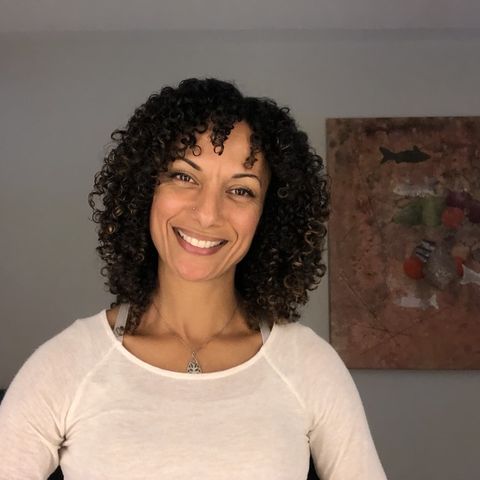
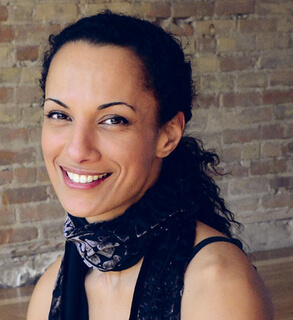
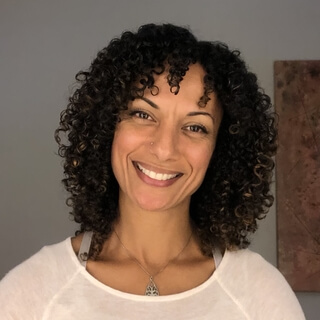
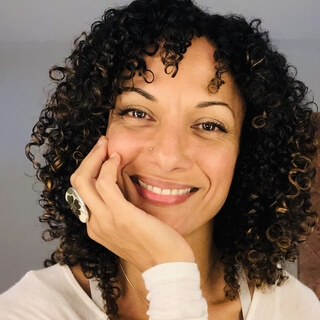
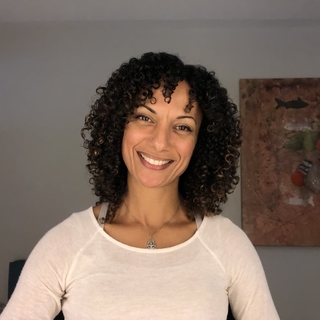
I'm Chantelle and your host.
And this week,
I am so pumped to bring you an amazing interview.
Well,
I think it's amazing with Soren Gordhammer.
And for those of you who don't know who Soren is,
Then I am even more pleased to be the first to introduce you to him.
We're going to talk about where business technology and mindfulness intersect,
How his baby wisdom 2.
0 was created and everything that falls under that umbrella,
What he's learned from that journey.
We talk about his personal life and how mindfulness has made its way into his life.
And we have,
I don't know,
I feel at the very end of the interview,
That's when beautiful messages really come out.
So sit back and enjoy.
Today,
I would like to welcome to the show Soren Gordhammer.
Soren is the founder of wisdom 2.
0.
And that's certainly how I came to know him.
And you can see this as someone that genuinely practices mindfulness and embodies it in every way and still has a genuine curiosity about it,
About what that looks like and how to grow it,
And then also create community around it.
So first of all,
Could you explain what wisdom 2.
0 is?
Sure.
So wisdom 2.
0 is just a name.
And the name reflects an intention to live wisely within a 2.
0 or digital or modern world.
So,
You know,
It's one thing for the Buddha or Lao Tzu or Mother Teresa,
Or whoever are the different religious or spiritual teachers of the past,
Where we have our own particular challenges of trying to actually live wisely within a current age,
Where there's so many distractions,
There's so much technology,
So much social media.
And so one option we have is to just kind of like give all that up and go live on a mountaintop somewhere or live in the woods.
But another option we have is to try to engage with all the amazing technologies of our age,
And to do it from as much a place as wisdom as possible.
And so what is wisdom to me is aligning with what really matters to us aligning to what the present moment is bringing to us,
And seeing if we can engage fully and actively and heartfully within the world of technology,
And within the world of all the beautiful,
Amazing modern things.
So wisdom 2.
0 is that is a name that reflects and supports people with that intention.
And it's also a conference and other things.
But inherently,
The intention behind wisdom 2.
0 is to explore how do we live wisely in a digital or 2.
0 age,
Knowing that the technologies are just going to continue to get faster and cooler and niftier and more engrossing.
What we don't know is whether compassion,
Wisdom,
Kindness,
Mindfulness will grow with the technology,
Or will the technology become so dominant that we just become kind of like walking zombies throughout the world with no real connection to our body,
No real connection to nature and no real connection to each other.
So that's a very possible outcome.
Or it's also a possible outcome that we have all these amazing things and that we learn to love one another and pay attention to one another and connect to one another and feel our body and appreciate nature and protect nature.
And so it's uncertain right now which way it's going to go.
And so for me,
The community or the real question is how do we support the movement towards consciousness,
Not by retreating away,
But by engaging from a more thoughtful place.
Dr.
Mm hmm.
And I have to say I've attended the wisdom 2.
0 conference in San Francisco.
It was really life changing for me.
And from that perspective of being someone who's been trying to live a mindful life and to practice that and sometimes that can be very isolating.
And so I think that and so when I went to the conference,
I mean,
Globally,
You pull a global audience,
And I think there were 3000 people there.
And everybody had their own approach.
And that never was an issue.
And somehow you managed to bring all that together.
And,
And then all of the teachers,
You really do an excellent job of bringing things that seem so unrelated or impossible to connect technology,
Business,
And mindfulness together under one roof.
And the conversations that were happening were so high level and authentic.
I wonder from your perspective of that during just the conference alone,
What would have been your biggest takeaways?
Dr.
I think so one of the things that I always kind of knew from the beginning was no one group has the answer to this question.
So you leave it up to the spiritual teachers,
They're not gonna solve it,
Leave it up to the tech leaders,
They're not gonna solve it,
Leave it up to the social activists,
They're not gonna solve it,
That all these groups were important,
And they all had pieces to a puzzle that we need to bring them forth and engage them.
So like you said,
So one session might be with one of the founders of Twitter and the next session might be with Jon Kabat-Zinn or,
Or somebody like that.
And my kind of orientation or my kind of thesis is that they each have a piece to offer and that there's a brilliance that created Twitter,
There's a brilliance that created Facebook,
There's a brilliance that created these technologies.
And that brilliance,
Though,
Needs to be balanced,
Or in partnership with spirituality and with wisdom.
Otherwise,
It just becomes an addictive tool.
And at the same time,
Spirituality and wisdom needs to know how to engage people through these devices and through these technologies.
So one of the things I think I really learned was when I started to reach out to different business leaders,
Activists,
Technology leaders,
How much they were all willing to join the conversation.
Yeah,
I was wondering what the response was when you first,
Like I'm thinking business,
For example,
Even the technology realm.
Yeah,
So there's really nothing in it for them.
Like you're not,
Like some of the business or the tech leaders,
Like they're not looking for more followers or more attention.
And so why would they come to a conference on wisdom?
I think initially they were suspicious because they didn't know me and they didn't know the intention.
And then I found myself explaining it to them and saying,
You know,
A number of them have children and saying,
We're trying to create a world where our children can flourish and where our children can know how to connect with somebody across the table as much as they know how to code an app or something.
Like we need both of these qualities.
And I think that really touched up a heart space in them because they really want that for their life and their kids.
And they also want that for the world.
And most of them had no idea that what they were creating would become so addictive or just like take over our culture in the way it has.
And so I think for them,
They have,
Like,
They're both happy about that,
But they're also scared about that.
And then they worry about their own children,
Like becoming technology savvy,
But not knowing about anything about their heart,
About their feelings,
About their emotions,
About how to actually make eye contact with somebody else.
So I think one of the things I learned was like,
How many people really care about this topic?
They might not do yoga,
They might not do meditation,
They might not use the word wisdom or they,
But they care about presence.
They care about,
They know the difference when they're all in a room with their friends and none of them are looking at each other and they're all in their phones and they just are engaged,
But not engaged.
And so I,
It took some time.
It wasn't like it happened instantly,
But over time,
I've been amazed at how many people resonate with the vision and want to create that world with us.
And so we're not,
People ask me,
Are you for or against technology?
And I always say,
We're for awareness.
And you can live without technology and be a mean,
Vicious person.
Just like money,
Right?
Yeah.
And throughout history,
People have done horrible things to each other who didn't have cell phones or,
Or anything.
And so there's a question about more about the human heart and it's less about whether technology is good or bad.
That said,
Technology is an AI and all of it is,
Is going to grow in leaps and bounds.
It's already,
But within 10 years,
It's going to be a whole different world.
So we better learn compassion and empathy and mindfulness now,
Because we're up against a very powerful movement.
And I'm concerned at times that the,
The,
The force of that will take over our culture and that young kids will just put on these masks and these headsets and they go into their virtual world.
Right.
And we don't know how to get them out of it.
Right.
And that's,
That's on its way.
So that's on its way,
But at the same time,
More and more people care about this conversation and more and more people are saying,
I want to be a part of the solution.
I don't just want to create technology that's addictive.
I want to create technology that's meaningful and that's helpful.
So we'll see which one wins.
Right.
Right.
And I mean,
You have access to some of the most impressive people who've been working hard in all of their fields.
And I'm wondering if through the years you've been able to see the impact of that intersection of these different areas.
And if you've noticed shifts along,
Cause it's been 10 years,
Right?
Yeah,
It's been 10 years.
Well,
One of the shifts is that people are now,
So like Ev,
Ev was one of the founders of Twitter and he now founded Medium.
And he said,
He said it used to be at a party.
He would be very hesitant to say whether he meditated or not,
Just because people would ask him weird questions or just have all these notions about him.
And he says,
Now when he goes to dinner with any kind of other friends or colleagues or tech leaders,
He's like,
It's almost strange if there's somebody at the table who doesn't practice meditation,
Like it's actually moved in this whole different direction.
And so that's been an interesting shift,
Which is words like mindfulness are now used in companies and in schools and in hospitals and in different environments where 10 years ago it wasn't used very often.
I think the danger is that we just use the language and we don't do the practice.
So the danger is that people at Google or Facebook or Twitter,
They kind of talk about mindfulness,
But they're not actually willing to look at how their technology supports mindfulness or doesn't support mindfulness.
And are they willing to lose money one year and not make as much money one year to support a more mindful technology.
And so I think that we have to make sure that we don't just talk about it,
But that we actually implement it.
But I think one of the big changes that we've seen is that now the conversation is there in the public.
And I think what we're starting to also do is we expect more from our tech companies than we did in the past.
Before,
If it's like,
Oh,
You made a billion dollar company,
How impressive,
Isn't that amazing?
And now I think for people it's like,
That's not good enough.
We want to make sure you protect our privacy.
We want to make sure you're not giving us ads that are addictive in nature or that promote over consumption.
So I feel like people are starting to rise up and say,
We demand more from the companies that,
Because if you look at any of these companies,
Facebook,
Twitter,
They're nothing without us.
They're a bunch of blank boxes that we fill.
So they should be of service to us.
And if we walk away,
It's not like they're creating great content.
We're creating everything for them.
And so the people actually,
I think have the power.
And so the people are like,
Listen,
We want changes.
I think the companies,
The smart companies will be like,
Absolutely,
We're going to make these changes.
And I think we're kind of in a friction now where the people are starting to get a voice and the tech companies starting to realize like,
Oh,
This is a new chapter.
This isn't kind of how it was in the past.
And we just kind of made our billions and nobody asked any questions.
Now it's like,
What are you doing?
What are you doing with your money?
How are you making your money?
And what's the right use of advertising?
You know,
If there's going to be ads,
Can we have more of an ethical use of advertising,
Not give young teenage girls pictures of beauty and pictures of consumption that just aren't healthy for them.
And I think there needs to be more of a thoughtfulness and an ethics around that.
And so far,
It's been like the wild,
Wild West.
I worry about the images that young people are seeing that distort their idea of what beauty means,
What success means,
What power means.
And I think a lot of those images are coming from social media.
So I think we need to kind of look at the ethics behind that.
And can we step up our game so that they can make money and we can all make money,
But that we're doing it in a way that doesn't lead to false ideas or false images of what we should become.
And then the self-hatred and the loneliness and the comparison that kids feel,
You know,
Like so and so.
It is a different world.
My son was at a party sometime back ago and he was maybe 16 at the time.
And he's talking to this girl and she's like,
Oh,
Can I see your phone?
And he's like,
Sure.
And she's like,
Oh,
Can I see your Instagram?
He's like,
Yeah.
And she goes to her account and then through his account,
Likes every post that she's done.
No.
Oh my word.
In the last couple of weeks,
Like there's nothing against her.
Somebody probably did that to her.
That's exactly it.
That becomes the norm.
But that is,
That's exactly it.
The connection isn't like,
Hey,
Who are you?
Let me understand you.
It's like,
Give me your phone.
Give me your phone so I can make it look like I have activity on my account.
Oh my goodness.
And actually my own daughter,
My 16 year old,
Has told me stories of being with friends and they share their phones and they want to,
Like they play a game and it's kind of like a Russian roulette and whoever looks at the phone,
They have to look at and guess who's content it belongs to.
And so there's judgment that comes along with that and this idea of,
You know,
Is the content more racy?
Is it racy enough?
Is it or is it boring?
And there's nothing exciting on your phone.
And so then there's that judgment of,
Well,
That's just not what I value.
But you've got your friend group where it's like you're being called a bore because,
You know,
You're not doing all these crazy things and recording it on your phone.
Yeah,
It's a different world to parent in.
It's a different world for these kids that it really isn't a lot of unknowns every day that they're waking up to because it's changing so rapidly.
And the systems know them so well.
I mean,
This doesn't know all of us so well.
They know just the image to give us to create activity through that image.
And I think if you look at like,
What does spirituality mean?
Or wisdom?
I think we can argue about it,
Or there's different definitions.
But I think one of the kind of key points to me is that who we are,
There's an essence to all of us that is beautiful,
And that is trustworthy,
And that is whole,
And that is complete.
And so if we're getting information counter to that,
It's not helpful.
No,
It's not.
We need to get information that who we are is whole and complete.
And like,
Of course,
We want to buy things.
And of course,
We want to,
You know,
Consume to some degree,
But if the consumption is to fill this bottomless pit,
Or if the desire to improve ourselves or look more beautiful or whatever is to fill an unworthiness inside us,
It's never going to get filled.
No.
And so I think there's a hunger for this spiritual dimension,
Which is like,
Realizes like,
Wow,
I don't,
I'm whole and complete as I am.
And all these other things are nice to have.
Right.
But they're not essential.
And I worry about a world where our children are told that these items are essential,
That how you look is essential to your worth,
That how smart you are is essential to your worth,
That how many followers you have is essential to your worth.
And so I'm trusting that there is a younger age group of people that are also awakening,
And they're also gathering and then we'll create another force that says,
No,
This is not this,
You can you can give us advertisements,
But there's,
There's conditions around those,
You know,
And I'm trusting that our children and hopefully other children can kind of come together and make some more demands because I think in the end,
The tech companies,
They're at our,
They're,
They're in our control.
Right.
Right.
Yeah.
It's because they don't really offer much.
No,
No,
You're right.
You're right.
So I'm really curious about before Wisdom 2.
0.
And what was the catalyst?
What made you say this is a necessity,
And it has to be created,
And I'm the one to do it?
I don't know if I knew about I'm the one to do it.
But I knew that there was a conversation that was waiting to be had,
That didn't seem to be being active in our culture.
So I knew that there was this emerging conversation and that I felt this tension in my own life between on the one side being really interested in meditation and yoga and spirituality,
And on the other side,
Seeing how technology was opening up doors and channels that were incredible,
You know,
Like,
Now we could communicate with people,
We can watch talks on YouTube,
We can read blogs from the most amazing people.
So there was this openness of technology and information.
And so I was seeing that happening.
And I was also seeing that the more that that world opened,
Kind of the less time I was spending on my practice.
And so I felt like this tension,
Like,
Where do both of these fit?
And then I wrote a book called Wisdom 2.
0.
And the book didn't do very well.
And I kept thinking,
Oh,
This book,
You know,
Once I publish the book,
Oprah will call,
And everything will just like,
She never called.
And I was trying to figure out what to do with that.
And I realized,
Well,
Maybe along with the book,
Actually,
It's a conversation that needs to happen.
So I had never done a conference before,
I've never really organized much of anything.
But I just had this vision that's like,
We need to get the tech leaders together with the spiritual teachers and the activists.
And we need to come together and see where the overlaps are.
Because this is really important.
So there was 300 people that originally signed up in Silicon Valley,
10 years ago.
And that was the beginning of the conversation.
And it felt like it was hitting,
It was hitting a chord in our society that like,
A lot of people are just beginning to realize like,
Oh,
There is this spirituality path,
And there's this technology path.
And how do they go together?
So I never really thought that I would be the one to do it,
Per se.
And I don't feel like now I'm the one that's doing it.
I feel like there was a conversation that needed to happen.
So,
You know,
When the tech companies or the tech leaders would go to conferences in the past,
They were often asked questions about,
You know,
Their quarterly report.
And if they're at Twitter,
How are they going to be Facebook?
Or how's Google going to be Twitter,
Whatever.
And so I came along,
It was like,
No,
Actually,
I want to have a deeper conversation.
And it was actually a big need that they had,
Because they were not asked questions about the kind of culture that they envisioned.
Or how do they bring more heart into their world?
And so for them,
I think it was like a really needed space where they could be more genuine about what truly matters to them.
So it was just kind of hit at the right time and at the right place.
And I continue to ask each year,
Like,
Where does this want to go?
Right?
Are we having the conversations that we need to be having?
Or are we having other conversations?
So every year,
We're now in our 11th.
It's it continues to be it's an ongoing exploration,
Because I don't want to,
I want to be on the cusp of where people's hearts and intentions and energies are.
And so each year,
It's it can change like one year,
Monica Lewinsky came and talked about shame online and bullying online.
Michael Pollan came last year to talk about psychedelics and and transformation and trauma.
We had kids from Parkland come last year to talk about healing.
And so it's it's always some aspect of healing or wisdom or consciousness.
But the forms of it change every year.
Yeah,
It's very relevant.
Yeah,
Very relevant.
I found and and but yet so,
So diverse.
Like I just,
I think that's something it's not easy to do.
But I think the setup and everything has been done so beautifully and eloquently,
That there's so many issues that are needing attention.
And you're able to pull the right people together and have all these conversations simultaneously.
I'm really interested in how,
Like the community is growing.
Did you see that coming?
I did not see that coming.
So now it's interesting,
Because a lot of people come or register before we even announce any speakers.
And part of it,
I think,
Is because they don't come for the speakers,
They actually come for each other.
And that was an interesting kind of realization for me is like,
They and people care about the speakers,
But they really care about connecting and sharing their own insights and sharing like this feeling of like,
Oh,
We're a community or we're a tribe.
And I feel like that's been one of the biggest,
Like,
Surprises in some ways.
It's like,
Actually,
People want to connect with one another.
Yeah,
We're often very lonely in our worlds.
And when they come to an event like this,
As much as they want to be inspired by a talk,
They actually want connections with each other.
And that kind of slowly came to my realization over the years when people would tell me,
Well,
I came to your conference and I loved it.
I'm like,
Oh,
What'd you love about it?
I met these really cool people.
Like that was consistent throughout.
I met these really cool people.
And I don't know how all these really cool people found out about it or how it attracts really cool people.
But that is really the secret sauce.
And then the speakers keep wanting to come back because there's really cool people in the audience that appreciate them and listen to them.
And they go to other conferences and they're talking and half the people are on their laptops and nobody's really taken them in.
So then the speakers are like,
Oh,
We want to come and speak again.
Can I speak again at your conference?
Because the audience receives them,
Which is a really,
Really beautiful thing.
And you don't get that.
They don't get that many places.
So it's been an interesting community,
Both among the attendees,
Community,
Among the speakers.
The community has really been the,
I don't know,
The secret sauce of the effort for sure.
I was going to say before,
Like,
Um,
Before coming,
It was really isolating sometimes,
You know,
Trying to live in this world and then seeing all the issues and knowing that it has to be something deeper than,
Than,
I mean,
Social activism is great,
But there has to be something on a much deeper level.
And sometimes when you look around and you don't see that reflected back in your environment,
It can be isolating.
And sometimes it feels like,
Is this for naught?
Like,
And then all I know is that when I went to the conference and everyone was there and then I laughed and I felt like I was a small piece of something very big and I was taking it back with me.
And anytime that that kind of would seep in that doubt,
I would always think back to the numbers.
And I also had this awareness that there were people that weren't there and what are those numbers?
And so it just kind of gave me the sense that,
No,
We are beginning to move the needle and things are shifting.
The shift is happening.
Um,
And I,
I'm,
I'm always very,
Very,
Very grateful for that.
Um,
And so,
You know,
Here we are right now at the retreat,
How did that come about?
Well,
I think a lot of,
Most of the things that came about in our world come about because there's a need that's just somebody expresses in the community.
So there's a need for,
Um,
A retreat that we have that's more intimate and smaller.
Um,
There's been other things like we do an event now in New York city that arise because people are like,
It's so far for us to travel.
Can you please do something for here for us here?
And so most of these things come about because somebody expressed,
They're not some great idea I have.
They're usually something express,
Somebody in the community expresses something that seems to resonate with people.
I'm like,
Oh yeah,
That would be a nice offering.
Like along with this big 3000 person event,
We need smaller,
More intimate events.
I would love for there to be like five or six different events going on in different places throughout the country,
Because I think we miss,
We miss a lot of places.
So we're going to go and do a wisdom 2.
0 Japan and wisdom 2.
0 Korea,
This end of this March.
But I'd love to have like wisdom 2.
0 Canada and wisdom 2.
0 middle America.
Because the in-person element is so important and it's hard for people to travel.
And so that's been kind of a challenge that I faced,
Which is,
I mean,
I definitely see the benefits of doing some stuff digitally,
But for me,
The biggest stuff happens in person.
Yes.
And so that's,
That's what I feel like the next 10 years it's about the next 10 years is about how do we support communities where people live.
Yes.
So,
Cause I think that's what we need.
And let's talk a little bit more about you,
As far as you said,
You were curious about meditation,
Mindfulness.
What brought you to that in your own personal life?
So I grew up in kind of a crazy household in Lubbock,
Texas,
Small town,
Very,
Very conservative,
Very,
Very Christian.
And my mom was a yoga teacher or became a yoga teacher.
My dad was a psychologist who was interested in Buddhism.
So I grew up,
The external environment was like one way.
And then our house is very different.
So we had,
We had books on Ramana Maharshi and the Bhagavad Gita and the Dhammapada and all these books and tapes and stuff we had at our house.
So I had access to a lot of stuff from a young age that my dad would give me.
And then when I was about 14,
My parents went through a really kind of surprising divorce.
I didn't see it coming.
And because our family was weird and different in the culture and they didn't understand us cause we didn't go to church.
I felt a lot of shame.
I mean,
I think kids often feel shame and divorce,
But I feel like I felt a lot of shame because I felt like our family had,
We were already the weirdos and now they had a justification for see you guys don't go to church.
You don't,
Your family,
This is what happens.
And then within the few years everybody started to get into a lot of you'll get to work.
But it was clearly not based on any religious orientation,
But my mom ended up kind of having a breakdown and I was raised from my dad as the last years.
And it was just a really,
Really hard transition for me.
I was,
And I was in a lot of pain and I didn't really know pain until then,
Like grief and sadness.
And so I remember feeling a lot of that and not having a name for it.
And my dad gave me these tapes,
You know,
Back in the day when we had tapes,
I remember Jack Kornfield and different Buddhist teachers.
And I remember them talking about suffering and I'm like,
Oh,
There's,
That's what I'm feeling.
Like there's a name for what I'm going through,
Suffering and talked about compassion and how suffering can be met with compassion or it's possible to meet suffering with compassion and there's healing there.
So at like 15,
I just became super interested in meditation and Buddhism and different spiritual traditions because I was trying to figure out how to heal.
I remember I wrote a book years later,
I wrote a book called A Fall from Grace,
An investigation of the closed heart,
Which was how I had closed off.
And so I didn't date,
I didn't have any friends.
I was just like really,
Really isolated as a teenager.
But I was just trying to discover what was true for me.
And so that led me to meditation and then that led me to kind of visiting Esalen and living at Esalen for a while and writing a book,
A meditation book for teenagers.
But it all started around that disillusionment of this world that I thought was my family and it falls apart.
Yes.
Like,
Well,
What's real?
Yeah.
And why love anyone or anything if it could be taken away?
Right.
Like that?
Yeah.
So that's what led me to do it,
To do the mindfulness practices and meditation practices.
And now here's the big question.
I think a lot of our viewers will be,
Or sorry,
Listeners will be able to relate to and that is mindfulness in a family setting.
Because once you're a parent,
And once you,
You know,
You have your career,
Like,
Like you said,
It's different than practicing up in the mountain and being completely retreated.
But then when you face the everyday challenges and the things that are maybe agitating,
Or there's the temptation of thinking that you need to be perfect,
And that you should be able to manage those emotions and never get upset and never be angry or,
Or make mistakes.
So what does that look like for you?
And how do you manage that?
Not always very well.
So I have a 17 year old son.
And then I have a eight year old stepson.
And I think the biggest learning I've had is to look at them as my teacher in some form.
They might not be the perfect teacher.
But they're trying to get something across to me and what and their defensiveness,
Their reactiveness,
Their whatever's going on with them.
If I,
The worst thing I can do is is judge them and think I'm better than them.
Yeah.
Like,
Oh,
I'm the spiritual person.
And you're this like low life kid.
And I had that orientation for a while of like,
You're just,
You're creating problems for me,
Leave me alone in my peaceful state.
I realized that's such a harsh thing to do to a young person.
And so I think they,
I've learned,
You know,
To see to whatever extent,
Even if my son's like,
Pissed off at me,
Just to be able to welcome it and be curious and be like,
Wow,
Help me understand what did I do wrong?
Yeah.
And then be able to mend and repair.
So it's not like we never make mistakes,
But like making mistakes,
Saying something stupid or getting upset with him about something.
And then coming to him and being like,
Wow,
You know,
I don't think I handle that so well.
Right.
You know,
I don't,
What you did was not right.
But I didn't respond to that in the way that I wanted to.
And I'm sorry for that.
Right.
And I think if they can see us as learning beings that make mistakes,
And that's okay,
But it's like the healing after the mistake.
To me,
That's such a great model that we can provide them because they're going to stumble so often,
And they're going to say and do things that are harmful.
And the question is,
In that moment of awareness,
What happens?
Right.
And can we,
Can I,
You know,
Model an awareness that comes back and says,
Wow,
I've reflected on this.
I could have been this better.
And to also not put pressure on them to be some Buddha.
Right.
Right.
May not be their personality at all.
Yeah.
And they need to act out and they need to do their thing.
And I think that's interesting versus like my self image is,
Oh,
Well,
My son or daughter should be.
Right.
Right.
Because I'm so well enlightened.
Yeah,
No,
No.
The more we have that the more they're going to be encouraged to fight that.
Exactly.
Resist it for sure.
What have you learned?
Have you?
Yeah,
I've learned,
Well,
That is the practice,
Like noticing and taking that accountability.
And I've learned that our kids are always,
Like you said,
Trying to teach us things and challenge us as well to grow.
I,
I'm always very mindful of their filters.
And always curious about whatever it is I'm saying,
Because as they get older,
The more those filters start to,
I guess,
Interfere with perspective and being aware of my own filters as well when they come up.
So I'm always curious about what how things are interpreted.
And so one thing I've done to kind of mitigate that is created this journal.
And I started when they were,
I think,
In fourth grade.
And basically,
It's a journal where if there's a disagreement,
I always go back and I make sure that the air is cleared and the intentions are,
Are clear.
And that and then we'll set it on their bed or if it comes from them sometimes,
So they'll set it on my bed.
And then I we open it and then we'll write back and forth.
And then we'll have this little discussion after.
And it's just a safe place to,
To explore.
Yeah,
To explore.
Well,
First of all,
It's like,
I know,
Ultimately,
I'm going to do something that when they're 25,
They're going to come back and say,
Mom,
Why did you and so I'm trying to have this conversation now and,
And hope hopefully soften the edges of what that might look like for them.
And but also show that I'm willing to be accountable.
And that when that conversation comes,
I'll be,
I'll be ready for it.
And it's okay,
Please bring that to me.
And let's work through that together.
Yeah.
So there's just been little things along the way that I feel they seem little,
But they're,
But they are big.
And it's,
It's easy to,
Especially with young parents and new parents,
And I,
I think of myself when I see them.
So much judgment,
And we're so harsh on ourselves.
And because when they're small,
They're just being themselves,
But they're so full of energy,
And they still need parameters.
And there's needs to be some firmness there.
But there's that guilt of,
You know,
How that's expressed or how it comes out.
And I always say,
You know,
Sometimes it's helpful to pull yourself out and see the bigger archetype of this is what it looks like to be a mother in the year 2019.
And,
And,
You know,
Middle,
Middle class,
Canada,
Or,
You know,
Wherever you're located.
It's just seeing that when you raise out,
You'll see that this is the experience of all parents.
It's not just you.
And so then what do we do from there?
But,
But yeah,
It is it is challenging.
I think the thing that I look back on,
And I also see in young parents is just like,
Where's the joy?
Are we making space for joy?
Yeah,
The kids are in a joyful space.
Not all the time.
It's like,
Are we can we join them in that joy?
Yeah.
Or do we resist that joy?
Because we never had that joy.
Right,
Right,
Right.
And that's what I when I look around,
And I see that I see sometimes kids acting out and,
And sometimes parents are just like,
And other parents somehow are able to set those boundaries and just relish in that life force.
I'm always admiring that ability that we have to be like,
This little being is like,
Teaching us so much about emotions and feelings and sensitivities.
And they want to know if we're there for them.
And are we appreciating the fact that we get to have this journey with this other being?
Or are we resentful that they're not doing it the way we thought they should do it?
Right,
Bowing and bending the way that we want them to.
And the more control I feel like people try to have,
It's just,
I don't know,
Somehow kids,
There's like a written rule that's like,
If we have stereotypes or images or our love is conditional,
Right?
They're gonna fight.
Yeah.
They're gonna fight every conditional thing that we can put on them.
And it doesn't mean there doesn't need to be boundaries,
But boundaries with love and acceptance.
And I see who you really are.
And you're not here to please me.
No,
That's right.
Yeah.
And the more I this more struggle,
I see so much pain and struggle when they're trying to satisfy something that's hollow,
Or that never got worked out in the parent.
Yes.
And the parents looking at their kid to be successful,
To be a great athlete,
To be whatever it is.
Yeah.
And it's,
It's a painful path.
It is.
It is.
I'm curious,
With your own personal growth,
What have you learned from this journey with the wisdom 2.
0?
How has it shifted you?
That's a really good question.
I think what has what shifted me is a couple things we touched on.
One is the power of community.
And that when you get a group of people together who share the same intention,
Who share the same focus,
And the same kind of orientation towards the heart,
That really powerful things can happen.
So like,
There'll be a speaker who will come on.
And afterwards,
He or she will say,
I never thought I was gonna say that.
I had no idea I was gonna say what I said,
But I couldn't help myself because every the group created a field that almost forced that person to be vulnerable.
Right.
Because everybody there was holding a space that they couldn't do their usual song and dance.
That's right.
It's just like that just doesn't work anymore.
Yeah.
So that's been interesting to see the power of the field.
And that it's not about a person.
It's about a field more and more.
That's been a big,
Interesting learning.
I've,
It's how have I grown?
I've grown in ways that I see things more from that field than I do individually.
So every year when the conference is organized,
I don't really do a lot.
What I try to do is just tune into what is emerging,
What people are suggesting.
Most great ideas come from other people.
And so the more I can just kind of attune and listen and follow and trust,
The better the program comes together.
The more I think of like,
Oh,
It's me doing this.
I've got to figure this out.
It just creates a tension that doesn't really work well.
And I've realized that I think in the end,
You know,
What matters are friendships,
Connections.
It's not who got to the mount top of the mountain the fastest.
It's about like,
How much,
How many moments did you have along the way?
And were you willing to help another person?
And were you willing to be helped by another person?
Because in the end,
We're all going like,
As somebody said,
Nobody gets out of this journey alive.
Right,
Right,
Right.
It's the same ending for all of us.
Exactly.
And are we appreciating that and relishing in that and allowing ourselves to be vulnerable and to lead?
Or are we trying to push ahead or hold ourselves back or are thinking that somehow we have to be a certain way in order to be loved?
And I've learned because I used to be much more ambitious and much more,
And I still am ambitious.
I used to be more like the first person to the top wins,
Like competitive.
And I think that's really softened for me.
And I've seen people who've created billionaires who created all these enormous companies and whatever.
They have the same exact challenges.
Right,
Right.
Their kids with money,
People wanting something from them.
Exactly.
Every life situation is problematic.
Yeah,
Absolutely.
And so either we're going to join together as a community,
Or we're going to compete and fight.
Yeah.
And think that we've all made it or someone has made it and someone hasn't made it.
Nobody's made it.
Everybody's on a journey.
Yeah.
To the great mystery.
And I think I've learned to kind of soften and realize like,
There is no perfect life situation.
No.
We're in whatever life situation we need to be in.
And the more that we accept that and bow to that,
And welcome that,
The more life can move through us.
That's probably my biggest learning.
Excellent.
Well,
You know what,
Soren,
I really want to say,
Thank you for embodying everything that you truly talk about,
That you that everything that I've,
I've seen and heard of you is truly authentic.
And I want to say thank you for that and being and choosing to be in alignment,
Mind,
Body and soul because you do,
You do definitely embody that.
Thank you.
Thanks to my wife and my kids.
I hope to do that.
Yeah.
And I mean,
It's again,
Being honest and raw and saying,
You know,
That embodiment isn't perfection.
Yeah,
Yet it is.
Exactly.
It's perfect imperfection.
And it's working with that imperfection or the things,
Those flaws or the things that,
You know,
That are a little more heavier,
But figuring out how to,
How to not let it be a dead weight so much as something that you work with,
And it's more dynamic.
And you can't rest on your past.
No.
I mean,
What I love about mindfulness is like,
Somebody once told me,
You don't have to be mindful all the time.
You just have to be mindful now.
Right?
Yeah.
I like that.
I think I have to write that one down.
It doesn't matter how many,
Whatever,
No matter how many,
Whatever histories of whatever you've done.
Yes.
Are you here now?
Yes.
That's the beauty of kids.
That's the beauty of friends.
That's the beauty of connections.
It's like,
Can we keep reminding us?
Are we in this moment aligned?
Are we present?
Are we present?
And I feel like there's a huge number of people that are feeling called to this path.
And this path doesn't even have a name to it.
I don't think.
No.
It's just whatever helps us wake up.
It doesn't.
And on that note,
My last question is for someone who's feeling that,
That pull,
What is your advice to them?
Wow.
It's interesting because I've been asked this question before and it often changes.
And so what now comes up for me as soon as you ask that question is,
Is there one person in your life you can be authentic with?
You know,
So if you're a teenager listening to this or an older person and you're feeling like disconnected,
Having some kind of practice you do every day that connects you to your heart.
And I think if we can find one other person that we can be authentic with and maybe that person doesn't live where we live,
We have to text,
But I've just learned over my life when we have one person that we can let down our guard,
We can be who we are.
We can share like,
Actually,
You know,
My real dream is,
Or,
You know,
You know,
What really inspires me is to start a podcast or what really inspires me to become a teacher,
Whatever like that.
If we can pray for that person,
Find that person,
Recognize that person.
I think that goes a long way to supporting that part of us that wants to come forth more,
But that if nobody sees it,
It's really hard to bring it forth.
So if we can find that person or that teacher or that entity that we feel like,
Oh,
I don't have to hold,
I don't have to keep my guard up with that person.
I think that's,
That's,
That's life changing.
Yeah.
It's unconditional.
The Buddha at one point said,
I think it was his Ananda who asked him,
How much are Kalyanamitta's spiritual friends important on the path?
And I can't remember,
It was like 90% or some huge number of the path is spiritual friends.
And I feel like that is what I think we're all seeking.
Yes.
It's like,
Do we have,
Can we find one spiritual friend and can that friend connect us to other friends and then connect us to other friends?
Yeah.
Right.
Right.
Yeah.
And it's just that bearing witness.
And I think,
Yeah,
That's a,
That's a very good,
Good starting point.
Yeah.
Yeah.
Thank you.
Thank you for taking the time,
Soren,
And for offering your thoughts.
And we can do it live.
Yeah.
That would be great.
I would love that.
Yeah.
And maybe we'll have to talk about wisdom 2.
0 Canada.
Let's talk about it.
Let's talk about it.
Yeah.
Because I know that people can't always,
I mean,
I love it if they can travel to San Francisco,
But that's not possible for people.
So the more that we can create the essence of it closer to homes,
I,
That's,
That's the next 10 years.
Yeah.
Awesome.
Thank you.
All right.
Thank you.
Before I get into the post-interview reflection,
I first want to highly,
Highly,
Highly encourage you to hop over to the wisdom 2.
0 website to check out the conference.
It runs every March.
So if you miss it this year,
Please be sure to check it out next year.
It's in San Francisco.
It is a must.
And the website is wisdom2summit.
Com.
So that's wisdom number two,
Summit,
S-U-M-M-I-T dot com.
And there's also other events they run throughout the year.
There's one in New York,
They're starting to do wisdom 2.
0 in Korea and in Japan.
And hopefully I can convince Soren to bring it here to Canada as well.
And there's also an amazing retreat that I have attended.
And actually that's where I interviewed Soren at.
It runs every November in Hawaii on Big Island.
So in any case,
Check it out.
It's a great community,
Amazing offerings and something that I just think you will really enjoy.
Now it's time for the post-interview reflection.
My kids are totally going to kill me for that cheesy intro.
I really am grateful for this interview.
I walked away with a lot.
I think in particular,
That starting point,
And it not necessarily that I'm starting in my mindfulness path,
But you always do have that beginner mind and you're always reevaluating.
But the one thing that Soren said to me that has stuck is paying attention to that one person,
Or hopefully more than one,
But just find that one person who you can be yourself 100% around without any fear of any judgment.
That person holds a space for you and you hold for them and you both just want the best for each other and can celebrate the victories,
Can hold space for the lows for each other,
Allow you to figure things out unless they can see a stuck point that maybe you are unable to see because of blinders.
That's an important thing.
And I hope you have that.
I hope you find that.
And if you don't,
It is out there.
You just got to look for it and be open and know that you're worthy of receiving it.
That's a good place to start.
Thank you,
Soren.
The other takeaway from Soren is this idea of the field,
That field of intelligence where everything manifests and just noticing that in our own personal fields or even in collective fields,
That whatever shows up is there for a reason and to work with that,
That we always don't have to drive and force everything.
But sometimes we need to sit back and observe and be open and be patient.
It really is a dance in life.
And I would like to deepen that practice of awareness in the field and going back to what you said about finding that person who you can be authentic with as I move more toward more of that in my life every day and let go of the people who cast judgment,
Who cast blame,
Shame,
Who don't necessarily celebrate growth,
Maybe see it as a threat.
Sometimes that process can be lonely.
And what I do know for sure is that every time that energy is let go of,
Someone new shows up to meet you where you are.
And the people who end up showing up are always the ones you've been waiting for.
And they're a reflection of your own self.
And that's what I do.
And I'm always looking for people who are in the right place.
And they're a reflection of your own growth.
So if depending on where you are with that,
If you're in a bit of a lonely stage,
Trust that the right people are there.
But you do have to get out there and you do have to meet people and get involved in things that are of interest and passion to you.
And they'll be there.
And as for technology,
And I believe that the numbers are growing of people who really want to live a connected presence based life.
And so long as we work on that,
And also exercise our voice as Soren suggested,
On demanding more from the digital arena,
And the creators and makers,
Then I think we can move forward in a positive way.
That's all I've got for today.
I hope you enjoyed the show,
And that it caused you to reflect as well.
If you enjoyed this episode of the Prana Mama podcast,
Be sure to share it with others.
And of course,
Listen to other episodes on the insight timer meditation app.
Also be sure to keep an eye out on iTunes and SoundCloud where you can subscribe to this podcast and never miss an episode.
You can also like subscribe and follow Prana Mama on Instagram,
Facebook,
And on YouTube.
Until next time,
Stay close to your peace.
Namaste.