Hello everyone and welcome back.
Thank you so much for taking a moment to be here with me today again.
Wherever you are in the world,
Welcome to this new talk.
Before we get into today's topic,
I just want to take a moment and say thank you.
Thank you so much from the bottom of my heart.
Seriously,
Thank you so much for tuning in.
Whether you're listening from home,
From your car,
On a walk,
Or somewhere on the other side of the world,
I genuinely appreciate you being here.
I know people are listening from different countries and different moments of their lives and honestly that means a lot to me.
So wherever you are right now,
Thank you for spending this time here with me.
In the previous talks,
We explore how sound works as vibration,
How the mind responds through brainwaves,
And how tools like binaural beats and solfeggio frequencies are used in meditation music.
We've been building this slowly,
Step by step,
Without rushing anything,
Just laying the foundation clearly so everything connects in a natural way.
And today,
We're taking another step forward.
We're talking about something very human,
Very relatable,
And honestly something that affects every single one of us.
We're talking about the relationship between sound and emotions,
And more specifically how frequencies can support emotional release.
Because emotions are not just thoughts,
Right?
They're not just something happening in your head.
They involve your body,
Your nervous system,
Your breathing,
Your posture,
And even your chemistry.
So we can say that they are full body experiences,
Right?
And once you start seeing emotions that way,
You begin to understand why sound can influence them in such a powerful and direct way.
And if this is the first talk you're listening to in this series,
You can always explore the earlier ones on my profile here on Insight Timer because each conversation builds naturally on the previous one.
So let's slow this down for a moment.
When we talk about emotions,
We usually describe them mentally,
Right?
We say things like,
I feel anxious,
Or I feel overwhelmed,
Or I feel low,
But if you actually pause and pay attention to what is happening in your body in those moments,
You'll notice it's not just a thought.
It's a state.
Your breathing changes,
Your chest tightens,
Your jaw might lock without you even realizing it,
Right?
Maybe your stomach reacts too.
You know exactly what I mean.
So emotions are really states of the nervous system.
They're not abstract,
They're embodied.
And because of that,
They show up physically whether we notice them or not.
When you're stressed,
For example,
Even if there's no real danger out there happening in that moment,
Your body prepares as if something might happen.
The system shifts into alert mode,
Your muscles tighten,
Your breathing becomes shallow,
Right?
There's this subtle guarding,
Right?
Almost like the body is bracing for impact.
And most of the time we don't even realize we're doing it.
And this is where sound becomes really interesting in a very practical way.
Because sound doesn't go through your rational mind first,
Okay?
It doesn't wait for you to understand it,
But it interacts with your nervous system directly.
You don't have to interpret it.
You don't have to believe in it.
The body responds anyway,
Whether you like it or not,
And that's very powerful.
Sometimes we try to process emotions by thinking more,
Understanding more,
Analyzing more,
Right?
And yes,
That can help for sure.
But if the body is still tense and still in protection mode,
Understanding alone doesn't create release.
Sound can reach that deeper layer.
And sometimes people tell me they notice this,
You know,
The first time they try one of my soundscapes here on Insight Timer,
They suddenly realize their breathing slows down or even their shoulders drop without them even trying.
So yeah,
That's the nervous system responding.
That's it.
Now,
I'm not going to turn this into a neuroscience class.
That's not the vibe here at all.
So this talk is meant to just bring clarity,
Not overwhelm you with academic detail,
Okay?
But I think it's helpful to have a general sense of what's happening under the right?
Your nervous system is constantly scanning for safety.
It's doing that all the time,
Even when you're not thinking about it.
And one of the pathways involved in that process is the vagus nerve.
Now,
You don't really need to remember the name,
Okay?
Just think of it as one of the mechanisms that helps the body move from stress into regulation.
When the system feels safe,
Your heart rate slows down,
Your breathing deepens,
Your muscles soften,
The body moves out of that survival mode and into restoration mode.
And research over the past years has suggested that slow,
Harmonious sound can support that shift.
So you might notice that when you listen to calming music,
Your body simply relaxes a little bit,
Right?
Not because you told it to do so,
Right?
And not because of course you forced it,
But it just happens naturally,
Right?
Without you forcing it.
And people often ask me,
Okay James,
But is this just a placebo?
And honestly,
That's a fair question.
But if your breathing slows,
Your heart rate drops,
And your muscles soften,
That's not imagination at all.
That's your physiology responding.
That's it.
And that's exactly the point.
Emotional release doesn't happen when the body feels threatened,
Right?
But it happens when the body feels safe enough to soften.
So safety first,
Release second.
Another concept that sometimes comes up here is heart rate variability or HRV.
Don't worry too much about the terminology,
But what really matters is what it represents,
Okay?
HRV reflects how flexible your nervous system is.
It pretty much describes how easily your system can move from stress into calm and then back again when needed.
A healthy system isn't stuck in one state,
Right?
But it moves.
It adapts.
And interestingly,
Sound-based relaxation practices have been linked to improvements in HRV while people are listening.
And in some cases,
Those effects continue even after the session ends.
So the benefit isn't just feeling calm for a few minutes,
But over time,
Sound can gently train the system to return to balance more easily.
It doesn't happen in a dramatic way,
But it happens gradually.
And honestly,
That gradual change is usually much more sustainable.
There's something really important to understand about emotional release,
Okay?
We often imagine it as something dramatic,
Right?
I mean,
Crying,
Shaking,
A huge breakthrough,
But very often it's much quieter than that.
I mean,
Sometimes it's just the absence of tension.
Maybe you notice your jaw relaxing,
Or your shoulder is dropping,
Or I don't know,
You suddenly take a deeper breath without trying,
Right?
And those small physical shifts matter.
Many emotions stay stuck not because we don't understand them,
But because the body still feels like it needs to protect itself.
You might intellectually understand your past perfectly,
But if the nervous system still feels unsafe,
It won't just let go.
That's it.
It'll stay there,
Right?
So when people ask me how they know something is releasing,
My answer is usually very simple.
Most of the time,
It starts subtly.
I mean,
A softer body,
A calmer breath,
A little more internal space,
That's where it begins.
And sound can help create those conditions,
Okay?
It doesn't force release,
It doesn't override the system,
It simply creates an environment where the body feels safe enough to soften on its own.
And when the body feels even slightly safer,
Things begin to loosen,
Okay?
Not all at once,
But gradually.
But that gradual softening is often,
You know,
Where real healing begins.
And I want to share something personal here.
A few years ago,
I went through a period where everything felt very unstable.
I mean,
I had just moved back to Italy after living in Canada.
You know,
The life I had built there suddenly disappeared.
You know,
My work was gone,
My direction fell unclear,
And honestly,
A lot of uncertainty,
You know,
It all disappeared with it,
Right?
And at that time,
I tried to analyze everything mentally.
That's what I did,
You know,
Trying to understand what happened,
Why things unfolded the way they did.
But the truth was that the body,
My body,
Was exhausted.
You know,
My nervous system was constantly on alert mode.
Even when nothing was happening,
I felt tension in my chest and restlessness in my body.
And that's when sound became something different for me.
I started listening not as an escape,
But as a way to regulate.
And I remember noticing something subtle,
Like a deeper breath,
A softening in my chest,
A moment where my body didn't feel like it needed to defend itself anymore.
I was like in peace,
Right?
It wasn't dramatic,
But it was real.
And that's when I understood something clearly.
Emotional healing begins with safety.
And safety is something that the nervous system feels.
It's not something,
You know,
It's not something you can think your way into.
That experience completely changed how I approach sound.
So how can you use this in everyday life?
You don't need to,
You know,
You don't need complicated routines,
Okay?
You can just listen at the end of a difficult day,
For example,
Or after a challenging conversation,
Or maybe before going to sleep.
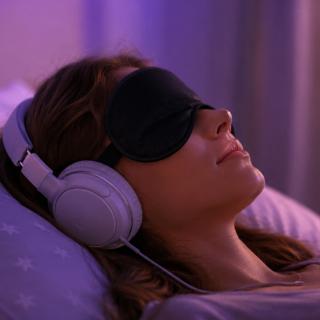
All you really do is put on your headphones and allow the sound to be there.
You're not trying to achieve anything.
You're not forcing a result,
Right?
You're just listening,
You're being present,
And allowing your body to respond.
And if you ever want to experiment with this,
You know,
You can explore many of my tracks here on Insight Timer.
Just search for my profile,
Point of Attraction Sound,
And just notice how different sound environments affect your body,
Emotions,
And your nervous system.
Alright,
This feels like a good place to wrap things up for today.
And if something,
You know,
Resonated with you in this talk,
Don't rush past it.
Listen to it again,
And just let it sit for a moment,
You know?
Sometimes integration doesn't need effort at all.
It just needs space,
Right?
And of course,
If you're curious to explore this more deeply,
You can also listen to the music on my profile here on Insight Timer,
And notice how intentional sound design can support emotional regulation.
And also,
If you'd like to go deeper into the understanding behind all this,
You can also find my full course here on Insight Timer called The Power of Frequency,
Understanding How Sound Shapes Your Life.
Thank you so much again for being here with me today.
I truly appreciate you spending this time here with me,
And in the next talk,
We'll explore how sound interacts directly with the body through resonance and vibration,
Bringing everything even more into the physical dimension.
So,
Take care of your nervous system,
And I'll see you in the next talk.