Good moment to you,
Beautiful beings.
I almost don't really want to interrupt this moment of just kind of allowing ourselves to settle in just a little bit more deeply with practice as a support for our birthday celebrations,
Practice as a support for many different ways we might be orienting to this call to center on the earth to bring our practice right to bear on deepening our awareness,
Our consciousness of how we are.
What's our relationship with this beautiful being called the earth?
As a personal matter,
How are we relating?
As human beings,
We get some issues sometimes with our relationships.
Mindfulness can be a support for exploring how we are in all of our relationships,
Including this one,
This relationship with the earth.
So in these reflections that I'll share this morning,
I am honored to have the support of a number of different types of teachings that I'll lean into.
But one of those comes from my friend and teacher colleague.
I've already referenced his name,
Venerable Bhikkhu Analyo,
Who is a teacher in the Theravada tradition,
Scholar of early Buddhism,
Who wrote this beautiful book,
Mindfully Facing Climate Change.
And in addition to this particular book,
I,
Like each of you,
I'm sure we all have many different resources that we lean into at times like these.
And so in a certain sense,
I come to you as a student on the journey just like you.
You know,
A human being struggling to make sense of this moment that we're in together.
Am I the only one that's struggling a little bit?
Am I the only one that's feeling in a real way?
This is a time,
Right?
And yes,
While we each in our own ways are certainly,
If we're here,
We've been called in some way to engage in practices that traditionally have been available to folks like us on the journey,
Navigating all kinds of uncertainty,
Change.
Dukkha,
We're here because we're on a journey to maximize our capacity to navigate these waters without,
You know,
Without being overwhelmed.
And yet,
Even as we cultivate those capacities,
Any moment can feel,
I'm just going to speak for myself,
Can feel really difficult.
James,
Just to say I'm Rhonda McGee,
I'm a law professor by day,
Right?
Some of you know.
I teach law at the University of San Francisco,
Have been for many years.
It's shocking how many years to me.
It's been 25 whole years that I've been teaching at the University of San Francisco School of Law and for five years before that,
Practicing law.
So it's been a journey.
And before that,
I was living in the South.
So I was born in a little town called Kinston,
North Carolina.
And when I say Carolina,
Like it opens the door to all the Southern accents and all the South,
Right?
That is in this body and being,
Right?
Because each of us,
I think of as,
You know,
We're all manifestation of the earth that walks,
Right?
So every place that we have been,
Every place,
Certainly where we've called home,
Part of this body,
Part of this journey.
So Kinston,
North Carolina is in the house as is Hampton,
Virginia,
Where I was then transplanted as a little girl.
In North Carolina,
There was definitely a sense of the sort of legacies of our cultures,
Histories around who gets to be well and at ease on the planet and who doesn't.
Who gets to kind of,
You know,
Feel the benefits of the way we've organized our politics,
Our law.
Y'all know I'm talking about white supremacy and patriarchy and all those things.
So in the South where I was raised,
You know,
We were,
I was born in a town that was still physically quite racially segregated.
And when I started public schools,
The schools,
Although it was 1972 when I started kindergarten,
You would not have known that Brown versus Board of Education had been announced by the Supreme Court of the United States,
You know,
In 1954,
Because the public schools I went to,
Right,
Were still racially segregated.
There's a little photo somewhere out there.
I don't know where it is,
But I remember having seen it.
Me and a picture of my little kindergarten class,
So all black class,
Right.
And all the kindergarten classes in the public schools in North Carolina at that time were racially segregated as best they could,
Right.
Through the,
You know,
The rules of race as they were played out and enacted on all of us and we imbibed those rules of identifying ourselves by race.
And so that's a part of what's in these spaces,
Whatever,
Wherever we've lived and the social rules and norms around how we get to live and where and who gets to feel at ease and doesn't.
With those aspects of earth embodied,
Earth overlaid with culture.
That's in the room.
You know,
That's part of the journey.
So when I think about the earth,
I think about,
Yes,
You know,
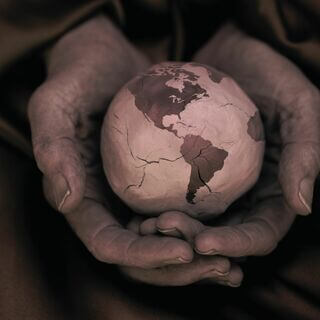
We could have that beautiful photograph of,
You know,
The earth from space.
You know,
I have one of those photos that the early,
The astronauts who first were able to perceive,
First human beings to actually perceive the earth from space gifted us with these images,
Shockingly beautiful images of this beautiful blue dot,
This fragile planet,
Right?
Look remarkably fragile when you look at these images of the earth,
But also like breathtakingly beautiful if you really stop and take them in.
So those,
I have one of these photos,
One of these representations of this planet that we're on right now.
And we recognize that that image is not out there in the heavens.
It is,
And it's also,
Again,
We're on that.
That image just includes our ancestors.
And us,
If we were born in the 1960s and different times when these images were,
Photos were being taken.
If we were alive on the planet,
That's a picture of us.
Y'all.
And our ancestors,
Right?
Because every human beings ever lived,
They lived where?
Here.
Right here.
And so with the living,
Those who've gone before those yet to be born,
All here.
All here.
So each of us in our formations,
You know,
In the sense that we hold of who we are,
Right?
Because in my reflection so far,
I've invited us to think a little bit,
Hopefully,
As I've shared a little bit about where I'm from.
Hopefully you're thinking about where you're from,
Right?
The parts of the earth that you're bringing into this room by your being here.
The specific places you've called home.
The lineages,
Right?
The people without whose experiences you wouldn't be here.
Grandmothers and grandfathers,
Known and not known,
Right?
Because no matter how much of our particular lineage and history we know,
Beyond a certain point,
We kind of don't know,
Right?
Am I right about this?
Even in the best of the human recorded history,
And some of us have beautifully detailed ancestral charts,
Many of us just don't.
Especially those of us whose histories were freighted by any degree of trauma,
Traumatic kind of forced migration in the form of enslavement,
Or any other kind of trauma in our past.
We may not know very much about our history.
And that's true for,
In different ways for all of us,
Right?
How many of us know what I'm talking about?
We know some of our history,
We don't know a lot of it,
Okay?
So that's poignant to recognize.
But just to know that even those who have access to all the information,
The best,
It goes only so far back.
Before which we are just sort of confronted with the uncertainty,
What we don't know about our history.
And so we tell a story that's like,
This is who I am,
And these are my people.
But no matter how refined that story is,
And how much content,
If we're honest,
We know it goes to a point beyond which we just don't know.
Beyond which we just don't know.
But we do know that all of those lineages and the degrees to which at some point they intersect,
The degrees to which they take us to different parts of the continent,
They all emerged and happened on this planet.
So in a certain sense,
This Earth radically connects all of us,
Always has,
Always will.
And that's a beautiful aspect that I bring to this reflection here on how my infamous,
What does it mean to bring my infamous to the question of how we relate to climate change in this moment.
B.
Cunalio in the forward to this book talks about how,
I'll read,
He says,
The crux of the problem of climate change,
This first part of the book starts with relating to the Earth,
Which I've been kind of pointing towards.
How do we relate to the Earth?
How do you relate to the Earth?
Is it that thing out there?
Is it that beautiful photo?
Is it this thing that we're celebrating?
Is it a part of you?
Part of your heritage and your lineage?
Are you part of the Earth that walks as we live and breathe?
Are we not exchanging oxygen,
Carbon dioxide,
Literally a part of that blue dot floating in the heavens right now?
So can we really think about how we're relating to this beautiful thing called the Earth and recognizing that when we talk about that Earth out there,
We're talking about ourselves.
We're talking about an aspect of who we are.
I was sitting here thinking,
Shouldn't we call it,
Maybe what if we called it worse,
Like W-E-E-E-E-E-E-E-E-E-E-E-E-E-E-E-E-E-E-E-E-E-E-E-E-E-E-E-E-E-E-E-E-E-E-E-E-E-E-E-E-E-E-E-E-E-E-E-E-E-E-E-E-E-E-E-E-E-E-E-E-E-E-E-E-E-E-E-E-E-E-E-E-E-E-E-E-E-E-E-E-E-E-E-E-E-E-E-E-E-E-E-E-E-E-E-E-E-E-E-E-E-E-E-E-E-E-E-E-E- And I just think we don't really have,
Maybe we don't fully have the capacity to take in what that really means.
But that thing that we call the earth is y'all,
It's us.
It's us.
And we're part of it.
And we are helping create it.
And it is creating us every moment.
Who are we?
And how we confront the biggest challenges of our time,
How we disrupt,
I'm gonna just use this phrase,
The big lies of our time.
Like that we necessarily are radically defined as separate hard-bound selves with a race and specific lineage that's so radically different from the other persons beside us that we can barely understand each other for from different backgrounds.
I can't imagine what it's like for you.
Really?
All right,
Sorry.
Back to Vico and Alia.
So I will say Vico and Alia and I found each other after having written these books and we sort of found each other's works and we were sort of like,
Hey,
We're trying to turn our practices toward addressing some of the most challenging aspects of our time.
Racism,
Climate change,
Political division and polarization.
We're taking these practices into the world and we are talking sometimes about different aspects of the problem,
But in a way,
Aren't they similar?
Let's ask ourselves,
How similar are the delusions?
How similar are the defilements that lead to the greed,
The hatred,
The delusion?
It shows up around racism,
It shows up around climate ignorance.
How?
Well,
The different ways that we conceive of things that set us up for causing harm.
The crux of the problem of climate change,
Vico and Alia says,
Is how we as human beings relate to the environment.
Crux of it is how we relate.
It's a relationship problem.
We think of ourselves as so radically separate.
It's that thing out there that if we're really good and we decide at some point to address the climate,
You know,
We feel good about ourselves,
But we've been radically forgetting every other moment that we're always choosing to behave in a way that has implications for this thing called the climate.
We're always impacting the climate.
How are we relating?
Are we relating with love,
With thoughtfulness,
With care,
With intentionality at least?
And if we're challenged by that,
How have we been formed for ignorance around our relationship to the planet?
We've been kind of trained in ways that make it easy for us to forget,
Right?
How have we each been trained in ways that makes it easy,
Almost,
I mean,
It's like a struggle to remember this which is just closer than the next breath,
That we are radically not separate from that which we call the earth,
That which we call the air,
That the bodies,
These bodies,
Your body,
My body,
Made up of earth,
Water,
Fire,
Air,
This air,
Water,
More than 60% of this being.
So this thing that we're calling the earth that's always part of us,
We are eating,
Drinking,
We are interacting with this all the time,
And yet we are prone to forget it because,
Well,
As a law professor,
I know we get trained in our spaces of education and how we think about,
You know,
The subjects and object of law.
For a very long time,
The law,
This formidable institutional structure that we have for helping organize how we relate to each other and how we resolve conflicts,
Tended to ignore the earth and the planet altogether.
You know,
Environmental law was not a core aspect of Western law.
Environmental law was this niche area that sort of emerged as a consequence of this kind of climate awakening.
But prior to that,
We treated the earth just as a resource that we could draw on.
Right,
That we can mine for our own benefit,
As we know.
So that notion of the earth as a resource that's there for us to use and abuse,
That we can throw things away on,
That there wasn't a way that you could throw stuff into.
Again,
That's formed through systems like our system of education,
Our system of law.
And we're trying to change or reform that,
But it's not easy to change.
So the structures are still,
We're still kind of struggling with structures that tempt us to forget all the time.
What matters instead under the law is your rights,
Your individual rights.
Now we're reinforcing identity-based rights,
All kinds of rights.
What are the rights to the earth and how does the notion of the earth as separate play into this or get sort of lost,
We're either promoted,
The earth is separate,
Or the sense of ourselves is connected.
How does that get lost in some of the ways we frame our rights-based discourse in law?
So there are a lot of,
In other words,
Big,
Let's say,
Factors,
Contextual factors that contribute to our delusions.
Big trainings and big lies,
Frankly,
That have helped sustain our systems and structures.
This notion that we're separate,
This notion that we can just throw things away and keep producing and producing.
This notion that we are separate as individuals and human beings from each other.
So there's just so much content that gets in the way,
I think,
Of us discerning how to be in right relationship with each other and the earth.
So there's repair work to be done around how we relate to our own lives in the context of this beautiful earth that we are privileged to be on right now that is Goldilocks enough to support our breathing and resting and sleeping and being.
How do we repair that sense that we've been trained in and that we've inherited that we're somehow separate from there?
And in the course of that,
How do we repair the sense that we've been trained in and we've inherited that we're somehow separate from each other?
In 2019,
I was fortunate to travel to South Africa to be present for a conference on mindfulness in an African context.
And there was a teacher there whose words were just very moving to me.
I quote some of his words in this book from time to time.
One of the parts of the book,
I begin this book with an exploration of how we might ground ourselves in the practices to support us in confronting difficult realities like the reality and the persistence of racism,
Like climate change.
How do we ground ourselves in practices?
So in that part of the book I write,
Grounding deep mindfulness arises from a view of our radical interconnectedness,
From a view that links each of us and all of us in our particular pain and possibility to earth,
Fire,
Wind,
Water,
Space,
Radical interconnectedness.
So from our particularity into a sense of what is it that we have in common?
What do we know about suffering?
What do we know about fear?
What do we know about anxiety?
And how can we work with it through our practices?
This deep South African teacher that I met on that journey that I spoke of,
Going to South Africa for the conference on mindfulness.
His teaching to us was a very simple,
Profound one.
He said,
All of us must realize that the goal that we should be moving toward at this moment can be simplified to healing the separations.
Healing the separations,
Healing the separations.
The separations between ourselves,
Yes,
As human beings,
Whether we see them through the lens of gender or race or sex orientation or class or political identity,
Heal them,
Heal them.
We cannot survive without each other.
We don't exist really without each other.
We might as well seek to heal what divides us.
Baba Mandaza Kademwa is the name of the teacher from South Africa who was telling us heal the separations.
And the phrase,
One of the phrases he used,
Be like the ocean that refuses no river.
Be like that ocean.
So what are the rivers that are hard for us to take in right now?
What does that look like for you?
What's the river that we're resisting?
I think these practices are beautifully capable of helping us do what we are called to do at this time.
By helping us recognize when we are struggling,
What is the quality of that struggle look like?
Is it anxiety?
Is it fear?
What does that struggle look like?
Is it anxiety?
For many of us it is.
My friend Jud Brewer,
Teacher and colleague in the mindfulness world,
He's a professor at Brown,
Neuroscientist and psychiatrist,
Has written a lot about anxiety and how mindfulness can support us.
What is anxiety?
Fear plus uncertainty about the future.
So as James was saying,
There's these,
We don't know how the future can unfold.
There's even the possibility for radical awakening,
But there's also,
There was a couple of other possibilities for things not going so well.
What do we tend to do with those uncertainties?
We add to them fear and we can feel anxious.
What is that like for you?
So Jud Brewer in his teachings about bringing mindfulness to these difficult emotions invites us to replace fear with wondering and curiosity.
What would it be like if we replaced our fear and our anxiety with curiosity?
We don't know what the moments are gonna look like.
We don't know how we are going to navigate a world of division and strife and rising identity politics.
But if we open up the possibility that something new actually does wanna be born,
That healing does wanna happen,
That love is already actually here or else we wouldn't be here.
Is it possible for us to evolve a new way of bringing,
Let's call it mindfulness into the world that is radically powerful as a manifestation of love and action?
I will close by saying that as a person who teaches law,
You know,
The word justice comes up a lot in the title of my book.
I define justice as what love looks like in public.
And by saying that I'm quoting Cornel West,
I'm paraphrasing Martin Luther King Jr.
And Gandhi and Mandela and Grace Lee Boggs,
Right?
There's just,
And that whole,
Our whole human lineage of people who have laid down a marker for love and action.
That's what we're called to manifest in our mindfulness practices today,
A love and action that has the incredible possibility of healing all the separations.
So thank you all for your presence,
Your being here,
The courage and the commitment that just your being here manifests.
And may we together in all the ways that only we can do,
Let's imagine that we are not here by accident,
We got some work to do together.
May we make manifest this fierce mindfulness and action that is what love looks like in public.
And that may indeed be the only thing that can help heal the separations that we feel,
Starting with ourselves.
Thank you all.