Hi everyone,
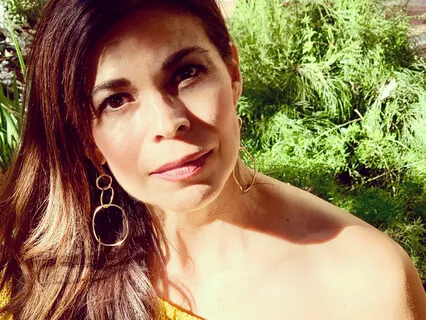
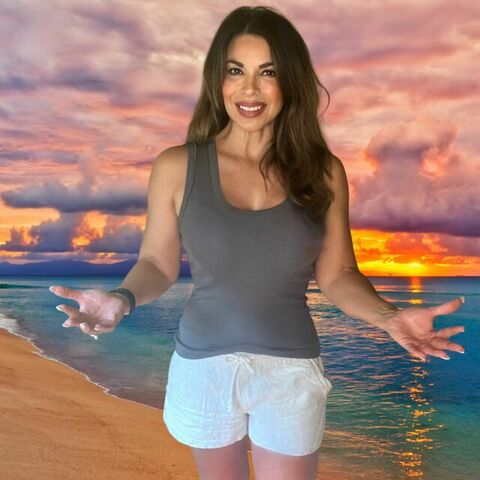
Welcome to another Nora Speakman podcast.
Today I have the honor of sitting with someone who I look up to and I'm going to tell him a little surprise in a minute that he really doesn't know about.
But I want to introduce someone who has become a mentor and a friend to me,
Mr.
Don Golden.
Don,
Will you please say hello to everyone?
Greetings to you and to everyone,
Nora.
Excellent to be with you.
Thanks for interrupting this time of quarantine with some good and optimistic conversation.
Very much looking forward to it.
Well,
Thank you.
So here's the surprise.
Some time ago,
When I was introduced to you through your work with Mr.
Rob Bell,
Who we all love,
Jesus Wants to Save Christians,
And processing that,
And really going through some of these podcast interviews that I've done,
One of the things that was impressed upon my heart is going out as you do,
And this intersection of social justice,
Love,
Philanthropy.
So it led me to marinate in that space and it is why I have written my book,
Which will be published in about a month,
Called Under Developed Love.
Wow.
Oh,
That's so cool to hear that connection.
Well,
It's beautiful because the analogy is that we can live in humanity much like an underdeveloped country.
And it's what prevents us from realizing the gifts and the abilities and the skill sets that we have to bless one another because we're all in this together.
And boy,
Isn't that message so relevant right now.
Yes,
It really is.
It really is.
Oh,
That's excellent.
I can't wait.
I can't wait to see the finished product.
Well,
It will be the second book that Alexander John Shaya and I released through our publishing house.
Oh,
That's awesome.
Excellent.
Very exciting.
That's a really great connection.
Yes.
So for those who don't know of this wonderful work that you did create with Mr.
Rob Bell,
Please share a little bit about that book.
Sure.
Well,
I had the privilege for three years of working with Rob Bell at Mars Hill Bible Church.
And I had met Rob,
I actually met him for the first time in Kigali,
Rwanda.
And I was working for an aid agency called World Relief and his church at that time.
He alone was there before I came along.
They wanted to get involved in responding to the AIDS crisis.
And World Relief was at the forefront.
This was in the early 2000s of mobilizing churches all around the world and working with the U.
S.
Government and the Bush administration to help bring a compassionate response to the global AIDS pandemic.
And I met Rob there and we struck a fast friendship,
Mainly probably around the way that we read the Bible.
He was involved in something called Jewish roots,
Where you're always looking for those Jewish connections to the cultural references in the New Testament.
And I studied something called the New Exodus theology,
Which is a form of understanding the New Testament as a ultimate liberation from the ultimate Pharaoh,
Which is sin and death.
And so that kind of linked our hearts together intellectually.
And so at one point I got this call saying,
Hey,
Don,
Why don't you come and serve as the lead pastor of Mars Hill?
And I was like,
What are you talking about,
Rob?
What do you do?
And he's like,
I'm a teaching pastor.
I just want to show up,
Do my thing and preach.
You know,
That's what I'm called to do to teach the Bible.
But we don't really know what to do with all of these people and all of the resources that we have.
So I got to come and be the lead pastor alongside Rob for that amount of time.
And what I needed to do was try to find a way to convey to the church,
The Bible's overarching emphasis on what you might call the political economy,
How we organize ourselves and our resources,
That that really as a covenant book,
The old covenant and the new covenant,
That's really the preeminent concern of the Bible is that we are so-called saved.
We are liberated from greed and scarcity and fear towards life and the ability to manifest in our lives what God has put in us.
And how was I to communicate that?
And I really struggled with it.
And at one point I just came up with this idea that if you look at God in four places in the Bible,
And you just sort of understood what God was doing,
What the people were doing,
What the context was in those four places,
You'd kind of understand the whole pattern of the Bible.
And that is Egypt,
The place of slavery where the book begins.
Sinai,
That place of calling and covenant where humans and God kind of marry in a covenant.
And then they're assigned a purpose.
And then Jerusalem is the place of power and privilege,
And also the place of choice.
Will you remember why you were given these blessings?
And will you use them to,
As the Bible says,
Uphold justice and righteousness,
Which really means the way you organize that political economy?
Or will you forget that,
Will you lose the plot and begin to use your resources to protect your privilege and your power?
And if you do that,
You head to the fourth location,
Which is Babylon.
And Babylon is that place of regret and loss when you lost the plot and you found yourself living in the consequences of your injustice and your indifference to others.
And that's really the biblical pattern.
And then Christ comes as that altruistic,
Self-giving form of love that interrupts that pattern.
So we kind of came up with that summary and we wrote a book really out of a series of sermons that we preached at Mars Hill.
And then because of the book,
Had the opportunity for me,
It was a great privilege to take ideas that were sort of going around in my mind and then to work with a world-class communicator to put them in really simple terms.
People ask me like,
What's your pathway for writing a book?
And I always say,
Convince a world-class communicator about how great your ideas are and then let them write.
So that was the way that I got to do it.
Rob pretty much did the writing,
But the ideas came from this conversation.
Well,
I'm going to backtrack a little bit because as we hear on the Robcast when he interviewed you,
Which was a beautiful podcast and my favorite part was when he said he met you and he said being around you made him feel alive.
Wow.
Yeah.
And I just,
That really resonated with me.
Honestly,
It's how I feel when I work with Alexander.
You meet someone that is almost like the second half of you and you're finishing each other's sentences and there is this kindred spirit that you just,
You know,
You complete each other to be Jerry Maguire-like,
But it was the most beautiful description because he's a very dynamic person and it felt like what he was conveying was you are the second half of his soul.
And there's a beautiful balance and exchange that happens.
And it's just as you said,
When you can marry the ideas with someone who has another gift and it's interesting bringing up the different testaments and the folks that we have to look back on.
This is something for me that's so powerful right now.
Given this global pandemic,
Given the sort of report card that it's given us of our social health,
We're in sort of an exodus ourselves,
Aren't we?
Yes.
Yes.
Yeah.
Well,
Let me just say something about Rob before we segue to the conversation.
You know,
I learned something about life and about a way to live through Rob.
And that is,
You know,
He did sort of like in that interview,
I sound like the coolest person in the world.
I want to know.
I want to know me listening to his introduction.
And that's really less about me and more about Rob.
Rob,
And he used to say,
And I picked up on this phrase,
Which I mentioned in the podcast,
I love everybody and you're next.
You know,
Rob does fall in love with ideas and with the people that give birth to them.
And that's really taught me something about a way to live.
It's really great people really bring that greatness to everyone and share it and lift everybody up.
And so I'm not the only one.
There's just so many people,
Rob,
Probably on every podcast is that's why people get on his podcast is because he has this sort of resonance with them.
And I've learned to try to live my life that way.
Seeing,
You know,
Recognizing that every human being brings a bit of creations fulfillment within them.
And we all are denied and we are all robbed when a person doesn't fulfill who they were made to be.
And so I really think that's a gift that he has on this.
You know,
As we segue to this pressing conversation about the virus and what it reveals about our time,
There's this phrase that when the tide goes out,
You see who's swimming naked.
And the tide has gone out and many things are exposed.
One very interesting thing that I learned on an interview that I saw last week with Michelle Berry,
Who is a doctor at Stanford.
I heard her say that the word quarantine is an Italian word for 40 days.
Stop it.
And that it has to do with the number of days that a ship was held in port before it could be released during the Black Plague.
That's fascinating.
That fascinated me,
Of course,
Because of the situation that Italy is going through.
But we're also all going through,
If you're coming from the Christian tradition,
We're going through Lent,
This period of 40 days.
And it is a time for us to recognize who,
What in us is swimming naked,
Who among us is swimming naked,
And what of our institutions have been exposed for what they are.
And,
You know,
Lent,
Going back to this idea of Jewish roots,
Lent has its traditions in Passover.
Yes.
And so Jesus has that ultimate Passover lamb,
Who's,
As we said in the book,
Putting blood on the doorposts of the universe,
Inviting the entire universe towards its liberation.
In the Passover in Exodus,
In Exodus chapter 12,
On the night of the Passover,
Everyone was to keep vigil.
And just by the way,
You recognize that in Matthew,
When Jesus is in the Garden of Gethsemane,
And it's the Passover season,
And his disciples fall asleep,
And he says,
You know,
Even tonight,
Can't you stay awake?
Are you still sleeping?
I always growing up as a kind of fundamentalist environment was taught that that's about having your morning quiet time.
You know,
Peter didn't pray,
He fell asleep,
Therefore he had a terrible day.
And,
You know,
What a terrible reductionism of the text.
This is,
This is,
This is the,
This ancient text saying,
Even,
Even now,
Can't you remember this vigil?
Can't you awaken to the conditions of your world,
Even today,
When Messiah is among you and is about to be handed over?
Of all days,
Can't you awaken?
Are you still sleeping?
And so I think,
As we face this,
This pandemic,
When the entire world is at home,
You know,
In this work I do in impact investing,
I've had conversations with people in Japan,
Peru,
Rwanda,
All across the US,
Just in the last few days,
And everybody was at home.
When does something like that happen?
There is this opportunity for vigil,
To keep vigil and to recognize what is it that is exposed,
What does this expose about ourselves,
About our economy,
About the world?
And so,
In short,
I think right now it is a time to awaken,
To use this Lenten season if you're a Christian,
To make sure that we are conscious of the conditions of the world that we live in and of the condition of our own soul.
Absolutely,
And it's interesting as we think through and live through this time,
The metaphor that it occurred to me is,
In some ways,
We're all in a different version of Noah's Ark.
Yeah,
Exactly.
We're waiting to send the dove out,
Going,
Is it safe?
But it's interesting,
As I talked with Alexander,
He said,
But don't forget,
They sent out the raven first.
And it's very powerful.
The other thing that we talked about,
Alexander and I,
Is the temple falling in 70,
And the empire that was so intimidated by this beautiful religion that was Judaism,
Because they were getting ready to celebrate Passover.
Right.
And the temple had to come home,
Because there wasn't any more epicenter.
And so there are all of these beautiful metaphors,
If we're willing to see them,
I think,
And as we say,
Can we awaken?
Can we really and truly take this time to see?
There was a social article yesterday that said either we're going to have corona babies born,
Or we're going to see the highest rate of divorce.
Yeah,
Right.
Maybe a little of both,
But I think you're right.
One of the many implications.
Yeah.
Well,
It's fascinating when you think,
Don,
Of the number of times that we've seen on social media,
Where people have said,
I need to do a phone fast,
Or I need to do a social media fast because I don't have enough time to spend with my family.
Well,
Guess what?
Here's the invitation.
What are you going to do with it?
Exactly.
But I want to bring attention to your beautiful crossroads of,
To me,
What brings the ancient path with new tradition,
Creating new ways to do things.
What was interrupted before this global pandemic and the work that you were doing?
Well,
Picking back up on this idea of vigilance and using this as a time of greater consciousness and being mindful.
One of the challenges that we face coming into this time of global health crisis is the separation of people into political camps.
A very deeply entrenched political division that existed in the United States between right and left.
And I,
As an activist with Red Letter Christians,
Dove into that world with both feet.
And I believe that we must be active in trying to bring about a healthier political economy.
So I fully believe in it.
I also recognize that there are,
I don't actually think that the division in America is primarily a right and left one.
I think the actual division that's being exposed today is a top and bottom division.
It is a corporatist versus populist division.
And I think what is exposed today,
So for example,
Why is it that we don't have some of the pharmaceutical,
Some of the personal equipment that we need to,
For our healthcare and why are we so vulnerable?
And we have built monopolies in this country that maximize profit at all costs.
We have allowed our CEOs to become primarily manufacturers of cash as opposed to the stewards of systems.
You know when an IPO is an initial public offering,
These are institutions that are shared in the public domain and yet when they pursue a profit maximizing goal,
You might find yourself beholden for example,
To get your pharmaceutical supplies from China.
And is that a position that is in the national interest?
Is it in anyone's interest?
And the fact is that we have allowed through our corporate laws,
Our legislations to,
We've allowed ourselves into a situation in which corporations have too much power.
And that's being exposed.
The vulnerabilities of monopoly powers are being exposed.
You know,
In 2018 for the first time in American history,
US billionaires paid a lower tax rate than working class individuals.
The wealthiest 400 Americans paid 23% tax.
The average working family paid 24% in taxes.
That is a public agreement around how we will organize society.
And it's unjust.
It means that people are left without healthcare.
It means that the needs that we have to create jobs that support ourselves are not available to us.
And so this kind of awakening and awareness to our economy,
To how it exists,
To the laws that support it or not,
These are the kinds of opportunities we have now to awaken and to build a better economy.
And to me that points to this new world of impact investing.
And that is taking the idea that capitalism doesn't have to be destructive.
You know,
Our history of capitalism in America is pretty much this.
Capitalism destroys the world and charities heal the world.
And in fact,
Capitalists themselves,
The Rockefellers,
The Carnegies,
They were highly destructive in their exercise of capitalism.
But then when they retired,
They became great philanthropists.
Even,
You know,
Bill Gates today,
His form of sort of monopolistic capitalism could be described as ruthless at times.
But now,
As he retires,
He retires as one of the world's most important philanthropists.
That kind of dualistic approach to capitalism is the one that has gotten us into this state of a destroyed planet and wealth inequality that's approaching the levels of the 1920s.
Well,
I'm sorry,
I just want you to touch on something that I think is so important with this whole point.
And that is,
We have gotten this so misunderstood even in the church world.
We have looked upon capitalism as mammon and it's evil,
And we're worshipping that instead of looking at it as fuel to create,
As fuel to birth creativity.
Yeah,
That's exactly right.
That's exactly right.
Because we live in this sort of right left binary world,
We either say it's terrible,
Or it's the only way.
Instead of recognizing,
In fact,
What we have today in this sort of corporatism isn't really capitalism.
Capitalism is an open and free market in which any idea can be brought to market and can live or die on the strength of the quality that it brings for goods and services to that market.
What you have in today's environment is a kind of corporatism that builds monopolies that exist to push out competition and that leaves the market inaccessible to most people.
What we really need to get back to is a true kind of capitalism that has a consciousness to it.
And that is happening.
That's the really exciting thing that's happening in this day.
It was happening before this virus came and did so much damage to the economy.
But I think it is,
The way I'd like to see this time is it's a wake up call about the vulnerabilities of the current economy and that these burgeoning ideas,
These new ideas inside of a more conscious capitalism within the world of impact investing,
For example,
That's the kind of consciousness and the kinds of practice that we need to accelerate on the other side of this crisis.
And so I'd love to share just a couple of the business ideas that I think are,
Yes,
They are capitalists.
Yes,
They seek to make money,
But they want to do so in a conscious way and specifically to create market based solutions to some of the pressing problems that we have.
Wonderful.
I'd love to hear about those.
Yeah.
So one of them,
I've been to Africa many,
Many times and I've been on a number of safaris and game drives and it's just always an honor when you're able to be in that context and you see these iconic mammals and particularly the African elephant.
And I was shocked to learn that the trajectory for the African elephant is critical right now.
But there's actually a timeline within the 2030s of the complete extinction of the African elephant.
And that is because the rate of poaching that's taking place across the continent is threatening the existence of this iconic mammal.
And I've come across an amazing opportunity through one of my former world relief colleagues who is now the economist at a group called Resolve and Resolve was birthed out of the Exxon Valdez spill.
They were brought in as a mediation body and their effectiveness in bringing first nations and oil companies and environmentalists together to help respond to the Exxon Valdez brought them to be called upon in many of the world's intense conflicts.
And so Resolve has been involved in exactly doing that,
Bringing resolution and Resolve to some of the world's most challenging conflicts around the world.
And often at the heart of those conflicts are economics.
There's usually an economic struggle going on like Cain and Abel right at the beginning of the text in the Bible that there's two brothers fighting over the same field for their sheep and for their agricultural products.
That's happening in many of these areas of conflict.
And one of them has to do with poaching.
You know,
There's an economic driver.
If you can kill an elephant and get 200 pounds of ivory,
You may be able to feed numerous families,
Maybe for a year,
Just from that one act of poaching.
And so while it's terrible and it's destructive and it's threatening something that belongs to all of us,
There's an economic driver behind it.
And so one of the ways that communities in Africa have sought to stop poaching is through a new technology,
Through artificial intelligence and working together with Intel,
A smart camera that's fed by machine learning that's about the size of your finger is being produced and being placed at choke points where this poaching goes on.
And it empowers park rangers to be able to understand the movement of poachers and to be able to respond to poaching before it happens.
And this is an incredible initiative by Resolve called Trail Guard AI.
It is being supported by Intel.
They're donating the time to design this machine learning chip that not only takes photos,
But analyzes the photos and understands not just that it's a human,
But what is the intention of that human.
And when there's a threat,
It sends that photo to empower park force rangers to respond.
That's incredible.
Yes,
It's truly amazing.
And I encourage you to visit Robert Downey Jr's new television show,
The Age of AI.
Season one episode seven,
He covers Trail Guard AI.
He shows this technology and the team at Resolve and how they're designing it and how it's working to stop poaching.
Super cool.
And so that's not just cool and environmentally awesome.
It's also an investment opportunity in artificial intelligence.
So for example,
In that one,
You can buy equity shares and put an investment for yourself in this initiative and thereby create a solution to a very,
Very serious problem.
So that's one.
Another is called Talenton and Talenton is a,
I guess it'd be like a venture capital fund,
Except the venture capitalists are all socially oriented and passionate Jesus people who want to see jobs created in the poorest economies in the world.
So they're gathering millions of dollars.
And then they have a team of analysts that look around the world for the best business startups.
They're environmentally friendly and they impact African families by creating as many jobs as possible.
So one of their investments is a coffee company called Long Miles Coffee,
Which is producing the highest grade of coffee in the country of Burundi.
And through the Talenton fund,
They're now expanding into Uganda.
So those are just two initiatives that I'm a part of that are really exciting and they show the new kind of face that capitalism,
I believe will take on in the next century.
I don't think we will,
You know,
I don't think we'll head to the communist revolution.
I don't think we'll get rid of private property.
I don't think we'll move to a command economy.
That's just not who we are in America.
And I don't think it's the most efficient use or means to incent people to action,
But we do have a responsibility to build a more conscious capitalism.
And it's exciting that through Trail Guard,
Through Talenton and through many other initiatives,
That kind of new face of capitalism is emerging.
Well,
It's interesting because I wonder what I've noticed is,
Have we been lulled into too much of a complacency in our culture because things have been so easy.
So what is the point of getting creative?
And I think that this time where we're sort of sheltering in place,
As we say,
And all these new buzzwords that we didn't know a year ago,
Is giving us the opportunity to almost see,
This is how I've been describing it to people,
It's giving us permission to dream again,
And to be creative.
And perhaps we can marry this future presence that we can all live into with what is going on right now.
And rather than focusing on what is right in front of us in terms of the calamity,
We get to create the future together in humanity.
It's beautiful.
Yes.
Yeah,
I agree.
And let me share a framework for how to use some of the time that you may have gained if you are in a position where you have more time on your hands.
I spend a lot of my time throughout the week in conversations like these.
Most of them are not recorded and shared with the rest of the world.
I'm really glad this one is.
But just talking with folks like you,
And I try to spend my time as much as I can.
There are three types of people in the world.
There are the haters and the indifferent and the converted.
And the haters,
There's a lot of that out there.
And God bless them.
I have nothing but love.
But I don't spend a lot of my time now trying to argue with or convert the haters.
There's the thing perhaps they need to go through and maybe they'll come out the other side.
The indifferent,
I try to give one or two,
I invest a little bit of time,
But it's really there are so many people who want to do something and whose attitude and spirit is positive.
That to me is where I want to spend my time.
And so in the conversations that I have,
I find that people are kind of somewhere on a continuum between what I would call contemplation,
Intention,
And manifestation.
There's somewhere on this continuum.
And mostly in the realm of contemplation and intention.
That is something's going on in the world,
Something's going on in me.
And I want to know what it is.
I want to understand why I was designed.
And I think that's really important.
That's a great thing to be able to focus on if you do have more time.
Again,
Taking them back to this lent and vigil idea that you have more time at home,
You have more time on your own,
Either reading or maybe some exercise time.
And this idea that every human being was made to contribute to the unfolding purpose of the universe.
And as a result,
You deserve,
You are even entitled to the resources you need to bring about that design,
The thing that you were given.
And usually through fear or doubt or disempowerment or many other reasons,
Many of us don't discover that sort of heart purpose,
That soul purpose.
And so this is a time to believe either whatever your faith tradition is.
If you're a Christian,
The text is really oriented for you and your community to be all about finding your mission and your purpose.
And so this is a good time to,
And I like to look to the contemplatives,
Maybe it's Richard Rohr or Thomas Merton or others that can sort of help you reflect on who you are and that desire to discover why you were made.
One of the contemplatives has this little paragraph that I really love,
Howard Thurman.
He's an African American.
Oh,
I love Howard.
He's in my book.
Okay,
Awesome.
Very good.
Because there's something about a contemplative from the African American tradition that brings in just another dimension.
But in one of his books,
It opens with this little paragraph that says that in every heart there is a sea and in that sea there is an island.
And on that island there is a temple,
Within that temple there is an altar.
And before that altar there is an angel with a flaming sword.
And only that which is pure and authentic and true can pass that angel to sit on that altar.
And that's really you as a human,
Your ability to discover your soul purpose,
That thing that you were designed to bring about in the world.
Even the metaphor demonstrates that it's a process,
That it can be an arduous process.
It's something that you commit to crossing that sea and finding that temple and being able to boldly confront that angel with a fiery sword.
That's a process that we go through.
But it's worth it because it helps us to discover why we were made.
And then once we discover that,
That's the next stage is about intention,
About setting an intention for yourself that is an authentic expression of what's truly in your heart.
And you know,
When it comes to material things,
We can get all wound up between either self-denial or acquisitiveness and seeking too much.
But the idea,
You think about Jesus's metaphor that,
You know,
Consider the lilies of the field.
They don't spin or sew,
But look at how they're clothed.
And aren't you more worthy than they?
So the idea is like a flower isn't at odds with its purpose.
Can we at least be as simple as that flower to discover our purpose and then seek it to set for us an intention that that purpose would come about in the world.
And then that's,
You know,
Leads to manifestation,
Building your dream,
Finding support and seeing,
You know,
There's also generative power.
I think there are two powers in the universe.
There's life and death.
There's entropy and there is Genesis.
And when you discover your sole purpose,
You can sort of name what's on the other side of that flaming sword.
And then you set for yourself an intention that comes out of that.
You're aligning your mission with why God made you.
And that's when you can begin,
You will be surprised at the things that come out of the woodwork to join you in your intention to see it manifest because by the way,
They've got that whole process for themselves going that you may be a fulfillment for them.
Well,
I love the analogy and the metaphor of the flower because for me,
As you described that,
The other part that we get to receive from that is the oneness aspect of a flower needs the sunshine,
A flower needs time.
And so we all need each other and knowing the ancient paths as you do,
I'm sure you're familiar with the phrase tikkun olam.
Yes,
Of course.
Yes.
So that is the only ink it's on my wrist.
Wonderful.
Wonderful.
I'd like you to say more about that.
And then I think it was you that told me about Rabbi Akiva.
Yes.
Who are you and why are you here?
Exactly.
By the way,
I've been shamelessly using that in these conversations with people and it's just wonderful.
Those questions to be asked.
Yes.
Yeah.
So that just the whole synopsis that you just gave is actually what underdeveloped love is all about.
And the funny thing is I begin the introduction talking about going on a virtual tour of what an underdeveloped country can look like.
But in my metaphor,
We are surrounded by a beautiful garden with the cherubim and the flaming arrow,
Except we think that we're still locked out rather than that we have the opportunity to enter.
But it's in knowing who we are and it's in that sort of pilgrimage,
If you will,
To going inward so that we can go outward.
Yes.
And we become being for community.
So each chapter goes into sort of what are the lies?
You know,
What have you believed?
What's this false narrative that you've been given?
And for such a time as this,
I think that as we began this podcast talking about who's swimming naked,
Who's still believing those things and how do we need to not only expose those situations,
But now what are we going to do with that?
Which to me is very tukunulam about that.
So if you wouldn't mind just speaking to that sort of for me is your driver in what you bring out even in other people and the way that you inspire and encouraged on.
It's funny because you can do so much with your name.
And I think of as I'm a social media person in marketing,
I thought this could be the golden rule,
The golden thread.
There are so many things.
Right.
Yes.
Yes.
It's remembering who we are.
Yeah,
It is very much.
And,
You know,
My own trajectory,
Which sort of goes from the international aid world through activism into this new world of impact investing.
You know,
I think one of the problems you referenced this earlier,
That because of our comfort,
We sometimes we become complacent.
And I think that is that is part of the human condition.
And it goes back to that pattern that Rob and I laid out in Jesus Wants to Save Christians,
That it's all building to Jerusalem when you will have power and wealth and privilege,
But for only one reason.
And,
You know,
In that story,
The queen of Sheba,
This African queen,
She hears about a former slave that is now the head of an empire,
Solomon,
And she makes this pilgrimage and she comes to see him.
And she says,
Wow,
Okay,
Now that I've seen it,
Now I understand why God has given you all of these blessings.
So of all people,
You will uphold justice and righteousness.
Now those words have been hijacked by sort of pietistic reductionist religion.
But their depth has to do with social arrangements with,
You know,
Rightness in our relationships with one another and justice,
Justice is what belongs to whom and how to give it back to them.
Yes.
And,
And,
You know,
One of the things that I encourage people to do is when they're in wealth,
Don't be ashamed of it.
Don't try to play it down because that's really a defense mechanism to give you an out to be irresponsible.
See it for what it is.
It's awesome.
It is awesome to be blessed.
It's awesome to have what you need.
And the fact is,
It's even more awesome to bring more people into that kind of flourishing life that you have been given or have achieved or have a combination of both.
And so,
You know,
To me,
What we need is not everybody leaving activism and becoming impact investors.
What we need are impact investors that become activists in their world and investors who come alongside those people like say a Shane Claiborne who's living on $30,
000 a year and is giving away houses and bringing it into the death penalty and you know,
Just doing amazing things.
That's who he is.
He's never,
He doesn't want to have more money.
If he had more money,
He would,
He would take it,
You know,
He'd take up a new cause.
Those kinds of friendships between entrepreneurs who know how to create wealth and activists who are pure and who are seasoned and who are tested.
But taking on that deeper purpose,
I referenced what for me has always been kind of the nuclear fission for me is the means meaning equation.
You know,
Those who have everything in life but a meaningful purpose and then those who have all the purposeful struggle but don't have the means to achieve what they want.
That we were intended to be together in that.
And so,
You know,
To overcome that kind of indifference or the sort of the laziness of spirit that sometimes prosperity can bring,
We have to nurture these relationships with people who are in that struggle.
And that's another thing that impact investing can do.
So my company,
Just Capital Quotient,
One of the things that we do is bring philanthropists and investors and businesses into relationship with startups,
For example,
In Africa,
Where it's not just the financial sharing,
But it's the human,
The technology,
Technological,
Even spiritual interaction that's by the way,
Mutual.
It's not one way.
It's because we're trying to create a business endeavor.
It's a mutual interaction.
That kind of,
That can be an enlivening and enriching experience when those who have means take risks,
Step out,
Build relationships and seek to invest in a world of people who've been marginalized from our economy.
You know,
One thing,
For example,
You know,
What's one thing that African Americans don't have that white folks in America do and that's power and power comes from a from money.
And so one of the things that you can do to help empower voices of the marginalized is help them engage in the economy,
Help them gain access to the economy and work on helping to develop some of these businesses that create solutions to our massive problems of inequality and environmental degradation today.
It's such a beautiful way that you talk about mirroring those things up.
And for me,
Again,
With my ancient roots,
You'll find,
And the reason that I reminisce so much about that.
So Rob came up at the same time with somebody who is a dear friend of mine and who was my teacher,
Scott Hare.
And Scott and Rob both learned under Ray Vanderlyn.
No,
Ray Vanderlyn.
Yes.
So Scott,
As he sort of branched off and went,
Became a pastor here in Texas,
I came underneath him and learned so much about the mother religion and the spirituality.
So,
So for me hearing you speak,
It reminds me,
And I think Rob even wrote a book about this,
Zim Zim.
Yes.
Uh huh.
So that's that whole,
Yes.
And it's beautiful.
And so it's that balance and it's that I decrease and you increase and,
And it's,
We need to learn how beautiful that harmony can be when we are marrying those strengths.
And maybe as you said,
One is capital and one is that beautiful entrepreneurial spirit with the creatives.
And what you are doing is,
Is you are sort of playing matchmaker for lack of a better way of putting it,
Which we need that network and the resources and the understanding of who does what.
And I have a feeling that God has really blessed you with that gift of connectivity as well.
Yeah,
Very much so.
And I,
On any media that I do,
I want to give my email address,
My website don at don our golden.
Com and the website don our golden.
Com because I'm,
I want to invest in any initial conversation with anyone that wants to do good in the world.
You know,
I really,
I,
I find that tremendously enriching the ideas that we get to talk about,
But also I've have a business deals that have come through these kinds of conversations where people are involved in something,
Something that overlaps with me or someone has a a contribution to make a young student in sustainability joined me on a,
On a project.
And it just started from one of these calls that,
You know,
Someone emailed me and then we had a conversation.
So I want to take very seriously the work of the spirit between those of goodwill.
They doesn't matter to me what faith background I,
My,
My Christianity is,
Is a,
Is a universal one.
It's,
It's for the whole world.
It's about a God who loves the whole world.
And that exclusionary religion is really the enemy of God.
And that's what we see in Christ.
And so I invite anyone to email me again at don at don our golden.
Com and let's have a conversation about your ideas about these ideas that we've talked about and let's see,
You know,
What,
What we can do together.
A woman I had a call this morning with a woman who had $16,
000 to invest and you know,
There's a number of different ways that she can go,
But but there are also the possibility of her pulling together a few of her friends and then being able to,
To buy into some of these funds and then having a seat at a table that would be very interesting for her.
You know,
So that was a conversation today and there's all kinds of,
Of serendipity that we can explore.
And why not at a time when you're going to find pretty much everybody at home for a while?
Yes.
Some conversations.
Yes.
So one sort of a speed round question.
What is the word that you want people to remember about this time?
Yeah,
Well,
I want to go back to this,
This Italian word quarantine.
I want us to think about being together at a time of need.
And that we have a certain amount of days in which we are forced for everyone's well being to stay put.
And then to segue that word quarantine to this biblical word vigil.
And you know,
Jesus asking his disciples,
Are you still sleeping?
Asking us right now,
Are we still sleeping?
There,
There's just so much to read and to learn and so many wonderful people to listen to.
There's no reason to stay awake,
To stay hidden in our anger or fear or concern or doubt or worry.
Now's the time to reach out to one another and to remember that people may be experiencing anxiety.
And so there are things that we can do now each day to reach out to family and friends and others who just need some human warmth.
But then to ask where do we want to be in four months,
Six months,
When this may not be the thing that destroys us but makes us better?
How do we prepare ourselves to be positioned well on the other side of this?
So quarantine leading to a vigilance for ourselves and our world.
Wonderful.
Well,
I want to let everyone know that I will put your information in the show notes so people can find you.
And I just want to thank you for coming into my digital sanctuary with me.
It's been a pleasure.
I really appreciate you,
Nora.
And I'd love to get to know any of your,
Your listeners or those in your network.
Wonderful.
Thank you again.
All right.
Thank you.
Bye bye.