The past few centuries have been marked by profound advancements in science,
Leading to an unprecedented understanding of the world we inhabit.
Meanwhile,
For over two millennia,
Buddhism has provided insightful perspectives on the nature of reality and the human mind.
Surprisingly,
We find that these two great streams of knowledge,
Rooting in seemingly disparate traditions,
Often converge,
Offering complementary insights into the nature of reality and human existence.
Buddhism,
Like science,
Values empirical evidence,
Pragmatism,
And encourages investigation and questioning.
The Buddha himself urged his disciples in the Kalama Sutta not to accept his teachings merely out of reverence,
But to test them against their own experience and reason.
Similarly,
Science thrives on empirical evidence,
Hypotheses,
Testing,
And critical analysis.
Both realms encourage a relentless pursuit of truth grounded in direct observation and experience.
But what are some of the specific areas where Buddhism and modern science kind of intersect?
Well,
In the domain of quantum physics,
Scientists have grappled with the puzzling behavior of particles at the quantum level,
Where traditional laws of physics do not seem to really apply.
Here,
The principle of dependent origination in Buddhism offers intriguing parallels.
This principle suggests that all phenomena arise and cease depending on various causes and conditions,
Hinting at an interconnected,
Interdependent reality much like the one proposed by quantum theory.
Secondly,
The concept of impermanence,
Which is a cornerstone of Buddhist philosophy,
Resonates deeply with our scientific understanding.
Just as Buddhists perceive all phenomena as transient and constantly changing,
Scientists often observe that everything from galaxies to atoms are in a constant state of flux,
Flow,
And change,
Or as Alan Watts may put it,
A wop and a woof,
Which is just fun to say.
Thirdly,
The teachings of Buddhism on non-self,
Or anatta,
Have found intriguing parallels in neuroscience.
Buddhism proposes that the self is not a singular,
Unchanging entity,
But a temporary construct of aggregated components.
This view aligns remarkably well with neuroscientific findings,
Which suggest that our sense of self emerges from a complex network of mental processes and is not rooted in a singular self center in the brain.
The transformative potential of meditation as well goes very well with science,
And we all know that meditation is of course a central practice in Buddhism.
Research has shown that consistent meditation can lead to structural changes in the brain,
Enhancing traits like focus,
Empathy,
And emotional regulation.
This understanding validates the Buddhist claim of meditation as a means to cultivate wholesome mental qualities and transcend suffering.
However,
While we celebrate these convergences,
It's crucial to remember that Buddhism and science operate in different domains with different objectives.
Science seeks to unravel the external world's workings,
While Buddhism's primary concern is the inner landscape of our minds and aims for the liberation from suffering for individual and all beings.
Nevertheless,
The dialogue between Buddhism and science can be immensely beneficial.
Science can offer empirical validation to certain aspects of Buddhist philosophy and practice,
Enhancing their acceptance and application in contemporary society.
Meanwhile,
Buddhism can offer science a rich introspective methodology and a profound ethical framework which can be especially valuable in guiding the application of scientific advancements.
As we journey towards understanding our reality and our place within it,
The dialogue between Buddhism and science I think is serving as a good beacon,
Illuminating our path with the combined brilliance of external discovery and internal insight.
May this convergence of wisdom foster a deep understanding of our world and ourselves,
Propelling us towards a future of wisdom,
Compassion,
And well-being for all.
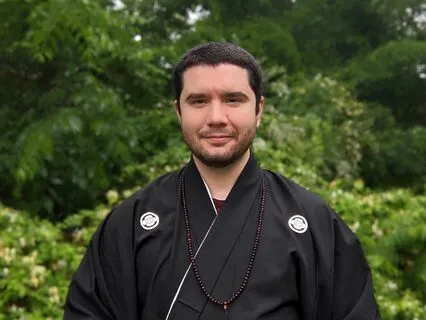
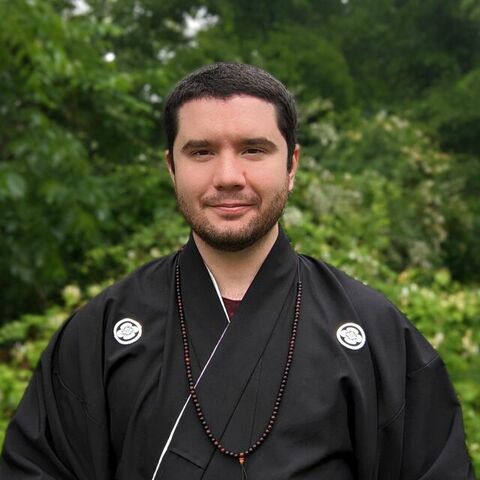
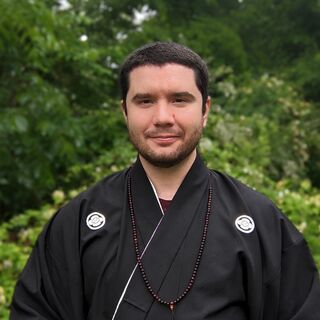
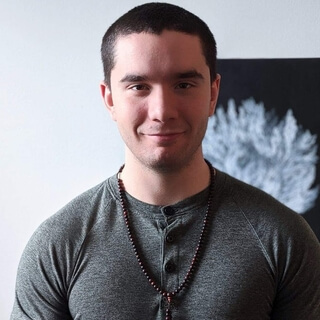
I'm Silas Day.
I hope you enjoyed this quick little Buddhist lecture of mine.
And thank you so much.