The principle of karma or kama in Pali,
Often translated as action or volitional action,
Is central to the Buddha's teaching and to many dharmic faiths.
It posits that actions driven by intention lead to consequences,
Thus constructing the fabric of our lives.
This belief forms the ethical foundation of Buddhism,
Offering us guidance on how to live life in alignment with the Buddha Dharma,
Or the universal law of nature.
At the core of the concept of kama is the law of cause and effect.
Our intentional actions,
Be they mental,
Verbal,
Or physical,
Set in motion a series of effects,
Which we eventually experience as the fruits of our kama.
Understanding this principle is pivotal in grasping the ethical dimensions of our actions,
For it illuminates the profound relationship between what we do and the consequences we face.
However,
Karma is not a deterministic law.
It doesn't bind us to our past or predetermine our future.
Instead,
It emphasizes our potential for ethical freedom.
It empowers us with the understanding that by altering our actions we can influence the results we experience in the future.
How then can we live a life of intention and consequence using the understanding of karma to navigate our ethical decisions?
Well,
It involves cultivating mindfulness.
With mindfulness,
We become fully present in the moment,
Enabling us to recognize and assess our intentions before acting.
When we act with clear awareness,
Our actions are less likely to be guided by harmful impulses such as greed,
Hatred,
Or delusion.
As well,
Living a life of karma and ethics requires us to develop that self-reflective wisdom.
This self-reflective wisdom allows us to discern skillful actions from unskillful ones.
Skillful actions are those imbued with generosity,
Love,
And understanding that lead to positive consequences for ourselves and others.
Unskillful actions,
On the other hand,
Are driven by destructive emotions and more than often lead to suffering.
Something to bring about when discussing karma is the five precepts,
Which prescribe abstaining from killing,
Stealing,
Sexual misconduct,
False speech,
And intoxicants,
Which serve as the fundamental ethical guidelines in this regard.
In Buddhism,
By following these precepts,
We cultivate virtuous behavior that leads to beneficial outcomes.
Furthermore,
Understanding karma encourages us to really be more compassionate in a very specific way.
Recognizing that our actions impact not only us but also others on an incredibly deep level,
We become more sensitive to others' needs and their welfare.
We strive to act in ways that alleviate suffering and promote happiness,
Thereby fostering a sense of interconnectedness and mutual respect.
Finally,
Living in accordance with karma means accepting responsibility for our actions.
We understand that we are the heirs of our karma,
The owners of our actions.
This insight fosters a deep sense of ethical responsibility,
Encouraging us to lead our lives with integrity and moral courage.
The understanding of karma,
I think,
Provides a robust ethical framework for our lives.
It empowers us with the ability to shape our destiny and encourages us to act in ways that contribute to not only our own well-being but the well-being of others.
May we all strive to lead a life of intention and consequence,
Making choices that are reflecting our deepest values.
Achieving harmony and attempting to bring about a true happiness,
Not only for ourselves but for others.
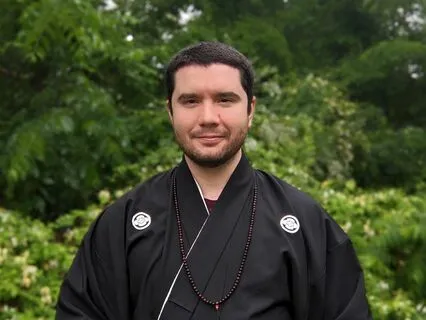
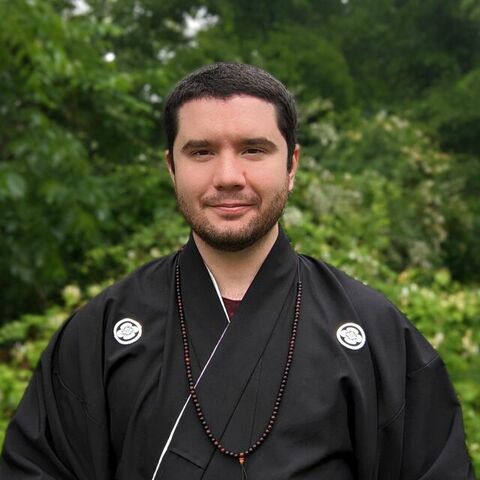
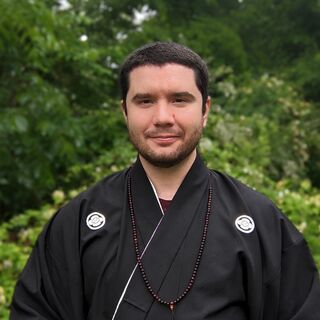
My name is Silas Day,
And I hope you've enjoyed this quick little Buddhist lecture of mine.
Thank you so much,
And have a wonderful day.