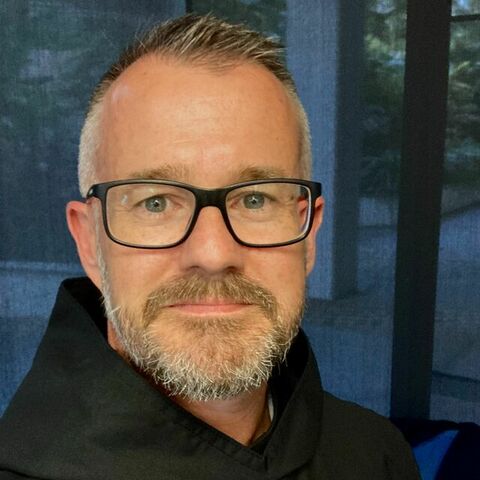
Greetings Friends This is Mark Gladman,
Also known as Brother Frederick James,
Your friendly neighborhood monk in docks.
Welcome back to our series,
What Do You Want?
We've been spending these episodes listening to the desires that are within us and discovered that desires,
Well,
It's pretty complicated,
Really.
Sometimes we don't know what we're looking for.
Sometimes we want change,
But we're frightened of what it might require.
Sometimes our desires are mixed with ambition and the need to be recognised.
Sometimes we can discover a desire that's as simple as Bartimaeus did,
I want to see.
Sometimes we discover that there's a deeper thirst.
Underneath what we're pursuing.
We've noticed that sometimes busyness can keep us from hearing our own hearts.
Sometimes we discover.
That what we want requires us to let go of something that we might be holding on to a little too tightly.
And so today the question.
.
.
Is going to shift just a little bit.
Is not so much.
What do you want?
Or what you think you should want.
But what do you want?
Now.
And for this I'm going to take you into my favorite chapter in all of the Gospels.
John chapter 21.
And we're gonna go.
.
.
To a beach.
And.
.
.
It's here that John tells us about a morning when the risen Jesus appears to his disciples beside the Sea of Galilee.
So let's listen to this story first from John chapter 21 verses 15 to 22.
Shown rods.
When they'd finished breakfast,
Jesus said to Simon,
Peter,
Simon,
Son of John,
Do you love me more than these?
He said to him,
Yes,
Lord,
You know that I love you.
Jesus said to him,
Feed my lambs.
A second time he said to him,
Simon son of John,
Do you love me?
And he said to him,
Yes,
Lord,
You know that I love you.
And Jesus said to him,
Tend my sheep.
And he said to him the third time,
Simon,
Son of John,
Do you love me?
And Peter felt hurt.
Because he said to him the third time,
Do you love me?
And he said to him.
Lord,
You know everything.
You know that I love you.
Jesus said to him,
Feed my sheep.
Very truly I tell you.
When you were younger,
You used to fasten your own belt and go wherever you wished.
But when you grow old,
You will stretch out your hands and someone else will fasten a belt around you and take you where you do not wish to go.
He said this to indicate the kind of death by which he would glorify God.
After this,
He said to him,
Follow me.
Peter turned and saw the disciple whom Jesus loved following them.
He was the one who had reclined next to Jesus at the supper.
And had said,
Lord,
Who is it who's going to betray you?
And when Peter saw him.
.
.
He said to Jesus,
Lord,
What about him?
And Jesus said to him,
If it is my will that he remain until I come.
What is that to you?
To follow.
So here we are,
On the beach.
Jesus appears to the disciples.
And Peter's there,
And Peter's been through a lot.
And that's an understatement.
He's followed Jesus.
He's promised that he would never abandon Jesus.
And then when it mattered most,
He denied Jesus.
Not once,
Not twice,
Three times.
After Jesus' death,
Peter goes fishing.
I like to think that he doesn't know what else to do,
So he's simply doing what he knows to do.
That's fish.
He's returning to the familiar.
And then Jesus appears.
And then there's a file.
And then there's breakfast.
Beautiful scene.
A lot of tenderness,
I think.
A lot of love.
Jesus cooking breakfast for the disciples on the beach.
That's a beautiful saying,
Worth sitting with.
And as they sit there,
You can probably sense that Peter's feeling a bit tense.
But what's interesting is that.
.
.
The whole conversation doesn't start between Peter and Jesus with a lecture.
Jesus doesn't turn to Peter and say,
Let me have a chat to you about what just went down.
About what went wrong,
About what you did wrong.
He meets him,
He comes to him,
And then he says to him,
Peter,
Do you love me?
Three times.
And this is a question.
That I think reaches right back out.
Into Peter's failure.
But I think there's something else going on here.
I think Jesus is asking Peter what he wants.
NOW!
Because Peter isn't the same person.
That he was before,
Something's happened to him.
He's discovered his own weaknesses.
He's had his confidence broken.
The future that he imagined has been completely disrupted.
He simply cannot go back to being the Peter that he was once before.
And maybe that's what he thought he was doing when he decided to go fishing.
And I'd suggest that that's true for most of us.
Life changes,
Failure changes us,
Loss changes us,
Love changes us,
Disappointments,
Age,
Experiences that we never expected,
All of that changes us.
And sometimes the person we thought we'd become isn't the person that we're becoming anymore.
And that can be really difficult.
Because we become.
.
.
Attached not just to things.
But to dreams.
Old dreams,
Old identities,
Old versions of ourselves.
We remember what we wanted.
When we were 20.
Or 30 or 40 in there.
Maybe we sit there and.
.
.
Judge ourselves because we no longer want those things.
Maybe there was a particular career or relationship.
Or kind of success or lifestyle or role in the world.
And somewhere along the way.
.
.
That desire changed.
Sometimes we think that means we've failed.
But maybe it doesn't.
Maybe it means.
.
.
We've grown.
Because I don't think desire is static.
What you wanted before you knew yourself.
And come on,
Let's face it,
At 20,
Do you really know yourself?
And what you wanted then.
Or even 10 years ago,
Before you knew yourself even more deeply,
May not be what you want now.
What you wanted before you experienced loss.
May not be what you want after that loss,
What you wanted before you discovered your gifts.
May not be what you want after you've discovered them.
What you want before you encountered God may not be what you want now,
And sometimes our journey through life.
Isn't about getting back.
To a dream that we had once before.
But rather discovering the desire that is alive in us right now.
Peter's life has changed.
He can't go back.
Ha,
To the beginning of the story?
He can have a go,
He just did.
He can't go back to fishing.
He's a different person.
And what's interesting is Jesus doesn't ask him to.
Jesus meets him on the other side.
Of all of the things that happen between standing on the beach and calling him that day to follow him.
And now.
And he says,
In this new moment,
Do you love me?
And then he says.
Follow me.
He recognizes that Peter is a new person.
There's no need to go back or become the person he was before.
Or to try and prove that you can do better this time,
Just follow me.
And this is a statement that's full of freedom for us.
Because there are times that we spend a lot of energy.
Trying to drum up.
And recover and rediscover a former version of ourselves,
The person we used to be or the life that we used to have.
A passion we used to feel.
A certainty that we once felt about ourselves.
But maybe God isn't asking you to go back to those things.
What if God right now is saying,
What is alive in you today?
And maybe you're in a season of life where you just don't know,
And that's okay.
Not knowing can be part of the journey.
Maybe what you want has become more simple over the years.
Maybe you no longer want the recognition,
But you want peace.
Maybe you don't want to impress,
But you want to be known.
Maybe you no longer want to accumulate things,
You want to give them instead.
You're no longer in pursuit of busyness.
You want a life where you can be more present.
Maybe you don't have to prove yourself anymore and you don't want that.
So rather.
.
.
You just simply want to become the person that God's created you to be.
And maybe this is why we need to revisit the question of desire.
All the way through our lives because the answer can change.
And that's a good thing because we grow.
It's not a problem if the answer to the question,
What do you desire,
Changes,
Because it's a sign that we are changing.
Growing,
We're not static.
This is something else about Peter that matters.
Jesus doesn't just ask him what he wants.
He asks him,
Do you love me?
And so there's a connection of desire.
To relationship.
So desire in this tradition,
In this Christian tradition.
We don't simply think about desire as about designing the life we want.
We're discovering the kind of life that love.
Is asking of us.
Peter wants something.
Jesus gives him a vocation.
He says,
Feed my sheep,
Care for my people,
Follow me.
In other words,
Your desire isn't just about you.
It's about a way of giving yourself.
To the world.
And this is important for the whole series as we've walked together because we can easily turn the question,
What do you want?
Into a project of self-fulfillment.
How can I make my life exactly what I want it to be?
How can I get everything that'll make me happy?
But this is not what the gospel is talking about.
The gospel offers something deeper.
What kind of life would allow the deepest desires within me to become a gift?
What do I want to become?
Who do I want to love?
What do I want to give?
What do I want to contribute?
What kind of person do I want to be?
PETA's future.
Is about becoming faithful.
And I think that's a really useful distinction for us to notice because you may need to become more yourself.
You may need a more truthful kind of life rather than an extraordinary life.
You may need to love.
More deeply.
So if you find yourself in a season where your desires are changing,
Don't be frightened by that.
Pay attention.
Notice that.
You don't have to cling to every old dream just because it mattered once in your life.
You don't have to keep living.
According to an identity that no longer fits who you are today.
And you certainly don't have to invent a new dream right now.
You can simply ask,
What is alive in me now?
What am I drawn towards?
Put them on no longer.
Drawn towards,
What gives me energy and what drains me.
What makes me feel more like myself.
What do I keep imagining?
What do I find myself wanting to make space for?
What kind of a person do I want to become?
And maybe the most important question,
Where does Jesus seem to be saying,
Follow me?
Raises another really interesting question.
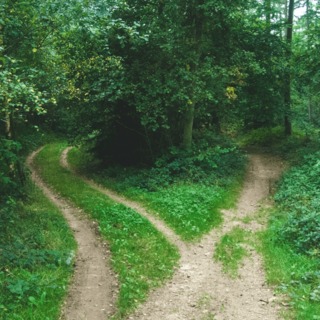
What if desire isn't always a destination?
But a direction.
You don't need to know exactly where the road ends,
You just need to know which way to take the next step.
That might be worth sitting with too.
Today,
Have a think about your own life.
Think about something that you once wanted very deeply.
Maybe you still want it,
Maybe you don't,
Maybe something's changed.
Don't judge the change.
Just see where it's shifted and think about where it's brought you to now.
Here,
This life,
This season.
This person that you've become.
And imagine Jesus sitting beside you.
And maybe like Peter.
You're on the shore after a long night.
Eating fish and bread that's cooked on the fire that's in front of you.
And Jesus looks at you.
And you're not the person that you were.
You're not the person that you thought you might become.
And so Jesus doesn't look at those versions of you.
Jesus looks directly at you right now in this moment and says,
What do you want?
And if the answer's different,
That's okay.
Answer honestly.
And then ask this question.
What is this desire asking me to become?
And then.
.
.
What would it mean to follow Jesus in the direction?
Of that desire.
So the question.
If I stopped trying to become the person I once imagined I would be.
What kind of life do I genuinely want to live?
Now.
And sit with that and allow it to speak to you.
Because the desire that matters most.
Isn't the one.
That you've been carrying for 20 years.
It's the one that's quietly emerging in you today.
And maybe you'll find.
.
.
That Jesus is already there.
And may grace,
Peace and love be with you and remain with you and hold you as you sit with that today and always.
Until tomorrow,
Grace and peace.
Bye for now.