You're listening to the Meditation and Mindfulness podcast.
This podcast aims to motivate and inspire you in your practice.
My name is Christian Netesol and a few years back I stumbled on meditation and it has completely changed my life.
I'm sitting down with other meditators to talk about their practice,
The lessons they have learned and what they want the world to know.
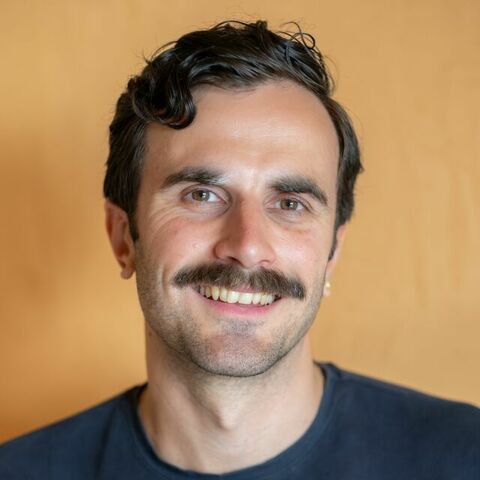
Today we're talking with David Bowman about his practice and his new course that just came out.
Welcome David on our first podcast.
Hey Christian,
How are you doing?
Doing well today.
How are you?
Life's good.
Life's good.
I'm really excited that this is our first episode of the podcast and you know that I get to be here.
Could you tell us a bit about yourself,
About who you are and how you stumbled on meditation?
Well as you mentioned,
My name is David Bowman.
I'm 31 years old currently and generally I live in New York City or Australia,
Depending on the season.
Always trying to avoid the winter.
My undergraduate degree is in finance where I worked in corporate finance for seven or eight years.
I really can't remember.
Pre-college,
During college and post-college and the corporate lifestyle was not for me.
Sitting behind a desk eight to nine hours a day independent of whether I completed my work or not was the most boring thing that I could possibly do with my life and I eventually left.
I went to graduate school where I studied philosophy and rabbinical studies.
Disclaimer,
I'm no longer a rabbi.
Just the level of restriction to me felt unnecessary if you could teach yourself the upper,
The higher level lessons.
I just felt you know you can have the good without the bad.
That to me seems very simple.
For the past 10,
11 years I've worked in business development consulting,
Ranging from back end analytics to front end marketing.
But beyond this,
The most exciting thing I do and the thing which I believe has the greatest potential to help humanity at large is with you I administer the meditation discord that we've built,
Which is exceptional.
I mean we get to speak with thousands of individuals each and every day helping them with their individual practice.
But now to kind of reverse track,
When I stumbled upon meditation in rabbinical school and graduate school where I was reading an author of a I want to say 12th century philosopher or Jewish scholar called Rabbi Abraham Abalafia.
Now Rabbi Abraham Abalafia was very fascinating because prior to him Jewish mysticism was exceptionally esoteric,
Meaning that you needed to know very specific terminology even to begin understanding it.
And the terminology was also exceptionally esoteric,
Meaning one way that,
For example,
Buddhism uses the word impermanence.
The word impermanence in general means that it's temporary,
Is that it's impermanent,
That it comes and it goes and the moment it's very simple.
It's a very simple term.
But within,
You know,
Old mystical works,
It could be 14 or 15 Hebrew words saying something like,
You know,
In God's light exists up for a moment within the snowflake that falls down from like a throne or something like this.
Like incredibly esoteric terminology,
Which is all metaphorical,
But it's concealed behind a veil of language in order to avoid talking to the everyday person.
Because back in,
You know,
The 10th,
11th century,
Life was hard enough.
Being religious was part of your life because it was your community.
Like if you weren't a Jewish person with your Jewish community,
No one else would accept you.
It was very cliquish back then,
Because that's just how people were in the 11th century.
So the community was very,
Very important.
So they believe that mysticism,
Teaching people how to meditate and whatever,
Will cause them to question their faith and question their dogma.
And if they do that,
They're going to leave the community.
If they leave the community,
It's going to ruin their life.
So there were all these safeguards around teaching meditation to normal people that weren't like,
You know,
Hyper intelligent,
That were unable to maybe make those compromises in their life without,
You know,
Ruining the religious community.
But Rabbi Abraham Abalafia was the first person to kind of come back and say,
You know,
Anyone can understand this,
I'm going to explain in very simple ways.
And he teaches a very similar path to the Buddha,
As opposed to anyone who's taught pragmatic meditation.
Although instead of the breath,
He used Hebrew names of God and fundamentally worked the same way,
Just slightly different.
So,
What really set me off with Rabbi Abalafia is his ability to take something which took,
Which appeared to be very esoteric,
And break it down in simple terms.
And I started practicing with that form of meditation and had what I would call good results.
And I thought,
I need more,
I need to read more.
But his writings on this were somewhat sparse.
So I started reaching out online and found other people that wrote in such a pragmatic style and read their books as well.
And that kind of led me here six,
Seven years later.
From business to Judaism to meditation,
Fascinating.
You've made your own course.
Could you tell us what the course is about?
Sure.
So the website,
The Mindful Course,
Is a website that offers this free course called,
You know,
Let's Achieve Access Concentration.
Access concentration is one of the first concentration states someone achieves in meditation.
And just to break that down really quickly,
When one meditates,
They begin to somewhat alter their perception of the world,
Particularly when they're meditating.
Access concentration is the first state where they can remain completely focused on an object.
So for example,
An individual might meditate on the breath.
And when you begin,
You lie down,
You sit down,
However you choose to meditate,
The breath can kind of come and go,
It can escape you.
You might start thinking about,
You know,
What you want to eat for dinner,
Etc.
But access concentration is a state where that breath becomes fixed within your mind.
Right.
This is easier said than done.
But through exercises and a few weeks of practice,
It's something that can be achieved.
And it works as kind of the entranceway to more difficult meditative practices.
So no matter what type of meditation you're looking to do,
Access concentration is a wonderful and almost necessary first step.
So it's a course to really get into meditation for people who haven't done it before.
Is that correct?
That's absolutely correct.
So if no matter what form of meditation you're interested in doing,
The ability to achieve access concentration will make the rest of the journey much easier.
Right.
So that really resonates with me.
When I started off,
I started off doing breath meditation to or focusing on my breath.
And the breath doesn't go away.
It's always there.
As long as you're alive,
It's there.
And you can always return to it.
It's very intimate to you.
It's very intimately connected to us.
What's nice about the breath is no one can really take it from us.
And if they've taken it from us,
Then we have far more significant issues at hand than meditation.
So,
It's something that God willing should always be with you.
Right.
That makes a lot of sense.
The breath is a great vehicle to get into meditation.
Could you tell us a little bit about your own practice?
What is your own practice?
Is it still focused on the breath or?
So for my personal practice,
I've moved a little bit beyond access concentration,
But it still remains the first stage of my practice.
So I'll get a little bit into real quick.
I'll share with you a little bit about my practice.
My practice is more of a pragmatic meditation.
That's kind of a careful way of saying that we've taken traditional or religious meditative backgrounds,
Removed the dogmatic and religious terminology,
And just made it straight pragmatic,
Secular,
Whatever.
Right.
And the reason why I really like this type of practice is you can teach it to anyone at any time.
They need not have a specific tradition to understand it.
They just need to be able to speak English or whatever language that pragmatic meditation has been taught in.
Right.
So within pragmatic meditation,
Or at least my own personal understanding of it,
There's many different concentration states which one can achieve.
And these concentration states are helpful for understanding deeper truths about your perception or are sometimes beneficial and maybe giving you more mental space to work with difficult problems or emotional issues going on in your life.
But what always remains at the forefront before any of these states can be achieved is access concentration.
So it's something that has to come first.
Right.
So you've talked about a pragmatic approach to meditation.
Now for a lot of people,
Meditation has a mystical side to it,
A more esoteric side.
How is that translated into pragmatic meditation?
Is there still a place for that?
Or how does that work?
Sure.
So that's a really good question.
It's a really good question because I found that many people who are atheist,
Agnostic,
Or religious,
It doesn't really matter where in that spectrum you fit.
If you go through the cycles of meditation,
It's going to raise certain questions in your faith,
Lack thereof,
Or ambiguity within.
And you will have to come to terms with those over time.
So a person who's deeply religious,
Who says,
You know,
My religion is the only correct way,
And all other ways are incorrect,
If they go upon this meditative path,
At some point they're going to have to reflect upon those traditional ideas and maybe reconcile them within themselves.
But so too on the other end,
A person who is,
Let's say,
Anti-religion,
You know,
A person who doesn't hate God because they deny his or her existence,
But instead hates the concept or modality of a God even existing,
So too when they meditate,
They will have to reconcile things to their own personal experience.
And they may need to find a way to solve those contradictions within.
The meditative path offers a certain level of truth,
Just as all things enter a certain level of truth.
And as long as someone remains open-minded,
I don't think they'll really fear the consequences of what they're doing.
Right.
That makes sense.
But as you said,
There are parts of the meditative path and experiences which will appear to be deeply religious and deeply mystical.
Any person who has no framework for those within their current worldview may find it unsettling or uncomfortable.
But it is something that's true,
Something that will happen to everyone,
And in my opinion,
Something that should be explored.
Because if you deny something wholeheartedly,
But someone throws it in front of you,
It has to raise questions.
Right.
Well,
So from my understanding,
It seems that Buddhism,
Wherever it came,
Incorporated the traditions or the symbolic,
The symbolism that was already there in the country or the culture,
And use those to explain the meditative path,
The path of awakening.
And so for me,
It's interesting to hear this whole secular or pragmatic movement,
Because I wonder,
Is this sort of Buddhism going through the ears of a atheist,
Or at least someone who is not that closely related to a religion?
So for me,
It makes perfect sense.
I mean,
I don't know if it is like that,
But it does sound like that.
It sounds like the core of the Buddha's teachings going,
Well,
Another way,
But it's still the same way.
It's just using different terminology,
A different approach,
But to the same thing,
To the same essence,
If that makes sense.
Yeah,
Of course.
From my knowledge of reading parts of the Palat Canon and seeing the Buddha,
What he was particularly strong at was teaching.
He was good at taking students of all different types and telling them what will work best for them.
So if a person comes and they are unable to concentrate,
Or if a person comes and they have a massive ego,
Or if a person comes and I don't know,
They just seem to hate everything around them,
The Buddha had an answer that would tell them,
These are the small moral things you need to work on in order to help your practice and your meditation.
The Buddha was an exceptional teacher,
But removed from all of these particular dogmatic principles rely underlying currents of proper practice.
I'll give the example.
I'll give an example,
I used to be an Orthodox Jewish rabbi,
And within Orthodox Judaism,
There are a lot of laws that dictate almost everything that you're supposed to be doing.
Regarding even drinking water,
The prayer you say beforehand,
The intention you have while drinking it,
The prayer you say afterwards,
To what type of water,
Where it can come from,
What can be in it,
What cannot be in it.
There are hundreds and hundreds of laws derived around before you drink a sip of water.
Incredibly restrictive,
But also within each restriction exists the philosophy of why these things exist.
For example,
You say a certain prayer beforehand because you're thankful for God to create the water,
Or you don't want to take something unbeknownst,
Meaning that you appreciate everything that enters your body.
I mean,
All these things have philosophical reasons that are meant to teach lessons.
But at the end of the day,
The lesson can exist without the practice.
It's just harder to learn.
Like for me to tell if I were to have a child and not teach him religious principles around drinking water,
It would be very difficult for that child to maybe understand the depth of why we appreciate water and why we should be thankful.
But certainly we can teach these things without these laws.
It's just harder.
So religion often takes these dogmatic theories and they take these laws and they restrict the practitioner in order to teach a high level philosophy.
Pragmatic meditation starts at the assumption that the practitioner is smart enough and intelligent enough and cares enough about self-growth that they're willing to accept these high level things at point blank value without having to be taught them in a rigorous restrictive way.
So I'm not going to any of my students and saying that you must dress this way,
Talk this way,
Eat this way,
Etc.
I just assume that they have their morality game in check and that they're constantly trying to improve themselves and they will practice correctly.
That's the goal.
Insightful and interesting to hear your view and your experience on meditation.
What would you give the listeners as an advice,
Like a single piece of advice that you found important in your practice and in your path that you would like to share?
Sure.
Although I've somewhat stressed that meditation is a serious practice,
You know,
Today,
I'd also like to stress that when you approach it with a sense of humor and that you approach it with like a fun lifestyle and you know there's going to be there's ups,
There's going to be downs,
It's going to be fun at times,
It's going to be hard at times.
You know,
Just take everything with a grain of salt and enjoy it.
If you're part of the discord,
If you're not,
Find a community,
Find someone to talk about these things with.
It can be something that really brings you together with yourself and with others and with all things.
Just take it with a big sense of humor and it makes life generally much easier.
All right.
Thank you for joining me today,
David,
On this first edition of the podcast.
If you'd like to know more about our community or are looking for a community about meditation and mindfulness,
Check out the link in the podcast itself and make sure to visit themindfulcores.
Com to take David's free course on access concentration.
Thank you for listening.
Take care.
We'll see you in the next video.