Hello there,
It's Mandy here.
Welcome back to The Wind in the Willows by Kenneth Graham.
We've reached chapter four,
Mr Badger.
It's interesting that the Edwardian period,
Which is when this book was written,
Has been portrayed as peaceful.
In fact,
Rumours of war,
Especially with Germany,
Were common and the Boer Wars had shaken Britain's faith in its army.
No wonder in the story that Ratty is not a fan of the wide world.
But before we begin,
Please go ahead and make yourself really comfortable.
Settle down into your chair or your bed.
Relax your hands.
Soften your shoulders.
And release your jaw.
That's great.
Then I'll begin,
Mr Badger.
They waited patiently for what seemed a very long time,
Stamping in the snow to keep their feet warm.
At last,
They heard the sound of slow shuffling footsteps approaching the door from the inside.
It seemed,
As the mole remarked to the rat,
Like someone walking in carpet slippers that were too large for him and down its heel.
Which was intelligent of Mole,
Because that was exactly what it was.
There was the noise of a bolt shot back and the door opened a few inches,
Enough to show a long snout and a pair of sleepy blinking eyes.
Now,
The very next time this happens,
Said a gruff and suspicious voice,
I shall be exceedingly angry.
Who is it this time disturbing people on such a night?
Speak up.
Oh,
Badger,
Cried the rat.
Let us in,
Please.
It's me,
Rat,
And my friend Mole,
And we've lost our way in the snow.
What?
Ratty,
My dear little man,
Exclaimed the Badger in quite a different voice.
Come along in both of you at once.
Why,
You must be perished.
Well,
I never.
Lost in the snow and in the wildwood too,
And at this time of night.
But come in with you.
The two animals tumbled over each other in their eagerness to get inside,
And heard the door shut behind them with great joy and relief.
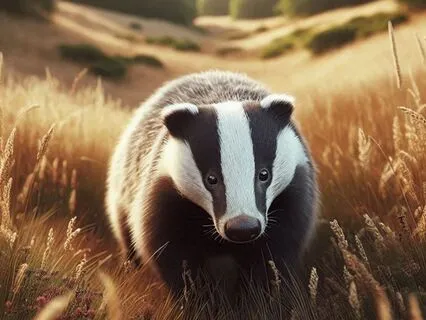
The Badger,
Who wore a long dressing gown and whose slippers were indeed very down a teal,
Carried a flat candlestick in his paw,
And had probably been on his way to bed when their summons sounded.
He looked kindly down on them,
And patted both their heads.
This is not the sort of night for small animals to be out,
He said paternally.
I'm afraid you've been up to some of your pranks again,
Ratty.
But come along,
Come into the kitchen.
There's a first-rate fire there,
And supper,
And everything.
He shuffled on in front of them,
Carrying the light,
And they followed him,
Nudging each other in an anticipating sort of way,
Down a long,
Gloomy,
And to tell the truth,
Decidedly shabby passage,
Into a sort of central hall,
Out of which they could dimly see other long tunnel-like passages branching,
Passages mysterious and without apparent end.
But there were doors in the hall as well,
Stout,
Open,
Comfortable-looking doors.
One of these,
The Badger flung open,
And at once they found themselves in all the glow and warmth of a large fire-lit kitchen.
The floor was well-worn red brick,
And on the wide half burnt a fire of logs between two attractive chimney corners,
Tucked away in the wall,
Well out of any suspicion of draught.
A couple of high-backed settles,
Facing each other on either side of the fire,
Gave further sitting accommodation for the sociably disposed.
In the middle of the room stood a long table of plain boards placed on trestles,
With benches down each side.
At one end of it,
Where an armchair stood,
Pushed back,
Were spread the remains of Badger's plain but ample supper.
Rows of spotless plates winked from the shelves of the dresser at the far end of the room,
And from the rafters overhead hung hams,
Bundles of dried herbs,
Nets of onions,
And baskets of eggs.
It seemed a place where heroes could fitly feast after victory,
Where weary harvesters could line up in scores along the table,
And keep their harvest home with mirth and song,
Or where two or three friends of simple tastes could sit about as they pleased,
And eat,
And smoke,
And talk in comfort and contentment.
The ruddy brick floor smiled up at the smoky ceiling.
The oaken settles,
Shiny with long wear,
Exchanged cheerful glances with each other.
Plates on the dresser grinned at pots on the shelf,
And the merry firelight flickered and played over everything without distinction.
The kindly Badger thrust them down on a settle to toast themselves at the fire,
And bade them remove their wet coats and boots.
Then he fetched some dressing gowns and slippers,
And himself bathed the mole's shin with warm water,
And mended the cut with sticking plaster,
Till the whole thing was just as good as new,
If not better.
In the embracing light and warmth,
Warm and dry at last,
With weary legs propped up in front of them,
And a suggestive clink of plates being arranged on the table behind,
It seemed to the storm-driven animals,
Now in safe anchorage,
That the cold and trackless Wildwood,
Just left outside,
Was miles and miles away,
And all that they had suffered in it a half-forgotten dream.
When at last they were thoroughly toasted,
The Badger summoned them to the table,
Where he had been busy laying a repast.
They had felt pretty hungry before,
But when they actually saw at last the supper that was spread for them,
Really it seemed only a question of what they should attack first,
Where all was so attractive,
And whether the other things would obligingly wait for them till they had time to give them attention.
Conversation was impossible for a long time,
And when it was slowly resumed,
It was that regrettable sort of conversation that results from talking with your mouth full.
The Badger didn't mind that sort of thing at all,
Nor did he take any notice of elbows on the table,
Or everybody speaking at once.
As he didn't go into society himself,
He had got an idea that these things belonged to the things that didn't really matter.
We know,
Of course,
That he was wrong,
And took too narrow a view,
Because they do matter very much,
Though it would take too long to explain why.
He sat in his armchair at the head of the table,
And nodded gravely at intervals as the animals told their story,
And he didn't seem surprised or shocked at anything,
And he never said,
I told you so,
Or just what I always said,
Or remarked that they ought to have done such and such,
Or ought not to have done something else.
The Mole began to feel very friendly towards him.
When supper was really finished at last,
And each animal felt that his skin was now as tight as was decently safe,
And that by this time he didn't care a hang for anybody or anything,
They gathered around the glowing embers of the great wood fire,
And thought how jolly it was to be sitting up so late,
And so independent,
And so full,
And after they had chatted for a time about things in general,
The Badger said heartily,
Tell us the news from your part of the world,
How's old Toad going on?
Oh,
From bad to worse,
Said the Rat gravely,
While the Mole,
Cocked up on the settle,
And basking in the firelight,
His heels higher than his head,
Tried to look properly mournful.
Another smash-up only last week,
And a bad one.
You see,
He will insist on driving himself,
And he's hopelessly incapable.
If he'd only employ a decent,
Steady,
Well-trained animal,
Pay him good wages,
And leave everything to him,
He'd get on all right.
But no,
He's convinced he's a heaven-born driver,
And nobody can teach him anything,
And all the rest follows.
How many has he had?
Inquired the Badger gloomily.
Smashes,
Or machines?
Asked the Rat.
Oh well,
After all,
It's the same thing with Toad.
This is the seventh.
As for the others,
You know that coach house of his?
Well,
It's piled up,
Literally piled up to the roof,
With fragments of motor cars,
That accounts for the other six.
So far as they can be accounted for.
He's been in hospital three times,
Put in the mole,
And as for the fines he's had to pay,
It's simply awful to think of.
Yes,
And that's part of the trouble,
Continued the Rat.
Toad's rich,
We all know,
But he's not a millionaire,
And he's a hopelessly bad driver,
And quite regardless of law and order.
Killed,
Or ruined,
It's got to be one of the two things,
Sooner or later.
Badger,
We're his friends,
Wouldn't we to do something?
The Badger went through a bit of hard thinking.
Now look here,
He said at last,
Rather severely.
Of course,
You know I can't do anything now.
His two friends are centred,
Quite understanding his point.
No animal,
According to the rules of animal etiquette,
Is ever expected to do anything strenuous or heroic,
Or even moderately active during the off-season of winter.
All are sleepy,
Some actually asleep.
All are weather-bound,
More or less,
And all are resting from arduous days and nights,
During which every muscle in them has been severely tested,
And every energy kept at full stretch.
Very well then,
Continued the Badger,
But when once the year has really turned,
And the nights are shorter,
And halfway through them one rouses and feels fidgety,
And wanting to be up and doing by sunrise,
If not before,
You know.
Both animals nodded gravely,
They knew.
Well then,
Went on the Badger,
We,
That is,
You and me,
And our friend the Mole here,
Will take Toad seriously in hand.
We'll stand no nonsense whatsoever.
We'll bring him back to reason,
By force,
If needs be.
We'll make him be a sensible Toad.
Well,
You're asleep,
Rat.
Not me,
Said the Rat,
Waking up with a jerk.
He's been asleep two or three times since supper,
Said the Mole,
Laughing.
He himself was feeling quite wakeful,
And even lively,
Though he didn't know why.
The reason was,
Of course,
That he,
Being naturally an underground animal by birth and breeding,
The situation of Badger's house exactly suited him,
And made him feel at home,
While the Rat,
Who slept every night in a bedroom,
The windows of which opened on a breezy river,
Naturally felt the atmosphere still and oppressive.
Well,
It's time we were all in bed,
Said the Badger,
Getting up and fetching flat candlesticks.
Come along,
You two,
And I'll show you to your quarters,
And take your time tomorrow morning,
Breakfast at any hour you please.
He conducted the two animals to a long room that seemed half bedchamber and half loft.
The Badger's winter stalls,
Which indeed were visible everywhere,
Took up half the room.
Piles of apples,
Turnips and potatoes,
Baskets full of nuts and jars of honey.
But the two little white beds on the remainder of the floor looked soft and inviting,
And the linen on them,
Though coarse,
Was clean and smelt beautifully of lavender,
And the Mole and the Water Rat,
Shaking off their garments in some 30 seconds,
Tumbled in between the sheets in great joy and contentment.
In accordance with the kindly Badger's injunctions,
The two tired animals came down to breakfast very late next morning,
And found a bright fire burning in the kitchen,
And two young hedgehogs sitting on a bench at the table,
Eating oatmeal porridge out of wooden bowls.
The hedgehogs dropped their spoons,
Rose to their feet,
And ducked their heads respectfully as the two entered.
There,
Sit down,
Sit down,
Said the Rat pleasantly,
And go on with your porridge.
Where have you youngsters come from?
Lost your way in the snow,
I suppose?
Yes,
Please,
Sir,
Said the elder of the two hedgehogs respectfully.
Me and little Billy here,
We was trying to find our way to school.
Mother would have us go.
Was the weather ever so,
And,
Of course,
We lost ourselves,
Sir,
And Billy,
He got frightened and took and cried,
Being young and faint-hearted,
And at last we happened up against Mr.
Badger's back door,
And made so bold as to knock,
Sir,
For Mr.
Badger,
He's a kind-hearted gentleman,
As everyone knows.
I understand,
Said the Rat,
Cutting himself some rashers from a side of bacon,
While the Mole dropped some eggs into a saucepan.
And what's the weather like outside?
You needn't,
Sir,
Me quite so much,
He added.
Oh,
Terrible bad,
Sir,
Terrible deep the snow is,
Said the Hedgehog.
No getting out for the likes of you gentlemen today.
Where's Mr.
Badger,
Inquired the Mole,
As he warmed the coffee pot before the fire.
The master's gone into his study,
Sir,
Replied the Hedgehog,
And he said as how he was going to be particular busy this morning,
And on no account was he to be disturbed.
This explanation,
Of course,
Was thoroughly understood by everyone present.
The fact is,
As already set forth,
When you live a life of intense activity for six months in the year,
And of comparative or actual somnolence for the other six,
During the latter period,
You cannot be continually pleading sleepiness when there are people about,
Or things to be done.
The excuse gets monotonous.
The animals well knew that Badger,
Having eaten a hearty breakfast,
Had retired to his study,
Settled himself in an armed chair,
With his legs up on another,
And a red cotton handkerchief over his face,
And was being busy in the usual way at this time of year.
The front doorbell clanged loudly,
And the Rat,
Who was very greasy with buttered toast,
Sent Billy,
The smaller Hedgehog,
To see who it might be.
There was a sound of much stamping in the hall,
And presently Billy returned in front of the Otter,
Who threw himself on the Rat,
With an embrace and a shout of affectionate greeting.
Get off,
Spluttered the Rat with his mouth full.
Thought I should find you here all right,
Said the Otter cheerfully.
They were all in a great state of alarm along Riverbank when I arrived this morning.
Rat never been home all night,
Nor Mole either.
Something dreadful must have happened,
They said,
And the snow had covered up all your tracks,
Of course.
But I knew that when people were in any fix,
They mostly went to Badger,
Or else Badger got to know of it somehow.
So I came straight off here,
Through the wildwood and the snow.
My,
It was fine,
Coming through the snow as the red sun was rising,
And showing against the black tree trunks.
As you went along in the stillness,
Every now and then,
Masses of snow slid off the branches suddenly,
With a flop,
Making you jump and run for cover.
Snow castles and snow caverns had sprung up out of nowhere in the night,
And snow bridges,
Terraces,
Ramparts,
I could have stayed and played with them for hours.
Here and there,
Great branches had fallen away by the sheer weight of the snow,
And robins perched and hopped on them in their perky,
Conceited way,
Just as if they had done it themselves.
A ragged string of wild geese passed overhead,
High in the grey sky,
And a few rooks whirled over the trees,
Inspected,
And flapped off homewards.
But I met no sensible being to ask the news of.
About halfway across,
I came on a rabbit,
Cleaning his silly face with his paws.
He was a pretty scared animal when I crept up behind him and placed a heavy forepaw on his shoulder.
I had to cuff his head once or twice to get any sense out of it at all.
At last,
I managed to extract from him that Mole had been seen in the wildwood last night,
By one of them.
It was the talk of the burrows,
He said,
How Mole,
Mr Rat's particular friend,
Was in a bad fix,
And they were up and out hunting,
And were chivvying him round and round.
Then why didn't any of you do something,
I asked?
You might be blessed with brains,
But there are hundreds and hundreds of you,
Big stout fellows,
Fat as butter,
And your burrows running in all directions,
And you could have taken him in and made him safe and comfortable,
Or tried to,
At all events.
What,
Us,
He merely said.
Do something.
Us rabbits.
So I cuffed him again and left him.
There was nothing else to be done.
At any rate,
I had learnt something.
And if I'd had the luck to meet any of them,
I'd have learnt something more,
Or they would.
Weren't you at all,
Er,
Nervous,
Asked the Mole,
Some of yesterday's terror,
Coming back to him at the mention of the wildwood?
Nervous?
The otter showed a gleaming set of strong white teeth as he laughed.
I'd give them nerves if any of them tried anything on with me.
Here,
Mole,
Fry me some slices of ham,
Like the good little chap you are.
I'm frightfully hungry,
And I've got any amount to say to Ratty here.
Haven't seen him for an age.
So the good-natured Mole,
Having cut some slices of ham,
Set the hedgehogs to fry it,
And returned to his own breakfast,
While the otter and the rat,
Their heads together,
Eagerly talked river-shop,
Which is long shop-talk that is endless,
Running on like the babbling river itself.
A plate of fried ham had just been cleared and sent back for more,
When the badger entered,
Yawning and rubbing his eyes,
And greeted them all in his quiet,
Simple way,
With kind enquiries for everyone.
It must be getting on for luncheon time,
He remarked to the otter.
Better stop and have it with us.
You must be hungry this cold morning.
Rather,
Replied the otter,
Winking at the Mole,
The sight of these greedy young hedgehogs stuffing themselves with fried ham makes me feel positively famished.
The hedgehogs,
Who were just beginning to feel hungry again after their porridge,
And after working so hard at their frying,
Looked timidly up at Mr Badger,
But were too shy to say anything.
Here,
You two youngsters be off home to your mother,
Said the badger kindly.
I'll send someone with you to show you the way.
You won't want any dinner today,
I'll be bound.
He gave them sixpence apiece and a pat on the head,
And they went off,
With much respectful swinging of caps and touching of forelocks.
Presently,
They all sat down to luncheon together.
The Mole found himself placed next to Mr Badger,
And as the other two were still deep in river gossip,
From which nothing could divert them,
He took the opportunity to tell Badger how comfortable and home-like it all felt to him.
Once well underground,
He said,
You know exactly where you are.
Nothing can happen to you,
And nothing can get at you.
You're entirely your own master,
And you don't have to consult anybody,
Or mind what they say.
Things go on all the same overhead,
And you let them,
And don't bother about them.
When you want to,
Up you go,
And there the things are waiting for you.
The badger simply beamed on him.
That's exactly what I say,
He replied.
There's no security,
Or peace and tranquility,
Except underground.
And then,
If your ideas get larger,
And you want to expand,
Why,
A dig and a scrape,
And there you are.
If you feel your house is a bit too big,
You stop up a hole or two,
And there you are again.
No builders,
No tradesmen,
No remarks passed on you by fellows looking over your wall,
And above all,
No weather.
Look at Rat now.
A couple of feet of flood water,
And he's got to move into hired lodgings.
Uncomfortable,
Inconveniently situated,
And horribly expensive.
Take Toad.
I say nothing against Toad Hall,
Quite the best house in these parts,
As a house.
But supposing a fire breaks out,
Where's Toad?
Supposing tiles are blown off,
Or walls sink,
Or crack,
Or windows get broken,
Where's Toad?
Supposing the rooms are draughty,
I hate a draught myself,
Where's Toad?
No,
Up and out of doors is good enough to roam about,
And get one's living in,
But underground,
To come to at last.
That's my idea of home.
The mole assented heartily,
And the badger in consequence got very friendly with him.
When lunch is over,
He said,
I'll take you all round this little place of mine.
I can see you'll appreciate it.
You understand what domestic architecture ought to be,
You do.
After luncheon,
Accordingly,
When the other two had settled themselves into the chimney corner,
And had started a heated argument on the subject of eels,
The badger lighted a lantern,
And bade the mole follow him.
Crossing the hall,
They passed down one of the principal tunnels,
And the wavering light of the lantern gave glimpses on either side of rooms both large and small,
Some mere cupboards,
Others nearly as broad and imposing as Toad's dining hall.
A narrow passage at right angles led them into another corridor,
And here the same thing was repeated.
The mole was staggered at the size,
The extent,
At the length of the dim passages,
The solid vaultings of the crammed store chambers,
The masonry everywhere,
The pillars,
The arches,
The pavements.
How on earth,
Badger,
He said at last,
Did you ever find time and strength to do all this?
It's astonishing.
Indeed,
Said the badger simply,
If I had done it,
But as a matter of fact I did none of it,
Only cleaned out the passages and chambers as far as I had need of them.
There's lots more of it all round about.
I see you don't understand,
And I must explain it to you.
Well,
Very long ago,
On the spot where Wildwood is now,
There was a city,
A city of people,
You know.
Here they lived and walked and talked and slept and carried on their business.
Here they stabled their horses and feasted.
From here they rode out to fight or drove out to trade.
They built to last,
But what has become of them all?
Asked the mole.
Who can tell?
Said the badger.
People come,
They stay for a while,
And they go.
It's their way.
There were badgers here,
I've been told,
Long before that same city ever came to be,
And now there are badgers here again.
We are an enduring lot,
And we may move out for a time,
But we wait and are patient,
And back we come,
And so it will ever be.
Well,
And when they went at last,
Those people,
Said the mole.
When they went,
Continued the badger,
The strong winds and persistent rains took the matter in hand,
Patiently,
Ceaselessly,
Year after year.
Perhaps we badgers too,
In our small way,
Helped a little,
Who knows?
It was all down,
Down,
Down,
Gradually,
Ruin and levelling and disappearance.
Then it was all up,
Up,
Up,
Gradually,
As seeds grew to saplings,
And saplings to forest trees,
And bramble and fern came creeping in to help.
Leaf mold rose and obliterated,
Streams in their winter freshets brought sand and soil to clog and to cover,
And in course of time our home was ready for us again,
And we moved in.
Up above us on the surface,
The same thing happened.
Animals arrived,
Liked the look of the place,
Took up their quarters,
Settled down,
Spread and flourished.
They didn't bother themselves about the past,
They never do,
They're too busy.
The place was a bit humpy and hillocky,
Naturally,
And full of holes,
But that was rather an advantage,
And they don't bother about the future either.
The future,
When perhaps the people will move in again,
For a time,
As may very well be.
The Wildwood is pretty well populated by now,
With all the usual lot,
Good,
Bad and indifferent.
I name no names.
It takes all sorts to make a world,
But I fancy you know something about them yourself by this time.
I do indeed,
Said the Mole,
With a slight shiver.
Very well,
Said the Badger,
Patting him on the shoulder.
It was your first experience of them,
You see.
They're not so bad,
Really,
And we must all live and let live,
But I'll pass the word round tomorrow,
And I think you'll have no further trouble.
Any friend of mine walks where he likes in this country,
Or I'll know the reason why.
When they got back to the kitchen again,
They found the Rat walking up and down,
Very restless.
The underground atmosphere was oppressing him,
And getting on his nerves,
And he seemed really to be afraid that the river would run away,
If he wasn't there to look after it.
So he had his overcoat on,
And his pistols.
Come along,
Mole,
He said anxiously,
As soon as he caught sight of them.
We must get off,
While it's daylight.
Don't want to spend another night in the wildwood again.
It'll be all right,
My fine fellow,
Said the Otter.
I'm coming along with you,
And I know every path blindfold,
And if there's a head that needs to be punched,
You can confidently rely upon me to punch it.
You really needn't fret,
Ratty,
Added the Badger placidly.
My passages run further than you think,
And I've bolt holes to the edge of the wood in several directions,
Though I don't care for everybody to know about them.
When you really have to go,
You shall leave by one of my shortcuts.
Meantime,
Make yourself easy,
And sit down again.
The Rat was nevertheless still anxious to be off and attend to his river,
So the Badger,
Taking up his lantern again,
Led the way along a damp and airless tunnel that wound and dipped,
Part vaulted,
Part hewn through solid rock,
For a weary distance that seemed to be miles.
At last,
Daylight began to show itself,
Confusedly,
Through tangled growth overhanging the mouth of the passage,
And the Badger,
Bidding them a hasty goodbye,
Pushed them hurriedly through the opening,
Made everything look as natural as possible again,
With creepers,
Brushwood,
And dead leaves,
And retreated.
They found themselves standing on the very edge of the wildwood,
Rocks and brambles and tree roots behind them,
Confusedly heaped and tangled,
In front a great space of quiet fields hemmed by lines of hedges black on the snow,
And far ahead a glint of the horizon.
The Otter,
As knowing all the paths,
Took charge of the party,
And they trailed out on a beeline for a distant stile.
Pausing there a moment,
And looking back,
They saw the whole mass of the wildwood,
Dense,
Menacing,
Compact,
Grimly set in vast white surroundings.
They turned and made swiftly for home,
For firelight and the familiar things it played on,
For the voice sounding cheerily outside their window,
Of the river that they knew and trusted in all its moods,
That never made them afraid with any amazement.
As he hurried along,
Eagerly anticipating the moment when he would be at home again,
Among the things he knew and liked,
The Mole saw clearly that he was an animal of tilled field and hedgerow,
Linked to the ploughed furrow,
The frequented pasture,
The lane of evening lingerings,
The cultivated garden plot.
For others the asperities,
The stubborn endurance,
Or the clash of actual conflict,
That went with nature in the rough,
He must be wise,
Must keep to the pleasant places in which his lines were laid,
And which held adventure enough,
In their way,
To last for a lifetime.
To be continued.