So welcome to the first talk.
Tonight's talk is called Mud and Beautiful Lotuses and it's about the Four Noble Truths and it's also about an introduction to the retreat space and what it means to come on a retreat.
So I know we talked a little bit about the retreat space earlier this afternoon and it is an interesting space.
I'm doing my first retreat about 45 years ago,
44 years ago.
My first retreat I was a teenager and I thought it was pretty weird,
You know,
Like people were being silent and kind of doing all these really strange activities and I'd be sitting there quite bored actually and other times lots of pain and all sorts of difficulties.
So there was a,
It was weird then,
Back then I noticed there was some sort of difficulty about it.
There was things happening that like kind of rubbing up,
Things rubbing together,
If that makes sense.
And I've done so many retreats since then,
Done an average of at least one retreat a year,
Sometimes long retreats.
There was a period where I was a monk for two years so that was virtually like a two-year retreat and there's always something interesting happen.
Even the last retreat I did was about,
Was in June,
I spent five weeks at a local monastery where I was sitting.
Yeah,
Something tricky.
Like on the last retreat,
There's something not quite right like the food was wrong or my posture was wrong,
Like I couldn't get a comfortable seat for example,
I couldn't find the right thing.
Something seemed to be always happening on retreats and sometimes it's minor,
Like worrying about what food I was going to eat or kind of getting into my neurotic habits.
On the last retreat,
Which was only a couple of months ago,
Just thinking about stuff,
Thinking about work or whatever it was that I was thinking about,
Just minor things,
There was something not quite right.
I noticed that this not quite right thing is what I was alluding to before.
I told you,
Dukkha,
Remember I spoke about Dukkha?
Dukkha starts to show its face basically.
I mentioned earlier this afternoon that going on retreats are times where we put aside what we're usually doing.
We're putting aside our usual habits,
We're doing something different,
We're stopping and we're looking at what's happening in our lives.
We're looking at what's happening in our mind and our bodies.
We're paying attention to the things that are coming up and also changing.
Retreats are really useful to give us that opportunity.
In the long run,
However,
It is like life is a retreat,
If that makes sense.
In terms of practice,
It's like we don't only practice on retreats,
We're just a wonderful opportunity to do that.
We start to generalize what we do on retreat to our day-to-day lives so that our life becomes a meditation practice,
If that makes sense.
Going back to this experience of Dukkha.
Dukkha technically is,
I can chant it,
But the translation of the chanting goes something like this.
The difficulties associated with birth,
Aging,
Sickness and death is Dukkha.
Pain,
Grief,
Lamentation and despair is Dukkha.
Pain here means emotional pain,
Not just physical pain,
But emotional pain that we all know how that we experience emotional pain.
Pain,
Grief,
Lamentation and despair is Dukkha.
Getting what we don't want,
Not getting what we want and in fact being parted from that which is dear to us is Dukkha.
This final one,
Which I'll spend a whole talk about on Friday night,
Some of you won't be here for that,
But it is clinging to a sense of self as lasting,
As an individual,
As not independent and as a solid entity.
Clinging to that very ego as a self,
As a lasting thing is Dukkha in and of itself.
So this experience of Dukkha shows itself.
Not always,
I mean I'm not making it sound like that retreats are just about Dukkha.
I mean often on retreats you have amazingly pleasant and blissful experiences.
Yet there is always in my experience and in the experience of most of my colleagues and friends and Sangha and students and so on,
Usually something happens.
Usually we rub up against something and it becomes a wonderful opportunity.
There was,
Many of you know that I'm a clinical psychologist and I've been working as a psychologist for nearly 30 years now.
I've had lots of good experiences.
There was one time when I once worked on Christmas Island with asylum seekers.
In the detention centres I used to run groups on mindfulness and loving kindness and equanimity and all sorts of different qualities.
Different people would come at different times,
Sometimes it would be just with the men,
Sometimes it would be families.
I used to ask,
I used to ask a question,
I used to ask what's wisdom?
Because I found that many years ago when I used to teach mindfulness,
In the first year I was teaching I used to tell people what wisdom was and it was so boring.
So meaningless to tell someone what wisdom is.
I found it so much more meaningful to hear what people had to say about wisdom.
Because people's lives are so rich,
Their unique understanding of wisdom is so wonderful to hear,
It's such an honour to hear.
I hope that as a principle I ask people what they think wisdom is.
On one occasion I was running a group and I was there,
There was about 60 people in the audience and some children as well and I asked what's wisdom and it was a group with Iranians.
So we asked this question and a lot of rich,
Elaborate descriptions of what wisdom was and there was one little girl who was about nine years old on the side putting up her hand and so the translator pointed her out and we asked her what she thought wisdom was and she said,
It's knowing what is good and knowing what is bad.
I thought that was really cool.
So we decided,
We had more discussion and we came to the conclusion that wisdom was knowing what is good and knowing what is bad and being able to act in ways that are helpful towards the good and not acting in ways that are harmful towards the bad.
So that was a pretty good understanding of wisdom.
So the next question would be,
How does one cultivate wisdom?
How does one cultivate this wisdom?
And is wisdom useful?
And they all have agreed it was useful.
It was all useful to free ourselves up from difficulty,
Free ourselves up from dukkha and so of course often you would usually come to the conclusion that one's experience was one way of developing wisdom.
And then we'd clarify that,
It wasn't just experience,
It was experience viewed in a particular way or understood in a particular way,
Understood with clarity and wisdom basically.
Life understood in a way where we're seeing the cause-effect relationships between things and we're understanding the nature of experience.
So then when I ask how does one cultivate wisdom,
We'd end up coming back to the conclusion of we cultivate wisdom with a focused attention and mindfulness,
Which I'll talk more about tomorrow.
So then I would ask another question.
I would say,
Has anybody known anybody who is really wise that hasn't had difficult experience?
Has anybody known anybody that seems to emanate this strong wisdom quality who has not had difficult experience in their lives?
And they would all say,
No.
Everyone that we know who is wise,
Those ones we call wise,
Have had very difficult experience.
And it seems to roll out that the more difficult the experience we have and we overcome it or we work through it,
The more wisdom we may have.
It's kind of pointing to a principle and that's been my experience too.
It's hard when we're in the middle of it to see the silver lining on our dark clouds.
And I'm talking about something that we teach in Mindful Self-Compassion,
There's a silver lining exercise.
It's about thinking back to experiences in the past that at the time were really difficult.
But once we've overcome it,
Once we work through it,
Do we see that there's been some redeeming features about that difficult experience?
In fact,
We've grown from it.
So when we can look at experience with an open heart,
With clarity,
With awareness,
With courage,
Courageously looking at our experience,
When we can look at it,
Those difficult experiences become transformative.
They transform to wisdom and ultimately to freedom.
So this whole transformation is described in the Four Noble Truths.
In fact,
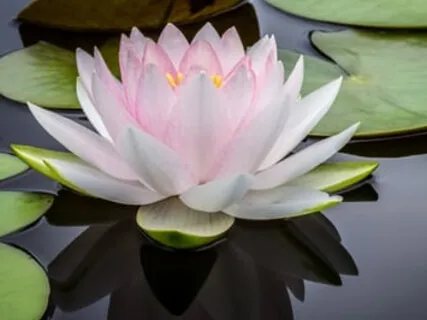
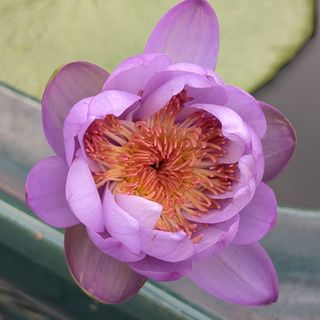
A symbol of the Four Noble Truths is the mud and the lotus.
People have heard about the mud and the lotus analogy.
The mud,
The lotus is a very beautiful flower.
Beautiful,
It rises up from the mud,
Moves through,
It comes,
Its origins are in the mud,
In the slime and the slush at the bottom of the pond,
The compost and all the crap.
And it rises up through the water,
Rises up through the water and then flowers as this most beautiful lotus facing the sun.
So the Four Noble Truths and in fact Buddhism in general,
Often the symbol of it is the lotus because from difficult things,
Difficult experiences,
Something beautiful grows.
So when we come on retreats and we stop and we look and we kind of hang in there with our neurosis,
Again I'm thinking about a couple of months ago,
I was just going backwards and forwards,
I was making sure I had enough shirts to last me and did I have enough tooth pastes and I was planting my food,
I was feeding myself,
I was cooking for myself,
I was planting my meals like three weeks ahead.
It was my neurotic mind,
My insecure mind just going through whatever it did.
Every now and then I could stop and say,
There it is,
That's Dukkha,
It's my own neurosis,
I could face it,
I could come face to face with it and see it for what it is.
So that's this process,
That's this principle of mud and lotus.
It's the principle of being able to use our difficult experiences because they become blatantly obvious,
Use our difficult experiences in a transformative way so that we become enlightened or awakened.
So this is what the Four Noble Truths talk about.
In essence,
Or maybe I'll tell you a bit of a story before I talk to you directly about what the Four Noble Truths are.
The story is of the Buddha and the Buddha's first discourse.
So you probably all know the story of the Buddha,
How he was born as a prince and he lived a life of luxury.
He lived in Northern India about 2600 years ago and he was protected from seeing the difficulties of life.
He was given every pleasure he could want,
Lots of luxuries.
Then it came about,
I mean they say he didn't see any of this but I think in reality he probably had the opportunity to be completely exposed to some realities of life.
He saw an old person.
They say in the stories,
They say that everyone in the palace was replaced whenever they got old.
I don't know how true that is but in this case he had the insight into aging.
He thought wow,
Look at that,
What's happening there?
His charioteer,
Chana,
Said to him oh that's aging sir,
That's what happens.
We all subject to this?
Yes we are.
We're all subject to aging.
So this was really stirring him up.
Then he went out again or he was exposed again to illness.
He saw someone who was really stricken with severe illness and he realised yes this is the nature of it.
I'm also subject to this.
And on the third time he went out and he saw a corpse and it was really came home to him that he was also all being subject to aging,
Sickness and death.
Everything changes,
Even the microphones.
On the fourth occasion he went out,
He saw an ascetic,
He saw a seeker and he realised that he wanted to find a resolution for this,
These issues of aging,
Sickness and death.
The general dukkha of life,
He realised that life was dukkha,
So he wanted to have a resolution.
So he eventually left home,
Left his luxury,
Practised with some prominent teachers at the time and then surrendered to become an ascetic in the forest and he practised self-mortification.
The extremes of self-denial,
The extremes of denial of any bodily pleasure and so on.
And he just practised and practised and practised.
While he was practising,
There were five ascetics that followed him around because they thought he was pretty determined and pretty wise and so on.
They followed him around waiting for him to wake up.
But the more he practised,
The more he realised that it wasn't working.
And he eventually stopped that self-mortification and he partook in some good nourishing meal and he started to sit comfortably and he realised that he had to nourish his body in order to make any progress.
And he actually remembered,
Actually not that time,
At that time these five ascetics abandoned him.
They thought oh this guy is going down the path of self-indulgence,
So we'll leave him.
So they left him,
They went off somewhere else and the Buddha continued to practise.
And he thought about,
He remembered a time when he was a young boy in his father's fields,
Sitting under a rose-apple tree and he just slipped into a very concentrated state of mind.
And it was quite useful,
It was a really pleasant state of mind.
He didn't stop thinking but he was in this,
What's called the first Jhana.
And he realised,
The Buddha as a 35 year old now,
Realised that this could be a possibility,
This could be a way of moving through and seeking enlightenment.
It is not to be afraid of pleasure but to embrace pleasure as a way of seeing clearly.
So he did that and then he went through,
Obviously he went through a whole bunch of things on the night of his enlightenment and then he was awakened,
He became a Buddha.
At first he thought nobody will understand this,
Nobody will get this profound realisation I've had.
So he just hung out in the place where he was enlightened and went to a couple of different places around the same area in the vicinity.
And he kept thinking well,
I'll just sit here,
Nobody will understand these realisations that I've made,
Or I've had.
And so it's said that one of the kings of the devas,
I mean this is the myth,
Heard his thoughts saying that nobody else will get it.
And this king of the devas,
Devas are like angels,
Angelic beings,
Came to him and said,
No some beings have only little dust in their eyes and they can see what you're talking about if you go and see them.
So he then realised yes,
Perhaps there are.
So motivated by compassion,
He surveyed with his mind the world and who may understand this and he realised those five aesthetics could understand it.
So he set out in stages to find them.
He realised that they were up in Benares and he was near Bodh Gaya,
What's currently known as Bodh Gaya.
So he set out in stages to walk towards where these five aesthetics were.
He met some people on the way and maybe that's a story from another time,
But eventually as he approached these five aesthetics,
At first they said oh here comes Gotama,
Let's not pay respects to him because he's gone down the path of indulgence.
And they weren't going to pay many respects,
But they couldn't resist it,
They couldn't stop their feelings of noticing his brightness and his awakening.
And they made paid respects to him and pulled up a chair,
Not a chair,
A seat,
Made a seat ready,
Took his robe,
Gave him some water and so on.
So the Buddha started to tell them that he had realised these truths,
That he had realised freedom,
He'd found a way to be free from dukkha and they didn't believe him.
They said no,
No,
No,
You're gone down the path of self-indulgence,
How could you be awakened?
Finally he said,
In all the time you've known me,
Have I ever told you a lie?
Have I ever told you something that's not true?
They said no.
So they listened.
And he expounded the dharma,
He expounded the truth.
This is what he said.
He said the path is one of not extremes,
It's not a path of extremes,
It's neither one of indulgence nor is it one of self-modification.
It's not one of self-denial,
It's down the middle.
So it's not extremes in any direction.
Then he said,
These are the four truths,
This is what I've realised,
That there is dukkha,
There is dukkha,
That's the first truth.
This is the reality of,
This is a reality of life.
It's not the whole of reality,
But it's a truth.
It's something that we can't deny really.
If you ask yourself right now,
Are you perfectly happy?
Anybody perfectly happy?
Are you,
Is your life,
Do you experience dukkha in your life?
It's a reality,
It's what's happening.
This is the reality,
Birth,
Ageing,
Sickness and death,
Pain,
Grief,
Lamentation and despair.
Not getting what we want,
Not getting what we don't want,
Being part of what we like.
In fact clinging to a sense of self,
Clinging to an ego as lasting and lasting forever,
Solid.
Then he said,
The second truth is the origins of suffering,
Or the origins of dukkha.
In essence the origins of dukkha as the Buddha explained it,
Are greed,
Ignorance and hatred.
To be honest the Buddha said,
Craving is the origins of suffering.
And I'll give a talk on that on Thursday night,
Craving.
But in essence what that boils down to is when we cling to things,
When we cling to pleasant experience,
When we grasp after and cling to pleasant experiences,
That with our addictions,
That's an origin of suffering.
When we reject experiences,
Condemn experiences,
When we push them away with hatred,
That's an origin of suffering.
And when we don't see things clearly,
When we're kind of confused about the way things are,
Seeing them in a way that's not in line with the reality of things,
That's also a cause of suffering,
Cause of dukkha.
So greed,
Ignorance and hatred.
Actually to clarify this a little bit more,
And I'm going to give a whole talk on this on Thursday night as well,
There was a principle that he talked about,
A principle of dependent arising.
And this principle is pretty complicated,
But simply it goes like this,
When this is,
That is,
When this is not,
That is not.
So the four truths could be thought about like this.
So we have,
When there is a cause for suffering,
There is suffering.
When there's a cause for dukkha,
There is dukkha.
When we have greed,
Ignorance and hatred still in our hearts,
Then that's a cause for suffering.
When we don't have the cause for suffering,
We have freedom.
When we no longer have greed,
Ignorance and hatred manifesting,
We no longer have suffering.
So the third truth,
The third truth is usually called Nibbana or Nirvana,
Is freedom from suffering,
The possibility to be free and freedom.
So when we're no longer feeding into our suffering,
When we've uprooted the tendencies towards addictions,
Towards grasping after,
Towards clinging to pleasant experiences,
Towards rejection and condemnation and avoidance and aversion to unpleasant experiences,
When we need to,
I know that there's obviously,
There's a need for us to be averse to some experiences obviously.
And when we can see things clearly for what they are,
When we see ourselves and our lives and experience in general as it really is,
Such as when we see its impermanence for example,
Then we are free.
So that's the third truth.
And the fourth truth is a way to freedom,
A path to freedom.
The fourth truth actually describes two cause-effect relationships,
Suffering and its causes or dukkha and its causes and freedom from dukkha and its causes.
So freedom from dukkha is Nibbana or Nibbana and I'd also like to say that there's various levels of this at a relative level.
To the extent that we grasp onto something,
Like the way we'd like to have a retreat run out,
We're clinging onto that.
To the extent that we cling onto that,
We'll be destined to have unhappiness.
If we can let go of clinging onto any,
Even something little,
Then we can be,
Have more possibility to be free.
So actually there's a,
Some of you have heard this before,
But when I was in Thailand talking about clinging,
There was an old Buddha smoke I was talking to and he picked up a little toothpick and he said,
You know,
The tighter you hold it,
The more pain it is,
Even something little.
You know,
Hold it tightly and it causes pain.
Let it go,
No pain.
That's it.
So he described it as simply a fad.
So the fourth truth,
The path of freedom is generally known as the eight four paths.
Right view,
Right intention,
Right speech,
Right action,
Right livelihood,
Right effort,
Right mindfulness and right concentration.
So I'll go into details about that more tomorrow.
But this eight four path,
The way it's described is as a way of practice.
It's basically it's wisdom,
Right view and right intention.
It is ethics or behaviours,
Right speech,
Right action,
Right livelihood,
It is meditation,
Right mindfulness,
Right effort,
Right mindfulness and right concentration.
These eight components,
Which,
Sorry,
These three components,
But they're eight factors together provide a way that we can live our freedom.
They provide a way of us moving and transforming suffering into something that's liberated from suffering.
So that was,
You know,
The Buddha first talked about it being the middle way.
Then he talked about it being,
You know,
These four truths like dukkha,
Freedom from dukkha,
Sorry,
Dukkha,
Origins of dukkha,
Freedom from dukkha and the way to be free.
What's really cool that I find is that he then went on to say,
Talk about these four truths as a sequence.
He described the four truths almost in terms of tasks to be done.
So in relationship to dukkha,
In relationship to our difficulty,
He said it is to be understood.
When we can understand dukkha,
Then that opens up our understanding for the causes of dukkha.
So when we can understand dukkha,
We're in a position to have insight into the second truth,
The causes of dukkha.
The task of the causes of dukkha are to release it,
To see the causes of dukkha and just release it.
Does this make sense so far?
When we release it,
When we release the causes of dukkha,
When we let them go,
That gives rise to freedom from dukkha.
The task of the third truth being freedom from dukkha is to realise it,
To experience it,
To manifest it,
To acknowledge it,
To see this is a moment of freedom,
This is freedom.
And that gives way for us to live the life of our awakening.
The eightfold path here becomes the way we live our freedom.
The task of the fourth truth being the path is to develop it.
So for me,
That's a demonstration of mud and lotus,
That those tasks is a demonstration of something rising out of the mud,
Rising from the difficulties of experience to be transformed into something that's free.
Is that enlightening for you?
If you were like the five aesthetics,
They would have gone,
The five aesthetics went fantastic.
I'm enlightened now.
Well,
Actually,
Some of them were then and then it took a few more days or something for the rest of them to become enlightened,
But they became the first followers of the Buddha.
They become the Sankar.
And I mean,
There's lots of things that happened from that.
But I guess the point that I'm making tonight and I just,
You know,
I won't be,
I don't want to go on for too long.
But the point is that when we come to a retreat,
We're doing something different.
We're giving ourselves the opportunity to transform whatever book we're experiencing into freedom.
And it is like,
It is like a lotus growing up from the mud,
To the extent that we can turn towards our difficulty with an open heart,
With a kind of a spirit of inquiry,
With a focused attention so we can see clearly with courage.
To that extent,
We can see the possibility of freedom in it.
And it becomes like,
You know,
The grit and the oyster.
Or that's another analogy of this.
But I don't think they had oysters in the Buddhist time.
But the grit and the oyster,
It's like something a little irritating can develop into something quite beautiful.
Some of us are new and some of us are old veterans at retreats.
And I've been,
I've been doing it for a while.
But I hope you're realizing that we're always beginners.
There's a saying,
Shunroy Suzuki,
An old Zen master,
He talks about something like Zen mind,
Beginner's mind.
In the beginner's mind,
There's many possibilities.
In the experts,
In the experts,
There are few.
It's that beginner's mind that is that mind that is open to every new moment as a new moment.
If we think we're an expert,
Then we're closing off from possibilities.
So for those of you who haven't been on a retreat before,
We're all in it together.
We're all doing this thing for the first time.
It's a new experience.
And it's a,
It could be like a grit and the oyster.
Could be a beautiful pearl.
It could be just blissful all the way through.
Either way,
I think I trust that it will lead to some sort of enlightenment,
Some form of enlightenment.
Let's finish it at that.
And we'll have a few moments of quiet.
And then I'll open it up for questions or comments.