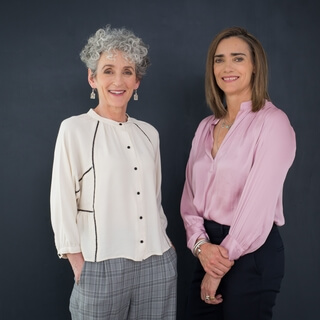
So previously,
We've talked about why strengths are important for leadership.
And today we're going to get into the really practical stuff and talk about strategies.
So,
Denise,
How should a leader get started on strengths-based leadership?
What are the fundamentals here?
Well,
You and I always say you've got to start with yourself.
Yeah.
So the first thing is to know your own strengths.
And there are lots of ways of doing that.
You and I,
Lucy,
Have been working with strengths for a long time.
And people might be familiar with CliftonStrengthsFinder,
Which is used globally.
One of the first workplace ones.
Alex Lindley's strengths profile coming out of the UK.
There's also Mapo de Talentos in Brazil.
There's the VIA,
The Values in Action,
Coming out of the University of Pennsylvania.
And the VIA Institute.
So there's a lot of ways to access it.
What's your favorite in terms of process?
So I think this is a really interesting question just to get us started on,
Isn't it?
Firstly,
I don't think that you and I really have favorites.
There is definitely a purpose for the VIA Strengths Survey because it's free.
And it just talks about character strengths,
Meaning that it's a pretty basic intro.
And you don't have to decode the language,
Such as woo,
That you do from CliftonStrengths,
For instance.
So I like it for that.
But then I also love the fact that these workplace tools,
Such as strengths profile and Clifton,
Are so valuable at work.
But we,
You and I,
Both know,
I'm going to ask you which is your favorite or what you think.
But we also know that the really important thing here is not just to do the Strengths Survey and then put them in the bottom drawer and forget about them.
So what's your favorite and what's the next steps,
Denise?
Honestly,
I'm asked this all the time.
And as part of my research,
I have really dug into the underpinning foundations and principles behind these surveys and these tools.
And really what it comes down to is being really clear what the tool is for and whether or not it fits your context,
Your purpose and your people.
And that's,
You know,
Is the language going to be easily used?
Is it going to lend itself to your context?
If it's about workplace,
Then really,
I know some workplaces that have struggled to use the VIA.
They've also managed to use it beautifully in the U.
S.
Army.
So it really is.
It really depends on your people and what they will,
What will fit for them.
In terms of how you do it,
There are online surveys.
There's paper and pencil or not so relevant here,
But very relevant for parents working with small children.
I always say,
Oh,
Please do not make a small child do an online survey observation.
And in the hands of a good manager,
Observation,
Otherwise known as strength spotting,
Is a really powerful tool to notice what's right.
OK,
So give me an example of what strength spotting.
That's obviously one of the key strategies that we can use to build our strengths based leadership.
What do you mean by strength spotting?
And can you give us just a quick example?
Yeah,
I think I think this is a fundamental skill.
Strength spotting is being able to notice other people's strengths,
To notice what other people are doing right and what it is that's leading to this behavior.
Is it strategic thinking?
Is it kindness?
Is it having a legacy?
Are they driven by mission?
Humour.
Yeah,
Humour.
And what I would say,
There's a couple of things that are really important to bear in mind here.
One is you're not the final arbiter of someone's strengths.
It's always good to ask a question.
I noticed you do X.
I noticed that you're really able to resolve conflict in the team.
Is being a mediator a strength of yours?
Or,
And they might say,
No,
Actually,
It's teamwork.
Let the other person name,
Label and own their own strengths.
However,
If all we do is an online survey,
And as you say,
Put it in the drawer,
Strengths is dead in the water in your organization.
What really matters is the skill of strength spotting and the strength spotting scale developed by Alex Lindley is really helpful because it talks about what's your skill in strength spotting?
What's your motivation to do it?
How often do you do it?
And do you get a buzz from it?
And how do you apply what you notice?
So I think it's a useful tool for a leader to look at to go,
Well,
You know,
You might find in the beginning you don't do it that often.
If you're not confident,
You probably don't get a buzz.
And some people are really good at noticing,
But not saying.
And I love that for so many leaders,
It gives them the accountability that they are so familiar with and really desire.
So it works in that way,
Too.
So if we come back for a second to like the leader who's diving into this work,
Definitely the first place,
Know your own strengths,
Work on strength spotting in yourself.
And then being curious about things like where do you use your strengths at work?
Where do you not use them?
How does that map across to the work you do really well and the stuff you struggle with?
And then thinking about where are your biggest challenges and how could you use your strengths to work on weaknesses?
I always describe strengths as a portal through which you can go to develop weakness rather than working on weakness directly.
Yeah,
I really like that,
Too.
So you've got to know them and then you've got to work out how to use them.
Now,
In our work,
We also do a lot of drawing people's attention to the fact that sometimes we overuse them.
And that can have damaging consequences for ourselves and all of those who we are leading.
Can you tell us a bit more about that?
It's often described as the golden mean.
It's that thing of what does the strength look like when it's underused?
But what does it look like when it's overused?
Some of our sort of core strengths sometimes referred to as your top strengths or your signature strengths.
But really,
These strengths that you use all the time that don't have an off switch.
They are sometimes at risk of being overused because they're so second nature.
We don't not even know where we're using them.
So that is the kind of when your strength is kindness,
But you fall too easily into that people pleasing trap.
Completely like I was in a situation once some years ago where I realised you cannot solve this problem with kindness.
Put kindness back in your pocket and pull out leadership and courage and do the difficult stuff.
So dialing back,
Dialing up.
This is sometimes referred to as the key strength,
Really,
Of knowing when that you are the conductor of your own strengths orchestra.
And one of the big skills we learn is when to when to bring in,
When to quieten down,
When to amplify different strengths.
And I really like that.
For me,
The terminology around shadow signs of your strength is really powerful and reminds me that they can be misused and overused.
So what else in what is typical of strengths based leadership?
What are some of the other practical strategies a leader can learn?
So when a leader is familiar with their own strengths,
Yep,
You've got to get it out into your team.
And a really significant part of the work is building a shared language of strengths unless we have.
And this is why we people usually land on a particular classification or inventory,
Because it helps you build that shared language,
Which makes it easier for people to comment on other strengths,
To give feedback,
To draw attention to it.
Because let's face it,
We're not typically good at talking about strengths.
And actually,
We do know this from the research that some cultures are better than others.
Actually,
Generally,
If you find it hard,
Then having this shared language,
Doing everybody doing the same strength survey does really help us get over that hurdle,
Doesn't it?
And small caveat here.
It's really important in global organizations to be aware that different cultures have a different approach to noticing or celebrating their strengths.
If you are in a Pacific Island culture,
Korean,
You know,
There's that Korean expression,
The nail that stands up gets hammered down.
And I remember Chris Peterson,
Who developed the VIA,
Saying in America,
The nail that stands up gets its own TV show.
So it's being aware of your context.
And we have worked on appropriate ways to bring strengths in to cultural settings where a culture of humility means that talking about your own strengths is difficult.
There are ways around it,
But we need to be aware of it.
And we have found ways around it.
And actually,
I'm just going to give a quick shout out to you to say that is some of the most internationally leading work that I've seen you do.
And it is so important.
So let's remember that different cultures value and talk about and frame strengths differently.
Okay,
I was interrupting.
Getting to know,
I mean,
This is potentially an 18 month program relay.
Getting to know each other's strengths,
Having conversations about it.
And of course,
You don't just get to know each other's strengths,
You get to know each other,
Which,
As Jane Dutton is saying,
Is one of the really vital things that helps build psychological safety.
This is why strengths is a great way in to building psychological safety.
One of the strategies that have been really effective in the strengths coaching work I've done,
And in the teaching I've done,
Have been,
First of all,
Deliberately looking for strengths in the difficult client or colleague.
Especially before you go into a confronting work situation.
What is right about this person?
What's good about them?
Especially when you're going into it,
But even when it hijacks you and you're in that confronting situation,
Because it raises your empathy,
Doesn't it?
Being able to see that they've got other strengths.
And maybe they're different to you,
But you can see something from their perspective.
The other one that's always powerful is pairing up with someone whose strengths are your weaknesses and learning from each other.
For the strengths that I really have very little of,
That are my weaknesses,
I probably don't like them.
I probably find it hard to see them.
I probably don't value them.
And to sit with somebody for whom my weakness is a top strength and ask questions like,
Where does this fit in your life?
How do you use it?
How does it help you?
What does it mean to you?
Well,
A,
Help you value it more in your staff and B,
Make it more likely you'll recognize it in the wild when you see it.
And these are the fundamental competencies of the modern leader is that curiosity and that humility too,
To know that you don't know everything,
That other people's point of view might have some value.
OK,
So we're running out of time.
It's also about valuing diversity,
Equity and inclusion.
This is strengths.
Absolutely.
It's also,
You know,
So this is a fundamental way we get to really train ourselves to be more appreciative of diversity and to include it.
Yeah,
Totally agree.
So now you and I were talking earlier on today about the importance of routines for strengths.
Completely.
If everybody does,
You know,
Their strengths and then sticks it on a,
On a shelf,
Nothing happens.
And even if,
As a leader,
You talk about strengths at an annual review,
That's not going to cut it.
It's looking for ways we embed them in routines.
And I always think when you're actually executing,
You just need to do it.
You can't go meta on what strengths I'm using.
So the big opportunities to use strengths in routines are in planning and feedback and review.
If you can embed strengths in your planning,
It can really help short circuit some of the problems that may occur.
But also finding ways to embed it in daily meetings or reflections,
Progress reports,
Review meetings actually will make this thing come alive.
Perfect.
So let's move to thinking about what's the next level?
You know,
What is actually possible with strengths-based leadership?
Where does the motivated leader take this work?
And what we've seen is that when you have a team that knows each other's strengths,
Then you're in a position to begin strengths-based task allocation,
Complementary partnering for maximum effect,
And also to start looking and encouraging people to get involved in some role shaping or job recrafting,
As Rob Baker of the UK calls it,
To really allow people to begin to shape their roles and their contribution around what they do well.
It takes trust and knowledge of a team to be able to do that.
I love it.
I think that strengths-based task allocation,
And we've seen it time and again with our clients,
Haven't we,
Is a really powerful tool.
So in wrapping up,
Just before we close today,
Tell us about a time when you've seen this work and you've noticed the achievements,
The real results it has created.
So the assignments that I would set on the Master's programme produced really inspiring results.
The executives surprised even themselves with what they were able to do.
And I think actually that warrants a whole video or audio on case studies.
Let's come back and do a whole,
Yeah,
Another video on case studies.
Yes,
Sorry.
One that I would share is a billion dollar property development company.
The most significant benefit they got was strengths-based task allocation.
They literally reshaped their development process to include team members with strengths of prevention at the design phase,
Where this team member was previously in the execution phase and said,
I am mopping up mistakes I could have prevented.
Let me get into the design.
They moved it around and the buzz in the team of knowing they were going to save headaches really deliver a better service to clients.
But it also really enabled better team morale,
Information sharing and engagement.
So just a huge win-win at the personal level and at the team level and the results level.
Yeah,
I love that.
And if we know that drivers of burnout or prevention of burnout is having greater autonomy and having your contribution valued,
Then it makes sense that having task-based allocation leads to reduced potential for burnout,
Which,
Of course,
Is something that we all as leaders truly care about.
So summing up,
What do you want to say before we close today?
I think that,
You know,
I'm curious why strengths haven't been used as much as they could be.
And I think it's because the people pushing them have been pushing them as a kind of a one shop solution,
Rather than a strategic way in to address some of the pressing challenges we face like burnout,
Like building psychological safety,
Like engagement,
Like putting the right people in the right place to redesign,
To respond to challenge and change.
So I think using this as a tool to achieve the goals you need to achieve is really what strengths-based leadership can offer.
And for the individual leader out there who's listening,
Who says,
Well,
I don't have a big budget and it's just me.
The good news is this is you can start today knowing your own strengths and noticing them in the people around you.
It's copyright free,
Paper free,
Permission free.
You just get on,
Notice strengths in others and watch it impact your relationship with them and their morale and engagement.
Yeah,
With immediate results.
And that's why we love it.
So thank you for joining us today.
And we will be back with some more case studies to demonstrate how strengths-based leadership really can make all the difference for your own leadership and those that you are leading.
Thanks for joining us.