Hi,
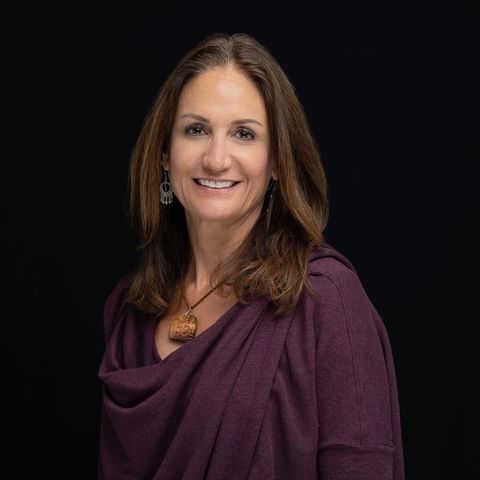
My name is Lisa and this is a brief tutorial of sort with a short practice at the end and the tutorial is about how to set the body up for breathing or meditation practices.
Many times folks in my yoga classes or even newer students to meditation will ask me how do I start out meditating at home?
Do I need to buy any new things or stuff?
So this short practice for today is a compilation of many things I've learned about setting up the body and I've learned them from my teachers,
From my own personal practice and my work with students.
And there's definitely a foundation to the posture in meditation that will serve the body and serve the mind.
This is not another self-improvement project that you must berate yourself for,
That you're not doing it right or it needs to be this way or that way.
And this isn't an intellectual or analytical activity either.
It's not something that you think your way through or that you pass or fail.
And just understanding that the practice is beginning again.
I'm just going through the experience and starting again.
And this brings us to presence.
And to begin I'm going to offer some tips for sitting in a chair.
As always there's choices in how to set up for meditation.
And there is no prize or extra points for sitting on the floor.
And the key is to be comfortable and aware of the body's needs,
Wherever it is,
Whatever is presenting at the moment.
The key is to keep energized and alert without straining.
And so to begin if you're in a chair the feet should be in contact with the floor.
And so if the feet are dangling off the floor,
Perhaps bringing some blocks or a pillow beneath the soles of the feet.
And then sensing the soles of the feet in contact.
And then turning the attention towards the hips and the pelvis,
Bringing stability to that area of the body.
We want to have that natural curve to the spine.
So perhaps elevating the pelvis slightly so that the hips are slightly turned,
They're slightly tipped forward.
And the hips higher than the knees,
Just slightly higher than the knees.
And this is important because you don't want the lower back to collapse or the front of the body to be compressed or slouched.
In the end,
If the front of the body is compressed or slouched,
It's constricting the diaphragm and prevents that free movement of the breath.
I mean if you're choosing to sit on the floor in a comfortable easy seat,
The knees should be in contact with the mat or a couple of blocks to support the knees if you're in a cross-legged position.
Perhaps blankets.
And the body to support the body to relax without tensing up and holding.
And so this can be this holding or gripping in the body.
And then turning towards the arms,
The weight of the arms.
And if the arms begin to feel heavy and they start pulling you down and you feel like your shoulders are rounding,
You can place your hands or your forearms on a blanket or on a pillow.
And then pulling the arms more towards the torso so that there's limited to no strain in the shoulder area.
And so working ourselves up from the ground,
The soles of the feet or the knees if you're in a cross-legged position are in contact with the mat.
The pelvis is stable,
Perhaps slightly elevated.
And so there's a natural curve to the spine.
The arms are pulled towards the torso so there's no strain in the shoulder area.
And then moving to the chin,
Bringing the chin parallel to the floor as best as you can.
And if your head gets tipped back,
You know,
We can have this tendency to kind of space out the neck constrain.
And then if the chin is tilted too forward and resting on the chest,
You may begin to feel sleepy.
And so to sense that energy and alertness,
I'm bringing that chin,
Slightly tucking it and bringing it parallel to the floor.
And so just sensing here the whole body supported.
You may have a habitual way of being in a seat or in a seated position.
So try to bring an elongation and extension to the spine.
Feel that head perched on the spine,
Crown of the head towards the sky,
And shoulders down and away from the ears.
And again,
If you're in a chair,
Just sense the slight tilt of the pelvis and the pelvis in contact with the cushion or the seat.
And now that we're set,
The body is set up for meditation.
Let's try this for a few breaths.
So beginning to arrive and settling into this comfortable shape and bringing comfort to the body.
And feeling relaxed,
Alert,
And energized,
Not stiff or rigid.
And crown of the head gently lifting towards the sky,
Releasing the jaw,
Slight separation of the teeth,
Allowing the tongue to rest heavy in the lower jaw,
Softening the throat,
Allowing the shoulders to settle in away from the ears,
Your hands resting comfortably,
Sensing the pelvis connecting with the earth,
Feet,
Legs supported and held by the mat or the chair.
Beginning to draw our attention to the breath as it moves through the body.
Taking a moment to slowly draw a deeper inhale through the nostrils,
And then inviting a gentle release of the breath through the mouth.
And a couple of soft and steady inhales through the nostrils,
And slow release through the mouth.
Inhale and exhale,
And then taking a moment to seal the lips.
Continue to breathe in and breathe out,
Just noticing.
Is the breath shallow?
Are there areas of tightness?
Any constrictions to the flow or movement of the breath?
Simply taking a moment here to become aware of the breath as it moves through the body on your inhalations and exhalations.
Inhale and exhale,
Inhale and exhale.
Releasing the shoulders,
Encouraging a softness in the belly as the navel rises and falls with the breath,
Sensing into the whole body breathing,
Bringing your hands together at heart center and self-connection,
Honoring yourself here.
This concludes our practice.