Welcome to Breakdown to Breakthrough,
The podcast that empowers you to transform your life by awakening to your true,
Authentic self.
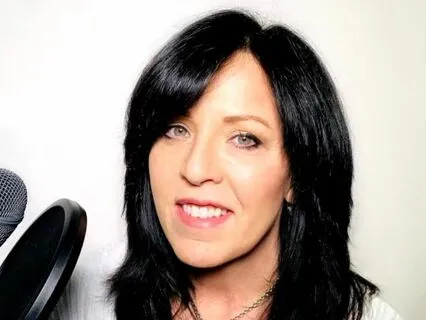
I'm Lisa A.
Romano,
Your host.
As an award-winning author and certified life coach,
I've dedicated my life to helping others understand the incredible power of an organized mind.
I believe that true empowerment begins with awakening to our false self.
My mission is to support you on your journey toward mental and emotional regeneration through conscious and deliberate awakening.
In this podcast,
I'll share insights,
Tools,
And transformative stories that illuminate the path to healing and self-discovery.
So codependency is described as a loss of selfhood.
When you are struggling with codependency,
You oftentimes focus on the needs of other people.
And this is a very human experience.
When we see people are in pain or we know that a loved one is struggling,
It's very natural when someone we love is hurting to want to do something to mitigate the pain that they're in.
The problem with codependency is that when we are struggling with codependency and the root causes of codependency,
We lose ourselves in helping other people.
We see other people struggling and we lose the boundary to self.
We end up enabling situations.
We end up denying our needs in situations.
And we end up being like puppets on the string.
We end up feeling like passengers in other people's lives.
And we don't even realize that we're entering into relationships without a healthy foundation for self.
We really don't answer the question and we don't have the answer to the question,
Who am I?
What do I think?
What do I feel?
And what do I need?
We do,
However,
Know what other people think.
We know what other people need.
But if you're codependent,
You have a very difficult time identifying your emotions and you certainly don't know how to express them in a healthy way.
So let's talk about some of the reasons you might be codependent.
Number one,
If you were raised by a narcissistic parent,
It's very likely that you may have developed codependency in your lifetime.
So codependency is seen as a coping strategy.
If you were emotionally neglected,
If your emotions were manipulated,
And if you were gaslighted as a child,
Then you didn't grow up feeling like who you were was valid.
In fact,
Who you were may have been consistently invalidated.
And as a result,
You don't have a healthy sense of self.
As an adult,
You may naturally pay attention to other people.
You might be naturally other focused.
Why?
Because a narcissistic parent demanded that you abandon the self and worry more about what they thought about you than what you thought about you.
It's impossible to please a narcissistic parent.
Narcissistic parents can live vicariously through their children and infuse the child with this idea that the child's life really is about satisfying the needs of the parent.
We see this in particular cultures where parents will force their child to go into a career.
The child doesn't want,
That's not a natural fit for the child.
And a narcissistic parent can really take on the belief that,
No,
It is your duty and your responsibility to do this for me because this is what I think you should do.
And if you don't do it,
You're not a dutiful son or you're not a dutiful daughter.
If you were raised by a narcissistic mother or you were raised by a narcissistic father,
You don't have a healthy sense of self.
You are living thinking that perhaps your entire life is about figuring out what other people need and you might be caught up trying to figure out how to be the version of you that other people want you to be to keep the peace.
Number two,
If you have suffered emotional abandon because of any reason,
If as a child your needs were not satisfied,
Your needs for feeling close to other people,
Your need for feeling safe,
Your need for feeling seen,
Your need for feeling understood,
Your need for feeling protected by the people that you loved.
If you grew up feeling like you were invisible,
I call it the disease of invisibility.
If you grew up feeling like no one saw you,
If you grew up feeling like an alien in your childhood home because the people that you love just did not connect with you or could not connect to you on an emotional level,
Then you may have experienced emotional abandonment,
Emotional neglect.
So those of us who grew up feeling emotionally neglected,
We have abandonment issues,
Then we struggle with the fear of abandonment in adult relationships.
So one of the ways that we compensate for that,
Although we're doing it at the subconscious level,
We end up focusing on the needs of other people.
We find ways to take care of other people.
And the subconscious belief is that if I can get you to need me,
And if I can prove to you that I'm worthy to keep around,
Love is conditional.
And if I can meet your demands,
Maybe then you'll love me.
Maybe then you won't leave me.
And so this is how codependency manifests in our relationships when emotional neglect and abandonment is at the core.
Another core reason for developing codependency in relationships later on in life is that you had overbearing or overprotective parents.
You had parents who taught you that it was unsafe to try new things.
You got the impression that you couldn't do things on your own,
That mommy and daddy had to monitor everything in your life.
And so overprotective parents,
Although they're coming from a good place,
Sometimes they do more damage than good.
If I was raised by a overprotective parent,
I'm insecure.
So now as an adult,
I might go out into the world and want someone else to make decisions for me.
I may even develop an anxious attachment style.
I may even develop anxiety and insecurity in a relationship and cope with it by being passive,
Taking care of my partner,
And hoping that my partner will make all the major decisions in our life because I don't feel adequate enough to take full responsibility for what I think,
For what I feel,
And what I want to take place in my life.
So sometimes when you have an overprotective and an overbearing parent,
That does more harm than good and can manifest as codependency later on in adult relationships.
Another reason that you can develop codependency is if you have the opposite situation.
You had parents who were underprotective.
You had parents that acted like they didn't care where you were at 4 a.
M.
In the morning.
You had parents that gave you the impression that you were not important to them,
That you were supposed to take care of yourself.
So no one was really interested in how your day was at school.
No one really wanted to know why you didn't eat that day or why you weren't hungry or why you had dark circles under your eye.
You just seem like a lot of aloof people or adults in your life that really weren't attuned to you as an emotional being.
It's almost like living with people who are robots and they really don't care whether you come or you go.
They're almost indifferent.
So when this happens,
Children grow up feeling very unsafe.
And it's not natural and it's not normal to live without boundaries.
Boundaries make you feel safe.
Children need to know there's a natural hierarchy.
There's someone in control.
There's a captain of the ship.
And when our parents are checked out,
When they are not doing their job as captaining of the ship,
When there's mayhem between the siblings,
When the bills aren't getting paid and electricity is getting cut off,
When our parents are irresponsible and their irresponsibility leads to an inability to actually be responsible for the children of the homes,
We can feel underprotected as if no one's in charge.
Now that will cause a child to grow up feeling like they have to protect themselves and that the world is a very unsafe place.
As it manifests in relationships,
When we are codependent and this is our issue,
We can develop very controlling behaviors.
So we end up resisting other people telling us what to do.
We want to take care of everything.
We want to control everything.
We don't know how to let people in and so we take control in the relationships.
So we will take care of a needy partner.
We will take care of a partner that's irresponsible.
We will enable our children because we want to feel in control.
So the lack of control that we had in childhood or the lack of control our parents had as we grew up,
The inability for them to take control over the family dynamics and make us feel safe,
Will actually manifest and can manifest as a need to control everything in our adult lives.
So codependence can be very controlling and this comes from a place of feeling unsafe.
We control our emotions by controlling other people,
By tending to them obsessively,
By ruminating about what other people need because how other people feel,
If other people start to feel unhappy or angry or upset,
That will make a codependent very unhappy.
And so how we mitigate this anxiety that we feel because other people are feeling out of control,
We try to control their anxiety and through controlling their behavior,
Which will help us control our anxiety as a result of them feeling anxious.
If you're codependent,
Your mood is very much dependent upon how other people feel.
And you will naturally by default,
Based on the subconscious programs that are keeping you stuck,
You will be affected by the moods of other people and do what you can to control them as a way to control how you feel and the powerlessness and the unsafe way that you feel below the veil of consciousness.
Another reason that you might struggle with codependency is because you may have been raised by alcoholics or people who struggled with an addiction.
When you come from a home whose parents are ravaged with addiction,
Unfortunately the home is unpredictable.
It's an unsafe place.
Unfortunately,
The needs of the children are going unmet.
When you have parents who are alcoholics,
Lots of things are happening that should not be happening.
In other words,
Like there's no consistency.
I don't know what's going to happen from day to day in order for me to feel safe in my own skin.
There has to be a predictable nature to my day as a child.
Why?
So that I can grow roots,
So that I can feel my feelings,
So that I know that I can go to mommy or daddy at any point in the day and say,
This is what I'm feeling.
But when you're raised by alcoholic parents,
That's just not the way it is.
Unfortunately,
What ends up happening is that you have to disown yourself and you have to pay attention to what's happening outside of you.
You have to know when mommy's drinking or when she's about to drink.
You have to know when daddy's about to lose it.
You have to know when the next argument is coming.
And so no,
You're not connected to the self.
And as a result,
You have to consistently look outside of yourself as a way to avoid future trauma.
And this is very destabilizing because you will end up feeling like you have to focus on other people just to stay safe.
And if you're codependent,
Think about the word codependent.
You are codependent on this idea of receiving a sense of safety outside of you.
And so you think that your safety is tied to what's happening outside of you,
When instead what should have happened is that you should have had such a healthy sense of self that as you grew,
Your sense of safety came from within,
Dear one.
It is not your fault.
A huge issue that we have when we're struggling with codependency is we don't feel safe.
And we are brainwashed to believe that the answer is outside of us.
We never receive that healthy attachment from the outside.
So this psychological milestone was never met.
This emotional milestone was never met.
And so at a subconscious level,
I'm constantly looking to attach to someone outside of me in order for me to feel safe.
And so if you grew up with alcoholic parents,
You do not feel safe.
You are not attuned to.
And as a result,
This lack of self is going to manifest as an identity issue.
I'm not good enough.
I'm not good enough to be loved.
Mommy never loved me.
It's my fault.
Mommy never loved me.
Children don't know it's not their fault that their parents have alcoholism.
All they know is that they weren't able to gain their mother or father's love.
And they assume responsibility for it.
So if you're codependent and you have alcoholic parents,
You have an identity issue.
Your self-concept is negative.
And you take that negative self-concept into adult relationships,
Although you don't know it.
It's happening at a subconscious level.
And so if you don't feel good enough and your life was never safe,
Then you think the answer is to be safe by taking care of other people,
By being hypervigilant.
And so that's what you will do.
You will cater to other people.
You will do everything that they want you to do.
You will anticipate their needs.
You will not take care of the self because you don't feel like yourself is worthy.
And you have no data for how to focus on the self and meet your needs because no one ever met your needs.
Another surprising reason that I've discovered that people develop codependency,
What happens when children are adopted.
Adoption is a very serious issue.
And it needs to be handled very delicately.
And it can work and it can result in very healthy adults who are going on to have amazing relationships.
We all know people,
I'm sure,
Who have been adopted and are doing just fine.
I think that's great.
But I've noticed in certain situations when children are adopted out and they are adopted by families that have problems.
For instance,
You could be adopted by a narcissistic mother,
Double whammy.
So you have the attachment issue,
The biological and chemical attachment abandonment issue from your biological mother.
And then on top of it,
You are not received well by this new adoptive person or the adoptive mother who may or may not be alcoholic or could be narcissistic or could have some other issue that is undiagnosed,
But it's manifesting in her inability to connect with you.
If you have been adopted out and you were adopted by a family that had emotional issues,
If they were a codependent family,
If you were adopted into a narcissistic family,
If you were adopted into a family that made you feel less than,
That didn't really navigate the adoption process well enough in order for you to feel like you were a member of this family and quite the opposite happened,
You were reminded that you weren't a member of the family.
Not every adoption is smooth.
Many adoptions don't land well at all.
And they end up with women and men feeling less than,
Not good enough.
And like I said,
It could feel like a double whammy because I was adopted out.
So it feels like my natural biological family didn't want me.
And now it feels like the family that I've been adopted into doesn't want me.
So where do I fit in?
So it feels like I am not good enough.
And what I do as a coping strategy is I try to figure out how to be good enough so that I don't get sent back home,
Or I don't get sent back to the adoption agency,
Or I don't get sent away from this family that I'm trying to fit in with.
So if you're trying to fit in with a new family,
That is going to give rise to you developing a coping strategy around avoiding further abandonment.
And so it's not uncommon if you were an adoptive child and the adoption process didn't go well,
Or if you ended up in a narcissistic family,
Or codependent family,
Or an alcoholic family,
A family that was dysfunctional.
Don't be surprised,
Dear one,
If you're presenting as someone who doesn't feel good about themselves,
Who tries to be good enough for men,
Or tries to be good enough for women,
And who is almost chameleon-like in relationships because you're trying to figure out what this other person needs you to be in order for you to feel safe within the relationship dynamics.
Another reason you can develop codependency is because you had a codependent mother,
Or you had a codependent father.
So codependency was modeled for you.
So let's say,
For argument's sake,
You had a codependent mother who rushed around to please your narcissistic father.
And in this dynamic,
What did you learn?
You learned that it's best to stuff your feelings.
You learned that it was unsafe to express yourself.
You learned that it was good to focus on the needs of someone else and to live your life trying to anticipate this person's needs.
You learned that boundaries weren't necessary.
You learned that boundaries were painful.
So if mom actually opened her mouth and she said something to dad,
And he huffed and he puffed and he slammed his fist on a table,
And then mom shut down,
You learned that boundaries equal pain.
So as an adult,
You don't know how to set a boundary,
And in fact,
Your brain is going to send you information that tells you or makes you feel like,
No,
Boundaries are bad.
Don't do that.
Bad things happen when you set a boundary.
And so below the veil of consciousness,
Pain versus pleasure is hijacking your ability to not be codependent.
So the codependent brain is a brain that's in survival.
It's a brain that's just trying to operate in a way that keeps you safe.
It's a brain that has been exposed to emotional rejection,
Emotional neglect.
It's a brain that's been exposed to feeling unpredictable,
Like your house was unpredictable.
It's a brain that's been exposed to feeling unsafe,
And your brain is simply trying to find a way to keep you safe.
And so these are some of the ways that you can develop codependency and some of the reasons why you are codependent in your relationships today.
The good news is that you don't have to live this way.
The good news is that there is help.
One of my sayings is that you cannot fix a hole in the wall that you cannot see.
When I was codependent,
The biggest issue was I didn't know it.
I had an operating system that was subconscious,
And I was living my life seeking approval.
I was living my life.
I didn't feel good enough.
I thought that my job was to make other people happy.
And somehow I thought that if I made you happy,
Somehow you'd be able to make me happy.
Now I look at it and I understand how illogical that thought process was,
But when you were living below the veil of consciousness,
You don't know it.
So that's what we're all doing.
Unless you are someone who is actually investigating what you think and how you think,
And unless you are really plucking out belief systems that limit you,
Unless you even understand what a dysfunctional thought is,
You are going to do what you've always done.
I was doomed while I was unconscious.
I was doomed as a codependent.
I was doomed to repeat my mother's life,
To repeat my grandmother's patterns.
I was doomed.
It could be no other way until I began to spiritually awaken,
Until I began to emotionally awaken,
Until I began to understand that the way that I was thinking was destructive.
It was absolutely reflexive.
It was not proactive.
Namaste,
Everybody.
Until next time,
I surely hope that this has been helpful.
Please know that you are enough,
But your subconscious mind and the programs that are in the subconscious mind might need help believing that that's true.