Welcome to the breakdown to breakthrough podcast.
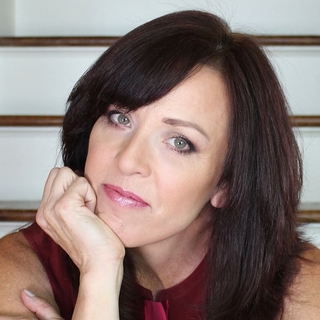
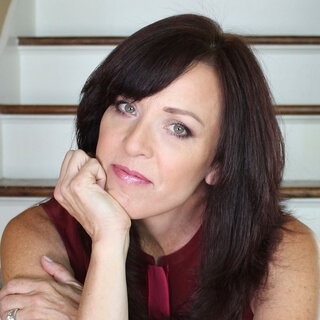
My name is Lisa A Romano.
I am a life coach,
Best-selling author,
YouTube vlogger,
Meditation teacher,
And expert in the field of codependency and narcissistic abuse.
I am a believer in the power of an organized mind.
My aim is to help people learn what it means to live above the veil of consciousness rather than living a reactive life.
May your heart feel blessed,
Your mind feel expanded,
And your spirit find hope as you spend time with me here at the breakdown to breakthrough podcast.
So today we're going to be talking about some of the characteristics of being the adult child of an alcoholic and why you should care.
So thank you for being here.
Thank you for learning.
Thank you for growing and thank you for wanting to open up your mind and learning more about you and how your childhood may have affected you in ways that you never realized.
If you were like me,
You were walking around on planet earth,
Maybe struggling with anxiety,
Maybe struggling with depression,
Maybe in a dysfunctional marriage,
Maybe struggling as a mom or a dad with how to set boundaries,
Maybe struggling in one negative relationship after the other,
Maybe struggling in a toxic family situation and unhappy at work and not knowing what the heck,
How to be happy and how many of us are walking around on planet earth this way every day and we aren't looking within.
And I know that that was my reality.
And I was shocked when it hit me that I was affected by my childhood and I had no clue.
So up until that point in my life,
I was married.
I had three small children.
I had a business,
I had a beautiful home and I was married.
I was in a family.
I was never happy in my family,
But I never thought that my family dynamics were the issue as much as I thought,
Well,
My family doesn't like me.
We don't get along.
I guess I have to accept this and maybe I'm just always going to be the misfit.
Maybe I'm always going to be misunderstood and misinterpreted.
And I guess this is just the way it is.
But below the surface,
I was angry.
I was frustrated.
I was terribly,
Terribly sad.
I was very lonely in my relationship with my siblings.
I felt unlovable and unworthy of my parents' affection or acceptance.
And I was struggling inside my relationship with my ex-husband.
I didn't know what I had a right to ask for,
What I had a right to need,
What I had a right to express or what I had a right to feel.
And I had all of these emotional issues and it wasn't like I wasn't asking for help.
I had been to four or five therapists,
None of which ever asked me about my childhood until the last therapist that I started going to,
Which I credit with really turning my life around,
Telling me like it was,
At least at the time,
The best that he could and really telling me straight,
Like,
Look,
Kid,
You're messed up and you better start looking at why and who happened to you and what happened to you.
And that was a super,
Super awakening because I had grown up like many of you,
Feeling like I had no right to look at my boo-boos.
I had grown up feeling like my emotions were irrelevant.
I had grown up feeling like I had no right to say that I was in pain.
You know,
The way I grew up,
I was conditioned to think that if I complained,
I was weak.
If I complained,
I was selfish.
I was making a big deal out of nothing.
When I tried to express to my family some of the things that I had learned in college psychology while I was in college,
My father would say,
That's a bunch of psychological mumbo jumbo.
Don't listen to these people.
And no matter what I tried to do,
And no matter how I tried to have deep conversations,
Our family could never go deep.
Everything was superficial.
And any hint that we were going to take the deep dive and talk about our feelings was criticized.
It was humiliated.
And we were given the impression that there was something wrong with us for daring to talk about our emotions.
And so I was confused.
Was I right?
Was I wrong?
Were my parents right?
And on the path to healing from codependency and healing from what it is to be the adult child of two very dysfunctional people,
I have since learned so much and have dedicated my life to other adult children of alcoholic homes,
As well as narcissistic and toxic homes,
Because you don't know what you don't know.
And one of my favorite cast phrases is you cannot fix a hole in the wall that you cannot see.
So if you keep attracting negative relationship after negative relationship,
And you don't know why,
Then you're going to continue to do what you have always done.
And that is the definition of insanity.
When you think by doing what you've always done is going to get you a different result,
But what's the missing ingredient.
The missing ingredient is self-awareness.
If you are the adult child,
Then you were raised by parents who lacked self-awareness.
Perhaps they were just doing the best that they could.
Perhaps they're struggling with their own trauma,
Which is,
I would say 99% of the time,
That's what's happening.
That our parents were wounded in childhood.
They were never taught how to process their emotions.
They're stuck at an earlier stage of emotional development.
They're reacting to their emotions below the veil of consciousness.
They have no life skills to manage their emotions.
They have no idea what it is to sit and observe an emotion,
Process an emotion,
And to make decisions that are based on logic and reason,
Because emotions are not facts.
Those of us who remain unaware,
And let's face it,
We're all unaware until the moment we realized we were unaware.
Many of us assume,
And I think that's probably why the state of the world is what it is and will continue to be until more and more people awaken,
Is that most people think that because they have a thought in their head or they're experiencing an emotion and the backwards rationalization that comes with an emotion,
Most people assume that what they think or what they feel is a fact.
Most people never question the story that they have in their head.
Why didn't so-and-so invite Aunt Mary to this party?
She should have been invited.
According to who?
According to you?
Well,
That's your story.
That isn't the story of the people who are actually hosting the party.
It's wrong that Aunt Mary didn't get invited to that party.
Says who?
You or the people who are actually hosting the party and have their own reason for not inviting Aunt Mary.
Just in that very innocuous example,
You can see how easy it is for someone who has a strong opinion to believe that it's fact and to lack the self-awareness to question whether or not what they're thinking and what they're feeling is factual and fair.
And so without self-awareness,
We cannot be objective.
We cannot become the silent observer.
We cannot experience higher states of consciousness without self-awareness.
And most of us who are adult children were raised by very unaware parents.
So I just wanted to talk to you a little bit about some of the character traits of what it means to be the adult child of an alcoholic or an adult child.
Number one,
Ask yourself this.
Do I fear authority figures and angry people?
Do I see most forms of criticism as a personal attack?
Do I have difficulty identifying feelings?
Do I involve myself in the problems of others?
And do I feel more alive when there is a crisis?
Do I judge myself without mercy and guess at what normal is?
Do I recall anyone at my home drinking or taking drugs or being involved in some other behavior that I now believe could be dysfunctional?
And I would ask you to include narcissism.
Were you the scapegoat child?
Were you the hero child?
Were you ignored as a child?
Were you triangulated?
Did your parents lie to you?
Were they cheating on one another?
So when we're talking about this question,
Do I recall anyone at home drinking or taking drugs or being involved in some other behavior that I now believe could be dysfunctional?
When answering that question,
Reflecting on that question,
Be sure to include the relationship that your parents had,
The way they treated other people,
Even the way that they treated themselves.
Was mom suffering from depression and she was never treated?
Was she bipolar?
Was dad bipolar or was dad borderline?
Was there a gambling addiction?
Were they abusive towards one another?
So include that when you answer that question.
Did one of my parents make excuses for the other parents drinking or behaviors?
So did dad excuse your stepmom's toxic behavior?
Did dad make excuses for why mom was cheating or couldn't take care of herself or wouldn't take care of you?
Did mom make excuses for dad gambling?
Did mom make excuses for why we are living in our car because dad lost another job because of his drinking?
As an adult,
Do I feel immature and do I feel like I am a child on the inside?
Now you can go to the adult children of alcoholics and dysfunctional families,
World service organization website,
And you can learn more about what it means to be the adult child.
But I think it's important that when you are trying to figure out what's wrong and if you gravitate towards work like mine,
Undoubtedly when you listen to what I'm sharing,
You are hearing me say,
Dear one,
Please look at who and what happened to you because that matters.
Each one of us is a puzzle and our parents are pieces of our puzzle.
And so if you are the adult child,
You struggle with self doubt.
There's this issue with trust that we have,
And it makes sense because if you as a child did not trust that your parents loved you,
That they had your back,
That you could rely on them.
If you didn't know where your meals were going to come from,
If you were constantly put to bed by yourself,
Was mom home,
Was dad home,
Were you forced to take care of your younger siblings?
Were there things happening in the house that mom and dad ignored?
Did you go to mom and tell her,
Hey,
Something's up with my stepdad.
And were you called a liar?
Or when you said,
I don't like that this person is drinking and leaning all over me and embarrassing me and making me feel uncomfortable,
Were those pleas or those cries for help ignored?
Were you conditioned to think that you had no right to feel these feelings?
And what happens then if you as a child are having these strong,
Visceral experiences and the people that you love are ignoring them,
Then you acclimate to that.
You have no other choice but to go along with the program.
And as a result,
You end up stuffing your emotions.
You end up thinking that there's something wrong with your perception.
I remember feeling like this as a little girl,
Almost like I was forced to dissociate from my internal reality.
And unfortunately my father liked that just fine.
My mother liked that just fine.
They were all about control.
And so they were both wounded in childhood.
They didn't know how to process their emotions and they certainly didn't know how to process their children's emotions.
They didn't know how to hold space for us to be who we really were.
And so there was no space in our world for crying,
For expressing a fear,
For having a need.
And yet that's what childhood is all about.
Childhood is about this vast world and voyaging outside the home and developing the life skills to believe that we can take care of ourselves outside that home.
But if you're reared by people who tell you that what you think is wrong,
Then how do you ever develop the confidence in your divine guidance system?
You can't.
We end up being people who are highly codependent,
Full of self-doubt.
We are caretakers.
We are passengers in other people's lives.
We end up being everybody else's cheerleader.
We don't have a self.
That's why I titled my first book,
The Road Back to Me.
For me to heal as the adult child,
I had to reparent myself.
I had to learn to see the inner child within myself.
I had to learn to honor these experiences that my parents taught me were invalid.
They were stupid.
They were unimportant.
They were grandiose.
And yet they weren't.
They were very natural fears and very natural needs of a child that was born to a world that was so big.
I needed to be loved.
You needed to be loved.
You needed to be heard.
You needed to be understood.
But when your family are people who are living below the veil of consciousness,
They have alcoholic issues,
They are in denial,
They are in a toxic relationship,
When they are unable to meet their own needs in a healthy way,
And they rely on alcohol or gambling or they have an eating disorder,
Or they are in toxic relationship dynamics with other people,
They're lost,
And they're not able to show up for the children in their lives that need them to guide the children to a place that allows the child to feel the gamut of very normal human emotion.
What each of us needed was a sober parent and studies are proving that drinking in front of your children at all causes issues for them later on in life.
Children who are raised by parents who aren't necessarily alcoholics report that they were paid less attention to,
That they went to bed on their own more often when their parents were tipsy,
That they were just expected to be okay when their parents were partying and having a good time.
So even those of us whose parents weren't alcoholics,
And this is our goal to struggle,
And this is really important for us as parents and role models for other children to listen to and to take accountability for.
When we are partying in front of our children,
We are hurting our children because we are not able to be 100% available for the children that we are responsible for.
I really regret that I've ever had any form of being tipsy,
That I've ever gotten tipsy in front of my children ever.
I regret it deeply because now I understand the consequences of it.
And I also understand how the human mind works when it's looking to justify a temptation.
Our minds all work the same way.
The minute we decide we're going to do something,
Our ego says,
Yes,
And this is why we should do it.
Whether we are robbing a bank,
Whether we're having an affair,
Or whether we're drinking too much in front of our children.
And so the work that I try to do is really about coming full circle,
Learning to understand what went wrong with us in childhood,
What were the effects of that,
And how can we raise our level of consciousness,
Become more accountable and do better as parents today?
Because that is what the dear innocent ones of our planet that are born to us deserve.
We didn't deserve anything less and neither do they.
So I hope this has been helpful.
And I hope that if you are looking for information on how to heal,
You check out what it means to be the adult child so that you can better understand the consequences of being raised in a dysfunctional home because they apply to you.
And the great literature that is available for adult children of alcoholics will undoubtedly relate to you and it will be helpful.
Namaste,
Dear ones.
Until next time.
Y'all take good care of yourselves by subscribing to my channel and I hope we talk soon.