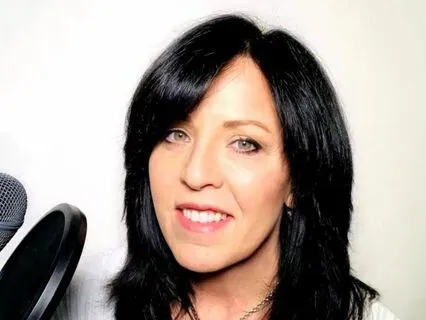
Welcome to the Breakdown to Breakthrough Podcast.
My name is Lisa A.
Romano.
I am a life coach,
Best-selling author,
YouTube vlogger,
Meditation teacher,
And expert in the field of codependency and narcissistic abuse.
I am a believer in the power of an organized mind.
My aim is to help people learn what it means to live above the veil of consciousness rather than living a reactive life.
May your heart feel blessed,
Your mind feel expanded,
And your spirit find hope as you spend time with me here at the Breakdown to Breakthrough Podcast.
So today we're going to be discussing five different ways being raised by a narcissistic mother can impede or destroy your career.
If you were raised by a narcissistic mother,
You undoubtedly have unmet needs.
You undoubtedly suffer from childhood trauma or the effects of childhood trauma.
You undoubtedly have unprocessed trauma,
Which means that this trauma from this childhood,
Being raised by someone who did not meet your needs,
Who may have been jealous of you,
Who exploited you,
Who brutalized you psychologically,
Emotionally,
And sometimes even worse,
Being raised by this type of a person has left you wounded.
We walk around as adult daughters and adult sons with these invisible bullet holes,
Like we can put on our lipstick,
We can drive a nice red Ferrari,
But inside of us we feel empty,
We feel anxious,
We feel like something's missing.
We keep looking outside of ourselves for something to make us feel better,
And psychologically that makes sense because how it was supposed to turn out was we were supposed to find what we needed outside of us.
So we come to planet Earth,
We incarnate as these tiny innocent beings,
We have a brain,
We have a nervous system,
We have stress responses,
We have an amygdala,
We have a hippocampus,
We have the reticular activating system,
We have a prefrontal lobe,
We have a neocortex,
And if all things go as planned,
Then we as little tiny beings will get what we needed from the outside.
And so our nervous systems,
Our neurological pathways are pretty long,
We don't have short fuses,
We are not hypervigilant,
We don't wait for the next shoe to drop,
We don't isolate just because there's a little bump in the road,
We're not afraid of something going wrong.
We don't have a lot of the mental health issues that someone else has who has not received the maternal consistent,
Predictable,
Unconditional love that they needed in order for their brain to perceive the experiences of Earth as friendly.
Einstein says that,
I'm going to butcher this,
But Einstein says that our greatest predictor of a healthier,
Happy life is really tied to whether or not we as children perceive the world as safe or unsafe.
This idea that we needed to feel safe,
That our nervous systems needed to believe and perceive that the outer world was safe so that the rest of our system,
Our neurological system,
Our physiological system,
Our psychological system,
Our spiritual system,
The ability to connect to our authentic self,
The ability to trust our intuition,
The ability and the right that we have,
And the need that we have to be able to trust what we feel.
If I don't trust what I feel,
Then I can't stay on this linear path from point A,
I'm born,
To point B,
I transition and move that line in a linear fashion in which I am consistently moving towards greater fulfillment,
Greater self-knowledge,
Greater self-love,
Greater hope,
Greater purpose,
Greater meaning in life.
I can't do that.
I'm going to get stuck on that line.
And what happens to many children who are born into unpredictable homes,
Who have narcissistic mothers or narcissistic fathers,
And this includes adult children of alcoholics.
And just as a caveat,
One in four children today,
One in four children kindergarten age to go home to an alcoholic parent.
And a parent who has an addiction has a whole set of emotional and psychological trauma and problems that they have not yet dealt with and they're escaping through the addiction.
And the way their personality works is to justify the addiction,
Right?
So there's a lack of empathy for how this addiction is affecting the other people.
And in addition to that,
Alcoholism is an addiction that tells you don't have a problem.
So you're in denial.
So how do we fix a hole in the wall with mom or dad if mom and dad don't even realize there's a hole in the wall?
You can't.
And so the consequence is to these tiny children who are forced to be raised in this environment,
Who are helpless,
Who are innocent,
And that is you,
That is me.
We are people who are on a quest to figure out what was wrong and primarily how to fix it.
I think a lot of us don't really understand the point A to point B thing that we're on.
In other words,
What am I supposed to be doing here in this lifetime?
I'm not just supposed to be identifying the problem,
Like what's wrong with me or what is wrong.
I'm supposed to be learning how to fix it,
How to overcome it,
How to transform my life,
How to reprogram my subconscious mind,
How to reconnect with my authentic self.
I think a lot of us in the spiritual community,
The self-help community,
Those of us who are really interested in healing,
We can get stuck along that path like,
Oh,
That's what's wrong.
Pass the butter.
No,
Don't stop there,
Dear one.
That's only part A.
Okay,
Now you know it was wrong.
But that's going to continue to show up in your life if you don't commit a year or two or the rest of your life like I do.
I'm still doing that work because I recognize that I have to keep up with what is current.
So this idea that you know what's wrong is not enough.
You have to commit to unlearning this childhood stuff,
This survival strategy,
Because your survival strategies are keeping you stuck.
So it's important that we recognize that.
And this idea that one in four babies goes home to an alcoholic parent is significant.
In 10,
15,
25,
30 years,
These children are going to be the adult children that are running our worlds.
And so if that's us,
We have an opportunity while we're still breathing to break those patterns to unlearn and to relearn.
But we have to understand that researching information isn't what changes you.
Applying that information is what changes you.
That's important.
So when you come from a home where mom is inconsistent,
Mom is unavailable,
Mom might have her own trauma,
And mom might be suffering and not even know that she's suffering,
And she's doing the best that she can.
She could have five kids to take care of,
Or she could be dealing with some really severe trauma,
Or she could be in a narcissistic relationship with a high conflict personality.
She could be trying to make ends meet.
I mean,
The stress on women today is phenomenal.
We are the ones who are having the children.
We are the ones that have to also make an income.
We are the ones who are predominantly are expected to know how to nurture these children.
And if we have trauma and we haven't dealt with it,
We're going to come up short.
Is that our fault?
No.
But do we have a responsibility to our children and to ourselves and to the humanity to fix it?
Yes.
And what is encouraging,
In my opinion,
Is this idea that we can.
There is hope in healing if you do the work.
If you don't do the work,
Then you're only going to get so far.
So rather than going from point A to point B and transitioning in your own authenticity,
In your autonomy,
In your individuality,
Rather than moving from point A to point B,
You're going to get stuck somewhere on that timeline.
It might be better than being in denial,
But you're going to get stuck and you're only going to be able to progress so far.
That's why I'm all about hearing the word,
But becoming a doer of the word.
Because if you just hear the word and you don't do anything in the word,
You're going to get stuck.
That's no big,
Great conspiracy.
It's just common sense.
So someone who wants to transform their life is doing something extraordinary.
They're doing what an ordinary person is not going to do or is not willing to do.
The key idea here is that transformation is possible when you put in the work.
That being said,
When we come from this type of a home,
We have to understand that as adults,
And I'm speaking to adult daughters primarily today,
Now this can apply to anyone.
This applies to anybody who comes from this type of a trauma.
What I want you to hear me saying is that your trauma,
These unmet needs,
These emotional needs that were not met,
Have caused psychological and emotional consequences,
Specifically in your ability to have autonomy over your life,
In your ability to feel confident,
To have clarity,
To trust your intuition,
To trust your feeling,
To trust your dreams,
To trust that you had an idea and it's been divinely inspired and that you should go for it.
Even if you do that,
An adult daughter of a narcissistic mother is going to feel wobbly in execution.
She'll doubt herself.
So let's talk about some of the ways in which your narcissistic relationship with your mother or your narc mother has affected your career today.
The first thing that you'll experience if you had a narcissistic mother is that you might find yourself as an overdoer or an overachiever.
Why?
Because you have learned that you can only rely on yourself.
You have learned that the way to get away from your mother and to escape is to do,
Is to do,
Is to do,
Is to do.
Keep the ball rolling,
Right?
Because if you settle,
Mom might come after you.
She might find a reason to criticize you.
She might smear you.
She might project on you.
She might triangulate you.
She might come after you.
And so you become this overdoer,
And in your mind,
You have found a way to control the anxiety that you feel in relation to this experience by escaping through doing.
So you might be someone at work who is just,
You don't leave the office till nine o'clock,
And you're there at 5 a.
M.
,
And you're in this perpetual state of doing,
Doing,
Doing,
But you're really not mastering anything,
One thing specifically,
Because you're doing,
Doing,
Doing,
Doing,
Doing.
And you're not even aware that you're not enjoying your life,
That you're not stopping to smell the roses,
That you don't have hobbies that fulfill you.
Damn,
You're not even asking yourself,
What hobby might I like to do?
You're just doing,
Doing,
Doing,
Doing,
Doing.
So ask yourself in your career,
Is this you?
Are you an overdoer?
Do you put unrealistic expectations on yourself,
And yes,
Do you want on others?
So this is all part of being an overdoer,
Where this is how you're escaping the anxiety that has been created and stuck in your body.
Remember,
Childhood trauma gets stuck in your body.
It has to,
Because what you experience that has not been processed,
The brain remembers,
And the brain thinks it should remember this painful experience so that it can prevent it or it can help you prevent it from happening again.
So trauma,
In terms of survival,
Is very,
Very important.
It's very resourceful.
However,
In today's modern age,
We call it a trigger.
And we think that there's something wrong with this trigger,
Or we think there's something wrong with us because we have that trigger.
There's nothing wrong with having a trigger.
Your nervous system and your mind and your memories are behaving,
Your amygdala,
Hippocampus are behaving exactly the way God,
Source,
Whatever,
Designed them to behave.
Something traumatic happens.
It's not processed.
Ooh,
I better remember that so it never happens again.
So when I start to notice similarities in the now to this past event that I've stored in memory,
Very high priority because it was so painful,
I'm going to set off the alarm in my body.
I'm going to have a trigger so that I can act.
The problem is that we're having this recall experience of a trigger.
Our body is responding,
But we are outside of consciousness and outside of awareness are reacting to the trigger versus understanding the divine guidance of the body.
Our divine guidance,
Our internal body,
Everything about us is responding appropriately.
What we need to do is elevate our consciousness so we understand what is happening so we don't resist the process.
If we learn to approach triggers from a higher state of consciousness,
We can process this unhealed trauma through meditation,
Through yoga,
Through various breathing techniques,
Through mental toughness skill.
And so this is exactly what we're trying to do is like,
How can we elevate your consciousness and give you these tools,
Right?
Just like teaching a mechanic to fix a transmission.
How can we give you tools that allow you to process this trauma so when you have a trigger,
You don't go into resistance,
You don't go into panic mode and psychologically lock yourself down,
Which impedes the ability for you to process this trauma.
Another way to know that you have been,
Your narcissistic mother has affected your career is that you're perfectionistic,
Which means that you,
Again,
You have very high standards for yourself that are absolutely unrealistic.
You are also,
What I think is also tied to perfectionism is that you will be praised for overdoing.
You will be praised for your perfectionism,
Which I think is addictive,
Especially when we have an anxious attachment style and we have not gotten that validation and that connection from our mother,
Which we all needed.
Now,
When someone on the outside is praising me for my perfectionistic behavior because it's good for them,
Maybe it's good for the office,
It's good for my team members,
It's good for my employer,
Which is fine.
I personally believe that if I'm going to go to work for you,
Then you deserve the best of me.
That's what you're paying me for.
But if I am the adult daughter of a narcissistic mother,
I am perfectionistic,
I have this mother wound,
I have the fear of abandonment and the fear of rejection,
Then on the flip side of that,
I also have a very high need for approval.
And now you offer me that approval,
I'm hooked.
You become the source of my sense of worthiness,
And that's very dangerous.
Now,
If you're perfectionistic at work,
Then you are,
Again,
You're not stopping to smell the roses in your life.
You're not in the now,
You are in the future,
Always anticipating,
When am I going to get that next hit of approval?
When am I going to impress my boss?
When am I going to impress my team members?
There's also a very,
You have a high fear of failure.
Of course you do,
Because as a child,
Any little bit of a mistake,
Step left,
Step right,
Coloring outside the lines,
Your mom was unpredictable.
So you never knew when the hatchet was going to come down.
So of course,
Your brain is geared towards,
And your psyche is geared towards perfectionism and the fear of failure,
Because that is where you feel safe.
Unfortunately,
It's why you need to feel safe,
Because you're inside the mind.
You're not outside the mind looking in.
The mental constructs or your childhood programming,
As I call it,
Is dysfunctional.
It's faulty.
The rules by which you're engaging in everyday life,
Engaging in your career,
Engaging with yourself is negative.
It's faulty.
It's maladaptive.
And like I said about this timeline from A to B,
You're going to get stuck there,
And you can live your whole life in that space and never feel not one day connected to your authentic self.
And I'm here to tell you,
It doesn't have to be that way.
So identifying the holes in the walls so that you can fix them is important.
One of my key phrases is,
You cannot fix a hole in the wall or a hole in your boat that you cannot see.
So a big part of healing childhood trauma,
Healing from the narcissistic mother,
And moving forward in your life and transforming your life is identifying what went wrong.
Here in this session,
I'm trying to help you identify,
Hmm,
Maybe these are issues that I have that I didn't even know I had.
Another issue that you'll have in your career is a fear of criticism.
Now when we're in a career,
Hopefully we approach our careers with this idea of a growth mindset.
I mean,
I have two daughters that are in a business,
And I see the fear of criticism in them.
I see their scarcity mindset in them.
And that will hinder their career.
And it will hinder your career.
I know that it hindered my career.
I had a real fear of criticism because I had such an anxious attachment style.
I had so much childhood trauma that,
And obviously my kids have trauma too,
And why wouldn't they?
They were raised by a codependent mother who had an anxious attachment style.
And in my opinion,
Someone who was,
My partner,
Their dad was very highly narcissistic,
Aloof,
Would stonewall them,
Would withhold love,
Was very,
Very conditionally loving.
You do what I say or I stop loving you.
And so of course they have their trauma that they're going to have to work through.
And I see it showing up in their career where there's this scarcity mindset that's happening where they're afraid of change.
They're afraid of opportunity.
They want things to just keep going this way.
And there is a tremendous fear of criticism.
So when I suggest as a business person myself with all of this knowledge that I've learned along the way in my own career path,
I can see them shut down.
They take it as a criticism rather than see it as an opportunity for growth.
If you have childhood trauma,
Whether your mother was a narcissist or your father was a narcissist,
Or there was a combination of both codependency and narcissism in your childhood,
It's going to show up in your career.
It has to.
So this idea that you have a manager come to you and say,
Hey Karen,
You know,
I noticed that when you put in this report,
You neglected to add this piece of data.
Karen,
Who has a narcissistic mother or father,
Childhood trauma,
Will feel tremendous shame.
She will feel called out.
She will see this as meaning that she is worthy.
She has no worth.
In other words,
It's simply an administrative error that with just this little tweak,
We won't have this issue anymore.
But to someone with trauma who is stuck in their trauma,
That little bit of constructive criticism is going to trigger them.
Another way to know that you have been affected by childhood trauma is analysis paralysis.
In other words,
Like you're at work,
Everything's going smooth,
There's a little bump in the road and you are the person that has to come up with the solution.
You will not be able to sleep.
You might not be able to eat.
The indecision,
The fear of making a decision,
Which is tied to so many things,
Feeling outed,
People looking at you,
Peeling yourself off the wall,
Becoming center stage is very scary for an adult child of an alcoholic or adult child of trauma.
We want to blend in.
We don't want you to look at us.
We're afraid that if you look at us,
The spotlight's on us and you're going to find something to criticize and that's going to trigger my shame.
It's going to trigger shame as long as I have unhealed shame.
The minute I heal my shame,
It's not a trigger for me anymore because now I can think from the prefrontal lobe.
I can think with the neocortex and not just the amygdala and the hippocampus,
Which has been designed to remember these experiences that may result in a negative consequence.
So analysis paralysis implies that it's very difficult for you to make a decision.
You will ponder this decision.
You will not trust yourself.
You might have the most inspired idea.
You might be inspired into action,
But doubt yourself to the point where you are ruminating,
Biting your fingernails off.
You can't sleep.
You're calling everybody,
Asking them to give you input because you will not have faith and trust in your decision.
You will want to push this decision off onto someone else and you will find very,
Very clever ways to do so.
Another sign that you have these unmet childhood needs and there's trauma in your background is codependency.
Yes,
You can be a professional doctor.
You can be a lawyer.
You can be a surgeon.
You can be a judge.
You can be a politician,
A psychologist,
Psychiatrist,
And still struggle with codependency.
You might be so far advanced in your career,
But what you'll notice is when you have to have a conversation with an employee that might cause them to feel on the spot.
If you have to go to HR about someone,
You're going to struggle with codependency.
How is this person going to receive this?
Oh no,
Is this person going to be angry at me?
Am I doing the right thing?
What will my superior think about me if I criticize this person?
What's going to happen to this person in their life?
Is it going to be my fault?
If they get fired,
We struggle with all of these worrying about other people,
Worrying about losing their validation.
We are not good at setting boundaries.
When we have codependency,
We blur the lines of codependency.
We might be someone's superior in a work situation,
But when we have to approach them about a boundary that needs to be adhered to,
We struggle the same way we would do inside a toxic relationship.
I know I got to say something,
But I don't know how to say it.
I don't know how to say it,
And I'm so afraid of saying it.
So we will struggle with having the ability to advocate for ourselves,
And we might let a situation at work go longer than it should.
I could be the CEO of a company that has tremendous responsibilities to my community and have a controller that is screwing up the numbers for a year,
Two years,
Three years,
And I know it,
But what I'll do is I'll hide it.
I'll cover up for him,
Which is what we do in a relationship with someone who has an addiction.
We lie for them.
We make up stories for them.
Oh,
He worked late last night on his second job.
That's why he can't come to work today,
Mr.
Smith.
We lie.
We lie to our children for our alcoholic spouses,
And we do the same thing in our careers when it comes to people that we really need to set boundaries with.
Another thing that you'll notice if you have childhood trauma is that it might be difficult for you to hold onto your personal wealth.
You might not feel worthy of your wealth,
And so here you are.
You have gone through college.
You are a doctor,
A PhD,
Whatever it is.
You're highly successful,
Or you've made it,
Right?
Maybe you work in an office somewhere.
You got away from your narcissistic family,
But you made it.
You finally made a way for yourself.
It'll be difficult for you,
Regardless of whether or not you are working in an office or you are the owner of the company.
It might be difficult for you to hold onto the financial wealth that you deserve.
You will push money away.
You won't feel deserving of it.
You will find ways to get rid of your money because you might not feel like you are deserving of what you've achieved.
Why wouldn't you feel that way?
Children who have narcissistic mothers and narcissistic fathers who are brought up in dynamics in which the children are being ignored because there's so much dysfunction at the kitchen table,
They're not being taught that they're deserving of attention,
That they're deserving of safety,
That they're deserving of peace.
All of these things,
If you think about the vibrational frequency of peace,
Of love,
Going to bed wrapped in your mother's arms,
Or having daddy read you a book,
Growing up in a community where you are safe,
Growing up in a community of people that care about you,
Whether it's your actual community in your neighborhood or it's a church organization or a synagogue or it's family.
The more people that children are exposed to that actually care and love for them,
The more loving they feel,
The more love they feel,
And the more worthy they feel of abundance.
The more gratitude they have in their heart,
The more grateful parents and grandparents and aunts and uncles and teachers in a community are for this little innocent being.
The more this innocent being resonates with abundance,
I am worthy,
I am enough.
Very oftentimes,
If you have a narcissistic mother or a narcissistic father,
Or you grew up in this type of a toxic home,
You have a difficult time holding on to your financial wealth.
You might end up in court cases.
You're either being sued or you're suing people.
You will find that it's hard for you to hold on to employees that are actually beneficial for your company,
And you'll waste money that way.
Or you'll hold on to employees that you need to let go of.
And yes,
We might have to put some effort into achieving that,
Which might mean we have to trust our intuition.
We might have to fire people more quickly.
We might have to set boundaries.
We might have to be clearer.
We might have to put ourselves first.
We might have to say no.
We might have to rock the boat.
So these are all issues that we will struggle with in our careers if we come from narcissistic mothers and narcissistic fathers.
And the quicker we pay attention to this idea that it's going to take time to right this ship,
It's going to take time to process this trauma and to learn how to process this trauma,
It's no different than trying to fix a transmission.
When it comes to childhood emotional trauma,
When it comes to inner child issues,
When it comes to unresolved and unmet needs,
We need to be taught how to fix it and how to process it.
It doesn't come by way of watching a video or listening to a podcast or reading a book.
We have to apply the knowledge.
It's why when you go to become a mechanic,
You are actually fixing cars.
We just don't give you a book and say,
Okay,
You're a qualified mechanic now.
Or why when you become a surgeon,
You actually have to participate,
Right?
You have to be the person standing next to the surgeon.
You have to participate in the surgical procedure to develop these skills.
It's why if you want to be a nurse,
There's lab.
You have to go to school,
But you also have to go to lab so you can apply this knowledge.
If you can just let that click,
That it's the same thing when it comes to emotional recovery,
Spiritual recovery,
Psychological recovery,
Learning mental skills.
You have to apply these strategies and then your life will transform.
So I really hope this has been beneficial.
Maybe aha awareness has happened in you.
Maybe you've had a couple of breakthrough moments.
And I really,
Most of all,
I hope that it's driven home this idea that it is possible to change your life.
If you change your life.
Namaste everybody.
You are enough.
Until next time.
Bye for now.
Bye bye.