Hey,
This is Ish,
Here with my bonsai tree,
And today I'm going to be talking about why in life you should try to be like an oak tree,
Very sturdy,
Strong,
And growing,
But also having very strong roots.
The analogy I'm going to give you today is that think of a tree's roots as your inner experiences in life.
This is something that you're going to be looking inwards,
And it's a period of reflection,
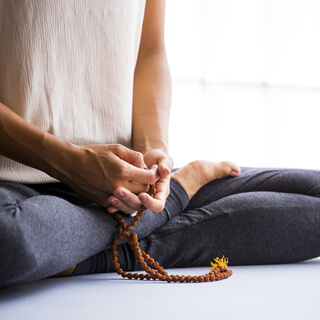
So certain inner practices would include meditation,
Yoga,
Just processing different emotions and things,
And meditation.
And the outgrowth of the tree,
So these are the branches that grow upward,
Is representative of the outer experiences in life.
So this would be like outer successes,
Like getting a promotion at work,
Getting new clients,
Moving to your dream city,
So more externally focused.
And I think in life,
Unless you're going the path of a monk or ascetic,
You should ideally try to bring balance in both growing your branches as well as your roots,
And being very firm.
So in today's culture,
Especially in the Western culture,
They overemphasize the tree branches,
So this is the outward manifestation of success and chasing after things.
And unfortunately,
Without a lack of context formed by the roots,
This feeling actually tends to feel very empty,
And you don't tend to appreciate the success that you're receiving because you don't have a certain level of context to enjoy it.
So I want you to think of branches like a big tall tree without any roots.
So this is a tree that gets knocked over by the wind really easily in external factors.
So certain examples would be like certain rock bands that gain such a level of success overnight,
Like one-hit wonders,
And they often don't know how to handle that extreme amount of attention that's given to them all of a sudden.
And you would think like,
And they would often self-sabotage and kind of wreck their lives,
And you would kind of wonder like,
Why is this happening?
Because here they are doing what they love,
This is their passion,
And they're sharing the gifts with the world,
Yet they kind of just throw it all away.
They numb themselves with different drugs and alcohol,
They might trash different hotels that they're staying at,
And they feel kind of like an empty or lost feeling.
And you can also look at lottery winners who have won really big,
Like tens and millions and even hundreds of millions of dollars overnight,
And they aren't as happy as they were before.
And there's actually a study done by CNBC,
And they found that lottery winners were more likely to go bankrupt within three to five years compared to the average American.
You might look at this and be like,
Why is this happening?
Like here they are having just an incredibly large amount of money,
And they just blow it away really fast.
And this is because they just don't have the roots in place.
And another example I'm going to give you is more on the spiritual side,
But you'll find that students who go to a retreat,
Where they sit next to a master,
And they kind of sit next to the master and kind of absorb his presence,
And they feel very calm.
But they haven't done their own practice of meditation,
So they might feel very chill in that one sitting with that guru.
And when they leave the practice,
And if they don't follow up with their own internal practice,
They step outside and they'll just get like,
They lose all the presence that they built up,
And their ego kind of kicks back in,
And they'll just be walking down the street and they'll hear like a car honk,
And they'll just go,
They'll like freak out.
So they kind of just lose all that stillness that they brought.
It's because they haven't done the work of actually sitting through and understanding themselves,
What causes them to build an ego attachment,
What causes them to build more attachment and lose their center of focus.
So there's all,
And it is hard,
This whole process of kind of sitting does take work and hours on a meditation cushion,
And they can't really bypass that because they don't have the roots in place,
Right?
So let's look on the other side.
So let's just say you have really strong roots,
Really deep roots,
But not much of the outgrowth.
So this would kind of be like a shrub,
Right?
If you think of like a small shrub on the ground,
It's very like bushy.
It doesn't have like long flowing branches that extend out all the way up to the sky.
It's very just short,
Probably like about a foot,
Right?
But the roots go like way deeper and it's very sturdy.
You can have like a thunderstorm,
Like winds and hurricanes,
And it just stays as it is.
So this is a representative of someone who has focused deeply on their inner journey,
But hasn't really focused on the external aspects of things.
And this is the path that's kind of more emphasized on the Eastern spiritual sides,
Where you just focus on the inner experiences,
Such as meditation.
And Taoism,
I found,
In particular,
Emphasizes the approach of having very strong roots,
But not the outgrowth a lot.
And actually in the Tao Te Ching,
Verse 28 says,
The master knows the utensils,
Yet keeps to the block.
And what Lao Tzu is saying in this phrase is that a spoon is made out of wood in this case.
And what is more valuable,
Or what the Taoists are trying to strive to find balance in,
Is to become like the uncarved wood,
Rather than the utensil itself.
So they value the wood as its present state,
As it is normally,
Its natural state,
Rather than it being crafted into a useful utensil.
So they value,
In this case,
More of the naturalness and the potential of being something,
Rather than actually doing something and accomplishing something.
So this focuses more on the potential of the human experience.
And I think that's good.
If you want to take this journey of being like a monk and getting a lot of these spiritual experiences and feeling really content with less external things,
That is certainly a path a lot of people take.
But I do think that for most people,
Especially even watching this,
Hearing this,
That you want to ideally strive for a balance because you do want to experience the world and you don't want to look back on deathbed saying that since you have a human life,
You don't want to look back and say,
Wow,
I wish I did certain things.
And I wish I did this.
And I wish I actually crossed off things on my checklist.
So it's your choice.
You can either choose to live a life of renunciation,
Where you kind of just throw all that away and become like a shrub,
Or you can take action and be in this world,
But not be attached to it.
And this is actually what is talked about in the Bhagavad Gita,
Which is a classic text.
Lord Krishna tells Arjuna,
You can either choose a life of renunciation or you can choose a life of taking action but not being attached to different things.
This is known as karma yoga.
So you can still be in this world,
You can still take action,
But you shouldn't worry about the fruits of your action.
So not being needy to the outcome.
And when you're actually following this life of karma,
You're going to actually take a path to mastering something and being in this world.
You are going to be met with resistance and pain where you kind of get knocked back.
And it's not necessarily a bad thing,
Because it actually teaches you where you need to let go.
Right?
It's kind of crazy,
Right?
So you are experiencing all this pain,
And you're like,
Oh,
I need to kind of push that away,
But it's actually a lesson for you.
So you can take any kind of art.
Let's just say you're a martial artist.
You love practicing your punches and kicks and whatever the case is.
But maybe one day you aren't doing your best,
And you kind of just mess up,
And you just did really badly in the class.
Well,
Now you're just really mad.
Then you can kind of think,
OK,
I've made this source,
This external thing,
Which is in this case my performance,
An indicator of my happiness.
So I tried to find my happiness in an outside object.
So now you've brought your inner happiness and put it in an object rather than bring it inside.
So then you're like,
Oh,
OK.
Then you kind of meditate and reflect on it.
And then the next time you kind of do poorly on whatever it is,
Whether it's martial arts,
Math tests,
Whatever the case is,
You're not going to be as attached to it.
You can still perform.
You can still enjoy the math test,
The martial arts class,
Just anything that's skill-based,
But you're not very attached to the outcome.
You kind of train yourself to do your best but not be attached.
And I think that's the beauty of growing in this world,
To grow your branches,
Because you can,
By combining both having tall branches and then having strong roots in the earth,
You can live a very fulfilling inner life of experiences.
But you're also playing with the world,
Interacting with the world,
And finding joy from it.
So this is very different from kind of just accumulating things and not feeling that happiness.
So it's up to you,
Ultimately,
What path you decide to choose.
But remember,
In life,
It should be a balance of growing your branches and then also the roots as well.
Hope you find this helpful.
Thank you.