Your sacred purpose is not something you have to become.
It's something already within you.
Just waiting to be remembered.
By reconnecting with the joy,
Freedom,
Creativity,
And wisdom of your younger self,
You create space to live more authentically.
You follow what brings you most alive.
And you embody the unique gifts that you're here to share.
Hello and welcome.
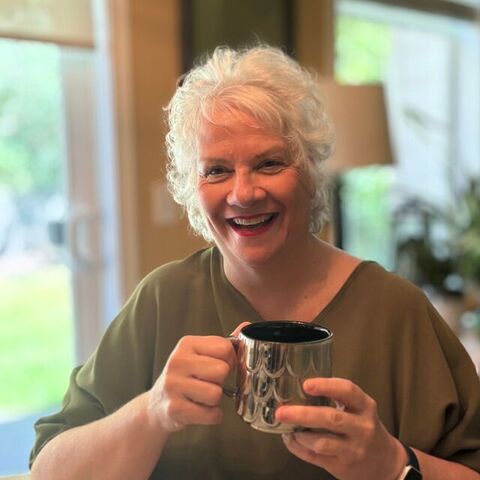
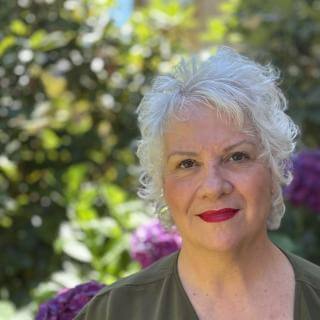
My name is Libby Lucere.
And I'm really grateful that you're here today.
This is about embodying your sacred purpose.
And connecting with your younger child self.
We all have a divine purpose.
And it encompasses typically our natural talents and our abilities and our passions.
Our unique stories and the challenges we've overcome,
Along with our family lineages,
Weave together a story that we share with the world.
And how we express ourselves.
When we show up in the work,
We're not here to just do our sacred purpose.
We're here to embody.
And to be our sacred purpose.
This means we align with our divinity of who we really are.
What we do.
And how we do it.
When we embody our sacred purpose as opposed to just doing it.
We show up more intimately in our relationships.
We understand how to nurture ourselves and our connection to life.
Which influences our choices.
In some cultures,
There's an understanding that the younger child represents fun.
Innocence,
And also work.
And in this context,
The inner child work isn't necessarily separate.
It's a part of.
In Western culture,
We often associate our younger child with what went wrong.
Trauma,
Unmet needs.
Abandonment.
Shame.
Family dysfunction,
And a need for healing old wounds.
This leaves us with the impression that the younger child is a wounded child who needs to be repaired and fixed.
Doing this work of looking at these traumas can be helpful.
But only in the right context.
And today,
This is not the context that we're focusing on.
Today we want to shift our understanding.
That the younger child within is a part of us.
And doesn't need fixing.
We aren't necessarily expected to abandon him.
The childlike parts of us simply because we've become adults.
So instead of asking,
Where is the child within me?
Or what happened to the child in me?
We can ask.
What brings delight to the child in me?
That changes the entire energy.
The wounded child approach might ask,
Where was I unseen?
What did I need that I didn't receive?
And what am I still carrying?
The Joyful Child approach asks,
What makes me lose track of time?
What makes me laugh?
What do I want to make simply because it's fun?
What feels unnecessary.
What would I do?
If it didn't have to be productive.
Children naturally work very hard at things they care about.
They build forts.
Organized imaginary worlds.
Draw and paint for hours.
Rehearse performances.
Collect things.
Invent Businesses.
And make elaborate plans.
The distinction is that work and play aren't separate.
There is purpose without the heaviness of obligation.
And it correlates to the question that I earlier asked.
What would I do?
If it didn't have to be productive.
Eventually.
It becomes less about how do I keep fixing myself and my past.
To what did that little person inside of me know about joy?
Curiosity.
Imagination,
And freedom.
That the adult in me is ready to remember.
When we ask this question,
We're showing up for our younger self.
But we're having a very different relationship.
So in this framework,
When we are intimately connected to our younger child,
We can fully embody our sacred purpose.
Which is about bringing joy.
And aliveness to our life.
So we want to begin to embody our younger inner child.
As love and joy and being free.
Rather than believing we need to fix our inner younger child.
Because they are broken.
When we start to believe that we are whole just as we are.
Then we can step into discovering or tending to our sacred purpose.
If you have no idea what your sacred purpose is,
There are ways to discover that.
You might start to shift your inner child narrative.
You might go to therapy.
You might talk with friends,
Read books.
Or spend time with someone you believe.
Is living out and embodying their sacred purpose.
If you are embodying your sacred purpose.
Congratulations.
You know exactly what that feels like.
And if you are.
Then I encourage you to share this with others.
Because they too.
Need to know.