When it comes to race,
Y'all gonna have to embrace the suck of this.
You're gonna have to get through the suck in order to get on the other side.
Because in actuality,
Part of the suck is y'all reclaiming your humanity.
You gave up some of your humanity in order to participate in whiteness.
So the suck is actually you starting to get back to a place where you reclaim your humanity and get back in line with the rest of humanity as opposed to being the arbiters of what humanity is.
Hey,
It's Ryan here.
Welcome to another episode of Levitate with Ryan Nell,
The show where I talk to people who are changing the world for good.
This show is supported by Levitate.
Levitate harnesses the power of meditation to help companies and individuals find calm connection and clarity in a world that often feels chaotic.
To find out more about what Levitate do,
Just head on over to www.
Levitate.
London at www.
Levitate.
London.
Oh,
And we would love to reach more people with the show.
So please help us out by subscribing,
Rating,
Or sharing with a friend.
In today's episode,
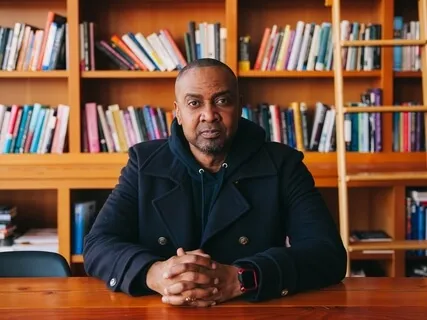
I'm speaking to Minneapolis based psychotherapist Resmaa Menakem.
Resmaa is a therapist who specializes in trauma,
Body centered psychotherapy,
And violence prevention.
And his book,
My Grandmother's Hands,
Which explains racism's effect on the body,
Has been on the New York Times bestseller list for the last 10 weeks.
Resmaa has appeared on both the Oprah Winfrey show and Dr.
Phil as an expert on conflict and violence.
Resmaa studied with the famous Bessel van der Kolk,
Multi-bestselling author of The Body Keeps the Score.
And he also served as a counselor in Afghanistan on 53 US military bases.
He is an absolute expert when it comes to trauma being stored in the body.
And particularly,
He is a leading thinker around racial trauma.
Now,
If that's a new term,
Then I promise that Resmaa will unpack it for you beautifully.
I was beyond excited to book him for this show.
And I can't wait for you to hear from him.
Resmaa lives in Minneapolis,
Which is something of a lightning rod at the moment for all things concerning race in America.
It is the city,
Of course,
In which George Floyd tragically met his death at police hands back in May this year.
And as such,
Resmaa finds himself right at the center of the conversation.
I just want to warn you that this episode contains mature themes.
We talk about trauma and sexual violence and strong views about racism that will make you uncomfortable.
So if you are easily triggered,
Then do consider sitting down for this one.
And do please listen to it out of the ear shot of children.
If you are a young person and want to be part of the conversation,
Why not listen with a parent or guardian?
Now,
On the subject of discomfort,
I was pretty uncomfortable going into this episode.
I think I was intimidated by Resmaa's stature.
I was feeling very,
Very conscious of my own ignorance around some of these topics.
And so I found myself a little less talkative than usual,
A little more inarticulate.
However,
Resmaa was a pleasure to speak to,
And he was never lost for words.
And his voice is compelling.
I can't wait for you to hear it now.
So without further ado,
Let's hear from Resmaa himself.
Hey,
Ryan,
How are you?
Hey,
Man,
How are you doing?
Just I'm running,
Man.
I got a lot of stuff happening right now.
So it's just a lot.
That's all.
It's a lot.
Yeah,
You're on the New York Times bestseller list.
Yeah.
If somebody would have told me it would have been like this,
I wouldn't have said I don't want it,
But I'd have been like,
Oh,
OK,
I'd have been a little bit more informed.
Yeah,
Yeah.
I imagine because of that,
Too,
Your diary gets crazily booked up.
So I'm so happy that we've found a bit of time to do this.
Well,
I appreciate it,
Man.
I appreciate the time.
This is cool.
Let's talk about your story.
Let's start by just welcoming you to the show.
I'm joined here today by Resmaa Menakem.
You've had the most amazing career in Afghanistan as a counselor,
As a practicing psychotherapist,
As a multi-bestselling author now at this point.
And a really,
Really interesting voice on racialized trauma,
Which I think is something that I'm only just scratching the surface of understanding myself.
So I'm so delighted to have you here on the show.
Thank you,
Brian.
Thank you.
Thank you so much.
Appreciate that.
Now,
We were just chatting just before,
But you're joining from Minneapolis.
Yeah.
Here I am sitting in London,
A world away.
In some sense,
I think of Minneapolis as the epicenter of a lot of what's going on.
If we were only paying attention to the news cycle,
Right?
Yeah.
Yeah.
But I'd love to hear from your perspective,
What's been going on for you,
How it's been affected.
Yeah.
It's been rough,
Man.
It's been rough.
I think,
You know,
I'm.
.
.
So my book is on its seventh week of being under New York Times bestseller.
And I don't take that lightly.
My book was doing well.
But when brother George Floyd got murdered,
And sister Breonna got shot,
And then brother Arbery got murdered,
And sister Breonna got murdered,
The fact is that my book was doing well,
But when that happened,
It exploded.
So there's a part of me that is very happy that my book is catching wind,
And there's a part of me that also is grieving.
And it's like this idea of the destruction of the Black body is not new in America.
It's not new terrain.
It's not new terrain.
It's not new terrain.
And the concept of policing,
And police,
And security guards,
And deputized white bodies,
Killing and murdering and destroying Black bodies with the support of the state is nothing new.
This concept that there has been a cleave between white body supremacy and policing has a major to it.
And when I hear white bodies and white people say things like,
Well,
I just didn't know.
And they think that that is a supportive thing to say.
What they don't realize is that when you say that to a body of culture,
When you say that,
Actually the inverse happens inside of our bodies.
We actually think you're now,
You're dangerous.
We actually think,
And we actually experience this sense that this stuff has been going on for four and 500 years,
Particularly in this country.
I'm not even talking about England or Australia or stuff like that yet.
But in this country,
It's been going on for a very long time.
And you're just now,
You're just now becoming aware of it.
Right?
And that means you're dangerous.
That means anything that I say,
It's like it's like an adult talking to a two year old about mortgage rates.
Right.
No matter what the baby says,
You're going to be like,
What the hell are you talking like?
What do you have?
You have no idea what you're talking about.
And so the collective grief,
The collective mourning,
The collective sense of dread and you know,
Mixed with a little possibility is really palatable,
Not to me,
But to my community right now.
We're dealing with a lot of weight.
We're the sleeping is off for a lot of us.
Our eating is off for a lot of us.
Our rhythms are off.
I'm asking a lot of people,
How are they,
How are they sleeping?
I'm not asking people how they're doing,
Because I'm assuming that if you're in a black body that you have been impacted by this,
Unless you have some type of personal,
You get,
You could get accolades or you make your money by supporting white by the supremacy in the black body.
Unless you do that,
You are being affected by what's happening and continues to happen to us.
So,
Yeah.
Yeah.
Talk to me a little bit about you almost have a new like a lexicon or language around white bodies,
Supremacy,
White skin privilege,
A lot of kind of embodied terms.
Yeah.
Yeah.
Yeah.
So,
So my definition,
My moreing definition,
My moreing philosophy is what I call somatic abolitionism.
I don't believe that we're going to abolish white body supremacy through intellect.
I don't believe we're going to appeal to people's intellect and all of a sudden white folks going to jump up and go,
Oh my God,
I get it.
It's we,
We,
You know,
I don't think that's going to happen.
And so you can't keep using the same framing that white people use to keep power structures in place.
You can't keep using the same framing.
And so my framing really is about how do we begin to actually put this stuff back in the body?
Because that's where this stuff ends up showing up between us.
And so my basic moreing definition of white body supremacy is that the white body is the supreme standard by which all bodies humanity shall be measured structurally and philosophically.
Now,
When I say that,
What I'm saying is that white body at some point gave up being Scottish,
Gave up being British,
Gave up being French,
Gave up being Portuguese,
Gave up being Spanish,
Gave up being Dutch.
It gave that up and was seduced by the idea of being white.
The construction of whiteness is not a construction that indigenous and black people created.
Right.
And so that construction is very,
There is a lot of investment in that construction,
Right?
To be able to determine that a person is human based on pigmentation and that pigmentation is the standard of that pigmentation of humanness is white.
What that does is divorces the white body from the rest of humanity.
This racial hierarchy ends up positioning itself where the white body is the supreme standard and the black body is the deviance from that standard.
Right.
And the indigenous body is invisible.
Right.
And so what ends up happening is that those concepts of who is human and who is not gets woven through every structure.
Right.
And it becomes decontextualized over time.
That if you are in a white body in this world,
In this,
In this world right now,
If you are in a white body,
You are advantaged simply because you are in a white body.
In a world that's constructed on the white body being the standard of humanness.
Right.
Yeah.
Right.
And so that also means that in a world that's constructed like that,
In a world that is positioned like that,
Any body that is not white is disadvantaged.
Now you're going to have some Bobos who hear me say it and say,
Well,
I have a friend of mine who's very wealthy and he's black and he's a look,
I'm not talking about individual.
I'm talking about structure.
Yeah.
I'm talking about how this thing plays out.
I'm talking about who,
Who is at the top of these power structures,
The economic power structures,
The military power structures,
The scientific power structures,
The philosophic power.
You understand what I mean?
Yeah.
That's what I'm talking about.
And so,
And so for me,
The lexicon that I use is an emergent lexicon is constantly changing.
Right.
So I don't say,
I don't say white,
White privilege.
I say white advantage,
Right?
Because what I'm trying to get people to understand is that developing a somatic abolitionist mindset really means that we begin to have a different philosophy by which we are more in the world,
By which we navigate the world.
And you can't keep using white supremacist framing if you want liberation.
Yeah.
It's,
It's,
It's never going to work.
It's that Einstein,
No problem was solved using the thinking that created it.
Yeah.
You know what I mean?
Yeah.
That's that.
So,
So,
So a lot of my languages are emerging from coming up out of community by me interacting with people saying these things.
And then somebody else goes,
Yeah,
What about that?
And I'm like,
Oh,
I like that.
And then,
So,
So the language is not just coming from me.
It's coming from my interactions with people and doing this thing.
And so there's actually this kind of glue that's starting to become developed in the construction of this language and in the construction of the kind of philosophical structure of this thing.
Yeah.
I really want to get into where the thinking was born from.
I saw,
I got very excited that you studied with Bessel van der Kolk and Rachel Yehuda.
I think you've kind of been inspired by neuroscience as well,
But would you kind of speak a bit about,
I suppose the the premise of trauma being passed down,
How that works?
Yeah.
Epigenetic.
So my working theory is that,
Let me give you an example.
Okay.
If somebody,
Like in my private practice,
Sometimes I work with women who have been raped and the trauma of that is not just the trauma that impacts their thinking,
Right?
The trauma that impacts their vibratory sense,
Like how they vibe in the world,
How they sense the world before anything is done and said,
How they pick up on the world.
So it impacts that it impacts the thinking and images.
It impacts the meaning making like how,
How do you make meaning?
Not just about the rape,
But how do you make meaning about life?
Right.
Right.
It impacts the behavior and the urges.
It impacts the affect and feeling and it impacts the literal sensation and sensateness of the person.
So how their skin,
How they experience their skin,
How they experience taste,
Smell,
Hearing,
Sensory pieces.
And so I spent a lot of time helping them with things like orienting and grounding and self touch.
And we go very slow in movement,
Right?
We go very slow.
Cause what I want to do is impact their sense of safety and comfort and calm and empowerment.
I want to help,
But you can't go very fast because the protective energy is so quick,
Right?
Yeah.
I'm working with the very hormones in their body,
Like the protective hormones,
The over expression of cortisol,
The over expression of epinephrine,
Over expression of adrenaline,
All of that stuff.
I'm working with that in the body.
Right.
And it's a slow process because so many things get connected together that you have to slow it down.
So you see what's in there and begin to pull it apart and then watch the energy slam back together to protect and then work with it some more and help people kind of condition and temperate themselves.
That's what one body.
Now compound is a process that's very simple.
I found 250 years of state sanctioned rape of my people,
250 years of state sanctioned brutality in which every woman that was black was raped starting at the age of 10.
And this happened for 250 years.
There was no reprieve.
If you were a man,
You were murdered.
If you stayed,
You were brutalized.
So when we're talking about something like that,
The idea that we can just think our way out of what gets passed down.
So if you take the women that were being raped by everybody on the plantation,
State sanctioned,
Legal rape.
This is key.
Legal rape,
Not outside of the boundaries,
Legal rape.
Right.
And the amount of cortisol that's in that one body compound that by 4 million bodies.
Right.
The amount of cortisol,
Both individual and communal cortisol that is impacting the muscular skeletal system,
The brain architecture,
The cardiovascular system,
The reproductive systems.
As you put babies in there,
Whose nervous systems are being developed,
Whose psoas is being developed,
Whose vagus nerve is being developed,
Whose spine is being developed in that pool of cortisol.
Yeah.
And then time decontextualizes trauma.
So what happens is,
Is that trauma in a person can look like personality over time.
Trauma in a family can look like family traits over time.
Trauma in a people can look like culture over time.
And we don't account for the amount of trauma that gets passed down,
Decontextualize and because it happened pre-verbally,
Unable to verbalize it.
And I'm talking about both individual and collective.
And so when I'm talking about somatic abolitionism,
That's what I'm talking about.
You have to address that.
And now we always talk about how to address that.
Like what happened to black people and indigenous people during that time.
What we don't talk about is that most white folks who are in America came here through the same thing,
Came here,
Fleeing something.
They came here,
Fleeing something,
Other white bodies that never got dealt with.
They created a structure to deal with it by actually creating whiteness.
In that way,
They could take all of that energy and blow it through black and indigenous bodies.
Right?
That fleeing energy showed up in Australia.
That fleeing energy showed up in South Africa.
That fleeing energy showed up in New Zealand.
Right?
That energy showed up because many of those bodies were being brutalized by other white bodies.
Right?
Having land taken,
Having brutality and mass rapes and all of that different type of stuff.
Right?
All that stuff never got resolved.
And white supremacy,
White body supremacy was a salve to soothe that wound.
Right.
This sort of never wanting to be subjugated or brutalized again.
Right?
Without so much thought going into it.
That's it.
Yeah.
And not just thought,
Not really any examination of it.
There was no examination of the brutality that those bodies had experienced.
There was no slowing down of what actually happened.
Right.
Yeah.
Yeah.
So you've got all of that being passed down generation to generation in white bodies and then different things being passed down in black bodies and indigenous bodies.
How do we get to a place where we're able to deal with things within our living bodies?
I mean,
They're not kind of passing it on for the next generation.
Yeah.
Culture building.
Yeah.
You have to create a culture.
See,
Race,
The concept of race has a four and 500 year charge to it.
It has a four or 500 year texture to it,
Speed to it and weight to it.
And so every time people say,
Well,
Let's just talk about race and everybody's stomach goes,
Oh,
Shit,
Here we go.
Right.
It's because we know that there is not a container that could actually hold the charge of that yet.
And especially in white bodies.
White bodies are when it comes to the concept of race,
Because white bodies have been standardized,
White bodies are as a collective infants when it comes to race,
Because you don't you have not had to navigate white bodies,
Even though they benefit from the brutality of racist.
The racism on bodies of culture has a racistness to it.
What I mean by that is that race has been put upon by the white bodies.
They're put upon other bodies.
So therefore,
White bodies really don't have to contend with it.
And let me say one more thing.
The race question in this world is actually not a race question.
It's a species question.
It has always been philosophically a species question.
Is Resma a monkey?
That has always been the question.
Right.
And that question has been woven in and out and through every economic structure that exists.
Every institution,
Every military structure that exists.
Right.
And so the idea that I am not human is the answer to that species question.
And this is why anti-Blackness.
This is why Indigenous invisibility is so rampant,
Regardless of what land mass you're on.
The darker you are,
The more subjected you are to whether or not structures view you as a valid human being.
Yeah.
That's not a rule I made up.
I'm simply reading what has been put here.
And that is the race was another word for species,
Species of ras,
Or ras of dog,
Ras of bird.
Right.
That idea is about species.
And so this is why you get things like three-fifths of a human.
This is why you get things like killing the Indian so you can save the man.
That's why you have these Aborigines types of things that are said about those is because if you listen closely,
You can hear the speciesness in it.
Right.
And the only way we're going to address that is by creating a culture that can hold what it takes for those things to cook in white communities.
White communities have to do this work,
Not coming to save me.
Right.
But they have to do this work with each other.
They have to get white people have to get intimate,
Not freaky intimate.
But they have to get intimate with white people as it relates to race.
Yeah.
Bodies of culture have to do the same thing,
But we have a different work,
Different job to do,
Right?
There's different work for us.
And many times people want to slam these two bodies together without paying attention to that charge.
And then people end up getting wounded and rewounded and hurt in the process.
Yeah.
Right.
Which is white people turning to their black friends and saying,
Tell me what I'm doing wrong.
Right.
Like wanting you to teach us as well as bear your pain.
Yeah.
Without pain.
Without pain.
That's the killer is that our bodies have been constructed with each other in such a way that the white body expects my deference.
It demands my deference.
It demands that I make it comfortable.
Right.
White people have not even began to uproot that.
They haven't even began to understand that there is a demand that white comfort trumps my liberation.
White comfort trumps my safety.
For most of our history together,
The white body has had full and unfettered access to my body and bodies that look like mine.
Think about that for a minute.
It is relatively new,
Ryan,
That I could be sitting up here talking to you right now,
The way that I'm talking to you,
Talking to a white man,
The way that I'm talking and be somewhat sure that when I go upstairs and I open my door,
That there's not going to be a lynch party waiting for me.
Yeah.
That's new.
That's new.
That the white body has had full and unfettered access to every orifice of my body,
Every idea of my body.
The fact that I have just the amount of stewardship over my own body is a new occurrence in this country and in white nations and in colonized nations.
That is a new occurrence.
And that ain't work for me to do.
That's work for white folks to do.
White folks got to excavate and do this stuff.
And that's the only way it's going to change.
It ain't going to change with Resma giving you 111 tips on how to do right.
It's going to change because you all get together with each other and you all start building a living,
Embodied anti-racist culture.
Yeah.
Yeah.
And look,
People are self-interested.
I mean,
You know,
We're wonderful if we want,
But.
.
.
Beautiful.
Well,
I was watching David Attenborough has got a new documentary out on animal extinction and watching that slightly headed in hands,
Just going,
We're not getting it.
We're not doing what needs to be done.
And it's only in the documentary when he starts talking about how this is all going to deeply affect us too,
Right?
That you can feel yourself perking up.
What?
Yeah.
What?
Right.
And now for a quick message from our sponsor.
Levitate is proud to present Levitate On Demand.
All the classes you love now on demand have been all the classes you love now on demand at any time and any place.
Featuring tens of hours of classes,
Featuring tens of hours of classes ranging from five minutes to an hour and covering themes like gratitude,
Compassion,
Setting intentions and letting go,
You're sure to find the perfect meditation to fit your schedule and your mood.
To find out more head to ondemand.
Levitate.
London.
That's one word ondemand.
Levitate.
London.
So what are you waiting for?
A world of meditation awaits at Levitate On Demand.
And now back to the show.
What's it going to take for white folk to get that this is in their interest too?
Right.
So right now as we speak,
California is burning.
Yeah.
Right.
California in the west coast is on fire.
You got ash and fires in Seattle,
Ash and fires in California,
Right?
Yeah.
People's houses are being burned.
People built houses right in a burn zone and all that different type of stuff.
Right.
And they're interviewing people and white women are crying saying that they lost everything.
And,
You know,
White woman's tears will move a nation.
An indigenous woman's tears ain't going to move.
A black woman's tears ain't going to move.
But a white woman crying,
Some got to get rectified.
Right.
Right.
And so you're watching these fires and you're watching people watch their whole sense of self and community get burned.
Right.
And for me,
I think that those things have to happen in order for people to actually go through the clean pain of growing the up.
Sometimes you don't grow up because your dad says,
Hey,
Come here boy.
If you do that again,
Here's going to be the problem.
Sometimes,
Sometimes that works.
Sometimes your dad goes,
Gone.
Let me see you keep busting your head the way that you're busting your head.
Maybe that will teach you.
Do you understand what I mean?
Maybe that's what you need to have happen before you get to the point to where you say,
This life,
I don't know what I'm going to do,
But I know I can't do this no more.
There's a cleanness in that.
There's a clean pain in that.
Right.
Yeah.
White people keep choosing dirty pain when it comes to race.
They keep choosing the ways around this as opposed to going through it.
And things are getting so tight right now that bodies of culture all around the world are basically saying,
Nah,
You ain't doing this no more.
I'm done.
We're not going back to that type of relationship.
We're not doing it.
And so I have a tendency to start with five superpowers,
Right?
The five superpowers that constructed and benefited and had their self interests.
See,
People think that racism and white supremacy and white by the supremacy is about hate.
It's actually not about hate.
It's about self-interest.
Yeah.
Right.
Hate is a useful byproduct of self-interest,
Right?
Elite white bodies staying in power,
Right?
In whatever levels of power you're talking about,
Whether it's economic power,
Whether it's positional power,
Whatever levels you're talking about,
This is about self-interest.
And so the organizing structures and the organizing superpowers of white body supremacy were England,
France,
Portugal,
Belgium,
And Spain,
Right?
They developed relationships with each other,
Philosophical relationships with a scientific relationship.
They shared those pieces around who black people were,
Who indigenous people were.
They,
They,
They,
They,
They,
So somebody in Belgium writes something about the scientific size brains of black people.
And then somebody in England repeats it.
Right.
Right.
Without checking the results.
Without checking.
Yeah.
Yeah.
Because it's about self-interest.
Right.
Right.
And keeping power in the hands of a few.
That's why white supremacy and white body supremacy has such utility is that people actually benefit from it.
You're not going to get around this.
And until white people are able to get to a point culturally,
By developing a culture that can hold that,
See,
When you develop a culture,
You'd set up rules of admonishment.
You set up rules of acceptance.
You set up ways in which you navigate space,
Ways in which you are tied to the earth,
Right?
When you're talking about culture,
You're talking about your relationship to all things.
And so until white people begin to do that and create a,
What I call a somatic abolitionist culture,
A living embodied anti-racist culture,
Their perceived and embodied self-interest will supersede any amount of intellect that you want to impart on white folks.
Right.
Yeah.
Until white people start to begin to excavate this stuff with each other,
You can do documentaries all day long.
And I'm not saying people need to stop doing documentaries.
I'm saying you have to take the information in those documentaries and white folks have to grind up against each other with it.
And they're not doing that as it relates to race.
Oh man.
It's heavy,
Right?
It's heavy.
Yeah,
Man.
Yeah.
That's what I mean by the weight.
There's an embodied weight to that,
Right?
It's weighted.
Yeah.
And we don't,
We don't account for it.
Yeah.
No,
You're right.
You're right.
There's,
There's that kind of fear response,
Right?
You know,
The tightening of chest and breathing gets a bit.
Exactly.
Things going on just at the mere thought of the amount of work that that might take.
Exactly.
But let me say something about that,
Ryan.
So you,
You just,
As a white man,
You said,
You know,
The chest tightening at the mere thought of it.
And with your chest tightening is what I live every day.
Do you see what I mean?
That's the piece.
And many white people are all right.
Oh,
You can do that.
I'm not doing that.
Right.
Your chest tightening and being tightened and participating in a white body's premise structure that is shortens your life in a black body by seven years,
Resma,
I'm all right with that.
And I'm not saying you're saying that I'm saying as a white collective,
As long as I don't have to be inconvenienced and uncomfortable,
I'm all right with Jews dying seven years earlier.
I'm all right with black women dying in childbirth on average,
More than any other people.
I'm all right with it,
With the infant mortality rate of black.
You know what I mean?
In a country like America,
Having the infant mortality rate and black women dying in childbirth at the rate that they're doing,
You're all right with that.
Because if you can stay comfortable by not having your chest and your stomach or having to kind of,
And then hold it,
Not for now,
But hold it for the rest of your life and then hold it with your children so they can begin to transform.
You ain't willing to do that.
So don't come to me and tell me you're an ally.
I don't want to hear it.
Right.
Your allyship is cursory.
Yeah.
It's agreeing with things on an ideas level.
Going,
Yeah,
I want to ally myself with that.
That sounds like the right thing to.
.
.
Yeah.
Yeah.
You're saying do,
But you mean think.
That's right.
That's exactly right.
Just the song of my life.
That's exactly right.
That's right.
I'll give a little money to somebody's GoFundMe page.
I'll put a Black Lives Matter sign.
I may even show up to a couple of meetings.
I may even get arrested.
But when this s*** get too hot,
I'm going to cut my blonde dreadlocks and I'm going to move out to a suburb and nobody ain't going to never know I was in the mix.
I married this little white boy or this little white girl.
We're going to have some little white kids and we're going to keep it moving.
That's it.
And yet I'm still stuck.
I'm still having to navigate this bull**** that your ancestors created.
That's the piece.
It's self-interest.
It's not about hate.
Hate is a useful byproduct of self-interest.
Yeah.
The hate is thinking it might get taken away,
Right?
Yeah.
That's it.
Yeah.
It's the fear.
Yeah.
That's where it gets kindled.
Yeah.
So tell me a bit about the work you're doing now.
You're still a practicing psychotherapist,
Right?
Yeah.
Yeah.
I've had to pull back on that a little bit recently is because I'm holding so many people's nervous systems right now that I don't have a whole lot of space,
As much space as I used to have to do it because this embodied work is different than just coming in and,
You know,
Freudian out of people is different than psychoanalysis.
There is a cost.
And so I'm trying to really balance my own self-care and communal care with the fact that people kind of need me right now.
So I'm trying to strike a balance with that.
And so I'm finding that I'm doing a lot more of this type of stuff with,
You know,
Podcasts.
I'm finding that I'm doing a lot more workshops online.
I'm doing,
You know,
Body specific experiences online,
Giving people like some of the language stuff,
Like the language,
Some of the language stuff is important because I think I've had people tell me,
Resmaa,
It was so good to hear you say that.
This is something I've been thinking my whole life.
And you put words to an embodied experience that I could not articulate.
Right?
And I think my role right now is to do a lot of that,
Is to help those people that are moving in and moving in this world,
Help them,
Number one,
Know that they are not defective and that exactly what they thought was going on,
Exactly what their body was telling them was going on is absolutely 100% true.
And all I'm doing is helping them develop a language for it,
Words for it.
So they don't think they're individually crazy or defective.
And I think right now that's my role is to,
I'm writing my next book now.
I'm creating classes online.
I have a free online class at resmaa.
Com.
I did.
It was great.
Yeah.
What'd you think?
Yeah.
I'd be interested in hearing that.
What'd you think?
I loved it.
Felt like I was kind of rubbing up against a whole bunch of ideas that I've never come across in my travels so far.
It was moving and it made me feel uncomfortable.
So I think that was,
Normally when things feel uncomfortable,
Right.
You know,
Some kind of growth is possible too.
That's exactly right.
Yeah.
That's exactly right.
Yeah.
I tell people all the time,
The thing that you do well,
You already do it well.
There's no growth there.
The growth is in the shit that you don't want to do.
The growth is in the stuff you don't do well.
That's what all of the energy is.
And most people don't understand that.
That's what all of the heat is over,
Is over in that place.
You know,
Marshawn Lynch talks about that idea as beast mode and Kobe Bryant used to talk about the mama mentality.
What they were talking about is pushing yourself in areas that are so uncomfortable that you actually,
That's where the growth area is,
Right?
So I could never go left.
I can never go left.
Everybody knew I couldn't go left.
And as law and I could go right,
Like nobody's business.
I can,
I can go right and dunk on people and go right and do like nobody's business.
And unless I went to the area that made me uncomfortable,
Made me feel inadequate,
Unless I went to that area,
I was never going to actually know who I am,
Who I am is actually over there,
Not over there.
And so the,
Who I am is actually and who I am going to be is actually in the uncomfortable,
Not in the comfortable.
Yeah.
Yeah.
And that's the work,
Isn't it?
That's doing the reps.
Doing the reps.
It's the reps,
Man.
It's the,
It's like anything else.
How long you've been doing this,
This,
This podcast?
Since last Christmas.
So it's good.
It's kind of new.
How many podcasts have you done?
10 so far.
Okay.
Okay.
Are you different even in a slight way?
Oh yeah.
Different now than you were when you first started.
The first one sucked so badly.
I didn't put it out right.
We played it to a few friends.
They said,
Yeah,
No,
That's it.
Yeah.
And yeah.
But you didn't stop.
No,
No,
No.
Every time I do it right,
I kind of feel like something,
Something went better.
Right.
That's right.
Not more comfortable,
But something was changed.
That's right.
That's right.
That's right.
You,
The thing is,
Is that you have to go through the suck phase.
You know,
One of the things that when I was over in Afghanistan that everybody said over there and people would say to each other,
Like,
We'd be sitting around and it's a hundred and fricking 25 degrees and we'd be sitting around and some people would be like,
Oh my God,
My Jesus.
It was just crazy.
Right.
And then,
And then on Kandahar where I was,
My main base was,
They didn't have a sewage system.
So all of the poop got dumped into these ponds all around the base.
Right now,
Think about this.
Think about a hundred and 25 degree heat and open poop ponds.
Think about the smell of that.
Right.
Yeah.
And what everybody would say when people would just be like,
You go into the defect and you're eating your food and you still smell it and you're like,
Oh God.
Right.
And what everybody would say is,
Man,
You hear now embrace the suck.
Let's just,
You can just got to embrace the suck.
You got to embrace it.
It is what it is.
Embrace it until it ain't this.
Right.
And,
And that's the way I actually do think about race and white people's work.
Right.
When it comes to race,
Y'all gonna have to embrace the suck of this.
You're going to have to get through the suck in order to get on the other side,
Because in actuality,
Part of the suck is y'all reclaiming your humanity.
You gave up some of your humanity in order to participate in whiteness.
So the suck is actually you starting to get back to a place where you reclaim your humanity and get back in line with the rest of humanity,
As opposed to being the arbiters of what humanity is.
You make a really powerful point there,
Right?
When I'm not doing this podcast,
I teach meditation and mindfulness in companies,
To individuals and groups.
And I feel like a lot of what we're doing there,
I'm forever saying,
This is an embodied practice,
Right?
Because everyone's coming to it,
Hoping they're going to be able to calm down that crazy whirlpool of thoughts.
Right.
And it's like,
Yeah,
No,
That might happen,
But that's going to be like a benefit,
You know,
Further down the line.
That's it.
But for now,
We're just going to have to sit with the uncomfortable feeling of sitting.
Yeah,
That's it.
That's the piece is that race has such a charge to it.
The static of it,
Whiteness has made the static of race less visceral for white folks.
Right.
And what actually has to happen is the opposite.
It has to become more visceral for white folks,
That the static has to increase.
It has to get louder for white folks.
Right.
And I think that's where I'm saying white folks have to get more intimate with each other,
Is that in getting in those rooms together and committing to the rest of our lives,
To coming back together and uprooting this stuff is going to bring a tremendous amount of static and heat.
Right.
And you build the container,
The thickness of the container to hold that charge.
Right.
Over time.
But if you think that you're just going to do this and then you're going to hit some type of Shangri-La moment or some type of Nirvana moment in race,
You're delusional.
There is no,
You know,
There's no original.
There is no,
If you're getting in this because you think that you're going to reach a place where things go,
That's so nice.
You don't do this.
You don't just go do something,
Become a brick Mason,
Go do some chimney work.
Right.
Pave some roads,
But don't do this.
Yeah.
Yeah.
Yeah.
Actually sitting with that energy long enough for it to transform you.
Right.
Yeah.
That's it.
Yeah.
That's it.
You start to begin to see,
I was talking with a client the other day.
I do,
I do executive coaching online.
I was talking to this client.
She's very,
Very,
Very,
Very,
Very accomplished woman.
She's tearing up.
And she says,
You know,
I have some sense of where I want to be,
But I don't know how to get there.
And I said,
I get that.
I said,
I get that.
I said,
But it's kind of like you're standing in front of a marble block.
That's that's 12 feet high and eight feet wide.
I said,
And you're in there someplace.
Yeah.
And what you're doing right now is you're contemplating how you're in there.
And what I'm saying is you got to get to the business of carving.
All of this contemplating and trying to see yourself in that is not how this happens.
This happens because you get the reps in every day of hitting that block and moving and watching things fall away and watching things fall away enough and get enough reps into you go,
Oh,
That's a little clear.
Okay.
Hit it again.
And so falls off.
He goes,
Okay.
Okay.
Right.
But if you ain't carving and you're just sitting there looking at it,
You're not going to get it.
You're not going to get it.
You're not going to get that.
You're just carving and you're just sitting there thick.
That ain't except you're carving and you're just sitting there looking at it.
You're not going to accept people.
Both this is actual you're just en master?
But if you just stand and still contemplating the how the earth turns on its axis and whether or not we're all one brother,
That's all the that you're doing?
That ain't this.
That ain't this.
Race has the ability to cook in ways because it's 400 years old,
500 years old.
It has the ability to cook in ways that no other thing can.
I've had yoga practitioners call me and say,
Reza,
I'm doing the same thing you're doing.
You're not doing the same thing I'm doing.
You think you're doing the same thing I'm doing.
You're doing,
What you're doing is you're soothing people down when they actually should be working with the heat.
Right?
I'm not trying to zen the out of this.
Zen is fine.
Buddhism is fine.
That's not what I'm saying.
I'm not saying,
Right?
But that ain't this.
That's not somatic abolitionism.
That's not this.
And people get that confused.
Yeah.
So we're getting to the end of our episode,
Sadly.
But I'm hoping we'll get you back.
But how do you look after yourself?
What are your mechanisms?
So I do comedic yoga.
I do some martial arts.
I've been walking.
And I was doing a lot of pushups and a lot of jumping jacks and stuff right now.
I've eased off of that a little bit because I'm just so fatigued right now.
Yeah.
It's a collective fatigue.
It's not just me,
But my community and my ancestors were and are very tired.
So I've been trying to reorient to doing smaller things,
Like doing more stretching,
To getting back.
I hadn't been doing the comedic yoga for a while,
But I'm getting back into it again.
And so I'm just trying to bring little pieces back in.
Yeah.
You know,
It doesn't help.
Every couple of days,
The state murders another indigenous body or another black body,
That another brown body,
Or puts Latinx babies in cages,
Mexican babies in cages.
That don't help.
So yeah.
Yeah.
Hard not to get just so caught up in that news cycle,
Right?
Yeah.
That's one of the things I've started to do also is turn the TV off more.
I don't have the TV on a lot anymore.
Please do just keep on looking after that black body.
All right.
I appreciate you.
We need voices like yours and we need the work you're doing.
Thank you for saying that.
Yeah.
And look,
Is there anything that you can do and look,
Is there anything,
I'll put it all in the show notes,
But is there any place you want to direct the listeners to?
Just good.
Just have people,
Two things.
Go to rezma.
Com,
R-E-S-M-A-A.
Com and then go to rezma.
Menakem,
M-E-N-A-K-E-M on Instagram and follow me on Instagram.
I'm trying to get as many people on there because I send out free content.
You do that too.
I send out free content four or five times a week,
Just a little small pieces that people can use to kind of help them orient.
So.
Amazing.
And go out and buy Resmaa's book as well.
That's it,
My grandmother's hands.
It's coming to the UK in January.
It'll be in the UK in January.
Amazing.
Through Penguin,
Yeah.
Amazing.
Hey listen,
Resmaa,
Thank you so,
So much for your time.
It's been an absolute honor.
Thank you,
Man.
And look after yourself,
All right?
I appreciate you.
All right,
Man.
Talk to you soon.
Hey folks,
It's Ryan here.
I want to say a big thank you for joining for this episode.
Please take a moment to subscribe to the show,
Rate and share it with a friend.
And support this show by supporting our sponsor and head on over to www.
Levitate.
London.
And a huge thank you to Resmaa Menakem,
Who teaches us that silence is not an option and we need to embrace the suck.
Thank you also to the composer of the show's theme,
Nick Nell.
And until next time,
Take care of yourself.
And I'll see you back here for another episode of Levitate with Ryan Nell.