Greetings and welcome to another episode of Bite-Sized Blessings.
This is episode 90,
In fact,
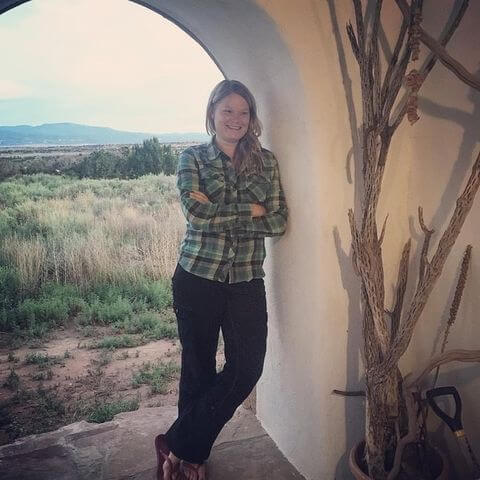
And in this episode I interview Reverend Julie Poplimazian.
And I really hope I pronounced her name correctly.
We did have a discussion in the podcast about how to pronounce it.
There are several different variations,
And so I hope that I didn't butcher it too profoundly.
Reverend Julie is such an intriguing human being.
At the ripe old age of three,
She began taking ballet and piano lessons.
And she has a wonderful website called Faith on Point,
Where she offers classes and workshops,
And where she has her Faith on Point blog.
And she talks about when she started teaching adults how to dance ballet.
And she says on her website that as she dove deeper into teaching ballet to adults,
The strangest thing happened.
I started noticing that the language I used to teach ballet was often and unintentionally spiritual in nature.
And so,
You know,
That's one of the themes of this podcast over and over again.
Finding God,
Finding spirit,
Finding that energy in the most unlikely of places.
And in this podcast today,
We do talk about that idea that the whole can sometimes become greater than the sum of its parts.
And that's kind of the miracle wrapped up in today's podcast.
And you can find this idea in many,
Many places.
For example,
I went looking on the internet,
And one of the examples that was presented to me was rogue waves.
So in the ocean,
You have all these smaller waves,
Obviously,
But sometimes,
Sometimes these smaller waves somehow mysteriously find each other.
They become synchronized,
And they join together to create these crazy,
Sometimes 100-foot rogue waves that you can see videos of crashing over the bow of ships.
They're really quite astonishing.
Also,
In string theory and physics,
Because everyone knows I love physics,
There is this idea,
And physicists,
Scientists are so desperately trying to prove it.
They're attempting to prove that these little vibrating pieces of string,
For want of a better word,
They vibrate,
And this is what creates the reality,
The universe as we see it.
So another example of small things coming together to resonate together,
To create something bigger than themselves.
And so Julie's Miracle this week,
From magical experiences,
They engage with this idea that all of these smaller pieces can come together to create something beautiful,
Something more powerful than when they were individual pieces.
And that's kind of one of the ideas of this podcast,
Is that if we form connection,
If we form community,
If we come together with others,
We can create a more beautiful world.
We can create something more powerful than our individual acts of service in the world.
And so yeah,
So that's this week's podcast,
And I hope you enjoy it.
And so now,
Without further ado,
Reverend Julie.
So I had this group of sixth graders from the South Bronx who did not care about anything,
Right,
Because they had to be the coolest kids,
But they don't know how to be cool yet.
So the only way they know how to do that is to be like,
Sarcastic and weird and awkward around each other.
Well,
What happens in a drum circle,
If you do it correctly,
Is they start to not just focus on their particular rhythm,
But they suddenly feel that rhythm in the context of the whole.
And all of a sudden,
You have this whole group of kids who I realized it was working when I could drop out.
I didn't have to conduct or lead because they all of a sudden were completely tuned into each other.
And they had all figured out how they were,
One was part of the whole,
And all of that synchronicity just kind of hung in the air and flowed out of every,
It was like the whole is bigger than the sum of its parts,
One of those moments.
And all the kids,
I mean,
I said nothing,
The kids went,
That was amazing.
I want to ask you,
How do you pronounce your last name?
There are many different ways and different people in my family do it different ways.
So like my parents growing up tried to Americanize it.
So we always said Hoplamazian growing up.
Professionally,
I've been trying to return to a more proper pronunciation,
Which is Hoplamazian.
Just because I think,
I don't know,
I overthink this probably,
But I think about it a lot and I'm part of a dying culture.
And I also,
My grandparents fled here after the genocide and just being coming from this sort of inheritance of like near annihilation.
And just thinking about how,
Like,
I understand why one felt as if one had to assimilate when they came to this country,
But I just don't want to participate in the erasure of my identity.
So I'm trying to,
But like,
My mom and my brother still say Hoplamazian and that's fine.
And a lot of people call me that,
But just,
I don't know.
Yeah,
Professionally,
I've been returning to Hoplamazian.
It's a really beautiful,
Beautiful last name.
And I'm wondering if it means anything,
Because my last name is Rudberg,
Which means,
My dad's Norwegian and Swedish,
And it means land of the red mountain,
Which means like we came from a village near red clay,
Like a mountain of red clay or something like that,
I think is what I understand.
So I'm curious if your last name has any meanings like that.
It does actually.
So Hoplamaz is a Turkish word,
You know,
Historic Armenia was conquered by the Ottoman Empire.
And so my great grandparents grew up in a Turkish culture.
And so a lot of Armenians have last names that come from Turkish words.
But Hoplamaz,
So there's a legend behind the last name.
Who knows how true this legend is.
But the legend is that Hoplamazian was not traditional or historically our families or our clans or whatever last name.
But the word Hoplamaz means like one who doesn't jump or dance.
And the legend is that my ancestors were at some sort of wedding celebration and had remained wallflowers throughout the festivities.
And people said,
Oh,
You're such a Hoplamaz,
Stop being such a Hoplamaz.
And so we apparently got the last name Hoplamazian as a result of my wallflower ancestors.
So my first question that I ask everybody,
Which has proved to be so interesting,
Such a stumper.
And I thought it was the easiest question I was going to give them is,
Who are you as a human being?
If you were to self describe or introduce yourself,
You know,
Whether it's a party or a gathering or a conference,
How do you self describe?
How do you introduce yourself?
Oh,
I love this question.
It's a great question.
It's an important question.
I feel like it's the question that as a faith leader is in a lot of ways at the core of what I do and what I've dedicated my life to.
Because like,
I think at the most basic or simple or obvious level,
I would say,
Who am I?
I'm a child of God.
That would be my like,
First answer.
And that's the first answer I want everybody to be able to get was to know that they belong to the Almighty and not in this like weird way,
But in like an embracing,
Loving way.
And the reason I think that's so important is because of this,
Like there's,
There's,
I see a lot of people or a lot of like places on the internet where they say things like,
We're not human doings,
We're human beings,
You know,
And it's so true.
Because if we,
We so often at a party,
Describe ourselves as our job,
As if our productivity,
The things we produce is who we are,
Right?
I mean,
Another thing like people say,
Oh,
Who are you?
You know,
What do you do?
Well,
Like,
When I that's another interesting thing,
You know,
My response is,
Well,
I am a priest.
It's not that I,
I work at a church.
I mean,
I do,
But my own vocation also is a vocation.
Like my,
The thing I do with my life is,
Is as much about my identity as it is the things on my to do list from Sunday through Saturday,
You know,
You know,
And I often get the question,
This is a bit of a tangent,
But like,
I was thinking about this today,
People often ask us,
So,
So you're a priest,
Like,
What do you do the rest of the week,
Which makes me want to pull my hair out,
Because this is a very full time job.
But you know,
No,
No two days are similar.
So like today,
I started my day early in the morning doing a meet and greet with,
We have a nursery school that is one of our,
The tenants in our church building in our parish house.
So we did a meet and greet with all the parents of this nursery school,
Beginning of the school year,
We're doing some construction,
You know,
A lot of what we have to do is like the,
The relationship stuff,
Right.
But also like,
That was a very appreciated because the parents were like,
Oh,
You know,
We know this school is in the basement of a church,
But we don't know anything about the church.
And it's nice to make that connection.
So,
So that's how I started my day.
And then I took communion to a homebound parishioner who has had a horrible year.
And I sat with her for about an hour.
And I listened to the trials of Job that she has been through,
This poor woman.
And that's like a lovely,
I think,
Like,
When people think about what priests do,
It's like a big bulk of what we think about when we,
When we think about what priests do,
It's like,
Oh,
Yeah,
They like visit the sick and,
You know,
Do all this pastoral stuff.
So that was another thing I did.
And then I came back,
And then I had a meeting with a youth group leader to plan stuff for the high school group this year.
And I answered a shit ton of emails,
Which is the thing I hate doing.
I think we all hate doing,
You know,
Phone calls and emails and office work.
And then I turned my desk upside down to kill a roach that had taken up residence under my monitor.
So that was fun.
And then in the midst of that,
I found mouse dropping.
So then I had to go clean that up.
And then you have to go through the whole like,
Oh,
Okay,
We have a problem here.
And then I had another meeting.
So like,
These are how our days go,
No two days are alike.
But all that is to say,
Like,
There's nothing that's outside the job description in a way.
So like being a priest is who I am as a human being.
And that runs the gamut from cleaning up mouse shit,
To taking communion to a homebound parishioner to meeting with parents and planning stuff for no classes here at the church to planning the Sunday services to writing sermons and all that.
There's also like,
I'm an artist,
Right?
I started both ballet and piano as when I was three years old.
And so like music and dance and the arts is very,
Very much at the center of who I am as well.
I hesitate,
I would never call myself a pianist or a singer or a dancer anymore.
But I am actually those things.
Not professional at them,
But I'm gonna pay to do them not good enough for that anymore.
But yeah,
That's a big part of who I am,
Too.
I'm a wife and a daughter and an aunt and all those things and a friend,
You know,
Like there are so many facets of who we are as humans.
And all of those things are equally important to me.
I'm a dog owner,
I'm an animal lover.
Happiest part of my day is when I'm sitting in bed with my morning coffee and my dog in my lap doing my most content part of my day.
I think like a call from God in some way manifested very early on in my life.
And I think it was a result of eventually being exposed to the Protestant church and learning about the ordination of women,
That that call finally made sense.
I grew up in the Armenian church,
So in the eastern branch of the church,
Where women are definitely not ordained and probably never will be.
And I had to move through my own issues of identity.
And I mean,
I started this call by telling you about my last name.
My ethnic identity is very important to me,
And it is so central to who I am.
I guess who I could have said is,
One answer I think I left out was I'm Armenian.
I mean,
That is a big part of who I am as a human being.
But it's not quite the same,
But it's very similar to being Jewish,
Where being Armenian is so synonymous with being part of the Armenian church,
Very much like other ethnic Orthodox churches.
The church and the culture are so,
So,
So intertwined.
So there was a process of leaving that I had to go through and grieving what that meant for me and my sense of self-identity.
But ultimately,
Someone had said,
An Armenian woman said to me one time,
Where she could tell I was really struggling with this,
She said,
I just want to remind you that God is not Armenian.
And I don't know why it took that moment where I realized that I had been operating under the assumption that God,
In fact,
Was Armenian.
So even though I knew,
Like in my head,
It was,
I realized in my heart,
I was assuming that you really couldn't find the real God outside of the Armenian church.
And if I believed in the God that I,
My head knew existed,
That I had to understand in my heart that that God was everywhere.
Because my second question is,
Did you grow up in a religious household?
It sounds the answer is yes.
Yeah.
We,
You know,
But I think that means different things for different people.
I married a Southern Baptist man who was the son of a Southern Baptist preacher,
Who was also the grandson of a Southern Baptist preacher.
He just came from a family of preachers.
And a religious household for him meant something very,
Very different.
Yeah.
So I think for us,
A religious household kind of meant both like church and community membership.
It meant saying certain Armenian prayers before dinner,
You know,
Certain rites and rituals that were expected around life events,
Like marriages and deaths and births and things like that.
And,
You know,
Unlike my husband,
There was never this like emphasis on being saved or like it was very,
Very different from American religion.
I've been an Episcopal priest for 10 years now.
I have been like in the world of American religion for longer than that.
And it's still in some ways very foreign to me.
I mean,
Here's the thing too,
Like,
You know,
It's not just an immigrant church.
It's this post-genocidal church too.
And there's so much that's integral to the preservation of culture implicit in the identity of the church.
I mean,
The big tension in the Armenian church is it's almost like,
You know,
If you want to use a Harry Potter reference,
It's like muggles and mudbloods versus the like pure blood,
Like people coming out of the Armenian church in Armenia are like,
Well,
We're the pure bloods,
Right?
And like you muggles who have like grown up in a different country,
Like you have a shell of or like,
You know,
They see it as like diluted in some way or not as pure in some way because there's Western influence.
There's the push to use more vernacular like,
You know,
Armenian church is done in classical Armenian,
Not even modern spoken Armenian.
They do it in the ancient language.
And so like there are some who think that that is like really important to preserve.
And then there are some who are like,
Get with the times.
And like,
Yeah,
There's tensions there.
In general,
It is very much we have to like the role of the church is to preserve the culture.
A couple of things that come to mind is very individual,
Personal,
Like moments where I have just been so smacked across the face with the presence of God.
Like all of a sudden,
It's like you realize you're living in a different world.
Like it's almost like in,
You know,
Wizard of Oz,
Where all of a sudden you're like seeing everything in color and like you realize you've been living in black and white.
Like it's one of those sort of moments.
And I've had two of those in my life,
Both when I was alone in nature.
You know,
It's funny.
I mean,
Here I am,
I'm a priest.
So much of my life is about church and the way we worship together.
And like,
I don't think that I've personally had as strong of a personal experience in church as I have just being like on a mountain lake by myself.
But nature is God's cathedral.
So that's like that's sort of one thing that comes to mind,
Because I think the idea behind magic or miracles,
To me,
Is something that completely defies human understanding and in no way,
Shape or form could be created or replicated by a person.
Like there's something transcendent and otherworldly that has intervened somehow,
Right?
So I think of those solitary moments,
But also,
Honestly,
What comes to mind are profound experiences creating art with other people.
And I don't mean that in like a performance way.
There were there were two things that came to mind almost immediately when you asked that question.
One was when I was taking this workout class that was sort of cardio,
Dance,
Yoga,
Life coaching,
Like everything rolled into one.
It was really life changing for me in a lot of ways.
Anyway,
There was a the instructor of this class would have like a monthly theme and different ways we would sort of close out the class with some sort of meditation.
So there was this one month where instead of closing the workout with like a traditional OM,
Like chanted OM,
We did an AH,
We'd like an AH chant to close it out,
Which is a very bright open.
It just sounds very different.
The energy in the room is really different.
And I was also in a room full,
I'm in New York City,
It was a room full of like actors and musicians.
So there's sort of like this implicit ability for this,
But we were chanting on it on just,
You know,
Chanting AH,
Chanting on this one vowel.
And of course,
Like,
Within probably one and a half to two seconds,
The room is breaking out into like four part harmony,
Which was really amazing and beautiful in its own way.
And the way you do this chant,
Too,
Is like you just you you in tone until you run out of breath,
And then you just breathe and you can you can it's like a rolling sound until there's just this sense like,
Usually,
It kind of peters out on its own.
Everybody sort of intuitively knows,
Okay,
We've been doing this long enough,
It's time to stop now.
But this one,
I think it was like the third week we were doing this,
We start chanting,
There's like all this beautiful harmony.
And all of a sudden,
Like the the the energy behind the voices just kind of grows.
It's almost like we were all in a choir,
And we were just,
We just locked in.
And it was like,
It got like,
Louder in Nada,
Like we're going to outperform each other sort of way,
But in a holy crap,
The energy is just all like,
And all of a sudden our eyes closed.
But there was this chant and it grew and it grew in intensity and beauty.
And all of a sudden,
We all stopped at the exact same time.
Like we just,
The spirit in the room was so incidental,
Like 30 people in the room.
We all just,
We were so locked into each other.
We chanted,
We chanted,
We chanted.
And it just,
We all stopped at the exact same time.
And there was this moment of suspension in the air,
Where I think all of us were collectively like,
Holy shit.
It was,
It was miraculous.
It was magic.
It was,
You know,
In many ways,
A very mundane moment,
But I will never forget that experience because you can't force it.
You can't conduct it.
You can't teach it.
You can't replicate it.
It just was the spirit at work in this room of random people together.
Oh,
It was incredible.
Because I can still hear the sound.
I can still hear the reverberation of that sound in the silence that followed it when we all stopped at the exact same time.
It was amazing.
The experience was really similar.
So my first career was in music education.
My undergrad degree was in music.
And so I was a music teacher in schools for several years before I went to seminary.
So one of my jobs was,
I taught here in New York City.
I taught in East Harlem and the South Bronx.
So like in underserved schools that were like music programs had been cut and I was working for a nonprofit that brought arts education into schools.
And so I was teaching middle school music.
And when you teach middle school,
They're very special,
Especially the sixth graders,
Because the sixth graders are like still sort of like there's this bridge year where like you've come out of elementary school.
So now you're too old and too cool for the little kid stuff.
Like no more recorders.
You're not playing those stupid little 2D instruments,
But they're not really adept enough to do some of the older kids stuff.
So the sixth graders,
You really had to,
It was a very unique age to teach.
So I decided,
You know,
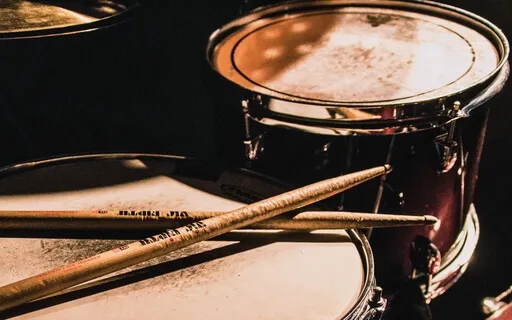
I think some drum circle stuff would be really good for these kids because you can do more complex rhythms with kids that are that age with different like sounds and timbres of different percussion instruments without necessarily needing more,
Some of the more skilled stuff.
Because this is a way to really get them listening to each other,
Communicating with each other.
And it's really fun.
It's a lot of fun.
So I had this group of sixth graders from the South Bronx who did not care about anything,
Right?
Because they had to be the coolest kids,
But they don't know how to be cool yet.
So the only way they know how to do that is to be like sarcastic and weird and awkward around each other.
And you put a whole bunch of different kinds of percussion instruments in their hands and they start to just bang on them.
And then you have to really go methodically and teach these different complex rhythms that interlock with each other.
Well,
What happens in a drum circle,
If you do it correctly,
Is they start to not just focus on their particular rhythm,
But they suddenly feel that rhythm in the context of the whole.
And so you've got five or six different poly rhythms happening at the same time.
And I remember it was just like a random Tuesday and we were rehearsing because I was going to have them perform this in like the year end concert,
Which all school music programs have to do.
We're just rehearsing and they couldn't,
You know,
It was a series of weeks where we couldn't get it quite right,
But they were having fun banging on drums.
And this week it just locked in.
And all of a sudden you have this whole group of kids who I realized it was working when I could drop out.
I didn't have to conduct or lead because they all of a sudden were completely tuned into each other and they had all figured out how one was part of the whole and it was just this harmonious,
Amazing moment.
Again,
Sort of similar to the class that I took,
We could just cut off at the same time and all of that synchronicity just kind of hung in the air and flowed out of every,
It was like the whole is bigger than the sum of its parts,
One of those moments.
And all the kids,
I mean,
I said nothing,
The kids went,
That was amazing.
Like you have all of a sudden this group of like really awkward preteens were like little children again and it was this transcendent,
Beautiful,
Amazing moment.
I'll never forget that.
Can I ask why you chose the piano?
It was when I knew.
I mean,
I started piano lessons when I was three years old and I took to it.
I mean,
It was a good fit.
I started with a Suzuki method,
Which doesn't require you to read music right away so you can learn how to play by ear before you are of an age where you can cognitively read.
So yeah,
I mean,
If you take conventional piano lessons,
You usually start when you're like six or seven,
First or second grade,
Once you can read.
But Suzuki method starts very,
Very young.
It sat with me.
I still,
I mean,
To this day,
If I'm like,
If I have my hand on my husband's leg or something,
If we're like watching a movie,
He'll just turn,
He'll turn over to me and be like,
So what are you playing?
And I'm like,
What?
Like my finger,
I always have music in my head and I'm always playing it in my fingers.
It's just the way my brain works and I don't even know I'm doing it.
That's so interesting because I do the same thing,
But with writing.
So I have this,
I don't even know.
It started when I was a kid.
It's probably just a nervous tick,
But I still do it every once in a while,
Like unconsciously this word will get lodged and I'll find myself when I'm really,
Really nervous or uncomfortable by a situation.
It's probably a form of self-soothing,
But I just write the same word over and over and over again.
I don't even know I'm doing it.
And then,
You know,
My boyfriend,
Like,
Yeah,
I'm in cursive,
Like on a page in cursive,
Like I'll catch myself doing it on my leg or I'll,
I'll be doing it on the table.
My mom's like,
What are you doing?
What,
What,
What word is this now?
What word is this?
And I'll,
I won't even know that I'm writing the word.
It's probably,
I don't know.
It's probably a self-soothing mechanism because I've noticed that I do it when I'm really uncomfortable or nervous,
You know?
It's so strange.
I've never heard of anyone else doing this,
But I haven't really looked it up and it doesn't bother me.
I mean,
I do it under the table,
So most people don't know what's happening.
So like,
At least,
I mean,
I could be doing other things that are worse,
I guess.
I don't know,
Drinking beer or I don't know,
Something like that to self-soothe,
Right?
There's so many other things I could be doing to self-soothe.
I just am writing.
So it's a- That's so fascinating.
So like literally,
I would,
If I were looking,
I would see your hand just going like this.
Oh yeah.
Oh yeah.
Oh,
That's so interesting.
I've never seen anyone about it,
But you know,
I don't,
It doesn't feel like anything that's,
I don't know,
Negative,
Overly negative,
I guess,
Or I don't know.
It's just,
Yeah,
I've done it since I was a kid.
I don't know.
And I don't even know how I capture the word.
It's maybe someone says something or it's so strange.
I don't know.
It's very strange.
So.
I don't think it's actually,
I think we're the normal ones and everyone else is weird.
Okay,
Deal.
Accept that.
I'm accepting it.
Thank you.
Thank you so much.
Thanks for listening to another episode of Bite-sized blessings.
And please,
Please,
If you think of it,
We're always looking for subscribers,
For ratings and reviews,
Those ratings and reviews that you take the time to do help others find us.
I need to thank my really talented guest today,
Reverend Julie,
For sharing her stories on synchronicity and resonance.
And I need to thank the creators of the music used for this episode,
Alexander Nagarada,
Chilled music,
Music L files,
John Bartman,
Winnie the Moog,
And Kevin MacLeod.
For complete attribution,
Please see the Bite-sized blessings website at bite-sized blessings.
Com.
On the website,
You'll find links to books,
Music,
Change makers,
And blogs I think will lift and inspire you.
Thank you for listening.
And here's my one request be like Reverend Julie,
Find out where you can channel the smaller parts to create a greater whole.
Where can you create resonance in your life,
Create the synchronicity and bring something powerful and beautiful into the world,
Something that might possibly change it.
And when you bring those moments into the world,
Know,
Just know that you're making this world a better and more beautiful place.
No no,
I was just going to say I had such a great experience.
I've been to New York once and I took a,
I arrived on the Queen Mary and took a cab to Penn station because I was getting on a train to go to Miami.
And you know,
I just finished walking the Camino through France.
I concentrated on walking through France.
And so I was in the cab and the cabbie was young,
Like 23,
24,
So young,
So cute,
So young,
Proud of New York.
Like you could never believe.
And I was,
He's like,
So where did you know what you got up a ship and what were you doing?
And I was like,
Oh,
I walk,
You know,
Mostly through France.
And I said,
One of my favorite parts was just,
You know,
Coming,
There's nothing.
And then you come up upon this really small village.
And then there's a church that's been there for 400 years.
And it looks the same as when it was built 400 years ago.
And I said,
Just the architecture is just so amazing.
It's so beautiful.
I loved it.
And he said,
Well,
You know,
New York has buildings that are way older than that.
And I was like,
What?
And he's like,
They,
We have way older buildings,
Like 600,
700 years.
And I was like,
Oh my God,
He's so proud of New York.
I don't think he knows what he's talking about,
But that's okay.
I'm not going to disabuse him of this notion.
And I was like,
That's amazing.
That's totally awesome.
I did not know that.
I just spoke.
That was so pastoral of you.