Hello,
Good afternoon or good morning.
Welcome to this launch party for the Honouring the Ancestors course.
Welcome in.
So good to see you all in here.
I'm very excited to be able to share this Honouring the Ancestors course with you.
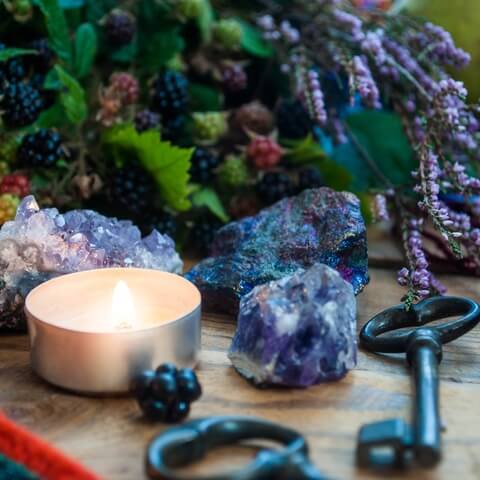
I'm just going to take a little pause and I've got here a ring that my grandma left me,
So I'll just put that on.
I've done some other things in preparation as well for the session.
So,
Welcome to the launch party for Honouring the Ancestors.
The course has been live for just about a month now on Insight Timer.
And I think about 600 people have come through it and it's always very rewarding to see people in there,
To see people engaging with the work.
So what I'll do today is I'll talk to you a little bit about the course,
Then I'll open a space for questions.
And we'll finish with a short practice,
Very short practice,
Just to honour the ancestors.
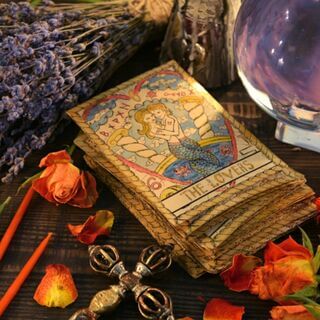
So I did a tarot reading for the Insight Timer community on Samhain last year,
That's the 31st of October.
And at that time I was already up,
I've been doing ancestor work for years and years and years and in lots of different ways.
And so I was already at this stage where my ancestor work was deepening or I was giving it more time,
More focus.
I was feeling more called to work with the ancestors.
And so I did a tarot reading with the ancestors,
Around the ancestors on Samhain last year.
And a lot of people in the Insight Timer community said that they would love to know more about ancestor work.
They wanted to know what it was and wanted to explore it a little bit.
So I wrote a course because that's what I do.
And so this course has taken about a year to sort of percolate and come through just under a year.
And it has been a really interesting process.
I've found it interesting.
There's been a real sort of creative tension because I've wanted to share everything that I know,
Which is not everything there is to know,
It's just what I know.
And I've wanted to share the wonder that I experience in my ancestor work.
So there's always an element of wonder,
Of awe,
Of deep connectedness that I experience when I do my ancestor work.
And I knew that I needed to write a course that would be accessible for everyone.
So,
You know,
Some ancestors we all share,
Some ancestors,
Sometimes we have different ancestors.
And I didn't want to make any assumptions about who would be using the course and,
You know,
What their ancestral story might be,
Because we all have different ancestral stories.
And so there was quite a bit of time while the course was being written where these sort of ideas,
Different concepts were turning over and over in my mind,
In my heart,
In my soul.
How did I write this course so that it's accessible for everyone and so that it can be meaningful for everyone?
So the course went through a few different drafts.
What we've got in the end of it is a 12 session course.
So I'll talk you through the different sessions and tell you a little bit about the practices in there.
So we start with this question,
Who are the ancestors and what is ancestor work?
And again,
This is a question that it's really challenging to come up with an answer to this,
Because who are the ancestors?
I'll talk a little bit more about that in a moment.
What is ancestor work?
Well,
There are lots and lots of different kinds of ancestor work,
You know,
And in many different cultures,
Different people have different approaches to it and different individuals have different approaches to it.
I would very loosely define ancestor work as any work that reinforces the connection and relationship with your ancestors.
There is an assumption,
A presupposition in the writing of the course and in the kind of ancestor work that is encompassed in the course,
Which is that the ancestors,
At least some of them,
At least some of the time,
Can be in relationship with us in some way.
So,
You know,
We don't know,
Nobody knows what happens when we pass on.
We know we're not here anymore.
Lots of people have got different beliefs and there is no right or wrong belief.
We just don't know.
My own belief is that we,
You know,
We go to different places and that one of the strong factors that decides,
You know,
What happens next is what our beliefs are around that and what our practices are during our life and also at the time of death.
But we don't know.
I don't know as a meditation teacher,
As a facilitator on the course honouring the ancestors.
I cannot say where those ancestors are or what they might be experiencing.
But there is a foundational belief in the course that we can have relationships with the ancestors wherever they are.
So it may be that those relationships have very clear lines of communication.
Some people have that with some ancestors or it may simply be that we work with our own relationship with them and that we can relate with them even when we can't communicate with them,
Even when we can't be with them as they were in life.
Because we do,
You know,
We have these emotions that are part of relationship.
We have parts of our identity that are influenced by our ancestral stories.
So we are in relationship with the ancestors no matter what.
And that's the foundation really of the ancestor work.
And then what are the actual things that we do to go about honouring that relationship,
Building that relationship,
Developing that relationship.
That can be different for each person.
What I've tried to do in the course is to create a consistent space where that relationship with the ancestors can be developed.
So I have had people in the classroom,
Had someone come into the classroom a couple of days ago and say they'd done the first practice and,
You know,
There weren't any benevolent ancestors that come.
And that word actually,
Just to digress a moment,
Is that in the classroom,
The space that we are creating is only for loving ancestors.
So,
You know,
Sometimes we have ancestors that we don't want to relate with and that's okay as well.
You know,
We can put that boundary up.
So in the classroom,
In the course,
What we're doing is creating a space where we can develop this relationship with loving ancestors,
With ancestors that are willing to support us and to be with us with love.
So someone came into the classroom and mentioned that they'd done the first session,
Which is just where we first go into that space.
We have a little visualisation.
We go inwards and find that place of the ancestors and no benevolent ancestors had shown up.
And so what I would say to that is that we also,
As part of our relationship with the ancestors,
We can't just expect them to come at our beck and call.
So,
You know,
Some of them may be there and kind of ready and waiting.
And as soon as we create that space and say,
You know,
I want to be in relationship with my ancestors now,
Some of them are there and they've been there all along and they're like,
Yes,
This is the moment.
And they come in and we can sense them and we're aware of them.
And that can be a very powerful experience.
But sometimes,
You know,
If we're new to the practice,
It might take a little time to establish that this is a space where we can have that relationship with ancestors.
And we don't know what they're up to.
You know,
They might not be snubbing us.
They might be doing something else.
But I would say that it's worth having a consistent practice just to try 12 days of the course.
But,
You know,
It could be a week or a month where you,
With or without the course,
Intentionally choose to create a space for relationship with ancestors,
For the honouring of the ancestors.
And some days they might turn up and some days they might not.
And kind of accepting that is also part of the practice.
Knowing that because they didn't turn up today doesn't mean they won't turn up tomorrow.
Once they do start to turn up,
As long as you are in that respectful relationship with them,
They probably will keep coming back.
So who are the ancestors?
I've divided in the course the ancestors into three types.
These are,
Well,
I suppose they're arbitrary.
I've seen different divisions,
Different categories,
If you like,
Of ancestors.
And at the end of the day,
You know,
People are people.
But the first is ancestors of family.
So this is the people who are the ancestors from your family.
So this includes our genetic ancestors.
Those that we wish to claim and to have relationship with.
And also includes those who brought us up.
And,
You know,
Sometimes that is the same group and sometimes it's not.
But both of those relationships will have energetic implications for us.
We are shaped by our ancestors of family,
Both those who are our genetic family ancestors and those who brought us up.
And those who brought them up and so on and so on.
So this is our ancestors of family.
Then we have our ancestors of spirit.
These are those who went before us in the path that we walk.
So,
You know,
For me as a Reiki master,
I honour,
Venerate and acknowledge Mikau Sui,
The founder of Reiki,
As an ancestor of spirit.
Because he is a Reiki ancestor.
He is someone who came before,
Not only came before me on the Reiki path,
He founded it,
But he also had a lineage behind him,
Who,
Although they may not have been practicing Reiki per se,
Were working with energy medicine and certain philosophies that are inherent in Reiki.
So our ancestors of spirit are those who went before us on any particular path.
And then we've got the ancestors of place.
And the ancestors of place are the people who were before us in the place,
Any place really actually,
That we have a relationship with.
So,
For example,
I'm from the UK and more specifically the north and northeast of England.
And so the people who lived before in the northeast of England are for me ancestors of place.
However,
Or also I'm now living in the Algarve in Portugal.
And so the people who lived here before are also for me ancestors of place.
So those are kind of categories of ancestors.
And they can be recent,
They can be immediate ancestors,
And they can be ancient,
You know,
Back to prehistory,
Back to before we know.
And in each of those types of ancestors,
As you learn about who went before you,
As you learn about who your ancestors are,
You will find that there's going to come a point whether it's very soon or the few hundreds years in the past,
Where you can't trace the line anymore,
Or not without it being becoming kind of a dotted line.
So we cannot trace our ancestry back in an unbroken line to anything.
And this is okay as well,
You know.
Part of working with ancestors is that they are individuals.
And they're also influenced by the cultures that they're from.
And the times that they lived in.
So connections to those cultures and times where we can't connect to a specific individual is also a good way to honour the ancestors.
Next,
We have the beloved dead.
So these are people that we knew in life,
Who are no longer with us.
Often these are people that we grieve,
Or have grieved,
That we remember,
That our relationship with them doesn't start as ancestor work,
It started as a relationship with another living human being,
And then they have passed on,
And our relationship with them changes.
So in the Course,
We have a space for just that,
Really to acknowledge the relationships that we have with those who have passed on,
With our beloved dead,
The love that we had for them,
Any emotions that come up as part of any grief or anything else that we're processing,
As our relationship has been changed from a relationship with someone who is living,
And someone who is not.
And included in the beloved dead,
There's also space for the unborn.
So some of us have losses before they have even been born,
And there is space for acknowledging that relationship,
There as well.
Then we have a series of sessions on healing.
So we start with healing the ancestors,
And this is where we go into why might the ancestors need healing,
Which ancestors might need healing,
And there's a space in the Course for ancestors to tell us what they need,
And we just send them some loving,
Healing energy.
And one of the things about this amazing relationship,
When we do ancestor work,
Is that as we heal the ancestors,
We heal ourselves.
Because that energy that sort of passes back and forth through time,
Through different generations,
As they receive healing,
So they are no longer able to pass on hurts down through the generations.
So when we heal the ancestors,
We heal ourselves,
And we can offer healing as an offering to the ancestors,
In lots of practices and lots of cultures,
Offerings to the ancestors are made,
And healing is an appropriate offering to make to the ancestors.
We have then a couple of sessions on mitochondrial Eve,
And why chromosomal Adam.
And I really like working with these characters,
I know nothing about them,
They are from so long ago,
My personal connection with them is,
Although it's something I feel very deeply,
It's also something that's quite hazy.
So mitochondrial Eve is the female ancestor,
Most recent common female ancestor of everybody who's alive today.
So that's traced through the mitochondrial DNA,
Which is passed on in the female line.
Mitochondrial Eve is a concept,
It's not an individual person.
So the person who is our mitochondrial Eve,
Might have been different 500 years ago,
And might be different 500 years into the future from now.
And the reason for this is that different branches of our family tree,
Sort of start up and die off.
And also that we just,
We haven't mapped the DNA of everybody in the world.
So lots of people have had their DNA tested and mapped,
And lots and lots of people haven't.
So as well as being the most recent common female ancestor,
Mitochondrial Eve is the most recent known common female ancestor.
And it's thought that mitochondrial Eve lived somewhere in Africa,
A couple of hundred thousand years ago.
And then we have Y-chromosomal Adam,
Which is our most recent common ancestor in the male line.
So again,
Who this is might change over time,
But this is the most recent common ancestor,
Or shared ancestor of all of us who are alive today.
And Y-chromosomal Adam,
That's in the male line,
People with Y chromosomes that pass that DNA on.
Y-chromosomal Adam is thought to have lived again,
A couple of hundred thousand years ago.
And it's unlikely that mitochondrial Eve and Y-chromosomal Adam ever met.
It's unlikely that they lived within the same time period,
Even within the same few thousand years.
And yet these two people are the most recent common ancestors,
Shared ancestors of all of us who are alive on this planet.
And I think that's amazing.
So we have a couple of practices just to connect with them and to connect with each other,
With our shared kinship.
There's a lot of division in the world,
And we like to sort people out into us and them.
But we're all us.
We're all the descendants of mitochondrial Eve.
We're all the descendants of Y-chromosomal Adam.
Then we have a session on healing ancestral patterns.
So ancestral patterns are those patterns that have been passed down ancestrally.
So these can be complex.
And you may have some patterns that you know about that come down ancestrally,
And you may have some that you're not aware of as being ancestral patterns.
So these are usually patterns of behaviour or of thought.
They get passed down to us.
So sometimes that can be that there's a particular pattern that everyone in a line does the same.
So you might have generation after generation who are drinkers,
For example.
Or sometimes it can be like it can swap around.
So you might have a generation who's a drinker,
And then a generation who won't go anywhere near anyone who drinks in reaction to that.
And then a generation who goes to drink to seek liberty in reaction to that.
So these patterns can be complex and can sort of twist and turn from generation to generation.
We have a little practice in there to work out your ancestral patterns,
Any that you'd like to heal,
And to offer healing to them and to offer yourself different ways of approaching whatever your pattern's about.
Then we have a session on remedying ancestral harm.
So I almost didn't put this session in here.
I really wanted to,
And then I had this whole thing of do I want to bring the concept of ancestral harm into an introductory course to ancestors?
So that,
You know,
It is an introductory course.
Only loving ancestors are invited into the space,
The ancestral space.
And so do I want to bring in ancestors who have caused harm?
And so eventually it became clear to me,
The ancestors have been with me working all the way through creating this course,
That it was necessary to put this in.
And when we talk about ancestral harm,
That might be ancestors of ours that have harmed each other or ourselves,
Or that have harmed other groups of people.
Now in the course,
I have encouraged people if they were the ones harmed by their ancestors,
Not to work with that.
You know,
That's something different that lots of people have trauma around that.
So that's not something to bring in to this course.
It's something to work through,
Perhaps with a therapist or in a more qualified,
In a more specialist space.
But there are a lot of ancestral harms that we can remedy or at least acknowledge.
So I've had a couple of people come into the classroom already who are living on unseeded land.
And as part of their work with Ancestors of Place,
To remedy harm done to Ancestors of Place,
They are involved in schemes to pay reparations to the people's whose,
Or the descendants of the people's whose land was taken.
So that's one way to remedying ancestral harm.
And in the practice,
In the course,
Again,
Those harmful ancestors are not welcome.
There are boundaries around that.
But we do examine what that harm might be and how we can start to redress the balance as descendants of ancestors who may have caused harm to people.
And we finish off with Ancestors of the Future,
And that's us.
So of course,
We are Ancestors of the Future.
Whether we have children or not,
We all have descendants,
We're all ancestors.
So,
You know,
Some of us will be Ancestors of Family,
Some of us will be Ancestors of Spirit,
Ancestors of Place.
And so as Ancestors of the Future,
Firstly,
What a wonderful thing to get to be conscious of that and aware of that and to act as Ancestors of the Future.
And what a responsibility we have to those who come next,
And even immediately next,
And then down the generations and down the generations.
So it's a space to think about that responsibility and also about what is it that is really important?
What do we want to gift to people to whom we are ancestors?
What do we want to pass on?
What do we want to share?
What do we want to preserve from perhaps from our own ancestors?
And how can we go about that?
This is not about saying that,
You know,
My way is the true way,
And everyone who comes after me has to do as I do and believe as I believe and so on,
Because that's really not going to work for a start,
And it's not a nice way to be.
But really about finding ways to pass on what is important with love,
With choice,
With agency.
And then we finish off with an integration session that pulls all of that together.
So that is a quick talk through the Honouring the Ancestors course.
I wonder if anyone has any questions about that?
I see a couple of people saying they've been having a few conversations after doing the course.
That's great that that is out there in the world.
Wendy,
Thank you.
I look forward to seeing you in the classroom there.
Claire asks,
Are all the ancestors human?
What a great question.
My immediate response would be no,
Because we know that we are descended from,
If we go far enough back,
Then our ancestors are not necessarily human.
So just in terms of sort of genetic ancestry,
You know,
We can all be traced back to amoebas floating in the water or something similar.
So that's one form of non-human ancestry.
And then I wonder if we think about,
If we connect with the reality that we are all connected,
That we all live in an ecosystem here on Earth,
Then by extension,
All the generations that went before us,
Human or non-human,
Would necessarily be our ancestors in some way or another.
So that's a really interesting question and something I might explore a bit more as well.
Laurie,
You're saying you're connecting with your grandmother who crossed before you were born.
And isn't it wonderful to create that connection,
To create that space?
Cheryl,
Thank you.
I look forward to seeing you in the classroom.
Jocelyn,
You're saying that you've almost finished the lessons on the ancestral course.
It's peaked your interest in searching for ancestral links.
And fortunately,
You had someone who did extensive genealogical searches on both your maternal and paternal sides.
So you've got a lot of something to go on.
And also you mentioned historical fiction.
I love historical fiction and I would absolutely recommend it to anyone who wants to get to know an era.
Sometimes when we think about people in the past,
We think that they're different from us,
From who we are.
We think that they're not the same.
We have all sorts of misconceptions.
If you read good historical fiction,
You start to be able to empathise more with the people who lived in the past and also to get an idea about what their day-to-day might have been like.
History is often taught with,
They call it the great man theory.
And so it's all about kings and so on.
But ordinary people experienced history too.
So if you can find good historical fiction about ordinary people,
Then you can really get a glimpse into not necessarily exactly how someone's life was,
But how it might have been.
Sarah,
You ask,
Is it possible to connect to family who are still here,
But not able to talk with us?
So I'm not sure about the context you're speaking of.
I would say,
Yes,
It's always possible to connect in some way.
I don't know if that is strictly an ancestor practice,
Might be part of an ancestor practice.
But certainly there may be many different ways to connect with someone who you're not able to talk with you.
Kim,
You've connected with an aunt that died tragically a few years before your birth.
Jocelyn,
You've seen how brave,
Resilient and amazing some of your ancestors were to go through all this.
And it really is,
It's a very connecting practice,
Is ancestor practice.
And on that note,
I'll invite you to join me and just we'll have a short practice together just to honour the ancestors,
Just to set an intention that we are willing to work with them.
So in the course,
We do a quick visualisation into the place of the ancestors.
And let's do that here as well.
So I invite you to be comfortable and then closing your eyes,
You can go inside and somewhere deep inside you is the deepest,
Stillest,
Darkest,
Quietest place within you.
Can you sense into that now?
And from that place within,
Just keep going if you're not already there,
In that place within you find the end of a thread.
So you might see this thread,
It might have beautiful colours,
You might not see it,
You might just sense it,
You might know it's there,
You might feel it.
You might just intend to find the end of that thread and that's enough.
And from that end of the thread in that deep,
Still,
Quiet place within,
Just start to follow that thread through your internal landscape.
Keep following that thread until it leads you to a great,
Rich tapestry.
So again,
You might see the tapestry,
You might notice its colours,
Its size,
It might not be clear to you,
You might just know that it's there,
You might just sense it there in front of you.
And as you get close to the tapestry,
Woven into it,
That this thread leads to,
Is a place of the ancestors.
Use your intention to step into or move into that place of the ancestors now.
And as you imagine yourself in the place of the ancestors,
Notice any aromas,
Any sights,
Any sounds,
Any sensations.
And you know that this is a sacred space where only loving ancestors can come.
And in this space of the ancestors,
Find a way to communicate an intention that you would like to develop and nurture your relationship with the ancestors.
And you might wish to make a small offering to the ancestors and you can do this in your mind's eye or out loud.
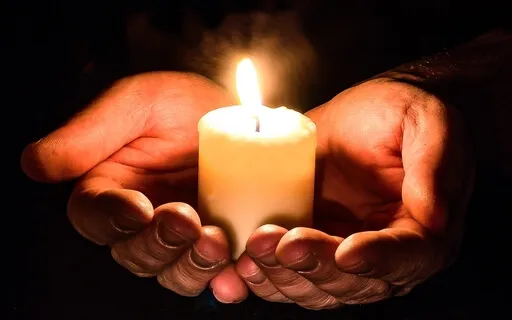
So you may wish to light a candle,
To pour a libation,
To offer flowers or words or a song.
It's an offering to the ancestors and as you make this offering,
Tell the ancestors what it is that you're offering.
So,
I acknowledge my ancestors,
I acknowledge the presence of the loving ancestors,
And I commit to nurturing my relationship with the ancestors.
And if there's anything that you would like to ask the ancestors,
To ask them to answer a question or perhaps to ask them to support you in something specific,
Even if it's just getting to know them better,
Even if it's just getting to know them better,
Or if it's something you're dealing with in your in your life,
You can ask the ancestors that now.
And then giving thanks to those loving ancestors who choose to be with you and take your leave of them,
Knowing you can always come back here and leave the place of the ancestors.
So stepping out,
Moving out of the place of the ancestors,
Moving out of the tapestry and following that thread back through your internal landscape,
Noticing any changes as you come back to that deep,
Dark,
Quiet and still place within you.
And from here starting to come back to the room,
So aware of your physical sensations,
Any need to stretch,
Aware of the sounds around you.
And when you're ready,
You can open your eyes.
Now although that was a short practice,
You may have gone deep,
So I do encourage you to take care of yourselves after this practice.
Have water,
Plenty of water,
Plenty of rest,
Have good food.
And if anyone does feel a little floaty,
Then food is a really quick fix to come come back into your body,
Ground yourself back in.
So that's our practice.
I will just explain actually before we go,
Why we have that journey to the place of the ancestors,
Why we don't just call the ancestors to where we are at any particular moment,
Although we can access that place from wherever we are.
The reason is because as with any practice where you're communicating with entities,
Energies outside of yourself,
That you want to have boundaries around that practice.
You don't want them turning up at all hours of the day or night.
You don't want them turning up when you're doing things that are private.
You don't want them turning up when you're focusing on something else that is happening.
So as with any relationship,
We set boundaries about when and where and how we are going to relate,
How are we going to communicate,
When can you come in and when can you not.
So that's why,
And again it is a personal preference,
But I think it's good hygiene.
That's why we make that journey through inside your inner landscape to the place of the ancestors before starting to do the ancestor work.
And you may also take your ancestor work to any sacred places in the physical landscape that you tend to work with as well.
So that might be,
You might have an altar at home or you might live near a sacred space outdoor,
Wherever it is.
But it is worth having those boundaries around,
Those norms about where isn't appropriate to be doing that relating.
Thank you everyone for joining me.
Heidi,
Cake for everyone.
I think that's a good idea.
It's a wonder,
Would be a wonderful way to finish the practice.
And if you do have cake,
Make sure to offer a bit,
Leave a bit to offer to the ancestors.
Thank you to those of you who've joined me.
You can find the ancestors course on my profile,
My Insight Timer profile,
Or you can search Honouring the Ancestors in the Insight Timer app and you'll find the course.
And I hope you enjoy it.
And if you do enjoy it,
Or if you have any questions,
Please do come into the classroom and let me know.
I check the classroom once or twice a week.
Everything that someone posts there,
I do answer.
So the longest you'll be waiting for an answer is a week,
But sometimes it's the same day the next day.
And the intention with that classroom is again,
This is a safe space to explore your practice.
Much love,
Much gratitude to all of you.
Love and gratitude to all the ancestors.
And have a wonderful rest of your day.
And I hope to see you in the Honouring the Ancestors classroom.
Take good care.