Welcome to Meditation for Beginners series.
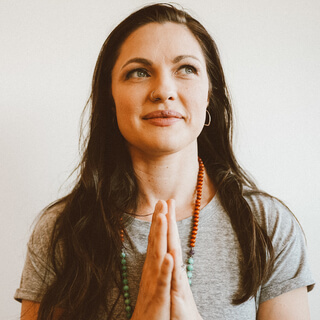
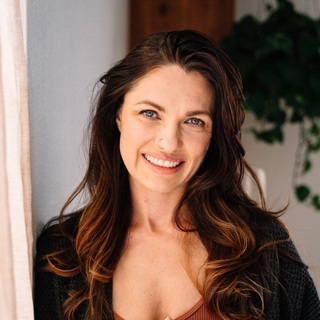
I'm Kelly Villarreal.
Whether you're new to meditation practice or simply returning after some time away,
This meditation will guide you through the experience of dropping into present moment awareness.
In my work,
I often hear from people,
I just can't meditate.
I can't get my mind to be quiet.
The good news is,
You don't have to.
The job of the mind is to think.
And beginning your practice with the idea that you have to turn off the level of thought sounds like a recipe for frustration.
Over time,
As your meditation practice evolves,
You might find that there is more space between the thoughts.
But simply bringing your awareness to the moment and practicing presence is meditation.
There's nothing to do beyond that.
So let's get started.
Begin by finding yourself a comfortable seated position.
Really take the time here to settle your body in a way that's completely comfortable.
Noticing any shifts or any movement that are needed.
And perhaps you could shrug your shoulders a few times up toward your ears and then let them roll down your back.
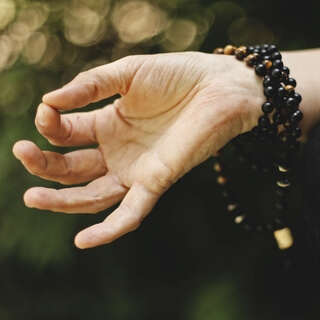
Find a comfortable way to settle your hands.
Open your fingers and allow any sense of grip to relax.
If you haven't already,
Allow your eyes to settle to close and take a deep breath in through your nose and release a settling breath out.
Start by bringing your attention into your body.
Notice how your body feels.
Notice the weight of gravity in relationship to your body.
Perhaps you can identify a particular physical sensation that called your attention here.
Whatever you notice,
Notice without judgment,
Other needs to change or fit.
Notice what is in the way the body feels.
You could begin to notice the body breathing.
The particular sensations of your inhale,
Where you feel the sensation of your exhale.
Begin to connect your senses.
You might start by noticing the quality of light behind your eyelids.
Notice if you could soften small muscles or the space around your eyes.
Could you allow your vision to rest in?
Could you soften your sense of looking?
You could come to notice the temperature,
The quality of the air in your space.
Notice the temperature,
The sensation of the air where it's in contact with your skin.
Notice the difference in sensation where your skin is open to the air and where your skin is in contact with your clothing.
Soften your sense of sound,
Sense of hearing.
You could let your attention notice the layers of sound inside your space.
See if there's a particular sound that you can identify and focus your attention there for a few rounds of breath.
You might notice if there's another distinct sound you could listen for and focus your attention on for a few more rounds of breath.
Notice your sense of smell.
Notice the sense of smell connected to the experience of taste.
Notice the sensations inside of your mouth.
You could come to notice again the movement of your breath,
The rhythm of your respiration.
Observe where you feel the sensations of your inhale.
What do you notice as the breath moves past the nostrils into the throat?
Where do you feel the chest rise?
What part of the ribcage moves to accommodate your breath?
Where and how does the breath move your belly?
You can notice in turn the specific sensations that accompany your breath out,
Where the belly softens,
Where the ribs settle,
Where the chest falls.
Anytime you notice that your mind has begun to carry you down a road of thought,
Just notice that that's occurred and direct your attention back onto your breath.
You might say to yourself,
I am breathing in.
I am breathing out.
I am breathing in.
Breathing out.
I am breathing in.
I am breathing out.
You might begin to send your attention out into your periphery,
Out to your fingers and out to your toes and find a little bit of movement there.
Take a deeper breath in and a complete full breath out.
Thank you for your presence and for your practice.