Welcome to the Future of Wellness,
Exploring self-transformation and holistic healing to unlock your inner potential.
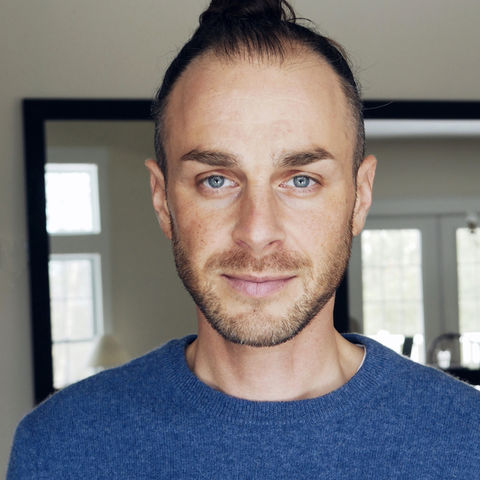
Hosted by Christabel Armstron and Keith Parker.
Hello and welcome to this spotlight episode on the future of wellness.
I'm your host Keith Parker.
Today we're going to be looking at craniosacral therapy and many of you may be familiar somewhat with craniosacral work and I'm going to describe the basics to you.
But one of the main things I hope to achieve in the next 20 minutes or so is to describe to you the two dominant schools out there.
The fundamental way people tend to describe craniosacral work,
Although we'll get much further and we'll get much more varied,
Is that it is a manual therapy,
A hands-on somatic therapy,
In which the nervous system is being attended to by the practitioner,
Particularly through the anatomy of the central nervous system,
The cerebral spinal fluid,
The spine,
The brain,
And the cranium and the sacrum,
The head,
The pelvis.
It's a body work based on listening to the nervous system,
Talking to the nervous system.
We're going to look at these two streams of craniosacral work,
One being craniosacral therapy,
Which is well known through John Upledger and he kind of uses the term craniosacral therapy.
And then there's another school or another approach that's quite different in many ways and that's called biodynamic craniosacral therapy.
And although there are a number of different practitioners,
The person who's really put their stamp on the modern approach and terminology there is Franklin Sills.
So craniosacral therapy originated out of osteopathic work and the osteopathic tradition.
Its kind of antecedents were called cranial osteopathy,
Where pretty much the bones of the skull were mostly being attended to in that the manual manipulation or attendance to those bones and the changes that could take place in them would bring about greater health in the individual.
And William Sutherland is the founder of craniosacral work and he was a cranial osteopath,
But he looked into all of these different mechanisms in different ways and he discovered something.
He discovered a kind of a breathing mechanism that your brain is basically breathing,
That your nervous system is breathing,
And that the cerebral spinal fluid that goes up and down the spinal column and goes into the brain,
What it's doing is it's filling and emptying and creating a kind of a pump.
And that that pump is like a pressure wave or a kind of pulsation or a kind of a breath.
And that that breath expresses itself through the head,
Through the cranial bones,
And that your cranial bones basically have some movement,
Have some flow.
And craniosacral work in part is hinged upon this idea that there is a movement available and possible within the articulation of all the different bones in your head.
And that what they're doing is they're actually expressing the way in which this deeper rhythm through the cerebral spinal fluid going through the spinal canal and being breathed,
If you will,
Or pulsated through that space most central to the body,
How that is then expressing itself through the brain itself,
Through the rest of the body,
Through the cranial bones,
And even the rest of the tissue in the body,
Particularly through the fascia.
And ultimately,
Sutherland came up with this term or they started to call it the breath of life.
And that's the way of thinking about it that's the most useful is that craniosacral work is about helping the breath of life express itself more fully through the body.
But what we're talking about is a kind of a breathing mechanism,
Something that's kind of drawing in and drawing out that has an inflow state and an outflow state,
Inhale,
Exhale,
And that there's a rhythm to that breath and that the nervous system when you listen to it more closely actually does this it indeed,
It does this.
My expertise is in energy healing.
And many of you may know me through my work in the world of energy healing and field dynamics.
Craniosacral work is really where I,
I cut my teeth,
As they say,
It's where I learned healing work and holistic healing work,
First and foremost,
As a practitioner.
And I spent a number of years doing craniosacral work,
Mostly studying through the lens of up ledgers work.
And I did all the core coursework and up ledger and many of the advanced modules.
And I also started to study biodynamic work as well.
And what I found was that within my own training period of approximately two or three years where I was very intensively studying it,
My perception was brought to,
In a sense,
The superficial or the first layers of perception that people tend to connect to when it comes to listening to the cranial rhythm and this phenomena of the breath of life,
As they call it.
And slowly as I became attuned to that,
And I learned to listen to it more carefully,
My perception of what was happening got deeper and deeper.
And I discovered that there were many more layers going on.
I discovered that there was a lot more beneath the surface or a lot more depth to this mechanism and this phenomena of the nervous system breathing.
And with William Sutherland,
Perception changed very dramatically as he practiced over the course of many decades.
And he was describing things very differently in his latter years.
And for me,
After the first six months,
A year,
Year and a half,
Two years of practicing,
My perception changed really dramatically in relation to what this cranial rhythm meant for me to attend to.
So let's say as a practitioner,
You put your hands on somebody,
Maybe you start to feel this rhythm and the rhythm is like an undulation.
It's like a breathing mechanism through the body and you can feel it through all of the tissues.
So you could place your hands on somebody's head,
For instance,
On both sides of the head.
You can feel what's happening locally near the head,
But you can also feel potentially what's happening in the hips and what's happening in the feet.
And that will sound strange to people who aren't used to body work,
But there's this uncanny ability that good and practiced body workers tend to get where you can connect to a person anywhere physically.
And once your hand makes that connection,
You actually can through the tissue of the body,
Through an extended form of sensing,
You can actually feel how the tissue is moving everywhere in the body.
And in particular,
What we're doing in cranial work is we're learning to follow this breath of life.
We're learning to follow the expression of this movement of the cerebral spinal fluid going up and down the spinal column.
So you can imagine like a tube right down the middle of the body.
And there's this pressure wave,
Right?
There's this like liquid being pumped up and down the center of the body.
And what that does is it creates a kind of a ripple effect outward in directions from the center.
And that ripple effect can be felt through all the different tissue,
Mostly through the fascia.
The other main place that is most focused with the cranial work is through the cranial bones themselves,
Through the head.
And you can feel how this cranial wave is being expressed through the rest of the tissue.
And the general idea is you listen to where there is a healthy breath,
Where the inflow and outflow and the rhythm is balanced,
Is full,
Robust,
Is being expressed at all and where it isn't.
And the areas where it's not,
That's where you want to attend to because there is in a technical sense called an adhesion,
Let's say,
Or a lesion.
And that is where there is some kind of an issue in the tissue.
It's where the breath isn't being expressed from this nervous system kind of pulse through the rest of the tissue of the body.
So a cranial practitioner learns to listen to the rhythm,
Find where there isn't an expression of the breath of life,
And then go ahead and to attend to those areas to get better breath into those areas that aren't breathing.
And that's the general overview of how that works.
There are two different approaches,
And this is where I'm just going to branch off and say there are two different approaches out there.
And there are more than two different approaches.
As I say that there's a spectrum of different schools and teachers,
But there are two dominant strains,
Two most popular strains of this out there in the world today.
Now I'm going to first strive up ledgers because up ledgers is a good starting point,
And it really is a great first entry point for a lot of people.
Sometimes it's called a structural one.
And the reason it would be called structural is because you're really learning to attend to,
In up ledgers courses,
You're learning to initially attend to specific anatomical structures to target them and to then improve the way in which this breath of life moves through them.
So let's say you put your hands on a person's head and you put your hands on the side of a person's head on the temporal bones.
And these are two bones,
One on the left,
One on the right.
They're mirrored paired bones that more or less are behind the ears.
If you as a practitioner were to notice,
Oh,
Well,
The right temporal bone is moving in a particular way.
And then the left temporal bone is kind of dragging behind it and is kind of slow and irregular in comparison.
The idea would be to improve the symmetry.
And what you would do is you'd say,
The issue is here.
I'm going to focus locally on the temporal bones.
And so you would essentially augment them.
You would pressurize the bone,
You would pull on the tissue,
Whatever direction or necessary correction would be done.
It's still very subtle and soft,
But nonetheless,
You would be essentially guiding the system towards the state of balance that you believe it should be when it's symmetrical and balanced.
And that's the general starting point in UpLedger.
You find a specific thing in a specific area,
And then you augment it in the direction that you believe it's supposed to go.
Another key thing in UpLedger is that you are learning to listen to the cranial rhythmic interface.
They call this the CRI,
The cranial rhythmic interface.
It generally is measured at about six to seven times per minute in terms of the in-breath,
Out-breath.
Remember,
We're listening to a kind of a rhythm,
Just like listening to your breath.
And that is the specific rhythm that is talked about in UpLedger.
And that's the kind of starting point you get when you take this structural approach.
You learn all the core anatomy,
All the different bones around the skull.
Of course,
You learn to work with the pelvis and the sacrum in particular.
And then there's ways of working with the whole body,
Like working at the legs,
Working in the abdomen.
You can work with the cranial rhythm through different organs and things like that as well.
But its greatest strength or its primary anatomical interface is going to be through the central nervous system and its associated anatomy.
There also are ways in UpLedger that when the system responds in a particular way,
And we might simply say,
Sometimes the breath gets arrested,
Where this cranial rhythm,
What it does is it falls off from the normal perceptual range.
And the practitioner will no longer perceive it.
Now,
Sometimes the differentiation here would be sometimes that's a state of stillness and peaceability.
But other times it's a state in which actually the perception is such that the reason it's changing is because something in a sense problematic is occurring.
And when that happens,
What tends to be the case in UpLedger is they switch to different modes of resolution.
And the particular way is to switch into modes of dialogue.
And the dialogue is to work with communication to different body parts,
To communicate with what they call a person's inner physician,
But different modes of communication in which the person is in a sense guided in their own inner healing journey and empowered through different kinds of communication devices.
Now,
This is the way in which UpLedger deals with the cranial rhythm going off the radar from this particular level,
The cranial rhythmic interface,
And then having a different skillset developed to add to the palpation skills in which communication is used to help to navigate the client to a space of resolution.
Those communication skills are sometimes called somato-emotional release,
SER.
That in a nutshell is the core of the UpLedger training and teaching.
There's a certain structure that is presented in UpLedger,
And it attends to particular levels or aspects of the cranial phenomena.
And that is what I'm describing to you here.
Where things jump off is where we get into what's called biodynamic craniosacral therapy.
And this is a much more energetic approach and it's really different.
And what it does is it shows you kind of the deeper layers and the deeper happenings of what's going on with cranial work in general.
And this is what my journey was.
And I'm going to describe it to you from a practitioner's standpoint,
Because this is going to give you insight before I describe the mechanisms.
When I would work with people,
I was experiencing something along the lines of,
Okay,
My hands are at the sacrum.
Okay,
I have one hand underneath the person's pelvis.
One hand may be above the person's pubic area.
I'm focused on the sacrum.
I'm focused on the pelvis.
I'm listening to the cranial rhythm.
And I noticed that CRI,
That cranial rhythmic interface taking place as there's this rhythmic pulsing breath through the nervous system happening.
And I'm attending to that.
And let's say I listened to that rhythm and that rhythm starts to get wobbly.
That rhythm starts to dissipate and to diminish in some way and starts to show a different pattern all the way to being,
Let's say,
Disrupted.
In the Upledger model,
What I might do is turn to the client and say,
Hey,
What are you experiencing right now?
And start to potentially use dialogue skills to help them find out what in their body-mind experience is taking place.
What pains they may be experiencing,
What memories or emotions they may be experiencing.
And this can be a very,
Very successful approach.
In the biodynamic approach,
However,
What the practitioner is orienting themselves towards are actually and primarily the deeper layers of expression that the breath of life and the nervous system breathing mechanism has.
And these they call the tides.
In the biodynamic tradition,
What they describe is actually fundamentally that there are three levels of breathing taking place as the breath of life and that the cranial rhythmic interface,
The CRI,
Which Upledger focuses on is actually a very superficial layer that they don't really even want to attend to so much.
And I mean that in the sense that the deeper healing takes place in the deeper tides when the person's system can calibrate and entrain the deeper tides and rather that the superficial level,
The cranial rhythmic interface is more of like a reflection of the things that are in a sense problematic for the person in that moment,
But it's that the deeper tides are actually where the potential health of the person is stored.
The greater resource of health and vitality is stored.
So you want to actually get to where the cranial rhythmic interface is not the place being attended to by the practitioner.
This is more of the biodynamic approach.
It's not to ignore the cranial rhythmic interface,
But it's to say the resource for healing is actually in the deeper tides.
So if you can imagine the ocean having a surface,
A mid and a bottom layer,
And if you saw the movement of the ocean,
What you'd see is at the surface,
There are certain kinds of ripples and waves at the surface.
And those are actually expressions of the deeper undertow beneath it.
And you go halfway down towards the floor of the ocean and notice that there is a mid tide.
There's a flow or a pressure gradient through the water that is deeper,
More formative than what's at the surface and that it informs the surface.
So there's more power,
There's more potency,
And there's greater organization at the middle layer.
But then you might notice that you can go all the way down to the base of the ocean,
To the bottom of the ocean floor.
And that in fact,
There's even a deeper tide and that that thrust and that pressure gradient is the deepest organizing force that has the most potency and is really the origin of the expression of all the layers above it.
And this is what the tidal phenomena is in cranial work and in biodynamic approach.
That is what they're focused on are these deeper tides,
Which are not talked about,
Which are not discussed or mapped or utilized explicitly in the Upledger model.
It doesn't make it better or worse.
It's just that these are different maps of the same phenomena with different modes of resolution.
As I return back to describing this as a practitioner,
This is going to make sense how the biodynamic approach works.
Let's say I'm going back to that place where I'm at the sacrum,
I'm at the pelvis working on somebody and the rhythm,
The surface rhythm gets disrupted.
What I've learned to do as a biodynamic practitioner is now listen to the deeper tides.
And naturally what happens,
The system will start to actually breathe differently.
And it's breathing differently because the body-mind experience,
The body-mind system is navigating into different territories.
And generally speaking,
What happens is that instead of being expressing through the physical tissue,
These deeper tides start to move into more energetic domains.
So in particular,
The first layer,
The mid-tide as they call it,
And this is what I was experiencing as a practitioner when I worked on people more and more clearly,
The thing that was a physical dysfunction,
Let's say pain in the hip or something of the breath expressing itself poorly through the hip,
It will turn into,
As it tries to heal itself,
As it tries to navigate into its source or root issue,
It will start to navigate into an emotional domain.
The idea is to go further than the mid-tide,
It's to go to the long-tide.
And the long-tide is when you go to the bottom of the ocean floor,
And that's when you get even past,
Let's say the emotional layer,
And you get more into a purely mental layer.
And these tend to be where memories are happening,
Tends to be where thoughts and beliefs are being explored,
And the person may be experiencing these things.
So this is what I would be experiencing as a practitioner over the course of a number of years practicing,
Is my perception went from physical,
Then it got more and more attuned to empathic resonance with people as I had more and more experiences of attuning to the emotional layer of the person's experience,
And these were tremendous.
But I had these experiences where I attuned very well empathically and emotionally to people over a number of months and then some years,
And then what started to unfold more was this long-tide phenomena in which very,
Very potent forces of reorganization would take place.
And very far off of the body would be where the activity was also taking place as my own perception of the person's energy field,
And you could say a certain kind of clairvoyance was being activated and developed in myself.
And so I would see that things would start physically,
And then most generically,
It would go from physical to emotional to mental,
And it would go from physical body space,
The activity,
And tissue,
To the emotional realm,
Which is usually a bit off of the body,
And it would be much denser in the sense of the energy would thicken and the emotions would get heavy,
And then things would get much further off of the body,
Sometimes three,
Four,
Five feet off of the body,
Where the activity to ultimately heal something physical was going out into extremely non-physical realms in the sense that it didn't occupy the space of the body at all.
And this requires a tremendous amount of presence on the practitioner's part.
This is a high-level skill to do biodynamic cranial work.
Now,
There is another layer past these three layers that I'm describing,
And in fact,
It's not a layer at all.
It's what they simply call stillness,
And it's when the system goes into a kind of a still point.
Now,
Upledger does have this idea of a still point,
Although they generally induce still points,
Or they notice certain still points,
And that's where the system kind of shuts off,
But it's not a freeze,
But rather a deep resourcing into,
You might say,
The infinite present,
Or emptiness,
Or pure potential.
So that is kind of the biggest arc that can generally take place in a biodynamic framework,
Is going through the three tides into stillness,
And then generally the system kind of folds back from stillness through the long tide,
Through the mid-tide,
Back to the cranial rhythm,
And then it's almost like everything gets reorganized at the mind,
Emotional,
And physical level,
And it's a pretty amazing thing to witness.
Cranial work requires practitioners to be very present,
And to be very still,
And very meditative in nature,
And in particular,
The biodynamic approach is actually extremely rooted in the healing potency of presence alone.
You could say that what biodynamic craniosacral therapy is,
An approach that takes physical anatomy,
And palpation,
And body work as a starting point,
But actually ties it into the healing potency of pure presence and meditation abilities,
Because meditation,
Presence alone,
Can do any and all healing that we can ever possibly imagine,
Really.
The most potent healing that can take place,
In the truest sense of what healing means,
Is actually through presence alone.
Biodynamic work essentially takes that,
And makes it a healing art,
Because you combine that with palpation skills,
And an understanding of physical anatomy and tissue skills,
And you can make this really wonderful dynamic.
If you're interested in craniosacral therapy,
Of course,
I recommend that highly.
I think it's a wonderful modality,
And it really is practitioner-dependent more than modality-dependent.
Some people might think in listening to this,
Oh,
Well,
I really like the sound of Upledge,
Or I really like the sound of the biodynamic approach.
I want to go find a practitioner that does those things,
And that's great,
But I actually think the number one thing in all of craniosacral work,
In terms of finding a practitioner,
Is finding a good practitioner,
Not the school.
What I found in my own experience is that craniosacral work gave me a wonderful platform to learn how to do holistic healing with people,
To learn bodywork skills,
And to learn how to have a therapeutic engagement with people at a very,
Very deep and profound level.
I will always be extremely grateful to my time in the world of craniosacral work.
I do continue,
When I work with people in person,
I pretty much approach sessions about 50-50 between a biodynamic approach and energy work,
And it just depends on what's needed in the moment.
Of course,
Sometimes it's going to be more biodynamic or cranial-dominant with some people,
And other times it's going to be more energy work dominant.
When it comes to people's self-transformation and their self-empowerment,
What I found is that nothing compares to energy work in terms of a self-practice.
Energy healing enables people to learn a practice that they can apply to themselves first and foremost,
And then with other people if they so choose.
The dynamics and the fun and the creativity involved in energy work and the philosophical implications are really,
Really profound,
And that's where I found myself being most drawn in the end.
Hopefully this has painted a picture to you of what craniosacral work is in terms of the different modalities out there or the different main approaches at the moment,
And also gives you some fundamentals as well and draws a general map.
Thank you so much for listening to this Spotlight episode.
It was a pleasure to share it with you.