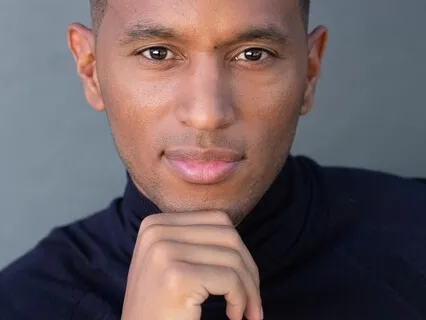
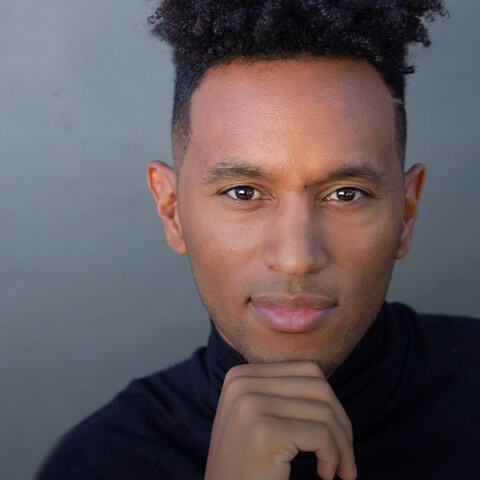
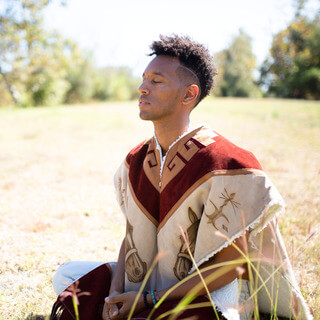
I'm Justin Michael Williams,
And welcome to the kingdom.
This is Spiritual Church for Everybody.
We begin each session with a prayer.
Let's pray.
Hands over the heart,
One over the other.
And today,
Actually,
Because the left hand is the hand that is more connected into the root of our hearts,
I want you to place your left hand over your heart and then your right hand on top of that,
Balancing the masculine and feminine energy here.
And just take a deep breath in and a deep breath out.
We are ready for love.
God,
Spirit,
Universe,
All that is,
All that ever has been,
And all that ever will be,
We thank you.
Thank you for bringing us here today together in the spirit of love,
In the spirit of grace.
May we each learn something new today,
When we learn something in the language of our own hearts and of our own spirits,
So that we can love ourselves and one another more fully and more completely.
So that we love our planet more fully and more completely,
So that we may love,
Period,
More fully and more completely.
May we wake up to what love is not,
So we can wake up from the delusions of our minds that try to grab us and pull us into directions that are not ours to go in.
May we anchor and rest in the current of your love,
In the current of your grace,
In the current of the love of this community.
We thank you for bringing us together.
This is the moment now for you to welcome in your own personal prayer and intention.
God of spirit,
Universe,
All that is,
All that ever has been,
And all that ever will be.
Even as we call you God or spirit or whatever it is,
Maybe remember that we cannot limit you to one particular state or feeling or even one particular name.
This all knowing,
The force of all that is.
We thank you,
We pray to you,
We call to you,
We are grateful.
Thank you for bringing us together and may all the words that are spoken today by me,
Our guests,
The videos and everyone in the chat box be used for the highest good and love for all.
So it is,
Ashe Aho,
Salaam,
Amen,
Sat Naam,
Om Shalom,
Awen.
Thank you.
Here we are.
Here we are today talking about the power of love.
The power of love.
And so we're going to get into love and we're going to explore it in some different ways,
In several different ways.
So love.
I want to tell you that a lot of what I'm taking today,
I've been reading this amazing book called All About Love by Bell Hooks.
And I'm going to be pulling some things from there and from several different places.
Love is this thing that is described so differently that can barely be explained,
Right?
That we can barely even understand what it is.
And so I want to read this quote from Bell Hooks' book.
And I thought this was really powerful.
So let me just open to the right page.
A reading from the book of hooks.
Okay,
So check this out.
This is on page four.
It says,
Love is the great intangible.
Everyone admits that love is wonderful and necessary,
Yet no one can agree on what love is.
We use the word love in such a sloppy way that it can mean almost nothing or absolutely everything.
And when the very meaning of the word is cloaked in such mystery,
It should not come as a surprise that most people find it hard to define what they mean when they use the word love.
And so we're going to explore this from a lot of different ways,
Because I wish that I told you all that I was going to come here and you're going to know exactly what love is,
Just like I have like a roadmap to love,
Like when we do manifesting and this and that.
But this topic of love is actually one of the greatest human questions of all of humankind.
It's something that has been explored from as far back as we can go of understanding and all the different opinions.
And so we're going to come at this as at a few different ways so that we can each by the end of this,
By the end of this form our own definitions of love and really deep leaf feel into the feeling of love.
Yes,
Beautiful Evie.
Love is so versatile.
So let us,
Let us jump in a little bit to this.
So you all probably know where I'm going to start those of you who've been here before with the etymology,
Okay,
Of the word love.
And there's from Old English,
There's in something called pi,
Which I don't know what language that is,
But something called,
There's this word lube,
Which is the first instance of where we find it.
And then my favorite,
Which is kind of what I want to just say from now on is lufu.
Lufu.
Lufu,
This is literally the word just before the English word love comes from a word lufu.
That was so cute.
And so lufu,
Right,
Has this definition of to care or desire.
And what's interesting is when you go deeper into the definitions,
They also constantly use the word love in the definition of love,
Which is really fascinating too.
Okay.
And then more on the etymology,
Okay,
There's this another one called lufian.
Okay,
So we have lufu and lufian.
Now the difference here is lufu,
Just pay attention,
Is a noun,
Okay,
And lufian is a verb.
And lufian is to cherish,
To feel love for,
To show love to.
And I found this really fascinating that you all know that I love like kind of messing with the etymology of all these different words.
And when I was looking at the etymology of love,
I found it so fascinating that no one could define love without using the word love in the definition.
That was really fascinating to me.
It was like definition of love or etymology of love.
It was like to love something deeply.
I'm like,
Well,
That doesn't really help,
Right?
Because we're trying to get to that word,
The lufu,
Right?
What does it really mean?
And so this just goes to show the confusion of,
And it's confusion in a beautiful way about this word that is so all-encompassing to all of us.
Now,
Let's talk about the difference between love as a verb versus love as a noun.
I want you to notice that because we sometimes,
And I'm going to come back to this a little later,
But I want you to notice that sometimes we look at love,
Right,
As like this thing,
Like there is this thing called love that I have to get to or receive or get,
Like it's a gift or a thing to have.
And then there is love as in inaction,
Right?
Like inaction within and through you.
And so I love,
There's this kind of phrase that Sianna Sherman uses that I think I mentioned to you before that she uses like,
I place my faith in the flow of love in action within me.
So I want you to feel that as a sentence.
I place my faith in the flow of love in action within me.
So there's this current of love and because it's a flow,
We know it's doing something,
It's a verb,
But it's also a noun because it's a thing,
Because it's flowing and it's inaction within us.
So we can enact it,
We can move it,
But we can also have it and receive it.
And so it's this really interesting thing,
Like in all the etymology and all the different ways that I've explored love,
There's explored words,
There's no word that is more mysterious to us than this word love.
And so,
But let me see if I can actually find this part.
I wasn't planning on telling you this one,
But I'm going to,
I'm going to pull it up.
So we talk about,
Ah,
Okay.
So in Bell Hooks' book,
Also on page four,
She says so beautifully that imagine how much easier it would be for us to learn how to love if we begin with the shared definition.
The word love is most often defined as a noun,
Yet all the more astute theorists of love acknowledge that we would all love better if we use love as a verb.
And I'll come back to this.
And so loving as a verb is how we place our faith in the action of love.
And we know based on everything we've talked about and manifesting and everything else that when we're putting something out,
That is what comes back to us.
If you want more love in your life,
Oprah says this all the time,
Be more loving.
If you want more joy in your life,
You be more joyful,
Right?
And so versus just trying to reach for it and grab it and get it and achieve it.
And so I'm going to explore this from a few different ways for us today.
And I think one of the big ways that will help us understand love a little bit more clearly is understanding what love is not,
What love is not.
And Mary Theresa,
Thank you,
And Carrie,
I want you all to remember,
Especially those of you who are new,
As I'm saying things that resonate to you from the book or from wherever,
I want you to type it in the chat box if you have a phrase that resonates with you,
Because that will help you remember it.
That will help you remember it.
So let's talk about what love is not.
So I would love to hear from you all in the chat box to hear what you think love is not.
Okay?
And I'm going to explore a few things as well,
But I want to give you a second just to type in what is love not.
And I want everybody to try.
Just do like the brothers Corinne say,
Dare to suck and just throw something out there.
What is love not?
Beautiful.
Beautiful.
Benilda said,
My husband said that to him,
Love is having no expectation back.
Beautiful.
So let's talk about,
Let's also talk about what love is not and I'll see that come through.
There we go.
Love is not desire.
Okay.
I see that VL Jill.
Love is not status.
Stacy,
Beautiful.
Well done.
I agree with that.
Love is not being right.
Risa,
Carrie,
Love is not expectations,
Clinging,
Controlling,
Kalani,
Love is not violence.
Janice,
Love is not pain.
Eric,
Hey brother,
Love is not hate.
Christina,
Love is not an expectation of someone else.
Love is not duty.
Love is not need.
Love is not dependence.
Love is not attachment.
Love is not ownership.
These are all things you all are saying.
This is beautiful.
Love is not grasping,
Possessiveness,
Control,
Obligation,
Jealousy,
Fear.
Love is not warm fuzzies all the time.
Love is not anger and unhappiness.
Love is not grasping,
Not pretending,
Not a tool to achieve,
Not control,
Not selfish.
A lot of you are saying possessions,
Sex.
Love is not sex.
Love is not miserable.
Love is not ownership.
Love is not a currency for trading.
Beautiful,
Allison.
Farron,
Love is not ownership,
Not attachment.
This is beautiful.
Love is not planned.
Love is not passion.
So look at all these things love is not,
Right?
This is amazing.
We can,
I think these are all true and we can unpack so many of these.
Love is not manipulation.
Love is not being someone else for,
Love is not being someone else to become someone's partner.
Yes.
Love is not inactive.
Okay.
I can go on and on,
But I think what I'll do right now is go on some definitions that I think will help us expand on this a little bit,
Knowing that everything that you just said is actually true based on all the research I did for this episode.
Okay.
So let's talk about that diaries.
Love is not your trauma bonds.
Love is not boastful.
Love is not codependence.
So here is one thing that I love to see.
Talking about what love is not,
A lot of us grow up thinking that to love is simply to want very badly.
That love is to want very badly.
And so we have to look at the difference and some,
One of you said this already is a difference between desire and love.
And even though so many of us know that love is not this,
Love is not that,
Love is not all these things that we said,
It's not being clingy,
It's not attachment,
It's not what it is.
In practice,
When we're practicing loving people,
And I want you to notice that I'm using the word practice,
We actually engage in all those things that we're saying,
We know that it's not expectation,
Withholding,
Changing ourselves,
All this stuff.
And so I want to look at the difference between desire and love.
So a little bit more etymology,
Desire,
This is something that I was almost in stay woke,
But ended up actually not making it into the book.
So desire comes from these two Latin roots,
De and situs,
Which means from spirit or of the stars.
And so desire is this beautiful thing,
Right?
Because desire is one of these things that actually helps us move.
And in a lot of many spiritual and religious and traditional texts,
They say that like without the energy of desire,
You have no movement towards action.
And so it's real desire that calls us forward,
Desire that gives us the energy,
Desire in our heart and in our spirit.
And so when it says it comes from spirit or of the stars,
Oftentimes,
I like to use the word desire as it relates to like finding our purpose or the desires of our hearts or writing the vision for our lives and creating a desire that's so big that it makes us move toward it.
And so what I believe here when I talk about desire versus love,
Is that we can have a desire for love,
Desire to love,
But love is not desire.
And it seems we say like,
Oh,
Yeah,
I know that.
But really think about how we practice it,
Right,
Especially in relationship.
Like is it wanting someone so badly?
And then that is what how we define whether or not we love them or not,
Or how much we love them or not,
Or desiring to talk to them,
Or desiring to be around them.
So is your desire to be around somebody indicative of how much you love them or not?
Is your desire not to be around them indicative of how much you love them or not?
Is your desire to talk to them or desire not to talk to them indicative of how much you love them or not?
I think not.
I think you can love,
Right,
Based on what everything is saying here.
You can actually love without desire for the person or the thing that you're loving.
But you have to have the desire to practice love in order to love anything.
Is this making sense?
Are y'all following me?
So you could,
Let's say there's somebody in your life who you don't necessarily like all that much,
Or desire to talk to all that much,
Or desire to be around all that much,
But you could love them dearly,
Right?
And on the flip side,
There's somebody who you could want to be around all the time,
But you don't love them at all.
Right?
And so this is an interesting way to look at.
And so the desire should be placed on our desire to practice love as a verb rather than to focus on the desire we have or not for a person or a thing,
Dictating whether or not we choose to practice love.
You see this?
This is complex.
Y'all following me?
Somebody tell me if you're following me on this one.
Okay?
You got it?
But do we have a desire in our hearts to practice loving?
And that is what desire moves towards as it relates to love.
Okay,
Cool.
Y'all are following.
Okay?
So this is my first time teaching this.
So it's very exciting to me to explore it in this way.
So let me talk to you about a word.
I'm gonna turn the music off for this one.
Okay?
I'm about to come for some of you.
So clutch your pearls right now.
Okay?
I'm about to just,
I'm just warning you because it came from me when I got it.
This is a word that I need everyone to know.
I need everyone to type this word in the chat box.
And I will promise you that after I tell you the word,
You'll probably never forget it.
But I need you to never forget it.
I need you to never forget this word.
Cathexis,
Cathexis,
Okay?
Get ready.
So the definition of cathexis is as follows.
The concentration of mental energy on one particular person,
Idea or object.
So I need you to remember that definition,
Okay?
It's a concentration of our mental energy on one particular person,
Idea or object.
This is the definition of cathexis.
And oftentimes,
We confuse cathexis for love.
So we're still exploring what is love not?
Now this is probably the sneakiest one.
And when I first read this in Bell Hooks' book,
I literally dropped the book on my face.
I just dropped it on my face because it reminded me of so many situations in my past and in my life.
All right.
I'm going to say this slowly.
I want you to put your hands over your heart.
Close your eyes.
Take a breath in and a breath out.
Great.
And now listen to this.
You can open your eyes and read this with me,
But I need you to listen to it very carefully.
Okay?
Listen to it very carefully.
Cathexis.
Most of us learn early on to think of love as a feeling.
When we feel deeply drawn to someone,
We cathect them.
That is,
We invest feelings or emotion in them.
Remember,
The definition of it is a concentration of mental energy on one particular person,
Idea or object.
So back to this.
We invest feelings or emotion in them.
That process of investment,
Wherein a loved one becomes important to us,
Is called cathexis.
And most of us confuse cathecting with loving.
I'm going to read it again.
Most of us learn early on to think of love as a feeling.
When we feel deeply drawn to someone,
We cathect them.
That is,
We invest feelings or emotion in them.
And that process of investment,
Wherein a loved one becomes important to us,
Is called cathexis.
And most of us confuse cathecting with loving.
This is all I'm telling you.
This is all in the first five pages of Bell Hooks' book.
Okay?
And it's very real.
Okay?
And I'm going to read a little bit more of this to you because this is important.
It says,
We all know how often individuals feeling connected to someone through the process of cathecting insist that they love the other person,
Even if they're hurting them or neglecting them.
Since their feeling is that of cathexis,
They insist that what they feel is love.
And so there's a couple things to unpack here,
Y'all.
There's a good handful of things to unpack here,
Actually.
Okay?
Number one,
The thing that I got here is,
I'll tell you a story.
So I remember,
As we go back to this word cathexis,
That I was dating somebody.
And this was several years ago.
Those of you who have read my book,
It was the relationship that I ended in the summer of 2017.
Okay?
And there was somebody who I was considering dating,
Wanting to date,
Thinking about dating,
But something in me felt that it wasn't right.
Right?
And I felt,
Hmm,
This,
Like I knew in my intuition,
This is not right.
But I really cared about him.
And I kept,
I couldn't stop thinking about him.
And there was a certain point where I broke it off,
Like I actually broke it off.
And I said,
This is not right for me anymore.
I'm letting this situation ship go.
And then after I broke it off,
I couldn't stop thinking about him.
I couldn't stop caring about him.
I couldn't stop feeling strongly about him.
And that's because I had confected with him.
I had placed a strong concentration of my mental energy on this person.
And I had built,
What it said here is feeling a deep draw towards this person.
And what happened to me in that moment,
The thing that really sets so much out of motion in my life is in that moment,
The decision that I made was I said,
It's been two weeks and I can't stop thinking about him.
I can't stop caring about him.
I must be hiding and blocking love because I must love him.
That's what I told myself.
I wrote it in my journal.
And then I went back and got back in the relationship because I had convinced myself that the cathexis was love and that I must have been blocking love because I wasn't ready for it or I was holding back intimacy and all of this.
And so this is,
And I'm laughing at you,
Melissa.
Melissa says,
I was not prepared for this depth of thinking.
I know,
Right?
Y'all know I don't play.
And so the thing here that was so important is once I kind of snapped out of the spell,
I realized,
Gosh,
And I ended up writing him a letter.
And I wrote him a letter and was very honest.
Robert Masters guided me through writing it.
It was one of the first letters I wrote with him.
And I actually told him,
I have to admit something to you.
I was never in love with you.
I was in love for how much you loved me and how much the feeling of our connection charged me up.
I was not,
I did not love him.
I literally did not love him.
And I can say that still to this day.
I was not,
I will say this.
I was not in love with him.
I think I loved him as a person,
Just like I love a lot of people,
But I was not in love with him.
And I told him that,
And it was this huge opening of my understanding of the difference between kafecting,
Which is I feel strongly,
I feel strong desire.
I want this,
I want this person.
I feel a strong emotional connection.
I've invested into this emotional connection and being in love or loving.
Two completely different things.
And so this felt really important because like the quote says,
We often confuse kafects for loving.
And I think one of the reasons is because we don't know how to define love.
And so there's so much to unpack here.
And so I'm just going to go back to this one piece.
Notice the very first sentence.
Notice the very first sentence.
Most of us learn early on to think of love as a feeling.
Love is not a feeling.
It couldn't be a feeling,
Right?
Because feelings,
Feelings come and go.
Feelings shift so often,
Like the mood changes.
And so if love was a feeling,
It's like you could love somebody and then not love somebody in and out in five minutes,
Right?
Like your emotions change and move all the time.
And so love doesn't necessarily,
The true love,
The true definition of love should be like the current that holds all of your feelings.
Because if you're really loving,
Loving,
Then you love despite what the feeling is.
There's this quote from Jim Selman that I think many of you have heard me use before.
And I think the power of emotions and the liberation experience and so many different things is that we cannot let our emotions or our feelings dictate our commitment to our path.
And so if we are on the path of love,
And I know so many of you,
I'm pointing at y'all.
Y'all know I get serious when I start pointing and now my thing's all,
Hold on,
Now my thing's all good.
So if we're committed to loving,
If we've committed to love,
We can't let our feelings dictate how much or if we're choosing to practice love.
So now we're understanding love in a bigger context,
Right?
So now instead of love being this thing that comes and goes,
But it's also a thing that we practice,
It's also a thing that we can have and maybe we don't have,
But maybe it's this ocean that everything is swimming in.
So what is love?
What is love?
What is love?
So this is beautiful.
I'm just reading some of your comments,
Right?
And so this is really important,
Okay?
This is really important.
And so I'm going to read something else to you.
I'm kind of in flow now.
I'm going off script.
So the last piece of what I read about this cathexis thing,
This is for so many of us who are in,
Who have been in or are in relationships or situationships or friendships or familial shifts and all the kind of things,
Shifts that can be toxic.
And she talks about,
I just want to read the end of this after cathexis,
This is page five and six,
Where Bell Hooks says,
We all know how often individuals feeling connected to someone through the process of cathecting insist that they love the other person,
Even if they're hurting or neglecting them.
When we understand love is the will to nurture our own and another spiritual growth,
It becomes clear that we cannot claim to love if we are hurtful and abusive.
Love and abuse cannot coexist.
Abuse and neglect are by net,
By definition,
The opposites of nurturance and care.
Often we hear of a man who beats his children and wife and then goes to the corner bar and passionately proclaims how much he loves them.
If you talk to the wife on a good day,
She may also insist he loves her despite his violence.
An overwhelming majority of us come from dysfunctional families in which we were taught we were not okay,
Where we were shamed,
Where we were verbally or physically abused and emotionally neglected,
Even as we're also taught to believe that we're loved at the same time.
So there's this complicated thing,
Right?
So are you really loving?
Are you really practicing loving?
Are you really receiving,
Are you thinking you're receiving love and you're not receiving love?
These bring up a lot of questions in our minds,
Right?
So I'll give you this part.
For most folks,
It is just too threatening to our lives and to what we know is our lives to embrace a definition of love that would no longer enable us to see love as present in our families.
Too many of us need to cling to a notion of love that either makes abuse acceptable or at least makes it seem that whatever happened was not that bad.
For most folks,
It's just too threatening to embrace a definition of love that would no longer enable us to see love as present in our families and in our lives.
So it's really hard for us to look at the true definition of love if once we really land on the real definition of love.
This is why I think so many of us run from the real definition,
That we realize that some of the people in our lives who say they love us aren't loving us at all,
That they're not practicing love at all.
They're practicing control,
They're practicing attachment,
They're practicing all the different things that we said.
And so we go into love.
So this is big,
Okay?
This is big.
And so when I think about children,
I think about children and what it really means to love your children,
Right?
And it doesn't mean that there's no discipline or all these different kinds of things like that,
Right,
Obviously.
And we practice this in our lives because I think people practice this with their children a lot.
But to really practice love with your children,
Right?
What does that really mean?
And with other people in your life,
I think that requires us to look at a different definition of love.
It's not about control.
It's not about them becoming what you expect them to become.
It's not about somebody being what you expect them to be.
And I'm saying all this right now,
Not based on what I'm saying,
Based on what you all said earlier was not love.
And so in what ways in our own lives are we now not practicing love?
Because as you know,
It has to start within.
So that brings me to,
I'll put some music back on for y'all because I know this is deep.
That brings me to this topic of self-love.
So this is a big one that we throw around all the time.
Self-love.
And I also want to take a moment,
Actually.
I need to take a second to know that I know that for some of us,
What I'm saying right now can be a little bit triggering,
Right?
Because we want to go,
Because it's hard for us to see the truth.
It's hard.
It's hard.
And this is why,
As I've been reading this book,
It's been falling on my face like this literally so many times.
I'm like,
Oh my God,
Looking at the ways in which I thought I was being loving and I'm not,
Which I thought something that I thought was love and it wasn't.
And it's hard to see this truth.
It's so hard.
And I just want to honor those of you who have something coming up.
If it's coming up for you,
Just take a breath.
You don't have to do anything about it right now.
You don't have to make some dramatic change in your life right now.
Just open up to what you are receiving and open to what you're hearing and know that you're safe and that it's okay.
Yes.
Yes.
And so,
Leslie,
Beautiful.
I'm loving all that you're all showing right now.
So some really deep realizations happening here that I just want to honor in the chat box.
I'm seeing them.
And so,
I just want to give you some space to process that.
I'm also going to go into this topic of self-love because self-love is one of these words that we throw around a lot.
And I want to tell you all a story about self-love that actually shifted something dramatic for me just this past year.
Just this past year.
And the reason I'm telling you a story is,
And I think the reason why we use songs and art and poetry and all this stuff to describe love is because it's so much easier to feel through story because we can't even define the word in the dictionary without using the word.
We can get into the energy of love when we feel these stories.
So here's one for all of you.
So many of you know that I had an eating disorder in college.
And it was bad.
It was short,
Thankfully.
I mean,
Short being like a year and a half long,
Which is short for most people who have eating disorders.
But it got kind of serious where I was doing all the things.
And right now I weigh about 160 pounds.
That's not true.
With COVID,
I probably weigh 165 or 170 pounds.
I don't know how much I weigh anymore.
We're not going to find that out.
But I'm about six feet tall.
Okay.
5'11,
But with my hair six feet.
And I weigh about 160 pounds or so.
At the end of my freshman year of college,
I weighed 115 pounds.
115 pounds.
And I think what this came from was,
And so many of you already know my story,
So I'm not going to go so deeply into it,
But growing up,
Hiding in the closet,
Feeling like the way that I could receive love was by achieving or accomplishing or perfecting.
Right?
So if I was really good at this,
Everyone loved me.
But the gay boy,
Justin,
Of who I just was,
That part of me was not lovable.
And so the way that I learned,
That I processed my trauma response to learning how to get love was to be perfect.
And so when I moved to LA,
The perfection,
I already was perfect at school.
I already got perfect grades.
I was already all in all those ways successful.
So I turned the perfection onto my body so that I could now,
Now that I was out of the closet for the first time,
I can now try to receive love from other men.
Right?
And so,
Or boys really at 18,
I guess men.
But there was this moment of,
Okay,
The way that I know how to receive love in all these other areas of my life is by perfecting myself.
And so if I want to receive love in a romantic relationship,
Then I need to perfect my body.
Right?
Because that was what I learned.
Obviously it's not accurate.
And so the reason I'm telling you all that story,
And we all have these things,
We all have these ways that we've adapted our trauma in our lives to how we think we need to show up in the world to be worthy of love is I had constantly all and I'm talking all the way up until this past November.
Was it August?
Whenever I was in Mexico,
November,
Whatever it was,
Okay,
When I was in Mexico,
August,
September,
October,
November,
I actually don't remember what month it was.
I was with Robert Masters,
Who many of you know,
Doing shadow work.
And what happened in that moment,
Okay,
What happened in that moment was I was talking to Robert about the fact that for my entire adult life,
I've been super active and very in shape.
So I went from being anorexic and bulimic to literally just working out a ton.
And I recognized because of COVID,
Because I've gained a handful of pounds in COVID and like,
I don't have,
The six pack is gone,
Y'all,
I got a little extra now.
And I have never had that.
I've never had that on my body in my adult life.
And I recognized right away that I was starting to feel self-conscious.
And I thought,
This is so fascinating.
I had worked so much on my self-love when I had the eating disorder.
But what I'm recognizing now is the reason I've been able to love myself is because I have still always lived up to the expectation that I had for my own body.
And now that my body's a little bit softer during COVID,
I'm finding that I'm not loving myself as much.
I was finding myself self-conscious.
I was finding myself not wanting to be shirtless.
I had a few friends ask me to go to the beach and I didn't want to go because I didn't want them to see me with no shirt on because I didn't look the way that everybody thought I looked.
And I felt really ashamed.
And I realized right there in that moment,
Oh my God,
I don't love my body.
I'm not loving my body right now.
I only,
Just like I learned to do,
I only loved my body when it looked the way that I wanted it to look.
And because it pretty much always was looking the way I wanted it to look,
I never really had to face the fact that I didn't really love myself.
And so this was big for me this past year,
Right?
And so when I was 19,
20 years old,
I worked on this a lot in therapy.
And so this was a beautiful moment for me to come back to this topic of my body that I had thought I had moved beyond with all the knowledge that I have now in my 30s,
Over a decade later.
So I'm telling this in detail for you right now because of this moment.
This is the clincher moment.
Robert Masters asked me a question and it literally,
It broke the system.
And I'm going to ask you all the same question.
It broke the system that needed to be broken,
The one that had kept me needing to be perfect.
And I literally can't do it anymore.
His question was this,
Justin,
What would you do for exercise or for your body or with your food if you weren't doing it to fix something that was wrong with you or to perfect something that you thought needed to be better?
I'm going to ask that again,
What would you do if it wasn't about fixing something that was wrong with you or perfecting something that you thought needed to be better?
And that like,
It tripped up my whole system of what my whole life really had been built upon of like,
No,
Perfect,
Fixing,
Accomplishing,
Achieving,
Improving,
Keeping it a status quo,
Then everything's good.
And so I had this moment of saying,
Oh my God,
I have never,
I have never in my entire life worked out once without trying to fix something.
Never.
I've never gone to the gym and gone to the gym and said,
Oh,
Like,
I'm just going because I love myself.
I'm going because I'm taking care of myself.
I only went to say,
Oh,
My arms need to get bigger.
This needs to get smaller.
I'm going to run because this needs to get bigger.
My chest needs to get bigger.
Let me do this because that,
And so this applies to your body,
But think about this in all the other areas of your life.
What would you do differently if what you were doing wasn't because something was broken,
But because you loved yourself so much that it was the right thing to do?
And so this kind of blew my mind because I didn't even know,
I didn't know what to do.
So for two months I literally couldn't work out because I was like,
Well,
I like,
Can I do crunches because I'm only doing crunches because I want my abs.
And so if my abs are like,
Fine how they are,
Then do I want to do crunches?
And I realized I was like,
I don't want to do crunches.
I don't want to do crunches.
I don't care about crunches.
And it's like woke me up.
It like woke me up from this spell.
And so I started to explore now.
Ooh,
It was a whole different thing.
And it's been a growth edge for me.
I'm still in it,
Right?
Like this growth edge of,
Okay,
What if I love myself?
What do I do now?
If I'm not broken,
What do I do now?
And that doesn't mean that you don't work hard or you don't grow or you don't achieve or you don't whatever.
But it's coming from a different place.
It's coming to expand your enoughness not to fix something that was wrong.
Somebody else write that in.
To expand your enoughness not to fix something that's wrong.
Okay?
And so it's been amazing.
So now what I've been doing is I've been doing deep exhale and dancing.
I've been hiking.
And the thing is,
Is these are actually things that I love.
Like I love hiking.
I love dancing.
I love yoga.
The reason I wasn't doing yoga is because yoga was an ineffective way to make my body look the way I wanted it to look.
But it's one of the things that I could do the most to love my body.
So if you're not broken,
What do you do now?
This is what self-love really is.
And it's a dance because it's not saying that we don't want to grow or we don't want to expand or we don't want to change.
And so the way I feel about like,
For example,
With my body now is okay,
Like when I'm on tour again,
When I'm on the road,
When I'm singing and dancing on stage,
Yeah,
I might need to snap my body into shape to do some like heavy fitness or something like that.
But I'm only doing it for the love of sharing my purpose with the world and doing it effectively,
Not to fix something that's wrong with myself and not to base my self-love on your body or any other aspect of yourself.
Okay?
And so this is beautiful.
And thank you,
Mary Teresa,
For all the retyping you're doing because it's beautiful.
And this is a big one.
What does it mean to expand on our enoughness and not to fix something that's wrong?
And this is,
For some of you,
It's going to be triggering because we haven't done this before.
So many of us haven't done this before.
And so what is it that needs to change in your life for you to actually love yourself more?
So I'll say this last thing about this.
I don't think I really ever understood,
Even though I've heard it,
I've taught it,
I've been in classes about it,
I've listened to podcasts about it,
I don't think I ever really understood the meaning of loving your body until I had that switch happen in the question of,
I am enough in my body until I had that switch happen in the question.
And so your question that you ask yourself is,
What would I do differently if I knew that I was enough,
If I wasn't doing anything to fix it,
But doing it because I really loved myself?
I loved my body,
I loved my voice.
So you can apply this.
I know there's a lot of singers here,
Right?
So we can sing and want to warm up and do all this stuff because we're trying to fix something about our voice that we think is not good enough.
I'm looking at you,
Alonzo,
Right?
And not because I know we both share this.
But what would I do differently if I wasn't trying to fix my voice if I was doing something because I loved my voice?
If my voice was enough and I was expanding that enoughness versus trying to fix something that was wrong with it.
So you see,
You can apply this everywhere.
All right,
Everybody.
So how's that for a self love talk?
So all of that leads to this question,
What is love?
What is love?
So I'm going to go back to Bell Hooks.
And this is something that Bell Hooks defines as love,
But in her book from a quote from somebody named M.
Scott Peck.
This is his definition in Bell Hooks book.
And it says,
Love,
He defines love as the will to extend oneself for the purpose of nurturing one's own or another's spiritual growth.
Explaining further,
He continues.
I love this part.
Love is as love does.
Love is an act of will,
Namely both an intention and an action.
Will also implies choice.
We do not have to love.
We choose to love.
This is beautiful.
Love is as love does.
Love is an act of will,
Namely both an intention and an action.
But the word will in here also implies choice.
We do not have to love.
We choose to love.
And so Cindy,
I think that answers your question beautifully.
And there's a little bit more.
Okay.
There's a little bit more here that says the practice is from Bell Hooks.
The practice of loving.
I want you all to really feel that word because we don't just love instantly.
Yes,
The universe is love,
But we have to choose to love.
Love has to be an intention.
The intention is not enough because you can intend to love somebody and do incredible harm.
And if we're doing harm,
We're not loving.
Right?
We can intend to love and do harm.
So if we're harming,
We're not loving.
You can intend to love yourself just like I was,
But be doing harm.
And if we're not harming,
We're not loving.
And when we find that we're harming,
What we do is we be kind and we love ourselves and then we choose to practice love instead.
We don't beat ourselves up for it.
We don't do all that.
We go,
Oh shit.
I thought I was loving and I'm not.
Now I get to practice again.
And this is why it's called a practice.
And so the practice of loving is a healing force that brings sustained peace.
I'm breaking all these down.
I know Magdalena always talks about peace,
World peace.
And so world peace is not something we could ever accomplish.
Sustained peace is not something we could ever accomplish unless we're practicing love.
And the constant practice of love is what brings sustained peace.
So this goes back to what we were talking about earlier about,
Well,
If the partner who's abusive or whatever is loving one moment then not loving,
Then there's no sustained peace.
There's peace in these little moments,
But there's no feeling of sustained peace.
And this goes beyond,
This goes well beyond how often you talk to someone,
How often you're in touch with them.
This is how you can have those people in your life who you talk to once a year,
But you constantly feel a sustained peace in your relationship because you're both practicing the energy of love.
There's no attachment.
There's no expectation.
When you show up,
There's gratitude.
There's love.
There's seeing.
There's no expectation of how often you're in touch,
But it's held in this wide open space of love.
And so this is amazing.
This is a really amazing way for us to see how can it be that somebody who we say we love who's in our lives every single day,
That we actually don't feel sustained peace with them,
But we feel sustained peace with somebody who we barely even talk to.
And that's because that's held more in the space of love.
Continuing from bell hooks,
I actually just want to anchor into the sustained peace.
I want you to feel that.
What would that feel like to be in sustained peace?
Well,
Guess what?
If you're practicing loving as a healing force,
Then we can bring about that sustained peace.
And I love one of the quotes that,
What's her name,
The white girl in the video with Oprah that just said,
Love is not something that we're supposed to even have forever.
It's something that's here to change us.
Glennon Doyle.
Beautiful.
And so this goes into the second point here,
Which is love.
It is the practice of love that transforms.
As one gives and receives love,
Fear is let go.
And as we live in the understanding that there is no fear in love,
Our anguish diminishes and we garner the strength to enter more deeply into love's paradise.
Yes.
I love Glennon Doyle.
I said white girl because she is,
But I love Glennon Doyle.
I'll see you all in the comments.
I love her too.
So Glennon Doyle said that the beautiful thing about love is not even something that we're meant to have forever.
It's something that is here to transform and change us.
And it's something that we practice and that can bring us sustained peace and that love cannot exist with fear.
And then I love this piece going back to this first,
First quote from M.
Scott Peck in Bell Hooks book.
Love is the will,
The choice to extend oneself for the purpose of nurturing one's own,
Your or another's spiritual growth.
This is the practice,
The power of love.
So as we close today,
I'd like to invite you into a short practice.
Just put your hands over your heart.
Close your eyes.
Take a breath in and a breath out.
And another breath in and another breath out.
And without making yourself wrong or without overthinking it or without even needing to make it perfect or right.
I want you to first answer this question.
What or who is something that you love?
And as you think of that person or that thing that you love,
That you're practicing love with,
That you're practicing loving,
I want you to imagine it with all of your senses.
Imagine what it looks like.
Are there any sounds associated with it?
Maybe if it's a person,
The sound of their voice or the environment.
Are there any smells associated with it?
And if not,
Don't force it,
Just trust it.
Are there any tastes associated with it?
Are there any tastes associated with it?
Are there any physical sensations to the experience of love,
Of loving this person or this thing?
How does it feel?
And then again,
What's the emotional quality in your heart?
Knowing that love is not a feeling,
Love is the practice and the action that you're taking and the energy field that you're creating.
And so what feeling does that produce in you?
Maybe it's joy,
Maybe it's happiness,
Maybe it's peace and contentment.
I believe that one of the byproducts of love is a sense of peace and rest.
To rest our faith in the embrace of love.
So feel yourself resting in the embrace of the practice of love that you're engaging in.
And I'd love you to open your eyes and then just type whatever that thing is that you're loving or that you love in the chat box.
This is beautiful.
And I love this,
Christina.
Christina said,
Oh my God,
I think I finally love myself because I'm constantly seeking sustained peace within myself.
That's beautiful.
And sometimes we don't feel it because it's a practice.
So type in anything that comes up for you.
What do you feel?
And also what is it that you love?
You can type it in here.
It's your child or your partner,
Your voice or yourself,
God,
Terry.
Beautiful.
Your ex,
Your son,
Yourself,
Your daughter's Devin,
Your grandma,
Risa,
Your best friend,
Eric.
Beautiful,
Everybody.
Your daughter,
Mary Theresa,
Your husband,
Lindsay,
Karina,
Your awesome kids,
Your parrot,
Brenda,
We love your parent,
Pete.
My mom,
Me and my sisters,
Alonzo,
Your mom,
Your husbands,
Your family.
So I'm going to ask you one more question that's going to go into your action.
It's going to go into your action,
Power action for this session.
Since love is a verb.
Place your hands over your heart again,
Close your eyes and now think of this person or this thing that you love and ask yourself this question.
If that person or that thing or whatever it was,
Was it broken?
If there was nothing to fix and nothing to perfect,
How would you love it more fully in action?
What would you do differently?
What would you do differently in action if there was nothing broken and nothing to fix?
See what arises and then open your eyes and type that into the chat box.
Here we are learning how to take love,
Not just into a noun as this thing that is there,
But into an action and a state of will that we can rest our faith in,
That we practice the healing power of love.
Mom,
I was thinking of you during my practice.
I love you so much.
Just feeling into the joy of that,
Loving my mother.
So beautiful.
And I invite you all into your power action.
And now a golden nugget.
So as we do with every single one of our sessions,
You can again close your eyes in just a moment for just a second and think there was a lot that I gave you today from cathexis and desire to Oprah and Glennon Doyle and Maya Angelou and self-love and resting your faith and all the things.
So if you had one golden nugget that you want to take away with you today,
What would that be?
And it takes about 20 to 30 seconds to commit something to the long-term memory.
So just think of one main takeaway because you're not going to remember everything.
What is your one main takeaway?
And then think about it for a few moments and type that into the chat box.
And now we'll all have this together and we can all see our kind of cascade of takeaways together here at the kingdom.
This is the power of love.
This is power of love.
I love all of you so much.
I love our community so much.
I feel like I really do practice love with you all,
You know,
And it's a beautiful gift and I'm reading your takeaways.
These are beautiful.
Love may not last forever,
But it's here to teach us lessons.
I will practice to just listen and not give so much advice and lessons and then we can just hike and hike.
Love is not cathexis.
Love is a choice.
Love is practicing.
Love is nurturing.
That's my big takeaway.
Love is a practice.
Love is a verb.
And I'm deciding as we close out the kingdom if I'm going to sing to you all again,
But my voice is feeling a little tired.
And so in the sake of me loving my voice after talking for an hour and a half,
I'm not going to sing,
But I just want you all to know I love you dearly.
And we rise together.
Let us close with our closing prayer.
God,
Spirit,
Universe,
All that is,
All that ever has been and all that ever will be,
We thank you.
By all the names you go by and by not limiting you to one particular feeling or state,
We know that we now understand more deeply the power of love.
Thank you for bell hooks,
For teaching us so much all about love.
Thank you.
We rise together and together we rise.
Bye for now,
Everybody.
I love you.
I hope you enjoyed this session of the kingdom.
One of the best things that you can do right now is share this session with somebody that you love.
It is only by each of us sharing inspiration in the corners of the world that only we can reach that we will rise together.
Thank you so much for joining me for this session of the kingdom.
I'll see you in the next one.
This is your moment,
Baby.
We are enough.
Let it shine.
We are enough.