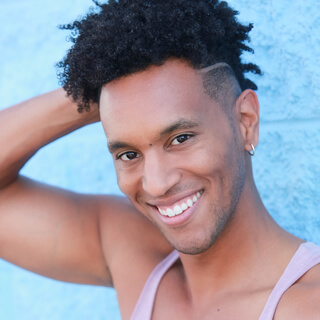
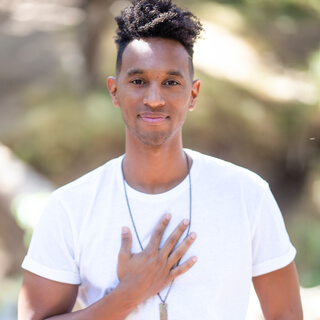
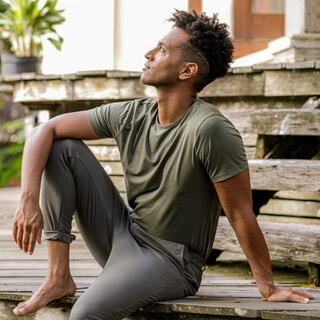
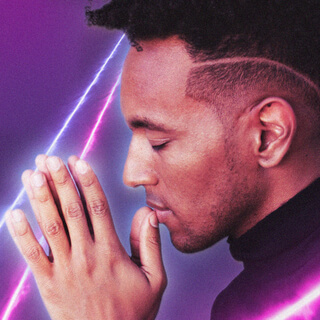
I'm Justin Michael Williams,
And welcome to the Kingdom.
This is Spiritual Church for everybody.
We begin each session with a prayer.
God,
Spirit,
Universe,
All that is,
All that ever has been and all that ever will be,
We thank you.
Thank you for bringing this community together.
Thank you for healing us,
And bless every single person in this community so that each person here today may hear the exact message,
May feel the exact thing that they needed to feel on this day.
So it is,
Asheh,
Aho,
Salaam,
Amen,
Shalom,
Sat Nam,
Awen,
Om.
Thank you.
So here we are,
Kingdom family.
Here we are,
Here we are,
Here we are,
Together,
Rising together.
And today's session is one that,
To be honest,
I'm shocked.
I haven't taught.
I actually had to look through my list to go,
Have I really not taught this yet?
And I'm very excited about this session today.
The power of belief.
Today's session is on the power of belief and how what we believe impacts what we think is possible in the world.
And thus,
The trajectory of our lives.
What we believe,
I want to say this again,
What we believe and what we choose to believe in impacts what we think is possible,
What we think is possible in our lives and in the world,
And thus the trajectory of our lives.
This is big,
Y'all.
This is really big.
I want to start this session with a little story to illustrate this to you.
This story is a really personal story to me.
And I call this story,
I Used to be Mexican.
And it's true.
I used to be Mexican.
Okay,
So I need you all to check this out.
My mom,
So follow this thread with me,
Okay?
My mom is adopted,
Okay?
My dad's black.
My mom is adopted.
Just hold there,
Okay?
My mom is not black.
My mom was adopted when she was just a few days old,
Barbara.
And when my grandparents who are Italian and Spanish adopted my mom,
The doctors told my grandparents who adopted my mom that my mom was a little Mexican baby.
They said,
Here's your baby.
She's Mexican.
She's this,
She's that,
Right?
Okay.
So our whole life,
Literally my mom's whole life,
My whole life,
I mean,
Not my whole life,
But for a long time in my life,
I grew up thinking that I was half Mexican,
Believing that I was half Mexican,
Identifying as half Mexican.
My mom,
Her whole life thinking she was Mexican.
Well,
Fast forward to about six or seven years ago,
My mom,
I wanted to take her on a trip.
It was seven years ago.
I wanted to take her on a trip out of the country because my mom had never been out of the country.
And because my mom was adopted and was never able to find her biological family at that time,
I said,
Wow,
What if I get an ancestry DNA test and see where my mom is from in Mexico?
And once I find out where she's from in Mexico,
I can take her to that spot in Mexico or even in South America just to see where she's from.
And so my mom takes the test,
I take the test and the results come back.
No Mexican at all.
No Mexican at all.
My mom is full Persian,
Middle Eastern and Italian.
Literally nothing from that whole region of the country.
My mom has nothing in her DNA.
I need you all to listen.
I grew up so identified with being black and Mexican that my screen name on AOL Instant Messenger,
For those of you who remember AOL Instant Messenger,
Was Black-sican-boy-22.
Yo hablo español,
Casa fluente.
My sisters,
My whole family,
I've been in like 15 quinceañeras.
I lived in Spain to study Spanish to get more ingrained in my culture.
This was my belief.
I was half Mexican.
And so for my whole life,
We put so much energy into building up and identifying with our Mexican-ness.
Okay.
So now we find out that we're Persian and Middle Eastern.
Okay.
So why am I sharing this with you today?
Well,
Finding that we're Persian and Middle Eastern,
Did that actually make me feel any less Mexican?
No.
It shows even culture,
Even culture is based upon belief.
Because the doctor,
Somebody with an authority,
Told my grandmother's family that my mom was Mexican,
We believed for generations,
Literally,
That we were Mexican and thus created our lives to fulfill this belief that we were Mexican.
And so how do the beliefs that have been ingrained in you from your own culture,
From your own family,
From your own religion,
From your own traditions,
Regardless of if you've grown beyond them or not,
How do these beliefs impact who we're choosing to grow into today?
And so this story taught me one of my life's greatest lessons is that our genetic makeup,
For example,
Has nothing to do with our ability to love and embrace all cultures.
Even with this new identity that we had,
I didn't feel less Mexican.
My mom still makes the bames,
Burritos,
Chilquiles,
Like that anybody can make.
And I'm about to start talking in Spanish on y'all,
But I'm not going to do that today.
And so it all boils down to belief.
All of this boils down to belief.
And so I need you to think about what are some of the beliefs that are ingrained inside of you,
Ingrained inside of you,
That may be impacting what you think is,
Like I said earlier,
What you think is possible and thus the trajectory of your life.
Just like us believing we were Mexican impacted the trajectory of our life.
I wrote my college entrance exam,
College entrance essay on being mixed with black and Mexican is not even true,
But I still got into college from it.
So do you see how beliefs impact everything?
So when we go into this more deeply,
Okay,
I want to be very clear with you all here why we're talking about belief because here's this word belief that underlines everything that is spiritual,
Everything that is religious,
Everything that there is for us to believe in or have faith in.
You can't get to any religion,
Any of these spiritual traditions without having a foundation of belief.
And so the power of belief and what we're covering in today's session is literally the foundation of everything that we do.
Those of us who are spiritual and seekers and those of us who are not,
It is the foundation of everything that we do.
And so the reason why I say that is because when you believe something,
It creates a conviction in your spirit,
A conviction in your spirit that then sends you forward into what you think is possible.
Now let me break this down a little bit for you.
Belief is a powerful word and it holds more weight than the word thought.
And I'll dig into this a little bit more in a moment because beliefs are the ideas that you hold to be true about the world and about your place in the world and where you belong in the world.
And so when we look at this concept of belief,
It's really important because think about what belief is.
Belief is what declares a guilty or innocent verdict on trial,
Whether the person did it or not.
Whether the person was actually guilty or not,
Committed the crime or not.
If the jury and the judge believes that it happened,
It doesn't matter if you did it or not,
It happened.
And that then impacts what is possible and the trajectory of your life.
Belief is what causes people to come together around their beliefs,
But also to kill and fight and wage wars.
Look what's happening in the Middle East right now.
And if we're not careful about our beliefs and what it is that we are choosing,
Because we do choose,
Once we're aware that we're having a belief,
We can choose to believe it or not.
And if we're not careful about our beliefs,
They can create massive separation,
Massive disintegration and a massive stuckness in our lives.
And the thing is,
Y'all,
Outdated beliefs and traditions get passed down from generation to generation and generation without anyone taking a moment sometimes to question whether or not that belief is either still necessary or valid.
And when that happens,
That's when things get toxic.
That is when toxic beliefs keep entire communities,
Entire families stuck in cycles of a person.
Oppression.
Because of what we believe.
And obviously there's more in the world that accounts for oppression and accounts for these different things.
It's not just our insular selves.
However,
What we believe and what the world then believes about us,
About people like us,
About people like you,
And how you choose to engage with those beliefs,
Impacts the reality that we co-create together.
All right?
Together.
And so when we look at beliefs,
I told y'all I'm going deep here today,
Okay?
Told y'all I'm going deep here today.
When you believe something,
It creates a conviction in your spirit.
So one of the things that you all will know is that I'm half very woo-woo.
There ain't no secret about that.
And I'm half a total neuroscience geek,
Psychoeducation geek,
Linguistics geek.
I love geeking out on the nerdy stuff,
Okay?
And the science especially.
And today,
One of the things that I like to do when we look at these words is to look at the etymology,
The origins of some of these words.
And I think you all will find this fascinating.
Of all the etymology I've done with you,
I think this is one of the most fascinating.
So listen carefully,
Okay?
Listen very carefully.
So the word belief,
The word belief comes from Old English and the original word was jaleefa.
Isn't that pretty?
Jaleefa.
And that then got into belief,
Which was actually spelled,
If you see believe,
Believe from jaleefa to believe.
And it was actually then spelled after that B-I-L-E-E-V-E and then B-E-L-E-E-V-E,
Spelled so many ways,
Which means belief,
Obviously as we know it,
And faith.
Belief in faith.
And so when we look at the origins of these words,
When jaleefa was even being used,
When the origins of what the word belief came from,
And the reason this is important,
You all,
Is because our language,
The language that we use impacts our ability to experience the world in a certain way.
When we strengthen our language,
We can strengthen the way that we can actually live because we can live in greater subtleties.
For example,
Look at,
This is a little aside here,
But look at what's happening in the world as it relates to gender right now and gender queer,
Right?
So there are people who can identify as they,
Them,
And be gender queer,
She,
Her,
All the different things.
Before,
I know it used to be like,
You gay,
You're bi,
You're straight,
Right?
And now there's people who are like,
No,
I'm straight,
But I don't identify as a male,
Identify as gender queer.
So I'm straight,
But I'm also they,
I identify as they,
Them,
And or this or that.
And so just with the subtlety of language,
We expand the subtleties to which we're able to experience life.
Language is how humans,
How we coordinate our reality together.
It's massive.
So this is why I always go to the language.
And when you look at the origins of even a word like belief,
Jalifa coming into play,
It meant originally to be persuaded of the truth of,
Listen to that,
Persuaded of the truth of,
Persuaded.
And this often turns into a doctrine or a system or a religion that is persuading you of the truth of.
It's not necessarily the truth with a capital T,
But it's a persuasion of what you should believe to be true.
And then what we believe,
Whether it's religious or not,
Spiritual or not,
Then becomes a religion of sorts in our lives.
What we believe is possible for ourselves,
What we believe in all these ways about our family,
About relationships,
About our art,
About how good or not we are at something becomes a religion because it's what we believe in.
And then I love this definition.
The earliest definitions is jalifa,
Believe a credit upon the grounds of authority or testimony without complete demonstration.
Do you all hear that?
A credit,
Meaning you're standing in the truth of it,
Upon the grounds of authority or testimony.
So somebody who has authority in the world or in your life or has told a story,
But that has no complete demonstration without complete demonstration,
Meaning you can't see it fully.
And this is what brings me,
What I was so excited about is the intersection of belief and faith,
Belief and faith.
It's crazy.
They're the same thing,
But this is going to shock you.
So this is the definition.
The definition of belief,
And this comes from the Oxford dictionary,
Belief,
The definition is trust,
Faith,
Or confidence in someone or something.
Faith,
Faith,
The definition is complete trust and confidence in someone or something.
So belief and faith,
Faith are the same thing.
A complete trust and confidence or something.
And what I always say,
Everybody knows this about faith is that fear and faith are the same thing.
Fear and faith are the exact same thing because both fear and faith require you to believe in something that you can't see.
And that hasn't happened yet.
Just like this definition of the origins of the word,
The second one,
A belief on the grounds of an authority or a testimony,
But without complete demonstration,
You can't see it.
It maybe hasn't happened yet,
But you're choosing to believe it as truth.
And so this is wild to me that belief and faith literally have the same definition.
And so far as in the dictionary,
Beliefs definition has the word faith in it,
But check this out.
This is how wild it is.
So,
And this is from etymology,
The Etym online website,
Where I look up a lot of my etymology,
You all can look this up.
Belief in the earliest words of it,
When it was spelled differently,
Meant a trust in God,
But there was a difference with faith.
They didn't use faith originally in the words faith to mean anything to do with divinity or spirituality.
Belief was exclusively for a trust in God and faith meant like loyalty to a person based on promise or duty.
So for example,
Like I'm keeping one's faith,
I'm keeping my faith,
Or I have in good faith or in bad faith or to be faithful or to be faithless.
And so originally the word faith had no notion of divinity at all.
But then as the definitions evolved and our words and our world evolved,
Faith took on a religious sense beginning in the 14th century and then belief had by the 16th century merged together because it was crazy.
They switched.
Okay.
Belief by the 16th century became non-religious and only about mental.
So then faith became spiritual and belief became non-spiritual.
And now in our age,
It's both.
And so we look at these words that started on polar opposite ends of the spectrum,
Switched and then became nearly one.
And so what you have to know everybody,
And this is the main dish here,
Is that some beliefs are good and help us and some beliefs are toxic.
Some beliefs are good and some beliefs are toxic.
And so in my book and in a lot of my work,
I know I often am talking about toxic thoughts and toxic beliefs.
And I want to be very clear here for you all,
Okay,
About the difference between what I,
This is what I consider the difference so that we can be talking about the same thing.
Toxic thoughts are about you.
Toxic beliefs are about the world,
How it works and your place in it.
You got it?
Toxic thoughts are about you.
I'm not good enough.
I'm not strong enough.
I'm too fat.
I can't do that.
Toxic beliefs are about the world and your place in it and how the world works.
And so beliefs hold way more power than thoughts because you live inside of the world.
At least part of you does,
Right?
Inside of the world partially.
And so if you believe the world works this way,
Then this is the context that you have the opportunity to even think inside of.
And so what we believe is the context.
What we think is the content.
What we believe is the context.
What we think is the content.
Our actions are the content.
And so here in this time when we shift what we believe,
We have the opportunity to shift the content of our minds and the content of our actions and step fully through and past the chains that sometimes bind us.
What you believe,
What you believe,
I need you all to hear me,
Impacts the trajectory of your life because if you believe something is not possible,
Then it's not for you.
If you believe you can't be successful in a certain domain,
Then you can't for you.
If we believe as a collective certain thoughts and beliefs,
Those thoughts and beliefs impact the reality that we all get to live in,
The content that we all get to live in together.
So I'm going to cover a few examples of some toxic beliefs so you can get an example of what I mean by the world and our place in it.
This phrase,
We are all one.
I don't understand why there's racism in this,
We're all one.
I wish people would just see that we're all one.
We're all one.
Okay.
So yes,
On a cellular level,
We're all made of the same stardust that creates the universe.
Yes,
I understand that race,
For example,
Is a construct that was just created to make us forget that we're all just one human race that evolved differently based upon our geography,
Literally.
And yes,
I believe that we are all equally valuable and all of us are searching for the same sense of meaning.
I feel emotional about this,
Of meaning and of purpose in our lives,
Regardless of our gender,
Our race,
Our creed,
Our economic standing.
But what we have to recognize is that as humans experiencing life on this planet,
We're not all one.
Yes,
In the spiritual domain,
Sure.
We're all one.
Let's check that box.
Made of the same stardust.
Great.
Sure.
But if we actually want to see change on this planet,
We have to stop spiritually bypassing reality and acknowledge that we do not all have access to the same resources.
We do not all have access to the same opportunities.
We do not all have the same economic bounty.
We do not all have the same experience of wellness in our body or of healthy food access in our communities or of education.
So even with the pandemic,
For example,
People are like,
Well,
What we really have in America and in the world is a problem based upon health.
And if people were just healthier,
This wouldn't happen.
Okay,
Great.
But that's basing it on the level like,
Yes,
That's true.
Check.
That is absolutely true.
And when you don't even have a store in your city that has fresh food and you do not have a car and you take the bus to work,
How are you supposed to get the healthy food that you need to be healthy?
And so people like us of privilege,
I consider myself of significant privilege in my life now,
Right?
I own that now differently than how I grew up.
And I can say,
Well,
If people just need to be healthier,
They just need to work out,
They just need to eat better,
Where are they going to get the food?
And then we're worried about vaccines and should you get it?
So what we end up arguing about is the content instead of focusing on shifting the context.
Do you see?
This is how it works.
And so the more,
And the last bullet point,
The more we keep perpetuating this idea that we are all one,
The easier it is for us to turn away,
Turn away from the places within ourselves and our lives and in our communities that need healing.
Because if we're all one,
Then everything must be just fine.
Why do we need to do any work on any of this stuff?
But when you recognize that we are not in the way that we experience reality all one,
You're able to look at the places in our lives and our communities that are in drought and feed them more water because you have enough.
And so this is an example of how just even a saying like we are all one can be a toxic belief.
Here's another one.
I'm going to switch this one around a little bit.
Rich people are greedy.
Rich people are greedy.
And so I remember as a kid hearing like,
Oh,
Those rich people over there,
They're greedy,
Those rich people there.
And then we hear about the way that we even look at some of the,
Whatever your beliefs are about this or not.
I have interesting beliefs about this,
But about people who have great wealth in our world and what we think they should be doing with their money.
And I do believe that people should give back in massive ways.
But if we run under the foundation of rich people are greedy,
Then it changes the context of our ability to even make money because we don't want to be greedy.
We don't want to be looked at as greedy.
We want to be spiritual.
We want to be good.
And so what I love,
This quote from MJ Harris is one of my favorites.
It's so,
So much one of my favorites that I put it inside of my book,
Malcolm MJ Harris.
He says,
Money makes you more of who you already are.
If you're a kind and giving person,
It gives you more resources to give more.
If you're an asshole,
It gives you more resources to be an even bigger asshole,
Right?
So the money isn't making you anything.
The money is making you more of what you already are.
And so the pursuit and gathering of wealth is not what makes us greedy.
It's what we do with the money once we have it.
And so just even going into a belief as simple as this that we have in the back of our heads,
Rich people are greedy,
Impacts our ability to build wealth for ourselves so that we have the opportunity to be more of who we really are.
All right?
So let's continue.
It's bad to get angry.
How many of you have felt this before?
I know this was me.
You know,
I grew up in a home with domestic violence,
Right?
And a lot of toxic masculinity in my life.
And so I had vowed as a kid that I was never going to be like those guys.
I was never going to be that kind of man who was angry and toxic.
Okay?
And so I became one of these people that was like,
I never get angry.
I never yell at anybody.
I'm never mad.
And then I learned a big lesson from my teacher,
One of my teachers,
Robert Masters.
And he's my teacher on shadow work.
And I learned a big lesson here is that that was also spiritually bypassing because it is just as important to be able to skillfully express anger as it is to express excitement or happiness or joy.
And like I said,
I used to be one of those people who bragged,
Literally bragged about never being angry.
And many of us think that anger is under,
Is bad,
Especially,
Which is understandable,
Especially if we witnessed only unhealthy demonstrations of anger when we were younger.
And so what you have to understand,
Healthy anger is about protecting what you love.
Unhealthy anger is about fighting against what you hate.
I'll say it again.
Healthy anger is about protecting what you love.
Healthy anger is about fighting against what you hate.
So this is big.
And healthy anger,
When it's about protecting what we love,
Is always coupled with compassion and love.
And this is what drives social justice movements and what initiates often change and growth in our own lives because we can get angry that the world is not a certain way.
We can get angry with ourselves that we haven't moved past certain limiting beliefs in our lives.
We can get angry with ourselves and it's okay because you can be angry and compassionate.
And that is healthy anger.
And that is the kind of anger that turns you on.
Oftentimes,
For example,
I think about smoking weed and I'm not going to,
I don't believe weed is bad or toxic or this or that.
I don't smoke anymore,
When I was younger I did.
But what happens,
I often see with people who smoke weed,
People who come and take my programs and all of this,
Is people will smoke,
Smoke,
Smoke,
Smoke,
This way,
I guess not this way,
Smoke,
Smoke,
Smoke.
And they'll have things in their life that they're angry or upset about or irritated about or feel distressed about.
And because they feel angry or distressed or anxious or whatever it is,
People will choose to smoke weed.
And they will say,
I'm smoking because it helps me relax.
But people,
I tell you,
Is one of the most common things people come to my programs,
Especially the 40-day program to work with.
One of the most common things,
Other than sex,
Addiction and alcohol and some other things,
Is the smoking of the weed often makes you comfortably numb,
Comfortably numb.
Because now that you don't feel the anger,
You don't focus on the thing in your life that actually needs to change.
Because you have to feel the discomfort to even know that you need to take a new action.
But if you've softened the discomfort so much that you don't even notice that you're uncomfortable,
Then it's like sitting,
Like what do they say,
A frog sitting in a pot of boiling water.
Boiling and boiling and boiling and next thing you know,
You're completely melted and you don't know how you got there.
Again,
I'm making no judgments about weed,
Cannabis as we like to call it these days.
What I am making a comment on is if we believe that it's bad to get angry,
If we believe that it's bad to get anxious,
If we believe that it's bad to be stressed,
There's good stress,
For example,
Working out in the gym,
Putting good stress on your body.
If we believe that these things are bad,
Then we won't turn toward them and then if we don't turn toward them,
Then we won't learn the lesson that the thing is here to teach us in the first place.
And so just like Magdalena so beautifully said here in the chat box,
With anger,
We're looking at the kind of anger that transforms.
It's beautiful,
Magdalena.
And if you're striving for growth and change,
You want to practice the skillful expression,
Not suppression,
Not suppression of healthy anger.
It's okay to feel the discomfort.
We're taught when we're kids a belief that it's not okay to be uncomfortable.
You got to lean into the discomfort to find the transformation inside of the shadow.
Okay,
Here are a few more that I'm not going to go into great detail on,
But I'm just giving you these for context because we're going to do a short practice together.
Okay,
Here's a big one.
No pain,
No gain.
How many of us have heard that?
Which just insinuates that anytime we grow,
It has to cause us harm,
Right?
Every time we grow,
It has to be hard.
It has to cause us pain.
That ain't true.
Not true.
Not what I believe to be true,
And so I grow a lot without much pain at all.
And sometimes there is pain,
So I'm not saying there never,
But if you say no pain,
No gain,
How you going to grow in your life without pain?
Okay,
Here's another big one.
Only insert the blank in the X,
People do that.
Only black people do that.
Only white people do that.
That's for Mexican people.
That's for girls.
That's for boys.
Girls don't like blue.
I see this with my little nieces.
He's like,
Boys don't wear dresses.
Girls don't wear,
Girls don't have blue.
I'm like,
Where is she getting this shit from?
She's five.
Right?
No,
Only girls like pink.
Right?
And you see how this creates a context in our lives that creates disintegration,
Removes our opportunities,
Keeps us stuck.
Because what if you're a little boy who loves Barbies and loves pink?
But if the belief system in your family and in the world is that boys don't like pink,
Only girls like Barbies and pink,
Then you have literally removed options,
Possibilities from life and the trajectory of your life.
Because who might you become if you were allowed to play with the Barbies?
What might your interests and hobbies be?
What might you choose to do later in your life based upon your experience with pink?
What might you create?
What might you wear?
Who might you hang out with?
Where might you go if you were allowed to like pink?
And obviously a lot of this is shifting.
So anything,
Only this person,
That person.
Here's a big one,
Y'all.
Okay,
I'm going to get y'all on this one.
This is a big one.
It's so important.
I included it in my book.
Okay?
I hate this quote.
And it's one that people say so fucking much,
Excuse my language,
That when I hear it,
I don't even correct people at this point.
I don't even try.
Like,
I just like shake my head.
And obviously if somebody's open,
I'll say it.
You can only love somebody as much as you love yourself.
Bullshit.
There is no science or evidence behind that at all.
There's no psychological evidence behind that at all.
It's not true.
It's not true.
How many of you have pets that you love just unconditionally,
Right?
Unconditionally.
That proves it right there.
Okay?
Listen,
This is a self-help myth.
The self-help myth says if you don't love yourself enough,
Then you'll never have real love.
But I learned this from a dear friend of mine.
Her name's Arielle Ford.
She's an author and a teacher.
And it's also proven in studies and psychology and science is that there's nothing more healing in your life than being in a secure,
Loving relationship.
Because guess what?
Your imperfections will always be there.
Those toxic thoughts may be there for your whole life.
You'll always feel if you're a person who's for growth that you'll have room for growth.
Being with a loving partner teaches you how it is and how to love yourself with your imperfections.
Not even despite your imperfections,
With them.
And so when you're with a secure partner who loves you for who you are,
Even though you may not love those parts of yourself,
That actually teaches you,
This is science,
Teaches you how to love yourself.
And so you don't gotta be perfect to be worthy of love.
So please stop saying that.
I can only love someone as much as love yourself.
It is literally not true.
Like you can look at this in your life,
Right?
I'm sure you have family members and nieces and nephews and parents and pets and all kinds of stuff that you love more,
Okay?
And more unconditionally than you sometimes love yourself.
So just look at the way that we do this,
Okay?
In our lives.
And when we do this in our lives,
It creates context because,
All right,
Check this out.
Let's go to this thought of you can only love someone as much as you love yourself,
Which to me,
And this is some of the most toxic beliefs of all,
Okay,
Is an either or belief.
I can either love myself fully and be with someone else or I have to figure out how to love myself first and then I can be with someone,
Okay?
Either or,
Which I'll get back into in a second,
How either ors are so bad,
Okay?
So if we look at this context,
If you can only love somebody as much as you love yourself and you set that as your belief system,
I can only love someone as much as I love myself.
What we believe impacts what we think is possible and thus the trajectory of our lives.
So if what you believe is I can only love someone as much as I love myself,
Then what you believe is possible is that you can't be in a relationship and you can't have love until you fully healed yourself.
And so the trajectory of your life,
Even though what you really want in your life is a partner what you really want in your life is love,
What you really want with your life is intimacy and connection,
What you choose to do is ignore the intimacy and connection and send the trajectory of your life towards just your healing and toward this perspective of I'm broken and I have to be fixed and until I fix myself in this direction I can't turn over here.
And so what you really want is a relationship but you spend your whole life single because you don't believe that you're worthy of a relationship until you have fixed yourself and so the trajectory goes into fixing.
Now notice what I said here,
Okay?
Listen carefully.
I talked about either or.
Either or.
And so in the example that I just gave it was an either or between fixing myself fully or going towards love.
But if you believe that I am worthy of love even with and in all of my so-called imperfections,
That instead of having to go either or you go both and give me both.
I'm gonna heal myself.
Give me both.
Give me both.
I deserve both.
You deserve both.
And so any time you have noticed in your life you have an either or mentality in your mind,
Okay?
An either or mentality in your mind.
I can either have a nice body or enjoy my food.
I can either be in a healthy relationship or have my creativity going off the chains.
I can either have kids or I can have a successful job or a fun life.
Anytime you see yourself creating an either or you know that you have conditioning,
A toxic belief stuck in your head that is creating a truth that you're choosing to believe in that has no demonstrable truth.
You're choosing to believe in something that's taking you down a path that you don't want.
And if you choose to solve for either or,
Then you're choosing not to solve for both and.
And I don't know about you,
But whenever you ask a question in your life and you try to solve for something,
You're going to get the answer to it.
You're going to get the answer to it.
And so I don't want to be solving for limitations in either or.
I want to be solving in my life for both and.
We don't want to solve,
Like Trey just said,
For scarcity.
We want to solve and believe in abundance,
In truth.
And what do we know to be true across every spiritual tradition?
What is it that we believe?
I'll tell you something that I believe,
That I hope that we all believe in,
And that many religious and spiritual beliefs tell us to believe is that we are created in the image of the Creator.
And if the Creator is full abundance,
Full abundance,
Full possibility,
Full,
Then why are we choosing to believe in scarcity for ourselves?
Before we do our practice today,
There's a story that I'd like to tell you all.
And this story is one of my favorites.
Many of you maybe have heard me tell this story before.
And it goes like this.
Once upon a time,
Long,
Long ago,
There was known to be a great river.
And this great river was known far and wide throughout all the land to have the most magical fish that the world has ever seen,
The biggest fish that the world has ever seen.
And so people would travel days and nights,
Far and wide,
To come find this great river to go fishing,
To bring these great big fish back to their families.
And so a young fisherman traveled for four days and four nights to get to the great river.
And he arrived at the river and he was excited and he saw the river with joy and he looked across the river and saw an older fisherman throwing and winding up his pole slowly and throwing his rod and his wire into the river.
And the young fisherman sat and watched the old fisherman in curiosity because it was his first time there.
And he saw the old fisherman,
Real inner fish,
And he saw him really struggling and pulling it in.
And the young fisherman is like,
Oh my gosh,
Look,
This is going to be the biggest fish.
Look how much he's struggling.
And the old fisherman pulls out the fish and holds it up,
Looks at it,
Sizes it up with his eyes and throws it back into the river.
And so the young fisherman is like,
What?
Why is he throwing?
That was the biggest fish I've ever seen.
Why is he throwing this back in to the river?
Does he want a bigger fish?
The young fisherman can't even believe that there could be a bigger fish.
So he throws it in the river.
And so the young fisherman just sits on his stoop and watches the older fisherman.
And he looks at him and then again,
He sees the older fisherman throw his rod in and then pull in and real inner fish and he's struggling,
He's trying,
He pulls it out and it's the biggest fish.
It's an even bigger fish,
The biggest fish,
Most magical fish that the young fisherman has ever seen.
The old fisherman looks up and sizes up the big fish and throws it back into the river.
And so finally the young fisherman is like,
Homie,
What's going on,
Man?
And the old fisherman is still there doing it again and again,
Throwing the fish back into the river,
Throwing the fish back into the river.
And the old young fisherman finally,
After he gets dressed,
He goes and runs up to the old fisherman and he says,
Hey man,
What are you doing?
Why do you keep getting these big fish that people would die for and throwing them back into the river?
And the old fisherman looks the young fisherman square into the eyes and says,
Well,
Young man,
These fish,
While these fish may be beautiful,
While these fish may be big,
While these fish may be fish that everyone desires,
These fish are too big for my frying pan.
And so I'm waiting to get a smaller one.
And I know this story sounds silly and crazy,
This little fable fairy tale,
But this is what we do with our dreams.
Our dreams and our ideas come down floating through the river of consciousness into our minds and we say because of our beliefs,
That dream,
That one big beautiful dream,
Not for me,
Not for someone like me.
I'm too fat,
I'm too old,
I'm too ugly.
People like us don't do that.
That dream,
Let me throw it back in.
It's better for somebody else.
And then another dream comes floating down the river of consciousness.
Another idea comes floating through your mind and you look at it and you size it up and you say,
Wow,
I would love this fish.
I would love this dream,
But I don't believe that someone like me deserves it.
So let me throw it back in and get a smaller fish.
When we shift what we believe,
We change our frying pan.
We get a bigger frying pan.
We can think to cut up the fish and share it with others.
We can take the fish and take what we need and offer the rest to those who are in need.
When we shift what we believe,
We can take the fish.
We can take the big dreams of our lives and fully honor them and say yes,
Because we believe that it's possible for us.
Let us close out today with a short practice.
Often times we have to first look at where our beliefs come from and how those beliefs are serving us or not.
And this practice is going to help us do that.
Because once you find where it's coming from,
It's like shining a light of awareness on it.
And when we have that awareness,
We can change the trajectory of our lives and what we think is possible.
Right now,
What I'd love for you to do is just have something to write with and then we're going to begin.
So once you have your writing device,
Place your hands over your heart,
Take a deep full breath in and a deep breath out.
And we're going to just take five deep breaths in and out.
Inhale deeply,
Exhale completely.
One.
Inhale deeply.
What do you believe?
Exhale completely.
Two.
Inhale deeply.
Hold it at the top.
Exhale what you don't need.
Three.
Inhale deeply.
What are you calling in?
Exhale completely.
Four.
Inhale deeply.
Hold this one for a moment.
Recall the intention.
What is your intention for today?
And exhale completely.
And now if you're comfortable closing your eyes,
I'll invite you to close your eyes for this one and I'm going to give you a few prompts.
And when you have the answer to the prompt,
I'll have you open your eyes,
Write it down,
Put it in the chat box,
Put it somewhere,
Then close your eyes again and you'll go to the second question and there are three questions.
Here's the first one.
A toxic belief that's holding me back is.
.
.
Fill in that blank.
A toxic belief that's holding me back is.
.
.
Just trust what comes up from your heart and then write it down.
Once you've written it down,
Take your time.
Maybe just pick one if you have multiple in your mind.
Just pick one for today is okay.
Two if you have to.
And then close your eyes again if you're comfortable doing that.
And then your second question is.
.
.
Where this belief might have originated is.
.
.
Where this belief might have originated is.
.
.
This is where you can think about where it came from.
Was it a family member,
A social group,
A religious organization?
Your ancestry,
Ancestors?
Where this belief might have originated is.
.
.
Then you go to the final one,
Which is.
.
.
How does this belief affect my life?
Every single session of the kingdom,
I give you a power action,
An action that you can take to take this work into your life more fully.
And today's power action is now that you know your belief and how it may have harmed you,
What is one new step that you can take in your life to move toward a new direction?
Now that you have this belief in your mind that has held you back,
What is one step that you can take in your life to move you in a new direction?
And it can be a big step or a small step,
A long step or a short step,
A quick step or a slow step.
But take a step,
Take an action.
And by action,
I mean not just thinking about it,
But doing something because it's those actions that change our lives.
It's that content that you're now able to step into once you've changed the belief,
The context.
So we'll close out here.
The last thing that we do in every session is a golden nugget.
So place your hands over your heart,
Take a deep full breath in and a breath out.
You can close your eyes if you're comfortable doing so.
And a golden nugget,
For those of you who are new,
The way this works is I taught a lot of stuff today,
A lot about beliefs and etymology and how it works.
You're not going to remember everything.
And so if there was one thing that you could remember today,
Just one thing that you could remember from today's session,
What would that one thing be?
And just think of that one thing in your mind a few times.
This is science-based.
Takes 20 to 30 seconds to commit something into the long-term memory.
So just think of it over and over,
Repeat it in your mind.
And then you're 40% more likely to remember it if you write it down.
So I want everybody to write down their belief or their golden nugget.
And so we can all have our golden nuggets,
A cascade,
A shower of golden nuggets here together.
So let us close now our session on the power of belief with our closing prayer.
God,
Spirit,
Universe,
All that is,
All that ever has been and all that ever will be,
We thank you.
Thank you for bringing this community together.
Thank you for helping us open our hearts and our minds.
Thank you for helping us believe in something greater.
Thank you for helping us be ripples of change in the world to our families and to those we love.
Thank you for gathering us here to help us remember to come back home to ourselves and who it is that we really are.
So it is,
Ashe Aho Salaam Amen Shalom Sat Nam Awen Om.
Thank you.
Remember to share your golden nuggets with everybody that you'd like to today.
It's a commitment that we make every single week that your golden nugget that you learned,
That you,
Because you've learned something new today,
You have commitment to share that nugget with somebody out in your life.
And it's in this way each of us becomes a ripple in the wave of change.
I love you so much,
Kingdom family.
We rise together.
Bye for now,
Everybody.
Thank you so much.
I hope you enjoyed this session of the Kingdom.
One of the best things that you can do right now is share this session with somebody that you love.
It is only by each of us sharing inspiration in the corners of the world that only we can reach,
That we will rise together.
Thank you so much for joining me for this session of the Kingdom.
I'll see you in the next one.
This is your moment,
Baby.
Let it shine.
We are enough.
Let it shine.
We are enough.