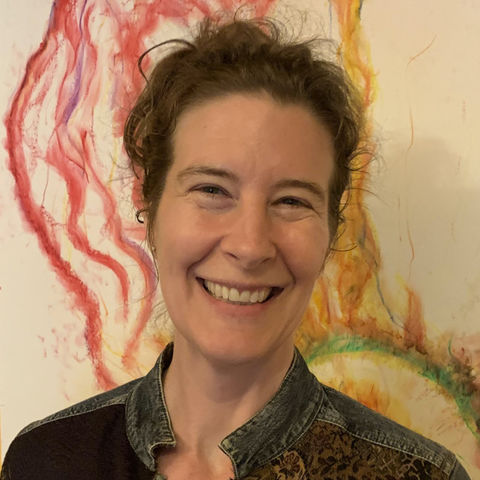
Hey,
Everyone.
Welcome to another episode of this thing that we don't totally understand,
But that we're calling sort of a podcast.
We have both Adam Risby,
Our wonderful co-host,
With us today,
But we also have a new person here,
Dr.
Joshua Weiss.
So let's everyone introduce themselves.
So besides me,
Because I'm always the first one to speak.
All right,
I'll go quickly.
I want to hear from Josh.
I'm Adam Risby,
A neurologist,
Intensivist,
Spiritual aficionado,
And love conversations around healing.
And I think that's part of what brought Julie and I together.
So I'm Joshua Weiss.
I'm a hospitalist physician up in Canada.
I also do group psychotherapy and group lifestyle interventions for diabetics in my outpatient practice.
Julie and I know each other because we're both fellows at the Institute of Noetic Sciences.
I'm the lead researcher for the Spontaneous Remission Project,
Something that's been ongoing for about four and thirty one years at this point at the Institute of Noetic Sciences in Petaluma,
California.
And yeah,
I'm also an assistant clinical professor at McMaster University in Hamilton,
Ontario.
All right,
Thank you.
And apologies in advance.
Joshua's audio can go in and out because,
You know,
Canada.
So we're doing the best we can.
And thanks for being here,
Josh.
We explicitly wanted to have Josh here because he knows a lot about mental health because he's a psychiatrist.
And we've been hearing from people who listen to this podcast,
Who have asked for an episode about mental health,
Because we've done a lot of talk about what is healing,
What is the body in physical health,
And now wanting to get at the essence of what it means to be healed in mental health,
Since no one's mental health is perfect,
Especially not now.
But what is healing and mental health?
And so that's something that we wanted to start with in terms of our discussion.
But who knows where it'll lead as usual,
We will find out.
So I have all sorts of thoughts on this,
But I would like to hear from Josh first and then maybe bounce some things around.
Sure.
So just want to say I'm not a psychiatrist.
I did train with many psychiatrists,
But I'm originally trained in family medicine and group psychotherapy is the main psychotherapy that I perform.
But I'm sorry about that.
I'm glad you corrected me.
That's okay.
Just don't want any false advertising for me.
But yeah,
You know,
The idea of true healing and mental health is,
Well,
True healing in both physical and mental health is something that's really dear to my heart.
And is the reason why I have created the kind of dual outpatient and inpatient practice that I have,
The experiences that I have with some of my some of my mental health patients,
You know,
The group psychotherapy that I do is for people with depression,
Anxiety and various addictions,
Both substance and behavioral addictions.
And there really is a difference between the people who jump in with their whole hearts versus the people who,
You know,
Dip their toes in and then everything in between.
Mostly in terms of how true quote unquote their healing is during the process.
Everybody gets some benefit but there's something really beautiful that can happen from jumping in completely and really having the desire,
The motivation to really take a deep look at yourself and understand what's going on inside.
Wait,
Wait,
What is jumping in completely really mean?
Because I can imagine if I were considering seeking psychotherapy,
I could imagine thinking of wanting to dip my toe in because I was scared.
And so how is it that is it that then someone thinks that they're bad and wrong if they don't jump in completely?
In other words,
Can you speak more deeply about that?
Totally.
So when,
You know,
When I introduced the type of group psychotherapy that I do is interpersonal group psychotherapy.
So it's not like cognitive behavioral therapy,
Though,
It's wonderful or dialectic behavioral therapy.
It's really about the experience within the dynamic,
The interpersonal dynamics in the room.
And because of that,
You know,
People get along or don't get along so well.
If you throw eight people in a room for 75 minutes once a week after a while,
But dynamics become clear.
And what I really mean by who's able to jump in and who's not able to jump in is certainly isn't about making anybody wrong or feel bad about their ability to jump in or desire to jump in.
All I mean is when we introduce the idea of interpersonal group psychotherapy to group members,
It's,
You know,
It's different.
It's really about being in the here and now,
Being able to process what's happening in the moment in these interactions between yourself and other group members,
And being willing to look in the mirror when you might hear from someone who says something about you that you don't agree with,
Says something about you that is a reflection of what they feel about your interaction with them.
To look at that and to be able to lower one's defenses.
And the more defended one is in the group room,
And I would say in psychotherapy generally,
The longer that it takes usually,
And I would say that that length of therapy or that length of benefit would be really related to kind of how deep you're able to get into it.
So if one's,
Yeah.
Well so,
But I guess I wonder,
I mean defenses are there for a reason.
So I guess what I don't want is someone listening to this and thinking,
Oh,
It's my fault that my group therapy experience didn't work because I wasn't able to lower my defenses.
But the thing is,
If you're not able to lower your defenses,
There's a reason for that.
Like the defenses are there for a reason.
So I don't want people to feel blamed for,
You know what I mean?
So yeah,
The important thing when I'm talking about looking in the mirror,
Looking in the mirror can be about looking in the mirror about being defended.
And that's the whole thing here is to be able to look at and process whatever is happening.
But there is also a tendency for everybody,
Not just the special people who can go deep or the non-special people or whatever,
I'm not labeling them in that way.
Everybody has a tendency to be defended and everybody has a tendency to avoid looking in the mirror.
Every single one of us,
No matter how spiritual we are,
It's hard to look in the mirror,
To see the good,
The bad,
The warts and all.
And those words include one's own defenses.
So to be able to talk about that out loud of,
Hey,
You know,
I feel uncomfortable or this,
I hate therapy,
You know,
Whatever it is that's coming up in the moment to be able to express that out loud,
One of the most important things is creating an environment.
And this is,
You know,
The onus really is on the therapist here is creating an environment where that kind of examination is safe.
You know,
There's something I wanted to point out here.
It's occurring to me that this is a microcosm of the macrocosm of life,
Right?
Maybe in a controlled setting,
But it's all it's life.
I mean,
We walk through our lives,
We have dynamics play out between our coworkers and our family members and everyone we know.
And to some degree,
There's more or less conscious awareness of that actually happening and being the case.
And here you have a,
I don't know if it's appropriate to say controlled,
But it seems fairly controlled setting with a set amount of people where you can be,
Where you can become,
Where you can be led into the awareness of these dynamics playing themselves out.
Because I imagine whatever's playing outside in the world is just going to reflect itself in this group of eight people plus or minus.
Yeah.
That word,
That word microcosm,
Oh,
Sorry,
Julia.
Oh,
No,
I think you were,
I just reminded me of a Petri dish kind of like you get to look at the microscope.
Yeah.
That word macrocosm is actually a really a perfect word,
Adam and the,
The godfathers of interpersonal groups like with therapy,
Irv,
Yalom and Mullen Lesh use that term macrocosm all the time and describing the therapy.
And I,
And I use it too.
That's really what it is being able to bring in the thoughts,
Behaviors,
Emotions that happen in our relationships outside of the group or outside of therapy into the group room and being able to have this environment where it's okay to explore what's actually happening.
There's something interesting that I find in how,
In my relationship with any other person when someone I know or even don't know,
Does something that I would normally label as wrong or bad or not good or what,
You know,
Pick your negative word of choice.
But if I can come to the point where I see where I can not judge it internally,
Like the feeling of judgment and then allow them to be however they're showing up as right now,
Like a product of their childhood or that's their world,
They're coming from their worldview and no one acts outside of their particular worldview.
You know,
Everything is a culmination of how they perceive the world and,
And they act from that point of view.
If I can see it that way and give them the space to be however they're being,
What it does in my experiences,
It creates that space for me too.
I'm much less likely to judge myself,
Much less likely to be upset at myself or self-critical,
But I can hold that same sort of space for myself.
It seems,
It seems healing for me.
Josh,
Do you find that when you're doing this work,
It's healing for you because you,
Because you said the onus is on,
You know,
The practitioner to create a space where people feel able to look at a mirror in a safe way,
You must be concentrating,
I imagine,
On unconditionally loving the people in the room,
Which has to include you.
And so I'm imagining that this opens up,
This opens you up too.
Is that true?
For me,
The most healing part of it is actually less the,
The unconditional love that I would hold for myself and much more.
Yeah,
Exactly.
As you say,
Being able to being put in a position where I am forced,
Where I must,
It's my duty to hold this,
This place of,
You know,
Deep compassion for the suffering of the people in front of me.
And as well as seeing these interactions that would be unhealthy or,
Or even sometimes toxic and being able to,
You know,
Have a zoomed out view of what's actually happening in the room and,
And keep me,
You know,
Maintaining certain safety and boundaries.
But yeah,
You know,
The the experience of sitting with a group of people and loving them as best that I can for 75 minutes once a week and getting to really know these,
These people and their ups and downs and beautiful moments and horrible moments.
It's,
It's very special.
It's that in and of itself,
Regardless of my own experience,
What I'm thinking or feeling in the moment when,
When I come out of the room having,
Yeah,
Just,
Just been able to feel for these people for that,
For that time.
It's,
It's a beautiful experience.
I'm wondering,
I'm wondering how or if that had,
I'm wondering two things simultaneously,
And I don't know if they relate.
So here's one thread.
Here's another thread.
I don't know if they relate.
So one thread is since COVID how has that changed the capacity at all because you're in Canada.
So you're having much less of a difficult time with COVID than in the United States,
But has,
Has that changed your capacity to get people in a room or,
Or during the time when there was fear about COVID in Canada,
Did that change?
And did that change your interactions?
So that's one thing I'm wondering.
And another thing I'm wondering is what could people do who are listening,
Who don't have access to group therapy that they,
Where they trust?
I mean,
You're a practitioner who sounds very enticing.
Like if I were interested in group therapy,
I'd be like,
Sign me up for Josh's group therapy.
Right.
Or Joshua,
Sorry,
Dr.
Joshua Weiss's group therapy.
Because,
Because I would trust this person,
But if they don't have a way to find someone that they would trust,
Is there any way to sort of do this kind of thing for themselves or with another person that they trust?
Those are,
I don't know if those two match,
But I kind of feel like there's something there because during COVID times,
That's this quarantine time,
You have the people that you're quarantined with and that's what you have.
So it's almost like a group therapy situation every day.
Anyway,
These are some thoughts.
You know,
You're,
You're right.
And people,
People need therapy a lot during difficult times like this.
I mean,
We haven't ever had something like this happen to us before,
But yeah,
Our,
Our volumes have certainly gone up over the last six months.
Which we,
We don't like to see.
But yeah,
You know,
So there's two,
There's two different questions.
I think they are related.
The,
The idea of how things change during COVID,
I mean,
For the first three months of COVID,
All we were doing was,
Was online.
So from mid March through till mid June,
Everything was online.
Starting in late July,
We were able to move back into into in-person,
But we've also been lucky up here that our numbers have been better.
And hopefully we were able to keep it that way.
But yeah,
You know,
The people,
What,
What people tended to need during the peak times,
Kind of peak anxiety was just a lot of,
A lot of warmth and support.
Be able to vent,
Be able to get it out and that's it.
There didn't need to be this looking in the mirror.
As important as that is,
You know,
This is a time of unprecedented stress for an unprecedented number of people or proportion of the population.
I mean,
I feel for you guys down in the States and,
But here too,
You know,
Especially during that time,
People just needed a place to talk and,
And to be heard,
To be seen.
But it definitely was a big shift in,
In what we were focusing on.
You know,
Related to that,
If there's nobody around who is a trustworthy therapist or someone that seems like a good fit,
That,
That idea of being seen and heard really is very,
Very important,
As I'm sure that lots of our listeners would know innately.
And people who are,
We,
We,
We have a sense of the people around us who can actually hear and see us who are able to get out of the way enough themselves to actually hear when we're needing help.
And whether it's a family member or a friend or,
You know,
Even a coworker who happens to be that really,
You know,
Wonderful person that you can sometimes go to in times of difficulty having some outlet of a person who can,
As I say,
Get themselves out of the way enough to listen,
Even for a short time is that can go a long way.
But yeah.
Two things I want to,
One path I'd love to dive down into is how to,
How to listen properly.
I think that's a really interesting conversation,
Which you alluded to.
But one question that I think I want to ask that's more pertinent is how do you,
How do you know whether healing has occurred in your context?
So for any success of any experiment or anything,
You need to define the outcome that you're like,
That you want to achieve,
Right?
So in,
In your group,
How do you know whether that outcome outcome is defined?
And a little,
A little background is I think on episode two or three that we did,
Julia,
We talked about how the traditional model of healing,
At least when it pertains to the physical body,
Is that the underlying disease at the diseased organ is cured or healed and no longer manifest disease.
And,
And we,
We talked how that might be a very limited perspective of healing,
That there may be healing that occurs on,
On other levels that are,
That are not physical.
That would be a more accurate definition of,
Of healing in its totality.
So that just that little background there,
Right?
Like if someone,
There's someone doesn't die because now the disease is gone,
But they're miserable and,
And suffering for other reasons.
Is that healing?
I mean,
So that those are the,
So yeah.
What does it look like?
What does healing look like where you're from?
So I would say healing as cliche as it might sound,
Healing is a journey and there are landmarks on that journey.
And some of the landmarks that I see first,
Usually the first landmark that I see is that people start to care more about the other people in the group.
So if there is,
You know,
One,
One group member suffering from depression or an addiction,
Often people enter a group,
Skeptical,
Suspicious,
You know,
Not,
Not particularly trusting or open.
And one of the first things that tends to,
You know,
Be a crucial step on the journey to healing is,
Is caring about the other group members and showing curiosity and asking and listening empathically.
And you can tell,
You know,
It's,
It's a shift that happens.
The,
The,
It usually comes hand in hand.
It's either just before or just after one's own desire to really share openly and authentically.
And once,
Once that happens,
You know,
That's,
That's kind of the,
The sign of going from dipping a toe to maybe dipping a whole foot or maybe getting both feet in.
And yeah,
As I,
As I said at the,
At the very beginning,
Being able to become a little bit more vulnerable is one of the really important aspects towards,
We all want healing from therapy.
So getting what we want out of therapy.
In the end,
Sorry,
Please continue.
I just have to,
Let's put a note in vulnerable.
Sure.
Okay.
So what I mean,
What I mean by vulnerability,
There there's a,
Well,
Okay,
We can,
We can earmark that,
But honesty and vulnerability are two maybe even sides of the same coin.
And but,
But we can,
We can earmark that for,
For a few minutes.
So the,
The eventual outcome,
The eventual,
You know,
Proof of healing is people know,
They say it and people know when they feel better.
It's usually,
You know,
For example,
We learn in medical school,
Adam,
But the,
Well,
I and Julia too,
You know,
For,
For depression,
Often people feel better as the last symptom to abate in depression and all of the other symptoms,
Eating more,
Having more energy,
Sleeping better.
Those things tend to come before mood and proves.
But in the end,
If people,
If,
If group members have taken all those steps on the journey,
They know they feel better and and they'll say it out loud.
So it looks like a,
You know,
A brightening more what it looks like to me is they're engaged,
They,
They care about the other group members.
They have expressed themselves and been honest and vulnerable in the group and and felt safe to do that.
And then eventually they,
You know,
They,
They feel like they've made really big steps in the direction that they wanted.
So just to summarize,
Because I think this is so,
This is like gold,
Isn't it?
Julia is like so amazing.
If we take that the microcosm is really that,
That your group sessions,
The microcosm of the macrocosm of life.
I would,
I would go so far as to say it's the,
It's a microcosm of the spiritual journey of the journey back to,
To,
To source or whatever people equate with that word.
Then you could identify the landmarks of that journey as being authentic expression,
Right?
Honesty,
Vulnerability,
And caring and compassion for others.
I mean,
Is that,
Is that not the major landmarks?
I think you have to self transcendence comes between honesty and vulnerability and caring.
Like you have that step and then there's the caring.
Is that,
Does that sound right,
Josh?
Is that a good summary?
I think that it's an excellent summary.
I would be hesitant to clearly define a temporal pathway that,
That this happens subsequent to this happens subsequent to this because sometimes these things are cyclical.
In fact,
They are almost always cyclical.
The issues that need to be explored in therapy tend to be like onion skins and there's a layer upon layer and that's okay and normal and but,
But in terms of the landmarks,
Yeah,
Absolutely.
I think you got it bang on.
All right,
We're coming back to vulnerability,
My friend.
So I'm promised,
Sorry to jump in there.
I got excited.
The vulnerability piece.
So when this,
In this series,
We've been talking a lot about time and space and how healing happens in time and how healing happens in space.
Vulnerability seems to me like an interesting name for becoming more permeable in a safe way.
So like vulnerability is really tricky,
Right?
Because people becoming more vulnerable,
Like it's actually a bad idea to become more vulnerable if you're not in a safe environment because then you become more permeable to things that are hurting you in a real way,
Not just perceived as hurting you,
But actually hurting you.
At the same time,
If you're,
If you can detect that this environment is different and you're now safe,
Becoming more permeable to other people is healing.
It's the same.
It's the same action in a different environment.
So you're,
So what,
Why vulnerability is so interesting to me is that because we could talk about these steps,
If you're doing,
If you're pushing these steps,
There's a difference between noticing the steps,
Sort of a descriptive process and pushing the steps,
Which is a proscriptive,
Prescriptive,
Depending on how you want to think about it,
Process.
And it feels to me like what actually ends up,
When healing works,
It's for everyone in the room,
Including the facilitator or the practitioner,
It's a descriptive process.
It's you're describing what happens,
But you don't have control over what happens as long as you're in an environment that is safe.
If you're,
If you're trying and it's almost like,
So it's almost like the other thing that flipping this around,
It feels like when you're in an environment that's not safe and you try to push those steps,
Um,
Then healing doesn't happen.
Like that's actually can be hurtful.
So it feels like there's something about the vulnerability of the whole system.
Like the whole system has to be vulnerable or recognize our humility.
Humility,
I think is the word you humble feeling of knowing we don't have control.
We're,
We're groping and we don't have control how this is happening,
But we're,
What we're doing is we're creating a place that's safe for this to happen and we're observing how it happens.
Is that important to you?
Cause it seems important.
Yeah.
And I think it's,
Um,
You know,
When you say the time and space aspects of healing,
I think that that's really important because you're quite right.
There is the safe space to be vulnerable,
But there's also even within that safe space,
There is a safe time,
Um,
Or a safe window of time.
You know,
There are some,
Some,
Um,
Uh,
Patients that I've had,
Uh,
Who come into group and have,
You know,
They,
They feel that this is,
This is,
This is amazing.
You know,
People can talk and feel heard and,
Um,
And jump right in and jump right in,
Um,
Faster than they would have wanted to in hindsight.
I know this because they've said it later on and,
Um,
End up feeling like it's,
It's,
Uh,
Not only harmed their process or no,
I shouldn't say harm slowed their process cause in the end it's,
It's okay.
Uh,
But,
But yeah,
Slowed,
Slowed their,
Slowed their process.
Um,
So yeah,
I think it's interesting to label the safe space and safe time.
Um,
Part of this,
One of the things that my,
One of my,
Uh,
Uh,
Most beloved mentors has told me,
Um,
When I have tried to be too proscriptive earlier on in my career,
Uh,
Was telling me to be a gardener and,
You know,
There are seeds to be planted at the beginning.
There are ways to model interpersonal psychotherapy,
But really I don't have control in the same way that a good gardener has no real control other than putting the water,
Making sure that the seeds are planted a certain space apart and all the rest.
But really it's up to the seeds to do their work.
And the gardeners job is to not over water and to not push,
But simply to watch what's,
What can be beautiful grow on its own.
Um,
And yeah,
It's a,
It's a very rewarding part of therapy when you get,
When you get the hang of it.
Um,
But both therapists and patients alike can feel that desire to rush things.
You know,
Your analogy reminds me of,
Um,
The,
The analogies used by St.
Teresa of Avila.
Have either of you heard of her?
I adore her.
I,
And that there's this wonderful,
I'm going to go find a wonderful poem about her right now.
Yeah.
So she,
She's also the,
Um,
The Spanish nun known for writing,
Uh,
The interior castle among other mystic works.
Uh,
One of the things she talks about is how on the journey of spirit,
Uh,
You have these moments that can be equated to gardening,
Where you plant the seeds right,
Um,
In fertile soil and then you,
You water.
And then she has this whole series of things of the different ways of watering,
Where at first she would have to walk a far distance,
Drop the bucket in a deep well,
And then haul the water up.
And it was very,
Um,
Tiresome labor intensive work,
And then haul it all the way back to the garden and water and keep doing that.
And,
And then there comes a point where after all the struggle,
Uh,
And,
And,
Um,
Difficult attempts at watering the garden,
Where you,
You don't see any benefit,
No outcome to all your efforts.
It's still just empty soil,
Right?
And you start to doubt yourself and question.
And,
And then you,
Then there are moments where there,
What she calls grace,
Which is rain basically,
Right?
It waters the garden for you.
You don't have to do anything,
But you have tons of water coming down and it just out of the blue.
And she calls that grace.
And,
And then there's the moment where you see the very first few sprouts come through and all,
All those periods of doubt and,
And self questioning,
Um,
Evaporate.
I just,
I've found that so beautiful and I've come back to that mental imagery over and over again in my life.
All right.
All right.
This is perfect.
I,
So I have this book by the side of my bed and I just happened to pull it up cause it's got a bunch of Teresa,
St.
Teresa of Avila quotes.
I'm going to read you this poem.
So it's called in a way the grain can feel.
Remember God that we are the plants in your fields.
So connected to the earth that you know what would happen if you did not rain upon us.
And if your light ceased to lift us from the ground and craft our bodies,
How might we near you?
Like the sun's remember God to love us in a way our souls can taste and rejoice in.
That's beautiful.
Thank you.
Beautiful.
Thank you.
Thank you.
Teresa.
So yeah,
It's that,
That she's that,
That longing of,
Um,
Please God,
Remember to love us in a way that our souls could taste and rejoice in that,
That longing of someone who can make things safe for you and help you thrive,
Even though they're of such a different mind.
I mean,
Clearly she acknowledges that this God that she's talking to is of such a different mind than a human mind,
But she's like,
You know what,
Because you love us because you love humanity so much,
You have to do the work of modeling our minds and loving us in a way that we can appreciate.
And so she's almost chest hasn't got a little bit like,
Yeah,
We're,
We're in your fields,
But like,
Don't mess around with us.
Like be tender with us,
You know,
Because things can suck.
And when things suck,
Um,
We need you to get who we are because we don't have your God's eye view.
We don't have your view of the universe of that everything has meaning,
And we don't understand why people have to suffer.
And,
And that's really hard to understand when you,
When you love someone and when you love yourself or you're trying to love yourself.
So I think that's a really beautiful,
That speaks to this mental health piece of it feels like such an interpersonal magic when someone can like Adam was saying the importance of listening,
Someone can listen and then respond as if they've correctly modeled who you are on the inside.
It's like you exist.
And it's almost like you don't exist if they can't do that.
That I'm actually interested,
Josh,
If you are able to go into a little bit about successful listening or effective listening,
I'm not sure what the right term is for that.
But when you've seen that happen or when you've experienced it,
What are the qualities?
How do we,
How do we do that?
Well?
So I think that the most important part was something that I alluded to before,
Whether it's with a therapist or with a friend is the idea of getting out of the way.
And one of the things that I've also trained in is spiritual therapy in this,
In the Sufi school.
And the idea in in Sufi spiritual healing is really to become a vessel,
To become a vessel for the divine to be able to shine through and help this person in the ways that they're,
That they're asking for.
And becoming a vessel,
Whether it's within spiritual healing or as a,
As a psychotherapist or as a physician.
You know,
Whenever we are with another person,
Just as you were talking about before,
Adam,
There's,
There's,
There's goods and bads and everything in between in that interaction.
And there's a whole dialogue going inside of all of us.
And the louder that that dialogue gets inside of us,
Even if we're not speaking,
The louder that we allow that dialogue inside of our heads to get the worse of the listener that we're going to be.
And again,
Regardless of if we're saying something out loud or not,
The person that we're speaking to can,
Can see,
Can see in our eyes and can feel it whether we're really present or not.
And that presence is directly correlated to the,
To the,
The,
The audio level of the voice in our heads that's judging and criticizing and comparing and doing all of the rest that we do most of the time.
And if one may,
If one's able to make an intention that,
You know,
I'm going to,
I'm just going to listen and all of those thoughts are not important.
All of those voices are not important for this moment that I'm going to be here for this person.
They're important.
You know,
Our mind is important.
It has good things to say,
But for this moment,
This person needs me to be here.
The more,
The more effective one can be at toning that voice down inside the judgey,
Comparey voice,
The more a person can feel heard and seen.
And that's true.
For in my practice,
That's true across the board.
I can't help but continually compare this to,
To aspects of the spirit and aspects of spiritual growth.
It's this idea of a,
The belief of a,
An entity,
A separate entity that engages,
Interacts with the world that we believe ourselves to be and give it a name and give it a whole story and a background and truly identify with it to the extent that we do so,
We suffer in many ways.
And to the extent,
Spiritually speaking,
We're able to allow that sense of identity to dissolve and allow something else to shine through which often defies words.
To that extent,
There's a greater sense of peace and joy.
And I would even say harmony with life and with the world.
And it's interesting that there's that concept,
Right?
The dissolution of the ego,
Spiritually speaking,
But also seeing it again in what you just shared,
Which is how to be a good listener.
Something as relatively simple as that involves the same dynamic,
The same concept.
Hey,
Adam,
Can I get you to say that again?
Because when it sounded like I know what you were trying to say,
I believe I know what you were trying to say,
But it sounded like you were saying that the more you engage with this source,
The harder it is for you.
And I don't think that's what you meant to say.
Can you say that in some other words so that we can get it again?
What I would say,
Okay,
So spiritually,
In many traditions,
Certainly in the Sufi tradition with the concept of nafs,
Which is layers of the ego,
There's different types of nafs for people who are interested in that,
I'm sure Josh would go into it,
Would love to go into it.
But spiritually speaking,
There's this idea that we identify ourselves with an ego identity,
Which has a name that we're often given at birth.
And the longer we live,
It has a more and more increasingly complex story.
I was born in such and such,
I was raised by so and so,
And I studied this and now I live here.
And basically the answer you give to someone who says,
Hi,
Who are you?
What do you do?
The answer to those questions is that ego self,
Ego identity.
When we identify with that,
There's a type of suffering that is often talked about in many spiritual traditions,
We just don't know it yet.
And the evolution,
Spiritually speaking,
Often involves a dissolution of that,
Or at least a non-identification with that,
And the recognition that there's something else at play.
Maybe we could use different words,
Source flowing through you,
Or the divine flowing through you,
Or eventually you become a vessel where there is no more sense of I acting as an agent in the world,
But like an allowing.
That's the spiritual concept.
And what I heard Josh is sharing was that that same idea of being a vessel,
To the extent that we can do that fully,
We become a more effective listener.
Do I have that right,
Josh?
Yeah,
Absolutely.
And then,
You know,
If this can be as intricate as walking the path of Sufism or other mystical or spiritual paths,
Or it can be something as commonplace as listening or sitting on a cushion and trying to calm down that voice as you're meditating.
This is ubiquitous.
And the ability for one to be able to silence or quiet or tone down that voice or distract oneself from that voice with the breath or with whatever it might be,
To center oneself in the present.
The ability to do that pays dividends,
Not just for one spiritual path,
But to connect with other people.
One thing that strikes me as paradoxical,
That seems paradoxical before you have the experience,
And then afterwards,
It seems quite normal,
Is that to quiet that voice so that you can listen in a deep way.
It seems paradoxical,
But my experience is that what one has to do is fully accept whatever is going on inside of yourself,
Including the voice.
So it's like,
If you say,
Okay,
Great,
I've got to quiet the voice and listen to what someone else says,
And you're basically resisting the voice,
Like there it is,
But like,
Go away,
I'm trying to listen.
If you're pushing it away,
It comes back harder.
So getting to the place where you can fully listen is like you have to listen to yourself first.
Like that's my experience.
And then once it happens,
I feel like it doesn't seem paradoxical at all.
Of course,
You had to listen to yourself first so that you could fully listen to someone else.
Is that resonating with anyone else?
Definitely resonates with me.
I think of it similarly,
But in a slightly different way.
One of my meditation teachers once gave me the analogy of the puppy and the chalk circle.
I don't know if you've heard of that.
But the idea of the monkey mind that's always kind of blabbing on in the background or not so much in the background that we're beholden to and,
You know,
Treating that rather than as something to be punished or forced away to look at oneself at the voice of one's mind rather as a puppy who doesn't know better.
And the intention of presence,
The intention of breathing,
The intention of listening,
Whatever it might be that one is trying to do in the moment is like drawing a circle of chalk around that playful puppy.
And the puppy,
Of course,
Is going to run around and get outside the circle and disobey the rules and get in the way and all of that.
But just as you wouldn't hit a puppy with a stick,
You push it back into the chalk circle,
You acknowledge that it came out and you say,
Okay,
You're going to sit here for a little while longer and I'm doing my thing.
And the intention combined with,
Yeah,
Certainly in self-compassion or the ability to be gentle inside when one is speaking to that loud or quiet voice is really important.
Otherwise you get into a whole cycle of yelling at yourself and you're all distracted by that.
I think Josh,
Your example of the puppet,
The chalk,
I love and to Julia's point,
It's your attitude towards the puppy that matters.
There's no animosity.
There's no resistance.
It's like puppies being the puppy.
Let's gently put them back in the chalk circle.
Well,
And it's also learning to not identify with the puppy.
You're the whole system.
You're not just this egoic piece.
You're the whole system.
And so the identification becomes larger.
So then you can recognize the puppy and love the puppy because you're not at risk because you're not only the puppy.
So yeah,
Yeah,
That makes sense.
When I was younger,
I used to have really intense emotions.
And one of my earlier lessons was what you brought up,
Julia,
Was that the emotions tended to get worse when I didn't want them to be around.
Let's say I would feel really angry at someone.
It was the,
God,
I wish I wasn't feeling this right now that would almost tighten it.
And I had this image come into my mind at one point of being at home and it's raining and thundering outside and the weather's horrible and there are these people banging at the front door.
And I'm like ignoring it and I can't stop ignoring it.
I can't do anything other than just try to close my ears,
But I can still hear them.
What eventually I got to was that these people banging the door were my emotions,
Right?
I opened the door and with great compassion and kindness,
I let them in and I give them shelter and I give them food and water and I welcome them into my home and the banging stops,
Right?
And that for me was very helpful to deal with emotions.
But that's healing.
You just described healing,
Right?
That shift.
And so what allowed that inside of you?
That's an interesting question.
I'm not sure.
It was an image that popped into my mind.
I think on some level I knew that if I kept resisting,
They would continue in their banging.
And I guess intuitively I knew that welcoming,
Generosity were the appropriate emotions.
Instead of wishing I wasn't feeling what I'm feeling,
I allowed myself to feel what I was feeling fully and mentally that needed an image of allowing them into my house,
So to speak.
Yeah,
So even your story about it is a description rather than a prescription,
Which I think is really healthy.
It's what happens.
It's what happens.
That's right.
It's what happens.
Yeah.
This being human is a guest house.
And I think that,
Yeah,
Speaking of Sufism,
That's exactly what you've described there.
I like that.
That's a great quote.
I think that's a good place to end.
I think we're running late on our conversation,
But it's been pretty exciting and fun.
Yeah,
Fantastic having this with you,
Josh,
Julia.
Thank you so much for having me.
Thanks,
Everybody.