Hi everyone,
It's Judy Cohen and this is Wake Up Call 379.
It's been pretty snowy where I've been up here at Lake Tahoe,
But today I just wanted to report that it was clear at dawn and the sun coming up over the lake was throwing the whole basin into these kind of cool shades of orange and this deep dark blue.
It was really amazing.
So last week I talked about the sixth Zen paramita,
Prasna paramita,
The perfection of wisdom,
And how understanding the three characteristics,
Dukkha,
Anicca,
And anatta,
In Pali or in English,
Suffering or stress,
And impermanence,
And not-self or emptiness,
Is one big element of wisdom.
But what I didn't do was I didn't emphasize the good news about them.
So here's that briefly,
And then I want to talk about non-harming as another element of wisdom.
So with dukkha,
We're practicing to get it,
Right,
On a cellular level that suffering is a thing,
That we encounter stress every day throughout our lives,
But that even though stress and suffering are right here inside the fabric,
The kind of secret lining of our lives,
We really can relax about them.
And once we realize that we can do that,
We can relate to them with ease.
And for me,
That changes our lives for the better,
Changed mine anyway,
For the more possible,
For the more relaxed,
For the easier.
It's what enables me to take a breath even in the most difficult,
The most painful moments.
So that's some of the good news about dukkha.
And then with anicca,
We're practicing to get it on a cellular level that everything is impermanent,
You know,
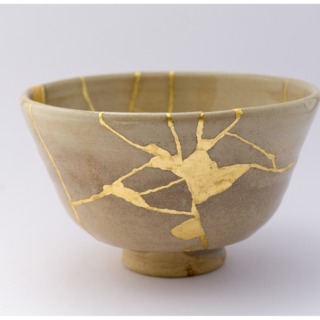
That my beautiful bowl was always destined to be broken,
That the things and the people we treasure and the ones that drive us crazy will end,
That a lifetime,
Our lifetime,
Is finite.
There will come a day when I won't be here to see the sunrise over Lake Tahoe,
And eventually when the sunrise won't happen at all.
So what's the good news?
Well,
When we keep impermanence in mind,
Or when I do anyway,
It's like medicine.
It helps me to treasure the moment,
Even the difficult moments,
Because one day they'll be gone.
And with anicca,
We're practicing to get it on a cellular level that all this content that we take so seriously,
Or that I do,
The content of who I am,
The content of the arguments I make,
The content of my life,
It's really just moving pieces.
It's not fixed.
It's in motion.
It's in flow,
Which is such a relief because then I know I can cultivate a more open and loving heart.
I'm not stuck with this moment's version of myself.
Neither are any of us,
Which is good because I always think about Suzuki Roshi,
The founder of San Francisco Zen Center,
Who said,
We're all perfect the way we are,
And we could all use a little improvement.
So that's the good news about the three characteristics and that element of wisdom.
And now I want to talk about another element of wisdom,
Which is non-harming.
So from a mindfulness perspective,
And also from a yogic perspective,
And really from all perspectives,
Non-harming is this key element of wisdom.
Don't harm,
Don't kill,
Don't interfere with other people's relationships,
Don't speak harshly.
There's the one big injunction,
And then there are the many micro-perspectives,
If you will.
And we are lawyers.
So how do we practice non-harming?
And can we practice non-harming?
I think about that article by the ex of the Wilson Sansini partner who overdosed on prescription meds he was taking to dull the pain of the intensity of his work,
And how he'd reported that for him being a lawyer was like being a surgeon,
Except there were always two surgeons in the operating room,
One trying to save the patient and the other trying to kill them.
And yet,
We believe in this adversary system.
Now my friends who do social justice work,
Many of them believe in it as mightily as the ones who do corporate work.
It's our working theory that in an adversary system,
The truth will out.
Okay,
But do we have to go after one another to make that happen?
Or maybe not go after one another,
But have such an edge,
Be adversarial ourselves,
Be contentious with one another,
Be so intense.
One of my friends is a very tough litigator,
And we were talking about a legal issue,
And for a moment they transformed before my very eyes into that tough litigator.
Confrontational,
Intense,
Scary.
And we had a good laugh.
But the moment,
You know,
Like many I've lived myself,
It leaves me with this question.
Is there another way to do this?
Because I'm familiar with it too.
When I'm pressing a point,
I can feel that energy of wanting to be right,
Or needing to be right,
Having been trained to be right,
And how intense I can get.
So what about that element of harm?
Because the intensity alone does cause harm.
I mean,
Maybe not every time,
But there's a harming energy in it.
It's so different,
For me anyway,
From approaching a moment or a person with curiosity,
With don't know mind,
With letting go of thinking I know anything,
Let alone everything,
Right?
With letting go of wanting or needing to be right,
With turning towards the person or the thing with loving kindness.
So different.
But can we do that at work?
Can we be passionate advocates and still tune in in a loving way or with an open-hearted approach?
I don't know.
Would we miss something?
Would we miss a chance to make our point,
To represent our client as fully as if we were driving our point home?
I used to think,
I used to say,
The best we could do was commit to causing no unnecessary harm,
But what is that?
And wouldn't it fly directly in the face of the mindfulness teachings,
Of all the teachings from all the streams?
Maybe as a starting point,
It's about developing more awareness of those moments when we're driving our point,
Or needing to be right,
Or thrusting onward and not noticing what's happening around us.
Maybe as a starting point,
It's about a kind of unflinching attention to our words,
Our actions,
And the damage,
The harm we're leaving in our wake.
I mean,
I don't know.
Maybe if you pay that kind of attention,
You'll be delighted to see that it's not happening for you.
But I guess I'm pretty sure it's happening in my life for me.
So I'm going to be taking a look,
Because it's 2023 already,
So why not go for it?
And I'll just invite you to take a look with me if you'd like.
Okay?
So with that,
Let's sit.
So taking a deep breath,
Letting go of all the words,
Letting go of any image that might have arisen from the words,
Any commitment,
Any aspirations,
And just attending to the sense of the body,
Sitting in the chair,
Or standing,
Or lying down,
Or walking.
Attending to the posture of the body,
The connection of the body to the earth,
Sensing into that connection,
And connecting to yourself,
The flow of being you,
And especially connecting to that beautiful heart that you have,
That each of us has,
That cares so much.
And then connecting with one another.
And it might not only be those of us here on the wake-up call,
But all of the people,
All of the humans all over the world who are practicing to be as loving as possible,
To be as open-hearted as possible.
Maybe even imagining that that's all the humans on the planet,
Or even all the beings on the planet,
Just connecting in our imaginations,
In our hearts.
Just the body,
The breath,
And all of us together,
Breathing and caring about one another.
Just the breath,
And the body,
And being alive together,
And offering love to one another,
Kindness to one another,
And also to ourselves.
Thank you everyone for being on the wake-up call today.
Take good care,
Be well,
Have a good Thursday and a good weekend,
And I'll see you next Thursday.