Hello spiritual seekers!
Welcome to another episode of the Unraveling Shaltazar Podcast featuring me,
Mark Lane,
Spiritual seeker,
Writer,
Along with the mouthpiece of Shaltazar,
My good friend and co-conspirator,
Jeffrey Eisen.
For those of you who may be unfamiliar,
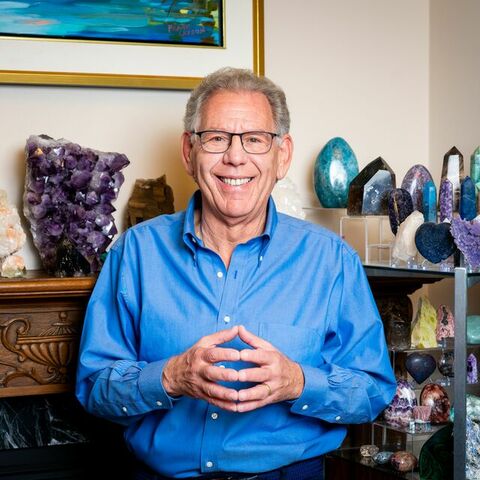
Jeffrey is a Toronto-based spiritual life coach,
Energy-intuitive,
Teacher,
And channeler of a spiritual entity who goes by the name Shaltazar.
With the help and support of Shaltazar's cosmic wisdom,
It is Jeffrey's mission to assist in shifting the consciousness of our planet.
It is my pleasure to assist Jeffrey in making this marvelous wisdom available to the largest possible audience and to unravel it in an understandable and comprehensible way.
Hello,
Jeffrey!
It's great to be back here doing another Unraveling Shaltazar episode.
It is,
Yeah.
I'm excited.
We are T-minus about one week from the Christmas holiday.
So for this week,
It seemed appropriate to pick the message,
Changing the Paradigm for Giving and Receiving,
Which is one we've talked about before,
Just you and I together personally,
But it's timely,
And I thought that's one we could kind of delve into today.
This is one of the very old Shaltazar messages going back to 2015,
And probably one of the longest also.
I printed it out,
And I think I've got four or five pages here of message.
And so I guess before we get started,
I wanted to explain a little bit of the motivation behind why I wanted to talk about this message,
And there's a part of it in particular that I kind of wanted to get your help with understanding.
But I've noticed that the energy around this holiday season,
At least for me,
Has felt different.
And this message talks a lot about the idea of giving and receiving and how perhaps we've sort of gotten into a more ego-based,
Materialistic approach to the holidays.
And for me,
This holiday has felt a little different.
It's felt a little bit lighter,
A little bit less materialistic.
There's always been that sense of obligation where you feel like you've got certain people that you've got on your list and you've got to make sure you get them their socks and their gloves and their hats.
And this year feels more like I feel more in tuned to the people around me and who they are and what makes them happy versus maybe just trying to cross them off of a list and have a gift in their stocking,
I guess,
On Christmas.
So the part of the message that kind of intrigued me this time,
And again,
We've talked about this before where the message is you can go back to them and they have different meanings and you have different reactions to them.
This phrase in here that said,
We say to you,
We are coming into the season that is often known in various faiths,
Religions in different parts of the world is the season of giving where everyone hustles and bustles and vice presidents to give to others.
And if you have noticed over the years that giving has become more materialistic,
The giving has become more ego-based.
And the theme of this message,
I guess,
Is the idea that they're saying that learn to receive before you learn to give.
And my question is,
What is your interpretation of what does that mean?
What are they suggesting we do?
Yeah,
Beautiful question.
And thanks for choosing that.
I think we've suggested to listeners before that when you choose a message,
I listen to it so that I'm somewhat prepared,
But I never know what parts of it you're going to ask for clarification on or question or whatever.
And you're right,
That was one of the long ones and that was a live channeling.
I used to do those on occasion.
A lot of the channelings that I had were very much journal-based.
And so this one was a live channeling and so it tended to be a bit longer.
And having gone back and listened to it,
It's interesting.
I know it was one of the older ones,
But what they were saying at the beginning was extremely timely for today.
And so because they talked about this change that was coming over the planet and I didn't realize,
I guess,
How the messages of Shaltazar were so predicting what we were going to be going through.
So thank you for that opportunity to listen to an older one.
Of course,
The ego comes out and say,
Oh,
The sound quality wasn't very good and all of that.
But I do appreciate that opportunity to listen to some of the older ones because I kind of get more into the new ones and forget about the older ones.
But it was very,
Very timely.
The interesting part about that one is that they talked about the giving continuum.
And they said that because we live in the planet of the polarities of the duality,
That everything is a continuum.
And they said that giving and receiving is a continuum.
And of course,
Then they say,
We hear your puzzlement and all of this.
And because they tend to see that it is opposites.
And it's kind of interesting.
But I think what they're saying is that in order to give,
You need to receive.
One of the important premises that they keep repeating is you cannot give to others what you do not have yourself.
At one point,
They talk about giving all these presents and then opening the credit card bill when it comes in early January.
And so some people do give the material things without having the monetary resources to give it.
And then there seems to be some suffering.
But what they're saying is that they're looking at giving and receiving more as an energy.
They make the distinction from the physical giving to more of a emotional and mental giving.
And when they're talking about giving,
They're really talking about the energy behind the giving.
And it's interesting that you've noticed that the pressure to get the socks and the gloves and the sweater,
When that's off,
Then it can really allow you to focus more on the energy of what you're giving.
And I really think that COVID has done us a favor.
I know we've talked about that.
You wrote a beautiful article around Thanksgiving about thank you COVID for everything that you've given us.
And I think they've given us an opportunity to relook at the season of giving and to realize that the material giving is not giving us that sense of satisfaction either for the giver or the receiver.
Because my daughter got me for Hanukkah another scarf and I sort of put it up in the cupboard with the other two or three scarves that she's already given me.
And my wife says,
You don't really wear scarves,
Do you?
And it's like,
No.
How come my daughter doesn't get that?
But certainly the gratitude that I had for her to make that effort and buy me something was felt.
And so I really believe that Shaltazar is asking us to look at giving and receiving more from the emotional perspective.
And so when they say that you cannot give to others,
Which you do not have yourself,
If your love tank is low,
If your love tank is dry,
If you're frustrated,
Depressed,
It's going to really be hard to give to someone else love,
To be able to give from a place of love.
And I think that COVID is giving us the opportunity to redefine the holidays,
That it doesn't have to be about the materialism.
Now,
I do feel sorry for all of the stores and the retail establishments because they were quite content to allow this holiday to be about material giving.
I mean,
I was kind of astounded when I came to realize that Black Friday,
Which is the Friday after Thanksgiving that you guys celebrate in the United States where it got its name.
And my understanding is that's the day that retailers go into the black.
So for close to 11 months of the year,
They are operating in the red.
They are operating at a loss counting on this spurt of materialistic buying from your Thanksgiving to Christmas to put them in the black.
Now,
I think there's something wrong with that system.
I think there's something wrong with the system.
So when when Chelsea's talking about the giving and receiving,
I think it's really,
Really important to take away the materialistic giving and talk more about the energetic giving.
And that's when they say that giving should be,
They end by saying that giving should be a 365 day a year exercise experience.
And I think we have to get away from it.
It's a difficult year to do that because of COVID.
But something's got to give.
Something's got to give that give giving interesting.
We have to get away from the giving being materialistic because in most cases,
What people want is the love,
The support,
The empathy,
The compassion.
And you know,
The scarf and the pair of gloves and the sweater give you a little bit of instant gratification.
And so I think that's what they're really trying to tell us.
You know,
To me,
I always like to go back to the oxygen mask in the airplane example,
That they,
You know,
They tell you that you need to put your mask on before you put the mask of the oxygen mask for a child.
And that's because if you are deprived of oxygen,
You won't be focusing enough to be able to take care of your child.
And that's what this is all about.
This is really about encouraging us to receive.
Now,
Another interesting part of that message is they're basically telling us that we don't know how to receive.
And that one caught me off guard.
And it's like,
You know,
What did I say?
Why did I misinterpret that?
But it's interesting.
I don't know about you,
You know,
We're of similar vintage,
But how well do you receive compliments when they're given to you?
Well,
Until I met you,
I didn't receive them well at all.
You kind of pointed that out to me that I had a tendency to push them away or to deflect them instead of just saying anything.
And so that's what I think they're talking about in that receiving.
So you receive the gift and there it is,
You open it and you pretend to appreciate that scarf and,
Oh,
Isn't it gorgeous?
You know,
I mean,
It's too wide,
It's too long.
It's like,
I'm not going to wear it.
And I do hope my daughter's not listening to this,
But she doesn't usually listen to these.
So I think I'm off the hook.
And for fear that when we get that present at Christmas time that it shows on our face that there's a little disappointment,
Right?
And so what Shaltazar is saying is that we really don't know how to receive.
We really don't know how to receive.
And they go a little bit beyond that saying,
How can you accept the love that is being sent to you from the higher realms if you do not know how to properly receive.
And you know,
That saying,
It's better to give than to receive.
I was raised on that.
And so I was a great giver and not a very good receiver.
And when I went on my journey of self-discovery,
I realized that the giving was mainly from obligation and responsibility,
Not from a full heart.
And as I opened myself up to receiving,
I came to realize that my giving was different,
That it didn't really matter what I bought that person.
When I gave to another,
I gave from a place of love and respect and gratitude and abundance.
And I find that those gifts are received so much better than something expensive.
And,
You know,
As a matter of fact,
When I give my kids money,
It's sort of like it's coming to them kind of thing.
So,
And when I give them an act of kindness or a compliment or tell them how proud I am of them,
They tend to respond,
You know,
Like it was the check for a million dollars.
And so I believe that in this message,
Shaltazar is asking us to go within and start thinking a little bit deeper about this giving and receiving and what it's all about.
And it's not just material.
It's not just giving out of obligation.
You know,
A couple of stories I'll share with you in terms of receiving.
I remember a number of years ago when I was doing one of my websites,
And of course the marketers tell you that you're supposed to collect testimonials.
And so I would collect testimonials and I would,
You know,
Upload them onto my website.
And I remember this one time where I got a really nice testimonial and it's like,
Oh,
That's nice.
Good.
I'm going to put it up on the website.
And I go to put it up on the website and I start reading the testimonials that were already there.
And it was really interesting,
Although they were really complimentary,
I guess I was in a place of not being open to receiving and thoughts of,
Oh,
They just said that to be nice and that's what people do and they probably didn't really mean it.
And that was it.
I posted the new website or the new testimonial and just let it go.
A few weeks later,
I received another testimonial and went through the same routine of posting it.
I reread the exact same testimonials again that I had read a few weeks earlier and it brought a tear to my eye.
And that made me realize that there's a certain energy that you have to be in to fully receive.
And if you're not in that energy,
Okay,
Then you're not fully receiving.
So when Sheltz desire is saying,
We really don't know how to receive,
A lot of people will take that very literally and say,
Well,
You know,
Give me the present,
Give me the check.
I'll show you,
I know how to receive.
But that's not true.
That's not true.
And the other example I want to give is from the giving side.
I remember once when I was living in Ottawa and it was the first time that I had had a pedicure and I actually had a pedicure that day and I was feeling amazing.
And then later that day I had a massage and it was like,
Whoa,
What a pampering day this is.
And when I finished that massage,
I felt so amazing.
There's a place in Ottawa called the market,
Which is sort of like a farmer's market and they got all kinds of,
You know,
Fruits,
Vegetables,
Flowers.
After my massage,
I went right down to the market,
Bought flowers for my wife,
Bought flowers for my mother.
And I rarely,
I rarely give flowers to my mother because at that age and stage I was,
I was grown up and I hand delivered both of them.
And I realized after that the reason I was drawn to that act of kindness to buying flowers was not out of obligation because I had many times bought flowers for my wife on anniversaries and birthdays.
And that tended to be more of you're supposed to do it.
But that day I was so full of gratitude because I had pampered myself that it was just so natural for me to shower that gratitude on my mother and my wife in the act of giving flowers.
How interesting that that's,
Um,
I've,
I had a conversation with one of my kids kind of on a similar track where this idea of self-love and,
And,
Um,
Putting yourself first is,
As you said,
You know,
I was raised the same way.
You know,
Giving was more important than receiving and putting yourself first was greedy and greedy and egotistical and self-centered and selfish.
And it was something that you never did or you tried to avoid,
But there,
There's a line in there somewhere,
Um,
Which this message,
Uh,
Based on your explanation sounds like it's,
It's trying to get to where you kind of have to be willing to take care of yourself first and love yourself first before you can actually open yourself to receiving love and giving.
Absolutely.
Which is why they call it the giving receiving continuum,
Which of course is very puzzling,
Right?
Because they seem to be opposites.
But what they're saying is that there is a,
There's a relationship that you can't,
You can't give,
And I'll use the word properly,
But I don't think I'm using the right word.
You're the,
You're the,
The articulate guy,
But,
But giving in a way that is,
Is the way giving should be unless you receive there,
They're,
They're really talking about it as this energetic continuum of taking care of yourself so that you're giving is more selfless.
Often our giving is kind of selfish.
If I,
If I give you,
Um,
An expensive present,
Then maybe you'll give me an expensive present back,
That kind of thing.
And,
And,
Um,
What's really interesting in this is they're,
They're kind of vague a little bit about it because I really think they want us to do our own personal reflection and thinking about what this giving and receiving is all about to sorta,
And that's why I titled it changing.
It was around changing the paradigm because we do have a paradigm about this giving and receiving.
And I think they're suggesting that we break that paradigm open and you and I have talked about it before that in this,
In this great potential for change,
This energy that we're in,
We need to break down some paradigms.
We need to break down some foundational beliefs.
And I think in the giving receiving,
It's one area where we have to break down the beliefs.
And like I say,
At the end,
They leave us with that giving receiving should not be in the season of giving.
It should be 365 days a year.
So there's,
There's so much debate,
There's so much conversation,
There's so much introspection that we can have about this that I think it's kind of a very interesting message because they're not clobbering us over the head with the teaching.
They're kind of inviting us into this discussion about something that has been around forever and ever,
And that is giving and receiving.
You know,
It's so fascinating.
You were bang on with what you said.
In my coaching,
I often ask people to repeat the phrase,
I am the most important person in my life.
And you have no idea how difficult that is for people.
They'll say it,
Some of them can't get it out of their mouth.
Some of them say it and immediately say,
Well,
I don't really mean that.
And what's interesting is,
And I use the phrase,
I choose the word life very,
Very knowingly,
Because I don't say you,
I am the most important person in the world.
I say I am the most important person in my life.
So it's not an egotistical statement.
It's very much,
I mean,
And think about it.
If you let go of that,
Of that,
You know,
Paradigm about about selfishness,
Wouldn't you agree that you're the most important person in your life?
Right.
Exactly.
So how come so many people,
So many people have difficulty saying that?
Yeah.
Well,
You know,
And I'm going to raise my hand.
I did when you,
You,
You,
You did that with me maybe a year ago or so.
And I,
I had a real hard time with that and now I don't.
So there,
There's certainly something to it.
And it's,
It's kind of liberating once you're able to,
To actually be able to say that without reservations.
So therefore you would be a,
An example of someone who has got their giving receiving continuum back in alignment,
Right?
I mean,
Because,
Because if,
If,
If what we're talking about is a year ago when we met or a little bit longer than that,
It's,
It's been a beautiful journey and I do hope it continues.
You were very typical of someone who's giving receiving continuum was out of balance.
And the fact that you now can say that as easily as you do that you realize,
Of course I need to be the most important person in my life.
You realize,
Of course I need to be in the right energy if I'm going to give something to someone else.
Of course I need to receive to fill up my tank,
My love tank.
So over,
Over that,
This period of time that the,
The,
The wonderful work that you do on yourself is really paying off and you are a perfect example of this message because your life,
And I'm sure if we had more time,
We could,
We could have this discussion.
Your life has changed,
Has changed tremendously because you've got your giving receiving continuum in balance.
I like that.
I like that and I agree with you.
I,
That's a very clear and concise explanation of those.
I think those feelings that I've been having with relation to this particular holiday season that I don't ever remember having before.
And I just want to end by saying it's going to be difficult for you to let go of the paradigm and the traditions that the gift is more important than the feeling behind it.
And so kudos to you for beginning that.
I do think that's where COVID is the gift to us.
COVID is,
Is,
Is preventing some of those things that we have taken for granted in the past that we have developed these paradigms that may not be in our highest good.
And I encourage you to continue along the lines of,
Of that,
Of that revelation that you had that the energy of your giving is far more important than the object of your giving.
I'm going to say that again.
I'm going to ask the listeners to,
To really try to absorb it.
That the energy of your giving is far more important than the object of your giving.
And I'm also going to say the corollary,
Which is again,
The other end of the pendulum,
The energy of your receiving is far more important than the object that you receive.
Very good.
Very good.
Well,
I think we're,
I think we're out of time.
I hope this was,
This was instructive and enlightening to people because this is,
I feel like I learned something just in our conversation and I've read and listened to this message a couple of times and we've talked about it a couple of times in the past,
You know,
Over the past couple of years.
So I hope,
I hope people,
The listeners got something out of it and maybe it's allowing them to kind of shift their own paradigm with respect to the giving and receiving that the season is known for,
You know,
In their life.
Yeah.
And thank you because just as you got another layer of the learning,
So did I.
And so,
You know,
When you chose that message,
It's like,
Oh,
That's an old one.
I don't want to listen to that.
And I am so appreciative,
So appreciative of you choosing it because it was a reminder.
And then this conversation really entrenched that.
And so I know that you have given me a gift by bringing up this subject and I will be continuing to reflect over the next few days,
Weeks,
As we move into the new year,
This,
This subject of,
Of giving and receiving.
So thank you for giving me that gift.
I receive it graciously.
Oh,
Very good.
You're welcome.
And thank you.
So that's it for this,
For this episode,
We'll come back to you.
We've got the holidays in here,
But we'll come back to you the next time with another interesting topic for Jeff,
For Jeffrey to unravel.
Thank you all.
Love and light.