Hey,
Wholeness,
Welcome.
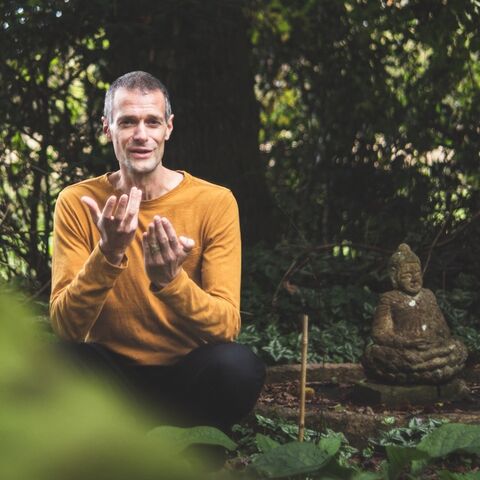
This is Josh,
Integrating Presence.
Wendy Nash,
What's going on today?
Well,
I'm here on Gubbi Gubbi Country in Queensland,
England.
Josh,
You're I think in Colorado.
No,
I'm back from Colorado,
Back in Missouri.
So yes,
That's a little confusing.
I didn't change the thing on my website that had mountain time,
Which is in Colorado.
So I was confused on how long I was going to be there.
But back here in Missouri.
And so today.
Yeah.
Today we're doing I'll just might as well just jump right in here.
And it looks like another platform is working.
At this time.
So I'm just I just started that.
So this is our 43rd installment of our ongoing live series with Wendy Nash here.
And we were going to continue our inquiry into meditation practice,
Both on and off the cushion this time with a massive topic of non harm.
The last q&a we did was on the five ethical training precepts took it took some interesting turns.
This time we'll look at those what those five are mostly based on,
Which is not harming.
This is big and basic,
Yet foundational for meditation practice,
Wisdom,
And everyday life with a massive range for our inner worlds,
The outer world,
And beyond.
So where do we start with this one?
Actually,
You know how I've got this thing at the moment where I'm talking about hurt and ache.
Yes,
Here in my chair.
Oh,
No.
Yes.
So this morning,
I was in my meditation thinking about what because I love when I'm meditating to think,
Why is it in that situation?
It doesn't bother me.
But in that situation,
It does.
I like the compare and contrast model.
Because like,
What is the difference there?
And so I think about hurt.
Why?
When do I feel hurt?
And I realized this morning,
Because I kind of get into blame game.
Talk about non-harm,
Haha,
Not.
So,
And what I realized is that I feel hurt,
I'm going to blame people when I feel hurt.
When I feel hurt it's because I actually am somehow believing that what they're saying is true.
I know that's a bit controversial but when I feel completely like well that has nothing to do with me they're just a bit nuts then I go okay but there is a part of me that realizes that maybe I'm not all squeaky clean and you know all the rest and I realized that there was a part of me that Actually.
.
.
I've been spiky still like i knew i used to be but i it still sits there and i can feel it in some of the ways that i've interacted with people and and I just got and some comments you know you can get there pretty pretty quick and so I was just reflecting on how the only way to step into that space is well this is the way that I do it anyway which is to ask myself in meditation what needs to be known here So I've got my identity,
I'm her.
What else is here in the picture?
What am I not seeing about this?
And I just went wow I'm actually quite spiky well you know I'm not always my best self what can I say but instead of trying to excuse,
Well,
Everybody's not,
You know,
Their best self.
All the time I thought well I am actually sometimes not my best self and maybe I agree with them that there is a part of me that doesn't that sort of deserves to be hurt now I'm not being all you know you deserve to be treated badly or anything like that I'm certainly not advocating in that space but just to recognize that sometimes I can be not my you know I'm not being my best self Oh,
That's it.
This is really,
I mean,
This is the nitty gritty of everyday life.
And I'm just going to go to this venerable's response.
That I love surrounding them.
Well,
First off,
I will say that That's my tendency,
Too.
And see,
I'm even one of blaming the fact that I'm blaming.
So that's my tendency to to go to someone else and say,
Oh,
It's on them,
Not me.
Right.
And then I even want to blame like my my parents or whoever my upbringing and external circumstances for me to be blaming.
And so to me,
This this speaks to self-responsibility.
But the way this one venerable put it,
When someone says something about me,
There's basically two main options.
Either we learn something about ourselves,
And what they're actually saying as some validity,
Or we learn about them,
What kind of person they are,
Right?
And a lot of times,
I find what someone says has a lot to do about actually what's been done to them.
And so they're saying the same thing,
But sometimes it's totally legitimate.
And it is about me,
And it's a completely valid point.
Now,
You know,
Then we come to discernment.
That's why meditation is so,
And reflection and contemplation is so great,
Because then I can take that in and say,
Is there anything to this?
And like you're saying,
From what I remember is basically,
You know,
Like,
Yeah,
Where is there anything to that?
And what do I need to do about it?
You know,
It was I being a little bit harsh,
Like the word spiky,
That's good.
You know,
Like,
And,
Yeah,
Did my words cause harm?
And even though I might not have meant that,
At least that's what I tell myself,
Was there actually something deeper going on where I wanted to have some kind of harm and I just wasn't conscious.
Maybe I just wasn't aware of that.
I don't want that to happen.
So then I want that feedback,
If it's valid,
Legitimate,
Helpful,
To then inform how I go forward.
Because at the root of this,
Like I mentioned at the beginning,
Harm and non-harming is the core of ethical practice.
And not to get too political here,
But apparently there's a war going on,
And war is big business in America,
You know?
And there's all kinds of rhetoric on why it's okay to harm.
How one is in the right to do it,
What kind of stories and narratives and imperatives,
And just even religious righteousness,
Because my God said we're justified in killing.
And all manner of craziness or just ridiculousness about why it's OK to harm.
And that's a radical statement.
In today's society,
But so be it.
Yeah,
Just going back to your first statement,
You know,
This venerable who said,
Either it's about them,
Or it's about you.
And I would like to say,
Actually,
Who says it's binary,
Either or,
You know,
These things,
Relationships are dependent arising.
So there's nothing to say that both of us aren't sitting there being hurt.
And there's a particular instance,
A particular person.
And M.
Reid is here on the scene.
Hi,
Josh.
Hi,
Wendy.
So good to be here on this topic.
Love to have you here.
Maybe is there something that you would like to share?
Now,
You're a little bit behind just because of the way the recordings go,
But.
.
.
You'll catch up quick.
Welcome.
Put your question in now while we're on this topic,
And then we'll come back to you.
But there's one particular person who I find quite,
There's two people in my life,
One is in my family and one is in my professional world,
Who are both quite difficult characters and Both of them play the power game.
Now,
I know a lot of powerful people because I deal with politicians and stuff like that.
But it's really.
.
.
Interesting when people feel like very quickly threatened by me.
Now,
I don't like to think of myself as being threatening,
You know,
Like I'm what,
55 kilo woman,
And I'm 165 centimeters tall.
So I don't know what that is in the old numbers.
But,
But you know,
Not physically threatening.
But what I've realized is that threat comes in many forms,
And we have identities about mirror,
Mirror on the wall,
Who's the something of us all.
And so I do feel that these two people that I know,
One is very threatened by the fact that They want to be,
Both of them want to be the center of attention,
Actually.
They want to,
Both of them,
Be the leaders in this space.
And I'm just doing my thing and I just want to do what I do and I'm happy to collaborate.
But both of those are solo players.
And want to be the one who claims the glory.
They want to be the one who's got that.
That's because in their own world,
They too have wounds and hurts.
But that doesn't mean to say that when they kind of cut me off or say something mean to me.
Aye.
Don't say something mean back.
Just in my frustration,
In my own hurt.
And so I think it's like this pinball machine of like,
Bing,
Bing,
Bing,
Bing,
Bing,
Bing,
Bing,
Where you're ricocheting around your own hurts.
So I often think of Shantideva.
I don't know if you've read much of Shantideva,
But I do like this example of the stick,
You know,
Blaming someone for their bad behavior is like blaming the stick for hitting me,
You know,
Like you can't.
So M.
Reid says here,
Yeah,
I can do harm and not know I do harm.
What is the best approach to this?
Well,
So I don't know if you noticed,
But at the beginning,
Amreed,
I said my approach is when I'm meditating to ask myself what needs to be known here,
Just sort of sit in the middle of this unpleasant feeling,
This particular kind of thing where everything gets quite still and I'm going oh okay I'm in the zone what needs to be known here and I just keep repeating that and often I'll put in things like what's the theme common to all these thoughts?
Or what's the emotion common to all these thoughts?
And I find that very helpful.
So that's me.
What about you,
Josh?
What do you say is what's the best approach?
There's there's a lot here.
Yeah,
Let me let me pick up on what you said yes,
And it's not as simple as the we either learn something about the other person or We learn something about ourselves a lot of times.
Yeah,
That's it particular helpful if I can't figure out Oh,
Is that them or is that me is what they're saying actually about me or what they're saying is actually Shows me where they're at and what's been done to them when there's some kind of confusion or just taking these extra perspectives yet simple as a binary thing,
That's for sure.
I want to ask Wendy,
Before I get to the question here,
Is did you ever ask them,
I'm curious,
Did you ever ask them directly if the people you say that,
What was the language you used,
That they think that you're harming them?
Yeah.
Did you ever ask them directly or did you just kind of assume that they think that you're hurtful towards them?
Do you know what I mean?
Or how did you know?
How did you find out that?
How did you come to that assessment?
Let's play.
Well,
One is somebody,
He's one of my local,
He's my local caller and he's blocked me because he doesn't want my emails anymore.
Now,
You know,
And I,
I had to kind of write to him and just go,
Yeah,
You can't actually behave like that.
Like he,
He came up behind and put his hand on me and he's a bit sleazy and creepy and stuff.
And I had to write to him and just go,
No,
You can't do that.
It's actually a power play.
It's a status power play.
So,
Um,
Yeah.
And the other person.
That's a more complicated relationship.
To do with other stuff in both of our personal,
It's a family situation.
So it starts from a long,
Long time ago in the galaxies of past eons.
And Emily said,
Oh,
OK,
Thanks.
Good,
Thank you.
So yes,
Here's here's how also Wendy's advice is really good,
Too.
So the introspection and contemplating on it and asking the questions and the other external ones for me are just sometimes it's embarrassing and sometimes I don't have the courage to do it.
But I just say,
Oh,
It is,
You know,
If I'm getting something intuitively from them like,
Oh,
Is that I mean,
Did you just asking feedback,
Basically,
You know,
How did that land for you?
Or it seems like you're upset?
Are you really upset?
And was it has something to do with me.
But usually a lot of the people that I interact,
They have no qualms about telling me right away.
You know,
You use I can't believe you said that to me.
Are you?
You're,
You know,
Yeah,
It's my fault.
So this what we talked about the beginning is,
And I do that too.
I do a lot is blame other people.
And yeah,
So it's,
It's a tough one,
Too,
Because sometimes there is something to that where I need to,
To say that,
But other times,
It's a vicious cycle then,
Right?
So one of the ways I like to do this,
But I'm not usually mindful enough to do it is when it just say,
Oh,
When when I I'm feeling like this right now,
You know,
Use like describing feeling language,
I'm not really good at this,
You know,
I have the concept,
But then actually bringing the practice is another thing,
You know,
Instead of saying,
Oh,
You made me feel this way.
Saying oh,
Wow.
I'm I'm feeling like this right now,
You know Well when I when I hear that I feel this way,
You know,
And then they say oh oh am I to blame for that and I go usually I go well,
I don't know because So this is the other thing when we when we speak my intentionality is a hundred percent my responsibility When it but when I say something I'm only partially responsible for that because otherwise I can't control how anyone takes my language,
But I'm still still seen this happening where they get into things where they feel that physical pain is actually pleasurable.
That's a whole other thing.
That's not what we're talking about here.
That's kind of a pathology,
I would say almost,
You know.
Yeah.
So that's that's another thing.
So Emery has said,
Oh,
Good.
So good communication skills and feedback.
So there you go.
Now,
Just two things.
I think there are other channels where people are giving us feedback live and comments,
But I actually can't see see those other channels.
So if you want to just.
Sure,
I'll check.
I want to say in the chat,
It should be all combined now,
But maybe it's not.
OK.
Wanted to just find out.
So I thought about that,
You know,
I feel this and,
You know,
It's been part of our language for quite a while.
It's part of our contemporary practice.
And I'm going to say,
I don't like it.
Because I think for some people,
You know,
Like I lived in England for a while,
To talk about your feelings is so culturally inappropriate.
It's,
It's really,
And then.
What I notice is that it makes the other person aware of their emotional stuff and they may not be ready.
So if I think about these two people in my life,
Professional and personal.
Neither of them are emotionally available particularly.
It's very interesting because the counsellor is very,
Very close to me with his wife because I see them together around,
They do stuff together.
Um,
But the other person,
Yeah,
No,
Not at all.
Just,
Just is very,
Finds that,
She calls that,
You're dumping on me.
So I would just flag that one,
That that means that that person is ill-equipped to navigate the emotional landscape.
What I prefer is what I hear you care about is So in this conversation,
What I would say for you is what I hear you care about is treading carefully and kind of owning your own stuff,
Trying to repair and mend relationships and recognize that you don't always do your best,
But you try,
But it doesn't always go well.
So that's what I hear you care about.
Now,
When I said that,
How do you.
.
.
What's your internal experience?
Of course,
That's that's beautiful Wendy and of course that's way more skillful and adept and applies in more situations,
Right that my The the thing that I'm trying to fumble through only works right when there's some emotional availability Which is a really good word Not that I'm always emotionally available either and my emotional IQ is not where I'd like it to be either You know,
I don't lead with that a lot of times it's a kind of a trained skill and I have to drop everything usually and go into that because usually I'm,
You know,
Business,
You know,
It's like cross things off the list,
Get it done.
And that's not the best way to,
You know,
Be in a lot of different relationships.
I mean,
It's efficient and it can keep things,
You know,
In harmony to some degree,
But it's,
It's really kind of a surface level business type thing,
But you're,
You're right.
Not everybody's emotionally available or emotionally equipped to,
To,
To,
To go in that way.
But the way that you illustrated there,
I think is applicable at almost any situation.
Lots of situations,
Whether the person has any emotional intelligence,
You know,
Any,
You know,
Any sensitivity,
You know,
Emotional availability,
It's a great way to do it.
Not only that,
But it shows that you're actually paying attention.
And you care,
You know,
As long as the as long as it doesn't get inverted,
There are unfortunately a few people where I've found where they use that as a kind of a,
And I'm not saying you're doing this,
Because I don't get that at all.
It's just like a manipulative thing.
So so you kind of,
You kind of gather what someone says,
And then you kind of summarize it in a way that are not you.
Let's just say I summarize it in a way that I want for my agenda.
And then I kind of try to put words in their mouth where it's not necessarily untrue,
But it's leaning and slanting towards what I want,
Rather than deeply,
Honestly caring,
You know,
About the other,
The other person's point of view.
But again,
That's hopefully we won't have to encounter that too much,
You know,
The manipulation of these techniques,
Too.
Because unfortunately they can be reversed and inverted and used in the wrong ways too.
But yeah,
Overall though,
I think most people can tell whether the other person's heart is genuine or not.
So it's not that big a deal,
I find.
I mean,
Our topic is non-harm today and it's very interesting.
So Earlier on this year,
I was in a meeting with a company and,
Well,
With one person in a company.
And in the meeting,
I was like,
Oh,
She really got it.
That was really,
And I felt,
And then I left and I was like,
Wow,
I was so had.
She just played me like a violin,
Like totally.
And I lost all respect for her in that moment.
I had heard very good things about her.
And I just went,
Yeah,
You are just something else.
And I bumped into her another time.
And yeah,
She's as shallow as a saucer,
You know.
And I just thought,
Yeah,
Like I kind of don't,
I don't have any respect for you,
Which means that The way that you behaved had harm because I'm not going to lose respect for somebody who I see is working with non-harm,
You know,
That's just somebody who is performing that.
And,
You know,
I do like the lojong slogans.
Do you know much about the lojong?
I know.
I knew I know a few of these and I've heard them read off before.
They're beautiful trainings.
Yeah.
Please share with those with us.
And then I want to see how you view these type of people.
And I find them really fascinating part of practice,
Too,
And how to view and respond to these type of people.
That you're talking about,
You know,
That's it's really fascinating.
You know,
It's been thinking about that person.
I just feel,
Um,
You know,
There is a saying,
You cannot be lied to unless you want to believe the lie.
So that's always worth thinking,
How could you betray me?
How could you lie to me?
Actually,
You are a co-participant in that lie.
There's a saying,
Let those who want to be fooled,
Be fooled,
Something like that.
Yeah,
Exactly.
Yeah.
So I just feel like I was complicit in thinking she understood me as opposed to being able to see through her because I wanted I was like,
Oh,
You know,
She's she's whatever.
She's invited me to the meetings.
Amazing.
And then it turned out,
Yeah,
No,
This is just a tick box exercise.
So how do I navigate that?
You can hear the hurt in that experience.
You can hear the sense of mistrust.
You can hear the contempt.
And derision and scorn.
And so,
And the defensiveness.
And so I think I just have to recognize that,
You know,
Still plenty of material to work with.
And I just,
You know,
There's such a deep yearning in me from my childhood that I want to be liked.
And I thought she liked me.
And then I realized,
Oh no,
She wasn't my friend.
She didn't want to play with me.
She was just playing a game.
Yeah,
And for me,
My response usually is I get infuriated.
That really,
The dishonesty is something that just absolutely infuriates me.
And I have to deal with that because part of it is a protective mechanism,
Right?
And I kind of laugh at these things because to keep from crying in some sense,
You know,
Because it's just the range of behavior.
And it almost seems like the character,
I don't want to speak for it because I've never met this woman,
But what I'm thinking of is different interactions I haven't passed.
And then if you were to try to express that honestly to some people,
It doesn't do anything.
It's just like they almost get off on that they're kind of superior and that they're in a position that they are and they can do what they want and pretend otherwise.
And I think it's said in the Buddhist scriptures,
And it really resonates with me,
If someone shows no sense of remorse for telling lies,
There is no amount of like harm that they can do,
You know?
Because if they don't really think there's anything wrong with it,
Then they can do just about anything and think it's okay,
You know?
And so it's super dangerous in a sense,
You know what I mean?
And some people just don't know,
You know?
But there is psychopathy,
Or yeah,
That's the right word,
Right?
Sociopathy.
And so I'm not saying that's a full-blown thing,
But like,
What do we do?
And the big thing is,
Lash out or get upset,
It just seems they feed on that,
Right?
And it will just perpetuate.
So there needs to be other strategies because there's a famous line in the Dhammapada that harm is never overcome with harm.
Only with non-harm is harm overcome.
This is an ancient and eternal law or something like this,
Right?
And Dr.
Martin Luther King said something similar too,
But it is.
So to me,
When something comes harmfully let me unpleasant,
This hurts.
I know that it'll only be there for a moment,
But that is the way forward that I want to be happy or in the long run,
Not right.
Because usually it's just tit for tat.
I'll just get back at them and then I will overcome them and I'll be right and then I'll win.
But no,
The other person is in pain that they still,
That doesn't,
They're,
Oh yeah,
You're right.
Let's all be friends now.
Or,
You know,
Oh,
Thanks for speaking so horribly to me.
Now we're just,
No,
It doesn't usually,
There's kind of enmity still in the heart.
So something has to be different.
Okay,
That's enough.
So about 13 years ago,
I was in a job and my line manager she resigned or I left or whatever it was.
No,
She resigned and I gave her a hug and I said something and because she's English and she had actually no idea that I had actually said really something.
Patronizing and condescending.
And I didn't know I had said it.
But I said it,
And it just didn't reverberate with her.
And so it just landed back to me.
And I went,
Whoa,
Okay,
I can see why people don't like me because I'm just going,
Well,
I'm not really not a pleasant person here.
And So I think that my goal with people who are like that is if you feel tortured by their experience,
You either react or you feel succumbed.
I'll put it that way.
They have one either way.
But what if through our own practice and our own experience of clarity and awake,
You know,
Like owning more and more basically gets to the point where it just passes through a bit like I did with this boss.
And actually,
They just get it back to themselves when they start to see who they are.
And and they may become enraged with me,
But I haven't done anything except do nothing.
So they kind of can't except experience their own thing.
So I do think it.
So I have some friends with psychopathic traits.
And what I notice about them and what I notice about myself when I get into very power-oriented systems.
Is there is a sense of paranoia that emerges and I have the feeling that when somebody becomes paranoid,
When they start to feel paranoid about,
And I'm not talking about schizophrenia or anything like that,
I'm just sort of talking about this sense of they're out to get me or you know like they they're attacking me or whatever,
That Actually,
That is because there is a part of the mind that knows that there is something you should be shameful of,
But you're not willing to own it.
And so it becomes inverted into paranoia.
Wow,
That's great.
So it's a signaling,
The saying that something needs to change here,
Something's happening that I'm doing that I'm not seeing,
That needs to be called to attention and owned and admitted.
Yeah,
Wow.
Go ahead.
I would say the thing,
Because this psychopathic structures,
And I don't want to get too much into it.
Because it's not one where it can turn internally,
Paranoia is internalized experience of discomfort,
Of shame,
That is projected outwards.
Onto other,
They are going to get me.
Someone out there is going to do me some harm.
And it's actually because their own egoic structure is unable to experience shame.
And they're sort of unable to tolerate it.
And so it just gets twisted into this outwards thing.
What kind of shame though I'm interested in?
What kind of shame do you think?
Well,
I guess it's a little bit like I was saying at the beginning,
You know,
Ah,
Well,
Actually,
I'm not always my best self and I am.
And I think I would say for that structure,
It would be power plays.
And that wouldn't surprise me then why people who are very into power become more and more paranoid about killing the opponents because because in in fact it feeds onto itself so then they become more paranoid so they set it up so they're more power oriented and then they become more paranoid and it just you can see how it just sort of spirals what is too because to get in a sense of worldly power a lot of times harm i shouldn't say a lot of times i'm imagining that some harm has to be done or because for a lot of things in the world if i get something someone else has to miss out on it right but that one person that's missing out escalate into paranoia too,
Right?
And so,
Yeah,
This is really interesting human behavior we're talking about here.
Yeah.
And now,
If I could jump back to Reid's question here too,
Another way that I look to the wise and wisdom teachings and the wise and teachers to find out if I'm being harmful too.
And yeah,
In a lot of times I don't realize it.
And another good practice is just to do a blanket forgiveness practice,
I find,
Too,
When I can remember.
It's customary in certain monasteries to do that,
To just say,
You know,
If I've done anything knowingly or unknowingly,
Please forgive me,
You know,
And then also to forgive others.
And it's tough because it can't really be a superficial thing either.
And some people have problems with this word forgiveness,
And that's understandable,
Too,
Because of different baggage and thinking that,
You know,
Anyway,
It's complicated and that's for another time,
But I think that's another beautiful practice if it's done the right way and feel comfortable at the right time to do it and sincere as well.
Just about the word forgive.
So in the European languages,
So take that from a Christian lens.
Yes,
We've talked about this too.
It means that I forgo the right for retribution.
And so I don't think that's what we're talking about.
We're talking about,
I think it's more like I feel resentful and I want to stop feeling resentful.
I think it's got a different twist to it when we talk about it in the contemporary sense.
It,
The ill will is still there.
Or maybe I have in the past at least said something nasty,
You know,
But the type of but so the in a way that's the yeah,
It's letting go of in a sense that notion to want to that person to have some harm come to them because of what they did to me or whatever wrong.
So you're wrong,
I interpret but the thing is that,
Yeah,
It's that it's it's hurting me.
It's not hurting them to harbor that ill will,
Right.
But And then the other confusion,
I think it comes around forgiveness,
Is saying,
If I forgive them,
Then that says what they did is right,
Or what they did is okay.
And that's not what it means.
That's not what we're talking about.
So if we need a different word to mean that,
It's the burden I'm carrying around that's not harming them or not making anything.
I'm the one suffering and hurting from this,
Not them anymore.
Or it has anything to do with them.
And it does not mean what they did is okay.
I do like to do it.
I've noticed how much I love to do it.
I wish I didn't like it so much,
But it's such a great addiction.
You know,
I'm like,
Oh,
I'm the ones who's so harmed.
I'm the one who's,
You know,
And it's like some bad 1970s program of,
You know,
And you see these in the movies all the time,
You know,
Revenge of the soul kind of hero.
And there's a whole lot of American stuff about that.
It's like,
Oh man.
Victimizer is huge,
You know,
Or bully victim.
Then throw the hero in for the other drama part of the triangle here where,
You know,
The,
The bully becomes a victim and the victim becomes the bully.
And then,
Oh,
Maybe a hero will come and stop all this,
Or maybe I'll be the hero and save somebody else's from,
From the bull.
And it just,
It just cycles on and on and on.
And people know this and they,
That some people will use that to their advantage and fuel this,
This drama triangle,
Right.
And take advantage of that because of how certain people are,
You know,
And the habit patterns,
The energy and the culture around this stuff.
What I noticed with that counselor is that what he does is he will create drama and then come in and want to be the rescue person.
And then he offends everybody.
He'll just suddenly get up and then he'll be completely dismissive and rude in a whole lot of ways to a whole lot of people.
And I'm going,
You're an elected official.
I think your name,
You should really be focusing on gaining connections,
Not not kind of creating enemies,
I just,
You know,
There's a part of me that goes,
I kind of feel really sorry for you,
Because and it's pity,
Actually,
I guess that's contempt.
But there's just like,
Man,
You're so clueless.
No,
But it's like,
Once you see,
You see the this pattern,
How it plays out,
It is laughable,
Because like,
What's going on here?
Can't people see this and how it's going and how like,
It's like a caricature,
Right?
Like a cartoon almost.
Would you kind of see how the how this thing plays out?
And yeah,
I mean,
It might.
It's so absurd.
I mean,
That's why I think that the laughing for me,
It's so absurd.
I don't know really,
What am I supposed to do with this?
You know,
How am I supposed to respond to this?
Seriously,
In some senses,
You know,
But I'm the same.
It's like the orange hair man.
I mean,
The things that come out,
I was like,
I don't know what to do with that.
I just kind of like,
That's so absurd.
How am I supposed to view that or respond to that?
What am I supposed to do with that?
What?
You know,
There was a federal politician I was listening to.
So we were at a conference.
And so there's a television.
We don't normally have a television.
So it's like,
Oh,
Well,
That's a television.
Let's go for the channel which has the most provocative,
Makes the most provocative statements.
We happen to choose Tune in to this.
Federal politician ranting with this like appalling journalist.
And we were sitting there and I had to put the timer on and I went,
Okay,
How long can we last?
And I couldn't make it to three minutes.
And this politician,
He'd been around for a long,
Long time.
He's Australian politician.
And I was sitting there kind of going,
I actually don't even know what you're saying.
It's not even like what you're saying is just really nice.
Nasty and hurtful,
But I'm just going.
I don't think I heard one coherent sentence in that.
And the journalist is this particularly unpleasant character.
And he just goes,
Exactly.
And I think he's just doing it to incite hatred in the audience.
So that's harm.
You know,
There's a lot of harm in there,
But there's something about this banding together that makes people feel that they're on the right side.
But the problem is,
It becomes more and more infighting.
I've been looking at messaging for this,
You know,
I've got this not-for-profit for trans.
And I'm going,
How do we talk about stuff?
And what's very interesting is to look in at Schwartz's values.
And there's the self-transcendent stuff,
Which is all about communitarian positive stuff.
And then there's the self-enhancement,
Which is money,
Power.
Wow,
That's excellent.
One is implicit.
This is what we all want.
We all want good community.
And the other one is explicit,
Which is more about me versus you.
And what I have noticed is that when you have political parties that are more me,
Me,
Me and less communitarian.
What happens with that is that,
And I don't mean the inclusive stuff,
Because a lot of the inclusive stuff is really alienating and irritating.
But if you have community goals,
Then more people will sort of stick into that space for sure.
But what happens with the self-enhancement goals is the more you talk about money and power,
It increases your selfishness.
And so you start off being a mob,
And then slowly it sort of that you start off going,
Well,
Us against them.
And then the us becomes smaller and smaller.
And then it becomes me against you.
And it just becomes increasingly,
Increasingly kind of separatist.
I don't know what the word is.
And for all the good things that sports do,
I guess,
I think they lend to that,
Though,
You know,
They lend to that.
And,
You know,
Going.
So this is really important.
There's some spiritual circles.
There's a lot of new age distortions.
But one of the dichotomies that are sometimes helpful although I think it's still off,
Is service to self or service to others,
You know?
And what are we doing here?
Am I feeding me,
Only me,
You know?
That's the difference between taking self-responsibility,
Making sure I'm in a good place,
And then I can help others.
That's different than,
It's all about me and my clan and nobody else,
And we'll go into competition and fighting.
No,
It's,
As my girlfriend says,
The highest,
First of many for the highest good of the many.
You know,
So this is,
Yeah,
So we can we can help each other,
When we're a good place to do so,
Especially now going back to the politician,
What I kept thinking is,
Do you know about neuro linguistic programming?
And I was wondering if they use that to in about this notion,
You pointed out a really interesting thing to about how they ban people together,
Sometimes out of outrage,
And,
You know,
All kinds of different things.
But then what interesting ends up happening as then you get the US versus them,
But then you get more division inside.
And so you have infighting as well.
And so it's divide and conquer.
So those on top,
Then they can rule and control those who are divided and fighting amongst each other too.
And I also want to say,
Since it is a meditation Q&A,
On a personal level,
If I've harmed somebody,
That's going to be one of the first things that comes up when I sit in silence.
And that was the first few years of my practice.
Waking up to the fact of how much harm I have done,
How much harm had been done to me,
And not to fall into the victim again,
But sometimes it didn't even realize that all this stuff is going on.
And so that's when,
I mean,
Yeah,
Self-compassion,
But also forgiveness was really helpful.
Forgiving myself,
That was huge,
Being able to do that.
And then forgiving others and asking for forgiveness too,
For what I had totally forgotten about or didn't see the full extent of.
So it's self-knowledge,
As rarely good news as they say,
But as that clears out,
Take your self responsibility,
But then it becomes more and more sensitized,
I think.
So what I used to be able to kind of get away with and not suffer like consequences or whatever,
Now it's become more and more subtle.
So where even slider things that I wouldn't even probably have noticed before,
The blowback is more,
And that's very noticeable,
Especially if you sit down in silence and not keeping precepts,
You know,
Find it comes back fairly quick these days.
And I also wanted to remind you about long jump.
Help me out with the pronunciation.
It's Tibetan training.
If you want to go into some of those too.
Thank you.
Easy for me to say.
Well,
I'll just pull them up here on the side because I think that's so one of some of them that I really like.
One of them is don't act with a twist.
So I think that's really clear.
That doesn't need any explaining.
And the other one I like is,
Of the two witnesses,
Trust the principal one.
And that has two meanings as far as I'm aware.
And one of them is,
Only you know when you're kidding yourself.
And only you know what is right for you.
So they're my sort of,
So that one is my thing.
And the other one is,
Or what is it?
I'll let me just pull up a list.
Sure.
And while you're saying don't act with a twist,
This is,
Yeah,
Definitely guilty.
I don't know if this is the right word,
But I think of ulterior motives here.
Like I'm saying one thing.
But the way I'm presenting it is not completely,
I have something else behind it or in context that I'm not explicitly stating that I find is too harsh and that I don't want to say directly,
But it's there.
And I want to kind of get to that thing behind what I'm saying instead of just directly saying that because it's either too harsh or it will be explosive or cause too much.
It's like this subtle thing in the background saying one thing but having something else.
Right there,
Like a Trojan horse almost,
You know what I mean?
And yeah,
Speaking in circles or not speaking as directly or having hidden agendas,
Hidden motives sometimes.
It is not always necessarily for a bad thing.
It's just that sometimes it's easier to do it that way,
It seems like.
But it's slimy,
It really is slimy.
Yeah,
So I was at this transport conference and I bumped into a colleague and she's such a snake.
Of inserting herself with the sort of big honchos,
You know,
All this sort of stuff.
And she's at the head table with the big politicians.
And it just,
And then I mentioned,
Oh,
Look,
Here's some data you might be interested for your thing.
And she replied,
Oh yeah,
And shall I give you a call afterwards?
And I said,
Well,
Just have a look at it and see what you think.
Oh,
And so shall I give you a call afterwards?
Well,
Why don't you just find out what it is and then just sort of see how you can use that information in your strategy.
And then she didn't say,
And so shall I give you a call?
Because it's like,
Yeah,
Don't call me actually.
And she said it another time,
You know,
It's all about the relationship.
And I'm thinking,
Yeah,
It is all about,
This game is all about the relationship.
And you,
It's about integrity.
You can't have a relationship with somebody.
Where you're liked one minute for what you do.
For your power because the minute you lose the power you actually nobody will have anything to do with you.
Yeah,
So I've got a number of the.
.
.
Slogans here.
Cool.
Let me let me ask real quick.
So I'm a little bit confused.
So she actually,
What was she meaning by?
Can I call you afterwards?
What was what was the deal with repeating that?
Did she really think,
Like,
I'm still not following that for some reason?
It's a way of her kind,
So what she does is she inserts herself into relationships to kind of claim territory.
It doesn't feel like,
So if I said to you,
Oh,
Look,
Have a look at this information and you said,
Oh,
Can I give you a call afterwards?
I'd be like,
That would be amazing.
Sure,
Well,
Let's have a chat about it.
But it felt like this was her trying to insert herself into a place in the relationship.
So,
So yeah,
Exactly.
So you get,
You know,
That,
That,
That's mommy feeling that you get where you go.
Someone's not straight with you.
I'm going,
You're not being,
You're not straight.
And I also know through on the grapevine,
It's like,
So this,
But watch for this person.
She didn't really care about what you're having to say.
She just wanted to make sure that she had,
Um,
Yeah,
She wasn't put the,
She wasn't putting the emphasis where,
Where you wanted it to be.
Right.
You know what I mean?
She was wanting to have it in what kind of power a place she could have with what you were trying to bring to her attention.
I think so.
Yeah,
That's what it seems like.
We both,
Very early on,
Like three years ago,
We both gave feedback to this council document.
And she said,
Oh,
You know,
And can I,
Is it okay if I can have a look at your submission?
At the time,
I was like,
Yeah,
Sure.
And I never heard,
And I asked her,
Oh,
You know,
Can I have yours?
And then that never appeared.
And so there's,
That's one,
That's kind of one of those flags where people say,
I want your information,
So I can use it for me.
But,
Or,
You know,
They kind of whatever,
Especially when you ask for it,
You ask to have be reciprocated,
And she basically lied or forgot about it,
Or whatever.
But maybe I didn't ask,
But and I just expected that.
So the thing about it is,
It's about reciprocity.
And I think relationships,
Non harm,
Fundamentally is about reciprocal relationships which are based on integrity,
Kindness and connection and safety and sort of sharing this relationship together and all that we do and we have working together in the space.
So it has a collaborative feel to it.
And I think the minute you end up with this feeling of like it doesn't feel reciprocated,
I think that's where you start to get this harm experience.
Because it just feels,
Something feels off.
And you don't know what,
But it suddenly feels a little bit one-sided or did I,
Did I,
Am I reading this?
You know,
What am I?
Because you can feel it's not only what people do say.
I think what we notice is it's like what people don't say,
What they don't offer.
And I think that is where it's the more subtle version of harm can come about.
And this is what they say with child abuse or abuse.
The acts of violence which necessarily cause the problem.
I mean,
That does obviously cause problems and the unpredictability of it,
But it's in some ways harder when people are neglected,
Children are neglected.
It's harder to prove you don't have the bruises and the broken bones.
So it's sort of a different thing.
Yeah.
Neglect is a huge core wound that many of us have along with,
You know,
Abuse.
And I'm trying to think of these other core wounds,
But yeah,
Neglect is,
Yeah,
It's,
It's not as noticeable and it just,
The other comment I when you talked about what watching the politicians on TV,
Yeah,
Three minutes.
That's,
That's great.
I don't know if I could have made it that much.
Usually I start yelling at the TV,
Not yell,
But commenting on the TV and annoying people around me because it's just it is too much a lot of times,
You know,
Okay.
Sorry.
Did you find these?
I did.
Any of them make sense,
Worth reading in this context or not?
Go ahead.
So what I've done is I've said,
Sum up the Lojong slogans into five slogans,
Just for the sake of brevity here.
Everything can become the path.
Don't wait for perfect conditions.
Joy,
Conflict,
Failure,
Illness,
Success,
And uncertainty are all opportunities to train your mind.
So transform all mishaps into the path of awakening.
Yes.
Two,
Turn your attention inward first.
Instead of blaming,
Judging,
Or trying to change others,
Examine your own reactions and take responsibility for your part.
Drive all blames into one,
As opposed to drive all blames into one,
Which is worse.
Juan from Permachildren speaks about that.
Why is everybody blaming Juan?
It's like,
Yeah,
Juan or Juanita.
Put others at the center,
Cultivate genuine concern for other people's well-being,
Practice generosity,
Empathy,
And the willingness to bear discomfort for the benefit of others.
Be grateful to everyone and practice sending and taking.
So that's Tonglen practice where you are breathing in their pain,
And you are taking on their pain and you are sending out the antidote,
Ease in some way.
So that's that.
And then four,
Hold your views lightly.
Your stories about yourself,
Other people and the world are not reality.
Stay curious.
Be willing to let go of certainty.
Regard all things as dreams.
And five,
Keep practicing,
Especially when it's hard.
Mind training isn't something you do only when you're calm or inspired.
The difficult moments are the practice.
If you can practice even when distracted you are well trained.
These five capture the spirit of Lo Jong remarkably well.
Use everything.
Start with yourself.
Care for others.
Hold your stories lightly.
Keep practicing.
Lojohn's slogans aren't primarily about becoming calmer or happier.
It's about becoming less self-centered and more useful.
Peace of mind is seen as a consequence of the shift,
Not the goal itself.
These are really beautiful and admirable practices,
For the most part.
And this is Mahayana.
The only thing I want to point out,
And boy,
I have a hard time of letting go of those,
Holding those views,
Still working on that one,
For sure.
But I do want to point out,
In the Mahayana,
One of the things I caution against is they have one of the precepts is,
Even though,
Which is really weird,
They say know when to hold the precepts and when to break them.
But that's really no different.
Than ordinary worldling,
I think,
You know,
Because,
But,
But what I want to say is,
I think they have one that you're not supposed to speak.
You're not supposed to speak badly of others or something like this.
You're not supposed to,
You know,
Ever.
And so wait,
Wait a second.
I mean,
I see where the wisdom is in that,
But one thing is if someone is actually abusing someone else,
They need to be called out,
You know,
That needs to be,
That needs to be called out for what it is,
A spade,
A spade.
You can't just not speak unless I guess there are skillful ways to do it in another way without speaking ill of someone or blaming someone.
The other thing is I just want to caution some people that have an inferiority complex,
Probably not Wendy and I,
But to take on this martyrhood or having some kind of,
Okay,
I'm going to be the world's savior and just take on everybody's crap.
That's not what they're saying.
But I just wanted to say that if it's interpreted in the wrong way and not done in the way that it's supposed to,
I think,
With this.
I think it could fall into martyrhood or messiahhood kind of thing,
Too.
And that's not what these are pointing to,
You know what I mean?
So we have to be careful,
Especially some personality types that are quick to blame themselves for everything,
And little me,
And I can never do anything right,
And I'm always wrong,
This type of thing.
So we got to be careful if that personality type comes into play here,
I find.
But for a lot of us,
That's not the case and these are beautiful.
So don't malign others.
Don't talk about injured limbs.
So don't dwell on or publicize others' faults or weaknesses.
Which I'm not very good at because I get really hurt by that.
Don't ponder others,
Don't obsess over other people's shortcomings,
Don't seek others' pain as the limbs of your own happiness.
So.
.
.
That's great.
Those are way more nuanced than I've heard them put before.
Actually,
The way to put it,
I think,
Is more helpful than the other translations I've heard of those.
There is one which says,
Don't be a martyr.
Let me just.
.
.
So don't act with a twist.
Don't abandon any hope of fruition.
Don't seek praise or gain.
Don't expect applause.
But in those long gen,
The ones we just read too.
So it's something like,
Don't make an identity out of self-sacrifice.
I think that's what you're sort of saying.
It doesn't say that,
But that is somewhere in there,
Because that's acting with a twist.
That's not being sincere,
For sure.
Oh,
We're at time,
Josh.
We are.
We just flew by again.
So yeah,
This was great.
There's so much.
I mean,
Non-harm is so massive,
And it can boil down kind of all over actions or are they you know are they being harmful or not in a sense or you know it's not as black and white as that there's a lot of nuance too and there's a lot of subtleties but it's this is this is the core of a lot of ethics and I'm glad we got to talk a little bit about it so I was just sort of looking up know when to break the sleep precepts.
Maybe that's a Zen thing.
Maybe that's a Zen.
There is a Mahayana principle that can look like that from the outside.
So it's not know when to break the precepts,
It's don't make rules for the goal.
Don't mistake the rules for the goal.
Let compassion guide the rules,
Not the other way around.
See,
That's a better reframing than know when to keep the precepts and when to break them.
That's kind of a more straightforward Zen approach to saying the same thing you did,
Which is way more nuanced,
I find it maybe helpful.
Maybe not as direct and clear,
But yeah.
And,
But yeah,
Well,
Actually- We have come to the end.
We've come to the end,
We're out of time.
All right,
We got to go.
Everybody be well and keep your non-harm hand strong.
Yeah,
And you know,
Just be ordinary.
Whatever that is.
All right.