Holiness and welcome.
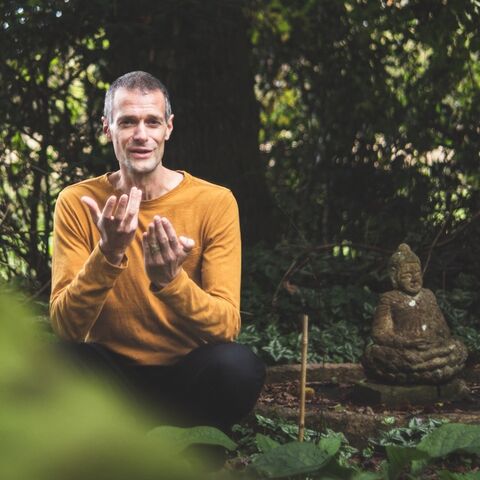
This is Josh DeBolt from Integrating Presence.
And today's event is called Jhanic Factors and Formless Realms Contemplation-slash-Meditation.
And the description I have for this is,
Addressing the politics and emotional charges often associated with jhana and nimitta before talking about jhanic factors,
Then placing this aside for a guided meditation-slash-contemplation based on the shorter discourse on emptiness,
Immin 121,
Involving village,
Wilderness,
Earth,
And the four formless states.
So there's a lot here.
On one hand it makes sense to combine these three things.
I guess my take on where and where jhana and nimitta teaching and things are.
Then just the jhanic factors and then this contemplation on the formless realms.
Of course this isn't the same as the actual jhanic states,
The absorptive meditation states.
But I'm going to do this anyway.
So I invite you guys to just,
You can also stay with your breath the entire time if you're here for the meditation at the end.
And the other words might be too distracting or confusing.
I invite you to just stick with it or come back in a little bit.
Or just stay with your breath the entire time.
So the disclaimers for this,
Obviously this is a big can of worms.
I can't rule out the possibility either that this could delay advancement in practicing the jhanas either,
Because this all could be just full of distortions.
I can't rule that out.
I advise you guys to seek out master teachers who teach jhana in study and practice with them.
And I may have been indirectly called out for oversimplifying this and I'm grateful for that calling out,
Because the less distortions we have the better.
The more we can get to,
Well basically the Buddha's original teachings,
How he meant this to come across,
I would think the better.
And any distortions in things that aren't helpful along the way,
Any kind of shedding or letting those fall away,
I feel could only be better.
As far as I understand there's no really clear consensus on jhana and nimitta and even the jhanic factors as I kind of discovered while looking into them for this talk.
And I find it interesting why it's not taught more in the West,
The jhanas.
And it's just a wild guess that maybe that these lack proper levels that are conducive to the type of disagreement and division for those seeking to further divide and conquer tactics.
I know here in the West there seems to be a lot of divide and conquer tactics,
Give people certain issues and then they can choose sides and then kind of fight amongst each other or disagree amongst each other while the people in power are playing both sides,
Right?
But that doesn't seem to be the case,
Even though there might be some kind of disagreement and really no solid clear consensus on jhana,
What is jhana,
What isn't jhana,
Nimitta too,
Then it's still,
For whatever reasons,
Isn't being taught here in the West to the degree that I hear that it's taught in the East.
There's a controversial nature of the jhanas supposedly of gaining psychic powers.
Again,
It's not really mentioned much why jhana hasn't been taught more in the West.
This kind of polarity of maybe being overly revered on one hand,
Protected,
Even coveted because of the potential of gaining psychic powers on the other end of the polarity is kind of a dismissal or an absence of availability,
At least here in the West.
So this may be a stretch,
But I was wondering if this kind of parallels the Buddha's own mastery of jhana with his two teachers achieved both the formless realms.
But then he abandoned them,
Even offered,
He was offered a teaching position,
But he abandoned them because he said this wasn't the ultimate teaching or practice.
So when he came out of these,
He was,
You know,
They were,
I guess,
Conditional is one way to put them.
So it's maybe a rough parallel there.
But there's also out there,
There's teachers claiming that their method is the correct way and others are not.
I mean,
This is fairly common in all walks of life though.
There's also claims out there of how the Buddha taught and didn't teach jhana,
And then how it ought to be taught,
How jhana ought to be taught,
And how it ought not to be taught.
So these politics and emotional charges involved in what is or isn't jhana,
Nimitta,
And they also seem further complicated by a monastic rule of not revealing attainments.
Lay practitioners not really knowing how these attainments are verified or who even has the attainments,
Right?
So I get it on one hand,
If monastics are boasting about their attainments,
Well then there's going to be this unnecessary,
Probably even harmful competition.
People might be dejected because they haven't received certain attainments yet.
And then maybe people will go to just one teacher because they have all the attainments,
And the other teachers that can be very helpful in certain areas,
Maybe get bypassed,
Build people up as superstars,
This type of thing.
But on the other hand,
If no one's allowed to have some kind of authority,
Or how are these attainments verified,
How do we even know they exist,
How do we know they do not exist,
What's the litmus test,
Who verifies,
How is it verified?
So all these kind of further complicated things that might muddy the water on this as well,
As far as investigating into the matter.
So I'm left with why all of the above,
Why all the stuff that I've mentioned here.
And from the base level one can see the danger of spending so much time of one's life practicing these,
And then someday be invalidated,
Saying,
Oh,
What you've done is all wrong,
You've practiced years and years and it's not jhana,
You're doing it wrong kind of thing.
Not in so many words like that,
But you get the idea.
But on the other hand,
There seems some level of concentration mastery is needed for right samadhi,
On the eighth of the eighth fold noble path,
Right concentration.
Now on to the jhanic factors.
These jhanic factors are not the same as any of the eight meditative absorption states known as jhana.
Even to give a description on what the jhanic factors are,
I wonder if I might mess that up.
So let's just say,
Just give the five factors and say they're definitely helpful for meditation,
Right?
I think that would be kind of a consensus.
These factors are helpful even if they're not all agreed upon in the exact ways.
I'll link some resources in the show notes for some of the sources to this.
Some of the stuff I just previously talked about though is just what I can kind of remember from talking with and hearing different teachers.
So this first one in the Pali,
It's vittaka.
And some of the translations for this are directed contact,
Initial application of mind,
Applied attention,
Applied thought,
Applied thinking,
And course engagement.
And this is bringing the mind to the meditation object,
Arousing and applying.
I forgot to mention,
If I'm remembering right,
I just discovered how the last fifth factor that we'll come to may not be included so much in the suttas as it is in the vasudhi maga and maybe commentary.
So anyway,
Back to the second one,
Vittaka,
Vichara.
It's the second one,
And this is sustained application,
Sustained attention,
Sustained thought,
Sustained contact.
Someone put it more thinking and examination and then subtle engagement.
And I feel these depend on the context too.
Maybe they're used differently in different contexts.
Like I've heard the word nimitta is used differently in different contexts.
So this vichara is keeping the mind with the object,
Sustaining and stretching the attention as far as I know.
Common analogy or analogies given in this is like striking a bell or a bowl.
The initial application,
The initial contact would be like striking the bell.
The vichara,
The sustaining,
Would be like the ringing of the bell.
I even want to say the analogy given in the suttas is like polishing a bowl.
So the cloth contacting the bowl is vittaka,
The initial contact.
And then the polishing is the sustained attention,
The sustained contact.
And so sometimes you might have to lift it back off,
Turn the bowl,
And then continue rubbing.
Or maybe there's an area that needs a certain attention longer and so the contact will be sustained longer on a certain area.
So this third one is pitti.
And it's been translated as joy in rapture.
And there's five types of pitti.
This first one is a minor joy.
And so this is where we really get into the very,
Very refined and,
Well not very,
Very,
But subtle pleasures that kind of surpass sense pleasures.
I would say not just kind of,
But sense pleasures take the backseat to some of these states,
Some of these experiences,
Right?
So the first one is like goose pimples or pleasantness.
This is a minor joy.
Then there's momentary joy.
This is flashes or sudden rushes of coolness.
The next one is uplifting,
Transporting joy.
This may make one feel lighter or hop or jump.
Maybe this is like being light on your feet just because we know when sometimes things we get weighed down and the body can actually feel physically heavier than when we're kind of in a bubbly or joyful state.
Kind of more uplifting or I mean a lighter state.
Then there's an overwhelming kind of like a flood or showering of joy that comes in like waves,
Joyful feelings,
And this might even make the body sway.
And then there's this suffusing joy where the entire body and mind system is suffused down to every single particle with joy and comfort.
So then the fourth one is sukha.
Happiness,
Deep bliss.
So it's as within or as if there's a very high and rapturous state.
If I could backtrack here real quick,
Pity is known as kind of like finding and having interest in the object.
Okay,
So with this sukha,
Happiness and deep bliss,
It's a more subtle notion than pity.
People would say,
Oh yeah,
I want more and more of that,
But after a while,
If some of those states go on and on and on and on,
It's almost like it's too much.
So sukha is a more refined happiness and deep bliss,
If I could say that.
So this high and rapturous state,
It's being happy and content with the object.
And the fifth one,
Ekagata,
One-pointedness.
Some people I think pronounce it ekagata.
I've heard it pronounced ekagata too.
So this is unifying the mind with the object,
Fixing.
A unifying,
A gathering,
A collecting of the mind.
And then a one-pointedness.
I'm not going to go too much into this because again,
There's some controversy on,
Not controversy so much as some would say lack of understanding.
And I totally will admit to not fully understanding this,
Right?
But a one-pointedness,
You think about unifying the mind around a fixing on an object.
And there's no other kind,
Well,
Again,
I ought to just leave it at that and leave this to your own studies.
Also with these five jhanic factors,
They're also known to overcome some hindrances or at least keep them at bay temporarily,
Temporarily from my understanding.
But there's some kind of variation on these two.
So one set I've heard,
And this might be from the sutimaga,
But I'm not 100% here.
Joy is overcoming restlessness.
So I guess if there's joy,
There's really not much incentive for restlessness or it kind of keeps it at bay.
Bliss as a counter to ill will.
How challenging would it be to maintain ill will if one is in a state of bliss?
Probably don't care too much about ill will anymore.
One-pointedness for overcoming sensual desires because it stops the mind from flooding to sense objects and fixes onto the meditation object.
So this other set here of overcoming hindrances,
Vitaka,
This directed contact for overcoming craving for sensual pleasures.
Now I don't know about that one.
Maybe I'll come back to that.
Vikara,
Sustained contact for overcoming ill will.
I guess maybe this one could be seen as,
Well,
If you're really sustaining contact with something,
Well then you'll likely feel and know how painful it is to stay with ill will.
Even if it's directed at someone else,
It's got to go through you first.
So just being with that ill will for a long time,
Maybe one will gain wisdom and not too long to see how painful that is.
So pity and rapture for overcoming sloth and torpor.
Just due to the nature of pity and rapture is more of a,
Or not just due,
But one of the reasons why,
Is because pity and rapture is an energetic state,
An uplifting state,
And sloth and torpor is the opposite.
So sukha and bliss for overcoming restlessness and worry and agitation and anxiety.
Yes,
So when you're in a bliss state,
It doesn't,
Restlessness,
Worry,
Agitation,
Anxiety doesn't seem to have much interest or sway or pull.
The bliss is way more pleasant than these kind of fantasy states of worry or being restless or agitated or anxious.
Ekagata,
Ekagata,
One pointedness is for overcoming doubt.
I guess this is maybe if the mind is fixed on one object,
There's really no doubt whatsoever that that one object is on one's attention.
It either is or isn't maybe kind of like a binary thing.
So when there is one pointedness,
It's very clear and obvious where the attention is.
Maybe the vataka directed contact for craving for sensual pleasures would be like,
Can eventually see how,
If you keep contacting the object over and over again.
I don't know.
These are just some guesses here.
That's almost like kind of a,
Kind of like has sexual parallels,
That contacting again and again and again.
So maybe it's a stand in for such sensuality.
All right.
So we're going to put all this aside now and we're going to do the formless contemplation.
So I invite you to find a comfortable seat.
We want to find a posture or position where there's a balance of energy.
So if there's too much energy right now,
Something that's more conducive to relaxation.
If there's not enough energy,
You might want to at least take your back off the chair back or use a cushion.
Possibly you could do this laying down.
It's not going to be helpful if you fall asleep.
So if you do that,
Put your knees in the air,
Put the hands side on the,
On the floor.
So if you start to fall asleep,
They'll fall over.
You can do on your side and put a pillow in your stomach so you can feel more of the gut.
But more than likely,
This will be recommended sitting.
Standing,
You will not fall asleep if you stand,
Obviously.
It's impossible pretty much to do as far as I know.
You'll catch yourself if you start to fall asleep,
But it's not really conducive to these refined states.
I think walking,
You could probably do village and wilderness and some of the earth,
But the formless realms is going to be fairly difficult as far as I know to contemplate on when walking.
All right.
So with that said,
Find a comfortable spot.
Balance between energy and relaxation.
This is obviously not Jhana.
Any of these states,
This is a contemplation and it's based on a guided meditation,
I'll include in the show notes by Ajahn Pudadhamma.
He bases it on MN 121,
The,
I think it's called the Lesser Discourse on Emptiness.
And so we'll go through village and I'll explain that as we go.
Wilderness,
Earth,
And then the four formless states.
And if you don't know,
It's boundless space,
Boundless consciousness,
Boundless nothingness or nothingness,
And then neither perception nor non-perception.
But you don't have to remember these.
And of course,
If you can't do these,
You can always come back to the recording,
Or if you fall asleep,
Wake up,
Or whatever,
No big deal.
You can just be where you're at with these.
Also welcome to stay with the breath too.
I'll ring the bell before and after,
And towards the end I'll even say when I'm about to ring the bell and how to exit it.
Oh,
And also this first one of village,
I invite you to keep your eyes open,
And then close them whenever it seems appropriate on the second one of wilderness.
So I invite you now to contemplate village.
So basically what this means is your everyday life,
Starting with the space you're in.
So we can look around the room and notice everything in it,
Right,
Or wherever you're at,
And notice the objects,
Especially the man-made objects.
So a lot of the stuff probably,
If you're indoors,
Is man-made,
Has been,
And humans have been involved in the creation of the objects around.
It might have furniture,
Of course the walls,
The ceiling if you're inside,
Various electronics and objects,
Books and art.
So now expand the attention out from that.
And so this includes buildings,
Roads,
Cars,
Maybe roadways,
Bridges,
Maybe billboards and signs,
Gas stations,
Your everyday world.
And then of course the humans in it,
Maybe not so much today in the West with it being Sunday,
But just the hustle and bustle of everyday life.
This is village,
And just keep expanding it as far as you're comfortable,
And especially noticing the man-made objects,
Sharp angles,
Steel and glass,
Bricks.
Now,
When we look into what underlines this notion of village,
Our everyday life,
Kind of underneath it,
Once we take away man's involvement,
Man's output of it,
Is wilderness.
So with the wilderness is just the natural world,
So trees,
Animals,
Mountains,
Streams,
Rivers,
Ocean,
Minerals,
The sun,
The moon,
The earth,
So contemplation of wilderness.
We're just letting the mind contact the natural world,
And expanding into the wilderness,
Trees,
Rocks,
Animals,
Creatures.
You can notice feeling into more ease that comes along with wilderness.
Less hustle and bustle,
Less intense,
Less agendas.
Letting the mind visualize and feel into the natural world,
Without so much of man's imprint placed upon it.
.
.
.
.
.
.
.
.
.
.
.
.
.
.
.
.
.
You can notice the properties of earth too.
It's vastness,
Solidity,
Density,
Degrees of hardness,
Stability.
.
If it's shaken,
It's not for long,
Stability of the earth,
Heaviness,
Denseness.
.
.
.
.
.
.
.
.
.
.
.
.
.
.
.
.
.
.
.
.
.
.
.
.
.
.
.
.
.
.
.
.
.
.
.
.
.
.
.
.
.
.
.
.
.
.
.
.
.
.
.
.
.
.
.
.
.
.
.
.
.
.
.
.
.
.
.
.
.
.
.
.
.
.
.
.
.
.
.
.
.
.
.
.
.