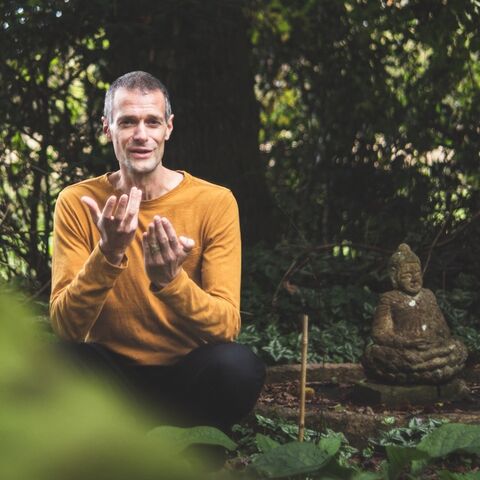
You're listening to another meditation Q&A with Wendy Nash and Josh DuPont on the Integrating Presence podcast.
Wendy,
How's it going?
Yeah,
Good.
I'm calling from Gabi Gabi outside Brisbane in Queensland.
So right at the other end of the universe from you,
Well,
The planet,
I should say.
So yeah,
It's good.
We've got sunshine.
It's been a pretty blustery kind of day.
It makes me wonder about many things.
There you go.
So well,
Yes,
I'm here in London for the very first time ever in England.
Got in last night fresh off the turnip truck or whatever they say.
And you know,
Here I am.
And thank you to those on Wisdom App.
I just realized that they can't hear me unless I have my headphones off.
So they have to hear me through my ear,
Wendy,
Through the computer speaker.
So welcome to anyone listening there.
And today we're going to talk about like internal and external war and conflict and also the things that are in common with this called death.
I'm sorry about that.
I've got to let me just mute my phone.
I'm just trying to do the wisdom app thing.
Oh,
You need to mute the wisdom app.
Yes.
So you don't hear me.
But I don't know.
I should be a little on the lower left hand corner.
It's like coming out everywhere.
Wendy and I are technical challenges.
You might just be.
I know where it is.
It was the YouTube.
That's right.
That happened last time too.
So we have simplified a little bit because of the time or shenanigans as of now.
So this notion of internal and external conflict and war too.
And the thing that comes with it is death a lot of times as well,
Even though that's ensured for,
I would say,
Most of us until we've become fully awakened and enlightened.
I don't know.
We won't go there because we're a little bit far from that.
So let's just say we haven't gone beyond death yet.
And the reason this came up is the holiday in Australia,
Anzac Day.
For whatever reason,
I wasn't familiar with this.
My girlfriend was telling me a little bit about it.
But Wendy,
Why don't you tell us what that's all about,
How you'd like to take it?
Yes.
So Anzac Day is the 25th of April.
I think because we've been juggling around with our dates,
We were trying to find something that was a little bit.
.
.
I think we originally planned this for a week later or something.
So we were thinking about Anzac Day.
So Anzac is the Australia and New Zealand Army Corps.
And it's to do with the.
.
.
It's called the Diggers from the First World War.
And the sort of thinking behind it is that it's to commemorate the people who were killed in the First World War,
Because it was the first war that Australia fought as a federated nation.
So before 1901,
We were part of the British Empire.
So although more people died in the Boer War,
Which was before federation,
Because the First World War was the first war after federation,
That's where we get to be known as Australians.
So that's.
.
.
You've given me a tip.
And so this is interesting for me because I like to stay out of politics,
Because I've said this in the past,
That for me,
Politics is an emotional con game.
And so,
How do I say about this?
Because I have this strong commitment to non-harming,
Right?
And how does that.
.
.
Look,
I think in the States,
The options are you can become a conscientious objector.
And I don't know exactly how all that works.
You can go to prison and some people can just try to flee the country.
When there's this thing called a draft,
Where one doesn't really have a choice.
They have to do it,
Or they'll either go to prison or they go into this conscientious objector.
So I don't know if I want to get into this,
But I can sidestep this,
Just like how some people sidestep the Ukraine thing by making it something other than people are fighting and dying in a war,
Supposedly.
I don't have boots on the ground.
I have no idea.
I don't follow the news even,
But that's what I'm told.
There's some kind of people fighting and killing each other there,
Right?
And so for me,
It's not okay.
I don't want to do that.
I don't want to go over and kill someone that I don't know for a reason I'm really not even clear on,
Because somebody else says you should do that.
I mean,
That seems so absurd to me.
They've never done anything to me.
And then there's just all these layers of programs on top of that,
Why it's okay,
Why they should do it.
And because I think that's about all the political thing I'll say about it,
Because there's millions and trillions of billions involved in war and conflict,
And a lot of our economy runs on this.
It props up our economic system and can get really political really quick.
We can also talk about this from,
Which is kind of the more safe side and beneficial side of internal,
The internal conflict.
But I want Wendy to address the external part of this first,
If you'd like.
So I think sometimes,
I think when you're a white person,
There is a luxury about turning away from racism.
We have the luxury as white people to say,
I don't want to look at that,
Because it doesn't,
Racism doesn't affect us except in a really lovely way,
Because people are nicer to us,
You know,
Because of that.
So I think,
Because we do,
You and me,
We aren't in a war zone,
We are two hours from a war zone.
But it's not easy when it's here and now.
And so in Australia,
The news is that there is a lot of stuff I've been reading and the governments,
They're militarizing in a way they haven't militarized for a long time.
And I've just been keeping up with the news,
I don't generally do it on this stuff,
But I was like,
Wow,
So there is a fear of war from China.
So I don't want to get into the politics of all that sort of stuff.
But I just think,
You know,
Well,
What do you do when,
When war is here?
What do you do when the Nazis arrive in Poland?
What do you do when they take over your country?
So there's a comedian here called Magda Zabanski,
And she discovered that her father during the First World,
During the Second World War,
When he was a 15 year old boy,
And Poland was invaded by the Nazis,
He decided that he would join the resistance,
And he killed people who were collaborators.
So he was a murderer of the of collaborators.
And so he had to live with that as an older man.
So Magda Zabanski's book is she's very funny,
She's very,
She's searing,
Searingly honest about it.
And I think it's complicated.
It's nice if you can step away.
But if you're in Afghanistan,
You can't step away.
If you're in the Congo,
You can't step away.
So it's more complicated if because,
You know,
My understanding from the Taliban is that what they do is that they say,
All right,
If you don't do it,
I'll kill your whole family.
So it's not like they've got a gun to your head and,
Okay,
Well,
If you don't do it,
You're done for.
They say,
If you don't do it,
I'm going to kill all your family and your village.
It's terrifying decision to make and how to live with that decision.
And there are Tibetans who when they moved over to India,
They escaped into India,
They had to join the armed forces.
It was part of the National Service.
And they had to kill people as part of that National Service.
So there's a penance that comes from doing that,
You know.
And it's complicated.
And I think that it's a bit like,
So my younger sister was born with a terminal illness.
And she had this huge roller coaster as she was slowly dying,
Getting well and dying and,
You know,
Deteriorating.
And there were three other children,
This huge catastrophe.
My mother says,
I just wish,
I just wish she had died earlier so that it wasn't so horrific.
And she,
My mom is a great proponent for euthanasia.
And I don't want to get into the politics of these things.
But simply to say,
You know what,
I'm going to turn around,
I think it's all whatever,
For political reasons.
I think if you look at politics from that way,
Yes,
That's true.
But if you look at politics from the embodied experience of,
Well,
This is a decision that I have to live with,
Good or bad,
Then it's more complicated.
So in about 1976,
My father became terminally ill,
It was his first operation.
And he'd already seen his daughter die,
And three of his parents died,
And he'd seen the role of the carer.
So he,
He had operations,
But he was a typical guy,
And he had symptoms,
And he didn't go to the doctor because he's a typical guy.
And so of course he died.
But it was more complicated than that because he,
He couldn't bear the idea that we were going to see him die,
And that we would be his carer.
So one day he wrote a letter and he told us that he was going.
And that was the last time we saw him.
And then he died in England at St.
Christopher's Hospice on the other side of the planet.
And so because Australia was against,
Or didn't have the resources,
Or didn't have the political landscape to set up a hospice,
That whole catastrophe happened.
So I think,
I think it's really with politics just to bring it back to the body,
To the lived experience,
And sit and kind of imagine,
Well,
What's it like when you have to make these decisions,
Actually?
And so I think that's,
That's what to me mortality is about.
And it's,
I think,
Also with war,
There is a thing in that they,
A term they called ambiguous loss.
Pauline Vos started this.
I don't know if you've heard of this term.
But where she was a psychologist and she was talking with women in the,
The wives of men who were missing in action in the Vietnam War.
I suppose a while ago now.
And so she,
She called this term ambiguous loss because,
Well,
Were they dead?
Were they alive?
Were these women married?
So were they single?
Were they widowers?
Were they,
Could they meet somebody?
Could they,
What did they say to their children?
What did,
How did they,
It's very,
Very ambiguous.
And so when you,
When you live in the embodied space of,
Has of uncertainty,
It's,
It's complicated.
And I think it's really important to include that in our meditation practice because to me meditation is so much about where are we in the body?
Where are we in the mind?
What are our blind spots?
Where are our challenges?
And so we have to kind of step in to make uncomfortable decisions,
The best decision of a whole range of unpleasant,
Difficult decisions.
So that's,
I just wanted to put that on the table.
And this is the key word that,
That just really resonates with me is complication,
Complicated.
This is extremely complicated.
This is the messiness of life.
You know,
Nothing is all black and white,
Cut and dry when it comes to these types of issues,
You know,
And we can hear about other people's decisions all day long,
Which I feel we need to,
Because that helps inform our own decisions,
Right?
When we learn how other people do this,
What's available,
What's not,
What's possible,
What's not,
What's more probable,
What's not.
But at the end of the day,
It comes down to our own embodied experience of,
You know,
How is this when these choices are made or these seeming choices are made and that the ambiguity of it as well is pretty,
Pretty wild too.
So yeah,
I'm just thinking of just all the different things that can be said and explored on this,
But really what it comes down to,
Again,
Like I say,
I'll echo it again,
Is our own embodied choices around this.
You know,
We can say,
Well,
It might,
You know,
Somebody should do this,
Somebody shouldn't do this,
You know,
These types of things.
I know in the Buddhist community there's,
And I haven't read this yet,
But I heard it was a famous exchange between two famous bhikkhus or monastics in Theravada tradition,
Bhikkhu Bodhi and Thaynasara Bhikkhu about war,
Right?
And you know,
What's kind of allowed and what's not according to Buddhist,
You know,
Either monastic rules or outlooks and things like that.
And centering around non-harming,
But like the scenario you were saying about in Afghanistan,
You know,
See,
That's,
I don't have a family,
I don't have a wife and kids.
So that's one that I can't really,
What I say on that's not really going to hold much weight,
Right?
And you know,
I'm not in Afghanistan.
So that doesn't really apply to me again.
You know,
I haven't lived there.
So what I say about that is going to be almost completely irrelevant.
You know,
There's some universal things,
I mean,
There's universal things about love and care,
Our loved ones,
Our dear ones,
You know,
Harming,
You know,
This golden rule,
What,
You know,
Treating others like I would be treated.
Then there's things where if we're forced to the barrel of a gun to pick up guns and fight other people,
I mean,
It just,
To me,
It just seems so ridiculous,
You know,
How can I,
How can anyone force another to pick up a gun and shoot,
You know,
Potentially shoot somebody else?
Are they going to hold me at gunpoint if I don't do that?
I mean,
It just seems so bizarre to me to,
To something like that.
I don't know how they would do it.
Like me,
They would probably lock someone like me in prison.
I'd be okay with that because I just don't,
I just don't see the point of it.
Now,
If I had loved ones that would be different,
You know,
Because then I'm responsible for other ones beside myself.
You have parents and you have a brother and maybe you have nieces and nephews.
That's right.
And my brother,
He's,
He's all for,
As far as I know,
Protecting them.
So that's,
You know,
That's his responsibility.
Now we can get into hypotheticals like what if,
You know,
Some kind of robber or something would,
Would give me some kind of scenario and that's different,
You know,
And I can say this is how I would act,
But until I get in that situation,
I really wouldn't know.
And I will give an example here of a real life violent situation that I witnessed,
But I want to give Wendy a chance to say anything if she'd like to at this point.
I think it's,
So I'm just,
I guess I'm also thinking that this is about meditation Q and A.
Yeah,
Exactly.
So we can get back.
We have a tendency to get onto tangents.
I just wanted,
Because we were talking about mortality,
I just wanted to bring it right back to the body,
To the lived experience walk.
But what do you,
How,
How do you live with it,
With,
With the decisions that we make that affect other people that makes us either,
So I don't have contact with my mother.
So I am the person who,
It's an ambiguous loss for my mother actually.
So how do I,
How,
That's,
It's complicated and I feel mean spirited and guilty for that,
But I had to do that because I just didn't feel I could do that.
So these are,
I think for me,
Meditation is really sitting with very difficult experiences.
It's a bit like,
You know,
I'm in Australia and we have this big,
Huge thing this year called the Voice to Parliament for Aboriginal People and which is about giving them a seat at the table at a really,
At a structural level.
There's a referendum at the end of the year and the,
The,
You know,
We have stolen their land,
So how do we,
So I'm the recipient of stolen goods which is a result of murder and violence and war and everything else.
And I just have to live with that consequence because I've got these stolen goods that I can't give back.
So for me,
Meditation is about sitting with that which is very unpleasant and being honest,
Like searingly honest,
Not a hypothetical thing,
Not distancing,
Bringing it right back to the body and going,
Okay,
Where are we here?
And knowing that we do cause harm and that it's not ideal.
Exactly.
And this,
We can know this by how the body feels.
I know for me,
When I've done unwholesome,
Unskillful things,
At this point in my practice,
That comes back to bite me really hard,
Pretty quick,
Most of the times I feel.
And it's just sitting with that and feeling how painful those unskillful actions are.
And there,
And I like the notion of these guardians of the world to protect us.
You know,
It's not to forget these things because then I can really feel how painful it is and how I've acted,
You know,
Not in my best interest or someone else's interest.
And it can feel how unpleasant it is in the body and see.
And so then what can we do instead of falling into shame,
Blame and guilt?
I can remember how this is not helping me or anyone else and then make a firm resolve not to do it again,
To be open to how I need to have this change.
And I think we've talked about these,
All these subtle layers of non-harming.
I know with,
You know,
Even my girlfriend,
I won't go into details here,
But the nature of the work we do,
Sometimes I don't realize that some of the things that I wouldn't normally consider as harmful,
There's these very subtle layers of harm.
And so waking up to this,
That I have caused harm and a lot of times all it takes is just this recognition and mindfulness that,
Hey,
You know,
I can't do everything I want to do like I used to do,
You know,
Now I'm involved in a relationship and some things that I'm okay with and doesn't seem to cause me harm can and does seem to do harm,
You know,
To my beloved.
And so I want to be,
As soon as I can,
The faster I can wake up out of that and know,
Hey,
Okay,
It's not just me anymore.
It's very helpful to know that.
Yeah,
Like really owning when you're wrong.
I mean,
I think this is what meditation is so fantastic for because,
You know,
I was actually emailing somebody about the definition of what is meditation and I wrote quite a long email.
We get that question.
So what is meditation?
You know,
You get a show and plug for a past show.
What is meditation?
Yeah,
But,
But we get that one.
So I was writing her an email and,
And,
You know,
She has this idea that it's that state of flow that she gets into when she goes for a run,
You know,
The endorphins kick in and she's just,
You know,
That's the state of flow and it's lovely.
But to me,
That's not meditation because it's not training the mind.
You're not becoming familiar with the traps and blind spots,
The pain bodies as Eckhart Tolle calls it,
You know,
This is what we work with is the pain bodies and,
And our fears and our concerns,
You know,
We're right in there.
And yeah,
So,
So it was just a very interesting email exchange because I said,
Oh,
You've got this.
So meditation is not that it's,
You know,
It's about training the mind.
It's about learning when you're wrong,
You know,
That's really kind of coming into it.
And then she said,
Yes,
That flow state.
That's exactly what I get into.
I was thinking,
Yeah,
No,
Listening is not your strength.
It's really true.
But it's honest,
You know,
I wasn't being mean,
But I was like,
Yeah,
It is.
And so with me,
I was like,
When I,
What comes to mind for that situation is,
Well,
That's that could be rolled into a mudita practice,
Right?
Rejoicing and being happy for other people's happiness.
But that's a separate thing.
What we're talking about here is,
Is a different type of mind training.
That's a,
That's a heart quality.
That's,
That's beautiful,
But that's,
That's kind of training the heart,
Right?
But we're talking about more of the mind training here.
Now let me,
When I said,
I don't normally talk about this,
But,
Cause this was kind of a traumatic experience for me.
But since we're on this harming internal and external,
I was,
This was right when things were opening up and I won't give too many details.
But when I hear about these things in the news or other people experiencing like random acts of violence or seemingly random acts of violence and shootings,
I thought,
You know,
I think,
Well,
That's,
That's horrible.
That's horrendous.
You know,
It's you know,
Nobody would ever want to experience that.
But then when I experienced this completely different,
So I was sitting outside at a cafe right when this opened and all of a sudden,
And this is in broad daylight in South St.
Louis,
And all of a sudden there's a shooting breaks out and it's right there on the same street and I,
I keep,
I look up and there's a guy,
He's unloading his handgun clip and all he would have to do is turn his gun just about this much more and that's it.
That's,
I mean,
That would probably be the end of my life.
And so I just,
Of course,
This is all my things after the work.
There was no thought process.
There was no anything other than I just slowly ducked down and you know,
Like the other people around me and just sat there and just like,
Of course I didn't think this at the time,
But it was like,
You know,
This could be it.
You know,
All you'd have to do is just move it just a little bit and there's no,
Nobody is around here to retaliate.
It's basically a gunfight on the street and just sitting there just utter bewilderment.
And then afterwards,
You know,
Just this,
This minor trauma of like how in the world can people treat each other like this,
You know,
With,
And then I realized later that it had nothing to do with anybody else.
It was a beef between two people.
They,
They,
They weren't there to hurt anybody else.
Right.
And at the same time,
The utter disregard for where those bullets would have ended up on the street,
You know,
They had,
They could care less.
And then to think that they would go on with their day,
You know,
Just wherever they went.
I mean,
The cops didn't show up until like 10 or 15 minutes later,
But it's just,
You know,
Shaking basically that.
And then it was so weird though.
I sat down to the table finally when everything was clear and a feather,
A feather dropped down from the air.
I mean,
This was so bizarre and landed on my table.
So you know,
Just completely different.
You know,
I hear about these things,
But until I experienced it that close and see,
I wasn't even directly involved,
Right.
To imagine picking up a gun and just utter dis abandon of anything and everything else just to shoot someone else for who knows why,
You know,
It was,
It's really,
It just mind boggling and crazy to consider another human being can treat each other like that over who knows what,
But yeah.
And so this is,
This is the external conflict,
But to take this back to meditation,
I mean,
How many times have we in our own mind to our own,
Our own thought processes,
You know,
Treat herself violently,
You know,
Maybe not to that extreme,
But I think of all the times before I even started meditation,
How down on myself I was,
How I was such a horrible person,
You know,
Or projecting out on others,
You know,
How many times have I really wanted to have ill will towards myself and towards others before I started meditating.
But the big thing about ill will is really one of the easier things to overcome because it feels so horrible inside.
To harbor this ill will towards ourselves or others,
Once we can see it,
We see how painful that is and we,
And there's a choice not to do that and how good it feels just to have an absence of ill will.
Yeah,
It definitely,
It definitely feels,
It's a great motivator.
I'm always amazed why some people are interested in working on that and some people aren't.
I heard a statistics yesterday,
It was about what we do,
What our mind does when is,
Is that we're not actually,
Most of the energy is spent forecasting.
I thought this was a very good way because we talk about,
You know,
In meditation you think about what's in the future and what's in the past,
But actually what we're doing is we're taking a past event and we're forecasting what we're going to do.
And so actually most of our mental energy is spent forecasting.
And what it was saying is,
What they were saying is,
One of the things is there's quite a lot of optimism in the human condition.
And 80% of people are over optimistic about how,
About the impact of climate change.
And I was going,
Yeah,
We're completely stuffed,
You know,
Like the climate,
It's all going to fall over for sure within 30 years,
Whatever,
You know.
And I thought,
Yeah,
But I'm really naive and overly optimistic when I speak to somebody and I think they're going to be open to change.
I think,
Oh yeah,
Well,
If,
You know,
We're all open to change and it turns out maybe 80% don't want to change.
Actually,
Maybe that's what that means.
And so I think I can be very violent with my conversations because I assume another person is interested in engaging with their demons to be kinder,
To be more loving,
To be more gentle with their speech.
And I think I can create violence that way or harm in a very subtle way.
You know,
It's a fascinating question,
Wendy.
What's the old joke?
How many psychiatrists does it take to screw in a light bulb?
None,
Because the light bulb has to want to change.
And that's the thing,
This futility of that I can change other people or even,
You know,
Step back that I can actually,
You know,
Make them change.
It's so wild because people,
You know,
This notion,
It was so illuminating for me when I hear it like this.
Why do people say one thing,
Mean another,
And yet act in an entirely different way?
So it's so confusing and frustrating when people's words and actions don't align and actually their meaning doesn't even align a lot of times.
So it's like reading this dynamic,
Complex psychology and,
You know,
Figuring it out or not and then how to approach it.
And like you're saying with the forecasting,
And I know this,
Especially in meditation early on when I had a situation,
A lot of it would be internal dialogue about what I was going to say to the other person,
Right?
Be back and forth.
Okay,
Well,
They're going to say this.
Well,
Then I'm going to respond like this or they said that I should have said that.
I mean,
I can't even count the hours of internal dialogue on the kitchen until I wake up to that.
And then realizing that this practice,
And it's so,
I don't know how to explain it,
But a lot of times it's just clearing out all the clutter.
And so where we can see clearly what's arising and then this trusting more and more that the best response is going to come forth or,
You know,
Trusting our internal wisdom,
Or at least we're working on the internal wisdom instead of spending so much time in mental energy forecasting.
What if we trusted our internal wisdom to spontaneously respond in a manner that's appropriate?
You know,
I guess one of the proofs I have for this is this saying,
If it could have happened any other way,
It would have.
You know,
This kind of little axiom has been really helpful for me,
Especially when looking on the past.
You know,
If it could have happened any other way,
It would have.
So now how does that,
If we do forecast that into the future,
Well then that would say,
What does that say?
Does that say,
Well,
We have this innate wisdom that's going to respond to what's needed in the moment.
And at the same time balancing that with not being too slack and saying,
Oh,
I can just do whatever I want because I'm just going to say the best thing all the time anyway.
That's not what I mean exactly.
So this,
Yeah,
This,
I think that's enough for now.
Go ahead,
Wendy.
Yeah,
There was something there in what you said.
I guess I look at it differently,
The forecasting,
Because I think of the forecasting or the reliving of those conversations as backlog,
Unprocessed stuff.
So what I observe is that when those conversations come up,
There's a theme.
And I always ask,
You know,
What's the emotional theme of this?
And then I find out,
Ah,
Yeah,
Okay,
There's an emotional quality.
And when I trace it back to an interaction where I felt the other person didn't pay heed to my needs and feelings,
It's invariably about that,
Then there's this emotional why,
I still want to,
How do I solve this?
They didn't help me with my needs and feelings.
And I think of it more as being an opportunity to integrate emotions that are painful.
And by doing that more and more frequently,
Like as you go on,
The more often you do that,
Then those blind spots,
Those pain bodies slowly release and it stops being quite so intense.
But I think that it's really,
It's a bottomless pit.
You know,
There is a part of me that thinks,
Oh,
Could I just go into the no self and then be done with it and just imagine that it's always clear?
And I think there is no end.
And I think it's really important to not bypass either,
Because otherwise you end up in a big pile of poo.
You know,
You can create a lot of harm that way.
Yes.
And this notion,
I'm fairly sure we've mentioned this in the past,
This being seen and heard and our needs met.
What I found,
When I can remember it,
That's so helpful for me is giving that to myself.
And it's great when others give it to me.
And yes,
Especially in our friends and interactions and the people we choose to be around,
So very important.
At the same time,
No one outside myself is going to be able to see and hear me the way I can see and hear me.
You know,
It's great when I get it from outside,
But it just never does it.
Because no one has to be around me as much as me.
You know what I mean?
And so this is where we can really give that to ourselves,
Allow ourselves to see and hear ourselves,
So to speak.
And I found,
You know,
In ways it doesn't seem like a consolation prize either,
Right?
This self-love.
Some people feel this is like a self-consolation prize,
Because we're not getting it from someone else.
Really?
Oh,
OK.
Well,
I guess some people do.
I mean,
This is where,
Because it's common sense to me,
Because we're the ones that we're around each other the most,
You know?
And yeah,
I feel you're going to say something on that.
And then this notion of changing change,
I think,
Is another one to pick back up on that's really important.
Yeah,
There's an idea that people don't change.
And I think,
Well,
I've changed heaps.
But what I notice is that when I go back to my family,
Which doesn't happen very much,
I go back to how I was when I was 15 or whatever,
Which really makes me think,
Well,
There is no self.
Because here I am,
A grown-up of 56,
And I suddenly find myself going back 40 years as if none of those years have happened.
And it makes me think,
Yeah,
So in some situations I'm like this.
And in other situations,
I'm like that.
And it really highlights the context-dependent nature of it.
But we were talking about death today.
That's right.
I was going to say that,
Too.
So yes,
One thing that's ensured to change,
The physical body even changes after death.
So yes,
What would you like to say about this?
Because I mean,
In general,
I'll just say that this is a really important practice.
I mean,
In the Buddhist community,
As far as I know,
They've shied away a little bit from it as far as practicing these death contemplations.
Because there is what is called the Asuba practice.
No,
No,
I'm sorry,
Not the Asuba practices.
That's the foulness of the body.
These cemetery contemplations or charnel ground contemplations where these monastics used to go in ancient India,
We're told,
That if people couldn't afford a proper burial,
Either cremation or burial or whatever,
Then they just dump the bodies in a place and let nature have its way.
And so we have things contemplating the body,
Like I did a death meditation on this.
All the different ways the body can decay,
Can become bloated.
Just a gruesome warning here,
But I'll say why I did this.
A bloated and discolored corpse,
A hacked and scattered corpse,
A worm and insect-eaten corpse,
A half-decayed corpse.
One that goes down to the,
I'm missing something here,
But one that goes down to the bones,
And then the bones themselves turn into dust and dustify,
Bleached in the sun.
And then eventually the bones will go back into nature too.
And that's the nature of this physical body.
And now all this is not to get bummed out or be morose.
This is to realize that this is the truth of how this body is,
Right?
If we live,
Or whatever,
When this body passes,
That is its nature.
And that,
Not just for that,
But this is going to happen.
It makes it so real and immediate.
It brings me into my body when I contemplate these things.
And it's also to take advantage of every moment because we'll never get this moment again exactly the way it is.
Our time here is limited.
What are we doing with our time?
What are we taking for granted?
What are we not?
What's important in this very life?
Yeah.
So I've been slightly distracted because I've been trying to look at the wisdom app because I wanted to make sure that I was connecting in with where it was,
But I couldn't get it to work.
So I should have more.
Well,
We have seven listeners,
It says.
There are seven people that have listened.
So.
.
.
I'm sorry.
So I'm sorry if I'm ignoring anybody in the chat,
But I can't figure out the tech and it's too distracting.
Yes.
And it's Rindy's first time doing that.
And I guess if you're watching this on YouTube,
You're welcome to chime in with any questions or comments.
We'd love to hear from you.
Yeah,
We love it.
Last time we had a really fantastic guy who was.
.
.
Asking good questions last time.
Who was asking great questions.
Yeah.
So I think the thing that a lot of people experience and the reason they take up meditation may be a terminal illness,
But also they live with chronic pain.
And so that I die doesn't bother me.
That my body after my death becomes bloated and wizened and disintegrates and I'm all good with that.
The part that I fear is the pain,
Is the physical pain.
And I've got some.
.
.
My feet are a bit stuffed at the moment.
So I'm in a bit of pain often.
And it's quite hard to enjoy life when you have physical pain.
So tell me more about how this relates to death,
Physical pain to death.
Because when you're in pain,
Often you're in pain because you are dying.
Because death is a painful process.
If you're terminally ill,
You've got cancer or whatever,
Or like a friend of mine,
Her husband had a heart attack.
It's actually his fourth heart attack.
And he suddenly had four stents.
So he's weak and he's right on the brink of death.
So this goes into a whole other thing,
You know,
And yes,
Death is painful.
There's even way more things in our lives that we have all the time,
You know,
That can potentially be painful.
But this is the final pain,
Right?
And so there's all these notions about now how to die with dignity and a proper death and things like this.
And it's so wild that we have,
At the same time,
We have so much death culture,
I feel,
You know,
There's tons of movies glorifying death and violence.
We hear about death all the time and it's not to ignore it at all.
It's just like saying,
I like to deal with the pain version of this too,
Because this is something in this human life,
We will never,
We will,
If we have a human incarnation,
We're going to experience pain.
So I feel this is a really good topic to address as well.
Dealing with pain on and off the cushion.
I've addressed some of this too in a past post.
I'll just ask Wendy,
How do you,
How do you work with pain?
Especially since this is about meditation,
How do you work with pain in meditation?
I move position.
I'm a bit naughty.
I really,
You know,
Before you were talking about how Western Buddhist practices tend to avoid the cemetery practices,
We're very mortality averse.
So.
.
.
Real briefly,
We don't really have the opportunity to do that because death is so sanitized too.
It's not really,
While it's also glorified and it's also sanitized,
So we don't have a really visceral experience with it anymore.
You know,
The bodies are involved.
We don't really get to see what death really looks like.
But I think that when you described earlier your experience,
Which was so close to death actually,
That it's not sanitized.
In that instance,
Right.
But it just,
It's so,
Again,
It's so complicated.
There was no death involved in that,
You know,
It could have been.
It seemed way more likely at that moment.
And at the same time,
It didn't come.
And this is another thing that's more complicated in these war things.
You know,
The historical Buddha,
He,
You know,
He's was famous or he was,
It was told that he tried to stop wars and with all his power and insight and wisdom and even miraculous power,
Some say he couldn't stop war.
I mean,
They stopped fighting when he was there,
But it went back.
And so what I've heard other people say is because of actions in the past that these folks,
This is,
We talk about karma here because of past unskillful actions in the past.
Well now some of them are fruiting in this,
You know,
The result of past actions are now coming,
You know,
Are fruiting or resulting in this.
And so maybe there's just too much karmic force behind it and these wars have to go on.
I don't know.
That's,
You know,
I can't pretend to say that I'm authority or can even discern,
You know,
All these very nuances of karma,
But who knows,
You know.
But one thing is for sure,
We know we experience pain,
Right?
And so that is obvious.
We all have,
And there's physical pain,
There's emotional pain,
There's psychological pain,
There's mental,
There's psychic pain even,
And so all these things are rich for work on the cushion,
You know,
Because we all experience these.
But in meditation,
We have a chance to really look in way more detail about how we're viewing this and how we respond to it and how we work with it.
When most people,
I wouldn't say most people,
But it seems like a majority of the population just wants it to go away.
They don't want to look at it.
They don't want to feel it.
They don't want to turn towards it and find out how to work with it.
They just want something to make it stop.
And I would say I can never take away this from people because sometimes it's so horrendous,
There needs to be some reprieve from it.
At the same time,
Wouldn't it be beneficial if we could sit and see if there's a better way to dealing with this?
And we're talking about the psychological approach to this too,
You know,
Not necessarily the physical,
But then again,
The physical and the psychologically are tied close together.
So it is a really complex issue.
I can talk about specifics of how I work with it in meditation and how I've been kind of taught to work with it in meditation,
Which I find is very helpful.
The same time,
I'm very grateful that I haven't experienced a lot of physical pain.
So yeah,
I mean,
If you,
I haven't,
I don't know much about pain meditations.
Oh,
Well,
Do you want to go into that?
Sure.
The way,
When I do it,
Like right now,
Because I'm sitting cross-legged on the floor,
I mean,
I can work with this in real time.
So just,
Well,
The big thing,
Especially for people identifying with emotions,
I feel is the second foundation of mindfulness.
Is this pleasant?
Is this unpleasant?
Is this neither of those?
So I can't believe how many times I've acted out of something that I just didn't realize it was unpleasant.
So I was trying to get rid of the unpleasantness,
Which is not wrong,
But not even knowing that unpleasantness was happening.
Or same way with pleasure,
Feeling pleasure and not knowing that I just want more cake or I want this and more and more and more and not realizing it.
So that's the obvious.
Well,
With pain,
It's easy because obviously it's unpleasant,
Right?
And when we go to the doctors,
It's actually very wise.
Well,
Where does it hurt?
Of course,
Finding where it hurts,
I'm surprised at how many people just say,
Oh,
I'm in pain.
Well,
Not say anything more than that.
So actually looking where does it hurt in the body?
I know it seems very easy,
But that's the first one.
Then the intensity level,
How intense is it?
And then depending on our skill level,
Allowing the attention to go right there.
So there's a lot of times it does that naturally.
Now,
Really paying attention to the changing nature of it.
That's key for me.
So right now in my left kind of hip,
There's,
So it's already changed already.
So we can put labels to it.
Is it an aching?
Is it a throbbing?
Is it a stabbing?
Is it a pulsing?
Is it a dull ache?
Is it a sharp ache?
Is it an acute ache?
And then noticing,
You know,
How far does it extend from the most intense area in the body?
How far away from that particular spot does it spread?
Is it really localized?
Is it really,
You know,
Spread out throughout that body?
Now notice the changing nature of it.
Is it static all the time exactly in the same way when you've done an assessment?
And I would say more than likely not.
It changes continuously.
And so now it's going to be kind of rippling and shooting up my leg.
And then it gives a reprieve for a moment and then it will come back.
And then the intensity level changes and fluxes.
So one of the big lessons and things of wisdom to gain from this is pain is usually not what we think it is,
Right?
We assume like a lot of things that it's going to be there forever.
You know,
Of course we know that's not rational,
But when we're in the throes of pain,
It's like,
Oh God,
When is,
Will this ever stop?
I just want it to go away.
So when we really look what's going on in great detail,
We realize that,
Okay,
This is in flux just like everything else.
It is changing and it's not going to be here like this forever.
You know,
It does change.
So that's one way to at least see that aspect of it.
There's so many other ways to work with it and deal with it.
The other things are movement masks suffering.
So a lot of times we're moving around a lot,
Not that it's wrong or anything,
And there's a lot of great meditation movements,
But just sit very still for long periods of time.
And I think eventually,
Unless we're in Samadhi,
Pain is going to be guaranteed.
Some kind of unpleasantness is going to be guaranteed.
You know,
That's fascinating to me.
You know,
Why is that?
Why does that happen?
So I never thought about that actually,
That when you're meditating and it is painful and it does get painful.
So for me,
I think about when my body's in pain,
It's seeking.
So I was thinking about,
You know,
This question,
The second mindfulness.
.
.
Foundation.
Foundation,
Thank you.
Which is,
Is it pleasant?
Is it unpleasant or is it neutral?
And as I was meditating the other day,
I thought,
Well,
It's unpleasant,
But it's seeking pleasant.
So it wasn't possible to say that it was unpleasant.
It definitely was unpleasant,
But it wasn't,
It didn't have a yearning to be pleasant.
And I was thinking about despair recently.
And I thought about with despair,
It's the idea that things will never change.
And of course,
Things do,
You know.
But yeah,
So that,
I think it is,
Maybe I don't quite understand,
Is it unpleasant?
Yeah,
It's a bit unpleasant or it is unpleasant,
But there's always,
It is always seeking to change.
Well,
Even if we don't seek it to change,
If we pay really close attention,
It's not going to be that same level of unpleasantness all the time.
You and I found over time,
What I once found very unpleasant,
The threshold gets higher because I'm able to stay with things unpleasant for longer periods of time.
Things that are really pleasurable don't have the same hook anymore because we can,
With wisdom,
We can see that how helpful it is to be able to be okay with,
It is just unpleasant.
Because what the mind usually does when something's unpleasant,
It starts building on top of that.
Oh,
It's because of this.
Oh,
I can't have that.
Oh,
You know,
I must have some kind of terminal illness,
Which I shouldn't,
You know,
But I mean,
How many times have I eaten,
It's so the mind playing tricks,
Right?
How many times have I eaten beetroot,
Seen my stool be red and automatically go,
I'm bleeding internally.
Okay,
Well,
I only have a few hours left.
This is it.
You know,
I'm bleeding out from the inside.
Oh,
Wait a second.
I just ate beets.
I know.
I'm so neurotic.
I've done the same thing.
I'm going,
Oh my God,
I'm dying.
My pee is pink.
I go,
Oh yeah,
As you say,
It's like,
Oh no,
I'm just,
You know,
What did I eat?
But that really highlights the forecasting question that we talked about before these huge stories that we have about what's going on.
And we go,
Ah,
Here's my story,
My forecasting.
I'm pacing this experience on that.
So why we don't go instantly.
Ah,
Of course I had beetroot before.
So of course I'm gonna get that.
But instead we do the much more,
Oh,
Woe is me.
I'm dying.
It's the end.
The end is nigh,
You know.
And I think it's personally because I just like a good pity party and I like that,
You know,
I have a tendency to go down that road very,
Very quickly.
You know,
And the unseen wisdom in this or the silver lining is that pity party,
When we can see it for what it is,
It's just a version of we're trying to be kind to ourselves.
We think that's,
You know,
And sometimes it does,
But there's other ways to even show ourselves kindness and love and affection,
You know,
That are healthier than that.
Right.
And the wisdom in that,
That the forecasting is,
Is what that's pointing to deeper is I want to be safe.
I want to find safety.
And so when we think that's the best strategy for our safety,
Well then we don't know any other way.
Well then that's what we're going to do because that's kind of what society conditions us to do and tells us to do for our own safety.
You know,
If we can just figure it out and know what's going to happen,
Then we'll be better and more at ease.
But that's like taking our happiness like a bone,
Throwing it into the future and chasing after it when we can have it right here.
And you know,
Here and now when we,
When we just sit and look at what's going on more and the more we can strip away,
At least in meditation,
I'm not saying it's wrong to add things on top of our emotions and feelings and things like this,
But we strip all that away.
It really,
A lot of times just comes down to,
This is pleasant.
This is unpleasant,
Or this has neither pleasantness or unpleasantness.
And when that happens,
I just,
A lot of times I lose interest,
Zone out and look for something that's pleasant or unpleasant,
Right?
Because that has more of a kind of an emotional charge or more interest because I can again just space out if there's,
If those two,
Those things aren't there.
And then being able to do that too,
You know.
I always think about neutral as being trying to find something interesting about a beige wall and every,
Every,
It's like,
You know,
You've got the wall behind you,
Right?
Wow.
I've got to find something super engaging.
It's like trying to find that wall and going,
Ah,
And observing the different colors.
As it,
I'm so determined to make it interesting and make it pleasant as opposed to bland,
Which is unpleasant.
You know,
So,
So a lot of things.
Okay.
We're up to four minutes left.
So what do you want to say about,
About the topic?
Well,
You know,
Just to pick that up real briefly,
The personality types in Buddhism,
Right?
The pleasant,
Unpleasant.
So like when you're saying,
You know,
The pleasant will go into a room.
Oh,
I love that.
Oh,
I,
I just got to find the aggressive thing about this.
You know,
This is so amazing.
Oh,
I really like what you do.
Or if I don't like,
Like something,
I got to find good qualities,
But the unpleasant person will go in there or the aversive person,
I should say,
Actually,
Yeah,
The,
The greedy type is what,
But the aversive type will go in there.
Oh,
I don't like that.
That's a horrible color combination.
I can't believe they have this in their house.
You know,
Why don't they do something about this over there?
It's,
It's a messy here.
And then the dilutive type or,
You know,
A neutral type,
I guess,
Would go in there and be like,
Wait a second.
Where am I again?
Oh yeah.
I'm in London.
Okay.
I'm in London.
I'm in London.
I'm in London.
I'm in London.
I'm in London.
I'm in London.
I'm in London.
I'm in London.
I'm in London.
I'm in London.
I'm in London.
I'm in London.
I'm in London.
I'm in London.
I'm in London.
I'm in London.
I'm in London.
I'm in London.
I'm in London.
I'm in London.
I'm in London.
I'm in London.
I'm in London.
I'm in London.
I'm in London.
I'm in London.
I'm in London.
I'm in London.
I'm in London.
I'm in London.
I'm in London.
I'm in London.
I'm in London.
I'm in London.
I'm in London.
I'm in London.
I'm in London.
I'm in London.
I'm in London.
I'm in London.
I'm in London.
I'm in London.
I'm in London.
I'm in London.
I'm in London.
I'm in London.
I'm in London.
I'm in London.
I'm in London.
I'm in London.
I'm in London.
I'm in London.
I'm in London.
I'm in London.
I'm in London.
I'm in London.
I'm in London.
I'm in London.
I'm in London.
I'm in London.
I'm in London.
I'm in London.
I'm in London.
I'm in London.
I'm in London.
I'm in London.
I'm in London.
I'm in London.
I'm in London.
I'm in London.
I'm in London.
I'm in London.
I'm in London.
I'm in London.
I'm in London.
I'm in London.
I'm in London.
I'm in London.
I'm in London.
I'm in London.
I'm in London.
I'm in London.
I'm in London.
I'm in London.
I'm in London.
I'm in London.
I'm in London.
I'm in London.
I'm in London.
I'm in London.
I'm in London.
I'm in London.
I'm in London.
I'm in London.
I'm in London.
I'm in London.
I'm in London.
I'm in London.
I'm in London.
I'm in London.
I'm in London.
I'm in London.
I'm in London.
I'm in London.
I'm in London.
I'm in London.
I'm in London.
I'm in London.
I'm in London.
I'm in London.
I'm in London.
I'm in London.
I'm in London.
I'm in London.
I'm in London.
I'm in London.
I'm in London.
I'm in London.
I'm in London.
I'm in London.
I'm in London.
I'm in London.
I'm in London.
I'm in London.
I'm in London.
I'm in London.
I'm in London.
I'm in London.
I'm in London.
I'm in London.
I'm in London.
I'm in London.
I'm in London.
I'm in London.
I'm in London.
I'm in London.
I'm in London.
I'm in London.
I'm in London.
I'm in London.
I'm in London.
I'm in London.
I'm in London.
I'm in London.
I'm in London.
I'm in London.
I'm in London.
I'm in London.
I'm in London.
I'm in London.
I'm in London.
I'm in London.
I'm in London.
I'm in London.
I'm in London.
I'm in London.
I'm in London.
I'm in London.
I'm in London.
I'm in London.
I'm in London.
I'm in London.
I'm in London.
I'm in London.
I'm in London.
I'm in London.
I'm in London.
I'm in London.
I'm in London.
I'm in London.
I'm in London.
I'm in London.
I'm in London.
I'm in London.
I'm in London.
I'm in London.
I'm in London.
I'm in London.
I'm in London.
I'm in London.
I'm in London.
I'm in London.
I'm in London.
I'm in London.
I'm in London.
I'm in London.
I'm in London.
I'm in London.
I'm in London.
I'm in London.
I'm in London.
I'm in London.
I'm in London.
I'm in London.
I'm in London.
I'm in London.
I'm in London.
I'm in London.
I'm in London.
I'm in London.
I'm in London.
I'm in London.
I'm in London.
I'm in London.
I'm in London.
I'm in London.
I'm in London.
I'm in London.
I'm in London.
I'm in London.
I'm in London.
I'm in London.
I'm in London.
I'm in London.
I'm in London.
I'm in London.
I'm in London.
I'm in London.
I'm in London.
I'm in London.
I'm in London.
I'm in London.
I'm in London.
I'm in London.
I'm in London.
I'm in London.
I'm in London.
I'm in London.
I'm in London.
I'm in London.
I'm in London.
I'm in London.
I'm in London.
I'm in London.
I'm in London.
I'm in London.
I'm in London.
I'm in London.
I'm in London.
I'm in London.
I'm in London.
I'm in London.
I'm in London.
I'm in London.
I'm in London.
I'm in London.
I'm in London.
I'm in London.
I'm in London.
I'm in London.
I'm in London.
I'm in London.
I'm in London.
I'm in London.
I'm in London.
I'm in London.
I'm in London.
I'm in London.
I'm in London.
I'm in London.
I'm in London.
I'm in London.
I'm in London.
I'm in London.
I'm in London.
I'm in London.
I'm in London.
I'm in London.
I'm in London.
I'm in London.
I'm in London.
I'm in London.
I'm in London.
I'm in London.
I'm in London.
I'm in London.
I'm in London.
I'm in London.
I'm in London.
I'm in London.
I'm in London.
I'm in London.
I'm in London.
I'm in London.
I'm in London.
I'm in London.
I'm in London.
I'm in London.
I'm in London.
I'm in London.
I'm in London.
I'm in London.
I'm in London.
I'm in London.
I'm in London.
I'm in London.
I'm in London.
I'm in London.
I'm in London.
I'm in London.
I'm in London.
I'm in London.
I'm in London.
I'm in London.
I'm in London.
I'm in London.
I'm in London.
I'm in London.
I'm in London.
I'm in London.
I'm in London.
I'm in London.
I'm in London.
I'm in London.
I'm in London.
I'm in London.
I'm in London.
I'm in London.
I'm in London.