All this in welcome.
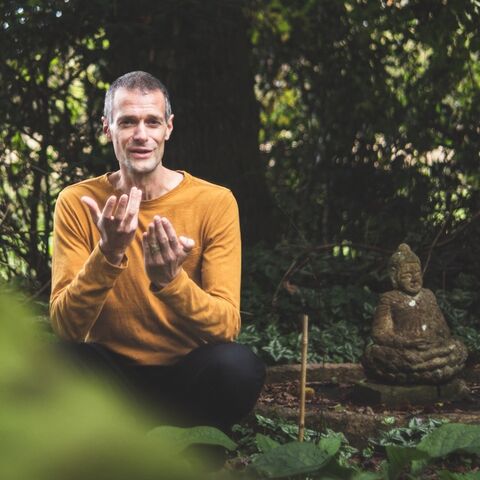
This is Josh Dippold of Integrating Presence.
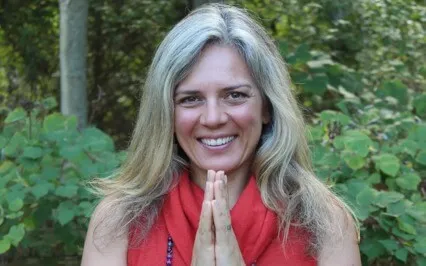
And today I have Melissa Mayer,
Right?
The gals at the coffee shop that I sometimes work on with the computer are listening.
I have to ask,
Are you any relation to John Mayer?
No,
I am not.
Okay.
Well,
At least I asked,
Right?
So I tried here.
How are you doing today,
Melissa?
Doing really great.
Hey,
I've,
We've only chatted a little bit with text and I've checked out your website and some of the topics that we kind of converge on,
But I don't really know you don't know much about you yet.
So why don't I just throw it over to you about,
Tell us a little bit about your life and your work.
Sure.
Well,
Thank you so much for having me,
Josh.
And so I'm a mother and a holistic physical therapist.
I live on the East end of long Island and I wrote a book called recovering my true self.
It's about my transformational journey,
Donating my kidney to my husband.
So that was the transplant itself was in 2018.
And you know,
I describe in the book,
What I had as a divine wake up.
I mean,
Just a deeper spiritual connection with myself,
With spirit after the surgery leading up to it,
I would have,
You know,
Characterized myself as a spiritual person,
But never a religious person.
I grew up with you know,
I grew up in a suburban New Jersey area with,
You know,
Strong Christian leanings and but never really resonated with me.
So I started practicing yoga.
I'm a certified yoga teacher.
I practice meditation.
I've been to Buddhist centers and that always resonated with me more,
But also in addition to,
Prior to the transplant,
I started reading a course in miracles.
I was always a big fan of Marianne Williamson.
So I'd heard a reference to it many years through Wayne Dyer and Louise Hay and said,
You know,
But saw the book and thought it was super intimidating,
But then opened it up and said,
You know,
And the course says,
You know,
When you know,
It's your time,
It's your time.
And I guess knowing that I had this huge,
You know,
Life,
You know,
Obstacle in front of me,
I said,
I think this is my time.
And it does use a lot of Christian language,
The word God,
For example.
And and that at first was a little,
You know,
I was like,
I don't know if this is right for me,
But something told me to just keep going.
And what really resonated was just a miracle is a shift from fear to love.
And that that was revolutionary for me,
Because no matter how many times I meditated or went to yoga or did things,
You know,
I would find myself in the pattern of negative mind chatter,
Which I think we can all relate to.
It's the human condition and just saying,
This is fear based thinking.
I need a miracle.
I need to shift from fear to love.
And then with the transplant,
You know,
I kind of got on my knees in a moment of spiritual surrender and said,
God,
If that's what you are,
I need a huge shift from fear to love.
I'm fearing this thing and I need to be in a place of love.
So I felt like when I woke up from anesthesia,
I got this,
You know,
Not really like verbatim message,
But like miracle granted,
You're going to be okay.
Your husband's going to be okay.
Your kids,
Your family,
Your life,
You're going to be okay.
You're,
You know,
We're here with you,
You know,
Spirit,
The entity is with me.
And and it changed my life.
I mean,
It changed my life subsequently afterward.
I was,
I am a physical therapist.
I always had an interest in metaphysics,
Holistic in my leanings and my work,
But it really gave me the courage and conviction to really practice in a holistic manner.
I stopped drinking afterward as a result,
I felt so clear and focused and I said,
I don't want to muck this up with anything.
So that was,
I mean,
I would never consider myself prior to that in alcoholic,
But I was a highly sensitive person.
I still am.
And I was numbing myself with alcohol and I didn't realize any of that until I stopped drinking.
And my writing was just coming so clear.
I felt like I was channeling spirit through my writing and through my work.
And I said,
I'm not taking any chances by poisoning myself or,
You know,
Just kind of setting myself up to fail.
I noticed that alcohol would really interfere with my negative mind chatter even more,
Especially the next day,
Waking up feeling like I could not stop the thoughts in my head even more so.
So the clarity was profound and it still is.
We kind of have similar journeys in a way with that.
My own thing with alcohol,
When I first started meditating,
Um,
It just got gradually over time where I used to go out with company culture and drink and just have to tell people who got blackout drunk the night,
Night before kind of things they did and what they forgot.
I would always remember I would go,
I would get up and I wasn't really that hung over,
But as I started meditating and why,
After I hit rock bottom and noticed such a huge difference,
How quickly,
Um,
It helped me right away that eventually within a year,
I just less and less,
It got to the point where I would drink one beer and be like hung over for like a,
You know,
Almost a day,
Sometimes even longer than a day.
It's like,
This is ridiculous.
Why even bother if one drink is even going to do that.
So,
Um,
As well,
The course and miracle stuff,
I'm barely a little familiar with that,
But these,
Uh,
Quotes you have on your website from them are really powerful.
And if I'm just going to read them,
Actually,
It's just,
Um,
Two lines here.
Nothing real can be threatened.
Nothing unreal exist.
I think that's so amazing.
And for real,
I equate that with truth too.
There's the guy on insight timer who says.
His tagline is the truth is all there is.
Right.
So that this is a clarifying statement to that nothing unreal exists.
And the fear thing you speak to is really powerful because I know I've,
Um,
Struggled with that early on too,
But it's also like a reference point and a training for becoming fearless and becoming courageous too.
Right.
And when we go through those,
Uh,
Those,
Uh,
Tests and trials in a way and come out the other side,
We can become a hero for those still going through it and a hero in the good sense of the word too.
Not like the cliche sense of it as well.
Yeah,
Absolutely.
Well said all of that.
Um,
And just to kind of piggyback on it,
I,
You know,
Nothing unreal exists basically only and it goes on in the course to say only love is real.
Fear is an illusion.
So I remember years ago discovering Eckhart Tolle and how monumental,
You know,
His work was to say that I'm not the thinker.
And of course,
You know,
In Buddhism and other spiritual philosophies share that too,
That,
I mean,
That was freedom right there because people would say,
Oh,
You're a good person.
And I'd say,
And I think to myself,
No,
I'm not.
I have these terrible thoughts in my mind.
And when Eckhart Tolle said,
No,
You're not that,
That just gave me so much freedom to say,
Oh my gosh,
Thank you.
And then in the course,
You know,
It continues with,
We're all love.
I mean,
We're here,
We're created,
We're extensions of God,
We're love and anything else is fear.
It's illusion.
And,
You know,
It just helps guide me when I'm thinking about things,
A situation with someone where I'm like,
Who was right and who was wrong.
And I'm like,
It's all illusion.
You know,
I can just rise above all of that.
And you know,
Again,
We do it in meditation and mindfulness,
You know,
When you just sit still and you transcend all of that,
All of the suffering and all of the thoughts you realize only love is real.
You know,
The right side is just love the,
You know,
Above it all where,
And you realize too,
You start to say when I am in that fear-based place,
It's just an illusion.
And when other people are,
You know,
You start to forgive.
There's so much in the course about forgiveness because you forgive yourself when you deviate from that and you forgive others.
Because we can point our finger all the time and say,
Look at that person,
What they're doing is wrong.
But you start to say,
I forgive them because it's an illusion and I can transcend all of this and I can be free.
God doesn't need me to police the universe.
And you know,
I'd,
We just have to be in a place of love.
And then when we demonstrate that place of love,
That is what really inspires a blip and it connects people to what they are and what they know to be is love.
And I would find in Buddha's texts,
Of course,
The miracle,
So many places I'd say,
How does this person know?
Because these are universal spiritual principles.
It's like,
You know,
One truth,
Many paths.
It is.
And that was a huge shift for me too,
Is when I found out,
Oh,
I'm not in my thoughts.
What,
Oh my goodness.
That it was so freeing.
Cause I was so identified with thinking.
Right.
And then the love thing,
Another way to put it too,
That I found helpful is that,
Um,
You know,
It's a,
It's either love or a cry for love.
Right.
And so,
Yes.
And then there's this tagline I have,
I like to repeat,
Even though where it comes from,
I'm not totally in alignment with everything there,
How it's conveyed,
But this bottom line on this website,
Um,
What on earth is happening.
Com is all is love fears and illusion.
Um,
All beings are free.
Truth can never be destroyed.
And so it's just like,
That's one of the bottom lines there are out there and that I can,
That I know of.
And so,
So since we've talked a little bit about kind of the spirituality side and Buddhism side,
I want to get into,
Um,
Physical therapy and your work,
But I guess before we do that,
Why don't we jump in a little bit to the Buddhist stuff?
I tell people that I'm not technically a Buddhist.
However,
I have had a daily meditation practice since 2012.
I study in practice Buddhism,
You know,
I do podcasts and shows about it as well.
So it says you have an interest in this.
And also,
You know,
We talked a little bit about stop drinking alcohol as people who are familiar with,
Uh,
At least the Theravada Buddhist precepts,
Uh,
Not for refraining from toxicants is one of the precept,
One of the precept trainings.
And we talked a little bit,
How helpful that can be.
Maybe you can elaborate on that,
But also traveling to these,
Well,
The Buddhist country,
Sri Lanka,
For sure,
India,
Uh,
You know,
I guess a little bit maybe,
But then also Africa.
Yeah.
That's plenty to chew on here.
So the Buddhism thing,
Alcohol,
And then your travels.
Yeah.
I'll start with Buddhism.
I go to the local,
Um,
The long Island Buddhist meditation center.
Um,
It's led by a Sri Lankan monk,
Bantenanda,
And it's an incredible place.
It's a wonderful community of people.
I'm really grateful to be a part of it.
And,
Um,
You know,
It was a couple of months.
I've been going,
I would,
I've been going there for years and certainly prior to the transplant,
But a couple of months after the transplant,
A good friend of mine who helps run the temple called me up and he said,
Melissa,
We're going to Sri Lanka.
You need to come.
And I sit down,
I just,
I just,
You know,
We had surgery a couple months ago,
I'm wrapping Christmas presents for the kids.
You know,
I can't go to Sri Lanka.
And I was in my writing room and I was working on my book.
And then I thought to myself,
When have I ever been invited to Sri Lanka?
You know,
What,
You know,
What kind of opportunity would that be?
And as I'm writing a book about,
You know,
Transformation and all these things.
And I said,
You know,
Maybe I could get some real good work on my book done in Sri Lanka.
So,
You know,
I just had this moment where,
And the first chapter,
My book is called life outside your comfort zone where,
And it was again,
One of those moments of like step outside your comfort zone and say,
Yes.
So I said yes.
And it ended up being the cover of my book,
Um,
On the cover of the book,
You see me on the top of Mount Sigiri.
And I mean,
It was this incredible,
Incredible trip.
I mean,
Bhante Nanda was,
Um,
You know,
Our local monk who's the teacher there.
He was being recognized by the president of Sri Lanka.
There was literally a ceremony where the president bowed to his feet for bringing Buddhism to the West.
So just to be there,
I mean,
We were kind of like his,
Um,
Entourage,
So to speak.
I mean,
That was,
I mean,
This incredible moment.
And that was at a very,
You know,
Elaborate kind of,
I don't want to say banquet hall,
But like,
You know,
A conference center,
Like in Colombo,
Sri Lanka.
But then we also went to the forest monastery where he did his training as a young monk.
So we got to have experiences like that.
I mean,
Meditations under the Bodhi tree,
We were connecting with local villagers and their,
Um,
You know,
Head monk.
And I mean,
It was just like,
It was a trip of a lifetime.
I mean,
And part of me,
When I was sitting on the bus writing,
Cause we traveled all throughout the countryside was saying,
I almost said no to this,
But you know,
It ended up being this,
This,
This incredible experience.
And the last chapter of my book is called Sri Lanka.
And I just talk about that trip in more detail because it was extraordinary.
And just to tie drinking back in,
Um,
And kind of the ending of the book,
I w we were sitting around the pool at,
Um,
One evening and this one monk who was from Sri Lanka and had,
Um,
You know,
There was a language barrier cause he spoke Sinhalese,
But he was so jolly that,
You know,
It was like love and happiness would just kind of transcend barriers,
But he was noticing some people were having a little glass of wine or,
Or something.
And I wasn't.
And he said,
You know,
Drink.
And I said,
No.
And I'm thinking to myself,
How am I going to describe kidney transplant,
You know,
Over a language like this.
And so I'm trying to explain,
I had a kidney transplant,
You know,
I,
I've donated my kidney to my husband and I don't,
Uh,
I don't drink anymore after that,
But he understood.
And when he heard that I had donated my kidney to my husband,
He just stopped and looked at me in this reverent way and said,
Thank you.
And I mean,
For me,
That moment to have a monk and somebody who,
I mean,
I watched him for the last week.
I mean,
The country bows to him.
I mean,
He's someone who gives the shirt off his back,
The food in his hand to somebody to have his approval,
You know,
Or to have him say thank you in that way.
It was so powerful.
And so,
Yeah,
So that's kind of been some of my experience with Buddhism and meditation through the center.
India,
I was there,
As more as a physical therapist delivering continuing education to,
Through an organization called healthcare volunteers overseas in the States,
Of course,
We do continuing education as medical professionals,
But in India,
You know,
They don't really have that kind of access and service.
So healthcare professionals are sent over there to deliver continuing education.
So I got to work with physical therapists in the hospital teaching courses that I had taken.
And it was an extraordinary experience.
I wouldn't say I really saw any connected with really any Buddhism there.
I did stay in an ashram after I taught,
But,
And that was even amazing because I was like,
There's a lot of,
I see that I was at Christian medical center,
Actually,
There's lots of pockets of where missionaries have started hospitals and communities.
So they were actually Christian based.
I mean,
It,
The country is just such a,
Such a diverse group of cultures,
Language.
So yeah,
So I wouldn't say I had too much experience with Buddhism in India and Africa.
I went on a yoga retreat with a not-for-profit organization that was delivering different care and my friend was the yoga teacher.
And we just got to travel around with the not-for-profit seeing like some of their work projects and missions.
And then of course got to do safari since we were there,
Which was pretty incredible.
So yeah,
They,
Those three trips weren't exactly related,
But each one kind of got me hungry for the next,
You know,
I went to India first.
Uh,
When I was,
Uh,
Before I had my children and was a young physical therapist and then Africa,
When my kids were,
You know,
Kind of young and saying,
Maybe I can,
I want to travel again.
And then Sri Lanka was,
Was the most recent and prior to COVID of course.
So yeah,
I'm really grateful to have all those experiences.
Cool.
Yes,
Sri Lanka.
And it's,
Um,
There's going to be a,
There's an upcoming retreat that I'm thinking about going that,
Uh,
Bonta Sujato might lead there.
He's a prolific translator and I don't know if I'm going to go or not,
But like,
I like it,
You said at the beginning,
You know,
Choose to get out of your comfort zone,
But yes,
Travel is a big,
Um,
A great way to expand the mind,
Expand consciousness as well,
At least for some people.
Right.
Um,
Uh,
And so now I guess for lack of a better transition here,
Um,
Let's jump into kind of like the meat and potatoes,
So to speak of your work,
Um,
Physical therapists.
So you've,
You've had training,
Right.
Uh,
In traditional physical therapy,
Right.
But then you've,
You kind of transitioned,
Um,
Maybe away from that a little bit.
Now what I just want to say here,
I don't have any experience whatsoever with physical therapy.
Um,
The folks I do talk to about it.
I know one of my yoga teachers is just had a hip replacement and,
Uh,
Her yoga,
Her friend who was a yoga teacher of mine too,
In the past,
She had the same hip replaced.
And I see this,
Um,
I see this happen.
I think more frequently now than I could remember,
You know,
When I was younger,
I don't know.
However,
Here there's like three main kind of stories or,
Um,
Things I see with people doing physical therapy in the traditional Western model,
For lack of a better word of that.
It's you get the one it's just like another prescription,
Right?
It's kind of like taking a pill.
They're told to go do it.
So they just do it right.
It's you know,
There's really no questioning or any,
Um,
Any,
Anything beyond that,
Which is okay.
Right.
As long as the system works,
Um,
And it's good for them.
Well then that's,
I guess that's okay.
I don't know.
I can't speak from experience.
The other one would be like kind of a people pleasing thing,
Right?
Oh,
I'm,
I'm doing this,
You know,
I'm doing exactly what they say.
I'm going to get better.
You know,
I just follow exactly what they say.
And that's all I have to do.
You know,
Um,
That kind of thing.
That's not quite as common.
The other one is kind of like,
Oh,
This is kind of constraining.
You know,
They're not real.
They can only kind of go by the book and there's only a few things they can do.
And it's very limiting constraining.
And it just doesn't seem,
They don't seem to be doing all they could or there seems like there could be stuff beyond this that could help me too,
But I'll just kind of go along with it because I don't know what else to do.
Exactly.
Exactly.
And that's that,
I mean,
You,
You know,
You,
You hit the nail on the head there.
I mean,
I went to physical therapy school and,
Um,
Because my uncle had had a stroke and it was,
Um,
I used to go with him to his physical therapy,
Um,
When he was at a rehab facility and,
You know,
I felt a real deep connection to the work of trying to get this person to walk again,
I'd always liked sports and exercise,
But I'd also felt a deeper connection to healing and to health.
So,
You know,
I was like,
Here's a good start,
But right from the beginning,
I knew I felt a deeper need to be a healer,
But I just didn't know what that meant.
And I said,
You know,
I want to learn the rules before I can break them.
So went to school and I'm glad I did it that way because I mean,
The traditional healthcare model is complicated and,
And,
You know,
And for some reasons for,
For,
For,
For a good reason,
I mean,
The body is complicated and,
You know,
You have to know how to recognize red flags and to know when shoulder pain or shoulder pain,
Or when there's something a lot deeper going on like hemorrhage or,
You know,
So I'm glad,
You know,
Just to practice safely,
I'm glad I went down that road.
And then not to mention there's complexities in different healthcare environments.
I worked in hospitals and outpatient centers and rehabs.
There's so many different diagnoses and things that,
And nowadays it's even more complicated.
Patients have,
You know,
So many diagnoses and you have to know what those are and how those connect.
So I'm glad I went to physical therapy school in a very traditional manner and physical therapists.
I,
In my experience are very ethical people,
Very thorough knowledge,
Well-educated people.
So I'm proud to be a part of that field.
My husband's a physician.
I do very much honor people that practice in the traditional healthcare setting.
If you're sick,
The doctor is a really good place to start,
But I think a lot of us these days are realizing,
You know,
After we see the doctor and get our blood work done and get our screenings done to make sure there's not something more damaging and dangerous that needs to be treated appropriately.
You know,
A lot of us are just kind of our longing and realizing that we need something deeper and practicing in traditional physical therapy clinics for years and dealing with,
Like you said,
Just the limitations,
You know,
Documentation,
Insurance over scheduling.
I mean,
Physical therapy practices have to schedule people every 15 minutes.
If they want to pay their bills,
If they want to pay for the building to have electricity.
So,
You know,
In that sense,
It gets overstimulating.
It gets overwhelming.
A lot gets lost.
There's not enough time with the practitioner and being a highly sensitive person.
I mean,
That would really start to get to me at the end of the day.
I'm like,
I'm seeing all these people and I'm not even connecting with them.
And you know,
It was just hard and it almost made me want to leave and stop the work.
But then after having my children and really connecting with myself as a mother and connecting with Waldorf education and just some of those education practices that really focus on the whole person and kind of,
You know,
Coming and finding myself again,
Said,
No,
This is my work and I want to get back to it.
So I started getting back slowly and picking up shifts.
And then with the kind of more grounded base said,
How can I work within this?
And then before I knew it,
It was time for the transplant and had that divine wake up.
Like I experienced,
Like I explained earlier,
Wanted to write a book about it,
Which was totally therapeutic.
And then I said,
You know what?
I went to a yoga class in my,
In my neighborhood and the yoga teacher who owned the studio.
So why don't you start doing some therapy sessions here,
Like private sessions.
And I said,
That would be perfect.
It's in a yoga studio.
The space is right.
The energy's right.
I can get people that are hurt back to their yoga practice.
So I started there and then,
You know,
People were starting to say like,
Well,
Just come to your house,
You know,
This way you don't have to pay rent because I felt like I had to charge them a lot because I had to pay rent with the studio owner.
So people started coming to my house and then with COVID,
We did a nice renovation.
So now I have like my own healing space that is just set up for them.
It's down in my basement,
But it has this earth energy that is really amazing.
And I can do body work with them.
Myofascial release,
Release the tension from their body and do yoga poses with them.
And I do acupuncture cupping.
I mean,
There's just lots of different,
You know,
Energy therapy and clearing.
And then at the end,
We always do a final meditation to just relax,
Connect ground and kind of,
Like I say,
Like turning the computer off and back on and resetting it to just let everything kind of come together.
So I love it.
I'm grateful to find this niche and it,
You know,
It took a lot of time getting here after,
Like I said earlier,
The transformation kind of really gave me the courage and conviction to say,
You know what you've wanted to do.
You've wanted to do this for years now.
It's the time.
And it just all came together.
So cool.
It's it.
And the point you made at the beginning is really important to having,
You know,
Knowing the rules before you can break them and just having that grounding and knowledge and training in the,
In how everything works.
I mean,
So you have that huge reference point and you have all that knowledge and wisdom and you can now bring it even to your own house,
Which I think is really cool because if some people get into like a,
You know,
A yoga studio,
It's a,
It's a,
Mostly it's a cool space,
Right?
But it's kind of impersonal in not the best ways.
Sometimes.
I mean,
Some places are really great and people connect in a community right away,
But if it's somebody going into their own home,
You know,
The person cares about the space,
Right?
And it's actually kind of a part of who they are in a,
In a manner of speaking.
So I,
I feel that's really helpful.
And then the person,
Uh,
There's a trust there too,
You know,
Letting someone in your own,
Your house for healing as well.
Um,
Now you,
I,
I,
I have to ask though,
I mean,
I'm sure you get this on most of the,
Your other,
Um,
Interviews and it seems to be like the most kind of life changing event.
Um,
Not only for you,
But if anybody would have gone through this,
Having a kidney transplant,
So might as well just talk a little bit about that before we get into,
I'd like to talk about some of the education things I'm interested in some of that,
But this huge,
Um,
Life-changing event of going under the knife.
Uh,
I mean,
You know,
Actually having your own body cut open in order to help another,
Right?
Yeah.
Yeah.
So,
I mean,
It was my daughter,
My oldest daughter's 10.
So when I was pregnant with her,
I was sitting in the midwife's office and my husband who,
Like I said,
As a re uh,
A physician,
But was a resident at the time came to meet me and I knew something was on his mind and he had seen a new nephrologist cause his old one had retired also at Columbia Presbyterian where,
You know,
We had worked in New York city and he said,
The new doctor said it was time to get it,
You know,
He needed a transplant.
So,
You know,
On some level we knew that this was a possibility,
But to kind of get it at that time was,
Was,
Was intense.
But at the same time,
You know,
Thank goodness,
We talk about our meditation practices that grounded us.
I said,
Well,
What do we do?
And he says,
We need a donor.
So thankfully we had family and friends that were willing to get tested to be a donor.
I was pregnant at the time,
But the best match was me and I wanted to be the donor.
So at that point,
The nephrologist said,
Well,
You have a living willing donor that results in the best outcome.
We can wait a little longer,
You know,
To watch your creatinine,
Your kidney levels.
We can monitor them.
And then when we get to,
You know,
Kind of the real,
We were at a red flag point,
But when we get to the real red flag,
Then it's time to,
You know,
Really spring back into action.
So they didn't know if that would be six months,
A year,
But miraculously it was seven years.
So I was able to have my first daughter able to have my second daughter.
We moved out of New York city to the East end.
Now where we live this beautiful beach community,
I was able to connect,
Like I said,
Being a mother and was just transformational in and of itself.
And then it was seven years later where the doctors,
Cause they were monitoring him closely said,
Okay,
Now it's time.
So then it was a scramble of chest X-rays and all this diagnostic testing to,
You know,
Really get it in motion.
And I was doing lots of inner clearing work.
I was doing lots of meditating,
Beach walks,
Writing,
Just all these things to like therapy.
I was by myself a lot.
Like I couldn't really be around too many people.
I just had to really stay like grounded and focused.
And like you said earlier about alcohol and one drink I had noticed the week before the transplant,
I'd had one glass of wine and I said,
And my mind started going and I thought to myself,
I need to be focused here.
This is I'm going to have surgery.
You know,
This is a huge moment,
Emotionally,
Vulnerably,
Physically.
I need to be focused.
I can't have any of this.
I can't have this distraction.
So I stopped a week before and you know,
Again,
Just doing kind of all that inner preparation work.
And then when I described earlier,
That kind of moment of spiritual surrender,
I mean,
I remember laying on the table and I wrote about this in my book,
Just affirmations left and right.
Just looking at everybody saying,
I bless you.
I wish you,
You know,
The highest good,
You know,
For every,
All the energy that you put into me,
May it be professional,
May it be purposeful.
I was talking to my kidneys.
I said,
Goodbye,
Left kidney.
You've served me well,
Continue your divine mission,
Right kidney.
I know you can handle the work of,
You know,
My body on its own and just like the whole time just staying in this kind of grounded meditative space.
And then when I went to sleep,
Just waking up,
It was just this,
It was,
It was so transformative.
I mean,
That's why I wrote a book.
I said,
I have to tell this story.
Cause when I woke up,
I said,
I can't believe what's just happened.
You know,
Like,
I mean,
My life has changed.
This obstacle became an opportunity,
You know,
To serve,
To connect,
To recover my true self,
Which is the title of the book.
So yeah,
It was,
It was,
It was very,
Very powerful and profound.
Thanks for sharing that.
And it will,
The,
That inner talk and is so cool too.
You know,
People might think that's if you,
If they didn't know that in context,
If you're just talking to your internal organs like that,
People might think that's a little silly,
But when people,
You know,
Would consider having getting cut open and having something taken out,
Right.
Then that doesn't,
It doesn't seem so silly anymore.
Right.
It's like a really grounding beneficial strategy as well.
And then as that seeps in right in how it actually is of benefit and it works the power of the mind and intention too.
And you can just tell by the way you put that forth,
You know,
And embody that it's,
It's beautiful.
I worked with an intuitive reader right before the surgery,
She had she had never met me before I was on the beach,
But that's what she does.
She does intuitive readings and she was reading me like a book.
She's like,
I see water.
I said,
Yeah,
I'm sitting at a beach.
And I said,
You know,
I'm,
I'm having this really huge life changing event happening before me.
And she said,
I see spirit in her inner wrapped around your organs.
I see it in you.
I see,
I see your spirit guides surrounding you.
I see your organs wrapped up with this energy and,
You know,
Just hearing someone say that.
And then I had a reading with someone else who said,
I'm getting messages to tell you to believe in your bones.
You know,
You're from your grandfather who passed away when I was a child who said,
You know,
Believe in your bones.
And so,
You know,
Once I started just hearing from different people and,
And,
And feeling like this,
There's,
There's so much,
There's a lot more going on here than just what you can talk about on the surface.
So I want to tap into that and I want to connect with that and have that guide me through this.
And I felt like I did have like hands holding me,
You know,
Throughout the journey.
Very cool.
And of course in traditional Chinese medicine,
Kidneys are linked to water,
Right?
And so,
Yeah,
Being at the beach and living where you live on long Island,
Being surrounded on most sides by water,
Right.
Pretty much.
So now you mentioned your,
Your children too,
And I've never married and I don't have kids that I know of,
But I am interested in,
Uh,
For my niece and nephew and just education in general,
Because I know my education,
Well,
I would say schooling journey.
It wasn't really much education,
Um,
Had been fairly challenging for me.
Um,
So I'm fascinated by kind of even homeschooling.
Um,
Now,
Uh,
And I'm familiar a little bit with Waldorf education,
But not much by name alone mostly,
But you also mentioned these terms,
Alternative education,
Which I just mentioned,
But attachment parenting,
I feel that's going to be highly psychological with the attachment thing,
Which is another interesting thing in Buddhism.
There's non-attachment,
But it's healthy to have attachment and parenting,
Right.
But the also the simplicity parenting,
I haven't heard of that.
So any,
Any and all of these you'd like to talk about,
I'm interested in however you want to approach those.
Yeah.
I'll just kind of touch on each one briefly.
So attachment parenting and,
You know,
There's books and lots of people who maybe would define it differently,
But how,
You know,
I,
The reason I'm,
I write about it and mention it is just,
Especially when your child is born,
Um,
A peaceful birth process,
Whether or not you have a home birth or with a midwife,
But in a natural environment.
So,
You know,
I've,
I've heard,
Um,
People say peace on earth begins with birth.
So just like a peaceful birthing process for you and for the child coming in and then,
You know,
Breastfeeding,
Co-sleeping,
You know,
Just things where baby wearing,
You know,
The,
The child is attached to you.
I mean,
That's in traditional cultures and that's how it always was,
You know,
The baby would be,
You know,
In a sling on the boob.
And then at night,
You know,
We didn't have separate bedrooms and beds,
You know,
Just kind of this really like primitive way,
But not from a maybe primal,
You know,
In a way that just makes sense for a developing human that was in your womb to want to be close to your body.
And then they naturally leave,
They,
They,
They start walking and they walk away.
So,
You know,
People would say,
Oh,
Aren't you worried?
They're never going to get out of your bed or off your boob.
And they,
They are in school now far away from me,
You know,
I mean,
They,
They move and they grow and,
And kind of the,
The lesson of teaching independence through having dependents met,
You know,
Where we're just like,
They need to be independent.
And it's like,
Well,
How about they will be independent once they feel their dependence on somebody is,
Is met and no longer needed.
And I'd say that's really the foundation for the simplicity parenting,
Waldorf education,
Simplicity,
Simplicity.
Parenting is,
Is a parenting movement led by an author by the name of Kim Jong pain,
Who's an extraordinary psychologist.
He's written tons of books and worked with people all over the world.
And what I think is most interesting probably to you and listeners is he talked about working with children in Southeast Asia that we're living in war zones.
I mean,
We're experiencing these children were experiencing post-traumatic stress,
But then working with more privileged families in the UK and noticing that they had similar tendencies of these children that were dealing with post-traumatic stress.
And that fascinated him.
And when he tells that story that fascinated me and instantly it was like,
Yes,
Because we live in the States,
We know why are children who are so privileged and have everything.
Of course,
Not everyone has everything,
But even people with low incomes have iPhones.
It's like we all have these things,
But why does everyone seem like they're in the state of post-traumatic stress?
So he talks about the four principles and pillars of just rhythm,
Especially focusing on the inhale and the exhale,
The rhythm of the seasons,
The rhythm throughout your day,
Not this tight schedule,
But after eating,
Running around outside and then coming in and reading a book and just,
You know,
And again,
It's so mindful.
Like,
I mean,
I loved it.
I mean,
It resonated with everything I was doing.
Being very cautious with screen time.
I don't want to say no screen time because that triggers people,
But really you know,
We all know it's like eating junk food.
We don't want to give it up,
But we know it's bad for us.
So the emphasis on that also simplifying the environments children don't need these crazy light up toys.
They stack up rocks by themselves outside if given that opportunity and also protecting them from the adult world.
You know,
People say you don't want to shelter your children,
But the young child does not need to know what's going on in the news.
I mean,
They have no context for what the atrocities that are going on in the world.
So people,
A lot of people,
You know,
Think like you have to treat them like a young adult,
But the young child really needs to be nurtured,
Protected.
Their imagination that they are born with is beautiful.
I mean,
We watch babies and we're in awe and we're like,
We have to preserve that and let that be.
And so Waldorf education is,
You know,
Again,
You know,
All connected to it because Rudolf Steiner,
Who actually developed it in 1919 in Austria,
But there's schools all over the world.
It's not so much filling the kids,
The child's head with knowledge,
But the connection to themselves.
Because he also came up with biodynamic farming and anthroposophy,
Which is the connection of the human to itself.
And that's what I loved about it.
You know,
The early,
The young children are,
They're out there raking leaves and playing in the snow and then working in the garden in the spring with farm animals and they're painting and,
You know,
And it's not a free for all,
You know,
I mean,
There's,
There's no,
No,
We're not going to do that right now.
It's not just like this,
You know,
I think people think like a lot of these parenting techniques means like,
Let the child rule the roost.
And Kim Jun-Pang talks about,
You know,
Being the governor,
The gardener and the guide,
You know,
The young child,
You're the governor.
I mean,
You don't scream and yell,
But no,
No,
We're not going to do this right now.
And then when the kid,
And then that's the thing,
It evolves.
And then when the child is 10,
Which my oldest is 10 now,
She doesn't need the governor.
And in fact,
That really kind of breaks our trust when I'm more of now her,
You know,
Gardener,
You know,
Where you're looking at the weather,
You're assessing the conditions,
You know,
Like he,
Kim Jun-Pang uses these beautiful metaphors,
You're,
You're kind of,
You know,
You're assessing things and putting it together.
And then when they're teenagers,
You're the guide,
You know,
You're,
You're guiding from your experience,
You're sharing what you've known,
But you're letting them,
I mean,
It's natural,
They leave and,
You know,
They come back.
But I noticed that with myself,
I moved to California,
And it was really hard leaving home.
And,
And I remember,
You know,
My family had a hard time with it,
But realizing and then that's,
That was natural,
It was natural for me to want to,
You know,
To leave.
And then,
You know,
They come back,
But just understanding that cycle and that rhythm.
So I just loved all of it,
I learned so much in it,
You know,
And thinking,
Gosh,
This is what I would have loved growing up.
So I think we make parenting decisions based on what we wanted growing up that,
That would have really helped me when I was a highly sensitive child running around,
Not feeling like I had much rhythm and,
And,
And new,
Knowing what was going on in the world.
So it was really great,
You know,
I really embraced it as you can,
As I'm sure you can hear.
I can pretty much agree with all of that,
You know,
It all makes so much more sense than a lot of the different models and,
And at the same time,
Folks are doing the best they can do better.
They would.
And then we also reparent ourselves too.
Right.
But I've noticed this in my niece and nephew that yeah,
It seems like up to maybe like five or six,
They do need that really.
They need attention all the time,
Right?
They need to be very close,
Total nurturing all the time,
Lots of time and attention.
But then after that,
And they start to go into more,
What were you talking about along those lines of,
Yeah,
Getting into the gardening stage.
Right.
And now I thought there was another point I wanted to pick up on there.
Well,
You know,
The Waldorf school,
There's a farmer's market in St.
Louis that I went to,
They had the winter farmer's market at one of them before it was a really cool place.
So with the education,
I guess we can start to wrap it up here.
Is there anything else you'd like to leave the audience with and also be sure and tell people where they can get your book?
What kind of events you have coming up,
How people can get ahold of you,
Your website and social media,
Anything else you'd like to plug or promote too?
Yeah,
Thanks.
So this is really great.
And to find out more about me and my work,
You can go to www.
Melissameyer.
Org,
M E L I S S A,
Mayor,
M A Y E R.
Org.
I'm on Facebook,
Of course,
As Melissa Anthony Mayer.
My Instagram is Mel May evolve,
But really my website has my blog and where to get my book and information about holistic physical therapy and podcast events and things like that.
So the best resources,
My website.
And I guess I'll leave with,
Since we do kind of share Buddhism and Eastern philosophy.
So there's a quote by Latsu,
A man who knows others is wise.
A man who knows himself is enlightened.
And I saw that on insight timer because I use that as my meditation app as well.
And I love sharing that as I kind of close out a podcast because you know,
My book and my work,
You know,
It's,
It's an offering to others,
But it always a lot of times too is,
You know,
To,
To learn myself because learning myself is how I can help serve others,
You know,
And,
You know,
In the course of miracles,
It talks about to just,
You know,
When you're connected to love,
That's how you serve the world.
You extend the love from spirit to others and the love has to start with you,
Not in this selfish way,
In a way of,
You know,
If anything like suffering with the ego is selfish,
Because,
You know,
It's all about you when you're in your head being victimized by the thoughts in your head by your ego,
That's selfish.
But when you're in a place of love,
And you can practice that and extend that to people,
You know,
That's,
That's why we're here,
Not the job we do or the money we have just how we serve through love.
So beautiful,
So poignant too.
And I tell people in the Christian tradition sometimes love your neighbor as yourself,
But if you don't love yourself,
How can you love your neighbor to the degree you,
You,
That makes sense,
Right?
Absolutely.
So thanks so much for joining,
Melissa.
It's been a pleasure.
And it's great.
Thank you so much for having me,
Josh.
You're welcome.
And may all you listening be blessed with an optimal ideal level of consciousness,
Consciousness and energy.
Bye now.
Bye.