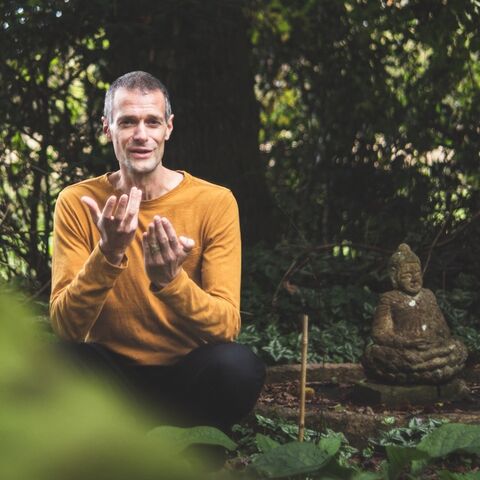
Integrating Presence joined with Wendy Nash once again.
Wendy,
How's it going?
I'm good.
I'm here on Gabi Gabi Country in Queensland.
So it's winter.
I'm cold.
What can I say?
My cat's got the heated rug.
It's so wild.
I haven't been to the southern hemisphere yet.
I'm here in Denmark.
It's such a nice,
It almost seems,
It's summer,
But it seems almost like a spring day so far.
But this Nordic sun is,
It's no joke.
I think it's,
It's fairly intense.
It's deceptively intense because the air temperature is nice and cool.
So then I think,
Oh,
The sun's not as bright as it is,
But it's early in the morning here.
So it's,
It will get more intense.
So this will be the perfect time to be out in like this today.
And today we're talking about boundaries.
So my little thing is my little description here in this 33rd installment of the ongoing life series of Wendy Nash inquiring into meditation practice on and off the cushion.
We plan to delve into boundaries,
Especially as they relate to mindfulness,
Empathy,
And personal slash professional relationships.
Wendy has mentioned previously that she often explores this theme in her work with clients and that it resonates strongly with many people.
And I thought before we get into this,
We could,
I would just mention a couple like physical boundaries and things.
And so that's not what we're going to be talking about today,
But just kind of as a more solid reference point.
I mean,
The most immediate one is the one behind me.
It's a hedgerow.
You can't really see it without context,
But our little garden here is fenced in by hedgerow.
And this is a foreign thing,
Like in America,
It's very rare.
There's fences.
Usually people make fences,
Either white picket fences or animal fences for fields.
There's not a lot of hedgerows,
But they're everywhere like in Denmark,
In England,
And I would assume other places in Europe too.
I haven't been to too many places,
But this is like a,
Um,
A noticeable physical boundary that divides one idea or group of land to another.
The other one that I think everyone's familiar with,
This is kind of the boundaries of countries.
These are political.
So these are less physical,
But as we get onto the border of a lot of different countries,
They are physicalized,
Right?
There's border guards,
There's,
You know,
Customs controls,
People involved in forcing these boundaries that are basically ideas that people have agreed upon.
And it's so fascinating to know that you can just cross this walk in one step.
And then all of a like this and how bizarre I think that is to me to,
To know that it's not,
I guess,
Applicable as it is in,
Uh,
Uh,
Australia,
I guess,
Because,
You know,
Everybody's,
I mean,
It's an island,
Right?
But then within the States,
We have these things called States and they're not as enforced boundaries,
But there's a,
There's a noticeable difference,
Uh,
Going from one state to another.
There's a lot of similarities,
But there's also noticeable differences and then less,
Um,
Defined boundaries.
There's counties within the States.
And some people really know,
Notice a huge difference.
I mean,
You watch old American movies.
Oh,
I made it past the County line.
Now the cop can't get me or something like this,
But we were just walking one to the other and would have never even known having there not been assigned there.
So there's,
We get really noticeable boundaries and we have these really slight boundaries,
Even in the physical world.
So they can go from very subtle to very defined and reinforced.
And,
And when you look at sometimes boundaries can be helpful.
And I think sometimes they can be,
Um,
Harmful like Wendy was alluding at too.
So,
So what do you,
What do you have to say about,
Uh,
Kind of the more,
Uh,
Clear notions of this before we get into,
Um,
The less clear notions,
I guess.
Yeah.
So that's a great way of bringing in the topic because historically throughout most of history,
People have just moved.
They've just walked from one side of the Hill to the other or across the bridge,
Across the river or whatever,
You know,
China,
I think has historically had very clear boundaries and you needed a letter of introduction to not be killed.
And I know in Aboriginal countries,
You don't cross into other people's countries because there were,
I don't know,
300 different countries before white people took it over and you,
You on pain of death,
You know,
Like you didn't sneak there.
You had to do it through correct protocol by you arrived at the sort of edge of your country.
Then you started a fire that would attract people to come and investigate and inquire.
And then you sought permission and where is the food and all these sorts of things.
It was very,
Very strict protocols.
Um,
And then as you were saying that I,
You know,
I have a lot to do with transport.
So because of my community group.
So I've also learned about urban planning in different transport modes and things like redlining,
Which is a political boundary and how,
Or it's a,
I guess it's the enactment of a political ideology,
Which is very clear.
And although it physically doesn't exist,
It's still emotionally exists in the US.
Uh,
We don't have that.
So he,
He is so much,
There are towns it's complicated because they're in remote areas.
Um,
But the other thing is that when you have a transport mode,
Then actually the,
And when you were talking about old movies,
They had,
We went up to the County,
But it's often dependent on how far the transport mode can travel,
How easy it is.
So for instance,
What the research has found is that people will commute 60 minutes to work and that'll be fine.
Once it gets to 90 minutes to work,
They get really jack of it.
And they,
Either they chuck in the job or they chuck in the home.
One of them kind of has to go because the physical boundary,
The wear and tear on the body and the mind and the family are actually,
There's a lot of,
You know,
People get really grumpy on the roads because they're tired,
There's congestion,
People are aggressive on the roads.
So there's a boundary by a time boundary in that instance that is based on infrastructure.
So when we had smaller villages,
People walked an hour to their workplace,
No more,
That is they worked off site or,
You know,
Whatever.
And then there were horses.
So people worked a little bit further away and then there were trams and so people walked,
Worked a little bit further away.
And now there are cars and so people do these huge distances,
But the journey time is the same.
I think that's really interesting about this idea of boundary.
And as for national boundaries,
That only started,
I believe,
During the First World War with soldiers.
That's when that began.
Before that,
People just hopped,
Skedaddled everywhere.
So there you are,
That's boundaries from that perspective.
I didn't really know that.
I guess what you mean by the World War I is then it became more enforced and noticeable where these boundaries were.
I mean,
I guess people could just,
I don't even know,
Get on a ship and just go wherever you want,
Whenever you wanted.
And then they didn't really say,
Well,
This part is,
This part of this land belongs to this country.
Yeah,
I don't even know how.
I think,
So people did have different countries.
There's no two ways about that.
But the passport,
Which said,
I am of this nationality.
So that's where I was incorrect.
That physical paper boundary,
Which created a kind of an idea of,
That really became implemented.
And that started with soldiers in the First World War.
But yes,
Of course,
You have these stories about places like Iran and Iraq,
Which were divided up according to the riches that the gold,
The oil barons wanted.
And so they divided it up and they've been fighting,
Afghanistan's been fighting ever since,
The sort of plunder of country,
Of the goods of those countries.
And then we have something like the end of World War II,
Where Israel was not there before in the same way.
It's completely created.
And it's a huge political football and hot button that we don't want to get into,
At least I don't want to get into right now.
And then we have this notion of digital boundaries too,
I guess.
It really has erased,
In a way,
A lot of our communication protocols with the internet,
In some ways.
But in other ways,
There's been other challenges,
Of course.
But like Wendy and I are talking,
I'm American in Denmark and Wendy's in Australia.
And it's just like,
We're right in front of each other virtually,
You know what I mean?
If we align the time right,
It's not too disruptive.
And we're able to do this,
Where it's not usually I could just fly to Australia or Wendy could fly to Europe every month to do this face-to-face,
Maybe in a perfect world,
But with really supersonic jets,
Where it would take a lot less or something.
But yeah,
So this notion of that and how that plays into how we interact with people,
Hiding behind anonymity is both freeing for a lot of people who would never speak up,
But then it's gone to the other extreme where people can just think they can get away with ever what they say that can be beyond harmful,
I would say.
Yeah.
Yeah.
So,
And then it's difficult because that,
You know,
I write to politicians,
And I write to council,
And I write to transport agencies.
And it's so tempting to think about the organization as a as a solid entity.
And I was actually going back to meditation,
I was actually thinking about my meditation.
And this,
What is it that I experienced,
You know,
In Tibetan Buddhism,
They say getting what you don't want,
And not getting what you do want,
Is the foundation of dukkha.
And,
And,
And I went,
Ah,
I feel let down by them,
In whatever form.
And just that,
And I was going,
You know,
Council lets me down.
And of course,
Council is made up of all individual players.
But in my own mind,
It's the authority figure.
And we say no.
So,
You know,
It's like,
Ah,
So maddening,
And transport agencies as well.
So this idea of being let down,
And this division in the mind,
Between me and you,
Right,
Wrong,
Has that boundary,
You know,
The worldly winds.
I was really curious about that at the moment,
About fame and disgrace,
And how that becomes a mental boundary,
Because I only want the good stuff,
And I don't want any of the bad stuff.
And I realized,
If I don't want to have the bad stuff,
Well,
I can't have any of the good stuff either.
And that was quite disappointing.
So over to you,
Josh.
No,
That's,
It's a really good point.
I mean,
That's where our everyday dukkha is,
You know,
Getting what we don't want,
Not,
Not getting what we want.
I mean,
We experience that time and time again.
But most of us don't even realize that in autopilot,
And think that,
Yeah,
It just spirals off into there.
But once we recognize and see that as a reality,
That's not a failure on our part,
Or even the world in a sense,
Because that's just the way that death,
Which is conditioned,
Arises due to causes and conditions,
Is subject to perish.
And it's impossible to get everything we want all the time,
And not get what we don't want all the time.
Even when we put so much effort into setting up the right conditions,
Yeah,
It helps,
And we should still do that.
But it's an impossibility,
Because in the long term,
We're not going to be able to maintain those conditions the way we want,
To get what we want,
And not get what we don't want.
And this notion,
When you talked about these groups,
And how kind of maddening it is,
It's the same way with a corporation.
So a corporation corpse is a dead thing.
So it's almost like this dead entity is given personhood,
And a kind of pseudo-life,
I guess,
In the minds and hearts of people,
But also in law,
And however all that works.
So it's just weird,
Vague,
Quasi-whatever thing.
And then the people on these councils and groups too,
They can use that to their advantage,
Which is both good and bad,
I guess.
If you try to address one or more individually,
On an individualistic level,
Then they can either take that on if they want,
But they can also say,
Oh no,
That doesn't really apply,
Because we're a council as a whole.
So they can bounce back and forth to however they want for their advantage in their agenda.
But if a singular person is coming,
Or an individual is coming along,
That dynamic needs to be flown and worked with too,
I feel,
To interact.
Because they can so easily put it on someone else within the group,
Or as the group as a whole,
Or go into their values and their agenda,
But also pull back how their personal agendas and ideas either clash or align with the groups,
And then whoever from the outside is seeking interface,
I guess.
But yeah,
It's a strange dynamic here.
So just coming back to meditation,
What I was thinking about is,
So I kind of got this insight,
So you know when you get really frazzled,
Let me think about it,
It's about boundaries,
And you receive something which is really,
Somebody really irritates you in some quality,
And there's a shadow side to you which is not owned here.
And so because it's not owned,
We can't actually form a boundary of ourselves,
There is no self that is,
Now I'm not talking about it from a,
You know,
Anatta kind of perspective,
I'm talking about the sense of self that is here that we need to have in order to have healthy boundaries with ourselves and others.
But because we have this shadow which is unformed,
We merge with the other side,
And then we get irritated for them,
For their bad behavior,
When it's our shadow which is exactly the same,
Because when we feel,
When we have good boundaries,
When we have a good sense of self,
Firm boundaries are no problem.
So I'm working with a friend of mine,
And it's a very interesting technique,
So she comes,
We do it sort of four days a week,
She comes,
She tells me a problem for 5-10 minutes,
And then I do a guided meditation about that,
So she starts to gain a sense of self and recognize that this is very guided,
Tailored to the problem she's got,
And then we debrief and we finish at half an hour.
And that process has allowed her to develop some skills and kind of come up with her own boundaries and a sense of self.
And she says,
It's so hard to,
With the kids,
To say no,
Because I feel so mean,
But I realized by not saying no to the boys,
That I'm gonna make their lives worse,
So it's even meaner.
And it was such a revelation for her through this meditation practice to gain a sense of self,
That this allowed her to have very clear boundaries,
So before she would have been quite ambiguous,
Because the shadow self would have been under-formulated and over-merged with the other person.
And you know,
We want to say,
You're separate from me,
But we're merged because of our shadow self.
I hope that makes sense.
And then,
Yeah,
And so now that she's very clear in her mind about her sense of self,
She has very clear boundaries.
And it's Pema Chodron who says,
Good boundaries are about good communication,
Or good communication is about good boundaries.
And I think when you meditate a lot,
These arguments that we have of he said that,
She said that,
She said that,
He said,
And what should I do,
And it's not fair,
And all the rest,
They settle and they give you opportunities for clarity to say,
Ah,
No,
This is my clear edge,
Actually.
So over to you,
Josh.
It was one thing that I wanted to pick up on there,
But I see this notion of shadow too.
I think another dynamic I look at this is when someone,
This comes from another teacher,
That when something annoys me,
And I feel irritated a little bit,
And I didn't see the connection at all,
I had to sit with it.
And not all the time,
But sometimes it shows that I feel not appreciated.
So it doesn't seem immediately apparent,
But sometimes it seems to be the case.
When I feel irritated,
It feels like I'm not getting a sense of appreciation.
Well,
That's a whole nother dynamic because I can't expect others to appreciate me.
That has to come from me within me.
So if I'm looking for kind of external validation in the exact way that I have to have it all the time,
And I don't get it,
Well,
Then I can get annoyed.
But this is kind of a more subtle background layer.
I think with this too about is preferences in feeling.
So usually if someone doesn't do something the way I like it,
Or I find some distaste with how someone is and how they do something,
Or they say something,
And then I feel unpleasant,
Then I can get irritated and annoyed with them too.
So this is the Vedana.
I think it's really important to look at this too.
I think Wendy's framing is really helpful with the shadow self,
Because obviously there's something in me that I'm still getting triggered by and annoyed and upset.
And that trigger shows me what I need to work on.
And Wendy's framed it in the shadow.
The only thing I see kind of a danger at that is just seeing shadows in me everywhere all the time.
And that's not the case either.
That's not what we're talking about here.
We're just not pretending they're not there either.
But there are times like when we're in full light or whatever,
Where there isn't many shadows,
Or the shadow's not having a significant impact on our reality too.
So I just wanted to add that as a kind of a counterbalance.
But yes,
So many of us ignore and deny our shadow aspects.
I will say some people focus a little bit too much on it.
But for the most part,
I say the most of us,
That's why that's called shadow,
Because we don't really notice it.
But it's there so much of the time.
And it does have this or can have this significant impact.
But when somebody does something that I find distasteful,
I don't like,
A lot of times it's just based on my preferences.
And it's okay to have preferences.
I don't think it's going to be really hard to get rid of our preferences.
That's how we can make choices,
I think,
Easier.
And,
You know,
Kind of know where to orient to sometimes.
But it's when I cling to,
I have to have my preference the way I want it,
Or I'm going to get upset and annoyed.
And then that unpleasantness,
A lot of times will be there.
And I don't even realize that there's the unpleasantness there.
And so then the way I see the world is colored by that.
The way I think,
Especially the way I think,
Is colored by that.
Because sometimes I'm strategizing how to,
Okay,
This is unpleasant.
What do I do about it?
How do I get it away?
How do I change it?
How do I substitute something so I get more pleasure?
And that's not necessarily wrong.
It's just an exhausting process that doesn't have to happen all the time.
You know,
Can I be okay with how it is,
You know,
Too?
Yeah.
So all of those things,
The theme that I heard,
You know,
You want validation or acknowledgement,
Or you getting whatever it was that you said,
All of that makes me think that you just feel let down by the other person.
Yeah,
That's right.
Yeah.
And that comes from expectations,
Expectations,
Right?
Yeah,
Right,
Right.
But so if we're talking about boundaries,
If the simple boundary here is to go,
I feel let down by the other person.
And just rather than it being,
I need to work this out and figure it out,
But just to experience it as a,
And I want to say this is a personal boundary about developing practice.
So instead of saying,
Okay,
How do I strategize my way around this?
Say,
I feel let down.
Yes,
It's true,
I feel let down.
And just simply allowing that.
And if that becomes a personal practice and a daily constant practice,
At some level,
What you're doing there is you're developing sort of a sense of self around that.
Because,
You know,
We're always disappointed by other people.
But I think this,
What's really interesting is this idea of expectation.
And then when we have an expectation,
And we lash out,
And then that's,
We're crossing a boundary,
An idea of who we are,
And again,
Expectation,
And then we feel shame.
So I haven't quite figured out yet how the mind works with regards to this sense of separation,
This internal framework,
Which for me,
It feels almost like a washing line.
You know,
In Australia,
We have a hill's hoist washing line,
Which is those,
What do you call it,
Like it's four,
It's two bars that are crossed,
And then you have the washing line that goes around,
Rotary washing line.
You hang laundry to dry on it.
Yes,
Yes.
Exactly.
So it feels like it's very solid,
But I know it's not,
But it's a structure of the mind.
And I don't know where that boundary lies.
But it's definitely got an edge there.
And I'm super curious about what is that?
Again,
This is where the rubber meets the road.
To acknowledge what you talked about with acknowledgement is so important.
You know,
That is the first step of compassion too,
Is acknowledging it.
Instead of pretending it's not there,
Or fighting against it right away,
At least just a moment,
I feel let down.
I acknowledge this is the reality right now.
I'm not trying to pretend it away,
Or pretend it's not there,
Or think that I'm above it,
Or beyond it yet.
No,
There is a let down here.
So that acknowledgement,
It's just such a huge relief right away.
Instead of a lot of people will lie to themselves,
Or pretend it's not there,
Deny it.
So it's a huge relief.
And acknowledging things in others too.
Yeah,
Maybe they might not be that accurate.
But if we don't have this habit of,
Not habit,
But I mean,
Practice,
I guess,
Of doing this,
It can be really helpful,
Again,
To counterbalance this.
I don't want to get stuck in one way of acknowledgement,
And then use that as a reinforcing mechanism to see it everywhere as a confirmation bias either.
That's not what we're talking about,
Right?
I don't go around now,
Okay,
Yeah,
And then over identifying with,
I'm a let down person.
That's who I am.
I'm always let down by myself and others.
And yeah,
It's just,
See?
And then using everything as confirmation for that,
Right?
So that's kind of the distorted version of what we're talking about here.
But what if I am a let down to myself?
What if?
Well,
And see,
That's no,
It's- I am a total failure.
What if I don't succeed?
Yeah,
No,
That's a really good point.
Yeah.
You know,
Like- So that's- But I mean,
I want to bring some lightness in here because- Exactly.
And that's,
You know,
You exactly answered your own question.
That's what has to happen,
You know?
Once that acknowledgement is there,
Okay,
What do we do about it?
Because if we just keep feeding the same thing,
It's just going to keep strengthening and enforcing the same thing.
So with the Brahma Viharas for that one let down,
What about when we're not let down?
The exact opposite.
What about when I am overjoyed by doing something for someone or someone doing something for me?
Or even just saying kind words and uplifting words to someone or some words that someone has and that are not let down,
That are the opposite of let down.
That I am,
Have been uplifted or uplifting.
It has to be authentic though.
We can't just pretend.
And sometimes,
And then that acknowledgement again,
Okay,
That's just not resonating for me right now.
I can see the benefit of that in the future,
But right now that's inauthentic.
And that right there is uplifting.
And seeing the uplifting versions of being honest with ourselves and being let down.
Hey,
I'm not lying to myself.
I'm being real here.
And that is in alignment with truth and with the truth of the way things are closer to it.
That in itself can bring happiness because we're not living in a delusion.
We're not denying or trying to do unhealthy strategies to get out of these uncomfortable truths sometimes.
Just the fact that we're willing and able to do that to me can lift the heart and is a huge support.
I guess the only thing I'm not sure is,
Is that we are,
Are we ever true?
Are we ever like,
May I try and always be sincere,
But sometimes I fudge it,
You know,
Sometimes.
And it's not that I'm insincere,
Although sometimes I am insincere.
You know,
Sometimes I do lie.
It's not,
There's no way,
You know,
I've got to go now.
Bye.
You know,
Or a friend of mine said that what she used to do when she was on the phone call and somebody rang and the phone call was going on and on and on.
And she,
She would go to the door and she would knock on the door on the inside.
And so someone's sorry,
Got to go.
Someone's just arrived.
And I've done that.
And unfortunately,
The other person couldn't hear the person knocking and didn't notice that.
But so there are,
We are,
I don't know,
I want to say we are not always acting in our best self.
And then,
I don't know,
I think we don't have 100% perfect social skills.
And I don't know,
Like,
It's difficult because I don't want to hurt people either.
And sometimes I fudge it.
And if they go,
But you said that,
Then I go,
Yeah,
I didn't want to do that.
Because XYZ,
I thought I was worried about you getting hurt.
And so that's why I did it.
Yeah.
But,
But it does.
Yeah,
It's difficult.
It's,
It's relationships,
You know,
Here,
We are talking about boundaries.
And I think we have ethical boundaries.
And in terms of meditation,
How would you feel,
What,
What do you feel is a boundary in relation to meditation?
Yeah,
I'm gonna get into that.
Because that's what this,
This show is,
We're gonna address something you said real quick.
And this is really important to the precepts.
Our meditation really isn't going to be as fruitful.
And it's just kind of like a,
Maybe an aspirin,
I think,
If we don't have a really firm precepts practice,
And our training,
We just put it as a training.
And so it's okay,
You know,
Most people,
It is a training,
Of course,
And I'm still training in precepts and,
And but that acknowledgement of when it is in realizing how they are for our benefit.
Now,
If I may,
With your example about on the phone,
And I get it,
First off,
I get it.
We,
It's almost like this,
Almost like an act of desperation that I okay,
I need to care for myself now.
And I don't know what else to do.
And I can't take this anymore.
And I have to take care of me now.
You know,
And so yeah,
And I totally get with that.
And that's,
That's what was the helpful part of that.
And to me,
I just,
I get creative with things like this,
You know,
What I've done before,
I take my,
If I have a phone,
Then I will turn the volume all the way down,
I'll walk away from the phone and just leave them talk,
You know,
You know,
First make it clear,
You know,
At least I was making it clear that this is,
This is not the best thing for me to just,
Well,
Anyway,
But then I just do that.
So it comes from the intent,
Like I get it,
It's a mixed intent,
From what I understand,
It was that you need to shut down now,
Because I can't,
This is not helpful for me.
And this is going to harm me if I keep running any longer.
However,
The I also think the mixed intent was,
I need to do something probably a little bit,
Maybe hurtful,
Or the intent was there,
I don't think you actually hurt them.
But to deceive that,
You know,
To knock was like saying,
I need to I need to,
Well,
Maybe not,
I shouldn't say that.
So So you know what I mean?
But so and I shouldn't say I don't want to blame you or say you,
You did it wrong.
It's just like,
When I look at these things,
It's like,
Is there creative ways,
Actually,
When you say,
Oh,
I have to go right now.
All it would have been to not be lying is just thought of something you actually had to do,
You know,
Even if it was like,
Oh,
I gotta brush my teeth right now,
You know,
Or I have to go do this right now,
It could be,
I have to go open and close the door right now,
Because I want some fresh air in for a second,
You know,
It can actually be based on something other than straight up deceit.
I mean,
It can be trivial,
But it's not necessarily you know what I mean?
But like,
Like I said,
This is this is a training,
And I don't want to blame so much,
You know,
Because that notion of care is really helpful,
You know.
So,
So,
You know,
I mean,
We're sort of talking about boundaries here.
And in our meditation practice,
It is time to think about our ethics.
So what do we deem as ethical,
And it's,
It's hard.
So,
And very hard.
It's very hard.
So a couple of things.
One is that women are ensnared by multiple relationships in a way that men just aren't.
Exactly.
So we get lumbered with long,
Huge care responsibilities,
That with,
You know,
Great Aunt Mildred,
That we've got to listen to rambling on and on and on for four hours,
You know,
And Great Aunt Mildred is extremely lonely.
So after the third call that week,
It's a bit tiresome,
You know.
So I think there is also a cultural thing here for women about how do you navigate that space.
But there was also something else I wanted to bring in.
And I just thought about it.
One was about the communication.
And it was about the precepts.
I've sort of,
But it's,
Yeah,
You go.
We can definitely come back to that.
Yeah.
We need to get into the boundaries now.
And you were saying,
How do you really even know if it's true?
And I would just say,
Yeah,
The,
What does it feel like,
You know,
Is it in accord with reality too or not,
You know?
And then we ask for feedback from wise people,
Right?
And we'd be okay with not knowing and that we don't always know all the time.
And it's not always clear and that's okay too.
That's how I look at that.
And that honest acknowledgement,
I think we can know when levels of honesty,
I think that we have towards ourselves and others.
And sometimes we can't,
You know,
Sometimes it really just strikes me.
Oh,
This,
I really know that I'm deceiving someone here.
Oh,
I did.
Oh,
That are realized later.
Oh,
I wasn't completely a hundred percent truthful with what I said there.
Now I'm realizing it,
But it's later that I realized that,
You know?
Yeah.
Well,
It's interesting because I have a friend and she says,
Oh,
It's like being honest is,
Is sort of new.
Yeah.
For a lot of people.
Yeah.
It's a new experience for her.
So I think that it's not what people really appreciate me is my sincerity.
There's no two ways about it.
Yeah.
So I think it's not always,
It's really,
I think communication boundary setting in our current society,
In any society is really,
Really difficult.
And yeah.
So some people will create boundaries and we're talking about meditation here,
But what if you,
In your insight,
In your meditation practice,
You realize that you have been lying.
There was a book and it was,
And it talked about when you when you get over your alcohol or drug addiction,
One of the things,
And you might have to start,
Look at places where you are not honest.
And it's really hard to lie to yourself.
It's really easy to lie to yourself.
A lot of people lie to themselves.
And I think that's usually the part that is the hardest lie.
You know,
What it was saying was if you're required to lie for your job,
If you are a sales rep,
You might have to give up your job,
Your income.
And I think that in the Dharma,
When you're practicing meditation,
I think that people do lose their marriages,
They lose their careers,
They end friendships,
Because they are actually standing up for themselves and they are creating stronger boundaries.
But there's a loss there.
And as they become more themselves,
There's a huge amount of loss that arises.
And,
You know,
You've been doing a lot of meditation in this past year or whatever it is,
Since you've been going back and forth to Denmark and traveling all over the world,
You've been doing lots and lots of meditation.
So how would you describe your own sense of your own boundaries has shifted because you've done so much more meditation?
Well,
That is really easy and apparent and immediate.
First off,
I want to acknowledge what Wendy said,
Too,
About the extra challenges that females,
Women,
Just old fashioned term here,
Have over males,
You know,
That I mean,
Haven't even walked down the street and go outside their house and start assessing,
You know,
Which male can be more that I,
You know,
That could be a male.
And,
You know,
Yes,
Of course,
This is the way the species survives,
I guess,
To get a little risque here by,
You know,
Seeking out mating opportunities.
But it has gone over to the extreme a lot of times,
Too,
You know,
Where it's so there's just a lot of men are pigs,
You know,
And I've been there,
Too.
So and it's just and it's not all to blame on the culture.
And this is another the culture of dishonesty,
A culture of lying.
Look at American sitcoms,
When I was it's,
It's,
It's,
It was hip and fashionable.
I don't know if it still is,
Because I haven't got into pop culture in a long time,
Really,
To pretend you're foolish,
To pretend you're an idiot.
And that that's how you're cunning and you're going to get ahead in the world.
If you pretend to be a useful idiot,
Or,
You know,
Yeah,
A buffoon,
Or,
You know,
You lie to get ahead,
You deceive and take advantage of people whenever you can.
That's how you get ahead in this world.
That's how you succeed.
And that's how you get everything you want.
So it's everything is kind of stacked against us in that.
Now,
Wendy asked about this notion of,
So I was always confused by this,
Because this is one thing that I felt of all the other precepts that I,
Yeah,
This is one that I felt I was fairly good at,
Because I just didn't see the point of it.
I didn't want to keep track of all the times I said something that was deceptive,
And then somebody could call me out.
And then I would have to spend so much time keeping that lie straight and sorting it out.
And who did I tell?
Who did I not tell?
Now,
What do I have to tell them if they say this?
And so it's just,
It's kind of maddening for me to keep.
So I didn't see the value in it.
And I just saw,
I just didn't want to associate with a lot of people that were really into deceiving.
I mean,
And deception for the most part,
Either to get back at someone or to protect oneself.
So I get it if someone's trying to protect themselves,
But I feel there's more effective ways of protection too.
So with this,
My early meditation experience,
And then I was no stranger to loss.
I had like my first real relationship,
And it was so painful to lose that.
And so I stayed in loss in order so I wouldn't have to experience the pain of loss again.
So I stayed in that for years,
Because that loss was so painful.
I never wanted to go through such a loss like that again,
Which was kind of backwards in a way.
So this is one of the reflections that the Buddha wants us to reflect on every day is loss,
That everything we hold dear is going to be separated from us,
Either by estrangement or death.
There's no way around that.
That is an inevitable truth.
And instead of pretending that's not like it is,
Denying it,
Covering it up,
Trying to cope with it in other ways,
Actually reflecting on that for a minute,
It brings a sense of happiness because,
You know,
Yeah,
I'm facing that truth.
I'm okay with it.
And then my heart is conditioned more for that inevitability.
So when that loss comes,
I'm not as affected in so much unhelpful grief over it,
Or the grieving process goes quicker,
You know,
So that is really,
It's been really helpful for me.
So,
So I was no stranger to loss when I first started.
And then actually,
There are some losses that are beneficial.
Like I didn't realize some of the company I was keeping before I started going inward and practicing meditation.
So yes,
It was,
It was a little painful to lose some friends in the beginning.
But it was it was so much better in the long run,
Because then I attracted,
You know,
People that were better for me,
And people that I could contribute to,
And all the better.
So but it was that time,
Transition time between the falling away,
And the aloneness,
Basically,
And kind of isolation,
In a way,
I mean,
In a way,
Looking back was more seclusion for,
For healing and undergoing a transformation process.
And sometimes we just need that alone time.
And that sense of loneliness,
I think it doesn't have to be judged,
It can actually be very helpful.
So in that way,
It just took time and care,
And then attracted new friends and new experiences and new opportunities.
Yeah,
So the honesty for me more was remembering things I had forgotten about.
There was old memories,
I guess,
That were kind of too painful that had gone off to the side.
And so then I was coming back with these,
And I was,
Oh,
My gosh,
I can't believe I said this,
Did this,
Or they did that.
And so going through that material,
Like we would do in therapy,
And working with that,
So I was actually a regaining in the sense of some things,
But then a deliberate losing as well.
So then I could have choices of what I wanted to let go of once it was kind of healed,
If that makes sense.
So I want to transition to here into what is even a boundary,
Because if we go inside a meditation,
We get really calm and still.
The physical boundary,
It's not like we,
I think,
Experience a lot of time during our everyday waking life,
Right?
The boundaries of where even skin is,
Or where the body starts and stops,
Kind of goes away.
You know,
Look,
Our hand,
Right,
We don't even really know where does the finger start and stop,
You know,
These names.
And you can say there,
But if you get down to a microscopic level,
It's really hard to know exactly where everything is.
But this notion of energetic boundaries,
I think,
Are noticeable,
Right?
When someone does something that's not okay,
The obvious one is abuse,
Okay?
When there's obvious and clear harm,
And then we know I'm harmed by that,
That's not okay.
But it is,
It can be a challenge to know what is mine,
And what is the others,
Right?
And I don't necessarily,
I think one way to get around this,
Okay,
What is mine,
What is theirs,
Is then looking at kind of guidelines and values,
Right?
So then it doesn't matter so much if it's theirs or mine.
This is happening.
This has been established beforehand.
So what do I need to do about it now?
Do I need to strengthen my boundary?
Do I need to pull back because they're not respecting this boundary and strengthen it,
Or maybe I'm not respecting their boundary or my own boundary?
So I think one of the ways to do this is set some clear guidelines and some qualities,
And then have some evaluation,
And then bring in trusted friends and teachers too,
To make sure that we're not being diluted in what that is,
And talk it through some other people if we're unclear on exactly what is the boundary points are,
Yeah,
Where our boundaries are,
Where they're not,
What constitutes a boundary,
What doesn't,
How permeable it needs to be,
Or how solid it needs to be,
How strong or how weak it can be too.
So there were a couple of things I thought about with the Prajnaparamita,
And you know,
No eye,
No ears,
No body,
No tongue,
No whatever,
No attainment,
No non-attainment.
And that is really saying this internal division that we have in our mind of what is good and what is bad is a fiction.
Yeah.
But that's a sort of a boundary within the mind.
I think that's really interesting.
I was curious to know how your own boundaries have changed as a result of all the meditation you've done in the past,
Whatever it is,
While you've been globe prodding.
Yeah,
That's a really good question.
I want to address this good and bad thing too,
And on an ultimate level,
We talk about the Prajnaparamita,
This is next level stuff,
You know,
This is not your average everyday Joe thing,
That's immediately relatable to most people,
Although it is on a higher level,
Ultimate level,
But what there is,
Is there's clear things that are helpful and not helpful.
There are things that are skillful and they're not skillful.
There is wisdom and there is foolishness.
So instead of good and bad,
Which what's good for me,
Somebody might think is absolutely bad,
Or what I think's bad,
Some people know that's good,
Right?
So this notion of good and bad,
It's not helpful,
But there are clear things that can be discerned on a relative level,
You know,
This is helpful,
This is hurtful,
You know,
These can be more clear,
And this is how I think we need to establish boundaries.
So for me,
How my boundaries have changed,
First I realized I really didn't have any boundaries when I first,
You know,
Or I had unhelpful boundaries that weren't helping me,
Then I realized,
Okay,
Well yeah,
This is going to be helpful for me,
And I didn't see it before,
And so it was like kind of a recognition,
And then I just,
I used it to make choices like,
Okay,
Well,
You know,
This is,
This is what I want to do,
And this is where this is going to lead,
And this other way is going to lead there,
And I don't want that anymore,
I know where that goes,
But when it talks,
I could,
It's a little bit personal here,
But I'll share it.
There was a thing with my mom,
Right,
And we were just squabbling back and forth all the time,
And finally I had enough,
You know,
And I said,
Okay,
I'm going to try something new,
I'm going to not talk to you for an entire week,
No communications whatsoever,
And she was so upset,
You know,
But I kept it,
And really got to go introspective about how I was relating to her,
And I saw all the other,
Some of the,
A lot of the things I was doing that I was responsible for that wasn't helpful for either of us too,
So that space and that distance,
You know,
Was so helpful,
And then I think our relationship changed quite a bit after that,
You know,
A lot of the old habits and patterns I had fell away,
I could see things clearly,
Or relate in a different way,
All I needed is that,
That,
That space and that boundary set up for a short time,
And then we were able to reconnect after that on a help,
Way more helpful level,
Of course it didn't solve everything,
And there's still squabbles,
But the amount of intensity as far as things that weren't helpful changed,
So that was,
Sometimes those hard fast boundaries are needed,
But it's not always that simple,
You know,
Especially when we get into,
Like,
Intimate relationships,
You know,
That's a whole other thing we probably won't get so much into here today,
But I can see how,
I'm thinking of a woman I was chasing at one time,
And I was deluding myself,
I was overlooking the,
The,
The bad qualities,
Because I,
I wanted to go after the good qualities,
You know,
So it's this kind of delusion,
Self-reinforced delusion,
I knew they were there,
But I didn't,
I didn't put any importance on them,
When in fact I needed to put more importance on those for,
For,
For the welfare of both of us,
Really,
And so that's another thing,
How we can get love struck or are sick in some ways like that,
And not oversee things,
So the,
Actually my boundaries,
Though,
Have,
While they were reinforced for a short time,
And I needed stronger boundaries,
I think overall they have become more permeable,
You know what I mean,
And so,
More permeable,
Permeable,
Yeah,
That I don't need to have as many hard,
Fast boundaries for protection anymore,
You know,
Now,
Sometimes that can not be the greatest thing,
Because we can stay around certain people that we don't need to stay around longer,
Because the kind of resiliency is built up more,
And so the recovery from either my own actions or someone else can,
Can then be mended,
I think,
Quicker,
Or they don't hit as hard,
There's more space around it,
So,
So be mindful of that,
But also to counteract that,
There is more subtlety,
So the amount of subtlety that can be potentially picked up on,
Where what was not a big deal before is now way more noticeable,
Because the,
The mind and the heart is now open to more,
And so it can detect and pick up on subtler and subtler things that wouldn't have had an impact before,
So it's like,
Yeah,
It's this balancing act of,
Yes,
Some things were strengthened,
Some things were weakened,
Yeah,
More territory was,
Was opened up to,
So then,
Yeah,
Where do we put the boundaries when we don't know where to put the boundaries,
So,
Yeah,
It's,
I wish I could have a little bit more concrete examples here,
But they have changed in flows,
Yeah,
Yeah,
So I was just thinking about the one boundaries with,
With,
In relationships,
Sure,
And I think about my current relationship,
And I mean,
I think the Dharma is great,
But if you only do it theoretical and not experiential,
I think you can really miss,
Miss,
Throw out the baby with the bathwater,
Because hard to relate to somebody from a theoretical level,
Sort of does matter when it's personal,
And when we first met,
He was a bit,
And in fact,
It's still,
You know,
For the last,
Until about six months ago,
Or something like that,
And I finally said,
Yeah,
Sometimes you speak to me in a really unpleasant way,
And I sort of had this inquiry,
We,
We are actually very,
Very fortunate,
Because we wake up,
Have a cup of tea,
And then we meditate for half an hour,
And then we talk about the meditation practice,
And it really gives us an opportunity to just incrementally share where we're up to,
But it also means that when things that aren't working in the relationship,
Because they sometimes,
That's the nature of being in a relationship,
You know,
I did this so that I would be a bit uncomfortable on a regular basis,
Then it does give an opportunity to air that,
And speak about the problems in that way,
And so I did,
I did say,
Ah,
You,
You actually speak a bit unkindly to me sometimes,
And you know,
Actually I'm pushing back on that now,
I don't wanna,
I don't wanna hear it,
I,
We're very solid together now,
But I,
I don't wanna be spoken to in that way,
And it's very interesting how that's really calmed down,
It's,
It's been really,
Really helpful,
And then he talks about at work,
What he did,
Is he,
He was being bullied in his workplace,
And then his,
The,
The structure changed,
And the boss who was bullying him moved up,
And somebody in came,
Then came beneath,
And there'd been a bit of a change,
And so my partner was really confused,
And going,
Well they're,
I'm still being bullied by this guy,
And so what he did,
Is he checked in,
And he said,
Why did you do that?
And the guy said,
I didn't,
But because my partner was so used to being,
He was in a trance about being bullied,
A bit like you being in a trance with that woman you were,
You know,
Really hot for,
That he actually crossed a boundary,
But in a way created a boundary,
And then it actually,
It actually formed some safety in the relationship for him.
He said,
No,
I'm gonna stand up for this,
And he said,
Well get over yourself,
Because I don't know what you're on about.
So I think that was very,
I think it's,
That's a really interesting way of working in relationships,
And it's,
It's not easy,
You know,
We,
It's really hard,
And we don't have good protocols.
This is really important when it comes to relationships and communications,
I feel,
Is having,
So the whole reason I think,
Or one of the main reasons for setting these interpersonal boundaries,
Is so that we can communicate,
Because if we don't have like clear boundaries set up,
Or let's just say,
If we do,
When we do have clear boundaries set up,
Then it's,
I'm more likely to say things that I normally wouldn't say,
And say things in a helpful way,
Because sometimes the tendency is,
Oh,
I don't want to express this because of,
Okay,
It will hurt them,
It'll hurt me,
It will make things even worse,
Right?
But if we have boundaries in place,
And both people recognize,
And respect,
And keep those bound,
Those mutual boundaries,
Then we're more likely,
I think,
To meet each other face to face,
More sincerely,
Kindly,
And with an open heart,
And able to facilitate more honest and effective communication,
That will have a real lasting impact,
You know what I mean?
So like,
It sounds like your partner,
He was able then to actually face,
And confront,
Not confront,
Is too strong a word,
But voice it directly,
When,
Yeah,
And a lot of times,
That's all it takes.
However,
Some people like me,
Sometimes,
Are too quick to do that,
That actually need more of a formal space,
A formal container,
Some mutual recognition of where those are,
Before I do that,
Because I can come off,
Yeah,
Too harsh,
Too direct,
Too lacking of emotional qualities,
You know,
Or at the wrong time,
Too.
So these,
These formal containers,
These formal mutual recognized boundaries,
I think,
Are really helpful when it comes to talking with folks,
And communicating.
But it's interesting,
So I think about my own journey,
In the last,
You know,
25 years,
Whatever,
22 years,
And there is one relationship,
Where I put up more and more boundaries,
Because the length,
That other way,
That other person spoke to me,
Was unhelpful.
What I realize now,
Is actually that person has an identity,
An idea of themselves,
As being a good listener.
So when I raised,
And a good communicator,
So when I said,
Oh this is a problem in our relationship,
That person was,
Just took it on board as being criticism,
And actually just didn't know how to,
Took exception to everything I said,
Well here's a communication issue between us.
And what was so interesting for me in this journey,
Is having now put up clear boundaries,
And put up more and more clear boundaries,
I stopped contact with that person,
And I said,
I'm not going to have contact with you,
I need to take a break.
And it's been several years now,
And I must say my mental health is 100 times better.
But if I,
If I had a choice,
Would I want to,
Would I want to not have contact with that person,
If I had any choice about that,
For my mental health,
Then I would have,
I would do everything I could to be in that relationship.
But I don't have a capacity,
Emotionally,
To be in that relationship,
Because that person says things that I find very hurtful.
Somebody else might do it,
And they go,
Well that's not hurtful.
But for me,
That's,
That's very hurtful.
And these levels of sensitivity,
These levels of who we are,
Are,
They're super important too.
And yeah,
Like you were just demonstrating,
Sometimes the most kind and compassionate thing we can do,
Is set up those strong boundaries,
Right,
And reinforce them.
Because it's better for,
It sounds like it's better for you,
Which in the long run,
Is going to be better for them too,
You know.
But it was interesting,
It was when I sat down,
And I'm going,
What am I not seeing about this relationship?
What am I not seeing about this?
And it said,
You're traumatized.
So I went,
Oh,
And I stopped my meditation.
And I think this is where meditation comes into play,
And boundaries,
Is that I just went,
Okay,
And then I sent the text.
And normally I try and vet.
And something that you can do,
In terms of boundaries,
Is email people,
When you know they're not going to reply,
So they can have time to think.
But in this instance,
That other person would just let fly,
And say all sorts of mean things.
And yeah,
And so that's why.
So it's very,
It's very painful,
Actually,
These relationships.
Hey,
Josh,
We're at time.
We are at time.
Yeah,
The,
This is,
Again,
This is,
This is a challenge for me too,
That I do really well,
If the boundaries are there,
And there's a formal thing.
But it can come off too rigid,
A lot of times too,
And not as natural.
But sometimes it's needed,
Sometimes it's not.
So let's,
The discernment,
What Wendy was talking about,
She exercised discernment,
Depending on the situation.
And yeah,
This is a fascinating thing.
And we didn't really get too much into how the direct meditation practice helps.
But,
But what,
What we can say though,
Is it,
It opens up us to notice a lot of these things too,
And to withdraw,
And give us space to see all these things,
And to better deal with them,
Especially internally.
All right,
Well,
This is,
This has been great and fascinating.
I don't know if we want to pick this up for a part two,
Or we'll,
We'll move on to even fertile ground,
We'll see.
But I guess until next time,
May you all have the most beneficial and optimal boundaries for yourself,
And for others,
And for all beings everywhere.
Absolutely,
100%.
Well,
Great.
Ideally.
All right.
Thanks,
Josh.
Thanks,
Everyone.
Bye.
Thank you,
Wendy.
Bye.