Hey Holists,
Welcome.
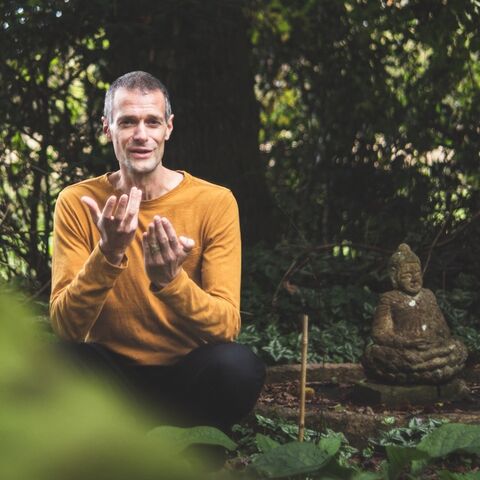
This is Josh integrating presence and today rejoined with Wendy Nash.
Wendy what's up?
Well I'm here on Gubbi Gubbi Country in Queensland in Caboolture and this morning very literally closer to the ground.
So today I'm sitting slightly to the side because my foot is resting on my bed on a cold pack,
Compressed in the rice method,
There you go,
Because one small pebble and I just fell over.
It's not at my strength but I'm doing this thing where I walk around my neighbourhood every day or you know a few times a week and just report the footpaths that aren't working or I'll write posts on footpath quality and the impact and what I'm learning.
It's very interesting,
Footpaths are much more interesting than you can imagine.
You sort of take them for granted like every piece of infrastructure,
You just take it for granted.
But I have learned so much,
I've been doing it for maybe a month and a half and today's one was actually about a path and I had my bike and it's a big cargo e-bike so it's about 40 kilos and I don't know what that is in American numbers you'll have to figure that out but yeah I don't know how to work out all those Fahrenheit things.
So it's technically I know it's Aventipoix.
So last country on earth Fahrenheit.
No I think you're up there with I don't know Saudi Arabia or somewhere.
So there's a stormwater drain which means there's no accessibility ramp so already that was a problem and then I walk along and in Australia you know when you're on a path and they put in sort of two metal bars a little bit apart so you have to do a zigzag around that,
That's to stop people like bikes and stuff like that.
But it also stops people who have legitimate accessibility needs like prams and wheelchairs and all that and so and where I went and then further on it was actually quite muddy on the it was quite muddy build up because we've had a little bit of rain lately and so the leaves were gathered and one part of the footpath was actually quite pooled in all that mud and not too bad but I couldn't I just didn't see a pebble and when I was trying to walk back because the path actually goes out onto this beautiful park and then onto the rail trail which would just be amazing for people on mobility scooters just make it a sort of a real life quality change for them and I was walking back and I just I was trying to figure out how to go through these banana benders we call them and my ankle just rolled off and rolls now because it just does it all the time you know so I went down the bike went down I thought I was going to break my nose because I whacked my nose and yeah I was going oh wow this is actually thing oh we have someone Deborah Long C1M so lovely to see you hi so I fell over and then I was the end of my little walking journey for today for the week luckily it's Thursday I'll be back doing it next week sorry sorry to my infrastructure guys say run yeah you're a trooper Wendy it was your the the eye last time and maybe you give a quick update on that and those banana benders those aren't as much the states they're in England and in Denmark quite a bit but you know I guess it's to stop people from going through there really fast on like scooters and bikes and stuff like that so you know people don't run people over or something like that but like you said they're a pain to get through and if people have a you know they have like a scooter or whatever they have to slow down or they can't get through it or have to do something else so yeah I don't know I don't know what to say I don't know the solution maybe you do well you you actually don't need to have banana benders you know if people ride quickly people ride quickly a big part of the problem is that so much of our land space is just taken up by the car so if you create streets that are safer for everybody to use people will use them and at the moment we're all restricted because of this private uh this sort of privatization of public land which is the car uh which is the road uh so and people have this idea that they're not allowed that only cars and motorized vehicles are allowed on roads which now that you've lived in Denmark you would go yeah that's not true but you in yeah pretty much in America it's I mean like people treat bikers like crap in America yeah exactly exactly not in Denmark Denmark they have like oh like total respect and you know just as much right away if not more than everything else so yeah so uh yeah so anyway so we've got Debra Long and she's asking what's my name you look bettify whatever that means beautiful Josh your makeup is stunning today is that yes yes yes I don't I actually don't have any on so oh there you go well that makes all of us so to follow up on my skin cancer last time there you are Joyce you know it's the body it's just the body the body just it you know I'm slowly getting to this idea that the body isn't against me the body does what the body does and and so of course it's going to do what it does it's no different to any other part of us so anyway subject to the laws of nature that's right exactly so that's that's just uh no you know birth old age sickness and death so now I know that we were going to talk about the title but that's right so we've I've been I've entitled this titled this I don't know which is the proper English they're losing in parentheses balance in dhamma so that's kind of optional so we can talk about the positive balance in dhamma too and I have in this 37th installment of the ongoing live series with Wendy Nash inquiring into meditation practice on and off the cushion so I recently witnessed a reoccurrence of various perplexing sentiments from the USA west coast dhamma scene which even parallel general society after running this by Wendy she rightly pointed out tinges of self-righteousness approach sorry yeah it's a tough one to get around for me so we'll work on that so so how do we exercise judiciousness and discernment while observing life at large and in meditation without falling into traps of judgmentalism and unhelpful righteousness subsequently how do we skillfully convey this in our speech and actions what else can catch us off balance in meditation and the wider world how do we regain balance and how does all this interrelate please join us as we fill in the details and get into all this and more and wow I'm just now realizing Wendy kind of lost balance there I just needed to shuffle myself around because I felt a little bit uncomfortable but I you know nothing compared to so Deborah Long has just written oh no you got skin cancer so just to let you know that I didn't really I just got it in the nick of time so in I'm in Queensland skin cancer capital of the world and the minute you see anything at all you're straight down to quick as a flash so you just got to get there so luckily they took it out and clinic clinically clear so but I feel that your mum has cancer and that's no good so I'm so sorry for you so my dad died of cancer but that's because he didn't go to the doctor here's a guy military man so um I hope that your mum recovers well and that's a long time ago my dad so I hope your your mum yeah I hope she's just getting enough treatment that works for her so um sending you lots of love Deborah echo this sentiment and also want to say that we do what we can to prevent too right we look at our our diets and Wendy takes precaution in the sun as well I guess and you know there's so many causes and conditions involved in this we do what we can and then we still do what we can after that right and there's certain things we can do certain things we can't I guess yeah you know always have love around it yeah you know a friend of mine he just uh went to hospital he felt something about his leg anyway it turned out he had pancreatic cancer normally you don't find out about pancreatic cancer until it's until you're at stage four so um yeah and I see thyroid cancer I'm not so sure I don't know anything about thyroid cancer so and it is very sad it's very sad and um yeah lots of love and lots of um yeah patience it just these things are and um it just takes it just takes a long time so to heal there's no there's no you can't there's no shortcuts to pain and um you just have to bear with what you can bear with and when it gets too much throw a temper tantrum and you know go out and dance and life and and then get grumpy so that is just you know we coping mechanisms are helpful too you know we need these when we can't do what um like dhamma things I mean even dhamma practitioners as part of that is having coping mechanisms to rely on when we need to for absolutely and healthy ones that the more healthy we have coping because there's some really not so good coping mechanisms and there's some good ones you know so yeah well yeah drugs and alcohol generally no not a great idea but I understand you know like sometimes it's too raw it's too raw and um and it's too painful and some days you just don't want to be good you know you're sick of it and you hate everything and you just hate everything and that's it's a moonscape it's a moonscape for a really long time so I'm I really I've I feel you I feel you where you are Deborah so um yeah so there you are we're here for you we're here for you remotely yes well I mean that's yeah yeah yeah so that's right lots of love and compassion so they can never have enough compassion and it's okay not to be okay all the time too right that's a classic one I like um well should we get into this as well I mean it kind of fits into this I I just wanted to start from where I saw this and hopefully I don't know if anybody knows if there's any really dharma practitioners here if they're familiar with like California dharma you know California's got some cliches going on I think part of it is a really beautiful state the weather is really nice the people are loving for the most part there's also a lot of problems out there but anyway I don't want to get into political things but I joined this group and I saw this pre-pandemic and then it kind of went away around that at least I didn't witness it I don't know but then I saw it research it's this very strange blend so let me see if I can explain this in the um there'll be kind of people cracking jokes um about becoming enlightened okay like basically you know making fun of it and saying that it's not possible I mean we don't what is enlightenment anyway so enlightenment liberation uh awakening right these are similar but maybe different and and I understand I mean it's a high bar right I mean this is a hugely high bar and it's it's it's a rare thing in the world um to get to such a level of attainment so it's understandable and certain generations including mine like to give each other crap um at least guys do in my um especially older generations they cruel to be kind kind of thing right you know and kind of poke it kind of releases the pressure right because you have you know you're you're told these teachings and they'll they'll lead to enlightenment and then but it's it's little me that says this this is not possible right and so it's kind of like everyone is bonding about how I don't know little me can't do this and we're all in this together and you know then we can kind of poke fun at it um in order to take like an inferiority and turn it around into kind of like a superiority like since we're adding our I don't know there's a lot of interpretation here but it's kind of like okay since we're all recognize this and can kind of poke fun at it then we're kind of we feel better about ourselves when we lift it lift each other up in a weird way I don't know if I'm really describing this but do you understand what it what it means so the Buddha said that this is possible in this very life and so you know I just don't see the helpfulness in the long term of poking fun at that and saying that I'm that it's not possible for me and that it's kind of a joke and you know that's what it's implying now if you said this explicitly and no they wouldn't say that right it just kind of like um taking some of the pressure off of like maybe expectations they feel or something like that and I don't know what I would have to do is sit down and do like a psychological interview with this type of response right to really know more this is all my assumptions and my my guessing so Wendy um so how if if there's anything too that's of value tell me how I'm getting it totally wrong please or how I'm getting it wrong but then you know how do you how do you convey this without me looking like the same thing like being judgmental you know and um yeah righteous and that's that's not how I want to come off I just how do we point something out you know that could be helpful in the long run but then it's it's then it's me up here saying you shouldn't be doing that down there even though you know so it's this weird dynamic and I don't know how to call this out or confront people because then I'm that guy and uh I'll say another where I got it wrong after this too well let me just say it real quick so during the lockdowns I was like we were on everybody was on all the time and I kept like preaching like you were looking at a computer we're talking to a computer we're not really talking you know because I could like people I just could sense they're just in a trance and they were you know but I may that was my projection too but here I find myself doing the same thing when I don't have full mindfulness in your very cool technique of expanding visual um perception that helps a lot then I'm okay now I'm looking at a computer of a screen and not right in front of windy the the mind can really trick in virtual reality and I just wonder if we get more and more in virtuality virtual reality how that might even you know um escalate let's just say that and so we get sucked in I mean our our regular lives are a kind of a virtual reality anyway because we're only seeing you know a bit of the visual spectrum there's so much more going on that we don't see but we just assume and even perception itself anyway yada yada yada Wendy take over here so I'm going to go a slightly different way uh so last week I discovered that my local counselor so I have a so for um Deborah and our listeners who might not be familiar I have a community group to advocate for more transport choice um you know everybody knows a couple of people who can't drive kids senior disability low income cars broken down broken foot whatever um and yet we don't provide transport for them which shows that we have an incomplete transport system so I'm looking in I work I'm in the outer suburbs and so I'm looking to close that transport gap in the outer suburbs and counselors um have an obligation in Australia to as part of their code of conduct to um share on social media the relevant appropriate one uh what's going on this is what's going on and then you know they get all the sort of status and glory that goes with that but my local counselor he has the transport portfolio I know quite a lot by now after three and a half years of a transport group about the transport portfolio in the outer suburbs in in Caboolture in my town and he's blocked me and so I found out on Friday on over the weekend that he's actually not allowed to do that according to the code of conduct so I wrote to the CEO of the local council and I said look could you just give me the lowdown on on code of conduct I did very politely I put a post on my social media group and just said oh look this is what's if anybody knows that counselor could you uh reach out to them and um the reply came back all right you know it's against the regulations somebody said I'll reach out to them and so the reply back came to the counselor to sit to to my friend who said um she's she's you know off on her own tangent with her own community group and uh and I will I will unblock her so he hasn't unblocked me yet so there you go and actually he's not allowed to do that you it gets pretty nasty on social media and I feel really sad for politicians because a lot of grief there so I understand the yearning to do that but actually he's in my instance he's completely out of order he just feels uncomfortable because I go well actually you haven't provided for safe pedestrian access here you know I think what you're doing is great but you haven't provided for safe temporary access here things like this and so it's been an interesting journey about that to sort of think about my own and I I felt myself going oh you're an idiot you know you're a tosspot you're a this that and oh you're so pathetic and then actually I realized that I was hurt by his unkindness fundamentally that's what it was I actually was hurt and then owning that hurt so to go back to your example of the California community we are all in a state of confusion not recognizing that we are hurt so I imagine in California and in the U.
S.
People are terribly ambitious it's quite competitive you don't have good social security so that if it falls over like you don't even have universal health care like it's a you know wow what a basket case so therefore it gets quite desperate to succeed and that desperation to succeed to be seen to be successful is is what can easily happen and I was there for a long time just trying to gain enlightenment trying to gain more awareness and going oh maybe you can't do it anymore and actually it was my own hurt towards my own experience my own lack of success with the Dharma my own insufficiencies that I was really grappling with and I saw my friends and I saw other people and they were really skilled in their practices and I just and so I I was just hurt and so often my temperament is to become superior and to be you shouldn't be doing that and you can't do that and all those things that you're saying and so recognizing that we are we're just kind of confused and limited and I guess for you in how you're responding I would perhaps encourage you to look at that part of you that wants to say no you've got it wrong and I would probably go there and before I do anything I want to say Amani Soss says hi so hi Amani so yeah just that's what I would say and I hope I have answered your question I think it well yeah if it and it's opened up some other things of course too and when I say this it's not that it's wrong you know what I mean but in a way yeah you could say that it is wrong but but it's it's like okay I want to it's more about how do I how do we reach in there and encourage each other and lift each other up instead of you know encouraging inferiority so that's you're talking about inferiority conceit that's a conceit too but then you know you and I both and most people do we bounce back and forth from superiority to inferiority and what I really like about this long game when you put it in perspective at a really long game we think about the samasambuddha that we have and how many incalculables okay that's that's longer than an eon I don't know how many eons constitute an incalculable it's this unfathomable amount of time that it took for him to gain these paramitas which I don't know if they're usually considered perfections which is not a helpful term for inferiority people right but so it's like building this up over eons and incalculable amount of times to get this to the point so when it comes to we look at fellow dharma practitioners we don't know how how many lifetimes they have been practicing really intensely right and so it doesn't help and then there's the comparison conceit too right when we're comparing ourselves to others so that's what just kind of encourage the long view here that it is possible and if we consider this notion that maybe there could be past lives and maybe there could be all this practice and parami built up and that could explain why some people are seemingly further along than others and you know to me it got to a point where yeah of course I can relate to that too but then seeing this and being inspired by that wow I'm sitting next to someone that has all this wisdom and Wendy's heart it's amazing I mean the aspiration you sent set and in body I feel fairly well is you you're you bring it into Jesus right that loving everyone I mean what an amazing aspiration you know why not why not sit the bar as high as you can I mean you know just don't tell everybody because some people they won't get it but you know you don't have to tell anybody you we the Tathagata right the the when they ask who the Buddha was he's a Tathagata and what one translation I like is that is I am thus you'll know me by my actions I don't have to tell you who I am okay I've got so many social media followers or I wish I had more or you know I've done this in my life well that's all great and fine too but how about okay this is how I am know me by my actions I don't know that so that's that's kind of what comes to mind around that yeah encouragement and empowerment how do we lift each other up and encourage each other it's real easy to talk about too but you know what if we're having a how do we do that when we're having a bad day you know when we really need it and I think that's where we friends can help us out too when when we need that if they have the capacity too yeah so all right so I just looked up Paramita and through one of the language large language model AI systems and Para means the far shore and Meta means gone or arrived interestingly you'd go gone or arrived like they sound contradictory but actually it means whatever so Paramita is a virtue that helps you reach the far shore of enlightenment it says here but awakening in the Theravada traditions ten paramis generosity virtue renunciation wisdom and we've talked about wisdom before it's not about being more knowledgeable or whatever it's about seeing things clearly and and yeah energy patience energy I probably would put as effort how your diligence patience truthfulness determination not through grim determination but more setting your heart to forward on a regular basis loving kindness and equanimity in Mahayana traditions the six paramitas generosity morality patience energy meditation wisdom and then sometimes expanded to ten I also looked up the ticket ah let me just uh so I looked it up and it says thus come thus gone often spelled suchness or thusness refers to the true nature of reality as it is beyond concepts labels or dualistic thinking suchness means things just as they are points to the ultimate unchanging nature of all phenomena it is not a thing but a way things truly are when seen without delusion or confusion I prefer confusion because you go I don't I'm really I've got these going around around around around and I'm really muddled you know uh it's closely related to shunyata emptiness the insight that things lack inherent separate existence and tatagata the one who has realized suchness a title the buddha uses for himself in simple terms tatata is the reality that remains when all our stories judgments and mental constructions fall away I obviously spelt to god I said it's like I did I did but it got but we got there in the end so we got there yeah yeah so that's right like when we it's just kind of like the raw experience right raw experience and and I wanted to add something so you know we often have this thing and and I have this really strong practice which is to notice this and I think this has been my my most effective practice it's to notice the small things that people do to help me feel at ease so earlier this week and I was at the um operation center for the transport uh the hot the state transport agency which looks the whole of the state Queensland for all of them trains buses ferries trams everything and um and I arrived and I was I asked a question and then somebody asked me a question um back and I and he goes oh my goodness you have such energy and I and I explained that well partly it's my disposition I just have lots of energy um but mostly it's restored or maintained because I see the kind gestures that people do to me to help me feel at ease so the other day he just answered me a question back and he took an interest and he kind of engaged with me about the topic now they seem like oh well why is that important but then once you ask a question to somebody and they go yeah okay I don't know if you've had that experience but I haven't a lot I notice it when somebody doesn't do that and so I go oh wow that's really lovely that person sort of put me at ease in that way and so I've been thinking about this idea of how to be you know Buddhism's got this whole thing about being happy and I think that's not really a great translation and I don't know what the correct translation is but for me I find that's like I'm supposed to be way you know it's kind of delusion and excitable and I think it can be too confusing you know totally because particularly in America you've got the pursuit of happiness is a sort of union constitution or whatever it's called and I think um you know the Russians you know they don't even want happiness you always do hard don't smile at them you know you don't smile because you are crazy you're seen as crazy if you do that so I think it's much more um the capacity to feel comfort the desire to feel comfort it's that simple it's like me twisting my ankle and it hurts so do I want to move away from the discomfort of that hurt yes I do actually would I like not to have a twisted ankle and be around the house with a cup you know trying to make a cup of tea of course do I want to be sort of slightly at an angle no I don't I want to be comfortable I'd rather have you sit there but I can't because my leg so I can't so I think it's I think maybe that's discomfort is maybe a better way to describe dukkha and sukha is comfort I don't know but I I think that's a a better way and when we when we see the translation of the tagata which is to see things as they are you know we suchness we a person who sees things as they are actually you just have comfort without being niggled at by an axle wheel that's grumpy at you anyway that's my thought so there you go I get the sentiment and I appreciate it too I for me personally I would refine it just a little bit because from what I understand being high on heroin is very comfortable you know yeah but you've got to come down so it's not but you it's not comfortable because I'm sure heroin is like amazing there's a reason why people do it you know a lot of pain have the heroin no pain until you get to come down and so and and it's the come down which is the problem and then you are not comfortable because then you have to go out and you'll do anything for that that's right yeah and and so I think it's there so anyway sure yeah yeah and I like what you said about ease that's if I were to choose that ease for me is is great because that's in the metta sutta too contentment I resonate with that because in in Denmark that you know of what I it's just not culturally appropriate to be really uh uh extrovertedly showy and uh in a happy manner right it's just not how people's dispositions are but contentment is and cozy culture and comfort like you're saying that's very valued so yeah and so the the only other thing um some people they need more of a comfort zone and some people need less you know I'm thinking like some of the generations maybe that have been maybe overly molly molly coddled have basically said that they could never do anything wrong that they're basically lied to and said oh you're you're doing so wonderful and so great you know in the wrong or in different context where you know maybe that doesn't apply of course we're all worthy of our own love and love and affection from others of course that's where the equality goes and the comfort so I and then what comes to mind around is nourishment right nourishment the only thing is with this we talked about this before we've got pleasant which is basically comfort right and we've got helpful that's the goal that's what we want all the time it's pleasant and it's helpful but sometimes we have something pleasant and it's not helpful and we don't want that though right so so and then we have we have unpleasant and helpful that's actually something that that is a value and it sucks not to have the pleasantness around it but some things that aren't pleasant in the short term can be helpful especially in the long term and then we have the one that everybody agrees on unpleasant unhelpful so that's the only caveat here I would say around this you know what I mean now this I'm not talking about tough love you know suck it up this is good for you not that it's just you know you think I'm trying to think of an example of when it's not pleasant but it's it's good for me you know what I mean it's helpful I'm I'm gonna I'm gonna sort of throw it at you okay so Deborah today she has said that her mom is very very unwell with thyroid cancer it's very from what it's if it's not terminal then it's kind of you know that's certainly a question that's being asked and so describe to me your framework in a way that is appropriate for Deborah in her situation with her tell me well don't go do heroin because you're in pain to do it you know so you know so so yeah how does it feel and whatever you're going through you know where we need to discern what's helpful and what's not and then we need to go towards the helpful and then it you know so if if if the helpful part of it is pleasant that's all the better you know but if there's also some unhelpful thing then maybe we need to just keep going towards what's helpful you know regardless of whether it's pleasant or not of course if we have the option to make it pleasant as well then then we aim for that right now I I'm blanking on what it is you know so you have to kind of go through moment by moment and the thing with emotions I feel is they they can change so rapidly and it could be unhelpful at times to feel them and it could be unhelpful at times to ignore them and pretend they don't exist and to numb out right so it really depends right this is where we need the discernment and friends and wise guidance because sometimes it's both ways sometimes we need to feel it deeply and sometimes it's too much and it's not helpful to do that right yeah yeah as somebody who's experienced a bit of grief uh what do I think pain pleasant helpful I think I think sometimes pleasant is helpful even when it might seem like it's such a intense time you don't know whether you're Arthur this is an Australian expression you don't know whether you're Arthur or Martha um so so sometimes you don't know what is helpful in that situation because it's so searingly painful um and so uh I think there is a really a really strong need a bit like what you said before about giving yourself a bit of slack yes and I think also reaching out to others when it gets too much uh my my thing that I often say to women who are pregnant is if you get to the point where you hate your baby your child it means you need to help um you need to ask for help and that has been the single best advice that so because they get lots of lots of advice and they go okay I hate my baby I'm going to harm my baby because I'm tired and I can't cope I'm going to ask for help and they say this is the single thing and I think the same kind of situation arises because it's such a state of crisis and it's so unbearable that if you if you are at the point where you are hurting yourself uh reach out for help so I I don't know maybe I don't know that's absolutely I was speaking with a friend yes um a few days ago and he was he was relating some really intense things from childhood uh just unbelievable unbearable things and yeah you know in in some people abuse is never okay right and compassion is always the right response I feel appropriate response to pain and um yes so but not justifying staying around and abuse to you know if abuse is being done and then like Wendy says if that yeah you know and if we look at karma karmic consequences we'll just say it'll be better long term for both everyone involved you know to reach out and do that yeah so it's yeah and people um people are here to help and serve and without them they don't have a purpose either it's not to make an excuse for bad things to happen so people could come in and be a hero or say but no there are people here you're you're helping them out too by allowing them to help you you know what I mean so yeah um and just you know yeah yeah um yeah so I sort of I think that probably responds to that I just think it's really easy to um do the theory of of this without really engaging with a kind of how hard some situations just are and it's too too unbearable but we have a thing here from icyfox2 which is hi what's your opinion on furries so it came up at the time when I was talking about fairy so I don't know what that is but if this is not a buddhist meditation q and this is a buddhist meditation q a so if that's not about buddhist meditation q a then I'm gonna let that one go so I've just put it up yeah that's thank you Wendy for taking the reins there because yeah this I I another looks like a little trickster archetype I think we got another one of these comments I mean this is this is what happens when you're on streaming live to social media platforms sometimes I'll just laugh and brush it off that's that's kind of funny so when you can look it up later if you want if he's really that interested but the thing yeah I mean you know it's probably some scummy thing and which I'm you know and I'm happy not to know what that is you know who cares well that's that's right and uh for the most part but also it's for younger generations that um there's actually um anyway I'll give Wendy some background time if we ever want to address that because it could be a younger generational thing that that can be more serious as far as far as asking for help in a certain way so let me just uh put another little end on that is um you know something in the reason some people I think aren't uh just don't do it automatically is because it can cause complications sometimes and we can go to the wrong people for help too you know so let's acknowledge that um as well and so it's it's not easy you know we have to use discernment too and sometimes we're not able to access that discernment so again this is why really good spiritual friends are helpful because they've got your back and you've got their back right and if you have a teacher to that you trust and can resonate with and receive benefit from it's a great another great person to run by to double check choices and stuff when you can yeah I've just dropped my cold peck so sorry about going off screen momentarily it's just the joy of having this discomfort um yeah so yeah I'm sorry for being naivety I actually decided I would switch off a great deal of social media and things that were unpleasant in life I decided a few good on you to watch the news because I just decided it made me unhappy and I decided you know who needs to be in an abusive space you know I found out with so with the media the ordinary news media that their job is to report the bad so basically if you just want to be miserable watch the news because that's actually what they they plan for um and so I just decided well I just didn't need to do that so I don't know about lots of things and I'm not entirely unhappy about that because look how much joy I have in my life compared to people who spend their lives watching the news and I'm the same way it's uh I've been resensitized to that I haven't had a tv for years I scan headlines from time to time or some social media stuff you know in the mainstream and that's right they it's a shock value to sell advertisements on the most um um base level I mean it can get a lot more insidious than that but it's pretty obvious that they're there to do the bidding of their paymasters and the more things they say you know it's not it's not a dog bites man that's news it's man bites dog so the more extreme you know the more attention people can get to it and then the more advertising they can sell and at the end of the day does it does it really help my life and how much of what I'm reading in the news or seeing in the news is actually applies to my everyday life and I would say very very little uh for the most part right um politics are designed to trigger people out emotionally and so yeah I'm sure a lot of people listening to that are ready listening to this already on to that well I mean just making a sort of a comment on that and I did look up fairies and I thought yep I'm glad I haven't gone there yeah yeah yeah exactly um so but I I do think that what we are looking at here and you know in Tibetan Buddhism there is uh the the Tonglen slogans and one of them is to uh what does it say it says something about abandon poisonous food and poisonous food is not just poisonous food like don't eat toxic foods like um ultra processed foods and stuff like that but actually don't take in uh obviously drugs alcohol all that sort of stuff but also don't take in um uh information that is toxic to your mind so news would be one of those and also people people who are toxic now it's not easy so a friend of mine his mental health is not great and he's made a big mess of his life and he's had to move back to his parents and it's a sort of extended community where there are certain social obligations and um it's very tricky because there's all these social obligations and you can't say that I can't say this to my parents because they will share that in the broader community so it's not like yeah so um so what was where was I going that so in that instance don't don't um what did I say abandon poisonous foods it means try and keep out as much as you can of of environments that are toxic and and unhealthy and I think that often means leaving workplaces if you can if you if it becomes too much where it's where people are being really mean to you you know so so that yeah this is the nutriments right Wendy mentioned it's not just physical food which we can all know that there's poisonous foods right it's not a value judgment it's not that I'm being insensitive or not respecting people's dietary choices there are certain things that make people sick you know and why it might be an inconvenience for you know a group that somebody can't eat something you know this is this is something else so but then like when he said that there's also emotional um nutriment there's there's thoughts in the mind and that's the news right and then there's I think it's consciousness right there's these nutriments and a lot of us don't think of it like that but once we really see that these have a huge effect on the the mind and body and heart and spirit and well-being we do this and it's even more complex because what some people think is totally socially acceptable and okay and not bad for them people with more sensitivity that it really affects them you know and then you have this whole older not just older generation but some people are insensitive then they they they they say oh you're just a you're a sissy or you know that's not real you're making that up or come on just buck it up and no it's bs you know and then you have the other extreme where people are so kind of fragile and frail and are like there's hardly any resilience whatsoever and every little thing can can trigger like a turmoil and a crisis you know what I mean so these are the two extremes of these so where do we kind of go towards the middle and and help the others on you know without being you know judgmental either but also saying hey you know um we need to so yeah how do we do it I'll just ask Wendy that instead of me just fumbling in the dark here right how do we bring the give teach more resilience and at the same time teach more tolerance to the other extreme right I think it's much easier than you imagine so the first thing is don't tell anybody how to live their life that's their life because otherwise if some if somebody tries to tell me ah you know you should do this and you do that you know I want to deck I want I'm gonna hit them I mean I don't need them literally but I just in my mind I don't anymore no I mean I never did but I you know I used to give as good as I got and then some you know so anger has been my work it's been my journey but if somebody tells me how to live my life I I it's hurtful it means you don't really understand me and so what I tend to do is to do my I it what it means is I need to listen better if I don't understand what's important to them I need to listen better to them I need to tune my sensitivity to them now what has this got to do with meditation Q&A we might ask because we have to keep on track here is I think in order to listen to others we have to listen to ourselves and I my hunch is a lot of what we're doing in our meditation practice is actually learning to listen to ourselves that's really what I and and I think that's learning to listen to ourselves and learning to be kind to ourselves and when we can do that for ourselves and that's why I love this practice where you notice the small gestures that people do to help you feel at ease like in that moment you said well I'll just let Wendy talk about that because I can see she's bursting to talk about it and you help me feel at ease and and so and plus I didn't have I didn't have anything to offer too you a great combination and and so I think that it's that simple and when you notice all these small things that people do to help you feel at ease um I think you naturally become buoyed and and people people just delight like these guys that I met at this transport thing on Tuesday and they're like wow and I felt like somebody was going she's got God or something and it's like no it's like because I do meet a lot of people here who are very very they're in the evangelical churches and they say God told me to do it and and I met somebody on Monday who and she just that's her vacation because God told her to do it and I think this is great um it's just not the way that I do it and and and if I notice the small things that people do to help me feel at ease I just I can listen I remain buoyed it brings an energy that people just love so this morning on my little walk um before I twisted my ankle I bumped into one of the one of the locals now she's not somebody I would ever socialize with she comes from a different class and very poor down and out and I just went oh I've been looking for you I've been wondering how you're going and she said this that and all the rest and and it was just so lovely and if I was somebody who didn't come with that um open-hearted love people just want to feel loved they want to feel listened to they want to feel understood it's not complicated and so that's what I love about that practice and she sees me and she just lights up and I see her and I light up and it's this really it forms this really virtuous cycle so did I answer your question I've got no idea I've had a great time to say no yeah I was just lost in the good energy here it's great and uh absolutely you know people can feel this know it right away right and it's a great protective mechanisms because people can let their guards down they know you have their best interest at heart and I love how you do metta because you're out there like a scientist in some ways too like okay what are people offering me that makes me feel at ease well then I have that in my repertoire and then I can give that back and I know new ways to to dole this out to other people to know how to make them feel at ease so it's just like this compounding you know what's the curve that goes up you know um exponential and into you know these are limitless states too so there there is no limit and it's great how many times have we told to limit ourselves and to have boundaries you know when the time's appropriate but there's no need for limits and there are no limits around this too you know there's just just appropriateness and uh when the time's right and and when this this state meets um hard times and turns to compassion you know and when it meets other people's happiness it turns to rejoicing so yeah there's more than one person happy and um yeah then there's the underlying equanimity that uh kind of balances it all out so yeah these are these are beautiful states yeah absolutely and what you said about listening in meditation oh it's so um so on spot I feel you know uh especially for those I think living in community and and in group containers and then socializing before and after um I'm thinking at monasteries and stuff this listening is really you know I see it because you're living with people too and this I like this whole body listening and it's not just with their ears either right it's attuning to the other person and what's going on with them and the interaction the relationship that's happening whether we want it to or not you know and um yeah yeah cutting slack where it needs to be slack um if the person's open to be held accountable we were there to offer that too like what's needed now I love this really standard basic question that that does a lot of work you know what's needed now yeah so uh m reed is on channel lovely to see you again today so she says that is what deborah can offer to her mom also accept the strength she has and she can walk the path she is in now one step at a time it's with true honest love and then the listen to herself and then listen to her body etc her her body wants her attention now so this is a bit of all communal love here just not giving advice but just putting forward some ideas that may or may not work so everything is always a question what's this everything in life is a question does this that's great I love this um offering her to um to accept the strength she has so that's right so there's there's still some strength there and that can be amplified right so focusing on what strength is there can be um acknowledged and amplified too and focused on that so where we focus the energy will actually go to right and yeah one step at a time that's how we walk we don't I mean some people I guess can leap for a little bit you know and uh maybe uh do some air walking when they're jumping through the sky but still it's basically one step at a time right and listening to the body is is definitely key and that's a great metaphor listening to the body what does the body need the body won't lie to you like the mind the mind has no shame it will come up with all kinds of stuff but the body is pretty much in as far as I understand it's incapable of lying you know so you have that really steady resource there um you know to what does it need well my body is feeling a little bit uncomfortable here so I'll be glad when it's an hour up yes exactly it's getting very close here I wonder if there's anything else here in my little description um what else can catch us off balance in meditation and the wider world well how long's your list there yeah exactly how much time do we have yeah for sure um but I think I think going back to your your thing the the mind is not even loyal to itself yeah and no shame either you know it doesn't want to go into feeling any shame and I think that's um yeah so but but I think that as you say the body keeps the score that's really what what is truthful yeah and I think um just it's it's okay to feel hurt so the the mind doesn't ever want to feel hurt they did it to me but I think I was watching a television series and um and uh it was somebody who'd been caught for a very bad crime and he said oh how could this happen to me and she's and the police officer said you you did this to yourself actually you did this you did this you brought this on to yourself actually and I think about that and and it's a little I don't want to be sort of self-recriminating or anything but I think there is something about um yeah I don't want to be self-recriminating but I think there is something about taking responsibility and not avoiding reality and the pain of the body yeah absolutely you know no one else is responsible for our speech and action you know so we have to take responsibility heir of my comma owner of my comma you know whatever I do be it skillful or unskillful I'm going to be the heir of that action you know so that's just how it works on a conventional level as far as I know so yeah absolutely and there's you mentioned shame it's a big one there's healthy shame shame that's helpful actually that that prevents harm in the future for ourselves and others and then there's the unhelpful shame well it's just this looping and how could I be such a bad person I'm so horrible you know on and on and on and then then to get in this rut and get in the mud and can't get out and you know I can never do anything you know it's just on and on and on so yeah there's a helpful shame and an unhelpful shame for sure.
So my friend who's found himself in this bad situation and he's now living back at home that's what he lives with and I'm trying to support him and it's actually quite it's quite painful you know he also follows a different religion so I don't want to intrude on his religious inclination and but I want to honor that humanity and but I also am very straight with him I'm going well you actually brought this on yourself because you've been not wanting to look at your mental health and we've tried this over a few years and and he's always going no it's it's the situation it's the situation it's the situation it's like it's not the situation it's it's it's actually you're not going there and there is something and I don't want to kind of suggest that Deborah's got to be always present but if you're you know the one common denominator in all your relationships is you so if you have these recurring crises there is something that you are doing that you need to look at and I think that that's where meditation can be super helpful and I think that's strength.
Absolutely it was for me because I there's so many things I couldn't see without it you know and yes there are complex causes and conditions and we're not responsible for everything that happens to us not everything is kama but where's the willingness to say okay I take responsibility this is going to empower me when I take self-responsibility what can I do to address this because it doesn't matter so much what happened in the past right now it can change due to my intentionality of what actions and choices I make now will have an effect will pay off in the future so that's what should be focused on what what is my role my choices in this right now and for my long-term benefit and happiness and that of others so yes and that's empowering we can do that we can take responsibility and do what we can do to to change things you know because our actions they do make a difference otherwise there would be no point of doing or saying anything you know be complete yeah okay yeah so my friend for my birthday I said this is what I want it's my birthday present and she she got her kids to decorate it for me and it says I think Arthur Ashe who is a tennis player who grew up um black man yeah yeah he grew up under segregation in during the 50s and his motto was start where you are use what you have do what you can and never dispute with the umpire who is always going to be white so um and I think uh but I love that start where you are to use what you have do what you can but also be aware there are structural problems that mean that you can't just do what you want to do and I I think there's a hard reality yeah so that's that's what we're at time we're at time we're at time I just there's one last thing I want to say about the the Christian thing is yes do what God tells you do unless he tells you to start a religious war please don't do that because that's been known to happen before so please please don't start a religious war okay um yeah yeah same of any religion Buddhist otherwise exactly absolutely yep all right uh I don't know if that's exactly where I wanted to end it but uh here we are and so may everyone's practice go well and may you communicate what you need to communicate in a skillful manner and uh yeah do it in a balanced way right and thanks everyone for being on the show and bringing your your you here so lovely beautiful love you and sharing and chiming in it be it uh eeny meeny miny moe or furries so yeah whatever all that yeah why not yeah so yeah all right all right sending love to everyone bye yes love you all