What if I told you that anxiety isn't a sign that you're broken,
But rather a sign that your nervous system is just trying to keep you safe?
Hi,
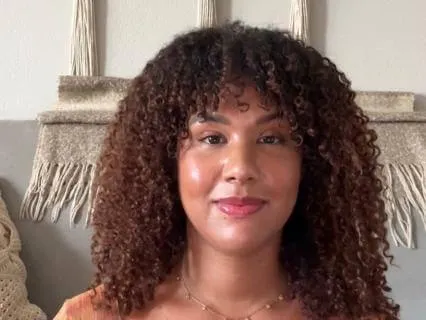
My name is Bea.
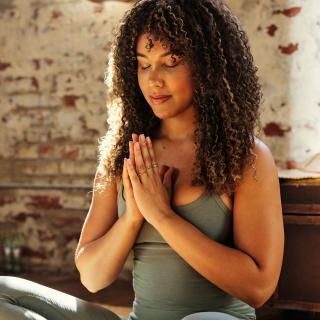
I'm a yoga and meditation teacher and a somatic practitioner,
And I love talking about anxiety and the nervous system.
If you've been living with anxiety for a while,
You might have started to believe that something is wrong with you.
Maybe you've wondered,
Why can't I stop the thought?
Or why do I always jump to the worst case scenario?
First of all,
I want you to know that anxiety is not a character flaw and there's nothing wrong with you.
It's actually a very normal human response that's become a little bit overactive.
At its simplest,
Anxiety is the body's way of preparing for danger.
You probably know the story.
Thousands of years ago,
This response helped our ancestors survive.
If they encountered a predator,
Their brain would send a signal to release stress hormones like adrenaline and cortisol.
And this would cause their heart to beat faster,
Their breath to become quicker,
Their muscles would tense.
All preparing them to either have to fight,
Flee,
Or protect themselves in some way.
The amazing thing is that your nervous system is designed to do exactly that today.
But unfortunately,
It has a hard time differentiating between a real threat and a perceived one.
So something like a difficult conversation or an unanswered text message,
Or maybe you have a presentation coming up,
Or even a stressful thought can trigger the same alarm system that was originally designed to help you escape physical danger.
Your brain isn't trying to make your life harder.
It's asking one simple question,
Am I safe?
When it isn't sure,
It often chooses protection over certainty.
And this is why anxiety can feel so physical.
Maybe your heart starts to race,
Or your stomach feels tight,
Your chest feels heavy,
And your thoughts start to move faster and faster.
These sensations can feel really overwhelming and uncomfortable.
Trust me,
I know.
But it's really just your nervous system trying to deal with what it believes is a threat.
Think of it like a smoke alarm.
A smoke alarm isn't bad.
It's designed to protect you.
But if it starts to go off every time you make toast,
The problem isn't that the alarm exists,
It's become a little too sensitive.
Anxiety works in a similar way.
It's a protective system that's become a little too over responsive.
And it can happen from different things like trauma,
Life experiences,
Chronic stress,
Or simply just being in survival mode for too long.
This is why I don't like to treat anxiety as the enemy.
When we think of it as something to get rid of,
This can actually create more tension in the body.
So instead,
The best way is to approach it with curiosity.
What if instead of asking,
What's wrong with me?
Or how do I make this stop?
We ask,
What is my nervous system trying to protect me from?
Or what do I need right now?
Or where do I feel this in my body?
By getting curious,
We learn how to pause before reacting,
And we can remind ourselves that maybe every anxious thought we have isn't true.
It simply means that your body is just trying to help,
Even if the alarm system has become a little too loud.
The beautiful thing is that our nervous systems can learn.
With practices like conscious breathing,
Grounding,
Movement,
Mindfulness,
And compassion,
We can begin to teach our bodies that we're safe.
I'm not going to lie to you and say that this happens overnight,
But with consistent practice over time,
You will notice a change in how you manage your anxiety and respond to situations that might make you feel a little anxious.
And this is how we build a resilient nervous system.
So the next time anxiety shows up,
Instead of seeing it as something wrong with you,
See if you can remember this.
Your anxiety isn't trying to hurt you,
It's trying to protect you.
And sometimes the most healing thing we can do is gently thank our nervous system and tell ourselves,
Thank you for looking out for me,
But right now I'm safe and everything is going to be all right.
Thank you so much for joining me.
I will see you in the next video of my anxiety series.
Have a beautiful day.
Namaste.