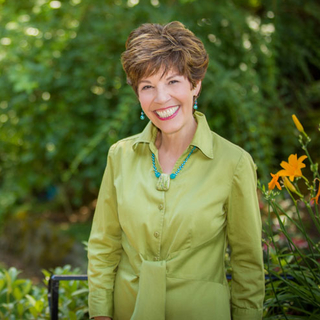
Welcome to the Everyday Mindfulness Show where we educate and inspire people to live fuller lives through mindful practices.
Let's get started with your host,
New York Times contributor,
Leadership advisor,
Sought after keynote speaker,
The author of the Amazon hot new release,
Everyday Mindfulness from chaos to calm in a crazy world,
She's smart,
Strong,
Sassy,
And a trendsetter in the field of mindful leadership.
Your host,
Holly Duckworth.
Welcome to another episode of the Everyday Mindfulness Show where we talk to leaders,
Thought leaders,
Practitioners,
A variety of people looking to navigate mindfulness in these interesting times.
And I am so excited to bring a special friend on the show today.
I am here to introduce you to Justin Foster.
Justin Foster and I have been friends through many chapters of life and he is the founder,
Thought leader,
Author,
Expert,
Consultant at Root and River.
Welcome to the show,
Justin.
Hi,
Holly.
Good to see you.
Thank you for having me on.
I love the way you think and to be able to talk about these ideas that you're presenting.
It's always a joy and it's always fun.
So thank you.
Well,
You know,
Justin,
It's so fun.
And I think this is really an interesting thing about mindfulness.
Mindfulness,
The practice of being fully present in the moment.
You and I have a friendship,
You call that a mystic friendship.
We may not email or text or phone for even months or years.
And then we just pick up the phone and it's like the time never passed.
So I'm curious,
What makes a mystic friendship?
How can people cultivate more of these?
Because we know the power of it in our friendship.
How can other people do that?
Any thoughts on that?
Yeah,
I think mystical friendships are like a direct correlation to your level of consciousness.
So you look at it from almost like a vibration standpoint or quantum physics standpoint is that you're going to,
As your consciousness increases,
Some people will go along for the ride,
Some won't.
That's part of the grief,
The grieving side of consciousness or mindfulness.
But new people will come.
And what I think there's three things that make a mystical friendship.
One is what you just said,
Holly,
Which is this soulful connection that transcends like time and these other so very human like things or something about it that it's transcendent of that.
The second is that mystical friendship is not fueled by standard methods of measuring form.
It's just not based off of ideology.
It's not based off of race or cultural,
Like social conditioning.
I think mystical friendships can happen regardless of all of those things.
And then I think the third thing is a genuine love,
Not just a true unconditional love,
But John O'Donohue referred to as the,
You know,
From the Celtic wisdom as the anamkara,
Which is this just this committed,
This commitment to another person's well-being without any expectation or attachment to what that form might be.
And what I've been saying for a while now is that in American culture and Western culture,
A marriage is considered to be the highest form of relationship.
But in the rest of society,
Especially if you go back to indigenous people and so the original like,
You know,
The original tribes that we came out of,
Friendship was the highest form of a relationship.
So we're living in interesting times.
And as we were prepping for the show,
Justin,
We were talking about,
You use the phrase,
Walls of illusion.
In 2020,
We joke,
Everybody went around with their clear vision vision boards at the beginning of the year.
Oh,
I'm going to have this or that.
And what we've come to know as energy people is what do you have to have to have clear vision?
You have to have muddy vision.
So we're moving through some muddy vision right now.
What thoughts might you have for folks that are navigating this,
Something they held really a deep belief is dissolved.
We kind of joked about the commute to work,
Or I have to do this particular thing.
These beliefs have been shaken to the core.
How can somebody navigate the deep root of that,
But then the river that's going to flow from it?
I know you're branding root and river.
How do we navigate that?
Yeah,
I think,
I think the,
This is a good time if you don't have one.
And I think this is a good compliment to mindfulness practices as a critical thinking practice.
Which is to understand that your inner world is a much better picture,
Much more accurate picture of reality than your outer world.
Because your outer world is large,
How you see the outer world is largely determined by the value you place on material things.
And so,
And material things that value,
Because they can't feel back,
Material things,
A tree can't feel back or a car can't feel back.
Maybe a tree can,
I don't know,
But you know what I mean.
So I think this critical thinking is a recalibration of about what's really important.
So these things that you kind of convinced yourself were important,
This job,
This career,
This relationship,
This business I'm in,
If you thought those were important,
But in the light of all the chaos,
Maybe they're not as important.
Maybe something else has emerged and you have to recalibrate to that.
And I think that it's also an invitation in this time to shift from sort of the world of measurement into the world of possibility or imagination.
And one of the things,
You know,
We look at it from a pandemic standpoint,
And I think certainly the racial justice issue also goes here,
But certainly the pandemic is nature kills pretense.
It always does.
It always kills pretense.
And so nature killed the pretense that we were infallible,
That these kinds of diseases were on distant shores of developing countries.
And I think this uprising,
This time that we see ourselves in when it comes to police brutality and racial injustice and racial justice is a very similar thing,
Which is it's,
That nature,
As far as like an uprising is killing the pretense that especially us,
Me as a white person have maybe not paid enough attention to because it didn't directly impact me,
You know,
In my day-to-day life and in the commute and in the things that,
And I think it's just causing us to re-examine again,
I'll go back to what I said,
It's causing us to re-examine what's important to us and that's a good thing.
You use the word we hear a lot on the show and I always like to dive deeper and unpack words that may be new for some folks,
Which is this,
This idea of consciousness.
And this is what does consciousness mean to you and how might somebody who's kind of new into this explore that in a way that's going to be supportive when the whole world is different now?
Yeah,
Yes,
Such great questions.
So consciousness is a highly contextual word.
This is what it means to me and it's,
Consciousness is about space and the space to me that it's about is the space between your thoughts and feelings and you,
Your true self.
In Western culture that space is almost,
That space,
That distance between true self and thoughts and feelings is often,
It's not,
Often not there.
And so when you begin a mindfulness practice and you begin to meditate even at a very basic level and you begin to understand that you are not your thoughts and feelings,
Then there's a little bit of space that opens up.
When that space opens up,
Your vision changes and when your vision changes,
The narratives,
The forms that you have and the narratives about those forms permanently shift.
And consciousness is a,
Is basically,
To me is evolutionary psychology.
It's the advancement to the mind to,
It's much more where it's supposed to go,
Which is to evolve to a more divine state for lack of a better term.
And I say that as an extremely non woo-woo person.
That this is,
That consciousness is where the unexplainable,
Mysterious,
Divine things,
Things we cannot explain around like faith and timing and synchronicity,
Combine with the human mind's ability to rewire its own neuro-programming.
And so the summation of that though is consciousness is the space between who you truly are and your thoughts and feelings and reactions and tendencies.
Got to breathe into that one for a minute.
It's a powerful time for folks,
Not just to slow down to slow down,
But I let you,
That play with the concepts and be open to ask these questions.
Obviously as an interviewer,
I've got 150 plus shows of these questions,
But I love the way you frame that.
This is what it means to me.
And if I had an invitation for folks in this transformative time is be willing to ask more questions and be willing to invite that phrase.
This is what it means to me.
Mindfulness,
The practice of being present in the moment without judgment.
Do you have any tips for folks on that?
Now we're given that,
You know,
Let's step into our friendships,
Step into our friendships more.
Some of them are going to be re-emerging.
Some of them may be brand new people coming in into our world.
How do we explore that place of this is not right or wrong,
Not judgment because we are human beings in this human doing world.
Yeah,
Right.
Well,
That kind of goes back to critical thinking,
Which is a kind of a lost practice in American culture.
You know,
It used to be like people that were in speech and debate were taught critical thinking or people that were that,
You know,
Philosophy when philosophy was part of the core curriculum,
You learned about critical thinking and the Socratic method and allegory and metaphor and simile and all these things that were used to combat literalism.
And so there's a couple of tips or thoughts I would have for those listening related to this matter is the first is to have a self-intervention practice.
So self-intervention practice to me is just essentially asking yourself when you react to something,
Is that true?
How do I know that's true?
And this is,
You know,
Somewhat like stoic philosophy,
But it's not trusting that your first reaction to your thought or feeling is accurate.
It doesn't mean being cynical.
It just means don't trust your thoughts and feelings all the way.
Listen to them,
But don't trust them.
I sometimes refer to thoughts and feelings as like the dashboard indicators on your car.
And just because the dashboard light comes on doesn't mean something's wrong with the engine.
So that's one.
The second thing that I feel is related to this is what are you feeling called to do?
What action are you feeling called to take that you haven't been called to take before?
So we see with the protests and marches that massive amount more of white people going to these things,
Way more as a percentage.
So maybe it's that.
Maybe it's something else.
Maybe it's to run for office.
Maybe it's to be a writer.
I don't know.
And then the third one is what is something you can't go back to?
So the Western mind is very programmed around this world of measurement about where we're going and we use words like goals and outcomes and all that.
And it's all an illusion.
Every plan is an illusion.
But what we can do is we can look back and go,
Oh,
I don't want to do that.
That doesn't serve me anymore.
And being willing to look back and use the power of remembrance to go,
Oh,
This is way less meaningful to me than it used to be because this is way more important,
Whatever it is.
So those are a few ideas related to this.
So I'm curious,
What can you not go back to?
I'll tell you mine while you think about it.
Mine is really,
I mean,
I had a very vibrant speaking career.
That was my primary gift to the world.
And I enjoyed the heck out of it until I didn't enjoy it anymore.
And I'm really clear that instead of a thousand relationships,
Really a one inch deep,
That I'm looking for 100 people to go 100 miles deep.
Right.
Yeah.
For me,
That's a recalibration of social media and integration and deeper,
More impactful conversations versus high,
High,
Shorter conversations.
I can't go back to that life on the road in the same way that I did before.
Yeah.
That's a good example.
I've been consciously working on this,
Designing the life I want to have for about five or six years now.
And so,
But one of the things that I'm not going to go back to is I'm not going back to borrowing energy from other people.
And I realized,
You know,
On the disc,
I'm a high I,
In the Enneagram,
I'm an eight wing seven,
And my seven's almost the same as my eight.
So I'm an enthusiast.
I like to be around people.
And what I would find myself doing is overbooking,
Number one,
Overbooking,
Like coffee in the morning,
Lunch,
Happy hour,
You know,
Three days,
Four days a week of that kind of pace or and the second then is because it's depleting,
Getting there and not contributing to the energy,
Just borrowing there during the conversation.
And I found myself and I will not go back to this.
I found myself at that time,
Burnout and enduring a conversation,
Waiting for it to be over.
And I won't go back to that.
There are certain conversations you have to have in business and,
You know,
They,
You know,
And all that.
That's fine.
But as far as face to face time to invest that time,
I'm going to do that with people that challenge me,
That interests me,
That and I that don't deplete me.
I'm not going back.
Wow.
I think there's a lot a lot of thoughts for our listeners on that and how they could apply that that strategy in our own life,
That that certain sense of obligation.
I'm obligated to do X or Y.
I totally get that.
So tell me a little bit about root and river.
How can people get more of your thought provoking questions,
Your energy and work people a little bit more?
So a lot of these ideas around mindfulness that I have in consciousness are found more on my personal site,
Which is fosterthinking.
Com.
And you can subscribe to my newsletter and get my weekly blog posts.
This recent one is called the root of the beast.
And it's an analysis of how of Christian nationalism.
So I touch on white casual topics.
As far as root and river goes,
We believe that every great brand is a spiritual experience.
It should feel like a spiritual experience.
And this illusory wall between business and beliefs is crumbling and crumbling and crumbling.
And now a brand is how other people experience what you believe.
So knowing what you believe in,
We call that intrinsic branding inside of an organization or an individual,
Which is what is going on in your inside world.
And marketing is just basically sharing your inside world with the outside world.
And you can do that without congruence.
Another thing that we do at root and river is we teach what we call humanistic marketing practices.
And humanistic marketing is essentially around the marketing golden rule that Emily and I created,
Which is do not market unto others the way you would not want to be marketed to.
And be seeing people as humans and telling stories and these other factors of humanistic marketing.
So it's kind of reflected in our name root and river.
So the root is the intrinsic brand.
It's your mission,
Your beliefs,
Your standards,
Your whatnot.
The river is your message and how your brand shows up in the world.
And they need to be in congruence in order for you to have a vibrant growing brand.
And we work with everyone from solo practitioners all the way up to big companies that are led by what we call defiers,
Which are entrepreneurs or executives or leaders that really do not care about social norms or old ways of doing things.
And those defiers come in all industries and we love to work with any of them.
Well,
Justin,
You know,
It's such a powerful time for change that if people are really recommitting to their branding,
Recommitting to their values,
I can't say enough how important it is for somebody to have an exploratory conversation with you and look at a branding package that fits for them so that you can have the same exchange of authenticity that you and I have within your brand and explore and expand your message no matter what the product or services that you offer because our world needs that spirit,
Mindful,
Driven business now more as the illusions fall away and the reality continues to emerge.
Yes,
Yes,
Yes to all that.
Well,
Justin,
I'm so glad you could come on the show.
I look forward to having you back.
Any last words of wisdom before we let you get on about your day?
I mean,
Our mission at Roon River is to inspire leaders to go inward.
And that's really what we're talking about here.
Business is getting is listening to your inner world.
Your inner world is much more in touch with reality than your outer world.
And if you do the inner work,
You'll be amazed about how different you see things.
And you get a whole new set of eyes.
And I so encourage everyone to do that.
It's free to go inward.
It's a powerful transformation.
Justin,
I look forward to having you back on the show.
Thank you so much.
I appreciate it.
Thank you for joining us for today's show.
For more mindfulness every day,
Visit everydaymindfulnessshow.
Com and download the three day challenge and experience the ABCs of mindfulness.