Welcome to the Everyday Mindfulness Show where we educate and inspire people to live fuller lives through mindful practices.
Let's get started with your host,
New York Times contributor,
Leadership advisor,
Sought after keynote speaker,
The author of the Amazon hot new release,
Everyday Mindfulness from chaos to calm in a crazy world,
She's smart,
Strong,
Sassy,
And a trendsetter in the field of mindful leadership.
Your host,
Holly Duckworth.
Hi,
And welcome to another episode of the Everyday Mindfulness Show.
Today,
I am so excited to have another conversation with the guest.
I had the opportunity a while back to be on a show on a podcast myself.
And that podcast was the mindful mama podcast hosted by our guest today,
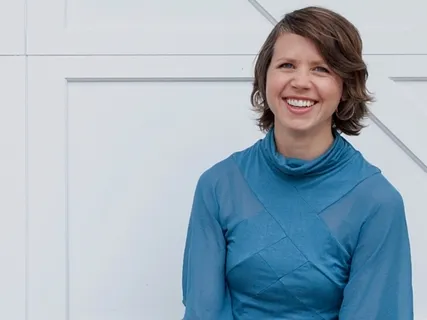
Hunter Clarkfield.
Hunter,
Welcome to the show.
Thank you.
I'm so glad to be here.
Well,
I'm excited to have you on the show because when I was on your show,
We were just in the final visioning stages for you writing your book.
And I said to you,
When you get your book done,
I want to have you on my show and you followed up.
And I think that's so key to mindfulness and living today and women supporting other women to grow this amazing work in the world.
So thank you for your yes to being on the show and for our continued growing friendship as we work together to make this movement possible.
All right.
I love it.
Yeah.
So,
Lots has been going on with your new book.
And I want to start with the title because it's Raising Good Humans.
And it's going to be coming out December 1st.
And it's such an important topic today because parenthood and the dynamic of parenthood has changed.
And with that,
I think has come a lot more stress,
A lot more overwhelm.
And your book is going to help parents set a mindful mindset,
Even in those times of chaos and overwhelm.
That's the hope.
I mean,
It's interesting because in the mindfulness world,
There's lots of people teaching mindfulness to kids,
Which is wonderful,
Bringing it into the schools,
Which is amazing and wonderful.
And I really see that a lot of our patterns start so much earlier.
And really,
To reach the littlest human beings and to help them as much as we can,
We really need to help ourselves as maybe the parents of those littlest human beings.
Because parenting challenges us in these.
.
.
It's physically demanding.
It's psychologically demanding.
It's like in the culture,
It's sort of depicted in some ways as so fuzzy and pink with newborns and very.
.
.
You get your sitcoms and things like that.
But the truth is parenthood is really.
.
.
It can be really incredibly challenging,
Boring,
Frustrating,
And it brings up all our stuff.
So for us to be able to start to.
.
.
There's so much it brings up for us to work with and transform.
And mindfulness really is one of the key tools I use in the book to talk about this.
Because if we're going to raise good humans,
It really all goes back to us and what we're bringing to the table.
That mindfulness thing again,
Awareness,
Practicing the presence in the moment,
No matter what title you've smacked on your head from executive to parent to leader to daughter,
All of these titles.
And as we were exploring the book,
I was asking you,
What are the key themes?
And I really love what you said,
Which is this idea of skillful communication.
We live in a world of more tools to communicate now than ever before.
Obviously we're coming out on YouTube,
We're coming out now on all the podcast channels.
I've got my phone right here,
Heaven forbid,
We missed a call,
We missed a tweet,
We missed a text.
While there's more ways to communicate now than ever before,
Our skilled communication skills have gone downward.
So I'm curious your take on mindful humans and parenting as you relate it to the book.
Well,
The skillful communication really comes in because.
.
.
So when I was a younger parent and I was freaking out and losing it,
It was so challenging and I was so challenged.
I realized,
I heard a lot of.
.
.
I was listening and trying to teach myself a lot,
How can I do this better?
And there were a lot of people in the parenting world that were saying,
Oh,
Just say this thing,
Do this thing,
Say this kind of thing,
And then everything will be all right.
And then in the mindfulness world,
I heard like,
Okay,
Just practice mindfulness,
Get yourself calm,
And then you're going to be fine,
Right?
Because you're just going to whatever,
Everything's going to be fine after that.
And what I really saw is that these kind of two things really needed to come together because I knew from my studies in mindfulness that I'd been reading and studying from,
Since I was a teenager,
That I knew that these practices had incredible power to change the brain and had to help us heal and to calm us down.
And I also knew that as I started learning these communication skills,
I realized that they're missing this thing because the truth is when we're losing it as a parent,
When our stress response is happening and that fight,
Flight or freeze response is checking in,
It literally makes it so that these stress parts of the brain,
They literally bypass the parts of the brain that we want to use for verbal ability,
Empathy,
Creativity,
All of these things.
So in this communication side,
In this parenting side,
They were kind of missing the fact that all their good information was kind of useless.
The stress response kicks in and we can't even access these parts of the brain.
But then likewise,
In the mindfulness world,
I realized like there was this kind of assumption that,
Oh,
Once you calm down,
Then you'll be able to communicate well.
But that wasn't true for me.
I found myself,
Okay,
I'm practicing.
I was coming back.
I noticed I was losing it a lot.
It was horrible.
It was frustrating.
It was disappointing.
And so then I worked on my practice.
I came back to my mindfulness,
Started being more diligent,
Bringing it more into my daily life.
And then it was great.
I was able to be calmer when my child was losing it.
I was like,
Yes,
This is great.
I'm doing it.
I can be calmer.
And then I would be calmer and I'm like,
Okay,
I'm doing it.
And then I would say something and it would be like something my parents might've said to me.
And then all of a sudden it was like a bomb had gone off again in my small child.
And in really like the calming down didn't give me better,
More skillful words to say to connect with my child and to help her not push back against me so much.
So these two things became like the wings that I needed to fly.
And I see so many people need to fly like mindfulness and skillful communication.
And it's interesting because I teach it in this parenting context,
But it really is.
It's interesting because I have clients say to me,
Oh,
My relationship with my husband is better.
It could be about caretaking with older people.
The communication skills are universal.
So these become these kind of essential life skills that most of us weren't really taught very well.
So that's where the whole piece comes together is that skillful communication plus that mindfulness.
Yeah.
I really want to dive into this because I think it's interesting.
And we've talked on a lot of the different shows about mindfulness is listening.
And I love kind of reflecting on that in what you just said is it's the taking that pause moment to listen to yourself and also that pause moment to listen to your kid.
And I'm not a parent,
I joke,
I'm not a parent,
I just play one on TV.
But that dynamic play,
It's not always the kid having the problem.
It might be the parent having the problem.
And how we do that dance with one another,
I believe starts with that mindful listening.
And sometimes that's not just listening to the screaming,
But it's listening to that energy under the discomfort and being willing to listen and then talk and then ask.
And obviously these skills change over your parenting experience and your child's various growth rates.
But I was actually smiling.
I was on my Facebook this morning and Facebook does those little memories.
And I had dated a man who had four kids and we had twins and in the four,
Three boys and one girl and the twins at the time were six.
And today's post was she had gotten in trouble and we had sent her off to her room.
And when I went to check on her after however many minutes she had been in her time out,
She had been drawing pictures of me and her together and I got to keep one and post it on Facebook.
But I think it's a great example of how can we be mindful about sometimes we need to take the time out,
Sometimes the kid needs to take the time out to listen.
And when we went back in and saw her doing the drawings and everything,
We were both in a different energy to move the parenting plan and the rules forward.
Yeah.
I mean,
Mindful listening is such an important essential skill,
Right?
When most of us listen,
We're waiting,
Like we're planning our response.
We're not really hearing sometimes even the content of what is said and not hearing the emotions behind the content of what is said.
And this listening is such a crucial skill for parents or really anyone who's in any relationship to be attentive to that relationship and to help the other person.
Because if you really think about it,
Love is attention,
Right?
When we're in love with someone,
We're giving them all our attention,
Right?
Or they're giving us all their attention.
And for us to love someone else,
Because I really think it is a verb to do something like to be more loving,
We are giving that other being our attention.
And mindful listening really is the most important step for being there for your child.
You can't be there for your child or for anyone if you're planning your next things to do,
If you're already on what's for dinner tonight or already,
Which at least in my experience,
Planning seems to be the predominant way my mind wanders.
And there's a really wonderful quote that for me really drives this home incredibly.
And one of the reasons why mindfulness becomes this sort of essential,
It's ninja parenting skill that we need,
Not only does it reduce the stress response and help us just act better and be a better model and things like that,
But the truth is if we're always in the future or in the past,
We're not really in that moment.
And my teacher,
Thich Nhat Hanh,
The Vietnamese Zen master,
He says,
When you love someone,
The best thing you can offer them is your presence.
How can you love if you are not there?
And just that question,
How can you love if you are not there?
It's so simple,
But it really is so profoundly the truth that if we're not ever here,
We're not able to really connect.
And that's why mindfulness becomes this essential foundation for creating a connection.
And that connection is what drives all the positive behaviors that we want in our kids.
So Hunter,
We're going to just take a short break in the show.
And right before the break,
We always just invite our guests to a question.
And I love that you did that so naturally.
How can you love if you aren't there?
I want to invite you to take that inspiration from Thich Nhat Hanh.
And certainly as Hunter has shared her experience of it,
How can you love if you aren't there?
Into the break.
We'll be right back.
Welcome back to the Everyday Mindfulness show where we are talking mindful parenting today with the expert on the topic,
The host of the Mindful Mama podcast and the author of Raising Good Humans,
Hunter Clark Fields.
Hunter,
Thank you for saying yes to being on the show and exploring this really powerful topic at this transformational time.
And one of the topics that I think parents often get embroiled in is self-defeating.
Oh,
I'm not doing enough for my kid.
I'm not seeing them enough.
I'm not getting to all the sports games,
The whole not enough cycle.
And in the book,
You talk about looking at it in a different way and the idea of mindful self-compassion.
So I'd love to hear what this technique is and how our listeners can use it more.
Yeah,
Well,
I mean,
We tend to be in a culture of achievement,
Right?
We're in this intense experience of where we're rewarded for the things we do and what we achieve and all of those things.
So it leads to a whole host of us always feeling like we're not enough.
And because our culture is very much kind of based in judgment as well,
Like we kind of have these Judeo-Christian roots and puritanical roots and all those things that there's a lot of judgment involved and we kind of believe in some righteous judgment.
And so we tend to be very hard on ourselves in our own hearts and our minds.
And we tend to think that,
Oh,
If I berate myself inside,
That's actually going to help me become a better parent.
That's kind of what we think,
Or it's going to help me do better.
And the truth is,
In the book,
I point to the research from Kristin Neff at University of Austin,
Where she has researched self-compassion.
And it really points out that when we do this to ourselves,
It actually makes it harder for us to grow and to change and to make a positive change in our lives.
So for instance,
If we're trying to stop yelling,
If we tell ourselves,
Oh,
I'm such a terrible person.
I suck.
I can't believe I did this again.
And we berate and work super hard on ourselves when we yell,
Then it's going to be really hard for us to kind of take any kind of meaningful change,
Make any kind of meaningful change in that direction.
Because if we do that and then we make a mistake,
We get this horrible,
Mean voice in our head punishing us.
So it makes it hard for us to take meaningful steps in that direction.
And the research really shows that when we can start to practice,
Just bit by bit,
Start to interrupt that voice,
First notice it mindfully.
That's what our awareness allows us to do is notice it.
But then if we can interrupt that voice and then start to practice to talk to ourselves as if we were,
As you might talk to your best friend,
Then you're actually much more likely and it's much easier to make the positive change that you want to do to slowly stop the yelling and slow it down.
And if we're forgiving of ourselves and kind to ourselves when we mess up,
Because we will,
Because we're human,
Then we're actually in a better place to make positive change all around.
And then the truth is when I think about this inner voice,
There's one piece I really want to share with you,
Holly,
And this is a metaphor that I really,
Really love from Dr.
Wayne Dyer.
And he would ask like,
So when you have an orange and you squeeze that orange,
What's coming out?
Juice.
Juice,
Yes,
Of course juice,
But not pineapple juice and no like carrot juice is coming out of this orange,
Orange juice is coming out.
And likewise with us,
What is inside is what's going to come out.
So if it's hard,
If that voice inside is mean and harsh and judgmental,
That's ultimately going to come out with your children and with the people you're around when you're squeezed.
So that work of transforming our communication on the outside really goes back to pointing to work that we have to do on the inside of creating a better relationship with ourselves.
And that just can be something that we practice and that can,
You know,
We can do a little fake it till you make it.
We can,
We can practice it and grow it stronger and bit by bit.
The other thing that I've found with this compassion practice too,
Is the power of having a buddy.
And I think society today,
Unfortunately we're kind of training ourselves that we have to be the lone ranger doing it on our own and you know,
Single mom,
Single dad,
And obviously there's a lot of different relationship dynamics right now.
But I really think part of raising good humans is having,
Having a buddy and that may be your spouse,
But it may be a friend or a community and looking at how we go back to that idea of,
You know,
It takes a village to raise a child.
So I was curious,
And I mentioned on the show before,
I'm not a mom,
I play one on TV.
Do you have any mindfulness tips or thoughts?
There's also a whole segment of people out there in the world who for whatever reason don't have children or haven't chosen to have children or you know,
That hasn't been their life path.
But yet there's lots of mindful ways that we can be supportive of people raising good human beings,
Even if they're not daughters or sons or whatever.
So I'd be curious,
What are your mindful tips for those of us who don't have kids?
That's a great question.
And I think that for the people who don't have kids,
I think one of the things that and the ways that you can support people who do have kids and are working with that and struggling with that is just working on being a good friend as best you can and working on checking and noticing maybe your own judgment.
I know for sure that before I had kids,
I would look at that person and say,
Oh,
I would never do X,
Y,
And Z,
You know?
And now,
Even though I now know,
Like I go to the playground,
I hear tons of unskillful communication happening all the time now that I'm deeply immersed in what that sounds like.
But I know that it's so hard and people are doing the best they can.
And we don't know what's happening in that person's life,
Whether how much sleep that person has had and what maybe they're suffering from their own childhood they're bringing into the situation.
So I think what we can do to be supportive of people who are going through this incredible journey of having children is to offer to go and babysit the kids would be an amazing one.
But just be a good friend.
Ask them how it's going.
And rather than maybe just asking about what their kids are doing,
How are you doing?
Are you getting your needs met?
Are you able to,
Can I support you in some way?
That's really a wonderful way to do that.
Yeah.
I hope I answered your question.
Absolutely.
I mean,
One of the things I do,
Obviously,
I travel a lot.
I'm on airplanes and you've always got the various states of family traveling.
And it's really easy as a non-parent,
Oh my God,
Here's another family.
And every time I do that,
I really use that as a trigger for an opportunity to send peace and joy to that family or that mom.
You know,
People,
It's really not that hard to just smile at the dad or the mom or the aunt or the grandma and just like send that compassionate smile to them that they're doing the best they can.
Some days the kids are smiling and happy with their toys and some days they're not.
But sometimes just that mindful human to human connection.
That's why I was so excited to talk to you about just raising good humans.
That yes,
This book is certainly geared toward parents.
So this is a great book to pass along as a gift for somebody that you know or for a teacher.
If you're not somebody who is a parent,
Just make sure to help get this book and this message out into the world as well.
Thank you.
So any other last minute tips or thoughts that we should take into the new year as we raise better humans?
Yeah,
I think our own practice of developing our own awareness is so,
So crucial.
It's so,
So needed in this world,
Whether we have kids or not,
To be practicing to understand our own awareness and practicing to see those things that,
Notice those things that cause us discomfort and understand them and use them as mindfulness bells to learn about ourselves and to also be and see those challenges that we have to help us be more compassionate for others.
I think those are always,
Those are lifelong practices that can make,
You know,
And as we all practice these things,
Like as you dear listener practice,
It really does.
What I say at the end of every coaching call I do in my mindful parenting communities,
I say,
As we create more peace in ourselves,
Or at the beginning I say,
As we create more peace in ourselves,
We create more peace for everyone.
And I really know that that is true,
That we all are very interconnected in a very real way and that,
You know,
You listening to Holly's podcast and filling yourself up with media that supports your highest aspiration and you just checking in with your intention to be more aware and be more mindful really does make a big difference for all of us.
So keep going.
Well,
Thank you so much for your yes to being on the show.
I think it's exciting to think about that word peace and peace and peace and peace.
And how can we carry that word and that energy with us every single day?
Thank you so much for your yes to writing the book,
To being on the show.
We're going to put the link to get the books and more tools from Hunter on the show notes.
And just remember,
Mindful matters and so do you.
Thank you for joining us for today's show.
For more mindfulness every day,
Visit everydaymindfulnessshow.
Com and download the three day challenge and experience the ABCs of mindfulness.