Hello,
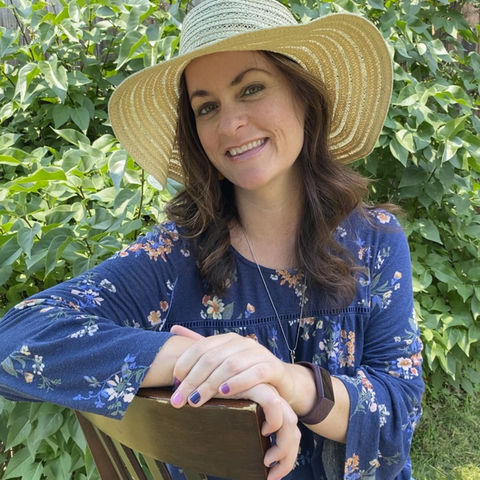
My name is Hilary LaFawn and I'm so grateful that you join me today for a sleep story,
How to Stop Worrying and Start Living by Dale Carnegie.
Before we begin,
Get yourself as comfortable as you can,
Laying in your bed,
Head on a pillow,
Enjoying the sheets and the blankets all around you.
Take great joy in the comfort of your bed and snuggle in as only you know how.
Take a few deep breaths and just relax and settle in.
While we're sleeping,
Why not learn a few things about how to stop worrying?
So we'll start with the preface,
How this book was written and why.
In 1909,
I was one of the unhappiest lads in New York.
I was selling motor trucks for a living.
I didn't know what made a motor truck run.
That wasn't all.
I didn't want to know.
I despised my job.
I despise living in a cheap furnished room on West 56th Street,
A room infested with cockroaches.
I still remember that I had a bunch of neckties hanging on the walls and when I reached out of a morning to get a fresh necktie,
The cockroaches scattered in all directions.
I despised having to eat in cheap,
Dirty restaurants that were also probably infested with cockroaches.
I came home to my lonely room each night with a sick headache,
A headache bred and fed by disappointment,
Worry,
Bitterness,
And rebellion.
I was rebelling because the dreams I had nourished back in my college days had turned into nightmares.
Was this life?
Was this the vital adventure to which I had looked forward so eagerly?
Was this all life would ever mean to me?
Working at a job I despised,
Living with cockroaches,
Eating vile food,
And with no hope of the future,
I longed for leisure to read and to write the books I had dreamed of writing back in my college days.
I knew I had everything to gain and nothing to lose by giving up the job I despised.
I wasn't interested in making a lot of money,
But I was interested in making a lot of living.
In short,
I had come to the Rubicon,
To the moment of decision which faces most young people when they start out in life.
So I made my decision and that decision completely altered my future.
It has made the rest of my life happy and rewarding beyond my most utopian aspirations.
My decision was this.
I would give up the work I loathed and since I had spent four years studying in the State Teachers College at Worsenburg,
Missouri preparing to teach,
I would make my living teaching adult classes in night schools.
Then I would have my days free to read books,
Prepare lectures,
Write novels,
And short stories.
I wanted to live to write and write to live.
What subjects should I teach to adults at night?
As I looked back and evaluated my own college training,
I saw that the training and experience I had in public speaking had been more practical value to me in business and in life than everything else I had studied in college all put together.
Why?
Because it had wiped out my timidity and lack of self-confidence and given me the courage and assurance to deal with people.
It had also made me clear that leadership usually gravitates to the man who can get up and say what he thinks.
I applied for a position teaching public speaking in the night extension courses both at Columbia University and New York University,
But these universities decided they could struggle along somehow without my help.
I was disappointed then,
But now I thank God that they turned me down because I started teaching in YMCA night schools where I had to show concrete results and show them quickly.
What a challenge that was.
These adults didn't come to my classes because they wanted college degrees,
Credits,
Or social prestige.
They came for one reason only.
They wanted to solve their problems.
They wanted to be able to stand up on their feet and say a few words at a business meeting without fainting from fright.
Salesmen wanted to be able to call on a tough customer without having to walk around the block three times to get up courage.
They wanted to develop poise and self-confidence.
They wanted to get ahead in business.
They wanted to have more money for their families,
And since they were paying their tuition on an installment basis and they stopped paying if they didn't get results,
And since I was being paid not a salary but a percentage of the profits,
I had to be practical if I wanted to eat.
I felt at the time that I was teaching under a handicap,
But I realized now that I was getting priceless training.
I had to motivate my students.
I had to help them solve their problems.
I had to make each session so inspiring that they wanted to continue coming.
It was exciting work.
I loved it.
I was astounded at how quickly these businessmen developed self-confidence and how quickly many of them secured promotions and increased pay.
The classes were succeeded far beyond my most optimistic hopes.
Within three seasons,
The YMCAs,
Which had refused to pay me five dollars a night in salary,
Were paying me thirty dollars a night on a percentage basis.
At first I taught only public speaking,
But as the years went by I saw that these adults also needed the ability to win friends and influence people.
Since I couldn't find an adequate textbook on human relations,
I wrote one myself.
It was written,
No it wasn't written in the usual way.
It grew and evolved out of the experiences of the adults in these classes.
I called it how to win friends and influence people.
Since it was written solely as a textbook for my own adult classes and since I had written four other books that no one had ever heard of,
I never dreamed that it would have such a large sale.
But I'm probably one of the most astonished authors now living.
As the years went by I realized that another one of my biggest problems of the adults was worry.
A large majority of my students were businessmen,
Executives,
Salesmen,
Engineers,
Accountants,
A cross section of all the trades and professions and most of them had problems.
There were women in the classes,
Business women and housewives.
They too had problems.
Clearly what I needed was a textbook on how to conquer worry.
So again I tried to find one.
I went to the New York's Great Public Library on Fifth Avenue and 42nd Street and discovered to my astonishment that this library had only 22 books listed under the title worry.
I also noticed to my amusement that it had 189 books listed under worms.
Almost nine times as many books about worms as about worry.
Astounding isn't it?
Since worry is one of the biggest problems facing mankind.
You would think one at you that even a high school and college in the land would give a course on how to stop worrying.
Yet if there is even one course on that subject in any college in the land I've never heard of it.
No wonder David Seabury said in his book how to worry successfully.
We come to maturity with as little preparation for the pressures of experience as a bookworm asked to do a ballet.
The result?
More than half of our hospital beds are occupied by people with nervous and emotional troubles.
I looked over these 22 books on worry reposing on the shelves of the New York Public Library.
In addition I purchased all the books on worry I could find.
Yet I couldn't discover even one that I could use as a text in the course for adults.
So I resolved to write one myself.
I began preparing myself to write this book seven years ago.
How?
By reading what the philosophers of all ages have said about worry.
I also read hundreds of biographies all the way from Confucius to Churchill.
I also interviewed scores of prominent people in many walks of life such as Jack Dempsey,
General Omar Bradley,
General Mark Clark,
Henry Ford,
Eleanor Roosevelt,
And Dorothy Dix.
But that was only the beginning.
I also did something else that was far more important than interviews and the reading.
I worked for five years in a laboratory for conquering worry.
A laboratory conducted in our own adult classes.
As far as I know it was the first and only laboratory of its kind in the world.
This is what we did.
We gave students a set of rules on how to stop worrying and asked them to apply these rules in their own lives and then talk to the class on the results they had obtained.
Others reported on techniques they had used in the past.
As a result of this experience I presume I have listened to more talks on how I conquered worry than has any other individual who ever walked the earth.
In addition I read hundreds of other talks on how I conquered worry.
Talks that were sent to me by mail.
Talks that had won prizes in our classes that were held throughout the world.
So this book didn't come out of an ivory tower.
Neither is it an academic preachment on how you worry might be conquered.
Instead I've tried to write a fast-moving concise documented report on how worry has been conquered by thousands of adults.
One thing is certain this book is practical.
You can set your teeth in it.
Science said the French philosopher Valery is a collection of successful recipes and that is what this book is.
A collection of successful and time-tested recipes to rid our lives of worry.
However let me warn you you won't find anything new in it but you will find much that is not generally applied and when it comes to that you and I don't need to be told anything new.
We already know enough to lead perfect lives.
We have all read the Golden Rule and the Sermon on the Mount.
Our trouble is not ignorance but inaction.
The purpose of this book is to restate,
Illustrate,
Streamline,
Air-condition and glorify a lot of ancient and basic truths and kick you in the shins and make you do something about applying them.
You didn't pick up this book to read about how it was written.
You're looking for action.
Alright let's go.
Please read parts one and two of this book and if by that time you don't feel you've acquired a new power and a new inspiration to stop worry and enjoy life then toss this book away.
It is no good for you,
Dale Carnegie.
Nine suggestions on how to get the most out of this book.
Number one,
If you wish to get the most out of this book there is one indispensable requirement,
One essential,
Infinitely more important than any rules or techniques.
Unless you have this one fundamental requisite,
A thousand rules on how to study will avail little.
And if you do have this carnal endowment then you can achieve wonders without reading any suggestions for getting the most out of the book.
What is this magical requirement?
Just this.
A deep driving desire to learn.
A vigorous determination to stop worrying and start living.
How can you develop such an urge?
By constantly reminding yourself of how important these principles are to you.
Picture to yourself how their mastery will aid you in living a richer happier life.
Say to yourself over and over,
My peace of mind,
My happiness,
My health,
And perhaps even my income will in the long run depend largely on applying the old obvious and eternal truths taught in this book.
Number two,
Read each chapter rapidly at first to get a bird's-eye view of you will probably be tempted then to rush on to the next one but don't.
Unless you're reading merely for entertainment.
If you're reading because you want to stop worrying and start living then go back and reread each chapter thoroughly.
In the long run this will mean saving time and getting results.
Number three,
Stop frequently in your reading to think over what you're reading.
Ask yourself just how and when you can apply such suggestion.
That kind of reading will aid you far more than racing ahead like a whippet chasing a rabbit.
Number four,
Read with a red crayon,
Pencil,
Or pen in your hand and when you come across a suggestion that you feel you can use draw a line beside it.
If it is a four star suggestion then underscore every sentence or mark it with an x x x x.
Marking and underscoring a book make it far more interesting and far easier to review rapidly.
Number five,
I know a woman who has been office manager for a large insurance company for 15 years.
She reads every month all the insurance contracts her company issues.
Yes she reads the same contracts over month after month year after year.
Why?
Because experience has taught her that it's the only way she can keep their provisions clearly in mind.
I once spent almost two years writing a book on public speaking and yet I find I have to keep going back over it from time to time in order to remember what I wrote in my own book.
The rapidity with which we forget is astounding.
So if you want to get a real lasting benefit out of this book don't imagine that skimming through it once will suffice.
After reading it thoroughly you ought to spend a few hours reviewing it every month.
Keep it on your desk in front of you every day.
Glance through it often.
Keep constantly impressing yourself with the rich possibilities for improvement that still lie in the offing.
Remember that the use of these principles can be made habitual and unconscious only by a constant and vigorous campaign of review and application.
There is no other way.
Number six.
Bernard Shaw once remarked,
If you teach a man anything he will never learn.
Shaw was right.
Learning is an active process.
We learn by doing.
So if you desire to master the principles you are studying in this book do something about them.
Apply these rules at every opportunity.
If you don't you will forget them quickly.
Only a knowledge that is used sticks in your mind.
You will probably find it difficult to apply these suggestions all the time.
I know because I wrote the book and yet frequently I find it difficult to apply everything I've advocated here.
So as you read this book remember you are not merely trying to acquire information.
You are attempting to form new habits.
Ah yes,
You are attempting a new way of life that will require time and persistence and daily application.
So refer to the pages often.
Regard this as a working handbook on conquering worry.
And when you are confronted with some trying problem,
Don't get all stirred up.
Don't do the natural thing,
The impulsive thing.
That is usually wrong.
Instead turn to these pages and review the paragraphs you have underscored.
Then try these new ways and watch them achieve magic for you.
Number seven,
Offer your family members a quarter every time they catch you violating one of the principles advocated in this book.
They will break you.
Number eight,
Please turn to page 190 of this book and read how the Wall Street banker H.
P.
Howell and old Ben Franklin corrected their mistakes.
Why don't you use the Howell and Franklin techniques to check up on your application of the principles discussed in this book.
If you do,
Two things will result.
First,
You'll find yourself engaged in educational process that is both intriguing and priceless.
Second,
You will find that your ability to stop worrying and start living will grow and spread like a green bay tree.
Number nine,
Keep a diary.
A diary in which you ought to record your triumphs in the application of these principles.
Be specific,
Give names,
Dates,
Results.
Keeping such a record will inspire you to greater efforts.
And how fascinating these entries will be when you chance upon them some evening years from now.
So in a nutshell,
The nine suggestions on how to get the most out of this book are number one,
Develop a deep driving desire to master the principles of conquering worry.
Number two,
Read each chapter twice before going on to the next one.
Number three,
As you read stop frequently to ask yourself how you can apply each suggestion.
Number four,
Underscore each important idea.
Number five,
Review this book each month.
Number six,
Apply these principles at every opportunity.
Use this book as a working handbook to help you solve your daily problems.
Number seven,
Make a lively game out of your learning by offering some friend a quarter every time you're caught violating one of these principles.
Number eight,
Check up each week on the progress you're making.
Ask yourself what mistakes you've made,
What improvement,
What lessons you've learned for the future.
And number nine,
Keep a diary in the back of this book showing how and when you've applied these principles.
That is the end of our sleep story this evening.
Thank you for allowing me the precious gift of your time.
Until next time,
Sweet dreams.