If you're highly sensitive and you've been struggling with overwhelm because you've been giving everything to everyone else but nothing to yourself,
Then I can help.
Maybe you've already tried reading the self-help books,
You've been to therapy,
You've tried setting boundaries.
And you're still struggling with the same cycles.
It may be that you just haven't had the map.
That helps you to see exactly how different areas of your life are contributing to your overwhelm and keeping you stuck.
And so that's what I want to talk to you about today.
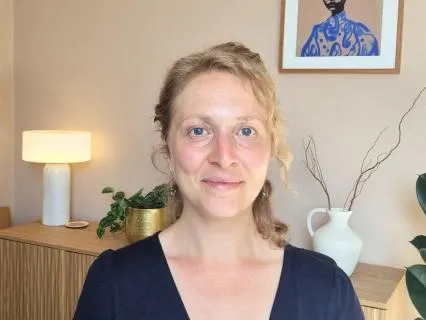
My name is Hayley Trower.
I'm a holistic psychotherapist.
I have a PhD in cognitive psychology and I specialise in helping people who are sensitive.
With overwhelm,
Anxiety,
Addiction and low self-worth.
And I have developed an overwhelm freedom framework.
That is designed to help you to see how there are different areas of your life.
That are influencing your overwhelm and to help you to see how you can make changes.
It's split into three areas,
The mind,
The body,
And the environment.
And importantly,
These three areas all interlink.
The environment,
Of course,
Affects our minds and our bodies.
Our bodies affect our minds.
And so when we're thinking about recovering from or reducing the experience of overwhelm,
It's really important to think about all three in combination.
It's natural to think that if you could just finish your to-do list,
Start thinking more positively and stop catastrophizing,
Then things would settle and your overwhelm would disappear.
So there's a tendency to believe that you can think your way out of overwhelm,
But then nothing really changes.
So actually it might be surprising to learn that overwhelm is a nervous system state rather than a thinking state.
That's not to say that our thoughts and beliefs don't influence our overwhelm,
Because they do.
But it's your body that's constantly scanning.
For threat.
It's your body that's telling you to slow down.
It's your body that's picking up on on the environment and it's feeling overstimulated.
And so then when we don't listen to our body,
When we don't pause or take a breather,
We then start to feel that pressure,
That overwhelm,
The tightness in the chest.
The sense of urgency or panic,
The brain fog.
The lack of capacity.
And that then.
That capacity then actually starts to shrink even further and that's because your body is then going into protection mode because it simply can't cope.
And then the symptoms of overwhelm just become magnified and they can get worse and then it becomes this cycle.
So when we're thinking about reducing overwhelm it's really important to look at the body first.
So next up is the mind and this can get quite complicated because we all have beliefs,
Stories and patterns and unhealthy coping mechanisms and these might be holding us back in ways that we aren't aware of.
So for example you might find it really hard to say no or you might find it really difficult to ask for help and if you were to do those things that might give you a bit more space in your life and it might reduce some of the overwhelm that you're feeling.
So it can be helpful to think about how your early life experiences have shaped your conditioning and shaped your beliefs.
You may have learned as a child that saying no is bad and it gets you into trouble or that asking for help is somehow weak or it makes you vulnerable.
So it can be worth exploring how these beliefs have evolved,
Where they came from and how they might be holding you back and you might find that you can actually shift your perspective in some ways and,
As I said,
Create some space in your life.
That helps you to feel a little bit less overwhelmed.
And if you're sensitive you may also feel some shame around your sensitivity.
Shame around being too much,
Too emotional,
Too sensitive.
Shame around being different.
Why can everyone else handle this stuff so much more easily than I can?
So it's worth exploring your mind and your beliefs in this way.
But overwhelm isn't just about what's going on inside of you,
It's also very much an external thing.
There are lots of factors outside of us that are influencing our overwhelm and many of those are things that we can't control.
Like your children,
Your job,
Your family,
There might be problems that you need to deal with.
People relying on you.
And part of the work is to accept that there are things that you can't control.
The other part of the work is to accept that there are things that you can control but you might be holding yourself back from changing.
If it feels like you just do not have the time to make changes,
Then you could start at a micro level.
And think about what micro-level changes can you make.
Can you take an extra five minutes at lunch,
For example?
Can you reduce the amount of digital sensory stimulation by not watching your phone whilst you're eating or not watching the TV?
Can you find a way to have just five minutes of meditation or five minutes of breath work?
You know,
These are really,
Really small changes that over time can have a really big effect on how you feel and having an awareness of cultural expectations and demands,
Societal pressures.
Pressures from people at work.
That can also help you to think about things differently and the more aware that you can be,
The less you're going to be on autopilot and the more likely you will be to make decisions that are right for you as well as right for the people in your life that you care about.
So that's the Overwhelm Freedom Framework and I hope that seeing it laid out like this has given you a little bit of relief.
In the sense that you're not doing anything wrong.
Overwhelm is an accumulation of a set of conditions,
Of circumstances that are changeable and you don't have to overhaul your life,
You just have to make a small change in the right direction.
In the next video I'll talk about the practical steps that you can take to help to reduce overwhelm,
Looking at the same areas again,
The mind,
The body and the environment.