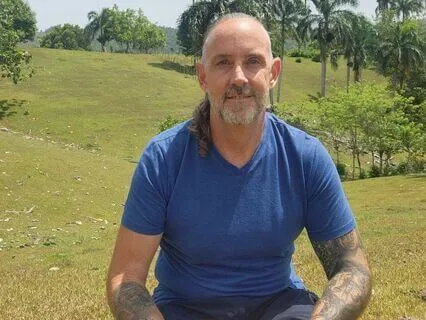
Welcome to Life,
Lessons,
And Laughter with your host,
Glenn Ambrose.
There I am.
Hey,
Welcome,
Welcome,
Welcome.
So today we're talking about the rat race.
The rat race.
That doesn't sound very good,
Does it?
The rat race.
You know,
So like,
You know,
Preparation I do.
Basically,
None.
But what I did do,
And I'm just going to do it again now because I deleted it.
Change screens.
I looked up the rat race definition.
So it says,
A way of life in which people are caught up in a fiercely competitive struggle for wealth or power.
And then there's a quote underneath using it in a sentence.
They quit the rat race in order to live a simple life.
Hmm.
Hmm.
Interesting.
So.
Yeah,
I wanted to talk about this because the rat race is what most people are caught up in.
Right.
And like,
I was thinking.
That.
This mentality.
Has slowly crept into society.
And.
Taking it over,
Really.
You know,
Like,
I remember.
It always amazes me,
Like my generation really amazes me because,
Like,
We're the ones that are the parents and the bosses and the,
You know,
Like.
We're the ones that are in charge of everything.
You know,
That's just our age at this particular moment in history.
And we often think back about how we grew up and how wonderful it was and how simple it was.
And all these wonderful things about it and how our values were different.
And then we compare them to the values of today's society.
And we are.
We say that today's society is all messed up.
Right.
And that amazes me because,
Like,
We're the ones that are in charge of everything.
So if anybody's morals or values have changed since we were children,
It's our fault.
Like,
We're the ones that are changing the values and the morals.
We are the ones that are the bosses.
So we dictate what happens in a workplace.
We are the ones that are the parents.
So we are dictating the way the children are raised.
So we are basically this is our time in human history where we had basically our generation is basically dictating everything that transpires in the world.
And we look at the world and we don't like what we see.
And instead of turning within and working on ourselves,
We point the finger outwards like society is some magical thing that just happens.
We forget that society is a group of people.
That's what makes a society.
The people within it determine what happens in the society.
So it's us.
We're determining what happens in our lives.
And we don't like it.
And we're just not taking responsibility for it.
So,
Like,
You know,
Change always begins with taking responsibility for where you are and how you got there.
So,
Like,
When I was young,
The rat race was,
You know,
Like I said,
The rat race.
I mean,
The term isn't a pleasant one.
You know,
It doesn't imply anything good.
Otherwise,
They would have called it the lovely dove race or something.
It's the rat race.
Rats generally have a negative connotation attached to them.
So this it's not a good thing.
And yet it has crept its way into our daily lives.
And for us not taking responsibility for our own lives,
We just say,
Oh,
You know,
It's happening to me.
Like,
Oh,
I'm in the rat race.
It's not my fault.
I have to live like this.
It's how things are.
I have no choice,
Which isn't true.
And,
You know,
So it's this is when I noticed,
Like,
The terms like the rat race or keeping up with the Joneses.
Like,
When I was young,
These were cautionary tales.
These were things that the generation before us warned us of.
They said,
Don't do that.
Don't waste your life getting caught up in a rat race.
Don't spend your time trying to keep up with the Joneses.
Because,
Like,
If you're constantly comparing yourself to other people,
It's going to lead you to make poor choices.
You're not live the life that you want.
Don't worry about what the neighbors are doing.
If the neighbors have a new car,
It doesn't mean you need a new car.
Don't worry about them.
You just live your life,
Stay in your lane,
You know,
Pay attention to what you need,
What's important to you.
So these were cautionary tales.
And when I look at society,
Somehow they've turned into a way of life.
They're not cautionary tales.
Nobody's avoiding it.
Nobody's trying to avoid the rat race.
Everybody has said,
Just accepted that the rat race is how we have to live life.
So they just go in.
They don't even try to avoid it anymore.
They just rationalize why,
Well,
It's not my fault.
It's just,
It's life.
Life is what we make it.
You know,
We got to stop handing the steering wheel over to this magical thing called society or life or all these other things that make us feel that we don't have any control over our lives or how we live it.
Because that's what it does.
It feels good in the moment because we don't have to take responsibility for anything.
Oh,
You know,
Not my fault.
That's life.
No,
It's not.
It's not life.
Nothing is life.
It's just,
Except what you make of it.
You know,
There are people all over the world that live differently.
You know,
This is one of the things I like about travel and being in a different culture.
It's like you see people literally living differently.
And it expands your mind.
So you go,
Oh,
I could live differently.
You know,
That's the thing with,
I think,
Where we are in human history is that it's just,
You know,
I've used this reference before.
It's the frog boiling in the hot water.
It's like,
You know,
If you throw a frog in hot water,
It jumps out.
But if you put it in cold water and then slowly turn up the heat,
It just stays in there and boils to death.
And that's what we're doing.
We're just boiling to death.
Like things are getting worse and worse and worse.
And our lives are more void of joy and happiness than they've ever been.
And people work more than they ever have.
And we buy things that we don't need.
And we keep up with the Joneses.
And we don't even acknowledge we're keeping up with the Joneses.
We just do it.
It's just acceptable.
It's just,
You know,
Like I was talking to some different people about this.
And I was saying,
You know,
What I noticed is like,
You know,
Not here in the DR,
Of course.
But when I go back to visit the United States,
It's like nobody has a car with a dent in it.
You know,
And to me,
That's very telling of the society that we're living in.
It's all cosmetic.
Like when I was a kid,
You always saw cars with dents in them.
Not everyone.
Like my father used to really like taking good care of his things.
Which I think,
You know,
I think that's a good idea.
Long story short.
I think that's a good thing.
And I adopted taking care of my things.
And I taught that to my son to take care of his things.
And that has served three generations very well,
I believe.
So that's all well and good,
Right?
That's something that's functional and it's working.
So let's leave it.
But so,
Like,
You know,
I don't remember my father having a car with a dent in it.
Like,
I just don't.
I also don't remember him getting dents in the car.
You know,
Maybe that's why.
I don't know.
But my point is I'm talking in generalities.
I'm talking in society as a general rule.
If you woke up in the morning in my little Massachusetts town that I grew up in.
And drove around,
Ran a couple errands,
Stopped at the convenience store or whatever.
And you had your eyes open.
You were looking around.
You would see some cars with old paint jobs sometimes.
You can tell that they look like they had never been waxed before.
The paint was all oxidized off of it.
You would see cars with half fixed up because people were working on themselves.
Working on the car themselves to fix the car.
So,
You know,
One door was all primered and it didn't match the rest of the car.
Dents in the car.
Missing hubcaps.
This was the type of thing that you would see every once in a while.
Not every car,
You know.
But,
I mean,
If you were out.
Like,
Let's say you saw 500 cars out and about.
Just including traffic.
Everything.
In one day.
You saw 500 cars.
You'd probably.
I would probably guess that maybe a quarter of them.
At least a fifth of them.
If you saw 500 cars,
You'd probably see 100 that had something wrong with them.
Cosmetically.
Either a missing hubcap.
Or a faded paint job.
Or a dent in it.
Or something.
You know.
Probably 25% of the cars or something probably had something like that.
And it just was.
You know.
I never see that in the United States.
Ever.
Like,
I mean,
Maybe one out of 20,
000 cars.
Might have a dent in it.
It's just very rare.
And to me,
This is telling.
Because it's just.
This is what I mean by the frog in the hot water.
We don't even know we're doing it.
We don't even know we're doing it.
So,
Like,
What we're doing.
So,
Let me see if I can kind of paint a picture here.
Most people think that they want to work less.
They're living paycheck to paycheck.
And they don't like that.
They have no extra money.
They have to work jobs that they either don't like.
Or they work their jobs too much.
And they feel that it's not their fault.
Because they need to just to get by.
Right?
And the term just to get by has completely changed over the last 40 years.
And it doesn't seem like people are realizing that.
Just getting by when I was a kid was,
You know,
Eating generic food.
Never going out to restaurants.
Leaving a dent in your car.
Like those things.
You didn't waste money on that stuff.
Because it wasn't important.
It wasn't that big of a deal.
Now,
It's unconsciously implied that you have to do these things.
And people just do it.
Like,
They'll,
You know,
They'll have no money in the bank.
And somehow scrape together $500 to get a dent on the side of their car fixed.
Why?
Wouldn't that $500 be better in an emergency fund in case your refrigerator breaks down?
You know,
Who cares if there's a dent in your car?
And usually the rationalization is,
Well,
I want it.
I just want nice things.
Okay.
Then don't complain about working all the time.
If that's how you want.
If you would rather work all the time and be stressed out of your mind and hate your job and all that stuff.
And have a nice car without a dent in it.
Well,
Then that's fine.
You have freedom of choice.
Choose that.
But don't complain about your job.
And don't complain about working too much.
Because you don't have to work that much.
You don't have to stay at a job that you dislike.
You could not get the dent fixed.
You know?
And that's just an example.
Like I was saying,
Like painting the picture.
It's the dent in the car.
It's having a new toothbrush every three months instead of every six months.
It's a scratch on the paint of the door where the dog was scratching to get out.
It's the closet full of clothes that you never wear.
It's the three sets of sneakers and the four sets of sunglasses.
Even though they only cost $15 each.
And it's the 14 baseball hats.
And it's the little dog with the bobbly head in the back of your window of your car.
I don't know if people still have those.
But I'm just trying to think of random things that we don't need.
That people spend their money on.
You know?
And it's like you don't need a four-bedroom house in case the in-laws decide to come visit.
You could get by with a two-bedroom house or a three-bedroom house.
You know?
It's unconscious living.
You know?
I know people are good people.
And I know people have good values and good morals.
And it's just we don't think about what we're doing.
You know?
We don't think about what we're doing anymore.
We just do it.
We're just getting dragged through life in these ways.
And people aren't enjoying it.
But they're not doing anything to change it.
They're just going,
Well,
This is what life is.
It's like,
No,
It's not.
It's not what life is.
That's what unconscious life is.
Life is not happening to us.
I'm not sure where we got that mentality that life was just this thing that just happened to us.
And we couldn't steer it.
And we couldn't make good choices to make our lives easier.
You know?
I mean,
It's we have to slow down and ask ourselves,
Is this true?
And I think right now it's getting worse because of the meme mentality.
Like,
You know,
I don't know.
Man,
It's got to be at least half,
If not three-quarters of the memes on social media don't make any sense.
They just don't.
They're not true.
You know?
But they sound nice.
And that's what gets shared.
You know?
It's like,
You know,
One thing that I hear is,
You know,
I hear lots of this stuff in conversations.
So,
Like,
So,
You know,
One thing that I've heard is,
Like,
When it comes to children,
Right?
People don't slow down and try to figure out what they're doing as a parent.
You know,
I know you all love your children.
And I know that you have good intentions.
But the good intentions,
You know,
The road to hell is paved with good intentions.
That's a statement for a reason.
The road to hell is paved with good intentions.
If you look at that and you dissect it and you understand what that means,
That actually makes sense.
It means that you can have the best of intentions.
But if you're not making conscious decisions around those intentions,
You're going straight to hell.
It's not literally straight to hell.
It's just a bad thing to do.
That's all that means.
Okay?
You know,
The road to hell is paved with good intentions.
That just means bad things can happen even with good intentions.
That's all it means.
So,
And that makes sense.
Because I see it all the time.
Like I said,
I mean,
Very rarely do I meet somebody that I'm like,
Wow,
That's a bad person.
You know,
Most people are good and most people have good intentions.
So why are people making poor decisions all the time if their intentions are so good?
It's because they're not thinking them through.
So everybody has good intentions.
Everybody loves their children.
Right?
But very few people,
It seems to me,
Slow down enough to think about what is my goal in raising my child?
And then making sure that their short-term actions support the long-term goal.
We don't even do it with our children.
And we love them the most.
Let alone do it when we make a decision whether we want to buy a car or a house or change jobs.
We just don't think anything through anymore.
And make sure that our short-term action supports our long-term goal.
So we just pay attention to memes.
Instead,
They're quicker.
They're easier.
Unfortunately,
A lot of them have really good intentions.
They sound good on the surface.
But they have no depth to them.
They don't actually make any sense.
So,
Like,
One of them is,
You know,
One thing I hear is,
Like,
That seems to have become a norm in society now,
Which wasn't before.
Is,
Like,
Oh,
When your kids are going to college,
They shouldn't have to worry about money.
They should be able to focus on their studies.
Now,
You know,
Hey,
In certain situations,
There might be some truth to that.
You know,
I don't know.
I would have to think about it,
You know.
I wasn't in that situation.
Like,
If I was making tons of money and I just had,
You know,
I had no worries about money.
I was a multimillionaire.
Everything was paid for.
I was in a good financial setting.
My kid's going to college,
And he wants,
You know,
I don't know,
$100 a week spending money or something.
And I go,
Hey,
It's not even a dent,
Whatever,
Sure,
You know.
And I start doing something like that.
Eh,
Maybe.
Maybe I would have.
Maybe I wouldn't have.
I wasn't in that situation.
So,
I can't answer that.
But my point is,
You can make any choice you want,
But think it through.
See,
We don't think it through.
So,
What happens when we don't think it through is,
Like,
Let's say you do give your kid money so they can focus on their studies.
Okay,
Cool.
Are you teaching them responsibility with money in any other way?
Or are you teaching them responsibility in general in any other way?
Did you teach them responsibility as they were growing up?
So,
When they're 18 and they go off to college,
Like,
They have some foundational understanding of finances and responsibility.
And they don't just run around pissing money away because it feels like it's just a genie bottle that that's what their parents are.
You know,
Like,
We don't slow down anymore and think about what we're training our children to do.
Like,
When are they going to learn responsibility?
When they graduate college?
Like,
They're 22 and they get their diploma.
And then on the backside of their diploma,
They get responsibility too?
No,
Responsibility has to be taught.
And you can use whatever situation you're in.
Like,
If you've got money and you want to help them focus on their studies,
Okay,
Fine.
Let them focus on their studies.
Teach them responsibility in a different way then.
But teach them responsibility.
Teach them not to piss money away.
Like,
Don't give them $500 a week or $100 a week.
And then as soon as they piss through that,
You give them another $100.
Because they don't learn to live within a certain amount of money.
They don't have any value of money.
So,
Then when they go out making it,
They're just going to fall into the rat race.
And just spend everything that they have and then wonder why they don't have any.
It's like,
Geez,
I don't know.
This never happened to me before.
I've always had money.
Well,
Yeah,
That's because your parents always gave it to you.
That's not actually how life works.
Like,
You know,
Teach your children how life works.
Nobody hands you anything.
You know,
It's funny.
Today I just happened to hop on social media a little bit.
And I saw this thing about Shaquille O'Neal.
And he said,
It says that,
You know,
I don't know if this is true or not.
But it says that Shaquille O'Neal doesn't give his children any money.
He tells them,
I'm rich.
We're not rich.
I'm rich.
He earned it.
So,
He says,
You know,
Your job is to go get an education.
I don't care what you do.
Do whatever you want.
But you get your education.
And if you come to me with a business plan that's well thought out and has merit to it,
Then maybe I'll invest in it.
But I'm not giving it to you.
I'm not giving you money.
I might invest in your business and help you out that way.
But you have to do what it takes just like anybody else that wants me to invest in their business.
I'm not just going to give you money and then watch your business fail.
You know,
Because who has,
You know,
This mentality,
Like I don't know if this is true with Shaquille or not.
I would venture to say it probably is.
He seems like he was raised with some pretty strict moral values that he feels important to pass to his children.
But I could be wrong.
But let's just say it is true.
Like he slowed down and thought about who do I want my children to become when they get older.
That's why he's doing it.
There's a reason to it.
You know?
It's like now most people are just doing whatever they can.
If I make a million dollars a year,
Well,
Then I can spend a million dollars a year.
Oh,
This is good.
I don't have to think about anything.
I don't have to work.
What are you creating when you do that?
What are you showing your children?
What are you teaching them?
There's no responsibility or hard work or like you're not teaching them anything.
You're just giving them a free ticket.
And then when they get into adulthood and they don't know what the hell they're doing and they're running around whining and complaining and they're broke and they can't do anything and you have to bail them out and you're like,
Oh,
I can't believe I got to bail all my children.
I don't know what's wrong with these kids.
I tell them to watch your money.
Yeah,
You tell them to watch your money,
But you don't show them how to watch your money.
Like kids don't listen to what we tell them.
I mean,
When they're young,
They do.
But like as they get older,
They listen less and less.
They learn through their own experiences just like we did.
So,
You know,
Let them suffer at a young age.
Let them be at college and have no food for two days and have to beg from their roommate and other people.
Then maybe they might think twice and go,
Geez,
I should watch how I spend my money.
They're not going to die.
They're not going to die if they don't eat for two days.
And I'm sure they're not going to go two days without eating,
Guaranteed.
But at least they'll suffer a little bit and say,
Hey,
Maybe I should be a little bit more cautious with my money.
Isn't that better than learning when they're younger as they're going through experiences and suffering small consequences that really aren't that big of a deal than waiting until they get to adulthood where their decisions make a lot more.
Like what happens when they're older and they want to go start a business and they're like,
Dad,
Give me $500,
000 to start my business because I need that.
And they go,
Oh,
Okay.
So you give them $500,
000.
Then they're like,
I want a big clock in the lobby.
I want to pay everybody $10 more an hour than they're worth because I'm such a wonderful person.
And I'm going to buy coffees for everyone every day.
And then next thing you know,
$500,
000 is gone and their business is tanked.
You just lost $500,
000 and you've got to bail them out again.
You know,
This type of stuff happens and people look at it and go,
I don't know how it happened.
Because you didn't think things through.
You didn't teach them to be responsible member of society.
Just gave.
You know,
So we have to think things through.
Why are we doing what we're doing?
Like I said,
If we do this with our children,
Our most precious commodity,
Can you see how we do it everywhere else too?
You know,
Like my dog scratched up my door.
That's where I got that example.
You know,
I'm leaving it.
Like one time I painted it.
But it was because I had some leftover paint from when I painted the interior of the house.
And I think I still might have some of that leftover paint.
And you know what?
I have no intention of painting it.
And you know what?
When I look at the door and I see a scratch on it,
I'm like,
You know what?
Good.
Good.
It doesn't matter.
It's a door.
The job of a door is to open and shut.
And I could give two craps if it has a scratch on it.
In fact,
I like it because it's a symbol that I am not making poor decisions.
And it doesn't have anything to do with the money.
I could paint that door.
It doesn't affect me.
It's just that it's a symbol that I am slowing down and disconnecting from the matrix in more developed societies where people run around doing these things and are unnecessary and then wondering why they have no money.
I'm looking at it going,
I don't care if it has a scratch on it.
And if somebody ever came over here and visited me,
My parents came over and visited.
Very nice things.
Very clean.
Everything's painted.
You know,
I'm not saying that everything,
Having nice things and having everything wonderful is bad.
That doesn't mean you're living irresponsibly.
My parents are a good example.
They live very responsibly.
They're very fiscally,
Financially responsible,
And they have nice things.
Okay,
Cool.
If you can do it that way,
Fine.
But I'm talking about the people whose quality of life is diminished because of things like painting the door and fixing the car and three pairs of sunglasses and their kid having the $500 cleats when they're 10 years old and the $6,
000 summer camp.
And,
You know,
This is the stuff that accrues,
And it's the frog in the hot water.
We don't even know we're doing it.
It just arises.
See,
We don't look into things anymore to determine if they are a good idea for us at this time.
That doesn't happen.
It's just mostly,
Like,
What's everybody else doing?
Well,
All the starters on the soccer team have $500 cleats,
So now I have to figure out how to get $500 cleats.
My car has a dent in it.
I don't see other people's cars with dents in it,
So I have to fix a dent in my car.
Like,
At no point do we slow down and think,
Like,
Is this a good idea?
We just do the next thing that society has somehow determined as acceptable.
And if you think about what's driving society,
It's advertising.
You know,
Like,
I haven't watched TV in,
Like,
20 years almost.
So,
Like,
I'm so removed from,
Well,
The news in 20 years.
TV,
I don't know,
10.
But,
Like,
I'll stream movies and stuff.
I'll stream stuff.
But the only time I get to see commercials usually is when I'm watching sports,
Which I like to do.
When I'm watching sports,
I see these commercials,
But I went so long without them,
And it's,
You know,
I'm not inundated by them,
Plus I'm living in a different culture,
So I see them differently.
And the commercials are,
Like,
Everything is selling a better life.
Nobody's selling a product anymore.
You know?
Like,
You know,
You have to buy a particular water,
And then they show what your life is going to look like if you buy a specific water.
And all the drugs.
Like,
We get desensitized to things,
And we don't even know it.
You know,
Everything is a better life now.
All the commercials show people happy.
You know,
Anything can be happening.
They could have some horrible disease or they could total their car or,
Like,
Whatever,
And they're going to show people,
Like,
In the beginning miserable and then really happy at the end,
Implying that if you buy their product,
You're going to,
You know,
They connect with you because you're feeling miserable now,
So they're like,
Oh,
Miserable,
Yes,
Oh,
Yes.
Okay,
Product.
Okay,
Happy.
Oh,
So me miserable,
Me buy product,
Me get happy.
And it's just constantly fed.
And on an unconscious level,
Like,
On a conscious level,
If you talk to people and you go,
Is that true?
You know,
Can you buy happiness?
Will this product make you happy?
And if they slow down and think about it,
They're going to go,
No,
That's absurd.
Of course not,
Right?
That's because people have brains.
So,
Of course,
If they actually engage it and think about it,
They're going,
But that's not how we function.
We function on an unconscious level.
We just,
Next thing,
Next thing,
And we don't slow down to think,
To engage that brain and make proper decisions about what we're doing.
Car's got a dent.
You got to fix it.
Well,
Do you really have to fix it?
Like,
Is that going to make you work another three weekends of overtime that you really don't want to do when you could be home relaxing with your family?
You know,
What's important in life?
A car without a dent or having a happy life?
We don't put any energy towards having a happy life or a joyful life.
All our energy goes to what we think is necessary.
And what we think is necessary has become a different thing,
And that's the point of this podcast.
When I was a child,
What we deemed necessary was closer to necessary.
You know?
It was.
Like,
I remember,
You know,
Like I said,
My father always liked to have nice things and take care of his things.
And,
Like,
He would wash and wax his car every weekend,
You know,
Or every other weekend.
I don't know,
But regularly.
So,
Like,
So we had,
You know,
We had nice things.
Now,
If I got into one of my friend's cars that was beat up,
Now sometimes,
You know,
I would notice that they didn't have as nice of a car.
I didn't judge them as bad people because of it.
If I put any thought into it at all,
It probably would have been like,
Oh,
You know,
What's their dad do for a living?
You know,
My dad's in IT.
You know,
There's their dad.
You know,
I grew up in a town that there was a lot of furniture factories.
So maybe their dad worked in a furniture factory.
Maybe they didn't make as much money as my dad.
Maybe they had five kids in their family when we had two.
Maybe.
You know,
Maybe that had something to do with it.
Like,
If I put any thought into it at all,
Which I probably didn't,
But if I did at all,
You know,
It would be looking at the circumstances.
I mean,
I do remember,
You know,
Kind of acknowledging that some families had less money and it might have something to do with the job that their parent was working.
Probably didn't make as much money as some other job.
You know,
Like,
I mean,
I remember having those types of thoughts,
But there was no judgment towards it.
It was just like,
Oh,
That explains it.
Yeah.
You know,
What they do for a living just doesn't make quite as much money as what this person does for a living.
So,
Yeah,
Their car's old.
Makes sense.
I was hanging out with them because I liked them.
I didn't give a crap what their parents did for a living or how much money they made.
But just the fact that there were those differences growing up,
There aren't those differences now.
Not much.
You can't tell them from the external,
You know.
But what that does is it makes it seem like everybody's doing better than us.
Right?
Because,
Like,
When you're – like,
Let's say you do get a dent in the car and you're like,
Oh,
My God,
I have to fix this dent in the car.
I don't want to look like a loser or whatever.
But you don't have the money,
So you're really stressed out.
So then you're,
You know,
You're doing whatever it takes,
Maybe working overtime or putting it on a credit card or something,
Which increases your stress because now you're going into debt over this damn dent in the car.
And you're like,
Oh,
My God,
I can't believe I have to do this.
Now,
While you're going through all that stress and feeling like a victim that you have to do this and it sucks because you don't have the money,
And you – you know,
If you look at the rest of society,
It seems like they can all fix their car without going through what you're going through.
Right?
Like,
Oh,
My God,
Everybody else can fix their car.
I mean,
Really,
Drive around.
Nobody has dents in their car.
But me,
I'm broke,
And I have to go into debt to fix my car,
And then we feel like a victim.
It's like – you guys are missing the whole puzzle,
Man.
One,
You don't have to fix the car.
Like,
It's okay that it has a dent in it.
If somebody judges you because your car has a dent in it,
You don't need them in your life anyway.
They're a bad person.
Not at their core.
They're just confused.
But you don't need them in your life.
And then,
Like,
It's – you're looking at everybody else's external projection and comparing it to your internal.
Like,
You can't compare your insides to everybody else's outsides.
This is what is like keeping up with the Joneses.
Like,
We think that everybody else is sailing through life,
And they're not.
They're doing the same stupid things that everybody else is doing.
They're going into debt to pay for things.
They're working too much.
You know,
They're working 51 weeks out of the year to go sit on a sandy beach and get handed umbrella drinks for a week and then going and working 51 more weeks.
It's like,
Seriously?
We don't have to live like that.
And then everybody – you know,
Then people post the memes and they go,
I just wish I could have a simple life.
Who's complicating your life?
Like,
Whose responsibility is your life?
It's yours.
If your life is complicated,
That's your fault.
It just amazes me how much people complain and whine about what's going on in their lives nowadays.
Like,
Nothing is their fault.
When did – and again,
It's my generation.
We're the worst.
And I don't know how we were raised with all – well,
I guess I do know.
It's the frog with the hot water.
But we were raised with all these morals and values and learning responsibility and all this stuff.
We learned all that stuff.
And we've little by little let it go and just fell asleep to the dream of the planet,
And we're walking around unconsciously not living the values that we so hold dearly.
You know?
Like,
When I was a kid,
Like,
You know,
I got 25 cents allowance a week,
And that was just enough to buy one candy bar,
And that's all I got.
And,
You know,
We should go back to those times.
And,
You know,
These kids don't have any respect for money and all this stuff.
And then it's the same person that's saying that that's a good idea that doesn't teach a kid financial responsibility and just gives their kids whatever they want and then goes and works extra overtime.
It's like you're the one doing it.
If your kid is irresponsible,
It's because you didn't teach them responsibility.
It wasn't some magic trick that happened while you were busy doing something else.
There's a direct cause to each effect.
You know,
Like,
My parenting,
You know,
Like everybody else,
I did some good stuff,
And I did some not so good stuff.
Like,
The times when I did where I had the best epiphanies where it comes to parenting was when I stopped looking at my son and started looking at me.
That was when I had the epiphanies.
That's when I figured out how to handle things in a really healthy way.
And this happens in all areas of life,
Not just parenting.
Like,
In all areas of your life,
If you're experiencing something that you don't like,
That's external.
So if you just go,
Hey,
Wait a minute,
Like,
Who's in charge here?
I don't like my life.
Who's in charge of my life?
And don't allow yourself to go down these.
Well,
It's not my fault because society and inflation and all this crap,
Don't allow yourself to go down there.
Just try actually taking responsibility for your actual life for a moment and go,
I am responsible for my life.
Oh,
Okay.
So if there's something wrong in your life,
That means you're doing something wrong.
You're either looking at something wrong,
You're interacting with something wrong,
Which is fine.
It's no problem.
We all do.
None of us are perfect.
We all make mistakes.
We all have things to learn,
So you don't have to get all defensive.
That's why people don't look at themselves,
Because it hurts to look at yourself,
Because we're so judgmental.
So if we think something's our fault,
Then we feel like crap about ourselves,
And that's why we don't want to do it.
Get rid of that.
If you are falling short in some area of your life and you're experiencing negative consequences,
That just means there's something for you to learn there.
So if I'm talking to my son when he was young and I'm going like,
I can't believe I told him 10 times the same thing,
And he's still not doing it.
Then all of a sudden a red flag would go up and go,
What did you just say,
Glenn?
You told your son to do something 10 times?
Why would you possibly tell anybody anything 10 times?
That's stupidity.
That's foolishness.
That's insanity.
Doing the same thing over and over,
Expecting a different result.
Why would you do that?
Oh,
I must have lost my mind for a minute.
I wasn't thinking.
Right,
Okay,
So stop and think now and figure out a different way to address this.
And that's when I would find out,
You know,
That's an empowering question.
So this is the whole thing of it.
If you take responsibility for your life and stop just pretending things are happening to you and understand that they're happening for you,
And then you take responsibility and you try to learn and make adjustments and direct your life the way you want it to go,
That's empowering.
So ask yourself empowering questions.
So when I let go of the frustration that my son was causing me,
He's not doing this right and he should be doing this and he should be doing that and he's not doing this and he,
He,
He,
He,
He.
As long as I was there,
All I got was frustration.
I never figured out any answers.
As soon as I stopped with my frustration about him and when,
Okay,
There's,
It was me and my son in my house,
You know,
So there wasn't a lot of people to blame and to point a finger at.
So I was like,
Okay,
Wait a minute.
Now,
If,
If my house is not functioning the way that I want my house to function,
Namely through my son in this particular instance,
Um,
Whose responsibility is what happens in the house?
Be like,
Well,
That's my responsibility.
I'm the dad.
Um,
The breadwinner.
Um,
This is my house.
He's a child.
If children were supposed to make household decisions,
We would be living in a very different society.
They haven't had life experience to decide how to run lives in a human world yet.
They're still growing.
So what transpires in my house is my responsibility because I'm the adult.
So I'm supposed to be in charge in the house.
So therefore,
If somebody within that dynamic,
I don't care if it's the cat,
The dog,
Or the boy,
If one of those three isn't behaving in a way that they're supposed to be behaving,
Then that is me falling short because I am the one in control.
And once I started viewing it as that,
That it was something I was doing wrong because I'm the one in charge and everything bleeds back to me,
Then I would find out,
Figure out the solution.
I wasn't blaming life or technology or the kids these days or any other thing that sounds nice.
So we don't have to take responsibility.
It's me.
If you're the boss and your employees suck,
You suck as a boss.
That's the problem.
It's not the employees.
Why?
Because the employees don't run the company.
The boss does.
That's the whole point of a boss.
If the boss wasn't in charge,
We would save a bunch of money by getting rid of bosses.
Bosses are supposed to run the employees.
That's the hierarchy of a business.
That's what it does.
So if your employees aren't working the way that they're supposed to be working and you're the boss,
Guess what?
It's your fault.
Don't blame it on,
Oh,
It's the kids these days.
I don't know.
I gave them a raise and they're still not working.
I don't know.
I let them take three times their vacation days off.
But for some reason,
They're not taking their job seriously.
It's because you're letting them get away with murder.
I've said this before.
Everybody blames the kids that they don't have this good work ethic and all this stuff.
And they're like,
When I was a kid,
I worked very hard and never took days off.
And I was the same way.
When I was young,
I worked very hard and I didn't take days off.
And you want to know why?
One reason is because I would have been fired,
Not because I was responsible,
Not because I was this mature worker.
It was because of what was expected of me.
If I wanted to have my own apartment,
Which I did at 18,
Food,
Beer,
Which was a high priority back then,
Then I needed to figure out how to stay employed.
Because if I wasn't employed,
I wasn't getting that stuff.
I was going to end up back in my parents' cellar where I didn't want to be.
If they would even allow me to be there.
Like I said,
It's cause and effect.
Please,
Please,
Please,
Let's slow down and think things through.
What are you doing?
Why are you doing the things that you were doing?
We're moving so fast.
This is part of the problem.
We distract ourselves from taking responsibility for our own lives and blame it on external factors.
And we're so busy moving so quickly to the next thing,
To the next thing,
To the next thing.
We don't even stop and realize that we don't even have to do half the stuff we're doing.
You know,
The people over here are happy,
Like in the Dominican Republic.
And do you know what I see on a regular basis?
Kids skipping school to bring a load of cattle over to a different area of grass to feed on.
I see kids in their underwear on the side of a road on Tuesday morning at 11 o'clock playing with a stick.
And these people are happy.
You know,
My point is,
Is like,
It's just,
We do so much stuff that is unnecessary and it's not working.
Like,
Like if it was working,
If,
If,
If I looked at,
If I lived in the DR,
Which I do,
And then I,
I go visit the United States and I go,
Geez,
United States,
Everybody's much happier there.
You know,
Yes,
They work a lot,
But they have nice things.
They're happy.
They live these wonderful lives.
And,
And,
You know,
Boy,
America,
The American dream,
That's alive and well there.
Geez.
You know,
I might come back over to the Dominican Republic and be like,
I don't think I want to live here.
I think I want to live in America.
Or I might be like,
Hey,
You know,
Maybe I'll bring some of these wonderful techniques that the United States has found and bring them over to the Dominican Republic so we can enhance their lives.
This is not what's happening.
I go over to the United States and everybody's angry and irritable and overworked and distracted and in the victim mentality.
And I can't wait to get the hell out of there and get back over here.
To where people are actually happy.
I don't want to bring the United States over to here because what's going on in the United States doesn't work as far as I'm concerned.
I don't care how tall the buildings are.
I don't care how much money is paved in the streets.
What I care about is,
Are people happy?
And they're not.
So what we're doing isn't working in a developed countries.
It's not just the United States.
It's not working.
When are we going to stop and just shift and start doing the things that do work?
Prioritizing our happiness instead of prioritizing,
You know,
A third pair of sunglasses.
I know it sounds silly,
But I mean,
It's literally what's happening.
Because it sounds silly because we're not.
On a surface level,
It is silly.
But it's literally the way most people live their lives because they don't slow down enough to think things through.
They just do what everybody else is doing.
It's the rat race.
I have no control.
Are you sacrificing your quality of life?
Because you think somebody might judge you because you have a dent in the car?
Like,
Maybe you should work on your self-esteem.
I don't know.
I don't know.
I don't know.
I don't know.
I don't know.
I don't know.
I don't know.
I don't know.
I don't know.
I don't know.
I don't know.
I don't know.
I don't know.
I don't know.
I don't know.
I don't know.
I don't know.
I don't know.
I don't know.
I don't know.
I don't know.
I don't know.
I don't know.
I don't know.
I don't know.
I don't know.
I don't know.
I don't know.
I don't know.
I don't know.
I don't know.
I don't know.
I don't know.
I don't know.
I don't know.
I don't know.
I don't know.
I don't know.
I don't know.
I don't know.
I don't know.
I don't know.
I don't know.
I don't know.
I don't know.
I don't know.
I don't know.
I don't know.
I don't know.
I don't know.
I don't know.
I don't know.
I don't know.
I don't know.
I don't know.
I don't know.
I don't know.
I don't know.
I don't know.
I don't know.
I don't know.
I don't know.
I don't know.
I don't know.
I don't know.
I don't know.
I don't know.
I don't know.
I don't know.
I don't know.
I don't know.
I don't know.
I don't know.
I don't know.
I don't know.
I don't know.
I don't know.
I don't know.
I don't know.
I don't know.
I don't know.
I don't know.
I don't know.
I don't know.
I don't know.
I don't know.
I don't know.
I don't know.
I don't know.
I don't know.
I don't know.
I don't know.
I don't know.
I don't know.
I don't know.
I don't know.
I don't know.
I don't know.
I don't know.
I don't know.
I don't know.
I don't know.
I don't know.
I don't know.
I don't know.
I don't know.
I don't know.
I don't know.
I don't know.
I don't know.
I don't know.
I don't know.
I don't know.
I don't know.
I don't know.
I don't know.
I don't know.
I don't know.
I don't know.
I don't know.
I don't know.
I don't know.
I don't know.
I don't know.
I don't know.
I don't know.
I don't know.
I don't know.
I don't know.
I don't know.
I don't know.
I don't know.
I don't know.
I don't know.
I don't know.
I don't know.
I don't know.
I don't know.
I don't know.
I don't know.
I don't know.
I don't know.
I don't know.
I don't know.
I don't know.
I don't know.
I don't know.
I don't know.
I don't know.
I don't know.
I don't know.
I don't know.
I don't know.
I don't know.
I don't know.
I don't know.
I don't know.
I don't know.
I don't know.
I don't know.
I don't know.
I don't know.
I don't know.
I don't know.
I don't know.
I don't know.
I don't know.
I don't know.
I don't know.
I don't know.
I don't know.
I don't know.
I don't know.
I don't know.
I don't know.
I don't know.
I don't know.
I don't know.
I don't know.
I don't know.
I don't know.
I don't know.
I don't know.
I don't know.
I don't know.
I don't know.
I don't know.
I don't know.
I don't know.
I don't know.
I don't know.
I don't know.
I don't know.
I don't know.
I don't know.
I don't know.
I don't know.
I don't know.
I don't know.
I don't know.
I don't know.
I don't know.
I don't know.
I don't know.
I don't know.
I don't know.
I don't know.
I don't know.
I don't know.
I don't know.
I don't know.
I don't know.
I don't know.
I don't know.
I don't know.
I don't know.
I don't know.
I don't know.
I don't know.
I don't know.
I don't know.
I don't know.
I don't know.
I don't know.
I don't know.
I don't know.
I don't know.
I don't know.
I don't know.
I don't know.
I don't know.
I don't know.
I don't know.
I don't know.
I don't know.
I don't know.
I don't know.
I don't know.
I don't know.
I don't know.
I don't know.
I don't know.
I don't know.
I don't know.
I don't know.
I don't know.
I don't know.
I don't know.
I don't know.
I don't know.
I don't know.
I don't know.