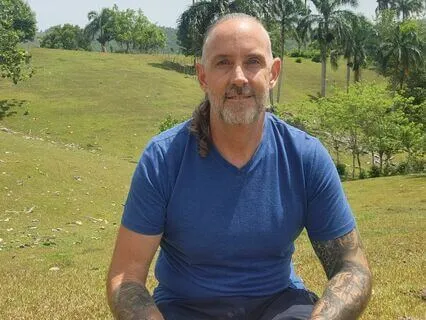
Welcome to Life,
Lessons & Laughter with your host,
Glenn Ambrose.
Hello,
Welcome to the show.
Hope you're all doing well.
So,
Today we got a big one.
This one's been brewing.
Coexisting is our topic.
Coexisting.
Excuse me.
I still have this little.
.
.
I was a little sick there.
My God,
It's been a while.
A couple weeks ago,
I think.
But still kind of getting rid of the stuff in the chest.
So,
Please excuse me.
But coexisting is the topic today.
It's come in.
.
.
This topic has come in several ways.
It's funny.
I didn't know I was going to call it coexisting until 60 seconds ago.
All of a sudden,
It was like.
.
.
I was trying to find a word to represent a lot of this.
And coexisting popped up.
So,
I was like,
Of course.
It's perfect.
Coexisting.
The way that I'm addressing this topic today is.
.
.
There's a lot of talk about boundaries.
In spiritual living and self-help.
People that are working on themselves and trying to take responsibility for their lives.
And not be victims.
We have to learn boundaries.
That's gigantic.
It's huge.
It's a giant aspect of what we need to do.
We need to be able to set boundaries.
We need to be able to teach people how to treat us.
And we have to stand firm in those boundaries.
And there has to be consequences if those people do not respect the boundary.
That's one of the biggest.
.
.
I'm not going to go into boundaries too much.
But I do want to give a little overview.
The biggest problem with boundaries.
With people who struggle with boundaries.
Is that they don't actually set boundaries.
They make suggestions and they call them boundaries.
That's the biggest problem.
Bar none.
With people setting boundaries.
I can at least.
.
.
I bet you it's 99% of the time.
If somebody says that they tried to set boundaries but it didn't work.
That's always the reason why.
I don't even know if I can come up with another reason.
Well,
I tried to set boundaries.
The only other way a boundary wouldn't work.
Is if you never actually told anybody.
But then I think most people would know that that's not a boundary.
A boundary has to work.
Always.
Every time.
That's the whole point of a boundary.
A personal boundary is impassable.
You can't not respect a boundary long-term.
Somebody could not respect a boundary short-term.
Momentarily.
But that's not the end of the boundary.
So it's not over if somebody disrespects a boundary.
That just means the consequence of the boundary needs to be enforced.
That's all.
So if somebody yells at you.
And you say,
Listen,
I can't have you yelling at me.
It's just I don't function well when people yell at me.
It's not a way that I'm willing to interact.
So we can't have the yelling.
And then they continue yelling at you.
You can't sit there and say,
I tried to set a boundary and it didn't work.
That was a suggestion.
So when you set a boundary,
If somebody doesn't respect the boundary.
Then you have to implement the consequence.
Depending on the scenario,
You can often let people know.
And I think that this is a good idea in many situations.
Let people know what the consequence is.
If they cross your boundary.
As you address it.
Sometimes you don't have that opportunity.
Especially if somebody is yelling at you.
You're not going to be like,
Listen,
Let's have a discussion about you yelling at me.
No,
They're already upset.
They're in the midst of the thing.
So those you just kind of got to do on the fly.
Listen,
Please don't yell at me.
I don't care what you say.
Listen,
If you continue yelling at me.
I'm just going to hang up the phone or leave the situation.
Because it's just I'm not going to be yelled at.
I'm just not going to be yelled at.
Because I'm making it about me.
I'm not going to be yelled at.
I'm not saying you shouldn't yell at me.
As soon as you do that,
It's about them.
You shouldn't do something.
You're wrong.
The way you look at things.
And what you think is right is wrong.
That's an attack on them.
And they're going to defend.
Make it about me.
No,
I just don't allow people to yell at me.
That's my thing.
It's just one of my things.
I don't communicate well.
So it's just not going to happen.
So if you continue,
I'm just going to have to leave.
And then you leave.
Or you hang up.
If they continue.
If they call back.
I've done this.
They call back.
And they're like,
You just hung up on me.
I'm like,
No,
You're still yelling.
I'm going to hang up again.
If you continue yelling,
Screw you.
Click.
Call back.
Hello.
Click.
Call back.
Hello.
And then usually at that point,
It's a little quiet.
Hello.
Okay.
I'm going to try not to yell.
Okay.
Great.
And then you can continue the conversation.
And that can vary.
You might have to block them.
Whatever.
And in a lot of situations,
You can let people know if there's something serious.
And you have to be like,
Listen,
We can't continue on this way.
We have to have a boundary.
I'm not going to have that in my life.
So this is the boundary.
And if you cross it,
Then I'm sorry.
But I'm not going to be able to have you in my life.
I don't know what.
If you have somebody in your life that's stealing from you.
With these types of boundaries,
I kind of flash towards like adults with adult children.
I see that a lot in that dynamic.
These adult children just manipulate and walk all over the parents.
And these parents don't know how to set boundaries,
Especially because the child is an adult.
And it's like,
Well,
Wait a minute.
If they're over 18,
You don't have to keep them in your house.
And even if they're under,
There's always a boundary that you can set.
So we have to be careful.
We're not enabling people.
That's a lot of where the boundaries can set in.
So let's say you're having an issue with an adult child,
Just so we have some sort of example to understand the concept.
But you can apply this in anything.
Sometimes it happens in romantic relationships,
Parent-child relationships,
Even outside the house.
All kinds of situations.
Friends.
So we'll go with the adult child.
If you have an adult child and you need to set a boundary,
Maybe it's a severe boundary.
Maybe they keep taking your car.
Or maybe,
I don't know.
So you say,
Listen,
If this happens again,
This is the consequence.
And maybe the consequence is you can't come home for a week.
I don't know,
Man.
It all depends on the particular situation.
But whatever.
There's a consequence is my point.
So that's one possibility.
And then you can actually have people be like,
If this happens three more times,
You need to move out.
Because I'm not going to have this in my life.
I'm just not going to live like this.
So sometimes that has to happen.
I mean,
Usually in a situation like that,
I don't think that should be option one or consequence number one.
I think you should be able to work through things and stuff and blah,
Blah,
Blah.
And then set boundaries.
Which comes to the main part of my topic.
Because quite honestly,
Coexisting has two parts.
And one of those parts is what I was just talking about.
Boundaries.
The boundaries has been covered in detail in my boundaries podcast,
Which I believe is one of my most listened to.
So that's worth listening to for sure if you're not familiar with it or if you want to get my take.
Or if you haven't heard it in a while,
Go check out the boundaries podcast.
And a lot of places you can put in a keyword and search the different ones.
And some other podcasts,
I've done over 300.
So some of the other podcasts may touch on boundaries.
I can't keep track of all the ones that I've done.
So you can search keywords.
But that's one option to do.
So I'm not going to go into it too in depth.
It's just coexisting has two aspects.
One is boundaries.
One is getting along with other people.
And just like most things in this world,
We have overcorrected and or we have not looked at both sides of the coin.
Most areas where we mess up when we're working on ourselves,
In my opinion,
Is one of those two things.
So when we are doormats,
So,
You know,
I'll give you an example with what we're talking about.
So if we are a doormat,
That takes energy,
Right?
So so that is it takes energy to live dysfunctionally,
Not in the flow of life.
So if we're a doormat,
Like the pendulum is over to the right,
You know,
And it takes energy to hold that up and be dysfunctional.
And then we go,
OK,
I'm done being a doormat.
I'm going to set some boundaries and we release the energy of being a doormat.
Right.
And those of you watching the video can see.
As soon as I let go of that pendulum,
The swings were first too far to the other side,
Too far to the left.
Right.
That pendulum overcorrects.
Why?
Because it was so much energy required to hold it up in a dysfunctional state.
It automatically overcorrected and just swung too far to the other side.
But that's where we are with boundaries,
In my opinion.
We set too many boundaries.
You know,
People like the way it sounds.
People are sick of being doormat.
So they're like boundary,
Boundary.
No is a complete sentence.
No,
It's not.
No is a complete sentence for somebody who is being rude.
Somebody that won't explain their actions and talk to you and explain their perspective so you understand why they're saying no.
As a general rule,
That's just rude.
Now,
Don't get me wrong.
If you've explained your perspective.
And they don't want to listen.
Well,
Then no is enough.
Hey,
I explained it to you.
You don't want to listen.
I don't really care if you agree with me or you understand that's the boundary.
So no,
But no from the start gate.
That's just rude.
So we've overcorrected and set boundaries and boundaries.
And boundary setting is enormously empowering when you learn how to do it.
And so that feeds it,
Too.
So I think we've gone swung too far in the boundary area.
And it's time for us to come back into the middle.
So we either overcorrect.
Right.
Or we don't balance between two things,
Which is often the same thing.
You know,
It's kind of two ways of saying the same thing,
Especially in this scenario.
So we're trying to balance between two things.
So always ask yourself,
What are the two things I'm trying to balance?
We often find a tool that works in life.
And then we latch on to that tool like it's the answer for everything.
It's not.
It's always a balance between two things.
We're always seeking balance.
This is a world of yin and yang.
That means there's two sides to every coin.
You know,
This this healthy masculine energy and toxic masculine energy,
This healthy feminine energy and as toxic feminine energy like everything has two sides here.
So we're always looking for a balance between everything.
So always look for the two sides.
What's the other side of of boundaries?
The other side of boundaries is learning to get along with people.
Like this is a skill that we've forgotten because we don't live in very close communities.
You know,
Like like ancient civilizations,
These these communities,
These people who live in small villages and or sometimes multiple generations within one dwelling.
They learn to get along with each other.
Like you had grandchildren.
Or great grandchildren and grandchildren and children and parents and grandparents all living in the same house.
Or the same tiny little village interacting with each other all the time,
Getting on each other's nerves.
They had to work through that.
We don't work through anything anymore.
We just cut people out of our lives left and right.
Now,
There is a time where it's OK to cut people out of your life if they won't.
But it needs to be based on respect.
See,
That's what the boundaries actually are about.
It's about respect.
And that's what getting along with other people requires is respect.
So let's find out if that's possible before we run around setting boundaries and kicking people out of our lives.
Will they respect me?
Which in some cases you need to have a boundary to find that out,
To let them know that you're serious because your words don't really mean much.
And if people don't respect your words,
Don't get mad at them.
People don't respect people's words.
When people don't stand behind their words.
OK.
We have to.
This is radical responsibility,
People.
If you're fine,
If you tell somebody,
You know,
No,
We've got to be careful.
It's a balance between two things.
Right.
You don't want to go too far in one way.
Like so if you have somebody's attention and you've expressed to them that this is really important for you and they still disrespect you.
Every once in a blue moon,
Somebody is going to forget because they're caught up in their own head doing their own thing and they might need to be reminded.
OK,
So that's the flexibility of trying to learn to get along with people.
But as a but that,
You know,
Most people,
When they're really upset about that,
They've already been through that.
Right.
So most times when people will not don't respect your word is because you don't stand behind your word.
There's no consequence if they don't listen to you.
So actually what they're what you've been doing in the past is teaching them to not respect your word.
And then you get upset when they don't respect your word.
Well,
It's because you taught them that you said,
Hey,
Don't do this.
And they did it anyway.
And nothing happened except you got upset over in a corner and they didn't even know or they didn't know.
And it just doesn't affect their life.
So they don't care.
You know,
And then that happens over and over and over.
And people like,
I don't know why they won't respect me.
It's because you say things and then there's no consequence.
You don't back it with anything.
So you're basically teaching them.
And this is huge with parenting.
You're basically if you don't stand behind what you you're saying to your child,
They are going to manipulate and walk all over you.
You have to hold them accountable with their with consequences.
You know,
So so this is all about respect,
Which is the foundation of any healthy relationship.
So whether you're setting a boundary or whether you're trying to get along with somebody,
The foundation is respect.
And that's what it needs to stay as if you can keep the conversation there,
Then you're not going to get caught up on the surface.
CBS,
That's where you that's where all the arguments happen up on the surface.
You know,
It's the I use the toilet seat one,
You know,
Because this seems like it's it's just such a cliche that most people understand.
You know,
So so the cliche is that men don't understand why you should put the toilet seat down and women want it up.
So there's two different perspectives.
It's like,
Well,
Like it doesn't a man doesn't have to understand,
Quite honestly.
I mean,
If he does,
Cool.
It's probably nice to explain it to him.
So he does have an opportunity to understand.
But at the end of the day,
It doesn't matter if a man understands why you want the toilet seat down or not.
It just matters.
Do they respect you to try to do that for you because it's important to you and it's really not a hindrance in their life.
Right.
So so do they respect you enough to do that?
So it's about respect.
It's not about the toilet seat.
Everything is like that.
It's about respecting one another.
It's not about the topic.
People argue over topics all the time.
Who cares?
I just respect if this is really important to me and it doesn't inhibit your life,
Then we're good.
You know,
Or if this is a deal breaker,
I just need to have you treat me with some basic respect.
Like I cannot be yelled at.
I can't like I can't have people in my life that yell at me.
I do not handle it well.
I don't like it and it's not going to happen.
So when people yell at me that like that,
That is not going to stay in my life.
It's just it's not I guarantee it because I'm not good at handling it and things get ugly and I don't like a life where things get ugly.
And I don't I've never liked getting yelled at.
Ever.
It's just crawls up my back and I think it's I don't think it's necessary.
I don't think it like like if I served a purpose,
I would work on myself and try to,
You know,
Allow it into my life in some way.
But I don't want it in my life.
So I'm not going to try to open up so I can allow it because I don't want it.
So so it's just that we have to connect on a level of respect and that's always underneath everything.
So when when we're talking about things,
We need to we need to enhance our ability to agree to disagree.
For for one example,
That which is probably maybe the most common example of what I'm talking about.
It's OK to disagree with people.
You know,
We all want to be happy.
We all want to be healthy.
We all want to feel safe.
We all want our loved ones to be OK and to be able to eat and have shelter and experience fun.
And we all want the same things out of life.
And if we respect one another,
The actual path that the other person takes to achieve that,
As long as it doesn't impede on me and that's I'll set a boundary for that or talk,
Talk to them about it first.
Just be like,
Listen,
This,
You know,
I understand.
I'm trying to,
You know,
Come up with an example,
You know,
And I was a single parent with a with a boy.
So like,
You know,
My son was in the house and stuff was flying all over the like,
You know,
When like before Mateo moved in with me full time,
We're together a lot,
But I still had breaks.
Right.
So even if we're together four or five days a week,
It wasn't all day,
Every day,
All the time.
So like,
You know,
Might be four hours,
Right.
Like three of the days and then longer on two of the day.
But whatever.
I had breaks.
So like we used to throw things at each other all the time.
Like,
You know,
Soft things like pillows,
Those rubber bracelets we'd shoot or or a Nerf ball or something.
And then he moved in with me full time and it was just 24 seven.
And like,
I noticed myself,
I noticed myself like walking across the living room one time and I was like petrified.
Because I was like,
I was expecting to get hit with something in the head,
You know.
And I'm like,
I was all I just noticed my body language.
I was like,
Oh,
My God,
I'm all like stressed out and tight and defensive and fearful walking across my living room.
And I started laughing when I recognized that I was like that.
And I was like,
So I stopped and I was like,
Hey,
Mateo,
I was like,
We got to have a talk,
Dude.
Like we we're going to have to have just like specific play time to where we throw things,
Because like I feel like I'm in a war zone in my own house.
Like I'm like watching out for shrapnel hitting me from behind,
Like in my own house,
You know,
Like so,
Dude,
Like we got to pull this back.
Like,
I'm scared to walk across my own living room.
I didn't even realize I was getting like this,
You know.
So so you have a conversation.
Now,
If he's like,
Well,
No,
I want to throw stuff.
Well,
Then that would be a lack of respect because he's not hearing me go.
I'm scared in my own house.
We need to make a rule.
He respected me enough and he was like,
Oh,
OK,
You know,
Yeah.
Hey,
Dad,
You know,
Later it's like,
Hey,
Dad,
Can we.
Can we throw stuff?
Yeah,
Sure.
OK,
You know,
So so you can,
You know,
Talk through things like that instead of getting upset for him to you.
I can't even walk in my own living room.
I'm scared.
What's wrong with you?
You throw stuff at me all the time.
That's attacking,
Attacking,
Attacking.
We have to stop attacking people and just like explain things to people.
Like most of the time we we make changes in our lives out of frustration when we can't take it anymore.
Right.
And we have to make them out of self-love.
That's how we can make changes in our lives instead of attacking people and cutting them out of our lives all the time.
We wait until we're so angry with people.
We stop.
We don't talk about it.
We go on social media and say,
I don't know.
I don't understand why people do this to me.
Like we're a victim.
And oh,
No.
Oh,
No.
And then we explode.
I can't take it anymore.
You're out of my life.
It's like,
Well,
Where's the learning to get along?
You know,
Where's the learning to understand what the other person is saying?
I touched on this in another in another podcast.
We argue over things all the time in our society now,
And it's because we're arguing over the surface stuff.
We're arguing over politics.
That's surfacy.
We're arguing because that's a way of doing things.
We argue over the way of doing things instead of what we're trying to do.
That's why no problems ever get solved.
And we do it collectively in society and we do it individually in the microcosm in our own lives.
That's why it happens in society.
I'm telling you,
People,
If you want to find out what you need to work on in your life,
All you got to do is look at society.
Now,
This is kind of difficult to do with the mind at first.
So you got to kind of teach yourself to do it.
But if you look at society's problems,
You will look and then you look at your life.
You will see a smaller version of society's problems in your life.
And that's what needs to change.
That's what society is.
Society is a group of people.
Right.
And they think society's problems are the problem.
No,
It's all the individuals.
That's why we have to be the change we wish to see.
So when we're character assassinating people in our individual lives as a society,
That becomes a character assassination.
And like,
For example,
In lots of ways,
I mean,
Heck,
It can even become an actual assassination of somebody.
It did in the 60s.
Right.
But I mean,
Just stick with character assassination.
Like we look at our politicians and go,
How come they character assassinate each other?
Why is that OK now?
Like,
How did that become acceptable?
Why do they do that now?
It's because we do it on a daily basis.
We're constantly judging one another.
Nobody's working through their problems.
They just assassinate one another's character.
You're a Democrat.
You're an idiot.
You're a Republican.
You're a moron.
It's just all this attacking,
Attacking,
Attacking.
Nobody is trying to understand the other side or come to any conclusion or solve any problems.
That's why we don't solve anything,
Because nobody's trying to.
They're too busy arguing over the surface differences.
We should do it this way.
Well,
We should do it this way.
You're wrong.
No,
You're wrong.
It's like,
Well,
Wait a minute.
Take a break a minute.
What do you want?
What are we trying to accomplish?
There's got to be a way.
There's always a way.
What are we trying to accomplish?
Well,
I just think we should have a good leader in the White House.
Oh,
OK.
Well,
Maybe if we work together.
Like,
I don't.
Maybe if we work together,
We can change the system.
And we would if people focused on that.
But they're too busy arguing with each other to stop long enough to try to find a solution to the actual problem.
We can do this with everything.
What's the actual problem?
Well,
The problem is that there's a bunch of money and food over here,
And there's a bunch of starving people over here.
Oh,
OK.
OK,
Well,
I bet you if we stopped arguing.
And just started communicating and opening up our minds and having like normal human being conversations.
Like,
Remember the normal human being.
Remember the normal human being conversations like they still happen in some places.
I mean,
Because things do get accomplished places.
Right.
So like like let's say that there is a business.
And they bring in a team of people.
And you have let's just say there's two people to simplify it.
And you have two people and one says,
OK,
What are we trying to accomplish?
The business is a cell phone company and they want to put towers up in a new area.
OK,
Well,
The problem is,
Is that,
You know,
The thing that we have to do is put towers up somewhere.
Well,
I think we should buy the land and then put the towers on it.
And the other person says,
Well,
I think we should talk to the landowners that are already there and see if we can rent it.
Now,
Do people just sit there arguing with each other.
For like.
Six years over that.
You're an idiot.
No,
This is the way we need to do it.
No,
This is the way to know what they do is they sit there and they go,
OK,
Well,
You guys both have different ideas.
Let's do some research and back it up and then we'll reconvene and we'll discuss it further.
Oh,
OK.
So then you do a little research and you reconvene and you look at facts,
These things called facts and you look at those and you go,
OK,
Well,
This this one is financially.
This is a better move in the short term.
In the long term,
This is financially a better move.
Oh,
OK.
So we don't really.
I mean,
I don't think we have our answer because it's kind of good kind of either way.
All right.
Let's.
What are some other benefits to your way?
What are some other benefits to your way?
And then you research more and you look and you have meetings and you discuss this and then somebody goes,
You know,
Somebody usually neutral.
It's helpful to have a neutral party,
Right?
They go,
Oh,
You know,
That's not attached to either one.
They're not attached to either one.
See,
That is the beautiful.
Point is the one that's not attached to either side and just is open to hearing information for both possibilities.
The problem is when one side latches on to their side and won't listen to the other side.
Or won't come together and do a blending of ideas to come to the perfect solution.
Maybe it's half and half.
Maybe you buy half the land and you rent half the land.
Then you save a few bucks short term and you save a few bucks long term.
And it kind of comes out in a wash.
You know,
I don't know.
It's a it's a hypothetical situation.
But my point is,
Is that we have to stay open.
You know,
The Dalai Lama does a great job at this.
And I came across it when he was talking about people accusing him of being wishy washy.
And they said he's being wishy washy because he says he agrees with both sides to things.
And he explained,
He says,
I'm not being wishy washy.
He said,
It's just,
You know,
I talk about we have serious topics that affect people's lives.
You know,
He's the head of the nation and religious leader.
He deals with some pretty big topics and his voice is recognized worldwide.
So he deals with some pretty big topics.
So it's just he says when somebody is explaining their perspective to me,
I open my mind and I try to understand what they're saying when they're saying it to me.
So when they explain it to me,
If I try to understand people,
I can.
I might not agree with it,
But I understand their perspective.
So I go.
So when they finish talking and go,
Yes,
I understand.
And then the other side explains their perspective.
And when they're done talking,
Since I'm trying to understand them,
I do,
Again,
Might not agree with them,
But I understand them.
So I go,
Yes,
I understand.
And people mistake that as being wishy washy.
Like,
No,
I understand your perspective.
This is what we've gotten away from.
And this is what we need to get back to.
We need to be able to have conversations about things,
Trying to understand the other person.
That has to be the goal of the conversation to learn.
I want to find out why the other person feels this way,
Why the other person thinks this way.
I want to understand why they think that way.
Not to adopt it as my own.
That's not that's maybe I will.
Maybe I won't.
I don't know.
I don't understand it yet.
It's just to understand.
Instead,
We run around in any way that doesn't think like us is a moron.
Or an idiot.
Or just wrong.
Like,
No,
They're not.
You can't have like hundreds of millions of people leaning in a particular direction.
And have no basis for it.
There is a basis for it.
You know,
I think the political situation is a good example of this.
It's like,
You know,
When I first looked at Trump,
I'm like,
Are you freaking serious?
I can't believe,
You know,
I mean,
The guy's obviously got some issues.
I mean,
It just seems obvious that he's got some issues.
I don't think anybody would deny that.
The dude has some issues,
Right?
So I'm looking at it,
Whatever.
I wasn't taking it too seriously like a lot of people.
And then all of a sudden,
His popularity has grown and grown and grown.
And I'm like,
Huh,
That's weird.
You know,
And I'm looking,
You know,
I wasn't on a side back then.
But if I,
You know,
I might have been leaning a little bit Democrat.
You know,
This was the first thing.
But I mean,
I wasn't on that side.
I can tell you that.
I wasn't on Trump's side.
Absolutely not.
You know,
I thought he had some serious issues.
I don't.
I wasn't necessarily on the other side either.
See,
That's a benefit.
I don't pick a side all the time.
If I see crap and crap,
I don't pick one of the craps.
Like,
You know,
The lesser of two evils is still evil.
So I don't pick one and go,
Well,
I'm going to back this evil.
Like,
No,
It's still evil.
I'm just going to not back evil.
So,
But when Trump was getting all these supporters,
I'm like,
I didn't instantly think that everybody that supported Trump was an idiot.
Which most people do.
That don't like Trump,
Right?
So I was like,
They must be seeing something in him.
So I went and I found some kind of pro-Trump stuff.
And I exposed myself to it.
And once I exposed myself to it,
I came to my own conclusions.
And I was like,
Oh.
And quite honestly,
I think some of my conclusions are different.
Because they were more of kind of like a spiritual basis.
Than other people's perspectives.
But I understood theirs,
Too.
Like,
I was like,
Oh,
Okay.
I get why people think that Trump would be good for the country.
I understand why.
I understand their thoughts process.
Now,
Do I agree with it?
No.
I still don't agree with it.
I don't think we have anybody,
Quite frankly,
In the political system.
That is,
Like,
Would really solve anything.
But I mean,
If you,
You know.
I don't know.
I mean,
I don't know.
Quite honestly,
I don't know.
Like,
Maybe there could be like some amazing,
Wonderful,
Spiritual,
Love-based,
Excellent person.
And I might not even care if they get into office.
Because I think the system is broken,
You know.
So,
I don't know.
But that's all hypothetical.
It doesn't matter.
My point is,
Is when other people were seeing things differently than me.
I didn't attack them and label them as bad.
What I did was,
I tried to understand what they were thinking.
Not so I agree with them,
Necessarily.
When I do that,
Sometimes I do agree with the side that I didn't think I was going to agree on.
Sometimes I don't.
Sometimes,
Most of the time,
I just stay neutral.
Which is where I like to be.
I don't pick a side,
You know.
But sometimes I do.
Sometimes I change my mind.
It's okay.
It's okay to change your mind.
Just gather information so you understand.
Nobody understands each other anymore.
Because we don't give each other,
Like,
The opportunity to understand one another.
We don't discuss things.
And we don't.
So,
Since we don't discuss things,
We just fight and argue.
Then we never get to the bottom.
Because we stay on the surface.
At our disagreement level.
Surfacy.
Specifics.
I think we should do it this way.
I think we should do it that way.
But if we get.
We're never going to come.
We're never going to come to a solution on anything like that.
Ever.
Because you're not looking for a solution.
You're looking to be right.
So,
You got to drop below that.
And disconnect from all that.
And say,
Okay,
Okay.
I get it.
You know what.
And really,
If you look at this.
This is what Nelson Mandela did.
He didn't.
Like he was angry against the other side.
Right?
And he never made any progress.
He just sat in jail.
Wow.
That was effective.
You know.
It wasn't until he dropped his animosity towards the other side.
And tried to understand what they were saying.
Once he understood what the oppressors were saying.
Then he began to have conversations with his oppressor.
To explain his perspective.
And then they started hearing him.
Because he heard them first.
You have to give what you want to receive.
He gave understanding.
And guess what he received in return?
Understanding.
The guy became the president of the country.
I mean.
That's.
It works,
Man.
This,
You know.
We have historical evidence that it works.
Let's learn from it.
We have to understand.
Okay,
Junior.
It was just his birthday.
He did the same thing.
He understood his oppressors.
And met them where they were.
And started having conversations.
To work towards solutions.
Instead of arguing.
Arguing has never solved anything.
And it's not going to.
Because that's not the goal of an argument.
The goal of an argument is to be right.
So you know what's going to happen?
People are going to feel that they're right.
The more you argue.
The more right you think you are.
Why?
Because that's the goal of an argument.
It's to be right.
So your rightness enhances.
The goal of an argument is not to solve problems.
And it doesn't do that.
So we have to stop arguing.
And start communicating.
What's really important?
What do we want?
Well I would like to be able to.
Work a job.
And feed my family.
Okay.
Cool.
Let's discuss options of how to do that.
Well I think we should do this way.
Okay.
Why?
Instead of that's stupid.
We don't even understand why they think you should do it.
They should do it their way.
And they're already demonizing them.
Like if people felt heard.
And were like.
Well I think it should be this way.
Because of this.
And because of this.
And you're trying to understand.
And you go.
Wow.
Okay.
Yeah.
Alright.
I understand.
I understand what you're saying.
My perspective is a little bit different.
But we're trying to get to the same place.
And your perspective.
Actually makes sense.
In a certain way.
So I'll explain mine.
And I'd like to get your feedback.
Maybe we can come to a blend here.
And actually solve the problem.
In a way.
Where it's a win-win.
Okay.
And then you explain your way.
This is what we need to do with things.
That's what a conversation is.
We lost the ability to be.
To talk with one another.
And then we wonder why we can't coexist.
It's so easy to cut people out of our lives.
You know.
The world is opened up with the internet.
And stuff.
And families don't live in close proximity.
To each other.
Like they used to.
Just since I was a kid.
Let alone in small communities.
In ancient civilizations.
So now it's like.
You've got a kid in California.
And you've got one in Virginia.
And you're in Michigan.
And you don't talk to any of them.
Or barely.
And it's over arguments.
Different relationships are different.
If you don't talk to.
Me and my family.
Don't constantly communicate.
But that's just.
What works for us.
It's not because I don't love them.
Or there's some block.
Or disagreement or anything.
You know.
That's just kind of.
What works.
We know that we love each other.
It has nothing to do with that.
There's no problems.
Those need to be worked through.
And talked through.
You guys love each other.
Talk through it.
Friendships flush down the toilet.
After years.
Come on man.
You're supposed to be able.
To have fun with friends.
So go have fun with them.
And then they go.
I like this political party.
Oh.
Okay.
I don't.
I don't.
I don't.
I don't.
I don't.
I don't.
I don't.
I don't.
I don't.
I don't.
I don't.
I don't.
I don't.
I don't.
I don't.
I don't.
I don't.
I don't.
I don't.
I don't.
I don't.
I don't.
I don't.
I don't.
I don't.
I don't.
I don't.
I don't.
You know what I mean?
Like we don't ask questions anymore.
We just assume somebody's on the opposite side of us.
And they're attacking.
Let's coexist man.
Community is good.
This is part of the new paradigm that we're opening up to.
It's community.
And we need to learn to get together.
You know.
There are people in my life that I don't particularly mesh with.
Personality wise.
We try to communicate.
And it's just difficult.
We just see things differently.
And it's just.
We just don't communicate well.
It's just kind of like that.
But underneath.
Like there are beautiful people.
Like salt of the earth.
Wonderful.
Loving.
Big hearted.
Wonderful people.
Like why do I need to cut a wonderful person out of my life.
Because we have an issue communicating.
Why don't I just communicate less.
We don't have to be joined at the hip.
With everybody that's in our lives.
We can still love and respect other people.
Even though.
Our personalities don't mesh perfectly.
And we can still interact with each other on a regular basis.
Maybe we're not going out to lunch all the time.
But we can be cordial.
And interact with one another.
In a healthy way.
When we're around each other.
Out of just humor.
We can still love.
And respect other people.
When we're around each other.
Out of just respect for another human being.
So please.
Let's get back to this.
Let's get back to this.
Just respecting one another as human beings.
And with the differences.
It's okay that they have differences.
That's what makes this world a beautiful place.
If we just embrace it.
So do you have to set boundaries.
Sometimes to coexist.
Yes.
But it's a mesh.
We can still love one another.
To work through our problems.
And to coexist with people.
In different manners.
You know.
Like some people.
You'll work through an issue.
And then you might become very,
Very close.
That's actually how people become close.
Very often.
That breeds intimacy.
When you can work.
And I'm not talking just romantic.
It breeds intimacy and safety.
When you can work through problems together.
Because you see a difference.
And you see the capability of working through it.
It's like oh wow.
That makes you feel close.
So if we work through our problems.
With some of these people.
They can become our closest friends.
We used to see this.
When I was a kid.
I talked that there was a lot of little street fights.
Going on all the time.
In school and stuff.
Honestly.
Most of the time.
When two guys got in a fight.
Where I grew up with.
That were from the same town.
I don't know why those.
I just had balloons pop up.
That happens randomly.
I don't know what the deal is with that.
It happens on my zoom thing too I think.
Anywho.
When two guys got in a fight.
In the same town.
In the same school especially.
So they were kind of in close proximity together.
They were in community with one another.
Right?
Most often when two guys got in a fight.
There was respect after.
Now.
Quite often they became friends.
And hung out.
Why?
Because they respected one another.
They didn't agree with one another.
But they respected one another.
Why?
Because they stood up to each other.
I'm not saying fighting is the right way to do it.
Like the two guys were like.
Well he'll stand up for himself.
So I'll respect him.
He'll stand up for himself.
So I'll respect him.
And they respected each other.
So then they dropped their differences.
And became friends.
You can do that without fighting.
Just drop the differences.
And pay attention on the similarities.
And even if you didn't become friends.
You'd stop giving each other a hard time.
Why?
But what am I going to do?
Go fight him every day?
That seems redundant.
So you just let him be.
Then you co-existed.
You still didn't maybe like each other.
But you co-existed in the same school.
This is what I'm talking about.
Throw the fighting out.
And it's the same dynamic.
I'm not making this stuff up.
This isn't like theory.
This is actual stuff that works.
Communicate.
Learn to work through things.
Learn to find the respect for one another.
And you know.
Base your relationship on that.
So that's it peeps.
We got to practice this co-existing.
Because we're going to be getting.
I believe we're going to be getting into smaller communities.
Because the larger communities just don't work.
There's too much individualism.
There's too much power.
Shifting upward.
And the masses can't keep track of what's going on.
It's just a melee out there right now.
So as we shift.
I think.
I mean we can do this now.
I'm already doing it.
I live in a smaller community.
You know.
So we can all do our version.
We don't actually have to pick up and move to DR.
You know.
You can actually get to know your neighbors a little bit.
We don't even know our neighbors nowadays.
You know.
Like you could try getting to know your neighbors.
And if you don't really like their personality.
It could just become.
A wave thing.
Where whenever you see them.
Hey have a great day.
And you can actually mean it.
Even if you don't like somebody.
You can still want them to have a nice day.
It's okay.
You know.
And then you might find out that your other neighbor.
Is just a wonderful person.
And you like hanging out with them.
We need to learn to connect with one another again.
Instead of cutting people out of our lives.
And creating more separation.
Okay.
Alright.
So that's going to do it for this one.
Thank you guys for listening.
And I will talk with you soon.
Peace.
Whoops.
I'm still here.
Peace.