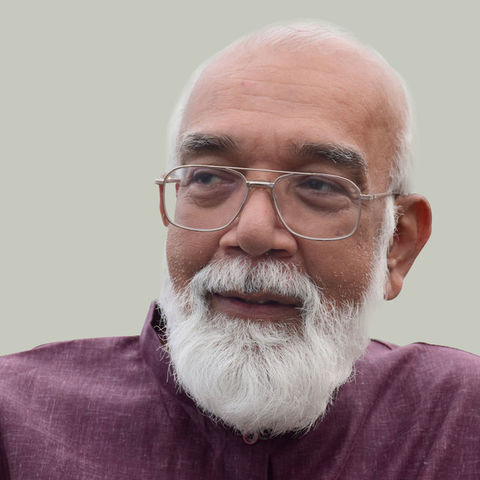
You know these masters who continued the tradition.
Very good,
Christina,
You came at the right time.
So these masters have been so kind.
Why they are kind?
Ah,
Christina,
You got it.
So they have been so kind,
Why?
They never left anything secret.
They are always ready to give this knowledge.
Why they want to give the knowledge?
To bring an end to the suffering and to awaken to our real self so that for once and all we live in peace and happiness,
Love and wisdom.
When we become a teacher,
We say,
Oh,
Hide this.
I belong to this.
Doesn't it happen,
Brandy and John?
No,
No,
I'll hide it.
No,
No,
Don't tell this.
Only tell little.
But our masters are totally open.
They give.
Here is the knowledge.
Here is the knowledge.
And one of many masters,
My master used to say,
The more you give,
The more you get.
More clarity you get.
More clarity you get.
So when I came to this country,
I saw people are hiding even in India.
But every knowledge is there already.
That has been passed on to us.
So I'm even talking about the Patanjali.
Patanjali says,
Oh,
Did you not understand?
Please go ahead.
Understand this.
So now see the Patanjali in the first four sutras that we have learned.
He says this is yogic state,
Meditative state,
And this is non-meditative state.
Did you understand?
A little bit.
So in the second group of the sutra,
He says,
Okay,
Let me explain you.
This is how the thought pattern works in our life.
And if you get rid of these thought pattern,
Then you will be happy once and for all.
You see the kindness of Patanjali.
He did not hide anything.
Don't be hiding.
No,
No,
No.
I know it.
You don't know.
Then in the third group,
Patanjali says,
Okay,
You did not understand.
So let us understand what exactly is the practice.
So he picked up a very fine,
Subtle way of understanding.
What is practice?
Regular practice with wisdom.
See my friends.
So his kindness has no limit.
He says,
Oh,
You did not understand.
So let us understand the different stages of mindfulness.
He said,
No,
You did not understand.
To understand your own nature,
What kind of a seeker you are.
Do you belong to the highest level of a seeker?
See the kindness.
And still we are not ready to receive this knowledge.
See the kindness.
He said,
This is the highest level.
You are,
If you do this,
You will become the highest level of a seeker.
And then the journey takes couple of weeks or a month.
Now see that.
Then he says,
Okay,
You have a doubt about the real self.
So he explained what exactly is the real self.
Yeah,
That is what we understood in the last few weeks.
And ultimately he said,
I have explained you a lot about the real self.
It is designated as AUM that we covered.
And then he said,
You practice AUM meditation.
It will not help you to reach to the highest level of the mindfulness,
But it will also remove all the obstacles.
Now see the sequence.
So he talks about the obstacles and then he talks,
There are nine obstacles on the path.
Am I mindful before I start meditation?
What obstacles I have?
Do I make an effort to remove that?
Look at it.
So every master is so kind to all of us,
Open to us,
All of us.
Are we open to them?
I don't believe.
First practice and then believe,
The master says.
You need not to have a blind belief.
And you see that then he told us that there are four signs of obstacles on the path.
And then he says,
Regular practice with the wisdom removes all the obstacles on the path.
And today he says,
Did you understand?
Ah,
Yes,
A bit,
Little bit I understand.
Because you know,
You see that what happens,
The knowledge is always available.
Why you miss the journey?
Because your mind says,
No,
I didn't understand.
Why should I attend?
If I don't have any experiences,
Others have,
Why should I attend?
Do you see it over mind or nature of the mind?
So then now,
Our master has come up with an idea,
With a principle that you can apply anywhere 24 by 7.
So I gave a foundation so that you should be understanding this principle in detail so that I can apply in my day to day life.
When 24 by 7.
See now again,
I'm using,
I'm stressing kindness of Patanjali,
Kindness of all these masters.
They have been so kind.
They say,
I'm ready,
I will continue to guide you until you reach to the state where I am.
So what is the sutra today?
Maitri Karuna,
Modita Upeksha Anam,
Sukduk Pune Apunyavishaya Anam,
Bhavanata Chitta Prasad Anam.
Simple,
Simple translation.
And we normally miss one point here.
So what he's saying,
The mind,
The calmness of the mind or the cheerfulness of the mind can be attained by cultivating,
By cultivating,
By cultivating,
Cultivating,
I'm stressing cultivating friendliness,
Compassion,
Happiness,
And indifference to the people who are happy or suffering or virtuous or wise.
So he says,
Now see that you will definitely understand,
Oh,
I have to be friendly to everyone,
But the mind,
The heart is burning inside.
How can I be friendly to everyone?
I already created a dislike and hatred for the people whom I'm talking.
How can I cultivate the friendliness?
See that,
Karuna,
Compassion,
Compassion to those people,
Compassion to those people who are suffering.
So in one way,
I would say,
Leave your compassion,
Be compassionate to yourself first.
Don't hurt yourself.
Don't burn your heart.
Don't live in ignorance.
That will help.
So now what is the most important point we are missing?
Patanjali is saying to succeed in meditation,
My mind should remain in the state of cheerfulness.
It should come from inside.
And what to do in order to have that state of the cheerfulness?
These are the four types of attitude we should cultivate while living in the world with people,
With our students,
With our teachers,
With our friends.
So what is most important?
Most important is the state of cheerfulness in the mind.
So it's an inner journey,
Outer expression,
Inner journey.
Now,
If I'm happy,
I can make you happy.
But if I'm burning inside and happy outside,
Normally what we say,
That's one of the most beautiful thing our country has.
So we go out and we see a stranger,
Hey,
How are you?
Oh,
I'm fine.
Thank you.
How are you?
But it does not normally go inside.
You look at the understanding of this Patanjali.
He says to succeed in mindfulness once and for all.
What is the goal of these four different types of attitude?
The state of cheerfulness in the mind.
Chikta prasadhanam.
We miss this point in the sutra bhavanata,
Chikta prasadhanam.
Prasadhanam means happiness,
Happiness,
Cheerfulness.
Get four qualities from moment to moment in life.
First thing to know that if you are a seeker,
Then seeker is always cheerful.
If you are not,
Ask yourself why you are not cheerful.
Now my honey said me something,
Get rid of that attitude in the mind.
You need to worry about anything.
Make yourself cheerful.
Do we really do it in our life?
No.
So what happens?
It gathers a lot of impressions.
And then what happens when you practice meditation?
You say om and that om gives you a picture of your honey.
What should I do?
Om.
What should I do?
It happens.
It's a very simple experience.
Cheerfulness even our master Krishna says,
Cheerfulness in mind always succeeds in mindfulness.
This is the message and we start digging over,
You know,
I have to be friendly with you.
Even if I hate you,
I have to be friendly with you.
What kind of logical interpretation is this?
Does it help you?
Will it ever help you?
No,
No,
It's a social norm.
So I have to be.
No,
It will not work.
The cheerfulness of the mind is inside.
Now let us understand this sutra step.
When the mind is scattered in millions of directions outside,
In search for happiness,
It fails.
It falls prey to delusion.
We lose discernment and dispersion and the cheerfulness disappears.
The mind is not happy.
It means quiet mind is a happy mind.
So what is the meaning of quietness?
It is very well organized in my daily life.
The mind is mindful in its relationship with the people,
With the things outside.
Then the mind is gathered inside and focus on the work in hand and you have the cheerfulness.
I've been telling you,
Every master is so kind.
Take away the knowledge.
I will continue to guide you.
Masters are saying,
I will continue to guide you.
I'll continue to make you understand.
Don't believe in blind belief.
Understand that.
So we should understand the process of friendliness,
Compassion,
Happiness and disinterest or indifference.
These are the four attitudes we should be developing.
So in Gita,
Krishna,
Krishna says,
Prasanthi manasam hi ainam yoginam,
Sukham uttamam upaiti shant rajasam,
Brahma bhutam akalpam asam.
He says that when the mind is thoroughly understood,
Reaches to a state of quietness,
Then that seeker becomes the highest level of a seeker.
And the first symptom,
Symptom,
Symptom is negative.
First expression is the state of cheerfulness.
And when you are in the state of cheerfulness,
In that state you practice meditation,
Leave aside everything.
You succeed.
Krishna further says in the Gita,
Marah prasad samyaktam maunam atma vini graha,
A clear and calm gladness of the mind.
Mind is gentle.
Mind knows what it means by the self-control.
The purifying of,
It purifies the whole temperament.
This is called,
Krishna says,
This is called the austerity of the mind.
So austerity is not that you are standing on your head and walking and demonstrating.
It has nothing to do with the yoga,
But it is a part of yoga,
It's okay.
So what is the austerity of the mind?
The cheerfulness of the mind is attained by constant discipline and education to the mind,
Moving towards purification,
Changing the temperament,
Changing the temperament,
It is called the austerity of the mind.
Now see,
There are different experiences when the mind is cheerful.
So another verse from the Gita comes,
Jetha atmanah prasantasya paramatma samahita,
Siddhu ushnu sukhdukheshu tatha man akhman niyahu.
Maybe when you take three or four,
What we say,
Three or four glasses,
What do you say,
Glasses of vodka,
And someone is abusing you,
You say,
What are you saying?
I don't understand.
So you're so much intoxicated in the state of the cheerfulness that whatever comes from the world,
You are not affected.
Whether it is heat and cold,
Pain and pleasure,
In certain place,
Honor and dishonor.
So this is a journey.
Every day,
The moment we wake up,
We have to interact with lot of people,
We have to do our work.
So when the mind can remain in the state of the cheerfulness,
I am mindful.
Today,
I got so much pleasure from the people.
Everyone praised me.
Yesterday,
Everyone said that you are crazy.
Now check the state of mindfulness.
Am I affected by both?
I'm not in the state of cheerfulness.
It is the mind that labels heat and cold,
Sorrow and happiness,
In certain place,
In the state of absence of cheerfulness.
I allow my mind to get influenced.
You see,
I've been saying,
Patanjali has been so kind,
Every master is so kind.
He says,
Oh,
You did not understand until now.
They are typical,
They are very complex.
No,
Understand,
Start living your life from today.
I didn't understand that.
Have that attitude.
We are understanding now what people normally miss.
Even the teachers miss the point in the sutra.
By the four different attitude,
The mind lives in the state of cheerfulness.
So the goal is,
Allow the mind to be in the state of cheerfulness all the time.
Whatever happening outside,
What happens?
It withdraws the mind within.
It raises your self-awareness.
And that mind is constantly searching the knowledge and lives in joy.
That is the state of cheerfulness.
And what is knowledge in the joy?
It belongs to Sato Guna.
So the mind starts living,
Thinking and speaking in Sato Guna.
Now we have another friend here,
Sangeeta.
So she also met my master.
My master used to say,
Keep smiling.
Whatever happens in the world,
Just keep smiling.
So when we are surrounded by pain and sorrow,
Keep smiling.
When you are suffering,
First smile and then solve the problem.
It is the mind working on us when I experience pain and the suffering because the world enters within us caused by the identification of the mind.
So again,
I'm repeating.
Goal of friendliness,
Compassion,
Dispassion.
Now I have to be compassionate.
I was moved by people suffering in the world.
God did not move while you are moving.
If there is a God,
Then God created the world.
So what the master,
My master used to say,
Always keep smiling.
Internally,
The mind do not allow the effect,
The influence of the world inside.
Now ask yourself,
That is why I say that,
Don't keep a big face,
Especially when you attend the session with me.
So what happens?
That is your expression of cheerfulness or absence of cheerfulness.
Absence of cheerfulness,
Why it comes?
Because that mind is still engaged in anxiety,
Running at this time also while practicing meditation.
Goal is that I should live into the state of,
I hope,
I believe that from the next session,
You are always living in the state of cheerfulness.
Anxiety is no problem.
Let me first smile,
Be in the state of cheerfulness and then work on it.
So the master is saying,
Cultivate the qualities in the mind to be cheerful.
So if I have those attitude,
Where are those four attitude?
If I have those attitude,
For these four attitudes,
Ask friendliness or you may say kindness,
Compassion,
Cheerfulness and equanimity.
I'm translating that indifference,
The fourth quality as equanimity.
Then what happens?
The mind lives in the state of the cheerfulness.
Then you go to any teacher.
He does not know even how to give meditation session and you are listening to him,
You will succeed.
You will definitely succeed.
So what the Patanjali is saying,
It is more on yourself,
More on yourself.
Buddha,
Even the Buddha says,
Cultivate these qualities.
Mind is purified and naturally focused that helps to succeed in meditation.
And every master says,
There is nothing to do with plagiarism and copyright.
That is another thing that is present in the Eastern wisdom.
You'll be surprised,
There are that many of the verses in Hatha Yoga Pradipika and Gheran Saita were copied as it is from Upanishad.
But we are talking of cheerfulness.
So we will pick up one more principle and then from the next session,
We will see how we can cultivate.
So what is the main word,
The cultivating?
Pay attention,
Understand,
Cultivation comes from agriculture.
See that cultivation to tilling.
Cultivating means to prepare the land for raising the crops.
That is a little literal translation.
So when cultivating applies to the mind,
It means loosen or break up the field of the mind that has been heavily conditioned.
I love John more than Sam,
I have to loosen the field.
One example,
One example.
You see that?
So it means loosen or break up the field of the mind that has been conditioned,
Habituated to perceive the world and replace it with the qualities required to calm and empty the mind.
These four qualities will make your mind empty.
To change mind,
We should be ready and receptive by recognizing the attitude causing the problems.
Before I do not,
If I do not recognize,
Nothing is going to happen.
Oh,
Compassion,
I understood.
I'm very compassionate to you.
It will not work.
It will not work for you.
It may work for others,
You know,
Because if you say I'm very compassionate,
I'm very concerned about you.
So others says what a good guy is he or she is,
But internally the problem remains the same.
So that is why the cultivating.
The cultivating includes breaking the soil,
Making it soft,
Putting fertilizer.
You are understanding these principles,
Putting the fertilizer,
Water,
Sowing the seed,
And then comes these four qualities.
If you do not make your mind soft,
Do not loosen the mind from the habituation,
From the conditioning,
These four qualities will never be a part of your mind.
And it will never lead you to,
It is a lifelong practice.
So when you have to do practice,
The moment you wake up until you sleep.
One more thing that then we will do the practice.
That real self contains all these four qualities.
They manifest in the mind when you live in the state of cheerfulness.
They are already present in the real self.
They are the qualities of the real self.
They are the attributes of the real self.
Four qualities and their cultivation.
My three,
I will take up that,
But I just want to go to that,
The state of compassion.
You see that I told you the story of a Buddha,
A mother approached Buddha whose son has died.
She said,
Can you make my son alive?
Now what is our response if we do not understand the real secret in this sutra?
Oh,
That's real,
I'm very sorry.
What should I do?
I will hug,
I will console,
But I don't know what I'm doing.
Now see what Buddha did.
Buddha said,
I understand your son has died.
You see the way the Eastern wisdom works.
So the Buddha said to the mother,
Mother,
Can you visit me?
Mother,
Can you visit every village,
Every house in this village?
Knock the door,
Ask them,
If no one died in their family,
I will make your son alive.
This is the highest level of compassion.
Why?
Why the Buddha wanted that mother should become aware of the reality,
The truth.
She returned,
She said,
I did not find anyone.
So it means it is the absolute truth.
The one who takes birth has to die.
Why are you crying?
If you do not see the compassion here,
Then we have not understood the sutra.
Now compare our response and response of the Buddha.
Let us start our practice.
We will pick up one after the other,
All these four attitude.
Eyes are closed.
Eyes are closed.
And you are looking at the body.
First body,
I am.
Now,
Awareness of the body,
Feeling of the body at the same time,
The mind is looking inside the forehead.
Now just imagine you are in a state of cheerfulness.
The mind has already got that state of the cheerfulness,
And you are ordering the mind to look inside the forehead.
It will continue to look inside the forehead.
It will not create any blame,
Complain,
Reaction,
Duality and conflict.
It says done,
I am there,
What is next?
Now,
Okay,
Then you say,
Okay,
Let be comfortable.
So being comfortable,
You look at all the joints,
Who is looking,
The mind.
Mind is looking at all the joints,
The neck joint,
The shoulders,
Elbows,
And everywhere you are looking,
You start feeling sensation,
Comfortable and steadiness.
You see that I used to spend couple of minutes in being comfortable,
But if you are in the state of the cheerfulness,
The mind says,
I got it,
I'm comfortable,
Go ahead.
See,
This is what happens.
Let's see that by cultivating these four attitudes in our life,
The life changes,
The meditation becomes a play and a fun.
Now be carefree,
Carefree.
Lot of thoughts are entering into my mind,
But cheerfulness dissolves.
Mind is not carried away by any thought.
You see what happens?
The same length of time we practice meditation,
But now we have more time in the same time period to go deeper.
Now let us do the Nyasa for a while.
Take a deep silent in slow breath,
Not very deep silent,
Which is comfortable.
And in that state of being comfortable,
As you move the mind,
As you inhale,
Move the mind inside the right arm from the shoulder to the fingertips,
In the space inside,
While saying mentally,
Oh,
You exhale,
The mind moves from the fingertips to the shoulder,
In the space.
So when the mind lives into the state of the cheerfulness,
It becomes highly absorbing step,
Absorbing to home the mind.
Mind says,
Okay,
I'm ready,
I'm doing it,
I'm enjoying.
You're always ready to live into that reality and anything that helps you to live into that knowledge of reality.
The mind says,
I'm always ready,
24 by seven.
The mind doesn't complain,
Today I have lot of issues.
How can I do it?
Don't you understand?
So what is that attitude?
Can you find out?
That is the fourth quality that we will be working on.
Equanimity.
Now move the mind inside the left arm in the same way.
There are four points.
The breath is like a car,
You drive that inside the left arm from the shoulder to the fingertips,
Mind moves,
Looks at the space and it is singing mentally,
Oh,
And in exhaling,
Oh.
Check the mind is totally absorbed,
It is enjoying.
Only the seeker with the state of cheerfulness enjoys every moment of meditation.
What a great step,
What a great principle.
Eastern wisdom is a journey of the self-discovery,
Where it is,
It is within me.
Now move the mind inside the right leg in the same way with the breath,
Singing,
Reciting,
Oh,
Mentally.
So when Eastern wisdom is a journey to the self-discovery,
It means we pay too much attention,
Oh,
I have to be compassionate to this guy,
I should not say this,
I should say this.
The mind is totally engaged and it destroys the principles.
Patanjali is saying by these four qualities,
Attitude leads to the state of cheerfulness in the mind inside,
That helps you to succeed.
And now moving the mind inside the left leg.
Now we are always ready,
You know,
Who cares?
We are always ready to give one pound of compassion to people.
Those with whom we are more attached,
We say,
No,
10 pounds,
Free for you.
We do not understand the secret of this sutra.
Again,
I'm stressing cheerfulness results by these four qualities,
Four attitude.
Be totally clear.
And inside the spine,
You already know the step.
So we are repeating the same practice with a little deeper understanding.
Mind,
Do you enjoy,
Are you enjoying doing this?
No,
Cheerfulness is not there.
Why the mind says,
Patanjali says four,
Even the Buddha says the same thing.
The first six path of eightfold navel path,
They talk of the same thing in a different ways.
One thing more,
Eastern wisdom talks of the same principles.
Sometimes we say Buddha talks of compassion,
Patanjali does not talk.
Gives little importance,
No,
Equal importance.
Equal importance.
And lead is,
All the four attitude will enter into your mind.
That is why we had started with the mantra.
So first three times,
Recitation and listening only.
Sarvesham swasthir bhavatu,
Mentally you're saying.
Sarvesham swasthir bhavatu,
Sarvesham swasthir bhavatu.
And we will be doing nine times with the meaning and the knowledge together.
What is the meaning?
May there be wellbeing for all.
What I'm doing?
You see that?
You add some element of friendliness,
Some proportion of compassion,
Some proportion of happiness and equanimity in this very mantra.
Sarvesham swasthir bhavatu,
Sarvesham swasthir bhavatu,
Sarvesham swasthir bhavatu.
From the state of cheerfulness of the mind,
Outpouring.
What is outpouring?
Sarvesham swasthir bhavatu,
Sarvesham swasthir bhavatu,
Sarvesham swasthir bhavatu,
Sarvesham swasthir bhavatu,
Sarvesham swasthir bhavatu.
Your mind is melting.
You're loosening the habituation,
Conditioning.
Sarvesham swasthir bhavatu.
Second line of the mantra,
Three times,
Recitation and simply singing,
Listening.
Sarvesham swasthir bhavatu,
Sarvesham swasthir bhavatu,
Sarvesham swasthir bhavatu.
I can even promise you with this sutra,
If your mind is living in the state of the cheerfulness here and now,
The body will not dare to move at all.
Nine times,
Meaning in the knowledge.
Now mind is picking up that essence.
What is the essence?
May there be peace for all.
Sarvesham swasthir bhavatu,
Sarvesham swasthir bhavatu,
And you see that peace is permeating,
Pervading.
Sarvesham shantir bhavatu.
Mind reminds you of any form of anxiety and you say,
No,
Here it is.
What it is?
Sarvesham shantir bhavatu,
Sarvesham shantir bhavatu,
Sarvesham shantir bhavatu,
Sarvesham shantir bhavatu,
Sarvesham shantir bhavatu,
Sarvesham shantir bhavatu,
And you see peace.
Sarvesham shantir bhavatu.
I believe you understand the point,
The state of cheerfulness.
And then you recite these mantras with a meaning,
Miracle takes place.
Third line,
Sarvesham puranam bhavatu,
We're reciting and listening only.
Sarvesham puranam bhavatu,
Sarvesham puranam bhavatu.
Now nine times with a meaning and knowledge.
So the mind picks up the meaning every time you are reciting mentally.
What is the meaning?
May there be completeness in all.
Think of it later.
Is the sense of completeness in the mind,
Is the state of compassion or something else?
They use different words.
Sarvesham puranam bhavatu,
I'm not only compassionate to myself,
But to everyone.
Come on my friends,
Foes,
You're suffering,
No need to suffer.
We all are complete.
Sarvesham puranam bhavatu,
Sarvesham puranam bhavatu,
Sarvesham puranam bhavatu,
Sarvesham puranam bhavatu,
Sarvesham puranam bhavatu,
Fourth line,
Sarvesha Mangalam Bhavatu.
Why I explained you that the well-being,
Peace and the completeness merges into the auspiciousness and now compare the attitude or the state of cheerfulness with auspiciousness.
Aren't they the same?
Sarvesha Mangalam Bhavatu.
You are in a state of auspiciousness so it means the state in the mind of well-being,
Of peace,
Of completeness is present and when that is present either you say it is auspiciousness with one way of explaining and the other way is the state of cheerfulness.
Sarvesha Mangalam Bhavatu.
Do it with the love,
Feeling,
Knowledge and wisdom.
Mentally.
Sarvesha Mangalam Bhavatu.
I have reasons to believe when the mother approached the Buddha,
Buddha might have sat inside Sarvesha Mangalam Bhavatu before answering,
Asking her to find out.
Sarvesha Mangalam Bhavatu.
A slight jump of the mind from the attitude of cheerfulness to the past memory conditioning destroys everything and you can return to that state if you are mindful,
If I say so.
Sarvesha Mangalam Bhavatu.
Now mentally you are reciting,
And the mind is ready,
It goes deep inside the heart into the infinite space,
Experiences the infinite space by saying Om Shanti,
First Shanti,
Awareness knowing I know that I have yet to know my real self.
It is a definition of ignorance.
Second Shanti to the mind,
Mind are you still there?
Yes.
Third Shanti to the body and the word outside.
Did you include all the four aspects to remain cheerful?
Yes.
Let us continue mentally.
Mind is absorbed inside,
You are mindful means you are aware,
You are continuing the journey.
What else we need?
Om Shanti Shanti Shanti.
Couple of months before we went to Flagstaff when there was a snowfall.
So as I reached we were approaching to the Flagstaff we start experiencing the coolness,
The cold.
This is what happens by this step.
Om Shanti Shanti.
The intellect says yes I have a glimpse of it,
I am getting it,
I am very near.
Om Shanti Shanti Shanti.
That can happen only in the state of cheerfulness.
Om Shanti Shanti Shanti.
Om Shanti Shanti Shanti.
When you simply say Om and allow the mind to drop deep inside your heart into the infinite space,
Infinite darkness or blankness,
Allow the mind to live there.
Everything will happen by itself.
Om Shanti Shanti Shanti.
Maitri Karuna Mudita Upiksha.
Sukhdukh punya apunya vishayanam bhavanat citta prasadnam.
The word citta prasadnam,
Cheerfulness of the mind.
Om Shanti Shanti Shanti.
Om Shanti Shanti Shanti.
Om Shanti Shanti Shanti.
Bring your mind to the right hand,
Your mind to the left hand,
Lift your both the palms,
Place it on your eyes.
Bring the hands down,
We'll share our experiences.
I remember some my master used to sit for five hours for a talk and his knees used to freeze down with an acute pain.
At this old age and then he used to say stand up my horse.
He used to refer the body,
Come on,
Stand up.
The state of the cheerfulness.
How are you Brandy?
Pretty cheerful.
Cheerful,
Good.
Very good.
How are you John?
I was struggling today.
With a cheerfulness and something else?
I don't know if it was lack of sleep or I was just you know struggling to stay on track.
Yeah it happens.
Contemplate on this.
Reflect on this.
The state of the cheerfulness comes by these four qualities in the mind first.
So now I'll tell you next time.
How are you David and Jerry?
That was very profound for me.
The tools you provided in the beginning and throughout it allowed my mind to be cultivated to allow me to go to a much deeper level.
It was very very cool.
You see that the mind instantly accepts that.
So once you accept that,
Don't worry about it.
That's why I gave the example of my master.
You know,
Come on,
Stand up horse.
Now the time to go.
So I said,
Oh the hair is the principle he is applying.
Let me also apply.
John,
That is the answer.
How are you Jerry?
Sir,
I love the analogy,
The idea of cultivating the soil too and getting rid of that habit and the ignorance and the weeds.
The mantra is how we feel very cheerful when doing the mantra.
Beautiful.
I had no experience of cheerfulness.
And then I felt when you mentioned the snow,
I didn't notice I was cold until you said that.
I felt like an ice cube.
Oh,
Beautiful.
That's a deeper experience.
That is why we say that the knowledge,
Right knowledge is essential to succeed.
So I give different analogies.
I give different similes so that our intellect picks up.
Oh,
This is it.
This is it.
How are you Stephen and Sam?
I'll describe it in one word.
Peaceful.
Peaceful,
Wonderful.
My mind,
My body,
Everything about me is just peacefulness.
Beautiful.
That's a beautiful.
How are you Sam?
I'm feeling very peaceful and cheerful.
I had a new,
More profound experience as well where I felt that the space within me was very vast.
But I felt very protected.
I had an image of having like 20 blankets around me basically.
I felt very safe and warm but the space inside was very bad.
So it was pretty great.
That's so beautiful.
You have a good experience.
We'll give interpretation in the following.
Hello,
How are you Lara?
I'm okay.
I had a weird experience.
So first of all,
I ended up traveling with my grandfather and his brother and they were escaping the Holocaust.
So that was my experience.
And then part of me got was like,
Okay,
Now I have more information,
I feel like I'm more ignorant and I'm not as happy.
And so part of me was like,
Well maybe I just better off just being ignorant and not knowing this stuff and then I'm more cheerful.
Because I think now I'm like,
I'm judging myself for everything and that's not a good place for me to be.
That's definitely,
You recognize,
That's not a good thing.
What should you do?
First thing.
You have a symbol of an elephant trunk or an elephant with a trunk up for like a half a second or like a half of a second.
So like okay,
Is that Ganesh coming up?
Like okay,
You have a lot of obstacles you still have to overcome.
I don't know.
No,
No,
First thing that you see that,
Don't tell your intellect that I want to remain ignorant.
We think that ignorance is bliss.
But in yoga we say ignorance is suffering.
Second point,
Definitely you are 100%.
Don't judge yourself but absorb these principles.
Start thinking about these principles in your mind.
The moment the mind goes for judging.
Third point,
That you had an experience of that holocaust event which was experienced by your grandfather.
Those impressions are already buried in the form of vasanas,
Whatever the way we think.
So once we see them it's a kind of a release.
So it is helping us.
It is helping us.
Now the time to keep a smile Lara.
How are you Christina?
I am very happy.
I have been feeling very angry about past things that have come back up.
But I am very grateful and this practice helped me feel confident in myself that I know how to disconnect the two.
Beautiful.
Right when you dropped the Aum Shanti,
That moment where it shifted,
You know the saying that I had a lot of things that were making me angry on the outside.
But the pieces within me and then deceptive.
It will go away.
Christina it will go away.
The moment the anger comes you start thinking of replacing it.
Only thinking in the mind during the day.
Just thinking that how to replace.
My master always,
I created a phrase from my master.
You are angry first smile and then be angry.
You want to fight with me first smile and then fight with me.
And then see what happens.
So let me have a smile first and then I will see where the anger is.
How are you Lara?
Barbara?
Yes,
Yes.
For me it was a beautiful experience and I feel very light and very happy.
Very beautiful.
That's a good experience.
How are you Sara?
Hi.
I had a very beautiful experience.
I think the talk that you gave about compassion for yourself as a way for cultivating the mind.
That was very helpful for me.
The meditation and the things came up instead of resisting.
I tried to meet it with compassion and it just really dissolved.
Dissolved.
Opened up into so much space.
Beautiful.
Inspired.
We have yet to cover these four attitudes,
Four traits in the mind.
We have just introduced those concepts that is the state of the cheerfulness comes by these four traits.
And in future sessions once we understand each and every aspect of this you will see a change will come.
Sangeeta,
How are you?
Ah,
Bhautsam,
She feels a sense of completeness.
You see that those ideas,
Those thoughts that is expressed because of your experience helps you accelerate,
Hasten the process of our evolution.
How are you my friend Terry?
We are waiting.
No worries.
My phone is.
.
.
No issue.
Let it budge.
No worries.
I am thinking of the practice of the thing that is bothering my body.
Okay.
So it is difficult for me to see tonight my mind thought is that the man should just sit on his single tail.
Because all the world in my real self is not in it.
So I am not very cheerful but I started myself separated from that.
That's really good.
First point,
Continue to separate yourself in the mind.
The body is different from you.
And definitely we are going to explore how the cheerfulness can be achieved by cultivating these four qualities and it will happen.
Remember the summary.
Summary is four to why we have to practice these four qualities to allow the mind to live in the state of cheerfulness.
Can you be angry on anything for coming from the past?
Because when you are cheerful,
That needs to be explored.
And that is all for today.
Thank you very much.
We will meet again.
Namaste.
Thank you.