Hello,
There is Miffed Eggistino to your watching Fairy Chimney Channel,
Continuing my series on Baltic Mythology and Baltic Folklore,
So the Baltic countries are Latvia,
Lithuania and Estonia.
And today I'm going to talk to you about Dyabas,
That is the Lithuanian name of this particular god and his Latvian name is Dybs,
So all the Latvian and Lithuanian speakers who watch this,
I apologize if I am pronouncing his names wrong,
I am a native Finnish speaker myself.
However,
I think I will use the Dyabas title in this video,
Because it's easier for me to pronounce.
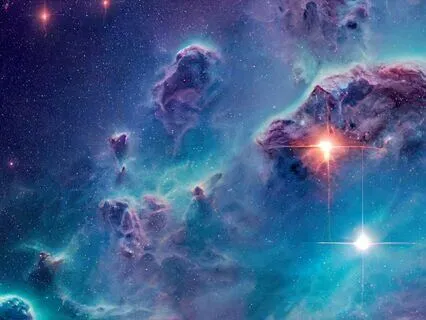
So Dyabas was the god of the skies in Baltic Mythology and he was seen as the ruler of the skies.
However,
Dyabas was not a thunder god,
For that Baltic mythology has a different entity,
But Dyabas,
He was the god of the skies.
It is believed that the name Dyabas and Dybs,
They are derived from proto-Indo-European word Dy,
Which means a god or heaven,
But in the Baltic sense,
Dyabas was foremost a pagan god and later on when Baltic countries,
People were trying to convert them to Christianity,
That is when they used the god Dyabas as counterpart for them,
A parallel god for the Christian god.
That's what they tried to do,
But however,
Dyabas is really a pagan god and even older than the European gods,
His worship go back to archaic times of the Aldic lands.
There isn't many description of how Dyabas looked like.
Most of the time he is described to be a handsome man who dresses up in silver silks and he has a shiny sword.
Sometimes the sword is described to be green,
But most of the time it's just a shiny sword and he is described to dress up as a Baltic duke of the pagan times,
So just described as a wealthy Baltic man and how they used to dress up in the past.
He is sometimes also seen as an old man or he can transform himself into an old man and this is something very common within many mythologies,
At least in Northern Europe.
Like in Finnish mythology he could also shapeshift and that would be in Finnish mythology and many of the gods in Baltic mythology,
They are also shapeshifters,
Both in Nordic mythology and so on,
It's very common.
So Dyabas,
He could change himself into shape of an old man and he could visit from town to town,
Village to village and meet people and give gifts for those people who think they deserve gifts from him.
Dyabas,
He is not only a god of the skies and god of heaven,
He was also seen as someone who controlled the saint and he has parallel levels to the Baltic goddess Laima,
Who is the goddess of destiny and she has like three counterparts of herself,
Laima,
This is very common with the three Norse and three weavers throughout Europe,
This idea of three ladies who are in charge of destiny,
But in many occasions Dyabas,
He is also connected to destiny and fate of the people and some stories even tell that Laima,
The goddess of fate,
She is the daughter of Dyabas,
But this is something that we don't know much about.
This is one part where mythology overlaps with everything and of course if we think about different countries in different parts of the different lands,
They've been telling different versions of basically the same story and this is how we get so many variations of every single telling,
Every single mythology and Dyabas,
He was also seen as a god who in cosmological order is the creator god,
But he's not really that kind of strong beginner god alone,
There were several different beginner gods in Baltic mythology,
But when it comes to humans,
That is where Dyabas is seen as a beginner god,
He gave humans their cultural gifts,
Our cultural gifts,
So Dyabas is a god who is related to human culture and human relationships and protecting humans in this sense,
He is also the god of law,
God of order and stability and he is the one that people ask advice when it came to legal matters and such things and it is believed that Dyabas,
Because he was depicted to be like a Baltic duke basically in a spiritual form,
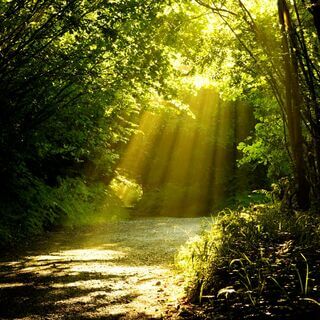
People believed that within heavens he had a farmstead where he lived under a mountain,
In the top of a mountain,
A cedar mountain and he had a house there with different gardens and kirtis,
Which is like a Baltic name for a sauna,
And his servants and all kinds of things like that,
So he was really a duke who lived in the skies and Dyabas,
His farm was very rich and a really farm,
Same way as Baltic countries their land is quite rich and earthy,
So I think that is a reflection from that,
And also Dyabas as the god of the heavens,
He is also connected to the sun and Sole,
The sun goddess and some stories tell that Sole and Dyabas were a couple,
But this is where the mythology overlaps,
Because Sole,
She's the matriarchal goddess of the whole Baltic pantheon,
She's connected to Perkunas,
The god of thunder,
Dyabas and also Menuli is the god of the moon,
So you don't really know what's going on there,
But Dyabas' mythology is also connected to the sun and bringing the sun to the earth,
He has also a wagon or sometimes a slyke,
Especially on wintertime he arrives with a slyke,
And this wagon is put by two magnificent steeds,
And they are called dievotsyrkai,
Hope I pronounced it right,
And sometimes he's also pulled by two black dogs or black ravens and the whole idea of wagon,
You can find that from the Baltic mythologies from Finnish,
Nordic,
Germanic,
Gaelic,
Pretty much all over,
So that is very common.
Dyabas,
He's very much connected to the solar circle and the sun and different sources,
And especially Dyabas,
He was called during pretty much every pagan Baltic festival,
But especially around summer,
The festivals that were related to summer,
That is when people did special rites for Dyabas,
And these rituals emphasize human sexuality,
Animal insemination and beekeeping,
So bees are holy animals connected to Dyabas,
As well with horses,
Horse was really the main animal of Dyabas,
The holy animal sacred to Dyabas,
And people saw horses as gifts straight from Dyabas,
They were gifts from the god of heaven,
So when you hear this myths about Dyabas,
You can hear that there is many similarities to Christianity,
There's the shape-shifting from young man to an old man,
And the fact that people really were very devoted to Dyabas,
And that he was very loved god by Baltic people,
And well,
He was the god of the skies and very important to humans,
That is when Baltic countries,
When the invaders wanted to Christianize them,
Dyabas became the god that was representation of the Christian god,
And in question,
The Dyabas is called Ropopyromas,
Which means the god who came first,
And well,
We didn't finish mythology,
I think parallel god for Dyabas would be Gokko,
And then Ternes in Teutonic mythology,
And all,
You know,
But Saurini more close to Perkunas,
But then I think of course we didn't finish mythology,
He is like a mixture of Dyabas and Perkunas,
He has elements of both of them,
But this is the way mythology overlaps throughout the world,
But anyway,
Because Dyabas was such beloved god by the Baltic people of the pagan times,
That is why the Dyabas,
He became the Christian god when the Christian invaders came,
Still today at the Lithuanian and Estonian,
They're probably the most atheistic countries in the world,
And there's lots of pagan activity,
So apparently the Christianization didn't work out that well in those countries,
So this was the story of Dyabas,
Thank you for watching guys,
If you are just as much passionate about mythologies as I am,
Feel free to subscribe to my channel,
And if you enjoyed this video,
Please consider leaving big thumbs up for the god of the heavens within Baltic mythology,
So thank you for watching guys,
I will see you on my next videos,
Take care,
Bye!