Hello,
Dear friend.
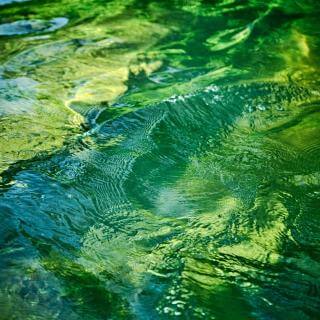
Remember that example with the stick and the pond?
Well,
Going back to the pond,
I notice that all the murk has settled.
But the mark from the stick I drew on the bottom remains,
A trace,
A consequence.
This mark is visible in the mud,
And it will stay there for some time.
It might take a couple of days or even longer for it to disappear.
This analogy perfectly illustrates our reactions to situations,
The murk that gets stirred up and the impressions that linger afterward.
What does that mean?
Imagine you had a spat with someone,
And the residue remains afterward,
Yet you want to live in harmony and love.
You rush in,
Resolve the situation,
Acknowledge you were wrong,
And voila,
The guilt dissipates.
In this case,
Both the situation and the impression pass,
Leaving no long-term tension.
It's like the stick in the water.
It almost instantly disappears without leaving a trace.
But what if the situation is different?
A conflict or stress arises,
And it only intensifies the tension.
This can be compared to the stick drawn through sand.
The tension remains within us for a while.
If you become aware of the situation,
You realize where you were wrong,
And where perhaps the other person was wrong too.
But usually,
The root of the problem lies within ourselves.
To see and understand the situation,
And ultimately resolve it,
Takes time.
Just as the sand needs time to level out with the surface,
Then there are deeper impressions.
These are situations where you reacted strongly,
Leaving a vivid,
Memorable mark that still triggers intense emotions.
These impressions are deeply rooted in your subconscious,
And you can't easily acknowledge them on a surface level.
This type of impression can be compared to a carving in stone or rock.
The trace of such a reaction lingers for a long time,
And doesn't disappear without significant effort.
These impressions will fade too,
But it takes much more time.
Overall,
This is about excess and lack of balance in seeking pleasures.
There may be too much of it,
Leading to a skew.
That is,
When you constantly crave enjoyment and enjoy it.
This happens because we don't see the source.
Why are we attached to fleeting,
Impermanent pleasures?
Why do we want to enjoy so much and become dependent on it?
This is how desire develops,
And we delve deeper into ignorance,
Distancing ourselves from our true selves.
So what is true enjoyment?
Why am I not in harmony and self-sufficiency?
This practice helps answer these questions,
And start noticing the deeper flaws right at the root.
How does the meditation process unfold at the initial stage?
Through observing the breath,
A connection between the mind and body is established.
However,
During the process,
Whether we want it or not,
Various sensations arise in the body.
These can be coarse or subtle,
Like pulsations,
Tingling,
Numbness,
And so on.
It might feel uncomfortable.
The thing is,
Sitting still in one place is unfamiliar and feels almost impossible.
The longer you practice sitting meditation and observe your natural breath,
The quicker you realize that everything is always changing.
Everything is impermanent,
And sooner or later,
All sensations pass,
Just like everything in this world.
All that's left is to observe the connection with the impermanence of sensations and the arising thoughts.
At the initial stage,
We need to develop concentration during the practice of breath observation.
This means learning to keep our focus on the breath for as long as we can,
And not allowing it to get distracted.
If we do get distracted,
It's essential to notice the distractions and immediately shift our attention from thoughts back to the breath.
Each time the mind wanders,
We need to bring our focus back to the breath.
Yes,
Thoughts arise.
Yes,
I acknowledge them.
And without getting into the details,
I don't elaborate on them.
I continue to observe my natural breath here and now,
Maintaining a calm mind.
I don't get distracted by thoughts or sensations.
Remember these aspects.
First,
The law of impermanence.
Second,
The goal is to develop concentration through breathing,
Without getting distracted by thoughts and sensations in the body,
Maximally remaining still and relaxed.
Thank you for your attention.
Remember,
During the day,
You will need to listen to one more audio recording as part of your practice,
After which you can proceed to the meditation audio.
That's all for now.
Feel free to move on to the next audio recording whenever you wish.