Welcome to the Happiness Podcast.
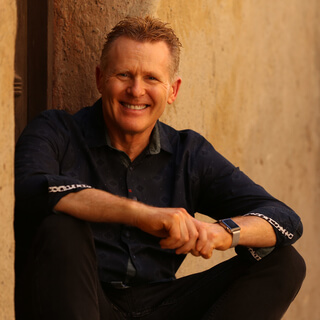
I'm Dr.
Robert Puff.
When we were teenagers,
Perhaps now or years in the past,
When something bad happened,
Like our boyfriend or girlfriend broke up with us,
Or we really want to get into a great university,
But we got the results from our entrance exam and we didn't do very well.
At these times,
It can feel like our world is over.
And I'd love to say that we grew out of it and we stopped catastrophizing,
But often it isn't true.
This anxiety can rear its head throughout our lives.
We get laid off from our job and we don't know if we're going to be able to keep our home.
One of our children gets sick and we have to take them to the emergency room and we wonder,
We fear this might be the beginning of the end.
Sometimes these thoughts are only fleeting,
But they're there and they keep coming back.
Our anxiety can act like a magnifying glass.
When we're stressed,
Our brain alarm system forces us to hyper focus on the intimate threat,
We lose all sense of scale.
In my private practice,
I often see people who are exhausted because their nervous systems are treating a bad week like a permanent state of reality.
Even though we know better,
Even though we've gone through crisis after crisis throughout our lives,
We often,
When that crisis comes again,
Can only see a few inches in front of our faces.
We suffer from temporal myopia.
You may be thinking,
But Dr.
Puff,
I don't do this.
What about when that extra bill comes that we didn't expect?
What about when the stock market drops farther than we hoped?
What about when prices at the grocery store make it that we can't buy everything we want because we just don't have enough money?
Where do our minds go when these things happen?
I think if we're honest,
We all can say it doesn't take us much from going from a good peaceful day to an anxious,
Fearful day.
But is it hopeless?
Is this just something we need to live with until the day we die?
Though we know each of these anxious moments will pass,
They just keep coming.
Today I want to explore with you how the antidote to this suffocating feeling isn't necessarily fixing the immediate problem.
It's changing our vantage point.
By expanding our timeline,
We dilute the concentration of our stress.
This technique has been around for thousands of years.
The Stoic philosophers,
Particularly Marcus Aurelius,
Practiced an exercise called the view from above.
When the emperor Marcus felt overwhelmed by the immense pressure of ruling an empire,
He would close his eyes and visualize his life from the perspective of the stars.
Looking down on Earth.
As a tiny speck.
We can do the same thing today.
When we listen to a lecture on cosmology or the formation of the universe,
We're reminded of the breathtaking scale of the universe.
When we realize that the universe is billions of years old,
It doesn't make our lives meaningless,
But it does make our temporary day-to-day frustrations profoundly small.
It gives us permission to exhale.
One of my favorite things that I do every week is at night,
After the sun sets,
I go for a swim outdoors.
And as I'm swimming,
With nothing to distract me,
I look up at the stars and the moon and I see how beautiful our universe is.
And whatever concern,
Whatever worry came with me into that pool,
It's gone very quickly.
Once I look up at the sky and see how vast and beautiful our cosmos is.
History.
There's a unique psychological piece that comes from exploring ancient history.
Whether we're studying Roman aqueducts,
The rise of ancient dynasties,
Or walking through historic sites like ancient capitals of Beijing or Xi'an,
We're confronted with a beautiful truth.
Humanity endures.
People who walked those ancient streets thousands of years ago worried about their families,
Their status,
And their futures.
Their empires rose,
Fell,
And transitioned,
Yet the human spirit continued to adapt and thrive.
When we stand before structures that have survived millennia,
Our problems are conceptualized.
If humanity can survive the sweeping turbulence of thousands of years,
We can absolutely survive the challenges of this month.
I'm headed to China next week,
And the thing I love to do when I visit another country is learn about the culture as much as I can before I get there.
One of the ways I do this is by reading some of the most popular literature in China that's been translated into English.
And this led me to the book,
To Live,
By Hu Hua.
The main character of this book,
Fu Gui,
Starts off as the son of a very wealthy family who loves to gamble and go to prostitutes even though he's married.
He's pretty despicable but he does,
Because of his gambling,
Lose everything.
And all his family estate is gone and now he and his wife must live in the state of poverty.
For the rest of their lives.
And it's shocking how many difficult things he has to go through throughout his life.
He has children,
But they both die.
He has a wife,
And she dies.
He has a stepson,
And he dies.
He has a grandson,
And he dies.
But the amazing thing about the book is,
Each thing he goes through,
He gets better.
He really turns into a beautiful old man sharing his story,
Realizing that he keeps living when everything else in his life is taken away,
But he finds beauty even in all the losses he went through.
And because the book covers the life where he had so much and lost it quickly through the rest of his life,
Where he had very little but kept going,
You really get to see his gentle transformation into a wise old soul.
I think that's one of the reasons the book is so popular in China right now,
Because it describes the very challenges that China went through over the past hundred years,
And yet this man came through them well.
And I think we all know people like that.
It reminded me of my grandmother who I lived with for three years when I was going to college.
She had grown up on the farm and she often described to me how hard it was for her to work on the farm when she was a young lady and how painful it could be to get up and go out in the cold and work all day long in the freezing weather and the long days in the summer working in the field.
She would say,
So hard,
But yet when I knew her,
She was a beautiful soul who loved me very much and was living a good life.
I was able to see she went through very difficult times.
She even lost her husband and had to raise her own children,
Three of them,
Including my mother,
For several years until she remarried and found a good mate to spend the rest of her life with.
But he died when I was living with her and she still did well.
For the rest of our life.
So what can we do as we navigate our lives when we get anxious or fearful?
How do we dissipate that anxiety?
We can first apply the hundred-year test.
The next time we feel a spike of panic about a mistake or a setback,
Pause and ask ourselves.
Will this matter in a hundred years?
Would this matter in 10 years?
Would it even matter in 10 months?
If the answer is no,
Don't give it the energy of a catastrophe.
And then we can immerse ourselves in history when we feel overwhelmed by the modern world.
Intentionally retreat into the past.
Read a history book or listen to an educational lecture on the ancient world.
Let the sheer scale of human history act like a weighted blanket for our nervous system.
And then the third thing we can do is a zoom out meditation.
We take two minutes to sit quietly,
Visualize our current problem,
Then mentally zoom out to see our whole house,
Then our city,
Then our continent and then our globe and if we're still anxious keep going further out beyond the solar system beyond the Milky Way galaxy beyond the visible stars and galaxies just keep going and realizing the vastness of the universe.
And find the peace in that vastness.
The anxious thoughts are going to come.
We cannot stop that,
But what we can do is as quickly as possible.
Put those thoughts at rest.
We belong to a resilient,
Enduring human family that stretches back thousands of years.
Our current struggles are just a tiny passing breeze in the grand timeline of our lives.
Saying,
I release my narrow focus on today's stress.
I zoom out and embrace the vastness of time and I trust in my own enduring resilience.
Thank you for joining me on the Happiness Podcast.
Until next time.
Accept what is.
Love what is.