I want to start by asking you a question.
When a decision lands in front of you.
It could be a text message or something bigger like a conversation you've been avoiding.
Or a choice that involves other people's feelings.
What is the first thing that you do?
If you're like most of the women I work with,
And honestly,
Like the version of me I used to be,
The first thing you do isn't check in with yourself.
It's an outward scan.
What does this person need?
What will they think?
What keeps things from getting too uncomfortable?
What keeps the peace.
And you do all of this so quickly,
So automatically,
That by the time you've made a decision,
You're not even sure it was yours.
Here's what I want to offer you today.
That's not decision-making.
That's actually self-abandonment with a to-do list.
And the self-loyal woman,
The woman you're becoming.
Makes decisions differently.
And the way she makes decisions.
Is based out of the care for other people,
Including herself.
And this is where she puts herself in the equation,
In the picture.
And today I want to walk you through exactly what that looks like.
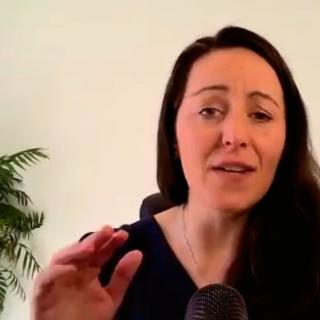
I'm Dr.
Kelly Kessler.
I'm a doctor of physical therapy,
Nervous system educator,
And the founder of the Self Loyalty Mentorship.
My work lives at the intersection of nervous system science and real lived experience.
Experience that I've been through myself.
And if you're new here,
Welcome.
And if you've been here for a while,
I am so glad you're back.
Let's start with why this is so hard in the first place.
Because I think a lot of women carry the quiet shame around decisions.
Like they should know what they want.
Like it should be simple.
Like everyone else seems to have it all figured out,
And they're the only ones standing there frozen,
Going through 17 mental scenarios before an answer of a basic question comes forth.
But here's what I want you to understand.
You're not taught to make decisions from the inside out.
You were taught to be good.
You were taught to be accommodating,
To be easy to love.
And what that translates to in practice is that decisions become about managing other people's responses.
Not honoring your truth.
So the decision isn't hard because you don't know what you want.
Most of the time you do know what you want,
But you're so quick to override that.
And the thing is,
Your body knows.
But yet your mind goes quicker.
The decision is hard because you know and you're afraid of choosing it because you wonder what it will cost you.
And this isn't happening at the conscious level,
It's happening subconsciously.
Because we hold on to beliefs that we need to be the version that other people expect.
We need to be that role that we have to fill of being the good girl,
The one who always goes along and gets along with other people.
And those beliefs drive you until you start to realize that they are.
And that's the thing,
You wonder,
Will they be upset?
Will they pull away?
Will they think that you're too much?
And for the longest time,
That dynamic that you have managed has worked.
Because you're the one carrying all the weight.
You're the one holding it together.
You're the one carrying the emotional burden.
You're the one silencing yourself,
Making yourself feel smaller so that other people are not uncomfortable.
And so,
Instead of choosing from the inside,
You negotiate.
You calculate,
You weigh what you feel against what seems safe,
And very often what feels safe wins because that's the nervous system.
The nervous system is designed to keep you safe.
And that's the pattern.
And it makes complete sense given how you learn to survive.
But it also keeps you making decisions that don't belong to you.
I want to get really specific here because I think this is where a lot of content around a self-abandonment gets way too vague.
It's easy to think that this might be happening,
But when you actually see it for what it is,
That's when you can recognize in yourself.
What's actually happening.
So here's what the self-abandonment decision loop looks like in real life.
Sometimes it comes in a request,
A message,
A situation.
And your body gives off a signal.
It's usually your stomach dropping,
A tensing,
A tightening in your chest.
A feeling of disease in your body,
Just something doesn't feel right.
And it's that quiet knowing that really is your no.
But then the mind clicks in and overrides that.
And this is where you get in these patterns.
You scan for what they want first.
You talk yourself out of what you actually feel.
You think about the consequences of saying no or speaking up or choosing yourself.
You pick the option that creates less friction.
It's those moments that you just swallow your pride and keep on doing the thing that you know you don't want to do again,
But yet you do.
You tell yourself it was your choice,
And then you quietly resent it later.
You go home and you wonder,
Why didn't I say something differently?
Why didn't I stick up for myself?
Why did I go along with that?
But yet it was the choice at the moment that felt safer.
And that part about resentment is important.
Because resentment is data.
When you make a decision from self-abandonment,
Even if it's a small one.
Something registers it.
Your body is keeping that score.
And over time,
Those small moments of leaving yourself behind accumulate into something that feels like disconnection.
Like you don't even know yourself anymore.
Like something essential has gone quiet.
And here's what I want you to hear about this.
It's not a character flaw,
It's not weakness,
It's a learned pattern.
Your nervous system has been conditioned to outsource your sense of safety to other people's reactions.
It learned that belonging and love and connection required a version of you that didn't take up too much space.
And it learned that so thoroughly that now it happens automatically.
It happens beneath the surface.
It happens in those reaction moments where you can't even think straight,
You just do.
And before you realize it,
You've already left yourself behind again.
I want to share something from my own experience here.
Because I think it matters.
Not long ago,
I remember this moment,
A message came in.
I felt it before I even finished reading it.
My stomach dropped.
I had this tightening in my chest.
I felt chest pain from this message.
The almost automatic pull to respond and fix it and make it okay for the other person felt so real in this moment.
That I was already typing to respond to them.
To smooth it over.
Before it became something even more difficult to deal with.
The old pattern had me typing before I even knew what I was actually doing,
Before I even had a thought.
It was responding from guilt.
Projected guilt from the other person.
From their framing of me.
From the version of myself that still believe my worth depended on managing their emotions.
But this time I paused.
I remember distinctly,
I stopped.
I put my hand on my heart.
I literally physically right there in that moment stopped and allowed myself to feel into it.
And not feel like I had to respond in that moment.
And instead of the usual me leaving myself behind,
I said to myself,
I'm with you,
I've got you.
And then I took a deep breath.
And I allow myself to just sit with myself.
Not feel the urge to do what the other person wanted me to do,
Not feel the urge to fix it or smooth it.
I just let me be with me and feel whatever I was feeling in that moment.
And this wasn't about me getting regulated enough to still give them what they wanted.
It was for me to be in tune with myself,
To check in with myself.
To know what I wanted.
And to come back to myself.
And from that place.
Even though it's still uncomfortable,
Even though you still feel that pull,
You still feel the guilt.
You feel all those things still there.
But the difference is that you don't let them drive your car.
You're in the driver's seat.
They can still be there as a passenger,
But you're the one who has that choice.
And in that moment,
I chose myself.
I chose my next step.
Instead of it unconsciously being chosen for me,
This was not chosen from what they wanted.
It wasn't chosen from a guilt trip.
It wasn't chosen because of their perception of me.
I made my next choice.
From a place in alignment with me.
When after I checked in with me,
After I allowed myself to be with myself.
And decipher what was mine and what was theirs.
That's what a self-loyal decision looks like.
It's not fearless because there is fear involved.
It's not without discomfort because the discomfort is definitely there.
It doesn't mean that the other person's feelings don't matter.
Because their feelings are real and so are mine.
It just means that mine do too.
Because when you abandon yourself,
Your feelings take a backseat to everything.
But when you're loyal to yourself,
You honor yourself.
And you allow yourself to be heard and seen and validated by yourself.
And you don't need to abandon yourself to prove it.
What does it actually look like to make a decision as a self-loyal woman?
I want to give you three questions.
This is not a rigid checklist,
But it's a way of orienting yourself inward before you move outward.
As a way of making sure that you're actually in the room when this decision gets made.
The first question is,
What do I actually want here?
Before I factor anyone else in.
I'll say that again.
What do I actually want here before I factor anyone else in?
And that is not gonna be answered by what's practical,
What's kind,
What's needed from you.
It's what's true for you right now in this moment.
Without judgment,
Without overriding it,
What is it that you need in this moment?
And I know this sounds simple,
And I know it's not.
Because for a lot of women,
That question has been so crowded out for so long that the honest answer does not come easily.
And you might sit with it and hear nothing at first.
You might hear competing voices that all sound like obligations.
But stay with it.
Ask your body,
Not just your mind.
What do I actually feel here?
The second question is,
Am I making this decision from fear or from love?
This is another one that can be really challenging because it's likely that you've made so many decisions subconsciously out of fear,
Fear of what could happen if.
And fear-based decisions are all about avoiding something,
Avoiding discomfort,
Avoiding rejection,
Avoiding conflict,
Avoiding what happens if you say no or disappoint someone or take up too much space.
But love-based decisions are different.
They move you towards something that you actually believe in,
That resonates,
That feels right for you.
Love-based decisions feel expansive.
They feel freeing.
They feel lighter.
They feel like you can finally take a breath.
They feel like you're anchored in yourself.
And the thing is that you can make the decision that from the outside it looks exactly the same.
But the important thing to decipher is what is the energy behind it?
Is it a fear-based yes or a love-based yes?
Is it a fear-based no or a love-based no?
What is driving the decision?
Are you fearful of what could happen?
Or are you making a decision because it feels like the most loving thing you could do for yourself?
And the third question is,
Can I live with myself if I choose this?
And it's not answering that by,
Will they be okay?
Will this create conflict?
Will they understand?
That is not what we're answering here.
You're asking,
Will I be OK?
Can you stay with yourself after this choice?
That is a huge checkpoint for self-loyalty.
That's where you find out if the decision requires you to abandon yourself to execute it.
And a self-loyal woman has learned sometimes the hard way.
That no outcome,
No relationship,
No version of keeping the peace is worth that cost.
I know I had to live that.
And sometimes that's the hardest.
Question we can ask ourselves.
But if something requires you to abandon yourself,
It's essential to look at that situation,
Relationship,
Whatever it might be.
With curiosity of what it requires for you to maintain it.
So I want to come back to that moment I shared.
The hand on the heart.
The breath,
The words.
I've got you.
I'm with you.
Because it wasn't just a nice moment,
It was the practice.
When you're in the middle of a decision and the old pattern fires.
When that pull to scan outward to fix it,
To make it easier for someone else kicks in.
You need something to interrupt it before your nervous system completes the loop.
That's what this somatic anchor does.
The physical touch activates your vagus nerve,
Which is your 10th cranial nerve,
The longest nerve in your body.
It signals safety to your nervous system and literally gives your body something real to orient to.
In that moment.
It says I'm here.
I haven't left.
The breath is the same.
One slow breath through your nose.
Allows you to come back to yourself rather than being pulled into the outward situation.
And the I'm with you,
I've got you,
Is that direct message to the part of you that learned to disappear.
The part of you that didn't feel worthy of being with yourself in so many moments.
The part that still believes that staying with yourself isn't safe.
You're telling her this time is different.
I'm not leaving you,
I've got you.
You don't have to have the decision figured out before you do this.
You just have to interrupt the automatic departure.
Come back to yourself first.
And then choose from there.
The last piece I want to leave you with is this.
A self-loyal woman knows her non-negotiables.
And these are not rigid rules she's drawn in the sand.
But as a deep knowing that has been earned through paying attention.
She knows what it feels like in her body when a decision requires her to abandon herself to execute it.
And she's done enough work to recognize that feeling before she's too far in.
In real life,
That might look like staying in a conversation and saying something true,
Even when her voice shakes.
It might look like not explaining herself three times after she's already said no.
It might look like receiving someone else's disappointment without feeling like she had to immediately fix it.
It might look like choosing the slower,
Harder path.
Because it's the one she can live with.
None of this is comfortable.
I want to be honest with you because none of this is comfortable.
It is challenging.
But the reward through it.
Is that you get to stay with yourself.
You don't get to the inner life and see that you've abandoned yourself.
Throughout this entire time.
You get to be with you,
To know you,
To connect with yourself and feel at home with yourself.
Self-loyalty is not a warm bath.
It is not immediately peaceful.
There will be moments where you hold to yourself and it costs you something real.
But here's what I've learned and what I've hear from so many women I work with.
The cost of staying with yourself is something you can recover from.
The cost of abandoning yourself accumulates quietly and is so much harder to come back from.
Here's the rewire moment.
Every decision you make is a vote for the woman you are becoming.
The woman who is no longer learning to leave herself behind in the moments that matter.
The next time something lands,
A request,
A message,
A conversation,
A choice.
You don't have to have it all figured out.
You just have to pause.
Put your hand on your heart.
Take a deep breath.
And say,
I got you.
I'm with you.
And then ask,
What do I actually feel here?
Am I choosing from fear or am I choosing from love?
And can I live with myself if I choose this?
That's the practice.
And every time you do it,
Even imperfectly,
Even when you get it partway right,
You're building a nervous system that knows you're listening.
One that feels safe enough to speak.
That's how the pattern ships.
This is not through trying harder.
This is through paying attention to the right places.
Thank you so much for spending this time with me today.
And if something in this episode stirred your truth,
Reminded you of your worth,
Or helped you see your patterns with more compassion,
You're already rewiring.
Remember,
You don't have to earn your place over give to be valued or shrink to keep the peace.
You get to include yourself.
Every single time.
Take a deep breath.
Put your hand on your heart.
Keep choosing a woman who feels like home.
I'll see you in the next one.