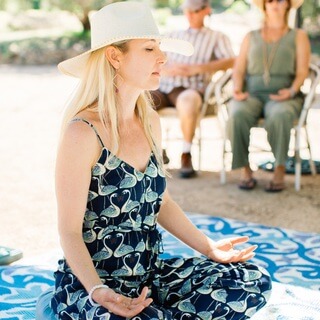
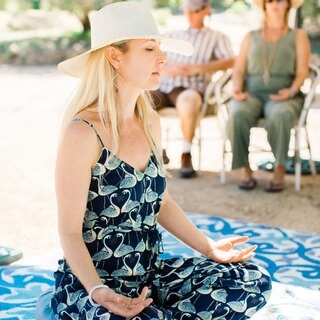
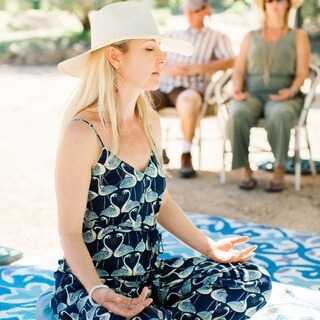
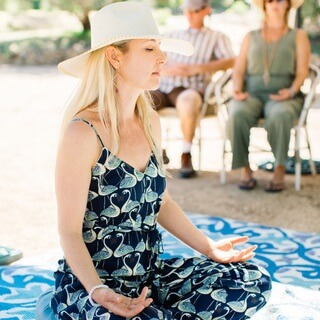
How can you turn towards the parts of yourself that you don't like with more care?
And what is the research behind compassion and its benefits for our mental health?
That's what we're going to explore today with Dr.
Marcela Matos on Your Life in Process.
Hey everybody,
I'm off to lead a retreat in Blue Spirit,
Costa Rica.
If you want to come along with me next year,
We are going to be opening registration soon for the last week of May 2024,
Blue Spirit,
Costa Rica,
For an ACT and yoga retreat.
Get on my newsletter at drdiannahill.
Com to be the first to know when it opens.
Those ocean view rooms go fast.
I also want to let you know about a few things in May.
Debbie Sorensen and I are releasing the ACT Daily card deck.
She's going to be on the show to talk all about it.
And if you want to pick up your card deck,
Go to Yoga Soup.
They're going to have them there along with the ACT Daily journal.
And I will sign them for you so that you can give them to somebody you love,
Like your mom or an upcoming graduate.
I'm going to be there Friday mornings during my meditation.
And on May 12th,
I will be at Inside LA with Alyssa Eppel and Trudy Goodman.
We're going to be doing a workshop together all about how to adapt to changing time.
You can sign up at insidela.
Org.
If you are a healthcare worker or therapist,
I'll be online at Cottage Health Psychiatric Ground Rounds on Tuesday,
May 23rd from 12 to 130,
Talking about psychological flexibility training,
Helping your patients adapt to change and engage with their values using ACT.
The link to that registration is in the show notes.
Spinning a lot of plates there.
I hope you can come along with me and enjoy the spin.
It's fun,
Psychological flexibility and compassion.
So today we have the real treat of talking to Dr.
Marcela Matos.
I've been following her research for a number of years now.
Dr.
Matos is a clinical psychologist and auxiliary researcher at the Center for Research in Neuropsychology and Cognitive and Behavioral Intervention at University of Coimbra in Portugal.
And for over 15 years,
Her research and clinical interests relate to evolutionary clinical psychology,
Compassion-focused therapy,
Contextual behavioral therapies,
And contemplative approaches.
She's published over 80 international peer-reviewed articles and book chapters on the topics of compassion,
Shame,
Self-criticism,
Emotion regulation.
And currently her main research focuses on applying and testing the efficacy of compassion-focused group interventions and promoting mental and physical wellbeing in several populations and looking at its epigenetic mechanisms and physical stress responses.
This conversation weaves in and out of talking about shame,
Talking about compassion as a buffer to shame,
And Dr.
Matos even leads us through an eyes-open compassion exercise that you can do while you're going about your day listening to this podcast.
Shame is such a painful whole body experience and one that we all experience across our developmental lifespans.
And some shame memories can be stickier than others.
We share a few of ours on the podcast.
But for some people,
Shame can become really central to their core identity and it can pop up over and over again.
Compassion involves noticing the distress that we experience,
The shame experiences we have,
The painful experiences we have,
And responding to it,
Approaching it rather than avoiding it and taking some action that is helpful.
Compassion is not as much a feeling as it is a motivation to offer help.
We can offer our help to others or offer our help to ourselves.
And it's different from something like pity where pity may be looking down on somebody saying,
Oh,
You poor thing.
Compassion is more about rolling up your sleeves,
Getting in there and doing something to be Compassion is not always being nice or being agreeable.
It's more about coming from a wise,
Strong,
Courageous,
And committed self,
A self that wants the best for you and wants the best for others.
And sometimes that's not always easy,
Doesn't always feel good,
But it does in the long run make us stronger,
Make us more courageous.
So I think you're going to love this conversation with Marcella Maltos all about shame and compassion and where she's taking it out in the world.
I will see you on the other side with your compassion practice for the week.
Welcome,
Marcella Maltos.
It's so good to see you.
I was just saying it's seven o'clock in the morning here and you're one of the few people I would do a podcast this early for.
Oh,
Thank you so much,
Diana.
It's 3 p.
M.
In Portugal,
Coimbra,
Where I'm at.
Thank you so much for waking up so early to have this conversation with me.
I'm so glad to be here.
Thank you for having me.
Yeah.
So I think I know you a little bit more than you know me.
I actually first met you five years ago in Nyack,
New York,
And we were at the first annual Compassionate Mind Foundation training.
I think Kelly Wilson was there and Paul Gilbert and Dennis Church and Laura Silberstein were putting it on.
And my memory of you,
Well,
I have two memories of you.
The first one is that you were sort of like the person that everyone was interested in hearing from.
I was like,
Who is this Marcella Maltos person?
Everyone was waiting for your talks.
And then the second,
But the deeper memory was that you led us through this exercise that I can remember every single aspect of it,
As if it were yesterday.
And it was an exercise where you had us embody our most compassionate self and imagine that we were doing an activity that we do every single morning,
But as that self.
So I washed my face very slowly with the most beautiful,
Compassionate self in mind and embodying.
And then I looked around the room,
We were doing it in a big circle,
And all these folks brushing their teeth,
Brushing their hair from this compassionate,
Drinking coffee.
And it was pretty powerful.
I took it away and I still think about it from time to time when I wash my face.
So thank you for that.
Thank you.
It is indeed.
It's very powerful,
Especially when we contrast that to the way in our usual days and lives,
In the busyness of our lives,
How we do so many of these activities without that awareness of not only our bodies,
But also of the quality of the relationship that we can establish with ourselves when we embody our compassionate self.
And then I was reading through some of the papers that you sent me in preparation for this episode,
Which was a lot.
You've written a lot of papers.
Thank you for the million papers to read.
But one of them stood out when I was thinking about this compassionate memory,
Which was actually a paper you wrote probably a year before that retreat.
And it was a paper on how actually embodying the compassionate self,
Getting into and feeling that compassionate self from the inside out is what predicts the impact of compassion.
That's what people found the most helpful,
Bringing it into their day-to-day lives.
Not just thinking about it,
But feeling it.
Exactly.
And so what we found,
That paper was part of a research project we conducted where we implemented a two-week compassionate mind training intervention where we asked people to come to an informative psychoeducation two-hour session.
And then we would ask them to practice a series of compassionate imagery and body-mind exercises,
Soothing rhythm,
Breathing,
Mindfulness exercises over the course of two weeks.
And we measured a range of psychological indicators,
But also participants' heart rate variability,
Which is an indicator of our parasympathetic system ability to regulate stress and negative emotions.
So we found significant effects just over the course of two weeks of practicing this core compassionate mind training exercises.
Significant effects in increases in self-compassion,
Abilities to receive compassion from other people,
Decreases in our resistances of receiving compassion from ourselves or from others,
Or of being compassionate towards other people.
We found reductions in depression,
Anxiety,
Stress.
And surprisingly,
We also found only two weeks of practice increases in heart rate variability.
So this physiological indicator of our body's ability to regulate stress.
And in the follow-up of that study,
We were interested in understanding actually what explains these effects.
So in terms of the practice,
How can we explain these changes that we found?
So we looked at the effects of the frequency in which people practiced,
Their perception of how helpful the practices were,
And also their ability to embody their compassionate self.
So to go to their everyday life and try to embody the qualities,
The skills,
The competencies that they learned and that they were learning through the practices.
And what we found was that it is actually more than the frequency of the formal practices.
It's more the fact that people are able to embody their compassionate selves in their lives to deal with hardships,
With their inner and outer struggles in the world.
That's what makes a difference in finding changes,
In changing,
In developing self-compassion,
Compassion towards others,
And having an impact on a psychological distress.
So embodying your compassionate self is everything from embodying like a facial expression that you would have if you were the kindest,
Most loving,
Most caring,
Most courageous version of you,
Or breathing in the way that you would breathe,
Or letting your body be in the posture of a compassionate self,
Having compassionate thoughts and compassionate motives.
And this is in real contrast to some of your earlier work.
So I actually want to rewind to how you started.
And if you look at the arc of your research,
It's really fascinating because you see the beginnings with shame,
And then you move into compassion,
And then now you're moving into the real application of compassion in schools.
So I want to talk about all of that,
But let's go to the beginning,
Which is shame.
It's such a challenging topic for folks and fascinating topic for therapists,
Right?
Like the shame experiences that we all have.
I'd love for you to define shame,
But before we do that,
Maybe even talk about your own experience of shame.
Yeah.
So it's interesting,
The arc that you mentioned is it kind of mirrors the arc of my own personal development through my own inner growth,
If I may say that.
So I'm,
Throughout my life,
As all of us humans,
I've had a lot of shame experiences.
We all have them.
Even though for many years,
Shame was not an emotion that stood out for me.
Like I would think about this emotion or knew what it was.
But since very early in life,
Diana,
Since I remember existing in the world,
I have a condition.
I have hyperhidrosis.
So I have,
I sweat from the palms of my hands.
So very early on,
And likewise,
Many of the people that I interviewed over the course of that research that was part of my PhD about their shame experiences,
If I am to choose,
Like the most significant shame experience,
I struggle with that.
So I have a set of,
Like,
It's almost like a mixture of experiences all related to this bodily characteristic of mine.
And these experiences entail this perception that,
For example,
When other people would unintentionally touch my hands,
They would immediately withdraw.
So I would feel disgust from other people when I touch them or they would touch me.
So I would have this experience of being different,
Being seen as somehow different or weird,
Or,
But people,
Because people mostly didn't understand what that was in the minds of others and me myself,
For many years experiencing that,
That difference,
That something was wrong with me and something,
Especially that I couldn't control.
When you ask them about their shame experiences,
People sometimes try to focus on one.
And what I discovered through my research is that that happens.
So for many people,
They will have a single event that's not a biographical memory that they will recall of shame.
But for many other folks,
That's not the case.
So sometimes there's a continuum of experiences or there's a mixture of experiences with the same theme,
For example,
Or about the same topic that can be a source of shame.
And it seems to pop up over and over again,
As you're describing as such a full body experience.
Shame is such a complex emotion.
It has sometimes anger can show up to sort of protect the shame.
Sometimes there's a lot of anxiety.
Sometimes there's sadness.
All of those come into the experience of shame that really at the core is about someone not liking you or finding you attractive or setting you out of the group.
Can you talk about the evolutionary basis of shame?
You said this is universal.
We all have this.
Why would we experience shame as humans?
Shame is seen as a self-conscious.
It's one of the most powerful self-conscious,
If not the most powerful self-conscious emotion that we have.
But it's also a socially focused emotion.
So shame is an emotion that an emotional experience that involves these feelings of inferiority,
Inadequacy,
Powerlessness,
Defectiveness,
Self-consciousness.
And with shame comes this desire to not be seen,
Avoid being exposed in the eyes of others,
Wanting to escape,
To hide,
Or to conceal one's deficiencies.
And it's interesting because even though shame is often experienced as very painful and distressing,
So it's one of the most painful emotions we can experience,
It has an adaptive value.
So over the last few decades,
Much has been written about this adaptive function of shame from an evolutionary perspective.
And UK clinical psychology and researcher,
Whom you're familiar with,
Professor Paul Gilbert,
Has written extensively about the evolutionary,
What he calls the evolutionary biopsychosocial model of shame.
And this model proposes that this propensity that we have,
We all share as human beings to feel shame,
Is rooted in our evolved socially competitive motives.
So our motives compete within a group with each other.
And the rise is from the fact that we are as human beings,
A species that is self-aware,
That is able to form an identity and is a highly social species.
So we have as humans innate motives to form attachment to others,
To belong to groups,
To want to be seen in a positive light by others.
So we all want to be seen as positively in the minds of others.
So to be regarded fondly by others,
To be wanted,
To be chosen by others.
And basically shame emerges as a warning signal that that's not happening.
So shame emerges when something happens that makes you believe that you are at risk of being rejected,
Of being excluded,
Of being persecuted,
Or even armed by others.
And if we think about this,
Evolutionarily,
This would be a huge threat for human beings.
So that's why shame,
Even though it is a secondary order emotion,
As you said earlier on,
Shame comes along with primary emotions like fear,
Anxiety,
Anger,
Disgust.
And this has to do with the fact that shame activates our threat system because it is the primary signal that we have that alerts us for social threats,
Threats of being rejected,
Excluded,
Criticized,
Humiliated,
Scorned by others.
And it prompts us to do something about it.
So the defensive maneuvers that come along with shame,
Be it the bodily responses,
You know,
The slumped shoulders,
Heart racing,
High gaze avoidance,
All of the bodily experiences that we have,
Which are very threat focused,
But also entail this submissiveness response,
Are all directed into the escalate potential social conflict towards repair damage to a social bond,
To appease others,
And to restore one's self image in the front of others.
And the behavioral responses that come along with shame,
Such as hiding,
Submit to others,
Escape,
Withdraw from the situation,
All of those are part of these defensive repertoire that is activated when shame is triggered.
And when we engage in those defensive behaviors of hiding,
Not talking about something that's shameful,
Isolating,
Slumping down,
Not looking someone in the eyes,
That's actually what keeps the shame going because we don't actually get the repair of someone touching your hand,
Feeling that it's sweaty and being okay with it.
I remember I had a really early memory of when I was dating my husband,
Going to the beach with him and I was wearing a bathing suit.
And there was like right on the side of your,
Like where your armpit meets your chest,
There was like this chunk of fat that was sticking out of the bathing suit.
And I remember my husband going and like poking it with his finger and being like,
That's so cute.
And it was this initial shame,
But then it had a repair quality to it.
He was seeing some part of me that I thought was ugly in a different light.
And that's a lot of what happens with,
I think the repairs that we can do in therapy or the ways that we can repair shame,
But it has to be exposed in order to be repaired.
There's a lot of courage to approach our shame,
But then also approaching our shame generates more courage.
So I'd love to talk about some of these buffers that you've found through your research that there's buffers early on because we're all having these embarrassing,
Shameful moments all the time.
And yet all the time.
And for some of us,
They get really stuck and they can contribute to sort of trans diagnostically to a lot of different mental health conditions,
But other ones we can kind of move through.
And what is the differentiation there?
What buffers are shame and how can we help with that?
It's a very,
Very important point.
This one that you are mentioning,
Diana.
And I was thinking about that when I was disclosing my own shame experiences,
Because that's the other side of the coin for me.
So I was very lucky in my life because if on the one hand,
I would be having these experiences,
I was also met with what I later found out in my research.
And I now know to be one of the key buffers to shame.
And that is experiences of warmth and safeness with others.
So shame is about social disconnection.
Shame is felt and lived mostly alone.
And it creates this disconnection between you and the other person or the other people.
And so if in the context of these experiences,
You are able also to have at the same time with other people,
Or even with the same people,
You are able to have experiences and record memories of feeling safe,
Connected,
Warmth in your childhood,
In your early life with important people in your life.
That is able to buffer the negative impact that these experiences have throughout our lives.
And then in turn,
What it does is that it creates,
Basically,
It reestablishes the bridge that shame destroys.
Because if shame by creating this disconnection,
It also creates this block for us to access our affiliative soothing system.
So for us to develop this ability to self-soothe ourselves in the face of adversity.
So when you learn that from others,
When you're met like what the experience you just shared with care and affection and warmth and acceptance in your own vulnerabilities,
Which is luckily the experience that I also have.
So even though I have these experiences,
I also have that.
So I have a lot of experiences where something that made me different was met with acceptance,
With kindness,
With warmth,
With compassion.
That allowed me to also start seeing that vulnerability in a different light.
And this is what I found in my research.
So through interviews with hundreds of people,
But also through research that we conducted using self-report measures,
We have found consistently that people who have access to memories and experiences of social connectedness with others,
Of social warmth,
Of feeling warm,
Feeling accepted,
Feeling loved and valued by others.
These people will be more protected against the negative and the pervasive impacts of shame experiences in their later lives than those who don't have access to these memories and these experiences,
Either because they did not exist or because the negative ones and the threatening ones were much more pervasive in their lives.
And so what we also found at the same time was that another key buffer of shame and shame experience is compassion.
And this is also related to these memories of warmth and safeness,
Which we know that may be key in developing these abilities that we can develop and cultivate within ourselves to be compassionate.
We conducted a study with my colleague,
Stan Steindl at the University of Queensland,
Australia,
Where we found that compassion is also a key buffer against shame experiences.
We found that if people are able to be self-compassionate towards themselves,
They will be protected against the negative impact that shame experiences,
Early shame experiences in their life may have on their depressive,
Their vulnerability to develop depressive symptoms.
But also they will be more able to experience positive affects.
So to feel safe,
Connected to others,
To feel relaxed,
To feel calm.
And we have found the same results,
For example,
With women suffering from eating disorders.
But for example,
In another study,
I also found the same results with gay men.
And if you're able to be self-compassionate,
These skills,
These qualities of the relationship that you can develop towards yourself are able to buffer the negative impacts that shame experiences have on depressive symptoms and internal shame,
In this case,
In gay men.
So these two components,
One of having an experience that coincides with your shame,
That is a loving,
Caring experience can help buffer.
And then if that doesn't happen,
So you don't have that,
Being able to give that to yourself is part of what can help buffer shame.
And I think,
For many of us,
Sometimes our shame experiences are so minor that other people don't even know to be compassionate towards those things.
I was thinking about a thread through my life was I started school really young.
And so it was always like one year behind developmentally from everyone else.
And when everyone else was ready to do something developmentally,
I wasn't quite ready.
So things like sleepovers,
I was the kid consistently that called their mom to go home.
And I remember being teased about it.
I remember when a sleepover girl peed on my pillow and said,
Why don't you go home now?
Because you can't sleep here.
And I internalized that experience for a long time of I'm not the same as everyone.
I'm too weak.
I'm too vulnerable.
I'm not strong enough.
I'm not brave enough.
But it really was just a developmental difference because I was ready for a sleepover the next year.
And that still shows up for me.
In my adult relationships,
I'll go out with a group of friends and meet them somewhere for a long weekend.
And I'm like,
Oh,
No,
I have all these weird things about me that make me not be able to I have to go to bed early or whatever that make me different.
And those things people don't always see.
But practicing self-compassion or being able even to acknowledge,
Oh,
This is my shame that's showing up.
I know what it feels like in my body and how can I respond to myself differently is really important.
And a lot of people either have I love Gilbert's fears,
Blocks and resistances.
So either have fears about that or have blocks to it like they don't have access to resources to offer themselves shame or someone else offer themselves compassion or someone else's compassion.
Or they have resistances.
They don't really believe that compassion works.
You did a fascinating study,
A giant study during COVID around fears of compassion.
And I'm wondering if you could talk about the study.
It spanned 21 countries and over 4000 people looking at how these fears of compassion really do get in the way of us being able to tolerate distress and stressors.
That's so that's so important,
Isn't it?
Because people leave these experiences usually in secret.
So secretly,
They don't disclose them.
We don't go to other people and we talk about our shame and our shame experiences.
And when I for my PhD many years ago,
When I did all the interviews with hundreds and hundreds of people from the general population and also from a clinical population patients,
Most people,
I was the first person who they ever these guys for I would say the vast majority of people.
I was the first person.
They for the first time they disclose their their shame.
And so this is a very important point because usually if we share this with others,
We are met with compassion.
We are met with acceptance,
Not criticism.
So we are able to repair what happened and integrate it in a different way within ourselves.
So that's a key point.
And this is very important.
But also shame experiences block in a way.
So they inhabit it.
They inhabit our abilities to activate compassionate motivational systems and those that in turn so then fears of compassion in turn,
They increase our vulnerability to psychological distress.
So you can see how hard this can be for people.
So we in the beginning of the pandemic,
We thought that it might be interesting because we were experiencing for the first time a global threatening event.
Nothing like that has ever happened to us globally as human beings.
So what I thought was what if we use this opportunity to conduct some compassion research?
So the idea behind this whole project was to look at how compassion and fears of compassion,
Social connectedness,
How these will be related to resilience,
Well-being or psychological distress in the context of the pandemic.
So this started as a very small idea,
Diana.
So this was supposed to be a small project involving three or four countries.
But you know how the compassion community is.
So as I started contacting people,
More and more people became interested.
And in a time where we were all closed and isolating from each other within our own homes,
We became glued together and connected through this compassion.
I was going to say these compassion researchers were hungry to offer compassion and doing this project,
I'm sure it gave them,
Actually alleviated some of their distress.
Exactly.
So we came together.
We came together and this project became a huge project.
So it involves 44 researchers around the world,
21 countries,
So 23,
But we had to exclude two because of low numbers.
And basically what we've been doing is mapping throughout the pandemic.
So we've already collected five assessment moments.
The final one,
We are in the process of collecting it.
And we are mapping basically how compassion and fears,
What's the role of compassion and fears of compassion and of social connectedness in the context of the pandemic in relation to our well-being and our psychological distress.
And in regard to fears of compassion,
What we found was that if we have these fears,
These resistances or these blocks to compassion,
Be them in regard to ourselves.
So being fearful of being compassionate towards ourselves or being fearful of being compassionate towards others or of receiving compassion from other people,
We will be more vulnerable to experience depression symptoms,
Anxiety symptoms or stress in the context of the pandemic.
And we will also be more vulnerable to feel less socially safe.
So fears of compassion include things like,
I'm afraid if I offer compassion to another person,
They're going to become dependent on me.
Or I'm afraid if I receive compassion from another person,
I'm going to be dependent on them or it makes me weak.
Or I'm afraid of giving compassion to myself because then I'll just become lazy.
So these are some of the fears in those three flows of giving,
Receiving and offering yourself compassion.
Exactly.
So you can be fearful of compassion for many different reasons.
And these are usually related to perceptions that you've developed throughout your life,
Experiences that you've gone through,
Lessons that you've learned from your significant others that made you believe that if you are compassionate towards others or towards yourself,
Or if you receive compassion from others,
Bad things can happen,
Or you're not,
You do not deserve compassion,
Or some people can't even notice their own suffering.
So how can they be compassionate towards themselves if they are not sensitive to the suffering?
So fears,
Blocks and resistances of compassion can be in relation to this ability to be sensitive to the suffering in ourselves or in others,
Or on the other hand,
To act towards alleviating or preventing that suffering.
So these two sides to it.
And what we also found in these studies that not only these fears of compassion make us more vulnerable to psychological distress and less psychological,
Psychosocial wellbeing,
But they also magnify the impact that the threat of COVID-19 has on psychosocial wellbeing.
So what this means is that if you are afraid of compassion or resistant of being compassionate towards yourself,
Towards other people,
Or of receiving compassion from others,
You will be much more vulnerable to be affected by the negative impact that the pandemic may have,
Could be having on your wellbeing.
You will be more vulnerable to feel depressed,
Feel anxious,
To feel stressed out,
To feel isolated from others and not connected to others.
And the key finding here at the same parallel to this is that this effect was universal throughout the 21 countries.
What this means is that regardless of individual differences between the countries in levels of depression or anxiety or compassion or fears of compassion or the lockdown measures that were being implemented,
This magnifying effect of the fears of compassion was consistent throughout the 21 countries around the world.
Which is an indicator of the universality of our need for compassion as humans when we're going through something really hard,
Whether it's globally or within our little families.
We're doing sort of what you begin to do in therapy.
There's a bit of an intervention just in the psychoeducation aspect of all of this,
But there's also interventions that you're doing with compassionate mind training that really help people begin to take in compassion,
Embody compassion,
And give compassion.
And I want to offer some of those to our listeners,
Like you offered to me on my face washing activity.
So that's one thing that people can just do is pick an activity,
They do it every day and do it with compassion and tenderness and love and care and really with a desire to be helpful to yourself.
That's the motive of compassion.
But do you have another one that is simple that people could do in their life to increase either self-compassion or giving compassion or their ability to receive compassion from another?
So would you like me to take you through a small practice to do that?
Yeah,
Yeah.
Eyes open,
People are driving,
They're walking,
They're jogging,
They're making dinner.
So yeah,
Something that we can do right now.
Yeah.
Something that we can do right now.
So firstly,
Try to engage with a soothing rhythm breathing.
So breathing in a slow and deep way,
Trying to expand the length of your breath,
Your in-breath and your out-breath briefly.
So start by doing that.
And then as you do that,
Try to bring to your face a warmth,
A warming,
An affectionate facial expression.
Like if you were in the presence of someone you love.
And bring to mind,
If you were to create an ideal compassionate self,
How would that part of you be like?
What qualities would this part of you have?
So imagine that you could be,
You could become this part of yourself.
You could become this compassionate self with a caring motivation,
The desire to be kind,
To be caring,
To be supportive in the world.
And think about how would your body posture be like if you were to embody this caring motivation towards yourself and others?
How would it be in this moment to look wherever you are,
To the world,
Throughout the eyes of this compassionate self with this caring motivation?
And I imagine that this part of you is also wise.
This part of you understands that you have a tricky brain that you did not choose,
That was created over millions and millions of years of evolution.
And imagine how would it be to look through the eyes of this wise version of you into the world and into yourself with a deep understanding of how life can be hard,
How all human beings share this common humanity.
They all suffer.
They all go through struggles in life.
They all go through shame experiences in life.
And finally consider that you have strength and courage and that you are able to embody that in this moment,
In your posture,
In your facial expression,
In how you hold your body,
How you are standing or running or sitting at the moment.
And in this moment,
Try to embody these qualities,
Caring motivation,
Strength,
Courage and wisdom.
And imagine that you can see in front of you an image of yourself,
A version of you that is in the world on a daily basis with its qualities,
Its talents,
But also its faults and everything else that you may perceive as a defect or something that you perceive as not good enough or different in you.
The things that make you feel ashamed.
And try to look at this version of you that encompasses all of this.
The aspects that you love about yourself,
But also everything else that you don't like about yourself,
Because those are the parts that are mostly in need of your compassion.
And try to look at this version of you,
These parts of you,
Through the eyes of the wise,
Caring and brave compassionate self that you are embodying at the moment.
And try to offer yourself compassion in this moment.
Let this version of you,
Your compassionate self,
Who knows and has a deep understanding of all the struggles you've been through,
That this version of you knows that each day you're in the world trying to do the best you can.
And this version of you that is able to accept and not judge and tolerate and embrace all the parts of you,
All the bits of you that you wish did not exist.
And maybe you can even direct some compassionate wishes towards this version of you that is in the world.
And you may say out loud or to yourself,
May you be well.
May you accept yourself.
May you cope with life's challenges.
May you be happy.
And when you're ready,
You can just let the image of this version of you fade away.
And maybe you can still hold on to your compassionate self for a little bit longer.
Maybe even try to embody it throughout the rest of your day.
And see the impact that that has on your relationship with others and how you approach other people,
But also on how you relate to yourself during the day.
Thank you,
Marcela.
That was beautiful.
I really did it with you.
I hope the listeners that were listening were able to really do it too.
And what was interesting is in viewing myself from my compassionate version of myself,
I could even,
When you said those parts of you that you feel shame around,
I felt that that twinge of the wince factor around those parts.
It's such an insidious thing,
That shame.
And even when looking at it from my compassionate self,
Maybe some of the listeners might not even be ready to embrace that.
That's sort of the next step.
But just staying a little bit longer with those parts is the first step.
And being able to view them from your compassionate self and just note them,
Notice them.
There they are.
And then maybe after doing that for a while,
You could move a little closer towards them and offer them an embrace or care.
But I really appreciated that.
It was really beautiful.
And so something like that is part of this mind training that you take people through.
This is just one aspect of it.
There's many different parts and pieces.
What are some of the other things that you do with folks in compassionate mind training?
So we have a few interventions ongoing.
So compassion mind training basically comprises the core components of compassion focused therapy.
It's not a part of compassion focused therapy,
But it can be applied in group settings and to non-clinical populations.
So it entails a set of body-based practices,
Such as the importance of postures,
Compassionate postures,
Facial expression,
The use of voice tones.
So body-mind practices.
Using rhythm breathing,
Which is a specific practice designed to activate the vagus nerve and the parasympathetic nervous system and basically creates the conditions to then cultivate compassionate qualities and competencies in our minds and also mindfulness practices and exercises.
And then aside from these body-based practices that are at the core and are the first steps to compassion mind training,
It also encompasses a set of practices that are imagery practices,
Behavioral practices,
Emotional,
Functional analysis exercises,
All designed to cultivate the qualities of a compassionate mind,
But also better understanding the way our emotions work,
What we call our multiple selves,
And also our self-criticism.
So addressing and working with our self-criticism from this perspective of the compassionate self.
So you begin with some of the body-based practices to get your nervous system aligned with the social engagement system,
And then doing some of these other things like compassionate letter writing,
Where you write a letter to yourself from your compassionate self,
Or maybe you have a conversation with your self-critic and listen to your self-critic and maybe even physicalize or be able to embody your self-critic and go back and forth between your compassion itself and your self-critic.
There's lots of different creative experiential exercises from compassionate mind training and folks that want to learn more about it.
Paul Gilbert has a great book,
Mindful Compassion.
And then obviously I'll link to a number of your research studies that,
From a research perspective,
Give you a little bit of a taste of what the intervention is.
But you're now using this type of intervention with schools.
And as we close,
I just want to get a sense of where is your.
.
.
We've talked about this arc of starting with shame and then identifying compassion may be the antidote to shame in some of these difficult experiences we have.
And now applying it in the world.
So can you just talk a little bit about where your research is headed for those that are interested in hearing how this is going to get out there to help people?
Yes,
Sure.
What I've been doing for the past five,
Six years is indeed bringing these type of interventions to schools.
So we have been collaborating with University of Derby,
We're doing it in Portugal,
But also in the UK in the development of this and implementation of this,
What we call compassion in schools research project.
And this project entails applying.
So we developed in collaboration with the UK team,
Professor Frankie Maratos,
Francis Maratos in the UK at University of Derby,
Professor Paul Gilbert and ourselves in Portugal,
We developed a compassion mind training intervention for teachers.
And we've been implementing it over the past few years.
And also this project aims not only at targeting teachers' well-being and emotional regulation skills,
Compassionate abilities,
But also the pupils and the parents.
So it takes a whole school approach and tries to target the whole school community.
And the results we have so far are very encouraging and promising.
So we've done a pilot feasibility study in Portugal,
But also a randomized controlled trial that has found that this intervention for teachers is not only well accepted by this population,
But is also effective.
Effective in reducing burnout,
Which is a huge problem for teachers,
Stress,
Depression,
Anxiety,
Reducing fears of compassion,
And also in improving well-being,
In improving positive affect,
Feelings of safeness,
Vitality in the school environment,
But also in promoting compassion,
So self-compassion,
But also to be compassionate towards others around them.
And this is very important because it means that this can have an impact on the whole school context.
So currently we are in the process of studying the impact of this intervention applied with pupils and parents.
And we've recently won a grant to look at not only the impact of these on psychological indicators,
But we also have done this with,
Again,
Looking at our choice variability and we found significant improvements in our choice variability with the teachers that did the intervention.
We are trying to expand that and we are looking at the impact of this intervention,
Of this eight-week intervention on a range of neuroendocrine,
Autonomic,
Immunological biomarkers,
And also on epigenetic mechanisms of prosociality and stress in public school teachers in Portugal.
So this is what we've been doing.
And for example,
Another setting that we have a project ongoing is in companies.
So we are now taking these into organizations and trying to understand the impact of compassion-focused interventions on improving not only a psychological wellbeing,
But also professional wellbeing and interpersonal relationships within an organizational context.
That's beautiful.
That's a true flow that when our teachers are doing well,
Then our kids are doing well,
And then our parents are doing well,
It is a.
.
.
Compassion is a flow.
I love when I talk to Paul Gilbert,
Him talking about it,
It's something that we breathe in and something that we send out.
So intervening at the school level is just a beautiful intervention.
It makes me think of Thich Nhat Hanh's book,
Happy Teachers Change the World.
And that is so true.
Let's keep our teachers well,
Let's keep our healthcare workers well,
And our organizations well,
And then we all will be well together.
Well,
Thank you.
This has been such a treat.
I so appreciate you taking this time,
An extra special that you led us through a compassion intervention that we're hearing it from the source.
That's a big part of the passion that I have for what I do.
So this contact with the participants and with the people is key for me.
I learned so,
So much from running these groups and from the experiences of these people.
So I'm always so grateful and I feel so blessed to be able to do this with them.
So yeah,
So thank you,
Diana.
It's a thank you,
Because it was a true pleasure to be here talking to you a little bit about the work I've been doing.
Wonderful.
Thank you,
Marcel.
Thank you.
So compassion takes courage and compassion builds courage.
It takes a lot of courage to look at the parts of ourselves that we don't like to stay with those parts and to offer our self-care.
And it takes a lot of courage to look at other people's suffering as well.
Dr.
Matos' research and in combination with others from the Compassionate Mind Foundation really show that compassion might be one of your most important inner resources that you have.
So I want to offer you two things to do this week.
The first is just going back to this practice of embodying your compassionate self.
So take an activity that you do every day.
It could be brushing your teeth.
It could be putting your kids to bed.
It could be drinking your cup of coffee.
And step into your most compassionate version of you while you do it.
Take on the facial expression.
Take on the physical posture.
Step into your heart.
Feel wise and strong and caring.
And notice how it changes how you engage in this activity.
Try it every day this week.
See what happens.
And then second,
Take a little time to write a compassionate letter to yourself.
If you were to be this compassionate version of yourself that Dr.
Matos had us embody and try on that is wise and strong and courageous and wants the best for you,
How would you talk to yourself?
What would you tell yourself about something that you are struggling with right now?
Write a letter.
Dear me,
Here is how I feel towards you.
Here are my wishes for you.
Here is my concerns for you.
Here is how I'm going to help you.
Get out your journal and write a letter to yourself.
And notice that when you bring compassion to even the parts that you don't like,
It softens them and it tenderizes them.
And hopefully it'll help you be able to offer compassion to others and maybe even show some of those parts to others as well.
Take care and have a beautiful week.
Thank you so much for listening to this episode of Your Life in Process.
When you enter your life in process,
When you become psychologically flexible,
You become free.
If you like this episode or think it would be helpful to somebody,
Please leave a review over at podchaser.
Com.
And if you have any questions,
You can leave them for me by phone at 805-457-2776 or send me a voicemail by email at podcast at yourlifeinprocess.
Com.
I want to thank my team,
Craig,
Ashley Hyatt,
And thank you to Ben Gold at Bell and Branch for his original music.
This podcast is for informational and entertainment purposes only,
And it's not meant to be a substitute for mental health treatment.