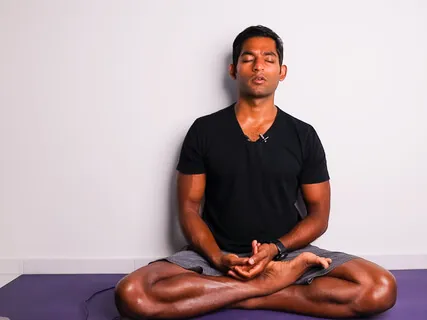
Namaste and welcome to this daily live meditation session with me,
Dehansi.
These sessions are a space of reflection,
Of sorting out your thoughts,
Sorting out your reflections together with the wisdom of ancient sciences,
Ancient sayings,
People who have deeply reflected on life and put out their reflections and guidance for us to use and to reflect on our own,
Not to take those guidance,
Not to take those reflections as rules,
As the truth,
But to come to those reflections on our own as well,
To use those guidelines as catalysts,
As things that would let us be on track and have those guidelines,
But the reflection has to happen within us.
The understanding has to happen within us.
The wisdom has to happen within us.
Otherwise all the talk,
All the meditation,
All this does not have much significance.
If the wisdom stays outside,
If the reflection stays outside and you only consume it as a consumer,
As a listener,
Then it has less significance.
Then this is entertainment.
You watching me talk and you watching me sharing these reflections with you.
The best way is to listen and reflect along with every word,
With every sentence.
Use your own intelligence.
Take the opportunity of these sessions to sharpen your own intelligence,
To purify your own consciousness,
To reflect,
To see what is being said makes sense or doesn't make sense.
If it makes sense,
Why does it make sense?
Can you relate to this in your own life?
If it doesn't make sense,
Why it doesn't make sense,
Where does your life's experience differ?
Not to make conclusions,
Not to make judgments,
But simply this process of reflecting,
Of challenging your own intelligence,
Challenging your own perspective,
Gives you the opportunity to grow for your consciousness that is stuck,
That is closed,
Your mind that is not open,
Not because you are at fault for that,
Just simply because you have been choosing the lifestyle you are so busy that your mind is stuck,
Is only stuck in the daily routines,
Is only thinking about your next step,
Your next meeting,
Your next doing.
It never has the chance to relax,
To reflect,
To open.
And when you give yourself that chance,
It constantly wants to go back to work.
It wants to constantly be engaged because we have not trained it to relax,
Thereby losing our own intelligence,
Thereby losing our own ability to know.
These sessions,
These 30 minutes every morning,
It doesn't matter what we are discussing,
Patanjali's Yoga Sutras or Atisha's mind training or Sufism or anything,
These are just an excuse just the context for the intelligence,
For the consciousness,
For the inner space to once again activate,
To once again come out of all the nonsense,
Of all the mundane and giving yourself time to once again be,
Once again have the eyes open,
Have your eyes slowly opening from being asleep to being fully open.
It's like the very morning minutes when you are still dreaming but then you decide that you want to wake up and you slowly wake up and the thought process starts.
But unfortunately that thought process is about what you are going to do today.
This here,
This reflection is about what is everything,
What is this experience of life.
And from this reflection we slowly move towards silence.
We don't stay with the contemplation,
We don't stay with the thought process,
We move from the context towards inner silence,
Towards having the pure experience of consciousness.
Every day,
Step by step,
More movement towards that pure consciousness so that we can see the ultimate,
So that we can experience and take ourselves to the highest possibilities as far as we can,
As much as we can afford.
This is the chance.
Right now today we are going through Yoga Sutras of Patanjali.
I have three sutras.
Let me share them with you,
Then we will reflect on them together and meditate in silence afterwards.
Patanjali says,
Egoism is the identification of the seer with the instrument of seeing.
Attachment is that which dwells on pleasure.
Aversion is that which dwells on pain.
Lots of wisdom in these three sentences.
We can unfold them very slowly.
It may happen now,
It may take several sessions to just unfold these three things.
It depends on you,
It depends on the space that we create for ourselves to reflect how deep we can go in that space on our own with our own experience.
The first point that Patanjali makes here is Egoism is the identification of the seer with the instrument of seeing.
We are discussing ego,
Such a vast complex topic,
Made as complex,
Made as a problem that is unsolvable.
Everyone talks about it,
That you are being egoistic,
You should not be egoistic.
All the preachings in all moralities,
In all religions,
In all spiritualities,
Everywhere you see there is a teaching to move away from the ego,
To not have the ego.
Do you really understand what ego is?
Have you first hand understanding of what ego is?
Or are you also just going by the books of what ego is?
Can you pinpoint in yourself where is ego?
What is ego?
Unless you can spot the enemy,
Although it is not an enemy,
Unless you can spot it in yourself,
You cannot address it.
So you have to spot your ego.
It may not happen in this moment,
It may happen in the moments while you are interacting in your daily life with other people or with things.
But right now you can recall those moments when you know this is ego.
According to Patanjali,
He says,
Egoism is the identification of the seer with the instrument of seeing.
So you have to understand first of all what is the instrument of seeing.
You have to understand who is the seer and then you have to understand the process of identification.
So this,
If you want Patanjali's wisdom on what is ego,
Along with your own unfoldment,
Along with your own logic,
Own reasoning opening this big topic for you,
Your ego and what to do with your ego,
You have to understand the instrument of seeing and who is the seer.
Instrument of seeing,
This body is the instrument of seeing.
This mind is the instrument of seeing.
What else can be the instrument of seeing?
This body,
This mind,
Your five senses,
Your touch,
Your smell,
Your eyes,
Your hearing,
All these five senses,
The basic senses that give you the access to this external world and then your mind that takes that data and creates a perception,
Creates the logic,
Creates the reasoning,
Creates the experience.
That is your instrument of seeing.
And who is seeing?
Is your mind seeing?
Is your body seeing?
Or is somebody else sitting inside and seeing what your mind is projecting?
If that is the case,
Who is that?
When you call I,
When you say I am eating,
I am walking,
Who are you referring to?
When you call your name,
Who are you referring to?
Let us take this very slowly.
When you say I,
Are you referring to one thing?
Are you referring to many things,
Objects?
Are you referring to a process?
Are you referring to something that is alive?
Or is it just a convention?
Or when you say I,
For convenience,
For functioning,
We are calling something,
Maybe one thing or a mix of things as I.
See this in yourself.
What is this I?
Imagine a child is born and that child starts saying to his or her mother,
The body is hungry.
Or the body wants to go to the toilet.
Or the mind is feeling the pain.
The mother would put that child into a mental hospital.
We have created a convention to address everything that comes in the experience,
Everything that comes from the senses,
Everything that the mind processes,
Everything put together which is the seeing,
Which is the instrument of seeing as I.
And that has no reality to it.
That I,
When we say I,
That first person training that we have through language,
Through conditioning,
Through education and through repeated use day in and day out,
We say I.
We say I and we either use I or we use our name,
The first person,
This instrument of seeing we are calling as I,
Which the body is hungry,
The instrument is hungry,
The body,
The mind is feeling the pain and pleasure,
The mind is having the desires and we say I want this,
I want that.
You are not wrong when you say I want this or I am hungry.
Yes,
The convention that we have created,
I is hungry,
Is having desires,
But you are not the I.
Do you see that?
Do you see that I,
That convention is a collection of this instrument,
Of the senses,
The processes that are happening,
But are you just the instrument?
Are you just the process?
Or is there a seer?
Is there a seer who is experiencing the process,
Who is going through the process,
Who is managing the process,
Who is experiencing the experience,
Who is seeing whatever the instrument is bringing,
Whatever the body,
The mind,
The body brings the information,
The mind processes it,
Presents a picture in front of you,
Gives you the logic to evaluate it,
To relate to it and then the seer sees it.
Who is the seer?
Is the seer the mind itself?
Is the seer the body?
Ask yourself in your own honesty when you ask this question to yourself,
If you don't have an answer,
It's okay,
But don't jump to an answer,
Don't assume the answer that is given in the books that you have trained yourself constantly over and over again that you are just the body,
You are just the mind and there is nothing more than that.
If you can slightly resonate to what I am saying right now,
You know that there is something more,
Something more inside,
There is a seer which is experiencing all the experience presented to it.
So this differentiation of the seer and the seeing created by the instruments of seeing,
This has to be so crystal clear in you if you want anything out of your life,
If you want anything out of spirituality or your physicality,
Whatever you want in life,
This process,
This clarity has to establish.
So I will take a pause here,
We will move into silence from here before we will understand what is this identification and we go further into rest of the sutras of the Panjali.
Let us close our eyes and reflect on the seer,
Reflect on the instrument of seeing,
Reflect on the process of seeing with our own consciousness,
With our own awareness,
With our own inner light.
Throughout the silence,
Throughout the meditation,
Try to speak.
Spot yourself,
Catch yourself as the instrument of seeing,
The process of seeing and the seer.
This will only happen when your awareness is turned inwards,
When there is some basic silence in your mind,
When your body is still.
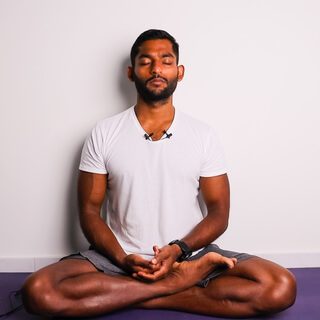
So give yourself these moments to be in a posture that is comfortable,
Allowing your body to be still.
Your mind to rest.
Acknowledge the instrument of seeing,
Your body,
Your five senses,
How they are present,
Always open,
Receiving the information,
Bringing the outside to the inside.
The noises,
The ambient sounds that you hear.
Your eyes are closed,
But you still see in front of your closed eyes.
Acknowledge the instrument of seeing.
Seeing means information,
Perception,
The picture,
The experience.
Point-of-view.
.
Your mind experiencing,
Creating the experience,
Creating the perception,
Transferring what your senses bring,
Translating the outside to the inside.
.
Since you can see this entire process of the senses,
Of your mind,
Who is this seer?
Just not the mind,
Just not the body.
The seer seeing whatever the mind and the body is showing.
.
It is not an imagination.
It is not a visualization.
It is paying attention to your inner space.
Acknowledge the seer.
Is the seer separate from the body?
Is the seer connected to the body?
Is the seer separate from the mind?
Or is the seer connected to the mind?
.
Stay with the seer.
.
Hold your awareness,
Your attention on the seer as much ungraspable it is,
Undefinable it is,
Formless it is,
Shapeless it is.
There is a seer in you.
.
If you wish to keep on holding this awareness on the seer,
Meditate further in silence.
Ignore what I will say next.
All very gently and slowly you may open your eyes.
As the eyes open,
More outside moves into the inside but maintain this awareness of the seer if you can during your day as well.
I'll see you tomorrow,
7 am Central European Time.
Namaste.