The virus is the same as it ever was.
It's still infecting people,
And it's still leading to loss of life.
A few of the world's governments have dealt with this crisis exceptionally well.
The key word there being exceptionally.
Most governments have chosen to put money before health.
And this leaves many of us in a tight spot regarding taking care of ourselves,
Our families and our responsibilities.
The key to continuing to get through this crisis is to do as much as we're able in the direction of safety and accept the rest.
There are always forces in the world beyond our control.
This was the case before COVID-19,
And it will be the case after.
One of the most powerful strategies we can adopt for living in the world is to skillfully identify what we can and cannot change.
Stephen Covey talks about this in terms of what he calls the circle of influence and the circle of concern.
In your circle of influence,
You will ideally place all the things you have the power to change.
This might include spending time with loved ones,
Either in person or on video.
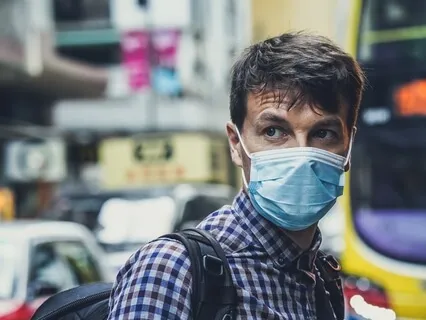
Wearing a mask in public.
Limiting the frequency of your grocery trips.
Sanitizing what you bring home.
Appealing for the option of working remotely.
And budgeting and cutting back on luxuries.
In your circle of concern.
You'll ideally place things which you cannot change.
But it is of benefit to you to be aware of,
Such as.
The current rules around mixing with family and friends.
Places that it's compulsory to wear a mask.
The revised opening times of your local supermarkets.
How the supply chain of sanitation products is doing nationally.
What measures your workplace might be taking regarding your safety.
And how the cost of travel is changing.
It's also very wise to place certain things outside of both your circle of influence and your circle of concern.
Examples are.
What other people choose to do regarding social gathering.
Whether or not everyone wears a mask.
How busy the supermarket is when you arrive.
Whether or not your trolley was sanitized by the previous user.
What arrangements your colleagues might have with your boss.
And how Richard Branson is treating his employees.
Stress and confusion often occurs.
When we place things in the wrong circle.
For example.
If I believe that whether or not everyone wears a mask is in my circle of influence.
I'm in for a rough ride.
Sure,
I could attempt to raise awareness of the benefits of wearing a mask.
And this wouldn't be a bad thing.
But in the end,
It's each individual's decision whether or not they do.
Even to put this matter in my circle of concern is unwise.
Because if I hang my feelings upon other people's behavior,
I'm going to be miserable at least some of the time.
To be clear.
Whether or not a person coming toward me is wearing a mask is absolutely an item for my circle of concern.
And my response to an unmasked person moving toward me is an item for my circle of influence.
When we're confused about which items go in what circle.
We're prone to wasting energy.
When we waste energy.
We become less effective.
But when we spend our energy wisely.
We become more effective.
And our circle of influence grows.
For example,
Say I do decide to campaign to raise awareness of the benefits of wearing masks.
My campaign may gain enough attention that the occasional person who's on the fence about the matter messages me and asks for further information.
Now I have something for my circle of influence.
That being how I interact with these inquirers.
There are very real health risks in the world right now.
Sometimes we can control the amount of risk we're subject to.
Other times we cannot.
In those times where our safety is out of our hands.
We have a choice.
We can panic.
Or we can conserve our energy and apply it to the things we can actually influence.
The former option further decreases our safety.
The latter increases it.
And this is a great example of a time when mindfulness practice comes in handy.
If we're not mindful of our thoughts and feelings.
We're likely to be reactive.
To retaliate to those who are unkind.
Or to become aggravated because of circumstances.
But with mindfulness established.
We're more able to consider our actions.
And to respond.
Instead of react.
We're more likely to be able to act wisely.
Upon what we can influence.
And leave alone what we can't.
We're more likely to concern ourselves with the things we really need to know about.
And ignore what we don't.
So.
Let's practice mindfulness.
So that we can take the best care of ourselves.
Our loved ones.
And our neighbours.
May we all be safe.
And healthy.