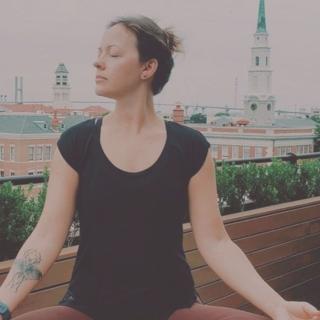
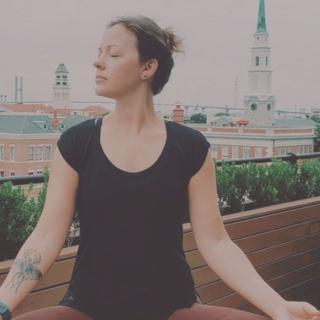
Let's go ahead and get settled into a comfortable seat.
And that seat can be on a chair or a couch,
Even on your bed,
But you may be seated on the floor.
And just make sure that wherever you are finding your meditation seat,
That you are comfortable.
That your spine can be tall.
That any sort of joints that might be resting on a harder or solid surface are padded with a blanket or a cushion,
So that as you are seated for the duration of your practice,
And as gravity begins to take over,
That these joints on the surface below them don't become uncomfortable,
Don't begin to distract you and pull you outward,
That you can find this sense of ease.
SUCCA.
In your shape,
In your posture.
You're welcome to close your eyes,
But you can also just keep your gaze soft.
Taking a moment,
Just offering yourself a body scan,
Maybe starting at the crown of your head and slowly moving down your body towards your toes.
Notice if there are areas that may feel a little sticky,
A little tense.
Especially through the face,
The jaw,
The throat.
Notice if the shoulders are.
Kind of crunching up towards the ears.
Can you soften the shoulders?
Relax your belly,
Just let your belly be soft,
Your hips heavy.
Is there any gripping through the fingers and the toes?
Soften the palms of the hands and even the soles of the feet.
Sensing any tension through the hips or the thighs,
Knees,
Lower legs and ankles.
Can you just find a little softness and notice the difference maybe between holding tension and feeling areas that might be sticky or stagnant.
And even if it's just a softening,
Letting go,
Just 5% more,
That's fine.
Mostly are just becoming aware of these areas where we.
May hold tension that's not always noticeable.
Then using your five senses.
Begin to notice what it is that you're taking in from the world around you.
Let's start with sound.
Begin to listen to sounds off in the distance.
Just allowing your awareness to move from sound to sound.
You don't have to name the sound or try to figure out what makes the sound.
You're just listening.
There may be a lot of different sounds or there may be only one or two.
Now allow those sounds to dissolve and bring your awareness inward to notice the sounds in the room around you.
If you're in your home,
Maybe you hear.
The sound of a dryer running or the dishwasher is on.
The hum of the air conditioning.
And then allow those sounds to become part of the background hum.
You're going to bring your awareness in and begin to listen for the sound of your breath.
You don't have to change anything about your breath.
You're just listening.
Noticing if you can hear this sound within or over the sounds of the background hum of all the other noises.
Then shifting awareness to your sense of smell as you inhale,
Do you notice if a scent lingers in the air?
If there's a lack of scent,
Maybe you just feel the breath moving in and out through your nose.
Bringing awareness into your mouth.
Notice if there's a flavor or moisture on your tongue.
Did you recently have a sip of tea or coffee?
A breakfast that that flavor is still present in the mouth.
Whether your eyes are closed or gazing softly.
Begin to visualize or recall the space that you're in.
See in the color of the walls.
Remembering the shape of the room.
Where you are in the space.
And then noticing the places where clothing rests on your skin.
And where you feel your body touching the surface beneath you.
Once again,
Sensing your seat heavy with gravity,
Anchoring downward.
Into the support of the earth,
Into the surface beneath you,
So that your spine can grow tall.
A slight lift to the crown of your head.
And taking a moment to notice if maybe the head is rushing forward of your heart.
Or maybe your head is following slightly behind.
Can you find that midpoint?
Where head and heart are aligned together.
Sensing the crown of your head right over your tailbone and that central channel of your spine.
Stacked.
Align.
Unobstructed.
Now shifting awareness back to your breath.
Maybe you once again begin to listen for the sound.
Maybe once again beginning to notice the sensation of the breath at the nose.
And you begin to detect the difference in temperature between your inhale and exhale.
The exhale breath slightly warmer than the inhale breath as it moves through the nose.
And then noticing where the breath is moving into the body.
How your body responds to the breath.
So as you breathe in,
Begin to just follow with your awareness the breath in through your nose and down into the space of your lungs where it dissolves.
Before you exhale and the breath moves from the lungs and back out through the nose.
The breath dissolving somewhere outside of the body.
Now just continue to follow the breath in and out.
Maybe noticing the sensation of your lungs filling.
Your ribcage widening.
Collarbone gently lifting.
And then begin to gently,
Slowly refine the breath.
So allowing the shoulders,
The chest.
The upper body to become passive.
Still.
As the breath moves deeper and you sense that the belly is expanding as you breathe in.
Gently contracting as you breathe out.
You're not creating the expansion and the contraction.
You're just allowing the breath to become more subtle,
To move deeper into the body.
And the physical body,
The upper part of the torso,
Becoming more passive,
More still.
This is just the natural movement of the body as.
You come into diaphragmatic breathing.
Now once again.
Notice what sounds you can hear that are close to you within the room.
Maybe within your own internal world.
Listening to your thoughts.
Can you just listen without being.
Taken on a journey.
Stringing thoughts together,
Just allow the thoughts to arise and dissolve.
And here you can incorporate neti neti if you desire.
But just listening to the thoughts,
Are they moving quickly?
It's their sense of steadiness,
Spaciousness.
Maybe they feel heavy or sleepy.
Anxious,
Calm.
Focus.
Just observing.
If you notice that you're being carried off into a story,
Into rumination,
Silently repeat neti neti.
Now let go of observing thoughts and begin to listen for the sound of your breath.
And again,
You don't have to change anything about your breath in any way.
Staying with this diaphragmatic breathing.
This often means that the breath is quieter.
So you may have to listen more intently.
You're not shaping the breath.
You don't have to count the breath.
Now begin to listen specifically to the sound of your inhale.
Each time you breathe in.
Hear or imagine that you hear the sound SO.
Each inhale breath hearing or imagining the sound so.
Now allow the sound of so to dissolve.
And begin to listen to the sound of your exhale.
You're just listening to the sound of the exhale breath.
As you continue to listen to the sound of your exhale,
Hear or imagine hearing the sound hum.
Hum on the exhale.
Bye.
Now allow the sound of hum to dissolve.
Listening to the sound of your inhale and exhale.
Begin to hear or imagine.
The sound so on the inhale.
The sound hum on the exhale.
So as you breathe in,
Hum as you breathe out.
Continuing to listen for the sound.
Home.
Now allow the sound of the mantra,
The sound of the breath to dissolve.
Bring awareness to the center of your chest.
Center of the spiritual heart.
Right behind the breastbone.
Just anchoring your awareness on one point.
Listening.
And gently begin to expand your awareness outward once again.
So moving from the heart space.
Expanding awareness to sense or feel the whole body.
In the space that you're in.
Taking in the sounds of the world around you.
And all of the background hum of the world becoming distinct individual sounds once again.
As your breath deepens,
Noticing if a scent lingers.
This taste comes back online noticing a flavor or moisture in the mouth.
Feeling the places where your body touches the surface beneath you.
And where clothing rests on your skin.
And then finally,
Seeing yourself in your meditation space.
Recalling the shape of the room,
Visualizing,
Remembering the color of the walls.
Keep coming back slowly,
Taking your time,
Welcoming yourself back in any way that feels right,
That feels best for you this morning.
When you are ready to close your practice,
You can slowly bring your chin to your chest.
And then bringing hands to heart center,
Palms gently pressing.
Taking a moment of gratitude.
For making space for your practice,
For making time to listen inward.
And to hear the messages that your breath and your body and your mind offer you.
And also remembering.
That space,
That silence between all of the sounds and all of the listening.
That spaciousness,
Which you are.
And bringing thumb knuckles to forehead.
Together we bow in gratitude.
To each other.
And to these teachings.
Thank you for joining.
Great to have you and I look forward to seeing you next time.