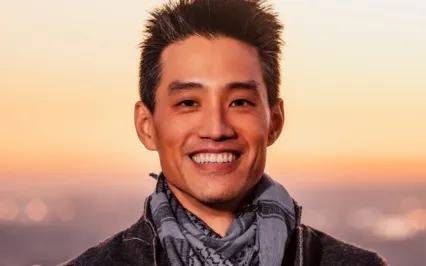
Welcome to Noble Warrior.
My name is CK Lin.
Noble Warriors will interview thought leaders about their journey from being a burnout warrior to a noble warrior and reclaiming their deep joy and purpose so you can do the same.
My next guest is Amir Ahmed Nasser.
He's an Excel author,
Journalist,
And pro-democracy activist.
His writings have been featured in The Atlantic,
Foreign Policy,
Wall Street Journal,
And The New York Times.
Today he helps leaders and entrepreneurs tell their own stories with more purpose,
Focus,
Prosperity,
Fulfillment,
And freedom.
And on the creative side,
He is also the artist,
Singer-songwriter Dreama Starlight working on his debut album.
We talked about the pros and cons of building a personal brand.
Transcending beyond the parent-child relationship.
Being rooted in your soul's purpose.
Accelerating your soul audience fit with technologies.
And finding your soul print and awakening your true leadership voice.
If you enjoy this conversation,
Please leave a review on what you got from the conversation on iTunes and all the different platforms.
It will really make a difference for us.
Please enjoy my conversation with Amir Ahmed Nasser.
Last weekend,
I got a chance to meet with the chief of the Yawanawa tribe from the Amazons.
And then I had a very visceral experience interacting with him in his presence.
Just how grounding he is and powerful voice,
Powerful storytelling,
Powerful wisdom downloads.
And has a very just the word is powerful,
Right?
Experience interacting with a man.
And he's only 31.
So age has very little to do with the power that he has.
He's very,
Very connected,
Spiritually present.
And then his facility to sing,
To use his voice,
To use his tools are just powerful.
And one key insight that I got is the name of the podcast is Noble Warrior.
So we use warrior metaphors quite a lot,
Right?
The dojos and martial arts.
But for him,
It's not a metaphoric description.
When he is leading his packs into the Amazon to hunt,
It's a game of survival.
Truly,
He's not only the hunter,
But he's only he's also the hunted.
If he's not aware of it,
Then,
You know,
Jaguar could like take them out like this.
If he's not aware,
If he doesn't use his discernment,
He can get lost in the middle of a jungle and then not being able to find his way home.
Indeed.
So,
So,
So I want to use that as a segue to your story of being a media warrior for many years.
You were a journalist,
You were a blogger,
And you let the pack of being an activist,
You're using your true identity,
Your voice to make change in the world,
Shall we say.
So,
So if you look at those metaphors,
I'm curious from your perspective.
What is the pros of using that your personal narrative,
Your personal identity,
As well as the cons,
The risk,
Exposure that you had to endure to do that.
So maybe you reflect back to me,
The nature of my question so then before we dive in deeper into your own narrative.
I love this CK I already have a good feeling this is going to be a great conversation I've already said to you beforehand that based on what I've seen you do before,
You are great conversationalist and interviewer and right off the bat.
From the get go,
You know we launch into it.
Thank you for asking that that's a very thoughtful question.
There are definitely pros and cons to storytelling and sharing one's message on the basis of one's own lived experience in a very raw capacity at times that can open you up to energies that you may not have discerned well,
Initially.
And so when you open up yourself to the world in that capacity in that manner,
Without paying enough attention to the energy in the room and the kind of people in the room and also their intentions and what they're feeling and if your energy field is not strong enough,
Certain patterns,
Thought forms can actually kind of seep in,
You know,
There's this whole concept in a lot of Eastern cultures,
Called the evil eye.
And for a long time I dismissed it like yeah yeah that's just a bunch of nonsense superstition.
But there is something to it,
What it is exactly how it works.
You know that's for somebody to figure out.
But having lived it.
Well,
It came back up,
Can you define that first because I actually don't know what that phrase means.
So the evil eye basically,
You know,
When you're out in the world and you're doing something cool and you are carrying yourself,
And really owning your authority and your power.
And sometimes there are cracks in your energy right in your in your energy field and people are trying to get in and kind of like weigh you down for whatever reasons,
You know,
They've got going on and a lot of the time they're not even aware of what's happening within them.
And so,
Envy,
Jealousy and they kind of give you this like searing heated look like man just like this guy,
You know,
Just,
You know,
And that can have quite a detrimental effect.
If you get hit with too much of that.
And you don't do enough work to maintain your energy hygiene,
Which is a very very real thing.
These aspects of our existence were not very clear to me in the beginning because I grew up with a father who for a very long time had been a professor.
So,
Very much cerebral.
You know a lot of cognitive processing very much in his head very much always reading books and reading books is beautiful.
It's a very important thing for our growth.
But there is also this,
You know,
Real thing about reading kind of being a socially sanctioned form of dissociation,
Not being in your body,
Not being within your heart,
Not being grounded not being present in the moment and just really being all up in the head,
And too much reading can actually be a bad thing.
If it's not balanced out with heart centered meditation.
It's not about introspection timeout in nature.
Anyone who's disconnected from nature is really missing out on a lot,
They're not living at their full potential.
So I had the benefit.
And one could say even the privilege of growing up from a very young age because my two older brothers were quite significantly older than me,
My older brothers like five six years older.
He's the oldest right he's Yeah,
Even older.
Right.
So,
By the time I was five or six,
They were already out hanging out with their friends and I was too little to go out and hang out with any friends and then my little sister was born.
And so a lot of attention was directed at her as a little baby.
I didn't have much to do except play with Legos and read comic books and other books.
And so I would spend time with my father and his friends scholars,
And I didn't know it at the time,
But I grew up around a lot of academic discussion scholarly discussion,
You know peer reviewed journals,
And in normalize that kind of language in that way of speaking for me and it made it very difficult for me to form friendships.
Just be a normal kid at school.
That was a big blessing as a privilege.
In other ways I was not privileged,
You know,
By the time I was 60 years old I had already lived through two wars.
You know,
The civil war in northern Sudan South Sudan,
You know,
We were originally from Sudan,
And then also the invasion of Kuwait,
You know by Saddam Hussein in Iraq at the time we were in Qatar and Doha,
You know,
Later on.
And so,
Being in that kind of environment where education was very valued but in a way that was very cerebral all about cognitive and verbal development.
I missed out on the energetic aspects.
And so,
When I learned the heartache aspect you mean what being in one's heart really owning one's energy and authority being grounded not just being all up in the head all the time thinking thinking thinking thinking thinking thinking like what about the being.
What about being one with nature.
What about finding one's own graceful sense of flow and and maintaining that sense of flow.
So,
That was something I learned later on the hard way,
As I was sharing my personal story from a very heavy intellectual place,
But I wasn't really solid in my heart.
And so I was getting all these kind of psychic attacks and energetic attacks and like jabs you know we've all experienced being out with some people,
And they don't hit you they don't punch you they don't literally jab you with their hand,
But you feel like an energetic job like you feel it in your heart like ouch,
That kind of hurt,
You know,
And so hence the word heartbreak,
You know,
Oh,
The word heart wrenching.
Right.
These are real phenomena,
We are energetic beings,
Whether people believe in that or not,
Just like there is gravity,
Whether we believe in it or not.
Hmm.
Like everything that you said,
So you're speaking to someone who lives in very comfortable in his head as well,
And in many ways,
Thinking back to my own childhood.
I actually wish that,
You know,
I had more adult conversations with my parents.
So it's funny how you live that life and you wish that you're more grounded.
I think there's a time and a place obviously my mind is a full range of development right so I'm not saying just one thing is better than others.
My might we want to be polymath right to be developed with our mind with our heart emotions with our body right as well as our spirit.
So it's interesting to reflect back on what you hope that you would have had more which is the more grounding heart level of development and playfulness like oh that can we talk about my comic books,
Can we go together.
Yeah,
Yeah,
Let's go.
Yeah,
It was very academic though.
But it is interesting,
Kind of like that whole thing the grass is greener on the other side.
What about your comic book.
I wish we,
You know,
My dad and I had talked more about like my comic books and my Lego and my toys and had those kind of conversations to balance it out.
But the thing is,
Is that he didn't receive that from his father.
And so he could not give to us what he never received,
Because how would he know what it is,
If he hadn't been provided with it.
Hmm.
Yeah.
So that's your origin story a little bit of it,
Right,
Your environment,
Going through wars,
Grow up in academic household.
Fast forward a little bit.
Now that you are taking on this,
This baton this this this this this torch of speaking your mind and being a blogger,
You know,
Sharing your perspective of,
And a very charged topic,
Religion,
Right and politics.
It takes certain courage to actually do that,
You know,
To want to make a difference in those realms.
You share a little bit about the cost of that.
Yeah,
Well both you know northern Sudan and Qatar the Middle East in general,
In the 90s and up until now unfortunately we're very authoritarian societies ruled by dictators.
By the time you know it was 1997 1998 we had already moved to Southeast Asia,
And specifically Kuala Lumpur,
Malaysia.
And all of a sudden I went from being in a,
You know,
In a school where the language was in Arabic,
To being an international school a British International School where the means of communication and learning would be in English,
And my parents felt strongly about that they did not like the sense of limitation that was imposed on us,
You know,
My dad was fortunate enough to graduate top of his philosophy class at the University of Khartoum northern Sudan at the time you know back in the 60s or something.
And he ended up with a PhD scholarship to the United States at the University of Wisconsin.
So he valued the liberal arts he valued the freedom for critical thinking.
He wanted that for us and he could notice that we were struggling because at home we were quite free to to critique him and to question him academically other things he didn't like it very much.
You know,
Um,
So they made it a point,
Especially after Saddam Hussein's invasion of,
You know,
Kuwait and there were these like public service announcements we had to wear,
You know,
Practice wearing masks in case of a chemical weapons attack like you know as a kid I could sense the fear in the air.
So we were very relieved when we ended up in Kuala Lumpur,
Malaysia.
And for my parents you know they also wanted to be in a Muslim majority country that was you know a bit more forward thinking and modern and like open to the world and Kuala Lumpur at the time was really emerging as a cosmopolitan global city.
And now it's become a really incredible city to be in to be honest.
So they're going to international school for the first time,
I'm now in a state of like being where there's just so much diversity.
You know,
I've got Chinese friends were Buddhists atheists,
Indian friends were Hindu,
You know,
Punjabi Sikhs,
Right.
There were many Christian many Muslims,
And he was a really good state of being to to to really experienced that they weren't,
You know,
Openly at least like you know Jewish people.
But other than that,
Like there was just so much diversity in the society and so it was very refreshing for me,
And I really began to bask in it but I could still feel the cost of having lived up until the age of 10 or 11,
You know,
In the Middle East,
Where stifling.
And any kind of critique,
Anything said that was wrong.
Canings,
Bullies,
Like fistfights,
You know,
Blood all over the floor,
Like it was frickin nasty and horrible.
And so like,
You had to either comply,
Or suffer the cost.
And suffer.
People did for sure,
You know,
I certainly went through some heinous experiences that no little boy should ever have to go through.
But it was a different reality in Kuala Lumpur,
Malaysia,
Relatively,
Compared to that,
It was a lot better.
There were still issues and problems,
But still,
It was a lot better.
And I joined the debate club,
Once my English started to become better.
You know,
My oldest brother was born in the United States in Wisconsin.
So he's an American citizen.
As I said,
My dad,
You know,
Obviously,
Knew English already and taught Arabic at the University of Wisconsin Medicine.
And he was doing his PhD in oral traditions and folklore.
And so he taught us at home through storytelling,
But it was never personal.
It was always referencing books.
Like,
Literally,
If my brothers and I fought,
My mom would yell at us and scold us and smack us and get us to calm down.
Right?
He would just walk in very,
Very like,
You know,
Sternly,
And like,
Yell at us to sit down.
And then he would get into a lecture,
He would literally start talking about the theory of conflict in sociology,
States that,
Da da da da da da da da,
We're just like,
Oh,
My God,
Like,
When is this gonna end?
And my brothers and I would be looking at us just like,
Looking at ourselves and looking at each other.
The cost of fighting is due to endure lecture from that.
Literally,
He would start talking about the theory of conflict,
You know,
Based on research in the field of sociology.
That's so funny.
You know,
And so like,
Okay,
Okay,
We get it.
Hey,
I'm sorry.
Are you sorry?
Yeah,
I'm sorry.
Okay,
Good.
We're done.
Can we just go now?
Can we just go back to our rooms?
You know,
So so we wanted to connect with him on a more personal basis,
You know,
Looking back at it,
And we we all had that yearning.
It's like,
Can you talk to us as your sons rather than your students?
Why does home have to feel like a professorial classroom all the time?
But again,
He didn't know better.
And I would find out later that he was actually sent off to boarding school.
So he missed out in his own childhood and you know,
Growing up on the experience of being like in a family that's like,
Really like very huggy,
Very touchy feely,
You know,
I love you.
I love you too.
Let's sit around.
Let's play like he didn't know what that was.
He went to boarding school.
And so his father was very stern education,
Education,
Education is the same.
Education is the way out of,
You know,
Humble beginnings.
And that that's kind of where that contrast comes from.
Then the internet arrives.
Well,
Before we move on to is this still alive?
Is this still doing well?
Yeah,
Thank you for asking.
Yeah,
He is right now as of like recording this having this conversation with you.
He is and he's 81.
And he is still reading books and still advising PhD candidates on their stuff.
You know,
For the first time,
We're also working on something together for the first time.
And I'm really glad I get to do that now.
Are you able to transcend beyond the father son relationship,
The student professor relationship to hopefully relate it to each other more on the human to human level?
Over the last three years,
I went through psychedelic therapy,
You know,
With with MDMA.
And I had to go through it because of my PTSD because of my work in journalism and activism,
Which,
You know,
I guess we'll get into shortly.
And that has had a profound effect on me.
And the therapists have said to me,
You know,
This work that you're doing on yourself,
Good for you,
It's gonna be really tough,
But just stay persistent,
It gets worse before it gets better.
And it's gonna have an effect not only just on like you,
But it will have a profound effect on your closest relationship,
Starting with your family,
And then your closest friends and your colleagues,
And it's gonna ripple outwards.
So just know that when you get tired,
And you're really,
You know,
Hurt,
And you're just feeling,
You're feeling,
You know,
Demoralized at times,
Keep going,
Like to stay persistent with it,
There really is a big payoff.
And you will experience even some long,
You know,
Dead relationships,
Going through a resurrection,
As you go through your own spiritual resurrection.
So now I'm incredibly fortunate,
I think it's one of the most satisfying things that I'm really feeling is three years,
You know,
After the psychedelic therapy,
Which I began in April 2019.
You know,
Now we're talking here three years later,
At last,
I've been able to transcend that relationship.
And it's been healing for him.
Because my two oldest,
You know,
The oldest brother,
My older brother,
The two of them,
They're not very bookish,
They love watching documentaries,
They're more visual,
They're a lot more social than I am,
You know,
Being out in the world and you know,
Very sporty.
But I'm kind of the bookish one,
Because I didn't have the experience of socializing with friends like he did.
So I was kind of the loner.
And I wanted attention from my dad.
And,
You know,
Okay,
He likes books,
If I like books,
Maybe he'll like me too.
You know,
The mind of a child,
Right.
So now I'm working with him to take the best of his life's work.
And we're creating a compilation volume,
That's going to be quite a big book.
And I could tell,
Like,
He's just so gratified and happy that his work will continue through me.
Because I can see his inner child now,
Like it's gotten to the point where I could see him and appreciate him as an individual,
Not all dad,
Father,
Like,
No,
Ahmed,
You're good,
You really did well,
You produced a lot.
And given what your generation went through,
And the tougher circumstances you live through,
I mean,
Good God,
You remember a time when there was no electricity.
And all of a sudden,
There's electricity.
Then you've got TV,
Then you've got phone lines with landlines,
You know,
And I know a time of before internet and after internet.
And now I'm looking at my nephews on their iPads,
And they have no frickin clue what the world was like before the internet,
You know,
So we've definitely been able to transcend it.
And I'm working with him on that.
And we're going to co author the introduction and the conclusion of the book.
But the actual content is all his academic publications and books that he's written over the years over the decades,
Really.
I love the the father son relationship where you now get to be the container for your father's legacy.
Mm hmm.
You know,
With all the skills that you hone as a journalist as a you know,
Consultant,
Communication consultant,
And guru expert,
You can now tell his story in the most beautiful way such as a way to honor who he is honor his life honor his honor his his gift,
You write two generations to come in the process,
You get to relate to each other as human beings,
You get to heal whatever trauma whatever as you're growing up.
And the beautiful thing what I'm hearing is also you get to heal that for yourself,
Right?
Intergenerational traumas and then stops with you.
And then then you get to give a new gift to future generations.
You know,
Should you have any children later on?
Yeah,
No,
Totally.
Um,
As beautifully said,
Exactly.
And it sounds strange,
Ck.
But because I've asked enough questions about his childhood,
What he can remember,
And also going through the psychedelic therapy,
You know,
While I was on the psychedelics with the the guides,
You know,
On my eight hour,
Very intense journey.
Do they interact with you throughout the eight hours?
They keep it minimal,
And only based on my own questions and my own responses to what's going on within me,
You know,
Then they would respond back to me.
And it was always about encouraged me to go back inwards,
Like,
Okay,
Put put,
You know,
The shades on and put the headphones back on.
And because there's like a soundtrack to the journey,
You know,
And go inward,
Like make use of the state that you're in,
Don't get so chatty,
You know,
Because I'd have questions.
But it was just it was a very beautiful thing,
Because I felt like I was talking to his father,
My grandfather,
Who,
You know,
I don't remember,
Because he passed away when I was like,
Two or three.
So I don't really have,
You know,
Cognitive,
You know,
Conversational memories with him.
But I suppose one can say my body has memories of him holding me and hugging me and I can feel his hands.
Right.
And this reminds me of a conversation that I was listening to,
You know,
Between Tim Ferriss and Gabor Mate.
And Gabor Mate says something to Tim,
Which really caught my attention,
Which is that as children,
You know,
We can help it,
But want to fill the void in our parents' lives.
You know,
So who he became,
To some extent,
To a big extent was about filling the void in his mother's life and the void in his father's life.
And I think as a kid,
I kind of felt the void in my father's life,
The absence of the familial experience,
And he was very frustrated with publishers.
He would write,
He would do his job.
And like,
He always stuck to standards of excellence.
He was really,
Really very stern about that.
And,
You know,
Sometimes to a fault,
He always expected us to be the top of our class really drilled at us,
You know,
When he came to education,
You know,
We needed other things to feel more nourished,
More well rounded.
But he didn't have an awareness of that necessarily for himself.
So he didn't really anticipate that we would need that for us.
You know,
His paradigm was different.
But I think I grew up hearing him talk a lot about his frustration with a publisher.
It's like,
They have only published,
You know,
This number of copies,
And they're not doing a good job promoting it.
I did my part.
I did my part.
They're not doing their part.
And he'd be really upset,
You know,
Talking to my mom and in a bad mood.
And so I think hearing that,
And then later on in Malaysia,
And being in an international school,
And I know English well,
And I could speak to him,
And now both English and Arabic.
And for the first time,
I can read not only the Arabic books he wrote,
I can also read the English publications in the English language,
And I could converse with my oldest brother,
My American brother in English,
And I could appreciate the American music he's listening to,
You know,
And actually understand the lyrics.
Things started to shift for me,
And I really wanted to have a voice,
A bigger voice.
And unlike my dad,
I wanted to speak from a very personal place,
Because I wish he had done that with us more often,
Which he's doing that now,
You know,
More off,
You know,
In the time being.
And when the internet became a thing,
You know,
Before you go into the internet,
I want to double click on the interaction with your father a little bit more.
Sure.
Because I want to make sure that this is as personal,
Right through your story to others.
Because I would assert that,
And I'll make it personal.
I want to have that kind of relationship with my father,
With my parents,
Really.
And the challenge has been transcending the identity,
Right,
You're big on identity.
So right,
So there's identity of parent child.
And then they have to hold on to whatever past decisions they made as parents.
And it takes certain amount of courage and openness to look at it now as adult to adult,
You know what I mean?
Absolutely.
So so so tactically,
How did you cultivate that safe space for your father to open up who he is as a human rather than staying a protective barrier or the bubble of being a parent?
Does that make sense?
Absolutely.
Thank you for bringing it back to this point.
And I think also the listener would really appreciate it.
I guess you're helping me realize right now in this moment that perhaps I've been taking it for granted a little bit what I've been able to,
For the lack of a better word accomplish after three years,
Not just of being on psychedelics,
Because that's the easy part,
Frankly,
Taking the MDMA or the LSD,
Right,
Or super pill and go through eight hours.
Yeah,
Like,
That's actually the easy part,
Especially with with with guidance.
I mean,
I had,
You know,
Professional psychotherapist and professional nurse works as a nurse in a hospital.
So like very qualified individuals.
And that's actually the easy part.
The hard part is the integration afterwards.
How do you now integrate this powerful eight hour journey where so much has been revealed that it just shakes up your entire sense of identity and your existence.
And in the first one,
As I said earlier,
I feel like my grandfather was talking to me like my father's father,
Because I saw images of my dad's childhood.
It's like it was like a movie reel.
I hadn't seen it.
But like somehow connected to my father,
And it's like,
His unconscious was talking to my unconscious,
And then his father came to me to help me understand him,
The son,
My father more.
And like,
It became this kind of like this beautiful sandwich.
Right?
So my grandfather on one side,
And I'm on the other side,
And it's like,
My father's in the middle,
Trying to understand himself,
But he's too close to his own stuff.
You know,
And so now I have this like meta perspective.
And part of what happened after that is,
You know,
And the Reverend Michael Beckwith explained it really well,
You know,
I've had the pleasure of some deep conversations with him in person,
You know,
For like,
A couple of hours at a time.
Wow.
I met him at Cancun at an event called A Fest.
Oh,
Awesome.
Yeah,
Walks on the beach.
And it was just profound.
Like,
I'm really grateful to him,
You know,
He had a really big impact on me to spend that kind of time and like,
He's like,
One of Oprah's favorite teachers.
He is,
He's definitely very,
When I think about someone who was really connected,
I like an empty vest,
So who can just transmit.
Sadhguru,
You know,
Michael Beckwith,
Like,
And also the chief that I just met this past weekend,
Like,
Meeting people like that is very transformative.
Yeah.
You know,
He,
He is the kind of person I aspire to be as I'm now stabilizing into this new identity,
You know,
This whole awakening resurrection experience.
So the way he puts it,
Michael Beckwith is that once you're tapped into source,
In a really deep,
Profound way,
You become so fulfilled with your own capital L love,
Which comes from source,
Source being also capital L love,
That you're so self sustained,
So self nourished,
That at a certain point,
You're like,
I don't even want to spend that much time with my mom and dad anymore.
I don't even want to spend time with my girlfriend or my wife or my closest friends.
Ah,
I am one with the two loving divine presence.
Oh,
Yes,
The true loving divine presence.
And he talks like that.
And you can feel your vibration,
Your frequency rising to be one with the I am presence.
Oh,
I love that.
That is,
That is exactly how he talks.
That's awesome.
Right.
And so having gone through the experience under the influence of psychedelics,
Which really,
Really helps you be so tapped in the integration was a practice of reminding myself,
Go inward,
To be one with a cosmic mentor.
Right?
Guidance from source,
The divine,
Loving,
Cosmic mentor.
And as you go through that,
What you're really doing is you're learning to reparent your inner child aspects,
Your wounded aspects of the little boy,
The little girl,
The little kid,
What the kid did not get.
And so rather than seeking small l love for mommy and daddy,
You begin to understand and feel that wow,
There's actually such like a vast,
Infinite source of capital L love that we can all be tapped into from within.
And so when I started to feel that,
I began to also go through a really painful,
Mournful state of almost like feeling as if like my parents had passed away.
And so the relationship of like the kid,
You know,
Mommy and daddy,
Like that starts to kind of wither away.
And it's a bit scary,
Because it feels like some actual death is going on like,
Oh,
No,
My mom and dad.
No,
But I want to hold on to them.
And then once you get to the state of you realize,
Right,
This is just a little ego talking.
And the ego never completely dies.
But you can pull the ego upwards and transmute so much of like the lower density stuff,
The fear,
The the guilt attachment,
The anxieties,
The little kid stuff.
And now the ego ascends along with the soul,
Your higher self,
The Supreme Self,
To a higher realm of being still ego,
But a lot more mature,
A lot healthier and now you can actually include the ego as you transcend the ego in a way where the ego can play a healthy role to be a functional individual in day to day human society,
Because you're going to deal with people with egos.
So this whole notion of like the ego dies,
And you got to eliminate the ego and the ego is the enemy.
You know,
In terms of like everyday language vernacular,
Like I get it,
Like it can sound cool,
And it can kind of get like this point across.
But if we're talking based on the definition of the spiritual traditions,
Whether you're talking Zen,
Sufism,
Even Christian monastics,
You know,
People like Thomas Merton,
There is no such thing as the ego is the enemy and the ego has to be killed and destroyed and the ego is ended and annihilated.
There will always be some level of ego,
You know,
Function that exists within us and it's a good thing.
But it's got to serve the greater good.
And there will always be shadow,
Every light casts a shadow.
Right?
So rather than denying the shadow and repressing the shadow,
It's really important to actually harness the shadow,
Acknowledge the shadow,
Don't repress it,
Acknowledge it,
Own it,
Reintegrated in a healthier way,
Right,
All the shadow aspects of the ego,
And then harness that for good.
So I know part of my shadow sometimes can be,
You know,
Desire for vengeance,
And you know,
Can go from vengeance to revenge,
You know,
And the two are actually very different.
So before we get into the theoretical,
I want to make it really practical and tactical,
Coming back to the way you relate to your father,
Right?
So is there any tactical thing that you can offer to people who are listening who desire more authentic adult to adult healthy relationship with their parents?
Step one,
Sit your ass down before you go approach your mom and dad like and meditate,
Get into your heart,
Meditate and realize whatever it is that you're needy for.
Don't be needy for it in that moment.
It can be really hard.
But it's not hard to do it for a brief period.
It's very hard to completely like suspended,
You know,
Sustained like that's difficult.
It's difficult to get to that.
But I think everyone has the capacity to at the very least for a brief moment,
Suspend their own neediness for,
You know,
Mommy and daddy and that need is coming from the little kid.
So meditate,
Ground,
Acknowledge that you have certain needs,
Some of them could be really legitimate and mature.
Some of them very kiddish.
And you know,
Childish and very like needy needy needy needy,
Like,
Like,
Okay,
You can have both.
And it's okay.
We've all got stuff to continuously transmit and work on,
Acknowledge that they exist.
And for a brief moment,
Just tell yourself,
This is not about me right now.
Because my father,
My mother,
They're human too.
They've got their own needs too.
And they've got an inner kid within each of them too.
And they went through experiences in prior generations where life was actually tougher for the majority.
So how about some patience,
Some graceful compassion,
And some acceptance that whatever I'm needy for whatever I'm genuinely needing in a healthy way,
I may not get right now.
In fact,
I may not get at all ever.
So let's not make it about me now.
Start there.
Once you've acknowledged those needs and neediness.
And you've kind of tempered that.
Just just temper it.
Step into the conversation with either your mother,
Your father,
Whoever the person is.
And just like you see keeping an amazing interviewer.
Think of them and imagine them almost as an interview subject.
Like being a journalist.
Right?
And I'm not here with gotcha questions.
I'm not trying to trick you.
I'm not trying to get anything from you and pull on your life force.
I'm respecting your autonomy and your sovereignty.
And as I respect your autonomy and your sovereignty,
Okay,
Okay,
Mom,
Okay,
Dad.
You know,
It's really interesting.
You know,
A long time ago,
You told me the story about your father,
Your mother,
Get them to talk about their parents,
You know,
Assuming their parents were in their lives,
Assuming they have certain memories,
If they were raised by an uncle,
Or an aunt,
Same thing,
A stepfather stepmother,
Same thing,
Ask them about that.
Because what you're doing by asking them about that is you're putting them in a state where they start to tap into the inner child.
And they kind of regress in their memories,
And they go back in time.
And they start talking from that place from that space within them.
And just listen and observe with no agenda,
Nothing that you want to get.
And then you can hold space and allow them to connect more and more into that space of who they are,
Because they've probably never been asked that in a long time.
And feel what it is that's coming out of them.
Don't just listen to the words,
Feel the music.
We all have music emanating out of us all the time.
And as you feel the music and you get a sense of their mood,
You'll begin to see,
Hmm,
Is there a feeling of guilt?
I don't know why they feel guilty about this or that with their parents.
Is there a feeling of hurt and yearning?
Is there anger?
Is there resentment?
What's going on there?
And when you start to see those things and aspects within them,
You really begin to see their humanity.
And in a funny way,
It actually makes it so much easier to love them even more and accept them even more.
And as you do that,
You also heal,
And you're able to accept aspects of yourself that were undernourished because of whatever reason.
And you make it a practice.
You don't do it every day,
But you could do it once a week,
Twice a week.
And then three months later,
Six months later,
One year later,
It's an entirely different paradigm.
And it's like,
Wait,
I don't even recognize who we were in our relationship.
And it's like,
Gosh,
This was available to us to create this entire time.
Yes,
One person's got to initiate it though,
One person's got to be proactive.
And so stop waiting for mom and dad to do it.
Take the initiative,
Make yourself the person who does it.
Amir beautifully said,
As you're speaking,
It kind of I was reliving my own journey in my attempt to establish a greater relationship with my parents.
And so I came from a Chinese family and,
You know,
Raised by Confucius traditions.
And stereotypically,
Chinese parents are not very deep regarding sharing their inner world.
They do take care of the external world,
Right,
The practical things,
You know,
Physiology,
Security,
Everything like that.
But getting into the real,
The inner world of,
Like,
Huggy and trying to understand your kids,
Like,
They don't really do that,
Culturally speaking.
So,
So,
So but thanks to the transformative,
Transformative work that I've been doing.
One question really pivoted my experience,
Because even up to into my like,
20s,
Maybe a little bit to my 30s,
There's still like some level of already resentment,
I wish my parents would have parented differently and so forth,
Right?
There's still a little bit of that.
And then one penetrative question really helped me transform,
Which was,
Are you relating to your parents as still as a little boy?
Are you relating to them as a as an adult?
Like that just like sappy out of like,
Oh,
I didn't realize I was still being that little boy relating to my parents.
And to a point,
Yes,
We all have needs.
And yes,
They are human.
And there's still that dynamic of parent child.
But nonetheless,
Now that I'm an adult,
I'm a sovereign being,
I'm now capable of parenting myself,
I'm now capable also providing space and grace and compassion towards my parents as a human being.
And it does take that willingness and that courage,
That grace,
That compassion to be with our parents and and and really appreciate who they are as a gift to our lives.
Yeah.
Right.
Versus versus like a burden or like,
Oh,
They just happen to be our biological parents.
And that's that the opportunity to deepen our relationship with our parents,
Our formative relationships is right there.
So what a beautiful way to articulate your journey to do that.
Awesome.
Thank you for that.
Thank you.
So I want to double click on the word warrior.
Because in my mind,
It takes courage,
It takes willingness to look at.
I don't know if you phrase this exactly,
But our lower self,
Right,
Our our survival instincts.
And then and then also choose differently to our higher commitment,
Our higher values,
You know,
What we stand for what we what we aim to do in the world.
So could you double click on a little bit of what's the word warrior to you?
What does that mean for you?
We can speak about it from so many perspectives,
You know,
More recently,
I've begun to appreciate more deeply,
You know,
Certain aspects of the tradition I grew up in,
Which at a certain point,
I had really resented,
Because it came with a lot of authoritarian impulses.
But that's human.
That's not really from the essence of the teachings themselves.
So I'm going to unpack it here from the perspective of the Islamic tradition,
But mainly from the mystical aspect of it,
Because that's really what's missing for so many people,
Unfortunately.
And that's the Sufi aspect.
It's called Sufism.
So Sufism to Islam is what Kabbalah is to Judaism.
Right?
And in a way,
It's what yoga is to the Hindu tradition.
Right?
So if you look at the externalities,
The exoteric aspects,
The exoteric aspects in all the traditions can be really quite problematic if they have not managed to keep up to date with the evolution of society in the modern world that we now inhabit,
You know,
So that the Hindu tradition,
For instance,
You know,
A downside of the exoteric would be the caste system.
You know,
It's being chipped away at being undermined,
Thankfully.
But it's been there for a long time,
You know,
Like,
Oh,
Like,
You have the higher castes,
And then those born into the lower castes,
And it's like,
You can't even shift out of that.
So the same thing with Islamic tradition,
Very similar is that,
You know,
This whole notion,
This word that,
You know,
A lot of Americans are familiar with,
Unfortunately,
For very bad reasons,
You know,
The word jihad,
Jihad in Arabic can be translated into English as struggling,
Striving,
Struggling,
Struggling,
Striving,
Aspiring,
Right?
There are all these different translations that quite,
You know,
Don't quite capture the full meaning.
But like,
It's there,
It's enough there,
You know,
Sufficiently in terms of conveying what the word means.
And there are actually three levels of jihad.
The lowest level of jihad,
The least impressive is jihad,
Literally being a warrior,
Wielding a sword,
Or in this era,
Wielding,
You know,
Machine guns or whatever,
And literally being on a battlefield and actually fighting with proper rules of conduct,
Don't target children,
Don't target women,
Don't target civilians,
Don't target non combatants.
If you're going to engage in that target people who actually chose to be in combat as well,
Otherwise,
It's a war crime.
And this is where terrorism comes in,
Because terrorists don't even respect those rules,
And yet they insist on calling it jihad.
So they're actually operating outside of the rules of the tradition.
So that's the least impressive,
You know,
And a lot of,
You know,
Toxic masculinity in the world,
Unfortunately,
Holds that up as like the highest kind of ideal of being a tough man and warrior.
It's the least impressive,
It's the lowest form.
Then there is a secondary form,
Right,
The second level.
So it's three,
We covered the lowest,
Now we'll go to the second one,
A little higher.
And that's the level of being a doctor,
Working in a hospital,
Treating patients in the emergency room,
You know,
Wanting to find a cure for,
You know,
A certain kind of cancer.
And it could be really just frustrating.
And you need to maintain that striving,
That sense of striving,
And in that sense of struggling,
Because certain things are a struggle,
Struggle never disappears.
It's part of our human existence.
But can you find meaning in it?
Can you still maintain the ethos of that aspiration,
You know,
For the benefit of all humanity?
So that's that.
The highest form of jihad,
The greatest form of jihad,
Is the inner struggle,
The inner aspiring,
The inner striving.
And that's all about transmuting,
Patience as a virtue,
Cultivating love from within,
Capital L love,
Divine love from within,
And emanating it outwards,
Even when people are spitting in your face.
And so in the Christian tradition,
Martin Luther King really exemplifies that beautifully and very well.
You know,
He stuck to an ethos of nonviolence,
Because he felt that,
Yeah,
There are times that call for picking up of arms weaponry.
But that should be like the last resort.
And it should be like the lowest form of the struggle.
The highest form should be to maintain an ethos of non violence and love for all regardless of skin color,
To judge people by the contents of their character,
And not the creed or,
You know,
Who it is that they,
You know,
Hold themselves up to be,
You know,
Small identity,
But rather to be tapped into the supreme identity of the beloved.
And in these different traditions,
You know,
We can refer to God with different names,
We can disagree on theology,
But we should never let that,
You know,
Let that get in the way of the fact that our true nature is non separation.
And even in the Islamic tradition,
A lot of people think that,
You know,
Muslims worship Allah.
Actually,
The word Allah is just the Arabic word for God.
That's all it is.
Arabic speaking Christians,
Christians in Lebanon,
In Egypt,
Who go to church,
Who worship in the Muslim God,
Who in the Muslim tradition refer to God as Allah.
So it's actually a really big misconception to think that Allah is the Muslim God.
Allah is just the Arabic word for God.
So whatever we call that source,
Divinity,
Supreme identity,
It's all the same at the end of the day,
The essence of it.
And to me,
That's really the greatest form of aspiring because it's about maintaining a higher spiritual state and one that's more powerful than warfare.
Because hatred will come at us,
People will try to undermine us and they will come at us in a way where they really want to inflict harm.
And you need to undermine that attempt with as little desire as possible to inflict back harm onto them.
And that's how you stop,
You know,
Bad karma from perpetuating,
Or in a more scientific,
Rational,
You know,
Evidence based way that we can discuss in peer reviewed journals.
That's what it takes to stop intergenerational trauma from continuing.
Thank you for sharing that.
And I ask that question as part of my meditation inquiries during my journey this past weekend.
At our time today where,
You know,
Russia and Ukraine has this conflict and when the world is watching very closely,
It's not a very popular time to talk about,
You know,
Being a warrior per se.
And I was thinking to myself,
I'm a pro peace guy.
Why am I not attached by why do I use Noble Warrior as my brand?
And my definition of warrior is exactly as you said,
Like I'm at war,
Not towards others,
But rather towards my own oblivion,
Lack of understanding,
Lack of consciousness,
Lack of clarity.
That's the war that I'm declaring the internal war and the warrior to me that is the courage to lean into the discomfort.
It's easy for me to just be whatever oblivion and fading to nothingness.
It's easy because I can just watch Netflix and numb out,
But it actually takes effort.
It takes,
You know,
Sometimes purging or long hours of meditation and just really discern,
You know,
What is it that I'm committed to and choose in that spaciousness between stimulus and response,
Choose to opt into steps for greater clarity.
So I love the three levels.
You know,
It's the inner striving,
Transmuting the lack of clarity,
The oblivion to clarity and then to to share,
Create tools and narratives to share with others such that they can take the same tools to create their own inner clarity as well.
I love that.
I love that that you brought it back to the first question because if we're only sharing stories and speaking based on referencing books and making it so heady and intellectual and cerebral and we're not tapped in,
Then we're actually missing the power of what communication can be.
You know,
A lot of the work that I do with founders,
You know,
Founders in different capacities,
Whether they're entrepreneurs or,
You know,
Also the CEOs of their own enterprises.
A lot of that is about getting them to be tapped into their inner music.
You know,
So I don't use spiritual terms.
You know,
I keep it as neutral as possible,
You know,
In my work with them and I always share a story of my experience with my grandfather on my mom's side.
You know,
He had a beautiful lime tree in his garden and one day I just came up to him like,
What's this thing?
What's this box?
And it was a chess set,
You know,
A wooden chess set and he sat me down and he started teaching me chess and we were under the lime tree and he did that every time we went back to Khartoum in northern Sudan for holidays.
And one time,
I guess like I was just kind of in a bad mood or I just wasn't feeling good and kind of a little bit,
You know,
Not focused.
And he picked up a fallen lime from the grass and he split it open.
He pinched it and you know,
He plucked out a seed and he held up the seed and he said,
This is a lime seed.
It only produces a lime tree.
It cannot produce a mango tree or an apple tree or a guava tree.
No matter what,
It can only produce a lime tree.
And see this lime tree right here?
It's getting old.
It's dying just like me.
And one day you're going to grow old and you're going to die too.
But before your time is up,
You must ask yourself,
What's my inner seed?
And in essence,
He was referencing the seed of the soul.
And I was like a seven year old at the time.
Ask yourself,
Grandson,
What is my seed?
And continue to maintain this inquiry throughout your whole life.
Do so with humility.
Approach the inquiry with reverence.
And as you do so,
Life will reveal your purpose here on this planet.
Trust that even when times are hard,
Even when the wind blows,
Make sure you're deeply rooted and keep going.
And one day you will bear fruit and the world will benefit from that and you would have fulfilled your soul's purpose.
What's my seed?
And so that means we must be tapped into who we are to come from that soul identity.
And that can really take our storytelling and communication to a whole new level.
And unfortunately,
In corporate America for too long,
We have been in an environment that's been very secularized.
That's had a lot of toxic masculinity that has thought of struggling and fighting and crushing it and all of that stuff in ways that yeah,
We could use that as a language jokingly.
But where's the music?
I got no issue with the language.
But is the music the right emanation behind it?
And when it is usually the language shifts to,
You know,
And it's such a sports culture,
Just testosterone,
You know,
Gladiator sports.
And we've had that throughout all of human history.
And right now we need less of that and a healthier expression of strength and assertiveness.
And that cannot come unless we really are tapped in.
So self discovery,
Self awareness,
Self acceptance.
We can't just stop it.
Okay,
Now I'm aware.
Yeah,
But do you accept?
Is there self acceptance?
I want to be Elon Musk.
Well,
You're not Elon Musk and you will never be Elon Musk.
Ah,
Self acceptance.
You have innate capacities.
What's your seed?
A lime seed only grows into a lime tree.
Accept that.
Ah,
Great.
You've accepted that.
All right.
Ongoing self mastery.
And thus self actualization,
Self realization,
Self fulfillment,
Perpetually,
Day in,
Day out,
Just like in Buddhism.
What happens before enlightenment?
What are we supposed to do?
Chop wood,
Carry water.
Okay,
And after enlightenment?
Yeah,
Still,
Chop wood,
Carry water,
Though now with self acceptance,
And self mastery has just such a joyfulness to it.
You're full,
You're mindful,
You're joyful.
You are full filled day in,
Day out.
I love it.
I was listening to Joe Rogan's conversation with Sakuru is very,
Very recent about a few days ago.
And Sakuru say something was a very penetrative observation.
He said that when you,
You know,
In America,
Life,
Liberty,
And the pursuit of happiness is our given right.
Yeah.
But when you pursued something,
What does it imply?
It implies that you don't have that thing.
So,
So if you built your life based on the pursuit of happiness,
Happiness is outside of you.
Right?
Versus if you use your life as an expression of your inner joy.
That means you already have it,
And use it to share abundantly with people around you.
So I think that's a beautiful comparison to what you just said,
In my mind,
Right?
How do you be fulfilled,
And make your life as such to share what you already have versus talking to mommy or daddy in order to make you feel whole?
Right?
It's one place of lack versus a place of abundance.
Absolutely.
You know,
One of the reasons I am very at ease,
And comfortable talking about all of the different traditions,
All the world's different spiritual traditions that we as a humanity have inherited and that we practice,
And I don't ever bother with like,
You shouldn't be talking about my religion,
What gives you the right?
Because I'm human.
And it's human heritage.
We come in so many different expressions,
So many different looks,
Creeds,
Colors,
Different types,
Like we're all human at the end of the day.
And if we were to look at all of it as human heritage,
Yes,
Confucianism in particular is Chinese heritage.
It's part of Chinese lineage.
That said,
Chinese are humans,
And I'm human too.
So it's also part of my heritage as a human being.
And I can benefit from Confucianism and learn from it.
And I also can engage with it in a constructive manner,
Where I'm constructively critical.
Same thing with my own lineage and my heritage.
Thank you for bringing your perspective,
Because I'm too close to mine.
Wow,
I've never considered that.
Thank you for stating.
Now I'm considering something different about Sufism,
About Nubians,
And the Egyptians and the Nubians who also came together and united because they were warring a lot of the time and they built the pyramids and some of the greatest temples and architectural achievements of human history.
That's not just my heritage that I'm going to hog and control.
It's our human heritage and we ought to learn from one another.
And so I'm a big fan of philosophers like Ken Wilbur,
Who's the philosopher featured in the Matrix trilogy set.
Now a lot of people don't know about him.
I'm quite surprised,
Along with Dr.
Cornell West.
And his whole thing is the integration of East and West.
The European enlightenment was so cerebral and really,
Really robust and gave us so many great things,
Western civilization,
Modernity,
And all of that.
That said,
There are also a lot of pathologies.
And so we need the best of East and West,
Integrated,
Put together,
Robustly discussed and applied for the betterment of all of humanity.
We cannot be closed up only to our own cultures and our own heritage because we don't have a monopoly on truth.
Everyone has something to share.
And I really wish that we had the perspective of an alien coming from another planet,
Landing on planet earth and saying,
You know,
I want to learn the ways of humanity.
These humans,
Man,
They're so fascinating.
I want to learn the ways of humanity and I want to embrace the best of it.
And kind of come in like a sociologist almost,
Right?
And a storyteller and a communicator and take the best of humanity and then take it to another planet or another dimension,
Another galaxy if need be.
If we had that perspective of what they call in academic literature,
The overview effect,
You know,
What astronauts feel when they go up into space,
We would have a much,
Much better state of affairs.
And if we made that part of our education system,
Starting from kindergarten onwards and DNA tests or a thing to understand that identity is such a social construct in so many ways,
You know,
That I'm not a pure this or a pure that,
You know,
I'm 30% this,
12% this,
15% that.
The world would be a much,
Much better place,
But people would rather hold on to their false certainties and divisiveness and have a sense of,
You know,
Superiority that really rests on eggshells and is actually nothing at the end of the day.
You're preaching to the choir.
I definitely am right there with you.
To me,
These constructs,
These identities,
These narratives that are a tool in my mind,
Right?
Yeah.
Heritage,
DNA,
Science,
You know,
All these are just different narratives.
If you're really drilling on it,
It's very,
Someone somewhere had to make up a premise to build on these.
So there's no absolute truism per se,
Right?
Capital T truth is the totality of it all.
But without getting too esoteric,
It takes a certain capacity to hold paradoxical ideas,
You know,
As both true,
Possibly true and find your own truth in the middle somewhere,
Right?
So,
So,
And you need to be in the right soil for the right seed with enough water and fertility and sunshine to grow because you can know who you are as a seed.
But if you're in the wrong soil,
It's not going to matter much.
So that also is a part of the equation,
You know,
And it can be very practical,
You could have a really great service and offers an entrepreneur.
But is it being served to the right market?
Because some are like,
Oh,
Nobody likes my invention.
Nobody likes my product and service.
It sucks.
Well,
What if it didn't suck?
What if it actually is an amazing product and service?
You're just trying to market it to the wrong audience.
You're in the wrong soil.
So okay,
So let's talk about that a bit.
Let's let's make it practical for the people who are listening.
External narratives are super powerful,
Especially as an entrepreneur,
You bring your your narrative to the marketplace.
So let's talk about the science of finding powerful narrative in the way that you want to serve for them for the maximum impact.
So can you concretize that a bit more?
How do you help someone to discern what is the core narrative that will help forward their mission in the world?
So it's important to start with the acknowledgement that,
Hey,
I might not be as self aware as I think I am.
And that's a constant process.
Because if you ever get to a point where like that's it,
I am so self aware,
It is done.
I'm enlightened,
You know,
The end.
It just isn't like that.
That's not life.
So one exercise that I really recommend,
It's very practical,
And that just offers so many revelations.
And unfortunately,
Too many people just don't go through with it,
You know,
Because because it brings up stuff.
So even if it does,
Stay with it patiently,
Persistently,
Just bit by bit.
I call it the story timeline exercise.
And it's not this like revolutionary thing.
It's something that has been discussed among songwriters,
Artists,
Producers,
Because being an artist,
What is it really,
It's an exploration of the self.
So you can excavate and mine and then you can excavate and mine and then bring out the best of who you are and offer it to the world,
And then match it with an audience that actually could really benefit from it.
And the story timeline,
The way that I go about it,
Basically,
It's a sheet of paper,
A journal with four columns,
Right?
Column one,
Year.
What year was it?
Your earliest childhood memory?
What year was it?
Second column age,
How old were you?
Third column in just one to two sentences.
That's so keep it very simple.
And then the fourth column,
Was it a high or was it a low?
Was it a high point or was it a really low point?
There's a lot of stuff that happens in the middle.
We're not very much interested in that for the time being.
We want to know the highs and the lows.
So like,
Oh,
Yeah,
My earliest childhood memory I was playing in the garden,
And my brother came,
And then he took the water hose,
And he sprayed me and I and we fought and we tumbled and we laughed and yeah,
And then after that when I was five and a half or six or seven,
Yeah,
I really got bullied in school.
Like that really was a very low point was such a horrible fight that would that was such a low point.
And then I was number one in class high point.
And then I joined the poetry competition.
And I kind of sucked and I got booed.
And I got made fun of and that was a low point.
So as you do that,
You don't have to do it in one day.
You could take number days,
Weeks,
Months,
Like my story timeline now is like in the dozens of pages,
You know,
Every little detail imaginable possible.
So anything that triggers me,
I have the self awareness to be like,
Yep,
That's from that event.
It still has an emotional charge.
I still haven't transmuted and diffused it,
I'll get to it.
So there's such powerful practical applications.
Once you have two pages,
Three pages,
Four pages,
Five pages,
10 pages,
12 pages,
And you can see patterns,
The highs and the lows,
The extremes.
And these patterns,
Usually,
If you go back enough,
Like,
You know,
Just far enough,
You'll notice that in storytelling terms was there was an inciting incident,
There was some kind of core trauma,
Some core wound within the soul that occurred.
And as long as that's not addressed,
The patterns will repeat.
And it's fascinating.
I mean,
I've worked with founders and entrepreneurs,
I've seen hundreds of these now.
Hundreds,
I've personally reviewed them,
Gone through them,
Discern,
Analyze,
Assess,
To help with revelations.
It's fascinating,
CK,
How people go through these different like heroes journeys.
And they go through these cycles.
And sometimes they're like,
Really just heartbreaking.
It's like,
Gosh,
Like,
You've repeated the same pattern.
Do you know you've lived the same?
Holy shit,
No wonder I've had such messed up relationships.
And my girlfriends were just this and that.
And oh,
My,
Wow.
Yeah,
It started right here.
That said,
Have you noticed this other pattern?
You have always crushed it at every sport you join.
You're in badminton,
You're in hockey,
You're in basketball,
You're in football,
Like you're in rugby,
Like you realize one of your core lived values,
Not aspirational and dreamy and dissociated,
No lived is movement.
It's physicality.
You just can't help it.
Holy shit.
Yeah,
But my parents told me never to get into sports as a professional athlete because they wanted me to be in the family business.
No wonder you hate being in the family business.
Oh,
My God.
Yeah,
Crap.
What do I do?
I don't want to disappoint my parents.
I'm like,
Well,
Can you maybe apply movement and physicality through the family business and kind of make it a bit your own so that you can have an outlet for your own expression while still honoring your loyalty to your family so that these things don't have to be in conflict?
Can you harmonize them and reconcile them?
Wow.
Thank you.
You know what,
Can we just end the session?
I need to go start journaling and reflecting.
I think there might be an opportunity.
Fantastic.
Email me when you're done.
We'll have the next session.
So the philosophical is not a luxury.
You know,
People treat philosophy as a lot of alcohol isn't a luxury.
What do you mean?
People treat these kind of inquiries as just some philosophical,
You know,
Waste of time,
You know,
Pontification.
And it's like,
Shit,
I got a business to run,
Man.
What are you talking about?
Great.
Are you fulfilled?
How's your quality of life?
Do your kids love you?
Silence.
Cool.
Have fun with your legacy.
I never try to convince or persuade the moment that becomes a thing.
It really is the thing that messes up everything afterwards.
It always needs to be invitational.
Right.
And that is the nature of an inquiry.
That's when you know somebody showing up in inquiry.
If they're not an inquiry,
I can't do shit.
I can't coach for desire.
I can coach for curiosity.
So that's usually the core value that I look for the most is somebody innately curious.
This is why frankly,
Like I've gotten all kinds of requests to be interviewed.
And you know,
I'm not still like in the podcast tour stage yet.
But with you,
It was an easy Yes.
I'm like,
I love this person.
Like,
He's awesome.
He's great.
He's so inquisitive and so curious and so genuine and so human.
I'm going to enjoy the conversation with him.
It's not going to be a dream is going to be energizing.
Let's do this earlier before I actually hit the podcast tour and he can have like one of the earliest ones.
And we can delve in in a way that I'm probably actually not going to delve,
You know,
With other interviewers because they're not as curious and inquisitive as CK where he's actually living an inquiry.
And he's got a bunch of amazing interviews that he's already done.
So you know what,
I'll happily make time.
Let's do it.
Let's go for it.
I appreciate that.
Thank you.
I appreciate the praise.
How do you how can you tell someone who is genuinely curious,
Someone who has the skill of curious,
Because I would say actually,
I do get that a lot like you ask such good questions.
You're generally curious,
You know,
In part of my insight from my medicine journey this past weekend was my questions as a gift to whoever who is being interviewed.
So yeah,
So I really thank you for accepting my gift.
No,
Thank you.
Thank you very much.
I really appreciate the earlier question,
Especially about how do you transcend the father son relationship?
I had never really thought of it that way.
I kind of just took it for granted.
And yet here I am after three years of arduous integration,
And inner work and jihad,
Internal striving and struggling and aspiring to get to this point.
And so that one question,
If that's all you had asked me,
Thank you so very much.
Ck,
What a gift.
You're very welcome,
My friend.
I mean,
I would say this,
That potentially it's a it's a it's an offering.
You could do it for the world to really coach people to repair transcend integrate their relationship with their parents.
That's so huge.
You just imagine the intergenerational,
Well,
You know,
Trauma that you can heal and then perpetuate new parent child relationships for generations to come,
You know,
Wow,
That's huge.
Wow,
You just,
You just connected something.
Even the example I just gave you of the the student that I've been working with,
You know,
Sure,
In business terms,
We can call them client,
But I always tell them,
This is a teacher student relationship.
He's actually a real person,
Obviously,
I'm not going to name him,
And I'm going to keep it vague and no respect confidentiality and privacy.
But yeah,
He's he's one of several whose main issue was being in the family business,
And struggling with the intergenerational aspects and different perspectives and being a hyphenated identity,
You know,
Multicultural and east and west and all of that.
And I never made the connection.
But in a sense,
I was helping him reconcile the conflict within and also among,
You know,
Him and his family members,
Especially with his father,
Because yeah,
They had expectations for him to run the family business in a certain way and loyalty,
But also his true self.
And so yeah,
In a sense,
That's what I'm kind of innately doing.
And another gift,
Thank you very much.
You're very welcome.
I mean,
I think in many ways,
Both you and I we serve sort of a therapist,
Healer,
You know,
And I think that's a great way to deal with,
You know,
Capacity.
And,
And,
And I do want to double click on this,
This question.
Our mind is a story making machine.
So we can make any meaning out of anything,
If I give you x and y,
And I said,
Tell me a story,
You know,
Someone skilled like you can immediately tell me a great story on my is like that.
The caution that I have with these people who speak is when the charges are still there,
100% double clicking on the narrative,
Then you're just perpetuating the old narrative per se,
Right.
But if you actually integrate the negative charges you have on these narratives,
Then you can look at it objectively and then use narratives to serve you.
So for example,
I know that I'm kind of speaking very abstractly.
Let's say let's use the the family business thing as an example,
If I can alleviate or relieve any kind of like,
Oh,
My father wanted me to do this,
Because he just wanted me to live a great life.
Let's just say right,
He's not really attached to me doing a family business in a particular way per se,
Right?
That's just a proxy to the outcome that he wants for me and also the legacy that he wants to live on.
Right?
Then I can say,
Recontextualize,
Reconstruct a narrative that will speak into his listening and career harmony versus perpetuating this weight of expectation and construct based on this existing paradigm of stories.
At times the people who show up in inquiry,
The inquiry in and of itself is creating a burden.
And if you say an inquiry in regards to that thing too long,
Then you start to acknowledge it too long and it creates a stuckness in the person's energy flow.
So very often I say that you know you want to know the highs and the lows of your story.
We don't want to dwell on the lows.
However,
We simply want to surface them up,
Acknowledge them so we know where certain things are coming from.
We don't want to dwell on them.
Once we've done that we need to move on and focus on the highs.
And how can you actually replicate more of the highs so you can live in an elevated state so that the previous lows,
Those patterns don't repeat again.
And even if they repeat,
They're very subtle until they just kind of die off and you've transmuted them and then you've ascended to the next level.
So don't shy away from them,
But also once we know them,
Let's not dwell on them.
And it really goes back to a lot of the work that you know,
Carl Jung has left us.
You know,
It's his legacy which we all benefit from.
And one of my favorite sayings from him is if you don't make the unconscious conscious,
It will direct your life and you will call it fate.
Well,
It's not fate.
It's a repeating pattern and you can disrupt it and then reinforce the really good patterns so you can have more wins based on those and play to your strengths.
So I'm going to respectfully disagree with you a bit a bit.
Let's have a have an inquiry about that.
Sure.
The Buddha said source of misery or suffering comes from two things,
Simply said,
Right?
One is the grasping of positive emotions.
The other one is averting the negative ones.
So in my mind,
In the most simplistic sense,
There's value in holding on to and then reinforcing the positive narratives.
Absolutely.
However,
When we have too much gravity,
When we're too attached to it,
Then that's still a source of suffering because we will never be able to hold on to a positive feeling per se because those things are fleeting as we know,
Right?
So I see the value in reinforcing things and I do advise sort of my clients to in the beginning stages to let go of the negative and reinforce the positive celebration,
Self acceptance,
All these things.
However,
I do feel that that's sort of,
You know,
At the black belt level,
You want to be able to release all of the identities.
What a great way to say it.
Yeah.
And be able to just be fluid in the context of whatever circumstances that we face,
Both internal and external,
To try on different identities.
Yeah,
We're actually 100% in agreement and you said it well,
You said black belt.
The majority are not at the black belt and aren't even anywhere near the black belt.
And so they're still living in a narrative.
They're still living in a story.
So in the earlier stages,
Even like the middle stages,
You want to work with the narrative.
But to your point,
The black belt is you become storyless.
There is no story.
It's gone.
And it's only musicality and music.
And you layer the lyrics and the story as appropriate,
Based on what the music flowing through you is wanting to convey.
And it's not even so much about what you want to say anymore.
It's about wants to be said through you.
I appreciate this.
Thank you.
So let's bring it back to your role previously as an activist,
Your attempt,
Your effort to make a positive impact in the world through this identity of being an angry activist.
I think you said in your TED Talk,
Right?
I was angry.
So knowing what you know today,
Because now you're trying on a new identity,
A new musician,
Right?
Using your music as a way to enjoy,
As a way to transcend the world.
Right.
So so I got I got your communication.
So knowing what you know today,
And looking at all of the quote unquote technologies available,
Angry activism,
You know,
Social media,
Music,
And all these things,
And also looking at the the sort of the global perspective,
You know,
The wars going on,
You know,
The Putin government is is you is weaponizing media to to confuse truth and then off you off you skate,
Such that the West or others would slow down their action and aid and so forth.
Right.
So looking at the micro and the macro,
You know,
Anyway,
You know,
Today,
What are some of the levers that you can use narrative to make the kind of positive differences you want to see in the world?
It's,
It's,
It's a great question.
And let's start with angry activism,
Because that's where the majority of people are in the level of consciousness and how they're operating.
And this is why I appreciate when you said black belt,
Because it's a journey.
And even the way that I explained things in this conversation,
Was to also convey the sense of a journey for the listener,
Right?
Because not everybody's going to step into this conversation.
And they're already out of black belt,
You know,
There'll be a lot of listeners who are maybe angry and frustrated,
Who may be having issues with their,
You know,
Parent.
But you're right,
Like,
Okay,
That happens.
We transcend all of that,
We get to this point,
You know,
What does that look like,
Especially if you're starting from an angry place.
And one thing I always love to point out is anger is not this bad evil thing,
You know,
Horrible thing,
Because it's too often treated as that even,
You know,
Among,
You know,
Spiritual kinds of people,
Spiritual types.
Anger is a very powerful emotion and has a very,
Very positive,
Constructive role to play,
But we don't want to dwell on it.
So people who are in a state of helplessness,
And despair,
Right?
Anger is a really good thing,
Like Ukrainians picking up their arms and saying,
We're going to defend our country,
Like going from panic and fear and helplessness and oh,
Shit,
You know what,
I don't want to feel helpless and panic.
Fuck it.
I'm going to pick up a machine gun and I'm going to fight the invaders,
Because this is a war of choice.
We didn't ask for this.
So we're going to defend our country.
And they're rightly livid and furious and pissed off.
Okay,
Then what?
At some point,
There's got to be peace.
At some point,
There's got to be rebuilding,
And then maintaining the peace.
Right?
And so that's where really music comes in.
And music comes in right from the beginning,
Too.
Because for people to move from despair to anger,
You could play some music to get them really riled up,
Like heavy metal or something.
Lots of bass.
Lots of bass.
Yeah.
You know,
Like,
High tempo or like Metallica,
Like,
You know,
Heavy metal type of music.
So then as you go through that journey,
You get after that,
Like the sort of more,
Like a grand soundtrack,
Like almost like a cinematic orchestral soundtrack,
Right?
Like you start to emanate a different kind of music as well.
And so we can go through the whole spectrum of human emotions.
And music is really,
Really brilliant for that to be used.
And the job of a musician is to evoke the feelings,
Right?
And the job of a singer songwriter is to express what is being felt and to give an outlet for it,
Because the majority of people are feeling a whole bunch of stuff,
But they don't have the emotional literacy to necessarily convey it.
And they don't have the words and the vocabulary to articulate it.
So the job of a musician and a singer songwriter is to take all of that and give expression to it in a healthier,
More constructive way to transmute,
To wake people up,
To transform.
And regardless of how we seem to be in a moment of peril as a civilization,
As a species,
We've been through some very,
Very messy,
Difficult times.
And now we actually have the capacity for solutions and to create real change.
And ultimately,
It's going to come down to raising consciousness.
How we do that,
My own practice that I've had to get much better at,
Is I can control a lot of things.
And it's not my job to educate people out of ignorance.
I think that I got from my dad.
He was very stern.
This is stupid.
How can they do that?
They should know better.
You get really riled up.
And he saw education as the way out of ignorance.
But you can't educate someone forcefully.
You can't coach for desire,
Inquiry.
And that's something that's been a journey more recently for me,
Like really let go of that and accept and respect that I'm here to fulfill my own sole purpose.
But this bigger plan,
Which is to wake people up through music and songwriting and expression and to help them clarify their own lived values and to amplify their true leadership voice.
You know,
Because most people,
Yes,
Speak and like you hear their voice,
But they're not really tapped into their true leadership voice.
That's what I call it.
You know,
Stephen Covey.
Yeah,
He wrote The Seven Habits of Highly Effective People.
Most people don't realize that he wrote another book called The Eighth Habit because he saw people implementing the seven habits and he's like,
They're missing the point.
I got to write The Eighth Habit,
Which actually should be the first habit,
But I don't know.
I thought they would get it.
So I'm going to write another book called The Eighth Habit.
And what's The Eighth Habit about?
Helping people realize their inner voice,
Their capacity for expression to develop leadership.
And I just simply call that your true leadership voice.
So I'm singing my song,
I'm playing my music,
I'm telling my stories and I'm just one voice.
And there are other stories that need to be told from other perspectives that I don't know much about.
And so the more of us who are speaking and storytelling and amplifying our true leadership voice,
The more of us do that,
The better the world can be.
And I can also honor my father's legacy when it comes to oral folklore and oral traditions.
And we can continue that legacy and we'll see what happens after I die.
By we,
I don't know,
Maybe I'll be non-physical,
Like sensing it or something.
But that's a whole other conversation for another day.
So I want to ask a follow-up question there.
I called what you said soul expression.
How do I excavate deep within such that my soul expression,
The essence of who I am,
Gets to make an imprint to whoever's listening,
Whoever resonates with my voice,
Right?
So for you as a teacher,
As a consultant,
As someone who's specialized,
Who's very adapt and skilled at doing this,
What are some of the indicators of such resonance?
Can you dimensionalize that for us?
I can say this.
I mean,
The work that I do at Assertive & Company,
That is nuanced,
Particular,
It's in relation,
It's interactive.
And so everyone is unique.
It's really hard to say just,
You know,
In a general sense.
And there is really no way for me to judge it.
And even if I feel it with my intuition,
I trust my intuition.
But in working with someone,
I don't only want to trust my intuition.
I want to trust my intuition.
And I'd like to have some data.
And the story timeline,
Goodness,
Wow,
The amount of data,
Especially when someone really does it well and elaborates on it,
You know,
And I usually tell people speak to your family members,
If you went through some really difficult stuff,
Work with a therapist with a counselor,
Once you've excavated all of that,
Then we can take things to the next level,
And then you will be ready for the work with me.
And so the story timeline,
CK,
Reveals patterns,
You know,
Everyone has a finger,
Fingerprint,
Right,
A unique fingerprint.
I call this a soul print.
We all have a very distinct,
Unique soul print.
And the vast majority have no freaking clue what their individual unique soul print is.
And once you know that,
Life is never the same again.
I love this.
Yeah,
And then and then.
So you and I,
We work similar ways,
Just different modalities,
How we work with our clients,
Right?
The way I see it is,
If you're a visionary,
If you're a creator,
How do you know what's the thing that has sole market fit?
Well,
You said sole market fit?
Exactly.
Talk a lot about Yes,
There's the inside out.
There's the inside out approach start from within to market and there's outside in approach started from market and hopefully find your way to what resonates with you.
I've tried many different modalities,
Both modalities rather,
From my perspective,
Inside out is the shortcut versus outside in because I'll say in outside in is very seductive.
Mm hmm.
Is outside in you can basically fit any narratives that you think is going to resonate with the market,
The people you want to serve,
And you probably will hit success.
However,
There is a cost of not paying attention to what feels your soul as the founders and entrepreneurs and operator 100% and if a person is not fulfilled,
Then what's the point and so the kinds of people that I work with are usually founders who have some successful track record,
But they're just too ashamed to admit that they're not fulfilled until they finally begin to be self honest and to acknowledge that that's when the real deep work can start and yeah,
It's it's it's really person to person,
Soul print to soul print,
Just like a unique fingerprint.
So it's,
It's hard to say.
Sometimes it's a conversation with parents,
Sometimes it's being connected to nature.
Sometimes it's exploring their,
You know,
Artistic side and sensibility more.
So it's it's quite hard to say in particular what that thing is,
But it's there,
The answer is there and the patterns are there and once you know the patterns,
You can really start to extrapolate and and really begin to point towards a better way of being and doing.
And that has very powerful positive ramifications,
Especially if a founder is leading a company of 1000 people,
You know,
That really ripples outwards and if they have an audience of millions,
You know,
I see my role,
Sort of like,
You know,
The,
The story of the Prophet Joseph,
Who was the dream interpreter for the Pharaoh,
Back in the day,
To influence high level leaders.
And then through them have a ripple effect outwards,
You know,
Onto entire companies and even societies.
And as you know,
I've worked with some heads of state and,
You know,
Prime Ministers and presidents.
And the reason they open up is because I insist on never seeing them purely as a Prime Minister and President.
Everybody's like,
Mr.
Prime Minister,
Mr.
Prime Minister,
How are you?
And I refuse that.
And that's something I talk about,
To make the point that once you begin to see the humanity of these high profile individuals,
It's refreshing for them.
That's what they want.
You know,
So I hesitate to say I'm a spiritual counselor or something like that.
But I am a teacher of spirituality.
You know,
I'm not a spiritual teacher,
I also hesitate to to own that description,
Because it comes with all sorts of baggage and issues,
And I don't like it.
But we all have the capacity to be teachers of spirituality.
The question is,
Are you activating this capacity within you as a founder,
As an entrepreneur,
As a singer,
As an interviewer,
As a parent?
That's really the task at hand.
You know,
Otherwise,
What the fuck are we doing?
So,
Okay,
So let's talk from teacher to teacher,
Right?
There are tons of emerging technologies,
There are tons of modalities,
Platforms available to us to amplify our stories,
Our voice.
What for you is your preference in terms of what actually would get the eyes and the ears of those,
As you call them,
People who with high influence,
Short form storytelling,
Long form storytelling,
Podcasts,
Music,
You know,
TV,
Radio,
Print,
PDF?
Let me answer it for you this way.
And I'll tie it back with the previous question,
Because I think I know where you're getting at here.
Something precise and more practical.
So,
In an esoteric sense,
I would say the right message at the right time for the right person,
Right?
How do you do that?
With modern day technology,
Unfortunately,
Social media has been weaponized,
Right?
But if we're using platforms in a good,
Dignified,
Healthy human way,
Where we're really honoring the dignity of the person that we want to communicate with,
First,
Figure out your own resonance,
Your own music,
Right?
And this is real.
Like if you hold up an acoustic guitar,
And you hold it up in your hands,
Right?
And you bring it right next to another guitar that nobody's holding,
Nobody's touching.
But you're holding up yours,
And you bring it up next to that guitar.
When you pluck one string on your guitar,
The same exact string starts to vibrate on the other guitar on its own.
No one needs to pluck it.
No one needs to,
You know,
Do anything.
Simply by plucking the string on your guitar,
Whichever it is of the six strings,
Pick one.
When you pluck it,
The same string starts to vibrate on the other guitar.
Why?
You're someone who knows physics.
It's because they have the same inherent frequency.
So resonance is a very real thing.
It's not this woo-woo thing we're talking about.
It is shown and demonstrable in physics.
And you could try it out.
Pick up the acoustic guitar.
If you have a second one,
Go next to it.
Place it just close enough.
Pluck whatever string,
The same string will vibrate.
So this phenomena of resonance also happens amongst us as humans.
Now,
Once you know what yours is,
And you feel good in your expression,
You feel good and fulfilled in what it is that's emerging through you,
How do you then match that so you could have sole market fit,
So to speak,
Or sole audience fit?
Use modern day technology.
Go to Facebook ads.
Choose an audience.
Let's say people who watch Oprah.
People who listen to Lenny Kravitz or Stevie Wonder or,
You know,
John Mayer,
Right?
And write copy,
Write an ad,
Feel good about it,
Almost like you're singing a song,
Have your headline,
Have your creative,
And run a very robust A-B split test.
And within one week,
If you run 10 campaigns for $10 each,
Let's make it easier.
10 campaigns for 10 days,
$10 each,
Right?
So 10 times 10.
You will have 10 datasets,
And you will see what kind of wording,
What kind of creative,
Based on your sole resonance,
Is actually starting to click for the marketplace and is getting a higher click-through rate,
And they're engaging more with your landing page and registration page for a freebie,
A webinar,
A masterclass,
A service,
Right?
And there it is.
Wow.
It felt really good to put out those 10 campaigns and put money behind them and run this robust split test.
And these are the different kinds of audiences who resonated.
Wow.
These didn't really give a shit.
The click-through is very low.
I'm going to focus here and now run even more split tests.
Wow.
This one worked.
Bam.
Sole market resonance fit.
Hallelujah.
Go for it.
I love it.
So what I'm hearing,
Too,
And then we can begin to wrap is this.
As a teacher,
Our spirituality as a teacher of awakening,
We need to be polymath in different skills.
And part of the skills is how do I rise above the noise?
How do I capture people's attention?
Right?
And then the way to do that is first and foremost,
Starting from within,
What's my narrative?
What feels good to me?
What do I want to speak about?
What is my soul expression?
First and foremost starts here.
Then externalize that narrative.
Run Facebook campaigns.
Run.
You're using these social media platform to amplify our voice and then use that as a way to find the attunement in the middle and then serve the audience that resonates with us.
So in my mind,
Capture attention,
Keep your attention,
Distribution.
Right?
And then finally,
Obviously,
The actual service itself.
How do we provide that spaciousness,
That container,
To allow for transformation to occur to aid them going from white belt to orange belt to blue belt to black belt eventually.
And so then they can go out and perpetuate their gifts and their soul expression to intergenerations.
Is that accurate?
What I heard?
A hundred percent.
And I would say in this era,
Even more so,
It is a moral imperative because otherwise we're leaving the platforms open to the tyrants and the dictators and the manipulators and people who want to put a hate and division.
And we can complain about it all we want from the sidelines.
Or we can step up and get involved and put out a better message at a higher frequency to wake more people up and pull them out of that matrix.
Thank you for the reframe,
Actually.
So it's not because when I think about social media ad platforms,
I think I don't say victim,
But more of the effect of these big companies or rogue governments trying to weaponize this and that versus these are just tools.
If they could use it,
That means I could use it too.
My budget may not be the same,
But I can still create the kind of resonance,
The ripple effect that I want to create using existing platform that's available for everyone.
Absolutely.
100%.
And I would say,
You know,
On a practical level,
That's my sole mission is we need better voices of leadership on the basis of non-separation as much as humanly possible on the basis of unity,
More courageous to be out there and be more expressive and really waking more people up and unifying more people and demonstrating that we share a common heritage and a common lineage and the overview effect.
If we can bring that to more of humanity,
Give them a perspective of this big giant blue rock.
And then when you zoom out just enough,
It's a little tiny,
Tiny,
Tiny,
Tiny blue dots swimming through space.
That perspective can be really mind altering and we need more of that.
That's something that has a lot more urgency.
And that's why with you,
CK,
I was like saying,
Listen,
I love your podcast.
You're a great interviewer.
Sure.
I'm open to doing this.
Let's do it early.
You know,
I don't need to wait for the podcast tour and you need to be putting out this content more robustly,
More effectively and make it much,
Much more far reaching because it's very important.
And I can see that can impact a lot of leaders because here's the thing,
Not every founder is going to resonate with me.
I'm a little too intense for a lot of people.
This is me keeping it chilled right now.
And you know,
Like,
I'm actually being chill right now.
There you go.
You know,
Your demeanor,
My demeanor,
Like not everybody's going to resonate with me.
I can have the best knowledge,
The best content,
You know,
But somebody out there is going to be better off working with you,
Not me,
You know,
And vice versa.
And so I don't see it as like,
Oh,
You know,
No,
We have to do it this way and that way.
It's like,
No,
No,
We need more voices to rise to the top.
You know,
Some women want to work with women,
You know,
Someone who's gay wants to work with another gay man who can feel,
You know,
More comfortable and right.
Some like diversity,
Some want to be more,
Much more local,
You know,
In Laredo,
Texas,
Right?
Like,
It depends.
Some of us love it to be just super freaking international and global because of lived experience.
So there is room and space for everybody,
But unfortunately not enough for stepping up,
Not enough for up-leveling.
And we really need more of that because I can show you the data where things are headed with a polarization,
Unless something is done,
You know,
Like it's not a very pretty place and it's going to get worse before it gets better.
So first accept that it's going to get worse and prepare for when it becomes better so that the tide can shift and we can harness that momentum and be ready for it because we do need to step up and do the work that's necessary.
And rather than despairing,
No,
Let's accept it's going to get worse before it gets better.
Be prepared for when it gets better and play a role for when that begins to happen so that it gets better and better and better again than ever before.
Amir,
On that note,
Where can people find you and follow you?
I know you have a book coming out.
I know you have a podcast coming out.
What do you want to send people to?
Thank you for asking that.
The best place to go to is assertive.
Co.
Assertive and company,
Assertive and co,
Kind of like Tiffany and co.
We're always up-leveling in terms of quality and really wanting to create a great experience.
And it's not something that I'm growing super fast just for the sake of scaling.
I've been doing it very deliberately in a spirit of stewardship.
That to me is really important,
A spirit of stewardship.
So assertive,
A-s-s-e-r-t-i-v-e dot co.
And I'm happy to speak to somebody in a position of leadership who's a decision maker,
A founder,
And who really wants to take things to the next level.
And that's the best place to go to.
I've been off of social media for quite some time to take a break,
Especially after it became weaponized,
Because I needed to come back to the game and return to the game with a better game plan to figure out how to like really adapt to this new environment that we're in.
Because in the early days with the blogging and the citizen journalism,
The tyrants weren't using them,
Those tools.
We the youth used the tools and we literally stirred up and mobilized revolutions in Tunisia,
In Egypt,
All over North Africa and the Middle East.
And sure,
It got really horrible and messy because of how the tyrants responded,
But there is another wave that's going to come.
And the conversation in Egypt has already changed now,
Thanks to these tools.
So for instance,
Young women are really waking up with a consciousness that my body is mine and a man shouldn't tell me what to do with my body and I shouldn't be bossed around.
And all these pathological expressions of patriarchy,
Like the dark side of it,
You know,
Because matriarchy,
Patriarchy can be a healthy expression or pathological.
Unfortunately,
It's too pathological.
So even that it's not changed things politically yet.
The political aspect of the revolutions didn't work out and things got messy,
But the cultural shift,
Whoo,
We don't see it covered in Western media.
You know,
Journalists don't talk much about it,
But I could tell you among the youth,
There's a big cultural shift that's ongoing and it's going to manifest an institutional change at some point.
And we've also got to be ready.
You know,
We've got to be ready for that.
We've got to be ready.
And like they say,
You know,
It's all about preparation and creating your own luck at the end of the day.
Amazing.
Amir,
Thank you so much for sharing your perspective.
Why ranging topics we talked about from your origin story to your relationship with your father to MDMA,
Psychedelic therapy to narrative crafting our own narratives in service of the world and using social media advertising platforms as a tool to help us amplify the kind of impact that we want to make in the world and also to be a part of a new narrative that inspires a new positive impact in the world.
So I so appreciate you,
Man.
Thank you so much for being here and share your perspective.
Thank you for the gift of this interview,
For the great insightful questions for the conversation.
This is easily one of the best conversations that I've had in this format.
And once it's out in audio,
I really do look forward genuinely to sharing it with a lot of people because I've never been a fan of the interview approach where it's just it's just got this thing to it that maybe is not in the right spirit.
It's kind of a commercial podcast and ends up sounding like a freaking infomercial,
You know,
Like there's,
You know,
There's got to be depth and you really do bring that.
And so I honor this time with you.
I really appreciate it.
I respect what you do.
Much love to you,
Brother.
And see you around where we met,
Which is Metal International.
All right.
Wonderful.